
问界

Search documents
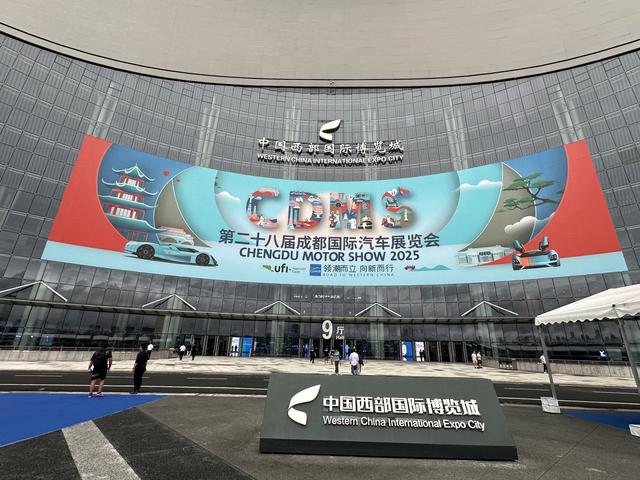
自主崛起合资突围 成都车展为汽车消费注入“新动能”
Zhong Guo Jing Ying Bao· 2025-08-29 20:53
Core Viewpoint - The 28th Chengdu International Auto Show serves as a significant indicator for the automotive market during the "golden September and silver October" period, highlighting the shift from traditional fuel vehicles to new energy and intelligent vehicles in China's automotive industry [3][5][6]. Group 1: Event Overview - The Chengdu Auto Show, held from August 29 to September 7, features nearly 120 automotive brands and over 1,600 models, covering various industry hotspots with an exhibition area of 220,000 square meters [4]. - The total contract amount for the 2024 Chengdu Auto Show is reported to be 5.86 billion yuan [3]. Group 2: Absence of Luxury Brands - Notable luxury brands such as Rolls-Royce, Bentley, and Lamborghini are absent from the Chengdu Auto Show, contrasting with the presence of domestic brands like Chery [5][6]. - The absence of luxury brands is seen as a reflection of the market transformation, with a decline in sales for imported luxury vehicles noted in recent years [5][6]. Group 3: Sales Trends - Data indicates a significant decline in sales growth for luxury brands, with Rolls-Royce experiencing a domestic sales growth rate of -9%, -12%, and -40% from 2022 to 2024, respectively [6]. - The overall market for imported luxury cars has seen a downturn, with a projected acceleration in decline for 2024 [5][6]. Group 4: Cost-Benefit Analysis - The high costs of participating in A-level auto shows, estimated at around 40 million yuan, combined with low transaction rates (below 5%) for luxury brands, have led to a reassessment of their participation value [6]. - Luxury brands are shifting focus towards more targeted marketing channels, such as high-end tasting events and private customization activities [6]. Group 5: Joint Ventures and New Energy Focus - Many joint venture brands are leveraging the Chengdu Auto Show to showcase new products, aiming to break through in the competitive new energy market [7][8]. - The market share for mainstream joint venture brands in the new energy vehicle sector is reported at 3.6%, reflecting a decline [8]. Group 6: Product Launches and Market Strategy - Several brands, including SAIC Volkswagen and Ford, are launching significant new products at the Chengdu Auto Show, indicating a strategic push in the new energy vehicle segment [7][8]. - Companies are increasingly opting to release products ahead of major auto shows to gain visibility and test market reactions, as traditional auto shows lose their role as primary platforms for new vehicle launches [11][12]. Group 7: Competitive Landscape - The competitive landscape in the new energy vehicle market is intensifying, with traditional automakers accelerating their transformation and new entrants offering high-cost performance models [13]. - Price adjustments, such as NIO's new ES8 model being priced significantly lower than its predecessor, may trigger a new round of price wars in the market [12][13].

星宇股份(601799):2025年Q2盈利能力环比改善 高端化+全球化驱动未来高成长
Xin Lang Cai Jing· 2025-08-29 06:33
Core Viewpoint - The company reported a strong financial performance for the first half of 2025, with revenue and net profit showing significant year-on-year growth, indicating a robust business outlook and potential for continued high growth in the future [1][2]. Revenue Growth - In Q2 2025, the company achieved revenue of 36.63 billion yuan, representing a year-on-year increase of 10.85% and a quarter-on-quarter increase of 18.36% [2] - The growth was primarily driven by strong sales from key clients such as Chery and Wuling, which sold 598,700 and 106,800 vehicles respectively in Q2 2025, reflecting year-on-year growth of 3.22% and 8.09% [2] - The company expects to maintain high revenue growth in H2 2025 due to the continued sales increase from core clients and the ramp-up of new projects from other clients [2] Profitability Improvement - The company reported a comprehensive gross margin of 19.64% in Q2 2025, showing a year-on-year decrease of 0.73% but a quarter-on-quarter increase of 0.81% [3] - The period expense ratio was 8.62%, with a year-on-year increase of 0.37 percentage points and a quarter-on-quarter decrease of 0.11 percentage points [3] - The net profit attributable to shareholders was 3.84 billion yuan in Q2 2025, reflecting a year-on-year increase of 9.35% and a quarter-on-quarter increase of 19.31% [3] Future Growth Drivers - The company identifies three main factors driving future growth: 1. Client autonomy through deepening partnerships with traditional automakers and expanding to new clients [4] 2. Product high-endization with a focus on new models that enhance average selling price (ASP) [4] 3. Global business expansion with new factories in Serbia, Mexico, and the U.S. contributing to growth [4] Investment Recommendation - The company maintains a "Buy-A" rating, projecting net profits of 17.0 billion, 21.1 billion, and 25.7 billion yuan for 2025 to 2027, with corresponding price-to-earnings ratios of 20.8, 16.7, and 13.7 times [4] - A target price of 148.75 yuan per share is set based on a 25 times PE for 2025 [4]

新一代中国豪华旗舰开启预售,极氪9X彰显自主品牌道路自信
Zhong Guo Qi Che Bao Wang· 2025-08-29 06:29
Core Insights - The Chengdu Auto Show 2025 showcased several high-end domestic new energy vehicles, with the Zeekr 9X being a highlight, featuring a pre-sale price range of 479,900 to 569,900 yuan and achieving over 42,667 orders within an hour of its announcement [1] - The success of the Zeekr 9X reflects consumer recognition of domestic high-end brands in terms of original design, technological strength, and luxury experience, indicating a shift in the value standards of the high-end market for Chinese electric vehicle brands [1] Market Dynamics - Historically, the 500,000 yuan price point was a significant barrier separating domestic brands from traditional luxury brands like Mercedes-Benz and BMW, while the ultra-luxury market was dominated by brands such as Porsche and Rolls-Royce [3] - The electric and intelligent transformation of the automotive industry has opened a critical window for Chinese brands to enter the high-end market, with Zeekr leading the charge [3] - The Zeekr 009 has achieved sales leadership in the luxury MPV segment priced above 400,000 yuan, capturing nearly 50% market share in the ultra-luxury segment [3] Product Features - The Zeekr 9X boasts advanced features, including a 48-volt active stabilizer similar to that found in the Rolls-Royce Cullinan and a high-end Naim audio system, which is typically an optional feature in Bentley models costing over 140,000 yuan [5] - The vehicle is priced significantly lower than international competitors with similar configurations, showcasing the competitive edge of Chinese brands in the high-end market [5] - The Zeekr 9X is built on the world's first luxury hybrid architecture, integrating advanced technologies that address common issues in traditional hybrid vehicles, such as short electric range and low charging efficiency [6] Technological Advancements - The Zeekr 9X features a 900-volt high-voltage hybrid architecture, a 70-degree 6C hybrid battery, and a self-developed three-motor system, achieving a maximum power output of 1,030 kilowatts [6] - The vehicle's AI digital chassis enhances control over various driving conditions, and it includes a 48-volt active stabilizer that improves handling and adaptability [6] Interior Innovations - The Zeekr 9X introduces a sliding wing screen that resolves the conflict between panoramic sunroofs and ceiling screens, along with a four-way adaptive lumbar support system for enhanced comfort [8] - The audio system features 32 speakers and supports 3D immersive sound, creating a luxurious cabin atmosphere [8] Global Expansion - Chinese automotive brands are increasingly expanding into international markets, with Zeekr successfully entering over 40 countries and regions [9][11] - The brand has achieved significant sales milestones in various markets, including being the top luxury brand in Hong Kong and leading in electric vehicle sales in Kazakhstan [11] - The success of models like the Zeekr 9X signifies a shift from product export to technology output and from price competition to brand value, enhancing China's voice in the global high-end automotive market [11]

极氪9X预售1小时突破42667单,中国豪华市场迎来旗舰双雄格局
Zhong Guo Qi Che Bao Wang· 2025-08-29 06:13
极氪9> 今日,中国新一代豪华旗舰SUV极氪9X在成都车展正式开启预售,价格区间为47.99万-56.99万元。其中宾利上选装价格14万的Naim标配,引发积极反 响。凭借包括全新超级电混架构、混动领域首个全栈900V、以及国产品牌首个48V稳定杆等在内的代际领先硬核配置,9X预售成绩超出市场预期,1小时订 单突破42667单。极氪9X的到来,将与同为50万元级的问界M9一起组成中国豪华旗舰"双雄",加速冲击原本由传统国外豪华品牌把持的高端豪华市场格局。 . . . . the e .. th x the d h : ti 2 # 15000 0988 re 谢 您 选 咸 ...

“豪华车”的定义更丰富了
Ren Min Ri Bao Hai Wai Ban· 2025-08-27 23:00
Core Insights - The definition of "luxury cars" is evolving in China, with consumers increasingly valuing technological features and user experience over traditional metrics like price and brand recognition [3][6][8] - Chinese automotive brands are making significant strides into the luxury car market, offering high-end features that were once exclusive to imported luxury vehicles [5][7][10] Group 1: Changing Consumer Perceptions - Consumers are redefining luxury cars, focusing on features like air suspension, smart driving experiences, and comfort rather than just price [3][5][6] - The younger generation emphasizes technological sophistication, with features like voice interaction and seamless connectivity becoming key selling points [5][6] Group 2: Technological Advancements - Chinese automotive companies are innovating with high-end technologies such as air suspension, which has seen a price drop from 500,000 yuan to around 200,000 yuan due to local development [5][7] - The shift towards electric and smart vehicles is transforming cars into "large smart terminals," changing the criteria for luxury from price to functionality and experience [6][8] Group 3: Market Dynamics - In the market for vehicles priced above 300,000 yuan, Chinese brands are increasing their market share, with companies like NIO and Li Auto successfully targeting high-end consumers [7][8] - Data shows that in the first half of the year, Chinese brands sold 9.27 million passenger vehicles, a 25% increase year-on-year, capturing 68.5% of the market share [8][10] Group 4: International Expansion - Chinese luxury vehicles are gaining traction in international markets, with brands like NIO and BYD achieving significant sales in Europe and the Middle East [10][11] - Traditional luxury brands are facing challenges in China, with sales declines prompting them to accelerate their electric vehicle strategies and collaborate with local tech firms [11][12]
乐道销量追上问界,理想落后小米?
Hu Xiu· 2025-08-27 12:44
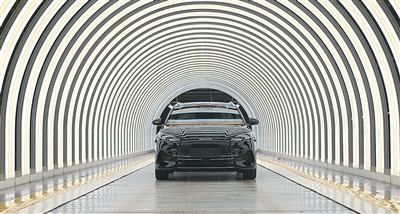
Core Viewpoint - The article discusses the contrasting sales performance of electric vehicle manufacturers, highlighting how Leap Motor has achieved significant sales while Li Auto lags behind Xiaomi, despite claiming a "low start, high rise" strategy [1] Group 1: Sales Performance - Leap Motor has become the top seller among new energy vehicle manufacturers, indicating strong market acceptance and demand for its products [1] - Li Auto's sales have fallen behind Xiaomi, raising questions about its growth strategy and market positioning [1] Group 2: Market Strategy - Li Auto describes its current performance as a "low start, high rise," suggesting a long-term growth strategy despite short-term sales challenges [1] - The article implies that the competitive landscape is shifting, with companies like Leap Motor and Xiaomi gaining traction at the expense of Li Auto [1]


OTA暂停?智能汽车强监管时代来了
3 6 Ke· 2025-08-27 07:11
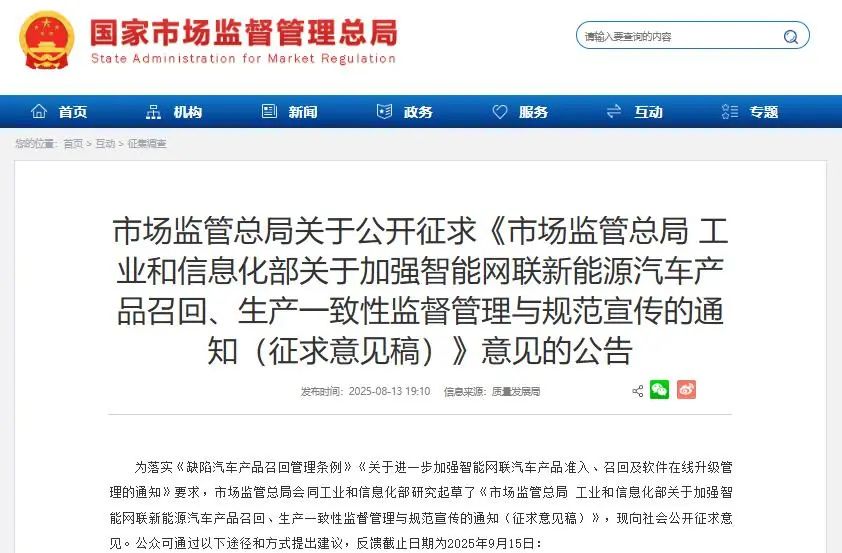
Core Insights - The article discusses the increasing regulation of Over-The-Air (OTA) updates in the smart electric vehicle industry, highlighting the shift from a "free trial" approach to mandatory compliance and oversight [1][2][3] - The new regulatory framework aims to ensure that all OTA updates are properly tested and approved before being pushed to consumers, marking a significant change in how automotive companies can operate [2][3][11] Regulatory Changes - The recent notification from the Market Regulation Administration and the Ministry of Industry and Information Technology emphasizes that all OTA upgrades must be filed for approval, especially those related to core functions like autonomous driving [2][3] - This regulatory shift has led to a slowdown in OTA updates across the industry, affecting companies like Tesla, XPeng, and Aito, which have faced delays in their planned updates due to compliance issues [2][3] User Experience and Expectations - The decline in OTA update frequency has resulted in user dissatisfaction, with many consumers expressing frustration over the lack of new features and updates, leading to concerns about the reliability of their vehicles [4][6] - Legal experts warn that failure to deliver on promises of "lifetime OTA" updates could lead to consumer rights violations and potential lawsuits, impacting brand reputation [6][11] Future of OTA and Revenue Models - OTA is evolving from a free service to a potential revenue stream, with companies like Tesla already generating significant income from paid software upgrades [8][10] - The automotive software market is projected to grow substantially, with estimates suggesting a tripling in size from €76 billion to €252 billion between 2020 and 2030, indicating a shift in focus towards enhancing functionality and value rather than just update frequency [10] Conclusion - The current pause in OTA updates presents both challenges and opportunities for the industry, as companies must adapt to stricter regulations while also improving the safety and reliability of their software [11] - The regulatory changes signify a transition in China's smart automotive sector from encouraging innovation to prioritizing safety and compliance, which may ultimately strengthen consumer trust in the long run [11]

特斯拉能否打破30万纯电市场销量魔咒?
3 6 Ke· 2025-08-26 10:59
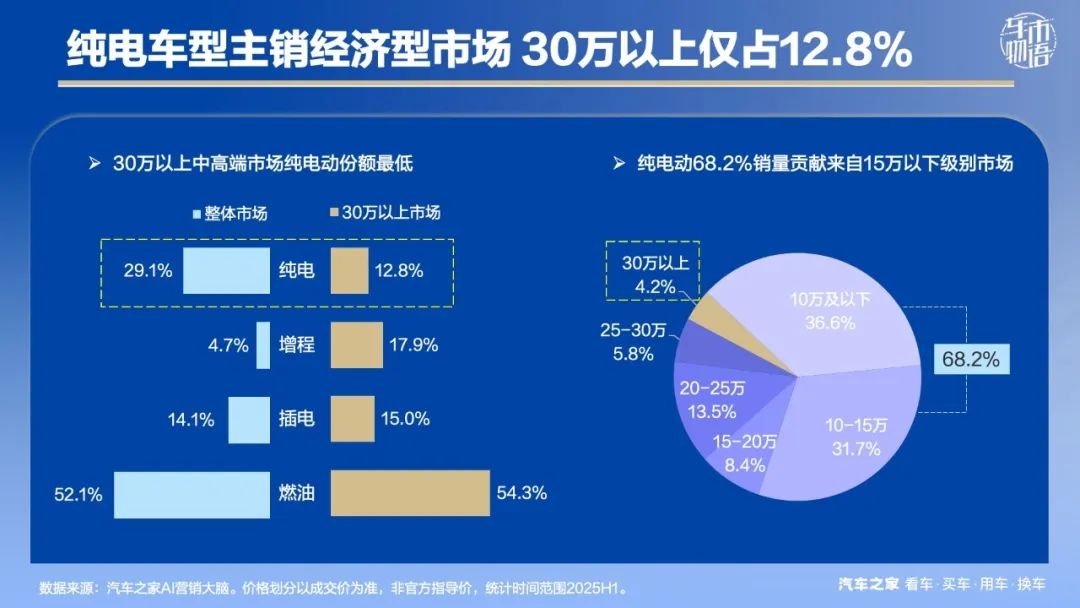
Core Insights - The introduction of Tesla's Model Y L has sparked discussions about its potential impact on the pricing and market dynamics of electric vehicles, particularly in the context of the Ideal i8 and other competitors [1][26] - The electric vehicle market faces challenges in breaking the 300,000 yuan price barrier, with a significant majority of sales coming from models priced below 150,000 yuan [1][3] - Consumer preferences are shifting towards six or seven-seater vehicles, with a notable inclination towards SUVs, indicating a change in market demand [8][12] Market Dynamics - The electric vehicle market is heavily influenced by consumer demographics, with 97% of potential buyers in the six-seater segment coming from replacement needs, primarily traditional fuel vehicle owners [3][21] - The high depreciation rates of electric vehicles contribute to consumer hesitance in investing more in pure electric models [3][12] - The sales performance of pure electric models remains weak, with the best-selling model, Zeekr 009, not exceeding 9,000 units in the first half of 2025 [6][12] Consumer Preferences - A significant 76.6% of consumers prefer SUVs when considering six-seater vehicles, with 41.4% specifically looking for six-seater versions for enhanced comfort [8][12] - Key factors influencing vehicle purchase decisions include space, comfort, safety, and energy efficiency, with over 60% of users prioritizing these aspects [12][14] - The reliability of Tesla's battery management system and electric drive system is a major draw for potential buyers, with over 80% of users valuing these features [14][26] Pricing and Value Perception - The official price of Model Y L is set at 339,000 yuan, which many consumers perceive as high, especially when considering additional costs for features like Full Self-Driving (FSD) [16][18] - Over 50% of users are reluctant to pay for FSD due to perceived high costs, and 32.7% express distrust in the utility of smart driving features [18][26] - The potential for Model Y L to penetrate the market hinges on its ability to attract high-income consumers, with 48.4% of potential buyers having an annual household income exceeding 300,000 yuan [23][26]
驶入新纪元:智能出行赛道转型已至,营销如何突围?
Jing Ji Guan Cha Bao· 2025-08-26 09:36
Core Insights - The Chinese new energy vehicle (NEV) market has transitioned from a policy-driven "blue ocean" era to a fiercely competitive "red ocean" phase, emphasizing the need for brands to adapt to new market rules to survive [1] - The market's growth is now focused on NEVs, with traditional fuel vehicle sales declining, indicating a shift from incremental expansion to stock competition [2] - A strategic price war is underway, driven by market leaders leveraging cost advantages to capture market share and eliminate weaker brands [2] Consumer Insights - The rise of Generation Z and Millennials as key consumers has transformed car purchasing decisions, with these digital natives relying heavily on online platforms for information [3] - For younger consumers, cars are viewed as "smart devices on wheels," with 63% prioritizing technology and in-car experience over exterior design [3] - There is a strong demand for personalized services and seamless cross-channel experiences, with 79% of Gen Z consumers open to AI-recommended models [3] Marketing Transformation - Traditional automotive marketing structures are often fragmented, leading to inefficiencies and budget waste, which is increasingly problematic in a competitive market [4] - The "Accelerator Engine" service model by Publicis Groupe aims to integrate resources and break down silos, adapting to the shift towards online consumer decision-making [4] - The use of AI and data analytics is crucial for creating precise user profiles and ensuring marketing strategies are responsive to market changes [4][5] Implementation of New Strategies - The CoreAI system, based on generative AI, enables rapid market data analysis and personalized content generation, enhancing marketing effectiveness [5] - Successful case studies, such as the rise of the AITO M9 as a market leader, demonstrate the effectiveness of the "Accelerator Engine" model in navigating the stock market competition [5] - The automotive industry must embrace integrated, technology-driven operational models to maintain strategic flexibility and execution precision in a rapidly changing environment [5]
市值重回千亿,蔚来又行了?
Xin Lang Cai Jing· 2025-08-26 09:28
Core Viewpoint - NIO has experienced a significant turnaround in its market reputation, with its stock price increasing by 80.88% from July 1 to August 26, reaching a market capitalization of 110 billion HKD [1] Group 1: Stock Performance and Market Sentiment - NIO's stock price had previously dropped to a low of under 60 billion HKD on April 9, reflecting a volatile first half of the year [1] - Internal optimism among NIO employees has increased due to the recent stock price surge, although some employees still face challenges in recouping their investments [1] Group 2: Product Launches and Pricing Strategy - The launch of the new model, the L90, on July 31 has generated positive attention due to its spaciousness, technology, and competitive pricing [1] - The new ES8 model has a pre-sale price ranging from 416,800 to 456,800 CNY, which is nearly 90,000 CNY lower than the previous model's starting price [2] - NIO aims to attract customers from competitors like AITO by offering a more competitive price for the ES8, which is cheaper than similar models from AITO [3] Group 3: Competitive Landscape and Market Strategy - NIO's price reduction strategy is a response to increased competition in the electric vehicle market, with competitors like Xpeng and Leapmotor gaining traction [4] - The company has adjusted the price of its 100 kWh battery pack from 128,000 CNY to 108,000 CNY, reflecting a broader strategy to maintain competitiveness across its product line [5] - NIO's shift from a "no price cut" policy to a more flexible pricing strategy indicates a pragmatic approach to market challenges, focusing on production capacity and delivery efficiency [5]
