宝马

Search documents
四维图新:数据合规业务是处理来自车端的数据 客户包括宝马、丰田等
Zheng Quan Ri Bao Wang· 2025-12-23 10:42
Group 1 - The core viewpoint of the article is that Siwei Tuxin (四维图新) emphasizes its data compliance business focuses on processing data from vehicles rather than the other way around [1] - The company serves a diverse range of clients, including major automotive brands such as BMW, Toyota, Volvo, BYD, Xiaomi, new energy vehicle manufacturers, and unmanned logistics companies [1]


万向钱潮(000559) - 万向钱潮投资者关系活动记录表(2025年12月22日)
2025-12-23 08:32
Group 1: Robotics Business Development - The company has established robotics as its third strategic business segment following bearings and automotive chassis systems, with a product range including universal joints, precision shafts, and various specialized bearings [4] - Current production capacity includes 100,000 sets of roller screws and 10 million sets of universal joints, with plans to establish a capacity of 1.2 million specialized bearings by 2026 [4] - The company is focusing on optimizing its supply chain and expanding international production, particularly in Thailand [4] Group 2: Automotive Business Growth - Major automotive clients include BYD, Chery, Dongfeng, and international brands like Mercedes-Benz and BMW, with new clients such as Xiaomi and Li Auto contributing to growth [5] - Incremental products in the automotive sector include drive shafts and braking products [5] Group 3: Financial Performance and Projections - For the first three quarters of 2025, the company reported revenue of 10.406 billion yuan and a net profit of 773 million yuan, with expectations for continued growth in 2026 [7] - The company aims to enhance its core products and invest in new technologies related to chassis control and humanoid robotics [7] Group 4: Mergers and Acquisitions - The company is actively pursuing the acquisition of the American WAC company, with due diligence and negotiations ongoing [6] - Future investment plans include increasing stakes in startups within humanoid robotics, low-altitude economy, clean energy, and new energy vehicle components [8] Group 5: Employee Incentives - A stock option incentive plan was disclosed in March 2024, with the first exercise period completed in September 2025, aimed at enhancing profitability and employee engagement [9]

唯新不破,致敬匠心智创的时代开拓者
Xin Lang Cai Jing· 2025-12-23 02:32
Group 1 - The core theme of the articles highlights China's economic resilience and innovation as it transitions towards high-quality development, with a focus on technology, advanced manufacturing, and modern infrastructure [1] - In 2025, effective investments are increasingly directed towards key areas such as technology, advanced manufacturing, modern infrastructure, and public welfare, with consumer spending playing a stabilizing role [1] - The integration of artificial intelligence (AI) into various sectors is emphasized, with China positioning itself as a key player in the global AI landscape through policy guidance and market scale [1] Group 2 - The eighth "New Award" list has been launched, showcasing over a hundred companies that exemplify resilience and innovation in the current economic climate [2] - The awards recognize various categories, including new consumption, AI interaction innovation, user experience, and investment potential, highlighting the diverse landscape of emerging companies [3][5] - Notable companies and individuals are acknowledged for their contributions to innovation and market development, reflecting the dynamic nature of the Chinese economy [7]


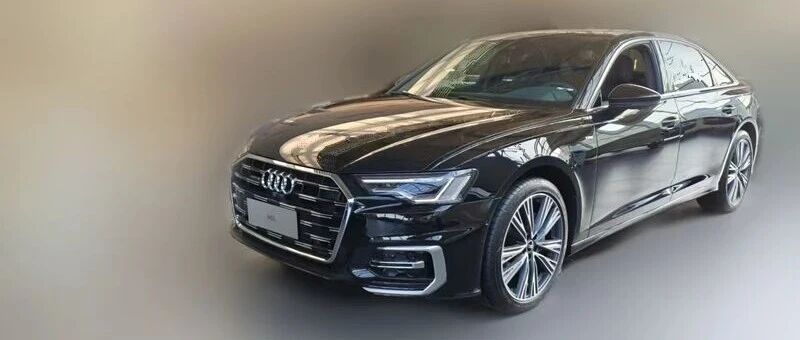
奥迪A6L:一半客户对比5系,用户画像和十年前完全不同
车fans· 2025-12-23 00:30
Sales Performance - The store sold a total of 110 cars last month, with 41 units of the A6L delivered, accounting for 50% of personal sales [1] - The most popular configuration is the A6L 45 TFSI front-drive dynamic selection model, priced at ¥454,900, with 30 units sold [1][11] - The average daily customer flow is 25 batches, with approximately 30% of them interested in the A6L [1] Customer Demographics - The typical customer profile for the A6L includes individuals with a bachelor's degree or higher, an annual family income of over ¥500,000, and a preference for quality and practicality [3] - A customer shared that their income has doubled over the past five years, leading them to consider purchasing a new A6L [4] Competitive Landscape - The main competitors for the A6L are the BMW 5 Series and the Mercedes-Benz E-Class, with a significant number of customers comparing the A6L to the 5 Series [7] - The BMW 5 Series is noted for its youthful interior color options, which attract a different demographic compared to the A6L's predominantly black interior [9] Customer Preferences and Purchase Behavior - Customers show a strong interest in features such as 20-inch wheels, heated front seats, electric tailgates, and 360-degree cameras, which are lacking in the entry-level A6L model [11] - Financing options primarily include interest-free loans, with long-term loans being less popular due to lower success rates [13] Maintenance and Ownership Experience - The A6L offers a maintenance package that includes three free oil changes, with subsequent regular maintenance costs around ¥1,300 [16] - Customers generally express satisfaction with the A6L, with minimal complaints regarding ownership costs [16] Market Trends and Promotions - Recent trends indicate a decrease in trade-in subsidies and user incentives, with a focus on the importance of providing scrapping documentation for additional benefits [18] - The visibility of the A6L has increased due to its appearance in high-profile events, such as the visit of French President Macron to China [18]
为啥中国的世界级企业估值都那么低?
集思录· 2025-12-22 13:44
Core Viewpoint - The article discusses the valuation challenges faced by various industries in the A-share market, highlighting that despite global competitiveness, many sectors are undervalued due to market dynamics and investor behavior [1][10]. Group 1: Industry Valuations - Home Appliances: Midea (13x), Haier (12.3x), Hisense (12.73x) [1] - Engineering Machinery: Sany (23.6x), XCMG (20x), Zoomlion (17x) [2] - Forklifts: Hangcha (16x), Heli (14x) [2] - Tires: Zhongce (12x), Sailun (16x), Senqilin (14x) [2] - Heavy Trucks: China National Heavy Duty Truck (12x) [2] Group 2: Market Dynamics - The industries mentioned are characterized by low-frequency consumption and strong cyclicality, leading to fluctuating performance and valuations based on government subsidies and market conditions [1][2]. - The article suggests that a P/E ratio around 15x is reasonable for stable growth industries, providing a risk premium over ten-year government bonds [1][2]. Group 3: Investment Behavior - Institutional investors hold significant pricing power in these markets, making it challenging for individual investors to influence valuations [1][2]. - The article emphasizes that high expectations can lead to investment disasters, and that long-term returns may be better for established companies despite their low valuations [3][10]. Group 4: Valuation as an Incentive Mechanism - Valuation is described as an incentive mechanism that reflects market competition and societal evolution, where higher valuations encourage innovation and investment in growth sectors like technology [4][5][6]. - Conversely, traditional industries with stable earnings often receive lower valuations due to a lack of societal encouragement for new investments [7][10]. Group 5: Global Comparisons - The article notes that mature manufacturing companies globally, such as Toyota and Caterpillar, also exhibit low valuation multiples, indicating a broader trend beyond the A-share market [14][15][16].






德国铁路公司订购中国电动公交车,德财长:让我十分恼火
Guan Cha Zhe Wang· 2025-12-22 04:43
Group 1 - The German railway company (DB) announced a procurement plan for 200 electric buses from China, which has sparked criticism from German Finance Minister Lars Klingbeil, who advocates for "rational domestic protectionism" [1][2] - Klingbeil expressed his frustration over DB's decision to purchase Chinese electric buses while also procuring buses from German manufacturer MAN, emphasizing the need for a domestic focus in such orders [1][2] - DB's procurement plan includes a total of 3,300 hybrid or fully electric buses, with a total order value exceeding €1 billion, and the Chinese buses will be produced at BYD's factory in Hungary [1] Group 2 - The German railway and transport union has also criticized DB's decision, with union chairman Martin Burkert stating that the government had previously called for more "domestic patriotism," making the procurement decision seem contradictory [2] - Klingbeil acknowledged the leading position of China in the electric vehicle transition, noting that the future of transportation is undoubtedly electric, and German automakers need to catch up [3] - Recent analysis from consulting firm EY revealed that the combined EBIT of major German automakers Volkswagen, BMW, and Mercedes-Benz fell to approximately €1.7 billion in Q3 2025, a 76% year-on-year decline, marking the lowest level since 2009 [8]

1—10月,全市入库软件和人工智能招商项目提前完成全年目标
Nan Jing Ri Bao· 2025-12-22 02:40
Group 1 - Nanjing has prioritized the development of the artificial intelligence industry, becoming the only city in Jiangsu approved to create a national AI innovation application pilot zone [1] - The city's AI products and services cover various fields in the industry chain, including software, algorithms, sensors, machine vision, intelligent voice, and intelligent unmanned systems [1] - A total of 25 new large models have been registered with the National Internet Information Office this year, bringing the total to 37, which accounts for 62% of the province's total [1] Group 2 - Jiangsu Yuanli Digital Technology Co., Ltd. and Nanjing Arts Institute have established a technical innovation center for 3D animation, which aims to create a self-controlled and internationally leading 3D animation technology ecosystem [2] - Nanjing has implemented the "Nanjing Harmony Ecosystem Development Action Plan" to promote Harmony software and hardware products, with 15 certified open-source Harmony operating systems and 122 software and hardware products [2] - The city has introduced a "scene + equity" application promotion model to facilitate the implementation of domestic industrial software, achieving significant project deployments [2] Group 3 - From January to October, 249 software and AI investment projects have been registered, exceeding the annual target, including 16 high-energy projects [3] - Notable projects that have successfully landed include Dassault Systemes' smart manufacturing headquarters in China, BMW's global IT R&D center, and JD Group's Nanjing R&D center [3] - The city has cultivated a number of nationally recognized high-level public service platforms and products in AI and software, enhancing the innovation capabilities and influence of the industry [3]
欧洲人也是搞笑,禁了燃油车现在来后悔了
3 6 Ke· 2025-12-21 23:45
Core Viewpoint - The European Union has proposed to delay the ban on the sale of all fuel vehicles, originally set for 2035, allowing car manufacturers to sell hybrid vehicles and use various methods to offset carbon emissions, which has sparked significant reactions from the automotive industry [3][21]. Group 1: Industry Reactions - Traditional automakers like Volkswagen and BMW expressed relief at the EU's decision, feeling that their legacy technologies are preserved [5]. - In contrast, companies that have already transitioned to electric vehicles, such as Polestar and Volvo, criticized the decision, arguing it undermines climate goals and European competitiveness [5][21]. - Polestar's CEO, Michael Lohscheller, described the postponement of the 2035 target as a "terrible idea," emphasizing the negative impact on climate and competition [5][21]. Group 2: Historical Context and Plans - In 2021, the EU announced ambitious plans to ban fuel vehicles by 2035 and significantly reduce carbon emissions, which energized the automotive industry [7][9]. - Major automakers committed to electric vehicle production, with Renault's CEO pledging to produce 1 million electric vehicles by 2030 and Volkswagen investing €73 billion in electric vehicle technology by 2025 [9][21]. Group 3: Challenges Faced - By 2023, several EU member states, led by Germany, Italy, and Portugal, opposed the 2035 ban, citing insufficient charging infrastructure and the need for a delay [9][11]. - The EU's initial plans for charging infrastructure were not met, with only 150,000 charging stations added from 2021 to 2022, 88% of which were slow chargers [9][11]. - The failure of European battery manufacturer Northvolt, which declared bankruptcy in 2024, highlighted the challenges in establishing a local supply chain for electric vehicle components [16][19]. Group 4: Shift in Strategy - The EU's recent proposal allows for a 90% reduction in emissions instead of 100% and introduces a carbon credit system, enabling manufacturers to offset emissions through the use of low-carbon steel and synthetic fuels [21]. - This shift indicates a retreat from the original goal of banning fuel vehicles, reflecting the pressures of commercial realities and the need to maintain competitiveness in the automotive market [21][23]. - The EU's change in direction has led to a reconsideration of electric vehicle plans by automakers outside Europe, including Ford [21][23].

怎么这么多年了,国内二手车还是这副德行?
3 6 Ke· 2025-12-21 23:17
Core Viewpoint - The article discusses the disparity between new and used car sales in China compared to developed countries, highlighting cultural habits, market maturity, and consumer trust issues as key factors influencing purchasing decisions. Group 1: Sales Data Comparison - In 2024, China's new car sales are projected to be 22.608 million, while used car sales are expected to reach 15.674 million, resulting in a new to used car sales ratio of approximately 1:0.7 [3] - In contrast, in Europe, the new to used car sales ratio is around 1:2 to 1:3, with 12.964 million new cars registered and 27.01 million used cars sold in major countries [5] - The U.S. shows a similar trend, with 37.3 million used cars sold against 15.85 million new cars, leading to a ratio of 1:2.4 [5] Group 2: Consumer Behavior and Cultural Factors - Chinese consumers tend to prefer new cars, often influenced by cultural factors such as marriage customs, where new cars are seen as a status symbol or part of a dowry [14] - Concerns about being scammed when buying used cars contribute to the preference for new vehicles, with many consumers feeling more secure purchasing new cars [14][19] - The perception of used cars being unreliable is exacerbated by market irregularities, such as the prevalence of flood-damaged or accident vehicles [19][20] Group 3: Market Maturity and Infrastructure - The used car market in China is less mature compared to the U.S. and Europe, where established channels and regulations provide greater consumer confidence [22][26] - In the U.S., 32% of used cars are sold through authorized dealers, while in China, only 14% of used car sales come from 4S dealerships, with the majority from independent dealers [26] - The lack of a unified vehicle information platform in China leads to difficulties in verifying vehicle history, contributing to consumer distrust [32] Group 4: Regulatory Environment and Future Outlook - The article suggests that the Chinese used car market is evolving, with recent regulatory measures aimed at improving transparency and reducing fraud [38] - The development of a more mature used car market is expected to take several years, as both supply and demand sides need to adapt [39] - As consumer attitudes shift and the market becomes more trustworthy, used cars may become a more common choice for transportation in China [39]

冲上热搜!120多万卡宴只卖60万,不过🤔
新华网财经· 2025-12-21 01:53
Core Viewpoint - The implementation of the "zero tariff" policy for imported vehicles in Hainan Free Trade Port has generated significant public interest, with substantial price reductions attracting attention, although the policy is limited to enterprises engaged in transportation and tourism, not individual consumers [2][6]. Group 1: Policy Implementation - Hainan's "zero tariff" policy for imported vehicles officially took effect on December 18, leading to dramatic price reductions, such as a BMW X5 dropping from 600,000 to 350,000 yuan and a Porsche Cayenne priced at over 1.2 million yuan now available for around 600,000 yuan [2]. - The policy exempts qualifying imported vehicles from customs duties, value-added tax, and consumption tax, significantly lowering vehicle prices [4]. Group 2: Eligibility and Restrictions - The "zero tariff" policy is exclusively available to enterprises in the transportation and tourism sectors, with strict conditions including the requirement for vehicles to be used for operations and equipped with satellite positioning systems [6]. - Companies must either have a fleet of over 15 operational vehicles for at least three years or import a minimum of 15 zero-tariff vehicles at once to qualify for the policy [6]. - Vehicles purchased under this policy cannot be freely transferred and must be registered for operational use, with a maximum stay of 120 days outside Hainan each year [6]. Group 3: Market Impact - Following the announcement of the zero tariff policy, Sanya's duty-free sales surged, with total sales reaching 118 million yuan, and foot traffic exceeding 36,000 visitors, reflecting a year-on-year increase of over 60% [7].