问界

Search documents
鑫椤锂电一周观察 | 奥迪确认暂停全面电动化计划!
鑫椤锂电· 2025-06-20 08:22
Core Viewpoint - The article highlights significant developments in the lithium battery industry, including major supply agreements, production expansions, and market price trends for key materials [3][4][5][6]. Group 1: Major Supply Agreements - LG Energy Solution has signed a six-year supply agreement with Chery Automobile for 8 GWh of 46-series cylindrical batteries, marking the first such contract between a Korean battery manufacturer and a Chinese automaker [3]. - Farasis Energy has begun supplying its 4680 cylindrical batteries to BMW for its global electric vehicle platform, with plans for increased production capacity at its facilities [4]. Group 2: Production and Investment Developments - Ruipai New Energy is nearing the completion of a project to produce 50,000 tons of lithium iron phosphate cathode materials, with the first production line expected to start by the end of June [5]. - Foshan Fospower Technology Group is acquiring Hebei Jinli New Energy Technology, with a total transaction value of 5.08 billion yuan [6]. Group 3: Lithium Material Market Conditions - The domestic lithium carbonate market price is hovering around 60,000 yuan per ton, with expectations of slight downward adjustments due to increased production and inventory digestion by downstream manufacturers [8][9]. - The price of ternary materials remains stable but may face reductions in July if new orders do not materialize [9][10]. - Phosphate lithium prices are stable, with significant production increases expected from companies like Fulin Precision Engineering [10][11]. Group 4: Battery and Electric Vehicle Market Trends - In June, domestic battery manufacturers are maintaining good production levels, with expectations for a slight decline in overall operating rates if no new projects arise [16]. - The sales of passenger vehicles reached 450,000 units, with new energy vehicle sales at 245,000 units, reflecting a year-on-year increase of 37.88% [18]. - Recent policy discussions in Hunan regarding energy storage pricing indicate a potential decline in competitive pricing for new projects [19].




电动化的尽头,是更大的油箱?
晚点LatePost· 2025-06-19 15:43
Core Viewpoint - The automotive industry is witnessing a shift towards hybrid and plug-in hybrid vehicles, as companies adapt to consumer preferences and market dynamics, leading to larger fuel tanks in electric vehicles to alleviate range anxiety [4][17][39]. Group 1: Market Trends - Audi has retracted its plan to stop developing fuel vehicles by 2033, indicating a need for a diverse product lineup that includes electric, plug-in hybrid, and internal combustion engine models [4]. - The retail sales of plug-in hybrid vehicles increased by 28% in the first five months of the year, reaching 1.69 million units, with a projected growth of 76.9% in 2024, significantly outpacing pure electric vehicle growth [5][39]. - The proportion of plug-in hybrids in the overall new energy vehicle sales rose to 42.1%, an increase of 8.6 percentage points year-on-year [5]. Group 2: Vehicle Specifications - New energy vehicles are now equipped with larger fuel tanks, with some models exceeding their traditional fuel counterparts. For instance, the Lynk & Co 06 has a fuel tank capacity of 51 liters, up from 35 liters, and the BYD Seal 06 DM-i features a 65-liter tank [6][7]. - The average fuel tank capacity of new energy vehicles in China has increased by 52.6% from 2017 to 2024, reaching 58 liters, which is comparable to traditional fuel vehicles [14]. Group 3: Consumer Behavior - Consumer concerns about charging infrastructure and range anxiety are driving the demand for vehicles with larger fuel tanks, as the current charging infrastructure is insufficient to meet the growing number of electric vehicle users [17][18]. - The psychological aspect of range anxiety is significant, leading manufacturers to prioritize the development of hybrid vehicles with larger fuel tanks to address consumer needs [18][42]. Group 4: Technological Advancements - The battery technology has matured, allowing plug-in hybrid vehicles to achieve electric ranges exceeding 300 kilometers, significantly improving their market positioning [4]. - The cost of battery materials, particularly lithium, has decreased, providing manufacturers with the opportunity to install larger batteries and fuel tanks in their vehicles [24][26]. Group 5: Policy Impact - The discontinuation of national subsidies for new energy vehicles has leveled the playing field between plug-in hybrids and pure electric vehicles, encouraging the growth of plug-in hybrids [39]. - The extension of tax exemptions for new energy vehicles until the end of 2027 further supports the market for plug-in hybrids, as they now enjoy similar benefits as pure electric vehicles [39].
新车“变身术”:拼销量卷出“零公里二手车”
Bei Ke Cai Jing· 2025-06-19 10:18
Core Viewpoint - The emergence of "zero-kilometer used cars" in the Chinese automotive market is a response to inventory pressure and sales targets faced by manufacturers and dealers, leading to significant price reductions in the second-hand car market [2][3][24]. Group 1: Definition and Characteristics - "Zero-kilometer used cars" refer to vehicles that have completed registration but have extremely low mileage, often less than 100 kilometers, making them almost new [2][21]. - These vehicles are typically sold by manufacturers directly to used car dealerships, which then resell them to consumers [6][12]. Group 2: Market Dynamics - The current market for "zero-kilometer used cars" is driven by a price war and an imbalance in supply and demand, with these cars serving as a "release valve" for manufacturers and dealers to manage excess inventory [3][24]. - The sales volume of "zero-kilometer used cars" is estimated to account for 5%-10% of the total used car market, translating to approximately 1-2 million units based on projected total used car transactions in 2024 [21][24]. Group 3: Sources and Distribution - The sources of "zero-kilometer used cars" include excess inventory from 4S dealerships, vehicles from rental companies, and those produced to exploit subsidy loopholes [14][15]. - Many used car dealers find it challenging to access these vehicles directly from manufacturers, often relying on established relationships or group purchases to acquire them [15][16]. Group 4: Market Impact - The rise of "zero-kilometer used cars" is expected to intensify competition in the used car market, particularly affecting the sales of "quasi-new cars" [27][28]. - The phenomenon may lead to a decline in the perceived value of traditional used cars, as consumers may prefer the nearly new condition of "zero-kilometer used cars" at similar price points [28][29]. Group 5: Regulatory Considerations - Experts suggest that the lack of regulatory measures for "zero-kilometer used cars" could lead to potential market manipulation, and there are calls for improved oversight from government bodies [32][33]. - Recent discussions among industry stakeholders, including the Ministry of Commerce, aim to address the implications of "zero-kilometer used cars" on the market [33].
电动化的尽头,是更大的油箱?
晚点Auto· 2025-06-19 09:35
Core Viewpoint - The automotive industry is witnessing a shift where traditional fuel vehicles and new energy vehicles (NEVs) are increasingly incorporating larger fuel tanks, reflecting a compromise between idealism and practicality in consumer preferences [3][4][5]. Group 1: Industry Trends - Audi has retracted its plan to cease development and sales of fuel vehicles by 2033, indicating a need for a diverse product lineup that includes electric, plug-in hybrid, and internal combustion engine models [3][4]. - Many Chinese automakers, initially focused on pure electric vehicles, are now pivoting towards plug-in hybrid models, recognizing the importance of fuel tanks in consumer purchasing decisions [4][5]. - The retail sales of plug-in hybrid vehicles (including range-extended models) increased by 28% year-on-year in the first five months of this year, reaching 1.69 million units, with a projected growth of 76.9% in 2024 [5][40]. Group 2: Technical Developments - The advancement in battery technology has led to plug-in hybrid models achieving electric ranges exceeding 300 kilometers, significantly improving their market positioning [4][5]. - The fuel tank sizes of new energy vehicles are now often larger than their traditional fuel counterparts, with some models featuring tanks up to 91.5 liters [5][6][13]. - The average fuel tank capacity of new energy vehicles in China has increased by 52.6% from 2017 to 2024, reaching 58 liters, aligning closely with traditional fuel vehicles [15][22]. Group 3: Consumer Behavior - Consumer anxiety regarding charging infrastructure remains a significant barrier to the adoption of electric vehicles, prompting manufacturers to enhance fuel tank capacities as a practical solution [18][19]. - The shift in consumer preference towards larger fuel tanks in new energy vehicles is driven by the need for convenience and reliability in refueling options [19][43]. - The introduction of policies that treat plug-in hybrids and pure electric vehicles equally in terms of subsidies has further accelerated the growth of plug-in hybrid models [40][43].

新能源大跃进时代结束,中国车市依然存在变数
Hu Xiu· 2025-06-19 07:07
Group 1 - In May, the domestic passenger car market in China saw total sales of 1.873 million units, a year-on-year increase of 9.71%, raising the cumulative sales growth rate for January to May to 5.3% [2] - The penetration rate of new energy vehicles reached 51.59% in May, marking a new high, but only a slight increase from April [7][8] - The total insurance volume for domestic brands in May was 1.175 million units, accounting for 62.7% of the market share, indicating a slowdown in growth after surpassing 60% [10][11] Group 2 - BYD's insurance volume in May was 282,000 units, significantly higher than other brands, but its market share has been declining in recent months [13][15] - Geely achieved a total sales volume of 185,000 units in May, with a year-on-year growth of 49.3%, indicating strong performance compared to the industry average [16] - Changan's sales reached 109,000 units in May, with an 18% growth rate, although cumulative sales for the first five months still showed a decline of 3.1% [19][21] Group 3 - Toyota's total sales in May were 128,000 units, with a year-on-year increase of 7.6%, outperforming the market average [26] - Volkswagen's cumulative sales from January to May reached 749,000 units, down 4.2%, but May sales showed a recovery with an 11.6% increase [28] - Honda and Nissan experienced significant declines, with Honda's sales down over 20% and Nissan's cumulative sales down 34.3% [29][31] Group 4 - In the luxury brand segment, Lexus was the only brand to maintain stable sales, with May sales of 14,900 units, a year-on-year increase of 6.95% [36] - Mercedes-Benz, BMW, and Audi all experienced declines in May, with Mercedes-Benz's drop being the least severe at 17% [34] - The overall trend for traditional luxury brands is a struggle for stability rather than growth [38] Group 5 - Tesla's sales in May fell by 29.7%, further highlighting its declining trend, with a cumulative sales drop of 9% for the first five months [39] - The AITO M8 model achieved impressive sales of 11,800 units in its first full month, indicating strong market potential [41][43] - Xpeng's sales in May dropped to 27,000 units, with significant declines in several models, while NIO's total sales reached 25,200 units, showing a 20% year-on-year growth [44][46] Group 6 - The Chinese automotive market is currently experiencing a stalemate in the competition between domestic brands and new energy vehicles, with both segments showing signs of stagnation [48] - The resilience of traditional fuel vehicles and the efforts of joint venture brands to innovate are evident, suggesting ongoing competition for market share [49]
2024新势力车型年度销冠,问界新M7引爆“618”购车热潮
Qi Lu Wan Bao· 2025-06-18 05:17
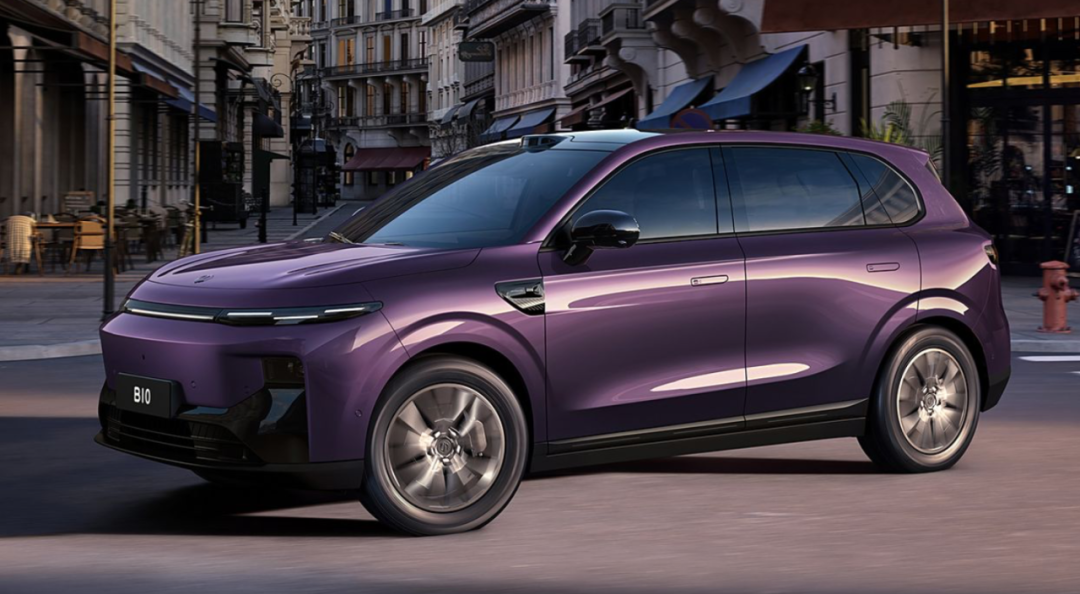
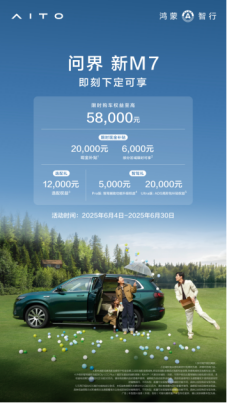
Core Insights - The AITO Wenjie New M7 has achieved significant sales success, with nearly 200,000 units delivered in 2024, making it the top-selling new energy vehicle in its category [1] - The vehicle is currently offering substantial promotional benefits, including up to 58,000 yuan in purchase incentives, which includes cash subsidies and additional features [1] User Feedback - The vehicle's design and technology have garnered positive reviews, with users appreciating its aesthetic appeal and luxurious interior [3] - The spaciousness of the M7 is highlighted as a key advantage, accommodating families comfortably and offering versatile storage options [5] - Safety features are a major selling point, with the vehicle constructed from high-strength steel and aluminum, and equipped with multiple airbags for comprehensive protection [7] - The intelligent driving system is praised for its proactive safety measures and seamless integration with user devices, enhancing the overall driving experience [9] Service System - The company has established a robust digital service framework, providing remote and proactive services throughout the vehicle's lifecycle [10] - AITO has expanded its service network significantly, with over 350 user centers and 600 experience centers across more than 220 cities [10] - The collaboration with Huawei to create a charging network demonstrates the company's commitment to enhancing the user experience in electric vehicle ownership [10] Market Strategy - The success of the AITO Wenjie New M7 is attributed to the company's deep understanding of user needs and a focus on service quality, positioning it well in the competitive new energy vehicle market [12]
汽车调光玻璃专题:打造差异化卖点+解决防晒痛点,调光汽玻产业趋势加速
2025-06-16 15:20
Summary of Automotive Smart Glass Conference Call Industry Overview - The automotive smart glass industry is experiencing a shift from high-end models to mainstream vehicles, with multiple popular models expected to feature smart glass as a selling point by 2025, driven by breakthroughs in domestic smart film technology, particularly Haoyou New Material's PDLC black film technology [1][5][9] Key Points and Arguments - **Technology Paths**: There are four main technology paths for smart glass: Electrochromic (EC), Polymer Dispersed Liquid Crystal (PDLC), Liquid Crystal (LC), and Suspended Particle Device (SPD). EC and PDLC are the most widely used. EC offers low haze, low energy consumption, and good insulation but has slow response times and high costs. PDLC provides fast response and good privacy but has weaker insulation and higher haze [6][10] - **Market Penetration**: As of the end of 2024, the panoramic sunroof installation rate in China's passenger car market is 17.4%, indicating significant room for growth. Smart panoramic roofs can address sun protection and insulation issues, enhancing consumer experience and becoming a new selling point for car manufacturers [8][12] - **Market Size**: The current market for automotive smart films in China is approximately 2 billion yuan, with potential growth to 20 billion yuan. The long-term penetration rate for panoramic roofs is expected to reach 40%, with half of them featuring smart functions [12][13] - **Cost Dynamics**: The value of a panoramic sunroof with smart functions can reach 3,000 to 5,000 yuan, significantly higher than standard sunroof glass. The price of non-functional panoramic sunroof glass is around 1,500 yuan, while smart versions can range from 4,000 to 8,000 yuan [10][15] Additional Important Insights - **Industry Players**: Key players in the smart glass market include Haoyou New Material for PDLC, with other notable companies in EC and LC technologies. Haoyou's high domestic production rate and lower process requirements provide a cost advantage [11][14] - **Consumer Trends**: The trend of equipping smart glass is shifting from foreign joint ventures to more domestic brands, with models like the Zhiji L6 set to feature smart roofs as standard by 2025, priced around 200,000 yuan [2][9] - **Investment Recommendations**: Investors are advised to focus on Fuyao Glass, which offers competitive pricing for standard and smart sunroofs, and Haoyou New Material, which has the potential for large-scale production of its PDLC technology [15]

车展观察丨智驾“祛魅”,车展上见证智驾宣传新常态
Qi Lu Wan Bao· 2025-06-16 06:17
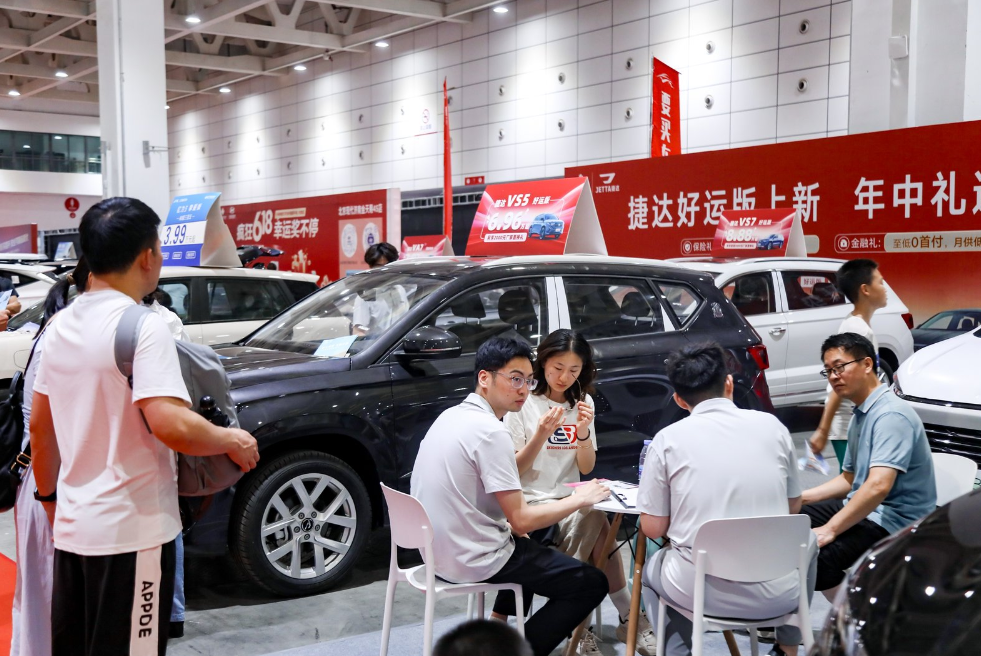
Core Viewpoint - The development of intelligent driving (smart driving) in the automotive industry is entering a critical turning point in 2025, shifting from aggressive marketing and promises of full automation to a more rational and realistic approach due to new regulations from the Ministry of Industry and Information Technology [1][2]. Industry Transition - The automotive industry is witnessing a transformation where companies are adjusting their marketing strategies to emphasize the "assistance" nature of smart driving rather than overpromising full automation capabilities [2][4]. - Traditional automakers like Volkswagen and Toyota have maintained a more cautious approach, focusing on safety and reliability rather than aggressive claims, which is now proving advantageous as the market stabilizes [4]. Consumer Perception - Consumer attitudes towards smart driving are divided; while there is some excitement, many remain cautious due to concerns about the maturity of the technology and its safety [12][14]. - A significant portion of consumers still view smart driving features as secondary to other factors such as price, brand reputation, and overall vehicle performance [9][11]. Marketing Adjustments - Sales representatives at recent auto shows have adopted a more restrained and factual approach when discussing smart driving features, moving away from exaggerated claims to clarify the limitations and necessary conditions for use [7][8]. - The shift in marketing strategy reflects a broader industry trend towards establishing a more realistic understanding of smart driving capabilities among consumers [8][14]. Safety Concerns - Despite the advancements in smart driving technology, many consumers express ongoing concerns about safety, often preferring to maintain manual control in complex driving situations [12][14]. - The industry is recognizing the need for patience and rationality from all stakeholders—manufacturers, regulators, and consumers—as smart driving evolves from a novel concept to a reliable aspect of safe transportation [14].
汽车销量跟踪:淡季提前来临
数说新能源· 2025-06-16 03:19
Market Overview - The market showed a "two-headed" trend during the May Day to Dragon Boat Festival period, but the customer flow (lead volume) gradually weakened after May Day, with a brief spike during the Dragon Boat Festival followed by another decline [1] - The passenger car sales off-season has returned to the pre-2020 model, with this year's off-season starting earlier in mid to late May, compared to early June in previous years [2] - The June market is expected to be weaker compared to May, with some brands potentially seeing short-term highlights due to new car launches or strong incentive policies, but the overall market is showing a clear downward trend month-on-month [3] Brand Sales Observations - BYD: Daily average orders have decreased by 10%-15% year-on-year, with retail pressure significant and main brand order volume maintaining at around 60,000 to 70,000 units [4] - Geely Galaxy: Achieved approximately 120,000 units in May, with a target of 120,000 units for June. Recent weekly orders are around 18,000 to 20,000 units due to pricing concerns [5] - Li Auto: The L6 new version launched in May, with weekly orders dropping to about 10,000 units after a spike during the Dragon Boat Festival [6] - AITO Wenjie: Recent orders mainly driven by the Greater Bay Area, with a decline in order volume when excluding orders from the Greater Bay Area and intermediaries [7] - Leap Motor: Orders remain relatively stable, with weekly orders around 8,000 to 9,000 units [8] - Zeekr: Orders are around 3,000 to 3,500 units [9] - XPeng: Total orders last week were about 11,000 units, with the MONA03 accounting for 6,000 to 7,000 units [10] - Tesla: Orders are highly volatile, with promotional measures leading to a rebound in orders [11] Outlook for the Second Half of the Year - The industry needs to endure the off-season in June and July, with some brands adjusting their semi-annual targets [13] - Fuel vehicles, especially B-class sedans/SUVs, may see a surge in sales around the half-year assessment [14] - Negative factors include tightening or halting of vehicle trade-in subsidies in cities like Zhengzhou, which may lengthen consumer decision-making cycles [15] - Consumer behavior shows a clear trend of downgrading, with a significant increase in A0-class electric vehicles, while mid-to-high-end vehicle consumption remains cautious [16] New Energy Vehicle Penetration and Competition - The penetration rate of new energy vehicles fluctuates between 50%-55%, with traditional fuel vehicles still showing resilience [17] - Fuel vehicles are favored for their cost-effectiveness, long-term stability, and durability, while electric vehicles face challenges due to rapid technological iterations and concerns over second-hand value [18] - Brands like Leap Motor and Geely are primarily capturing market share from BYD, with BYD's market share dropping from nearly 40% to 25%-28% [19] Policy Impact on Vehicle Purchase Tax - The expected reduction of the vehicle purchase tax exemption from 30,000 yuan to 15,000 yuan by 2026 will lower the taxable price threshold significantly [20] - The current average transaction price of passenger cars is around 168,000 yuan, with the new policy potentially covering about 75% of sales [20] Key New Vehicle Launches 1. XPeng G7: Positioned between G6 and G9, expected to sell 8,000 to 10,000 units monthly if priced reasonably [21][22] 2. Xiaomi YU7: High initial interest with a projected monthly sales of over 25,000 units [23][24][25][28] 3. Li Auto i8: Aiming for over 5,000 units monthly, with a competitive pricing strategy [29][30][31] 4. Li Auto MEGA Home Edition: High demand for the top configuration, with a unique market position [32] Export and Market Dynamics - BYD has shown strong export performance in regions like Europe, America, and South Asia due to its competitive pricing and parameter advantages [33] - The competition in the 300,000+ mid-to-large SUV market is primarily targeting the share of joint venture and foreign fuel vehicles [34] - The market capacity for fuel vehicles in 2024 is estimated at around 530,000 units, with new energy vehicles expected to capture an additional 100,000+ units [35]

科学评估体系构筑行业公信力 2025年一季度汽车品牌影响力指数正式发布
Zheng Quan Ri Bao Wang· 2025-06-15 12:44
Core Insights - The report highlights a significant shift in the automotive brand influence landscape in China, particularly in the passenger vehicle sector, where domestic brands have made historic breakthroughs, with six out of the top ten positions occupied by Chinese brands [1][3][5] Passenger Vehicle Market - BYD leads the passenger vehicle market with verified sales of 623,400 units, surpassing Volkswagen by 180,000 units, indicating a strong market dominance driven by its advancements in new energy technology [3] - Aito (问界) has established a new benchmark in brand reputation with an impressive 89.67% netizen voice share and only 29 complaints, showcasing its quality management as a model for high-end market strategies [3] - New entrants like Li Auto and Xpeng maintain a strong presence in the mid-market segment, while Xiaomi's vehicle has not yet matched its high media presence with corresponding sales figures [3] Commercial Vehicle Market - Jiangling Motors stands out in the light commercial vehicle sector, ranking first with a score of 684.22, despite having only 44% of the second-place competitor's media voice, demonstrating effective conversion of positive sentiment into sales [4] - The pickup truck market continues to see a concentration of market share, with Great Wall Motors dominating 47% of the total sales in the top ten, while Jiangling maintains a strong second position [4] - In the light truck segment, Foton leads with 91,900 units sold, capturing 34% of the market share, while the new energy player, Dongfeng, leads in electric vehicle discussions with a 72.18% netizen voice share [5] Industry Trends - The report indicates a core trend of transformation within the automotive industry, with domestic brands reshaping competitive dynamics in the passenger vehicle sector and local companies establishing dominance in the commercial vehicle market [5] - The upcoming data collection for the second quarter will continue to provide authoritative references for policy-making, corporate strategy, and investment decisions, reflecting the ongoing evolution of the Chinese automotive industry [5]