零食很忙

Search documents
大家都觉得日子难过,为什么这些品牌反而成了消费冠军?
创业家· 2025-07-21 10:10
Core Insights - The article emphasizes the importance of learning from Japan's "lost thirty years" to identify potential opportunities in the Chinese consumer market, particularly focusing on the emergence of new national brands and retail chains [4][18]. Group 1: Japanese Market Insights - Japan's experience during its economic stagnation highlights two key lessons: the continuous upgrade of consumer necessities and the rise of alternative retail formats such as convenience stores and discount shops [4][5]. - The shift in consumer behavior in Japan from luxury goods to value-oriented brands like Uniqlo illustrates a broader trend towards practicality and cost-effectiveness [4][5]. Group 2: Chinese Market Opportunities - The Chinese market is expected to see significant growth in the next two to three decades, with a focus on identifying new national brands and chain stores that cater to the evolving consumer landscape [6][18]. - The article notes that since 2016, the company has invested in over 20 firms, primarily in the food, beverage, home goods, and lifestyle sectors, with 15 companies generating over 1 billion in revenue and 5 exceeding 5 billion [15]. Group 3: Investment Strategy and Performance - The company has positioned itself as a leading consumer fund focused on offline retail, with investments resulting in over 25,000 community stores and more than 4,000 shopping center outlets [15]. - Notable investments during the pandemic, such as in Delmar, October Rice Field, and Pot Circle, have shown rapid growth, particularly in the food sector, indicating a structural opportunity in the market [16][15].


锅圈、钱大妈、零食很忙的“万店”是怎样炼成的?| 幕后投资大佬深度分享
创业家· 2025-07-14 10:07
Core Viewpoint - The article discusses the emergence of a new generation of retail chains in China, particularly focusing on the "ten thousand stores" model, which has transformed the retail landscape by emphasizing convenience, affordability, and efficiency in consumer goods distribution [4][11]. Group 1: Retail Innovations - The "ten thousand stores" model in China has seen the rise of several successful chains, including Mi Xue Bing Cheng, Wallace, and Luckin Coffee, with Mi Xue Bing Cheng leading with over 30,000 stores [4][6]. - The retail sector has shifted towards a model that combines community engagement with discount offerings, making it easier for consumers to access products [11]. Group 2: Case Studies of Successful Brands - Guoquan, which started with around 1,000 stores in 2019, has rapidly expanded to over 10,000 stores, focusing on frozen food retail, making hot pot dining more accessible and affordable for consumers [7]. - Snack brand "Zero Snacks" has also seen significant growth, surpassing 10,000 stores, and operates on a discount model that allows for lower prices while maintaining quality [8]. - Qian Dama, which specializes in fresh food with a unique discounting strategy, has grown from 200 stores and 600 million yuan in sales to over 3,000 stores and 10 billion yuan in sales [10]. Group 3: Market Dynamics - The shift in consumer behavior has led to a decline in sales for traditional snack brands like Three Squirrels, which saw a drop from 10 billion yuan to around 7 billion yuan, as consumers increasingly prefer discount stores [9]. - The article highlights the importance of adapting to consumer preferences, with many brands now focusing on creating tailored products for discount retail environments [9]. Group 4: Investment Strategy - The company emphasizes investing in essential goods and innovative business models, which are more likely to yield significant returns and create large companies [16]. - A strong business logic and competitive advantage are crucial for successful investments in the retail sector [17]. Group 5: Efficiency and Quality - The significance of commercial innovation lies in combining quality with efficiency, ensuring that consumers receive real value for their money [18][19].

长沙四家企业上榜2025全球“独角兽”
Chang Sha Wan Bao· 2025-06-27 02:21
Group 1 - The core viewpoint of the report is that despite a sluggish global economy, the number of unicorn companies has reached a record high of 1,523, representing a 5% increase from the previous year [1] - The total valuation of these unicorn companies is $5.6 trillion, reflecting a growth of 22% [3] - Among the 203 new unicorns, the United States leads with 108, while China has 36, indicating a strong performance from both countries [1] Group 2 - In China, Beijing has the highest number of unicorns at 75, while Shenzhen is noted as the fastest-growing city for unicorns [2] - Guangzhou ranks 11th globally with 24 unicorns, including 2 new additions this year [2] - The Guangdong-Hong Kong-Macao Greater Bay Area has 72 unicorns, accounting for 21% of the national total [2]
零食集合店零售模式分析:量贩式选品与会员体系构建
LINSHOU· 2025-06-10 03:35
Investment Rating - The report indicates a positive investment rating for the snack collection store industry, highlighting its rapid growth and market potential [26]. Core Insights - The snack collection store industry is characterized by a direct procurement model, offering a wide variety of products at competitive prices, with a significant market expansion projected [12][18]. - The industry has evolved through various phases, with notable growth in the number of stores and market size, particularly from 2019 to 2024 [22][26]. - The report emphasizes the importance of a well-structured membership system and effective product selection strategies to enhance customer loyalty and sales [54][135]. Summary by Sections 1. Industry Overview - Snack collection stores, also known as bulk snack stores, eliminate the distributor layer by sourcing directly from manufacturers, focusing on low prices and product diversity [12]. - The market size for snack collection stores in China is expected to grow from 4.08 billion yuan in 2019 to 104.59 billion yuan in 2024, capturing over 40% of the snack sales market [26]. 2. Bulk Selection Strategy - Effective product selection can attract more customers, with a mix of well-known brands and private label products to enhance store traffic and conversion rates [28][34]. - The strategy includes placing popular brands at prominent locations to draw customers while maintaining a higher margin on private label products [36][51]. 3. Membership System Construction - A robust membership system enhances customer loyalty by offering exclusive benefits such as discounts and priority access [54][57]. - The design of the membership system should be fair and incentivizing, with clear criteria for upgrading membership levels based on spending [60][61]. 4. Industry Competitive Landscape - The market is dominated by major players like Wanchen Group and Snack Very Busy, with significant store counts and market shares [82][84]. - Competitive strategies include aggressive market expansion and brand consolidation to enhance market presence [87][89]. 5. Consumer Demand Analysis - The primary consumer demographic includes younger generations (90s and 00s), with a strong preference for convenience and variety [90]. - Consumers are increasingly drawn to snack collection stores due to their competitive pricing and diverse product offerings, often perceiving them as more affordable than traditional supermarkets [92][102]. 6. Industry Development Trends - The industry is moving towards an integrated online and offline retail model, leveraging technology for personalized marketing and improved customer engagement [106][108]. - Future trends indicate a focus on quality, health, and personalized experiences, with an expected increase in market concentration [139].
5个湖南人,撑起中国零售创新半边天
阿尔法工场研究院· 2025-05-28 14:28
Core Viewpoint - Changsha has emerged as a dense incubator for new consumption in China, showcasing a vibrant ecosystem of innovation across various retail sectors, including tea drinks, snacks, and community group buying [1][3]. Group 1: Investment and Market Dynamics - In 2023, Changsha's consumer enterprises accounted for 8.4% of national financing, with a projected retail sales total of 579.77 billion yuan in 2024 [3]. - The city has a night economy that ranks second nationally, with the number of new consumption brands per ten thousand people exceeding that of first-tier cities by twofold [3]. - The snack sector alone has produced six listed companies, indicating a robust and innovative market landscape [3]. Group 2: Key Players and Innovations - **Xingsheng Youxuan**: Founded by Yue Lihua, it pioneered community group buying with a "pre-sale + self-pickup" model, leveraging a three-tier logistics system for efficient delivery [5][6]. - **Zero Snacks**: Founded by Yan Zhou, it has rapidly expanded to over 7,000 stores by focusing on low-cost, high-quality snacks, achieving a valuation of 25 billion yuan after a 240 million yuan Series A funding round [9][10]. - **Tea Yan Yue Se**: Founded by Lü Liang, it emphasizes cultural value and direct sales, achieving a valuation exceeding 20 billion yuan by 2021 and planning to expand to over 1,000 stores by 2025 [14][16]. - **Le Er Le**: Founded by Chen Zhenguo, it introduced a hard discount model, achieving significant sales growth and establishing a unique supply chain strategy that minimizes costs [21][22]. - **Wen He You**: Founded by Wen Bin, it combines dining with cultural experiences, creating a unique consumer environment that has attracted significant investment and attention [23][24]. Group 3: Market Trends and Future Outlook - The snack market is experiencing a compound annual growth rate of 114.6%, driven by innovative retail strategies that target lower-tier cities [10]. - The integration of local culture into retail experiences is becoming a key differentiator, as seen in the success of brands like Wen He You, which merges dining with cultural nostalgia [24]. - The entrepreneurial spirit in Changsha, characterized by resilience and local market understanding, is expected to continue driving innovation and growth in the retail sector [26][27].
零食界的“蜜雪冰城”,不能只做“薄利生意”
新消费智库· 2025-05-28 12:31
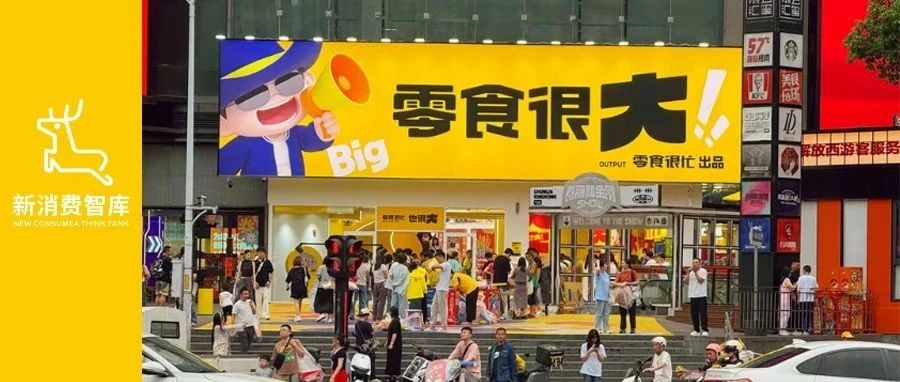
Core Viewpoint - The article discusses the rapid expansion and business model of the snack retail company "Ming Ming Hen Mang," highlighting its impressive growth metrics and the challenges it faces in maintaining profitability while competing in a price-sensitive market [3][4][5]. Group 1: Company Overview - "Ming Ming Hen Mang" achieved a retail sales figure of 55.5 billion RMB and a total revenue of 39.3 billion RMB in 2024, with over 14,394 stores nationwide [3][4]. - The company was formed by the merger of two snack giants, "Snacks Hen Mang" and "Zhao Yi Ming Snacks," which had previously raised significant venture capital [4][5]. - The merger has led to a combined store count of 6,500 before the merger, positioning "Ming Ming Hen Mang" as a dominant player in the snack industry [5][6]. Group 2: Business Model and Strategy - The company operates on a "low-margin, high-volume" model, similar to "Mi Xue Bing Cheng," focusing on rapid store expansion and competitive pricing [5][9]. - "Ming Ming Hen Mang" has a SKU count of at least 1,800 per store, which is double that of average supermarkets, and offers prices approximately 25% lower than similar products in offline supermarkets [6][12]. - The majority of its revenue (99%) comes from selling products to franchise stores, which enhances its bargaining power with suppliers and spreads operational risks [9][12]. Group 3: Financial Performance - From 2022 to 2024, the company's revenue grew from 4.29 billion RMB to 39.34 billion RMB, while its gross margin remained stable at around 7.5%-7.6% [13][12]. - The net profit margin increased slightly from 1.7% to 2.1% during the same period, indicating ongoing profitability challenges in the snack retail sector [12][13]. Group 4: Market Dynamics and Competition - The snack retail market is highly fragmented, with the top five retailers holding only 4.2% of the market share, suggesting significant opportunities for new entrants [16][17]. - The industry is currently experiencing a "price war," with competitors engaging in aggressive discounting strategies to attract consumers [18][16]. - "Ming Ming Hen Mang" is exploring new store formats and product categories to adapt to changing consumer preferences and market conditions [19][20]. Group 5: Future Outlook - The company plans to introduce 30 proprietary products to reduce reliance on wholesale margins and improve gross margins [14][15]. - The expansion into new categories, such as baked goods and frozen products, presents operational challenges and increases supply chain complexity [24][22]. - To succeed, "Ming Ming Hen Mang" must balance its low-price strategy with the need for supply chain efficiency and product innovation [24][15].
两个85后霸总组CP,一年干出555亿
创业家· 2025-05-22 10:33
Core Viewpoint - The article discusses the rapid growth and competitive dynamics of snack retail brands "Zhao Yiming Snacks" and "Snacks Are Busy," highlighting their recent merger and the implications for the snack retail market in China, particularly in county-level cities [6][39]. Group 1: Company Overview - "Zhao Yiming Snacks" and "Snacks Are Busy" are two emerging snack retail brands that have gained popularity in county-level cities, with a significant increase in store openings [6][39]. - The brands are led by two 85-year-old CEOs, Zhao Ding and Yan Zhou, who have transformed their businesses from traditional snack shops to modern retail chains [7][20]. Group 2: Business Growth and Strategy - "Zhao Yiming Snacks" was founded in 2019 and quickly expanded from 84 stores in 2022 to over 2,500 stores [31]. - "Snacks Are Busy" has over 4,000 stores as of October 2023, supported by significant funding from investors [30][31]. - Both brands focus on low-cost snack offerings, with prices averaging 7%-40% lower than traditional supermarkets [36]. Group 3: Market Dynamics - The merger of "Zhao Yiming Snacks" and "Snacks Are Busy" into "Ming Ming Very Busy" aims to reduce internal competition and enhance market presence [37][39]. - The combined entity is expected to leverage their strengths in different market segments, with "Snacks Are Busy" focusing on acquisitions and "Zhao Yiming Snacks" on expanding in lower-tier cities [39]. Group 4: Consumer Behavior and Market Trends - The snack retail market is witnessing a shift in consumer preferences, with a high repurchase rate of 75% for members of "Ming Ming Very Busy," indicating strong customer loyalty [41]. - The article suggests that the demand for snacks may surpass that of beverages like milk tea, reflecting changing consumer habits in county-level markets [44]. Group 5: Financial Performance - "Ming Ming Very Busy" reported retail sales of 55.5 billion yuan in 2024, with over 1.6 billion transactions [47]. - The company is positioned as a leading player in the snack retail sector, with plans for further expansion following its recent IPO application [48][49].

海通国际:“省钱超市”模式试点 量贩零食门店仍有巨大空间
智通财经网· 2025-05-19 07:02
Core Insights - The "省钱超市" model focusing on bulk snacks and trendy toys is being piloted in multiple regions, with the goal of expanding customer demographics, increasing store foot traffic, and enhancing average transaction value [1][6] - The sales performance in Chengdu is expected to decline year-on-year in 2024 due to immature supply chains and slower turnover rates for non-snack categories compared to snacks [1][6] Group 1: Market Trends - A special event hosted by Haitong International on May 15, 2025, will feature experts from the snack consumption sector to discuss industry insights and trends, covering various regions including Hunan, Hubei, Jiangsu, Anhui, Chengdu, and Chongqing [2] - The market for snack stores is categorized into four types: A+ core business district stores, community stores, campus stores, and town stores, with A+ stores requiring the highest initial investment and yielding the highest daily store efficiency [3] Group 2: Product Strategy - The expansion of SKU and category diversification is aimed at attracting a broader consumer base, with the customer demographic shifting from primarily young women to include families, children, and older adults [4] - The average gross profit margin (GPM) for private label and white label products is significantly higher than that of traditional brands, indicating a potential for increased profitability as these products gain market share [5] Group 3: Growth Potential - There is substantial potential for growth in the snack store market, particularly in underdeveloped and blank markets, with many areas still lacking sufficient snack retail presence [7] - Brands are leveraging established supply chain networks and logistics capabilities to enhance service delivery in remote areas, with some brands already achieving nationwide warehouse layouts and same-day delivery systems [7]
白牌崛起,原因几何?【和君新消费】
Sou Hu Cai Jing· 2025-05-14 16:33
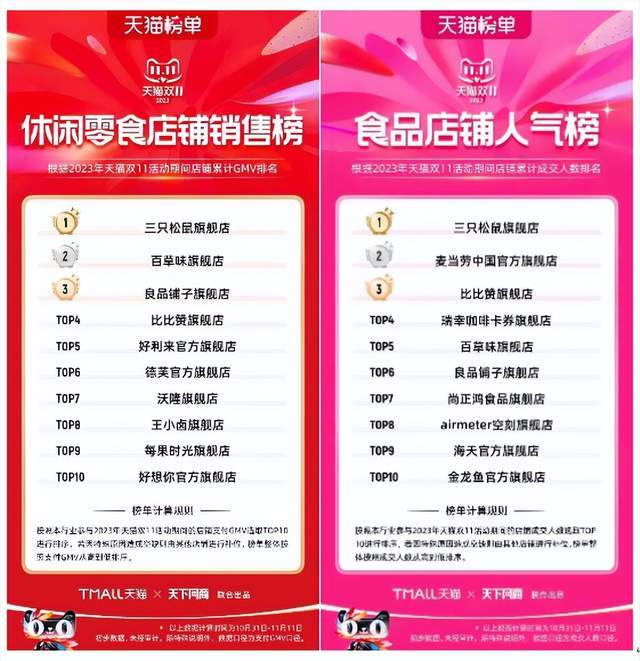
Core Insights - The rise of white-label brands is a significant trend in the consumer market, with these brands gaining traction in both online and offline retail environments [3][21] - White-label products are characterized by low prices, weak brand recognition, and high standardization, making them appealing to cost-conscious consumers [5][6][7] - The shift in consumer behavior towards value-oriented purchasing is driving the growth of white-label brands, particularly among younger demographics in urban areas [10][18][19] Group 1: Market Performance - In the 2023 Double 11 sales event, the brand "Bibi Zan" ranked fourth in the leisure snack store sales list and third in the food store popularity list, showcasing the competitive performance of emerging white-label brands [1] - White-label products accounted for 80% of sales revenue in discount stores and bulk snack shops, with a gross margin of 30%, indicating their profitability and market penetration [3][8] Group 2: Characteristics of White-label Brands - White-label brands focus on low pricing as a key factor for survival in lower-tier markets, emphasizing that without low prices, there is no consumer traffic [5] - These brands do not prioritize brand recognition, allowing them to operate with lower marketing costs and focus on high sales volume to achieve profitability [6][12] Group 3: Consumer Demographics - White-label products are particularly popular among consumers in third-tier cities and below, where they dominate sales in retail environments [8] - In first and second-tier cities, there has been a 50% increase in white-label purchases among consumers aged 20-35, reflecting a shift in purchasing habits towards these products [10] Group 4: Drivers of Growth - The rise of white-label brands is supported by various e-commerce platforms that facilitate consumer access and trust, helping these brands to reach a wider audience [16][17] - Changes in consumer attitudes post-pandemic have led to a more cautious approach to spending, with consumers seeking value and functionality over brand prestige [18][19] Group 5: Challenges and Future Outlook - While the growth of white-label brands is notable, many are currently following market trends rather than leading them, posing a risk of short-lived success [21] - Established brands must adapt their marketing strategies to compete effectively against the rising influence of white-label products, or they may face significant challenges [21]
未来十年,中国零售渠道会有哪些变化?
Hu Xiu· 2025-05-12 03:31
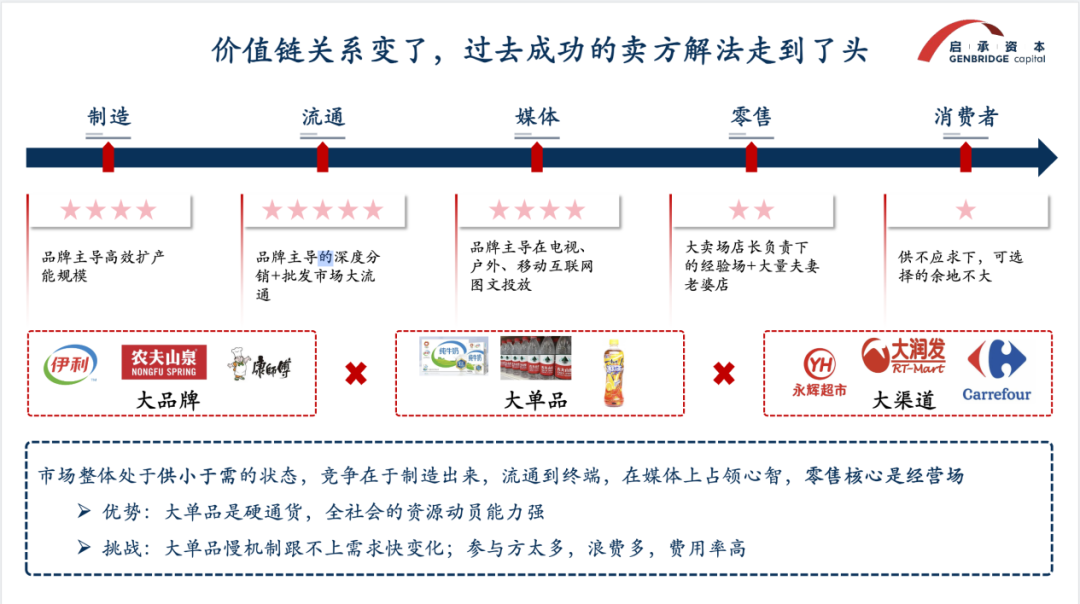
Group 1 - The core viewpoint of the article emphasizes the transition of the Chinese retail market from an incremental growth phase to a stock-based market, leading to significant changes in consumer behavior and retail strategies [5][6][10] - The company, Qicheng Capital, has focused on investing in the consumer sector since its establishment in 2016, targeting "new generation national brands" and "new generation national chains" [1][3] - The investments made by Qicheng Capital have collectively served 100 million families in China, indicating a substantial market impact [2] Group 2 - The article discusses the emergence of a "buyer solution" in the retail landscape, where the power dynamics shift from brands to retailers and consumers, reflecting a change in the value chain [11][12][14] - The current market features approximately 6 million stores in China, with a significant number being non-chain enterprises, suggesting a long way to go for the consolidation of retail chains [13] - Predictions indicate that in ten years, the market may evolve to include over 2000 large stores and 300,000 small stores centered around buyer solutions [15] Group 3 - The article highlights the importance of category management and the need for retailers to adapt to consumer demands, moving away from brand-centric strategies to a focus on category performance [17][24] - It notes that the consumer decision-making process is becoming increasingly complex, with various factors influencing purchasing behavior across different channels [30][32] - The blending of food and retail sectors is creating new opportunities for innovation, as seen in the emergence of hybrid business models [36][38] Group 4 - The article emphasizes the significance of understanding consumer segmentation and the need for retailers to tailor their offerings to specific consumer profiles [42][44] - It discusses the evolving relationships between brands and retailers, advocating for long-term partnerships based on mutual understanding and shared goals [43][45] - The future of the market is expected to be characterized by continuous innovation and the reconfiguration of product categories to meet diverse consumer needs [39][41]