
李宁

Search documents
2026年-大消费策略展望
2025-12-29 01:04
Summary of Key Points from Conference Call Records Industry Overview - **Consumer Sector Outlook for 2026**: The consumer sector is expected to recover significantly, driven by a focus on domestic demand and policy support, particularly in service consumption and new product categories. The real estate sector's negative impact is diminishing, with core CPI showing six months of recovery [2][5][8]. Core Insights and Arguments - **Long Bull Market Prediction**: A long bull market similar to 2016-2019 is anticipated to begin in the second half of 2026, led by AI-driven new products, service consumption, overseas opportunities, and durable goods. The first half of 2026 will see strong performance in overseas markets, while domestic demand will gain attention in the latter half [1][5][6]. - **Policy Support for Consumer Spending**: The introduction of a resident income increase plan by the central economic work conference, along with the appreciation of the RMB and favorable trade policies, will provide a solid foundation for consumer spending in the coming years [1][9][10]. - **AI and 3D Printing Opportunities**: The AI and 3D printing sectors are poised for significant growth, with opportunities across the entire supply chain, including leading companies and innovative hardware products like AI glasses and smart mattresses [1][12]. Key Sectors and Companies to Watch - **Service Consumption**: Focus on service consumption growth in 2026, particularly in travel and tourism, as well as the elderly care sector, which is expected to see increased demand [3][15]. - **Alcohol and Snack Industries**: The liquor sector, particularly major brands like Moutai, is expected to maintain strong performance due to price stability measures. The snack sector is also showing promise, with companies like Wanchen and Yanjin expected to perform well during the pre-Spring Festival period [16][20][24]. - **Elderly Economy**: The silver economy is anticipated to grow, with companies like Sanxia Tourism and Aima Technology showing potential in the elderly travel and mobility sectors [15][11]. Investment Logic and Recommendations - **Consumer Sector Investment**: The consumer sector is seen as undervalued, with significant room for valuation recovery. The focus should be on companies benefiting from policy support and improving domestic demand [2][30]. - **Emerging Technologies**: Investment opportunities in AI and new technologies, particularly in 3D printing and AI-enhanced products, are highlighted as key growth areas [12][35]. - **Overseas Expansion**: Companies with strong overseas branding and supply chain capabilities are recommended for investment, especially in light of the RMB appreciation [13][31]. Additional Insights - **Real Estate Market Impact**: The negative impact of the real estate market on consumer spending is expected to be limited, as government measures to boost public spending and social security are likely to stabilize purchasing power [7][8]. - **Consumer Market Drivers**: Key drivers for the consumer market include urbanization, rising GDP per capita, and demographic shifts, particularly the aging population, which will influence consumption patterns [10][11]. - **Food and Beverage Sector**: The snack and beverage sectors are expected to benefit from new retail models and consumer trends, with specific companies recommended for their growth potential [20][24][27]. This summary encapsulates the essential insights and recommendations from the conference call records, providing a comprehensive overview of the anticipated trends and investment opportunities in the consumer sector for 2026.
国信证券晨会纪要-20251229
Guoxin Securities· 2025-12-29 01:00
Group 1 - The cleanroom engineering sector has seen significant stock price increases, with key players like Yaxing Integration rising by 74% and Shenghui Integration by 60%, driven by the structural changes in capital expenditure due to AI infrastructure development [8] - The demand for cleanroom construction is expected to surge due to the explosive growth in overseas AI computing power, making cleanroom construction a critical bottleneck for global AI capacity expansion [8] - Companies like Shenghui Integration and Yaxing Integration benefit from their unique position as the only overseas operating platforms for their Taiwanese parent companies, sharing technology and customer resources [8] Group 2 - Huatu Shanding has transformed its focus to examination training, with 2024 revenue projected to surpass that of Zhonggong Education, becoming the industry leader [9][10] - The public examination boom is driving demand in the examination training sector, with the number of candidates for the national examination expected to increase by 9% in 2026, surpassing graduate school entrance exams for the first time [9] - The company has a relatively lighter historical burden compared to competitors, allowing it to seize opportunities in the post-agreement class era, with revenue expected to exceed that of Zhonggong Education in 2024 [10] Group 3 - The "Exam Direct Train" initiative aims to enhance pass rates significantly through immersive teaching methods and unlimited study opportunities, targeting the underserved lower-tier markets [11] - Strategic partnerships, such as the one with Fenbi, are expected to leverage resources and improve the competitive landscape in the examination training industry [11] - The company forecasts net profits of 3.5 billion, 4.3 billion, and 5.6 billion yuan for 2025-2027, reflecting strong growth potential and a favorable market position [12]
龙行天下启动主板IPO进程,这家安踏、李宁的代工商需警惕估值陷阱
Xin Lang Cai Jing· 2025-12-29 00:15
Core Viewpoint - Longxing Tianxia Technology Co., Ltd. has officially initiated its IPO process, aiming to raise capital for expansion and modernization in the competitive sports footwear industry [1][4]. Group 1: Company Overview - Longxing Tianxia, founded in 1998 and headquartered in Dongguan, specializes in the development, design, production, and sales of sports footwear [1]. - The company reported a revenue of 4.211 billion yuan in 2023, projected to increase to 5.588 billion yuan in 2024, representing a year-on-year growth of 32.71% [1]. - The net profit after deducting non-recurring items is expected to rise from 194 million yuan to 265 million yuan [1]. - The overall gross margin is forecasted to decline from 19.18% in 2023 to 17.56% in 2024 [1]. Group 2: Business Composition - The company's revenue is heavily reliant on a few key clients, with the top five clients contributing 89.12% of sales in 2024 [2]. - Li Ning is the largest client, accounting for 25.01% of sales, followed by Under Armour (23.68%), Adidas (17.49%), Decathlon (13.80%), and Anta Group (9.12%) [2]. - Running shoes are the primary revenue source, generating 2.068 billion yuan in 2024, which is approximately 37% of total revenue [2]. Group 3: Industry Perspective - The sports footwear manufacturing industry is evolving towards specialization and deeper outsourcing, presenting opportunities for companies with scale and R&D capabilities [3]. - However, the industry is highly competitive, with many participants facing growth pressures and profit margin challenges [3]. - Longxing Tianxia is considered a mid-sized growth company, with a production capacity of nearly 50 million pairs, significantly lower than industry giants like Huayi Group and Yue Yuen Industrial [3]. Group 4: Global Production and Trade Environment - Longxing Tianxia has been shifting production capacity overseas since 2016, establishing a base in Vietnam and planning a new facility in Indonesia [4]. - The sales proportion from the Vietnam production base is expected to increase from 25.68% in 2023 to 39.32% in 2024 [4]. - The changing international trade environment and potential trade barriers pose uncertainties for this global production strategy [4]. Group 5: IPO Objectives and Future Challenges - The IPO aims to leverage capital market resources to overcome development bottlenecks and expand production capacity [4]. - The company plans to enhance automation and digital transformation in its factories, which requires significant funding [4]. - Future challenges include high customer concentration, intensified industry competition, declining gross margins, and external economic fluctuations [5].

2025年第51周:服装行业周度市场观察
艾瑞咨询· 2025-12-29 00:05
Group 1: Innerwear Market Overview - The innerwear industry in China is experiencing "micro-growth and strong differentiation" in the first half of 2025, with a slow recovery in the consumer market [3] - The impact of consumption downgrade has led to weak demand in the mid-to-high-end segment, resulting in many companies facing the challenge of "increasing revenue without increasing profit," with net profit declines generally exceeding revenue drops [3][4] - Offline store optimization is significant, with companies like Anlifang closing 50 stores, while online channels are becoming growth engines, as evidenced by Urban Beauty's e-commerce repurchase rate of 25% [3] Group 2: Luxury Brands in China - The global personal luxury goods market is expected to remain stable in 2025, but the Chinese market is projected to contract by 3-5%, making the fourth quarter particularly crucial [5] - Since October, luxury brands have significantly increased their activities in China, including the opening of flagship stores and immersive experience events, with over 38 brands renovating or opening stores [5] Group 3: Brand Dynamics - Biyinlefen is undergoing a transformation to attract younger high-net-worth individuals, moving from a focus on the "golf" demographic, but faces challenges with increased sales expenses and inventory pressure [6] - Hailan Home has initiated an "A+H" dual-platform capital layout to address performance fluctuations and inventory pressures, with online revenue only accounting for 20.54% of total revenue [7] - Lilang is leading the drafting of the first domestic group standards for water-repellent down jackets, aiming to promote functional and professional development in the down jacket market [9] Group 4: Investment in Gold Market - The handmade gold art brand "Linzhao Jewelry" has received a strategic investment of over 100 million yuan, which will be used for product innovation and brand upgrades, emphasizing original design and craftsmanship [10]


可选消费W51周度趋势解析:A/H零食和零售板块表现亮眼,海外NIKE拖累运动服饰表现-20251228
Haitong Securities International· 2025-12-28 14:45
Investment Rating - The report assigns an "Outperform" rating to multiple companies including Nike, Midea Group, JD Group, Haier, Gree Electric, Anta Sports, and others, while Lulu Lemon is rated as "Neutral" [1]. Core Insights - The A/H snack and retail sectors have shown strong performance, while overseas Nike has negatively impacted sportswear performance [4][11]. - The report highlights a recovery in overseas consumer sectors and anticipates the implementation of supportive consumption policies in the A/H markets [3]. Performance Review by Sector - **Snacks**: The snack sector saw a weekly increase of 5.7%, with companies like Qiaqia Food and Three Squirrels rising by 6.0% and 7.5% respectively. The performance is attributed to seasonal sales and expectations for new products in Q1 2026 [5][13]. - **Retail**: The retail sector increased by 2.3%, driven by the rapid expansion of Wancheng Group's stores and positive same-store sales growth [6][14]. - **Overseas Cosmetics**: This sector rose by 2.4%, with notable increases from ELF Beauty and Estée Lauder [6][14]. - **Luxury Goods**: The luxury sector increased by 0.8%, with Samsonite benefiting from high-end consumer recovery [6][14]. - **Domestic Sportswear**: This sector experienced a decline of 0.3%, with Li Ning showing a 7.5% increase due to the opening of a flagship store [6][14]. - **Gold and Jewelry**: This sector fell by 1.9%, with Chow Tai Fook and other companies facing price increases and market volatility [6][14]. - **Overseas Sportswear**: This sector declined by 2.6%, primarily due to Nike's poor performance, which saw a 13.0% drop [6][14]. Valuation Analysis - The report indicates that most sectors are currently valued below their average over the past five years. For instance, the expected PE for the overseas sportswear sector is 31.2 times, which is 59% of its historical average [9][15]. - Other sectors such as domestic sportswear, gold and jewelry, and luxury goods also show lower expected PE ratios compared to their historical averages, indicating potential investment opportunities [9][15].
纺织服饰周专题:Lululemon发布FY2025Q3季报,公司营收增长7%
GOLDEN SUN SECURITIES· 2025-12-28 08:15
Investment Rating - The report maintains a "Buy" rating for several companies in the textile and apparel sector, including Anta Sports, Li Ning, and Shenzhou International, with corresponding PE ratios for FY2026 of 14, 18, and 11 respectively [4][9][21]. Core Insights - Lululemon's FY2025 Q3 revenue increased by 7% year-on-year to $2.6 billion, with a notable 33% growth in international business, particularly in mainland China, which saw a 46% increase [1][12]. - The report emphasizes the resilience of the sports footwear and apparel sector amidst a volatile consumption environment, predicting long-term growth potential [3][19]. - The report highlights the expectation of improved orders in the apparel manufacturing sector for 2026, driven by healthy inventory levels and anticipated replenishment from downstream [19][20]. Summary by Sections Lululemon's Performance - Lululemon's Q3 revenue reached $2.6 billion, with a 7% year-on-year growth, while gross profit increased by 2% to $1.4 billion, although gross margin decreased by 2.9 percentage points to 55.6% due to higher tariffs and promotional discounts [1][12]. - The company expects FY2025 revenue growth of 4%, with a potential increase of 5% to 6% when adjusted for a comparable 52-week basis [1][12]. Regional Performance - In the Americas, Q3 revenue declined by 2%, with the U.S. down 3% and Canada down 1%, while the international segment grew by 33%, driven by a 46% increase in mainland China [2][16]. - The outlook for FY2025 suggests a stable performance in the Americas, with expected revenue changes between a decline of 1% to flat [2][16]. Investment Recommendations - The report recommends high-quality stocks in the sports footwear and apparel sector, including Anta Sports and Li Ning, while also suggesting attention to companies like Nike's Greater China retailer, Tmall, which has a PE of 14 for FY2026 [3][19]. - In the apparel manufacturing sector, Shenzhou International and Huayi Group are highlighted as attractive investments due to their competitive valuations and positive customer trends [19][20]. Market Trends - The textile and apparel sector is expected to outperform the broader market, with a focus on companies that demonstrate strong inventory management and growth potential [3][19]. - The report notes that the textile and apparel sector has underperformed compared to the broader market indices, indicating potential for recovery [23].


可口可乐出售 Costa 遇阻;红杉中国确认收购 Golden Goose;李宁买下的“火柴棍”上海开出首店|品牌周报
36氪未来消费· 2025-12-28 06:08
Group 1: Coca-Cola and Costa Sale - Coca-Cola's sale of Costa is facing significant challenges, with a reported risk of the deal collapsing due to a £1 billion price gap between Coca-Cola's asking price of £2.1 billion and TDR Capital's expectations [3] - The sale is being influenced by Costa's poor performance, with revenue declining since its acquisition in 2018 when it generated £1.3 billion, and only a modest increase in store count from 3,800 to 4,200 expected by September 2025 [4] - Coca-Cola's strategic focus has shifted towards divesting low-revenue subsidiaries like Costa, which has not met growth expectations in the competitive coffee market [4] Group 2: Li-Ning and Haglöfs - Li-Ning has opened the first global flagship store for the Swedish outdoor brand Haglöfs in Shanghai, showcasing a range of outdoor gear and apparel [5] - The partnership between Li-Ning and Haglöfs began in 2023 when Haglöfs was acquired by a fund in which Li-Ning is a limited partner, leading to a joint venture for sales and marketing in Greater China [6] - Haglöfs plans to expand rapidly in China, having opened 21 stores within a year, but its success in the high-end outdoor market remains to be seen [6] Group 3: Sequoia Capital and Golden Goose - Sequoia Capital has confirmed its acquisition of a controlling stake in the Italian luxury sneaker brand Golden Goose for €2.5 billion (approximately ¥206 billion) [7] - Golden Goose has shown strong performance, with revenue increasing from €266 million in 2020 to €655 million in the 2024 fiscal year, and plans for further growth in the Asia-Pacific region [8] - The brand's previous IPO plans were delayed due to poor European market conditions, leading to the partnership with Sequoia Capital as an alternative growth strategy [8] Group 4: Anta and Instant Retail - Anta has partnered with Taobao Flash Sale to enable over 1,000 stores nationwide to support online orders and rapid delivery, with plans to expand to over 4,000 stores by 2026 [9] - This move is part of Anta's broader strategy to enhance its omnichannel retail approach, addressing the growing demand for instant retail solutions [9][10] - The instant retail market is projected to exceed ¥1 trillion by 2025, with significant growth in the sports category, as evidenced by a 100% year-on-year increase in sales for sports products on Meituan Flash Sale [10] Group 5: PepsiCo and New Product Launch - PepsiCo has launched a new sugar-free strawberry milkshake-flavored cola in China, leveraging successful overseas experiences while tailoring the product to local consumer preferences [12] - The product has generated significant social media buzz and sales momentum, indicating a strong market reception [12] Group 6: Meituan and Burger King Collaboration - Meituan's "Pin Hao Fan" is collaborating with Burger King to develop customized meal packages, focusing on consumer preferences and optimizing the supply chain [13] - This partnership aims to enhance the dining experience by offering value-driven meal options that cater to evolving consumer tastes [13] Group 7: Birkenstock's Financial Performance - Birkenstock reported a 16.2% revenue increase to €2.097 billion in the 2025 fiscal year, with a notable 31% growth in the Asia-Pacific market [18] - The company's performance was driven by a 12% increase in sales volume and a 5% rise in average selling price, reflecting effective product strategy [18] Group 8: Taikoo Coca-Cola Leadership Change - Taikoo Group announced the resignation of Patrick Healy as the executive director and chairman of Taikoo Coca-Cola, with a successor appointed to take over in May 2024 [19] Group 9: KAILAS Controversy - KAILAS, a domestic outdoor brand, faced backlash over significant price differences between similar products, leading to consumer concerns about pricing strategies [20]



李宁(02331.HK):发布全新系列产品重拾成长
Ge Long Hui· 2025-12-28 06:08
Core Insights - Li Ning has opened its first global "Dragon Store" in Beijing's Sanlitun Taikoo Li, marking a significant milestone for the brand and a key practice in retail channel upgrade [1] - The launch of the "Honor Gold Standard" product series is designed to create a strong synergy with the new store format, enhancing consumer experience [1] Group 1: Dragon Store and Product Launch - The Dragon Store focuses on three themes: "Award Moments," "Competitive Moments," and "Life Moments," aiming to provide a space that resonates with sports spirit and cultural exchange [1] - The "Honor Gold Standard" series features a minimalist design philosophy with high-quality materials and ergonomic cuts, suitable for urban life and multifunctional wear [2] Group 2: Product Features and Market Positioning - The "Honor Gold Standard" footwear line emphasizes the spirit of "refining into gold," with black and white gold color schemes targeting urban consumers seeking quality [2] - New product lines "Super" and "Conquer" are introduced, with the "Super Burn" series inspired by the shoes worn by Li Ning during the 2008 Beijing Olympics, incorporating advanced cushioning technology [2] Group 3: Financial Projections - The company maintains its profit forecast for 2025-2027, expecting revenues of 29.1 billion RMB, 30 billion RMB, and 31.1 billion RMB, with net profits of 2.5 billion RMB, 2.7 billion RMB, and 2.9 billion RMB respectively [2]
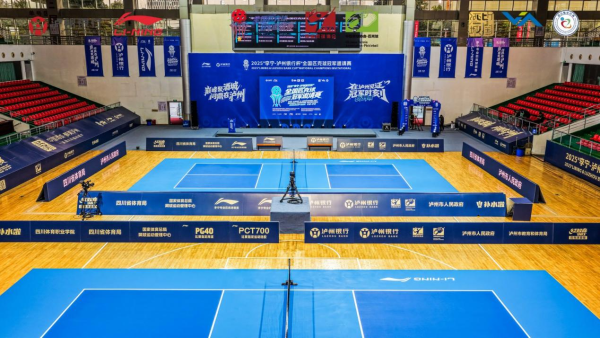
全国匹克球冠军邀请赛泸州开赛
Xin Lang Cai Jing· 2025-12-28 05:00
Group 1 - The event "2025 Li Ning-Luzhou Bank Cup" is the first national pickleball championship held in Luzhou, which is seen as a significant boost for the city's sports development and aligns with high-quality urban development [2] - Luzhou's officials emphasize that pickleball, with its inclusive nature, is becoming an important medium for connecting communities, promoting health, and driving the sports industry [2] - The event is recognized as a validation of Sichuan's achievements in pickleball and is viewed as an opportunity to promote the sport's high-quality development [4] Group 2 - The China Tennis Association highlights the event's goal of promoting urban development through sports, aiming to create a widely participated, clearly tiered, and well-branded event [4] - The association plans to continue advancing the social, standardized, and systematic development of pickleball, enhancing the event structure to make it a new driving force for public health and social cohesion [5] - To enrich the event experience, the organizing committee has planned a series of supporting activities, including "Champion Training Camp," "Champions in Schools," and "Champion Luzhou Tour," allowing participants to enjoy the competitive spirit while experiencing Luzhou's unique culture and natural beauty [5] Group 3 - The event is organized by the National Sports General Administration's Tennis Management Center, China Tennis Association, Sichuan Provincial Sports Bureau, and Luzhou Municipal Government, with support from various local institutions and sponsors [7]
耐克在华失速 高层坦言需调整策略
Zhong Guo Jing Ying Bao· 2025-12-28 04:57
Core Viewpoint - Nike is facing significant challenges in the Greater China market, necessitating a strategic overhaul to enhance brand differentiation and adapt to local consumer insights [1][3]. Financial Performance - For Q2 of FY2026 (September-November 2025), Nike reported total revenue of $12.427 billion, a year-on-year increase of approximately 1%, while net profit fell to $0.792 billion, a decline of 32% [1]. - Revenue from the Greater China region was $1.423 billion, down about 17% year-on-year, with direct sales (Nike Direct) declining by 18% and digital sales (Nike Digital) dropping by 36% [1]. - Earnings before interest and taxes (EBIT) in the Greater China region halved, decreasing by 49% [1]. Challenges Faced - Nike's management highlighted several ongoing challenges in the Greater China market, including decreased foot traffic, lower sell-through rates, and aging channel inventory [2]. - The brand's frequent discounting in digital channels has weakened its market influence, leading to increased discount rates, higher return rates, and rising costs associated with inventory clearance [2]. - In the fiscal quarter ending August 31, 2025, revenue in the Greater China region also declined to $1.512 billion, a 10% year-on-year drop [2]. Strategic Adjustments - Nike is implementing various measures in the Chinese market, including store upgrades, a focus on sports, reduced promotions, self-service inventory clearance, and adjusted purchasing plans [2]. - Total inventory has decreased by double digits compared to the previous year, with a 20% reduction in inventory items [2]. - Despite a 35% year-on-year drop in sales during the "Double 11" shopping festival, management indicated this was in line with their expectations [2]. Organizational Changes - Nike is undergoing a structural transformation, eliminating the positions of Chief Technology Officer and Chief Commercial Officer, while creating a new Chief Operating Officer role [3]. - The new COO will oversee end-to-end operations, including the technology department, and regional leaders will report directly to the CEO [3]. - The company is reducing manpower in stores and enhancing the management of product displays and retail presentation [3]. Competitive Landscape - The decline in Nike's performance in China is attributed to increasing competition, with local brands capturing approximately 60% of the market share among the top 20 brands [5]. - The 2025 version of a report by McKinsey and WFSGI indicates that traditional sports brands have lost 3% of market share from 2019 to 2024, while challenger brands are rising through targeted cultural marketing and omnichannel strategies [5]. - Local brands like Anta and Li Ning are gaining traction by investing in R&D and aligning closely with Chinese cultural symbols, creating a new consumer paradigm that emphasizes quality, cultural recognition, and price advantages [6]. Market Dynamics - The rise of domestic sports brands and the outdoor market is exerting pressure on Nike's market position [6]. - Local brands are perceived to better understand consumer psychology, focusing on product performance, unique design, and alignment with consumer values [6]. - Nike's recent product strategy has been criticized for being rigid, with a tendency towards luxury pricing, which contrasts with the more competitively priced offerings from local brands [6].
