立高食品

Search documents
寻找中报可能的超预期
Huachuang Securities· 2025-07-23 06:19
Group 1: Earnings Forecast Overview - The earnings forecast for the mid-year report shows a positive rate of 44%, with high proportions in non-bank financials, non-ferrous metals, and electronics sectors[4] - A total of 1,564 A-share listed companies disclosed their 2025 mid-year earnings forecasts, with 690 companies expecting growth and 869 companies expecting declines[5] - The overall net profit growth rate calculated using the disclosed companies is 75%[5] Group 2: Sector Performance - The leading sectors in terms of positive forecasts include electronics (73 companies), chemicals (59 companies), and machinery (56 companies)[10] - Conversely, the sectors with the highest number of negative forecasts are chemicals (72 companies), pharmaceuticals (61 companies), and machinery (55 companies)[10] - The forecasted earnings for 2025 show improvements in financial sectors, while consumer sectors are expected to weaken[16] Group 3: Historical Comparison - The 2025 mid-year positive forecast rate of 44% is slightly lower than 47% in 2024 and 48% in 2023, remaining consistent with 2022[13] - The proportion of companies with upward revisions to their earnings forecasts has increased significantly, reaching 76% as of July 21, 2025, compared to 39% in April[13] Group 4: Profit Changes in Industrial Enterprises - Industrial profits have shown significant improvement, particularly in upstream cyclical industries such as fuel processing and non-metallic minerals, with profit growth rates improving from Q1[17] - The manufacturing sector has also seen slight improvements, particularly in electrical machinery and furniture manufacturing[17] Group 5: Stock Recommendations - A strategy has been developed to identify stocks likely to exceed expectations in the mid-year report, including Great Wall Motors, Haoneng Co., and Midea Group[19]
立高食品(300973):拓展暑期冰品市场,发力餐饮和商超渠道
Orient Securities· 2025-07-22 13:15
Investment Rating - The report maintains an "Accumulate" rating for the company, with a target price of 52.92 CNY based on a 28x PE for 2025 [2][5][9]. Core Insights - The company is expanding its summer ice cream market and focusing on restaurant and supermarket channels, which are expected to drive growth [1][8]. - The introduction of new ice cream products is anticipated to significantly boost the ice cream business, addressing seasonal sales challenges for downstream baking stores [8]. - The company is leveraging its star products to penetrate the North American market, with promising growth in international business [8]. - The multi-channel strategy is showing potential, with notable performance in restaurant and supermarket channels contributing to revenue growth [8]. Financial Forecast and Investment Recommendations - The company’s earnings per share (EPS) estimates for 2025-2027 are adjusted to 1.89 CNY, 2.26 CNY, and 2.62 CNY respectively, reflecting a downward revision due to increased competition and channel adjustments [2][9]. - Revenue projections for 2023-2027 show a growth trajectory, with expected revenues of 3,499 million CNY in 2023, increasing to 5,384 million CNY by 2027, representing a compound annual growth rate (CAGR) of approximately 10% [4][11]. - The net profit attributable to the parent company is forecasted to grow from 73 million CNY in 2023 to 443 million CNY in 2027, indicating a strong recovery and growth potential [4][11]. Financial Metrics - The company’s gross margin is projected to improve from 31.4% in 2023 to 33.3% in 2027, while the net margin is expected to rise from 2.1% to 8.2% over the same period [4][11]. - The return on equity (ROE) is anticipated to increase from 3.2% in 2023 to 13.4% in 2027, reflecting enhanced profitability and efficient capital utilization [4][11].

拟13亿赴澳洲建厂,三全食品海外寻增
Bei Jing Shang Bao· 2025-07-22 11:59
Core Viewpoint - Sanquan Foods plans to establish a wholly-owned subsidiary in Hong Kong and subsequently invest approximately AUD 280 million (around RMB 1.3 billion) to build a production base in Australia, aiming to enhance its global strategic layout [2][3]. Investment and Expansion - The investment will account for 30% of the last year's audited net assets and will be used for setting up and operating overseas companies, purchasing fixed assets (including factory purchases, R&D center construction, equipment procurement, fully automated cold storage construction, and cold chain logistics vehicles), infrastructure renovation, marketing system development, and working capital [2]. - The primary target markets for this overseas expansion are Australia, New Zealand, and Southeast Asia, which are characterized by high consumer spending and low competition density, providing significant growth potential [3]. Financial Performance - In 2023, Sanquan Foods experienced a revenue decline of 5.09% and a net profit decrease of 6.55%, with further declines projected for 2024, where revenue and net profit are expected to drop by 6% and 27.64%, respectively [3][4]. - The company's main products, including dumplings, tangyuan, and zongzi, saw revenue declines of 15.74% and 5.84% in 2023 and 2024, respectively, with gross margins also shrinking [4]. Market Trends - The domestic frozen food market is undergoing structural changes, with traditional staple categories facing pressure while niche snack categories are emerging [4]. - In 2024, only three out of eleven listed frozen food companies achieved both revenue and net profit growth, indicating a challenging market environment [4]. Industry Insights - Many frozen food companies are increasingly focusing on overseas markets to capture growth opportunities, with examples including Anjuke Foods and Huifa Foods, which have successfully entered international markets [5][6]. - Experts suggest that establishing production bases abroad can help companies control supply chains and ensure product quality, although initial investments are high and the payback period is long [6].


食品饮料行业 2025 年中报前瞻:白酒出清探底,食品亮点频现
Huachuang Securities· 2025-07-22 09:25
Investment Rating - The report maintains a "Recommended" rating for the food and beverage industry, particularly highlighting opportunities in the liquor sector and food products [1] Core Insights - The liquor industry is undergoing extreme pressure testing, with a significant focus on inventory clearance and bottoming out of financial reports. The second quarter has shown weak demand due to seasonal factors and regulatory impacts, leading to a notable decline in sales and pricing pressures [5][10] - High-end liquor brands like Moutai are expected to maintain growth, while mid-tier brands face challenges with declining revenues and profits. The overall industry is in a deep clearance phase, with potential for recovery as regulations stabilize [5][12] - The consumer goods sector shows mixed performance, with snacks and beverages remaining strong, while other segments like frozen foods and chain restaurants face ongoing demand pressures [20][25] Summary by Sections 1. Liquor Sector - The liquor industry is experiencing extreme pressure, with weak demand in the second quarter and significant inventory levels. Major brands like Moutai and Wuliangye are expected to show modest growth, while others like Yanghe and Luzhou Laojiao are facing declines [5][11][12] - Moutai's revenue is projected to grow by 7% in Q2, while Wuliangye is expected to see a 1% increase. In contrast, brands like Yanghe and Luzhou Laojiao are forecasted to decline by 35% and 8% respectively [11][12] 2. Consumer Goods - The overall demand for consumer goods remains weak, but segments like snacks and beverages are performing well. For instance, East Peak is expected to see a 33% increase in revenue, while other snack brands are also showing positive trends [20][25] - The beverage sector is projected to see positive growth, with major brands like Qingdao Beer and Yanjing expected to report increases in revenue and profit [25][26] 3. Investment Recommendations - The report suggests focusing on high-performing stocks in the short term while considering long-term investments in liquor brands that are currently at their bottom. Brands like Moutai and Gujing are recommended for their lower risk profiles [7][8] - For consumer goods, companies like Anqi and East Peak are highlighted for their growth potential, while traditional dairy brands like Yili and Mengniu are suggested for a bundled investment approach [7][8]





次高端业绩筑底,加速探索新渠道
Ping An Securities· 2025-07-22 01:42
Investment Rating - The industry investment rating is "Outperform the Market" (maintained) [24] Core Viewpoints - The performance of mid-to-high-end liquor is stabilizing, with companies exploring new sales channels. Major companies are expected to build momentum for future growth after a period of adjustment [6][8] - The beverage sector is witnessing a shift from "thirst-quenching" to "solution-oriented" consumption, leading to diverse functional demands. This trend is driving the development of new products such as functional drinks and health-oriented beverages [6][8] - The snack food segment is experiencing strong growth due to its ability to meet emotional value and cost-performance demands from consumers [6][8] Summary by Relevant Sections Liquor Industry - The liquor index has shown a cumulative increase of 1.30% this week, with notable stock performances from Luzhou Laojiao (+4.79%), Yanghe Brewery (+4.37%), and Jiu Gui Jiu (+3.64%) [6] - The first half of 2025 is expected to see a continued decline in revenue for major liquor companies, with Jiu Gui Jiu forecasting a 43% year-on-year drop in revenue [6][8] Food Industry - The food index has recorded a cumulative decrease of 0.13% this week, with top performers including Baihe Group (+5.73%) and Huang Shang Huang (+5.12%) [8] - The beverage market is diversifying, with companies launching new products to cater to specific consumer needs, such as electrolyte water and sugar-free tea [6][8] Key Company Earnings Forecast - Guizhou Moutai is projected to have an EPS of 68.64 yuan for 2024, with a PE ratio of 20.9, and is rated as "Recommended" [23] - Wuliangye is expected to have an EPS of 8.21 yuan for 2024, with a PE ratio of 15.1, also rated as "Recommended" [23] - The report highlights several companies with strong growth potential, including Three Squirrels and Dongpeng Beverage [6][23]
食品饮料周报:白酒情绪边际修复,关注中报确定性个股-20250721
Tai Ping Yang Zheng Quan· 2025-07-21 11:49
Investment Rating - The overall investment rating for the food and beverage industry is positive, with expectations of returns exceeding the CSI 300 index by more than 5% in the next six months [23]. Core Insights - The food and beverage sector has shown signs of stabilization and recovery, with soft drinks, liquor, and dairy products leading in growth. The sector index increased by 0.97%, ranking 14th among 31 sub-industries [4][13]. - The liquor segment is experiencing a rebound, with the SW liquor index rising by 0.88%. The sector is in a bottoming phase, with a focus on the upcoming demand during the Mid-Autumn Festival and National Day [5][17]. - The beverage market is seeing mixed short-term performances due to external events, but there is a long-term positive outlook for companies with upward momentum [6][18]. Summary by Sections Liquor Sector - The liquor sector is recommended for investment, with specific companies like Guizhou Moutai, Luzhou Laojiao, Shanxi Fenjiu, and Jianshiyuan receiving "Buy" ratings. The sector is currently at a historical low valuation, suggesting a potential recovery [3][5][21]. - The price of Moutai (bottle) is reported at 1890 RMB, showing a slight increase, while the price of Wuliangye remains stable at 870 RMB [5][17]. Beverage Sector - The beverage sector is experiencing fluctuations due to public sentiment affecting certain brands. Companies like Nongfu Spring and China Resources Beverage have shown resilience, with Nongfu Spring's market share recovering significantly [6][20]. - Recommendations include Youyou Foods, Dongpeng Beverage, and Dashi Co., with a focus on companies that can capitalize on market share recovery [6][18][21]. Food Sector - The food sector has seen some companies facing challenges due to external events, but there are still opportunities for growth in the long term. The focus remains on companies with strong mid-year performance [6][18].


食饮行业周报(2025年7月第3期):龙头白马持续反弹,大众品Q2业绩表现分化-20250720
ZHESHANG SECURITIES· 2025-07-20 11:52
Investment Rating - The industry rating is maintained as "Positive" [4] Core Views - The rotation between old and new consumption sectors continues, with leading brands in liquor and dairy products rebounding. The performance of mass-market products in Q2 shows divergence, with new consumption-related stocks experiencing rapid growth despite previous adjustments in performance expectations. Traditional channel reforms have impacted some stocks, leading to ongoing adjustments in performance [1][3][33] - The liquor sector is expected to have limited downside potential for leading companies, with high ROE, dividends, and cautious profit assumptions indicating a valuation floor. Recommended stocks include Guizhou Moutai, Shanxi Fenjiu, and Luzhou Laojiao [2][12] - New consumption trends are anticipated to continue, with potential for recovery in the second half of the year. Focus on low-priced or undervalued stocks with future catalysts, including Wei Long, Yili, and Wancheng Group [1][3][33] Summary by Sections Liquor Sector - The liquor sector remains at a low point, with a focus on potential policy catalysts and rebound opportunities. Leading brands with strong market positions are prioritized for investment. Recommended stocks include Guizhou Moutai, Wuliangye, and Shanxi Fenjiu [2][12] - Recent performance shows a positive trend, with Luzhou Laojiao, Yanghe, and Jiu Gui Jiu leading in gains, while Jinzhidao and Huangtai Jiuye faced declines [5][39] Mass-Market Products - The new consumption paradigm is reshaping the food and beverage investment landscape. Despite a recent pullback, the long-term trend remains positive, with clear opportunities for continued investment. Focus on stocks that align with new consumption trends, such as Wei Long, Yili, and Wancheng Group [3][33] - The mass-market sector has seen significant fluctuations, with stocks like Huangshi Group and Guoquan showing strong gains, while stocks like Ganyuan and Gu Ming faced notable declines [39][42] Performance Metrics - From July 14 to July 18, the Shanghai Composite Index rose by 1.09%, with non-dairy beverages and liquor sectors showing gains of 2.16% and 1.30%, respectively. Conversely, frozen foods and snacks experienced declines of 2.26% and 1.10% [39][40] - The valuation levels for the food and beverage industry have adjusted, with the liquor sector showing the highest valuation increase this week [43]

周观点:业绩分化持续,饮料正当旺季-20250720
GOLDEN SUN SECURITIES· 2025-07-20 09:27
Investment Rating - The report maintains an "Increase" rating for the food and beverage industry, indicating a positive outlook for the sector [6]. Core Insights - The beverage sector is currently in its peak season, with a focus on differentiated performance among companies. The report highlights three main investment themes in the liquor segment: leading brands, sustained regional benefits, and recovery-driven stocks [1][2]. - The report notes that the overall retail sales in June grew by 4.8% year-on-year, with the liquor category experiencing a slight decline of 0.7% [2]. - The beer segment faced slight pressure in June, with a year-on-year production decrease of 0.2%. However, the report suggests that the beer market remains in a high-demand season, and emphasizes the importance of focusing on high-growth products and companies [3]. Summary by Sections Liquor Industry - The report discusses the recent channel reforms initiated by Moutai, aimed at stabilizing prices and enhancing regional cultural product development. This is seen as a positive move for the industry, which has been under pressure due to weak consumption and pricing challenges [2]. - Leading liquor companies such as Moutai, Wuliangye, and Shanxi Fenjiu are expected to continue gaining market share, while companies like Jiuzi and Luzhou Laojiao are highlighted as potential recovery plays [1][2]. Beer and Beverage Sector - The beer production data indicates a slight decline, attributed to seasonal factors and market conditions. The report encourages investors to focus on companies with strong product lines and growth potential, such as Yanjing Beer and Zhujiang Beer [3]. - KKR's acquisition of an 85% stake in Dayao is noted, with Dayao being recognized for its established market presence and new product launches [3]. Food Sector - The report highlights the ongoing disclosure of mid-year performance forecasts, with companies like Zhou Hei Ya and Hao Xiang Ni showing improvements in profitability due to operational optimizations [4]. - However, companies like Ganyuan and Qiaqia are facing profit pressures, with significant expected declines in net profits for the first half of 2025 [4].
立高食品20250718
2025-07-19 14:02
Summary of the Conference Call for Lihigh Food Company Overview - **Company**: Lihigh Food - **Date of Call**: July 18, 2025 Key Points Industry Dynamics - **Impact of Sam's Club CEO Change**: The new CEO has accelerated product iteration in the bakery section, increasing demands on suppliers for R&D and service response speed. Lihigh Food has maintained stable cooperation with suppliers, with no significant changes in pricing or supplier numbers [2][4][6]. Product Performance - **Sales of New Products**: - Fig Cheese European Bread and Taro Mochi have monthly sales exceeding 10 million. - Creamy Small Square was temporarily taken off the shelf due to seasonal raw material shortages, while the Black Pepper Sausage Puff, upgraded to Cheese Sausage Bread, also achieved over 10 million in sales [2][7]. - **Stable Sales Trends**: Overall sales trends remain stable, with the Taro Mochi product achieving nearly 400 million in sales last year [2][9]. New Product Launches - **Upcoming Products**: - An upgraded version of the Multigrain Cheese Bun is planned for release in the second half of the year, with annualized sales exceeding 100 million in 2023. - Additional new products are pending, with launch dates dependent on customer notifications [2][8]. Seasonal Products - **Ice Cream Cake Sales**: The summer promotion of ice cream cakes has seen significant sales growth, alongside a successful collaboration with a chain restaurant for the Salty Cheese Mochi Ice Cream [2][12]. Production and Supply Chain - **New Pizza Factory**: A new pizza factory is expected to be operational by the end of this year or early next year, with specific output values yet to be determined [2][13]. - **Cream Production Compliance**: The company has prepared for the implementation of new national standards for cream production, with 33% cream already in production and 36% undergoing internal testing [2][14]. Market Competition - **Competitive Landscape**: The cream market is highly competitive, especially for traditional mixed cream. Lihigh Food has introduced higher-end animal cream products, which have performed well, prompting other manufacturers to enter the market [2][15]. Channel Strategies - **Response to Channel Pressures**: In response to pressures in the bakery channel, Lihigh Food has introduced new cream products and frozen baked goods, offering combination discounts to stabilize channels and maintain relationships with key distributors [2][5][16]. Financial Performance - **Raw Material Price Stability**: The company employs strategies such as locking orders and supplier premiums to maintain stable raw material prices, despite some fluctuations in the second quarter [2][21]. - **Profit Margin Outlook**: The short-term profit margin is expected to be in the range of 8% to 10%, considering raw material cost control and efficiency improvements [2][30]. Future Outlook - **Expansion Plans**: The company plans to continue expanding its national market presence, particularly in non-South China regions, through regional marketing companies [2][26]. - **Cold Chain Logistics**: Lihigh Food aims to enhance its competitiveness in other regions by optimizing cold chain logistics to reduce transportation costs [2][27]. Additional Insights - **Sales Team Adjustments**: The company is not actively laying off staff but is improving efficiency through natural attrition and resource reallocation [2][24][25]. - **International Market Exploration**: Lihigh Food is exploring international markets, with subsidiaries established in the U.S. and Indonesia for product exports [2][20]. This summary encapsulates the key insights and developments discussed during the conference call, highlighting Lihigh Food's strategic initiatives, product performance, and market positioning.
从好丽友•派下架到“洋名”争议:山姆的国产供应链为何常在“躲猫猫”?
Mei Ri Jing Ji Xin Wen· 2025-07-18 10:29
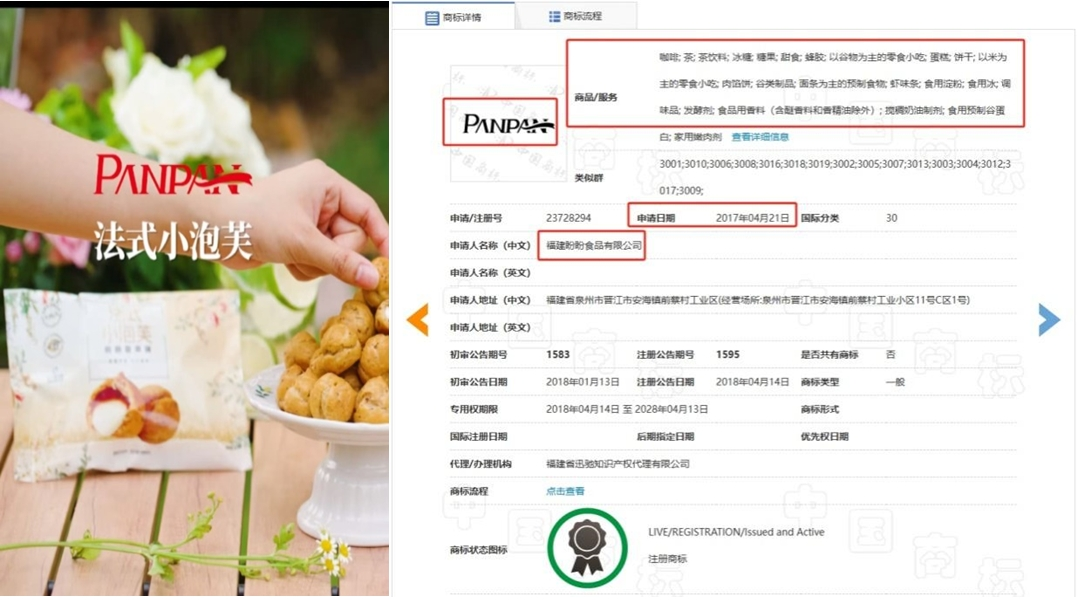
Core Viewpoint - The recent controversy surrounding Sam's Club's product selection adjustments highlights the shift from exclusive brands to more commonly found brands, raising questions about the perceived value of membership privileges [1][2]. Group 1: Product Selection and Branding - Sam's Club has faced criticism for introducing products with unfamiliar English names, such as "PANPAN" French puff, which are actually from well-known domestic brands [2][5]. - The "PANPAN" trademark was registered in 2017, indicating that it was not created specifically for Sam's Club [3][5]. - The "Sweet Hour" brand, associated with the product "益生元岩烧海苔," was registered by Guangdong Xizhilang Group in 2000, long before Sam's Club entered the Chinese market [5][6]. Group 2: Supplier Relationships and Product Quality - Sam's Club maintains high standards for its suppliers, requiring certifications for products, which limits the number of eligible suppliers [10]. - The self-branded products, such as Member's Mark, are primarily produced by well-known Chinese manufacturers, ensuring quality and local sourcing [10][11]. - The company relies heavily on local suppliers for popular items, such as frozen baked goods, which are produced by companies like Lihigh Foods [11]. Group 3: Market Positioning and Consumer Perception - The introduction of products with foreign-sounding names has led to consumer confusion regarding the origin of these products, prompting discussions about transparency in branding [15]. - Industry experts suggest that the quality of products should not be judged solely based on their branding, advocating for a better understanding of the value of domestic manufacturing [15].