红旗连锁

Search documents
该省省该花花的尽头,是质价比与情价比的终极胜利
Sou Hu Cai Jing· 2025-11-07 09:29
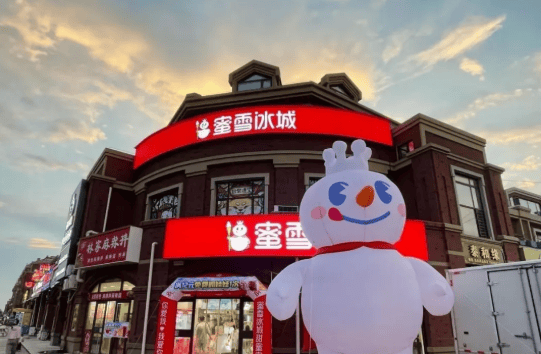
Core Insights - The article discusses a shift in consumer behavior towards a focus on value-for-money and emotional satisfaction rather than traditional brand prestige and high prices [3][21][22] Group 1: Consumer Behavior Changes - Consumers are increasingly prioritizing cost-effectiveness and quality, leading to a new consumption philosophy that emphasizes "precise spending" rather than mere frugality [5][12] - The rise of brands like Mixue Ice City and Luckin Coffee illustrates the success of the value-for-money approach, as they disrupt traditional high-priced markets with affordable yet quality offerings [4][8] Group 2: Market Trends - The demand for affordable yet high-quality products is evident in various sectors, including beverages and food delivery, with brands like "拼好饭" gaining popularity for their low-cost, high-quality experiences [9] - The luxury market is experiencing a downturn, with significant sales declines reported by brands like LVMH and Gucci, indicating a shift away from high-priced, status-driven consumption [12] Group 3: Emotional Value in Consumption - The younger generation, particularly Gen Z, is willing to spend on products that provide emotional satisfaction, reflecting a shift towards valuing experiences and emotional connections over material possessions [13][22] - The concept of "情价比" (emotional value for money) is emerging, where consumers seek products that enhance their emotional well-being and identity, rather than just fulfilling basic needs [18][19] Group 4: Future Implications - As consumer needs evolve, the focus on emotional and experiential value is expected to grow, suggesting that future consumption will increasingly revolve around identity construction and emotional fulfillment [21][22] - The article posits that the ultimate form of consumption will be about investing in one's inner world, highlighting a significant cultural shift in how products are perceived and valued [22]

在“四叶草”里河南深度链接世界
He Nan Ri Bao· 2025-11-06 23:26
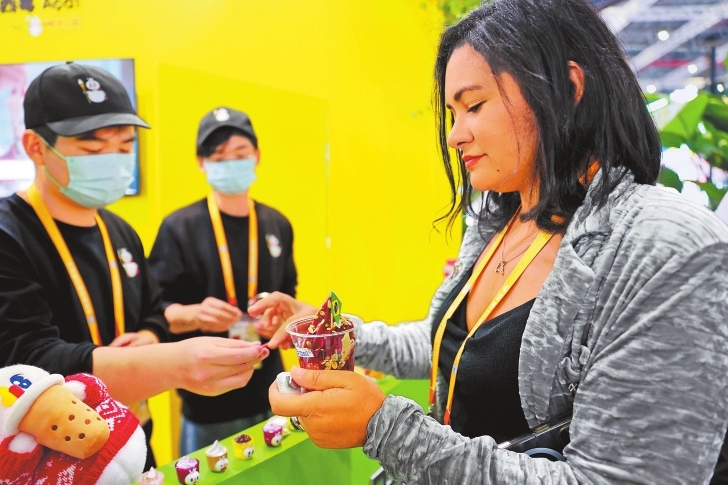
Core Insights - The 8th China International Import Expo (CIIE) opened in Shanghai, showcasing 461 new products from global enterprises, highlighting China's vast market appeal [1] - The event serves as a significant platform for Henan to connect with global resources, with local trade delegations actively seeking cooperation opportunities [1] Group 1: Trade and Business Opportunities - A foreign trade service platform signed a $4 million procurement order with an Indian company, indicating the expo's role in facilitating quality raw material sourcing [2] - Companies from Henan are exploring new consumer markets and upgrading their product lines, reflecting a clear path of industrial transformation [2] - The presence of Fortune 500 companies at the expo provides local businesses with insights into industry trends and opportunities for product diversification [2] Group 2: International Collaboration - The Brazilian pavilion attracted significant attention, with local brands like Mixue Ice Cream showcasing unique products, enhancing cross-border partnerships [3][4] - Brazilian officials emphasized the strong partnership with Henan, viewing it as a reliable consumer and collaborator in the market [5] - Multinational companies are increasingly investing in Henan, with Metro AG planning to expand its supply chain in the region to distribute quality consumer goods nationwide [5] Group 3: Growth and Development - The expo has seen a continuous increase in participation, with Henan's trade delegations achieving substantial results, including a long-term exhibition space for local products [6] - The collaboration between Henan and the Yangtze River Delta region has led to the signing of projects worth over 10 billion yuan, showcasing the region's growing economic ties [6] - The CIIE has become a platform for Henan to not only procure but also showcase its products, marking a significant evolution in its approach to international trade [6]

从超千家豫企参会看河南开放活力
He Nan Ri Bao· 2025-11-06 23:26
进博会进入第八个年头,河南是名副其实的"全勤生"。这个不沿边、不靠海的内陆省份,每年都认真筹 备、积极拥抱新风潮。今年,河南更是组织了超千家企业逛展采购,同时精选一批老字号、非遗企业登 台展示,既是参会者,又是展示方,体现了河南的开放活力。 越开放,越自信;越自信,越开放。在每一个国家级展会的舞台上,河南的主动和积极,都将迎来更多 目光和机遇。(记者 王歌) 作为全球尖端技术、优质商品与管理智慧的汇聚地,进博会为河南提供了"引进来"的重要窗口。当一颗 颗马来西亚鲜食榴莲从郑州机场高效分拨至全国市场,在满足老百姓对美好生活追求的同时,也带动了 航空物流、跨境电商等产业协同发展。在"买全球"的过程中,河南不断做强枢纽优势,以开放激活内 需、赋能产业发展。 责任编辑: 王苑 对外开放不只是引进来,还要走出去。在进博会这个超强资源链接平台上,河南企业深谙"主动才能抓 住更多机遇"的道理。我省各交易分团密集拜访外企高管、推介本土优势产业;蜜雪冰城、禹州坪山钧 窑等企业以独特的文化表达,向世界持续释放合作共赢的信号。 ...
本土资本为何频频买入在华 “洋品牌”?
Zheng Quan Shi Bao Wang· 2025-11-06 15:49
Core Insights - Starbucks has officially announced a strategic partnership with Boyu Capital to establish a joint venture for its retail operations in China, marking the conclusion of a year-long speculation regarding its sale in the Chinese market [1] - Other foreign brands, such as Haagen-Dazs, are also considering selling their Chinese operations and bringing in local investors, indicating a trend where top-tier local capital is increasingly acquiring foreign brands facing growth challenges in China [1][2] Group 1: Investment Trends - The buyers in these acquisitions are primarily top-tier local private equity firms that possess strong fundraising capabilities and comprehensive operational restructuring skills, making them mature players in the M&A field [1][2] - Boyu Capital has made significant investments in the new economy and consumer markets, including stakes in brands like Mixue Ice Cream and Hai Tian Flavor, showcasing its active role in the sector [1] Group 2: Acquisition Rationale - The targets of these acquisitions are mostly established foreign restaurant brands rather than emerging brands, driven by the scarcity and irreplaceability of these brands in the minds of consumers in first- and second-tier cities [2][3] - Established brands like Starbucks and McDonald's have a solid financial foundation and cash flow, which provides a safety net for capital operations, even when growth slows [2] Group 3: Operational Challenges - Mature brands face significant operational challenges, including bureaucratic decision-making processes and insufficient local team incentives, which hinder their ability to innovate and adapt to the fast-paced Chinese market [3] - Local capital can leverage its advantages to address these shortcomings, thereby unlocking asset value through targeted restructuring [3] Group 4: Market Dynamics - The current environment of slow growth presents a favorable opportunity for capital to enter the market, as established brands are more willing to negotiate prices during downturns [5] - The involvement of local capital is expected to enhance the efficiency of the consumer market, as it will empower local teams with greater decision-making authority and accelerate innovation [6][8] Group 5: Future Outlook - The trend of foreign brands selling stakes to local investors is likely to increase, driven by the dual pressures of sluggish growth and competition from local brands like Luckin Coffee [7][8] - This strategy allows foreign brands to retain their standardized advantages while benefiting from the flexibility and local insights provided by domestic capital, creating a synergistic effect [8]


狂砸3亿!蜜雪冰城收购利润107万福鹿家,和蜜雪利润差4000倍图啥
Sou Hu Cai Jing· 2025-11-06 13:05
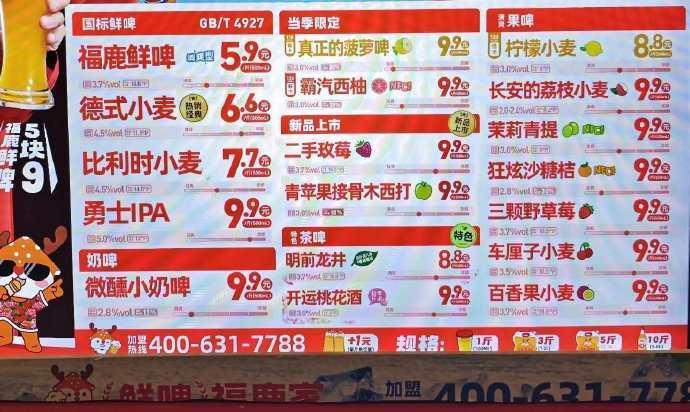
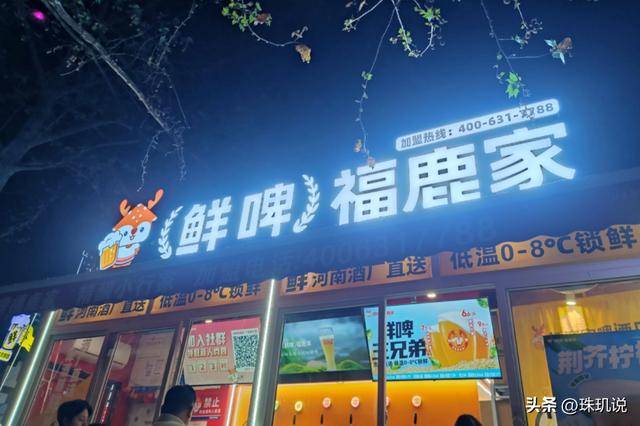
Core Viewpoint - The article discusses the strategic move of Mixue Ice City to enter the beer market by acquiring a lesser-known craft beer brand, Fulu Family, as a response to the slowing growth in the milk tea industry [3][25]. Industry Analysis - The growth rate of the new tea beverage market is projected to decline from 44.3% in 2023 to 12.4% by 2025, prompting major brands to close stores and indicating a market ceiling [3]. - The craft beer market in China is expected to approach 100 billion by 2025, with an annual growth rate exceeding 30%, potentially surpassing 200 billion by 2030 [5]. Company Strategy - Mixue Ice City invested 285.6 million to increase its stake in Fulu Family to 53%, indicating a calculated move to diversify its revenue streams [5]. - The relationship between Mixue and Fulu Family is strengthened by personal ties, as the CEO of Mixue is married to the actual controller of Fulu Family, which reduces the risks associated with cross-industry ventures [7]. Fulu Family's Business Model - Fulu Family transitioned from a convenience store to a craft beer brand in 2022, rapidly expanding to 1,200 stores within three years by adopting a low-barrier franchise model [10]. - The initial investment to open a Fulu Family store is only 60,000, significantly lower than the 210,000 required for a Mixue store, making it attractive for small entrepreneurs [12]. - Fulu Family's pricing strategy positions its craft beer between 5.9 to 10 yuan, making it accessible and appealing to a broader audience [12]. Target Market - Fulu Family targets young women aged 18-35 with lower alcohol content and sweeter flavors, avoiding direct competition with traditional beer brands [14]. Supply Chain Advantage - Fulu Family benefits from Mixue's cold chain logistics, reducing spoilage rates from the industry average of 8% to below 3%, enhancing product freshness and distribution capabilities [16]. Challenges Ahead - Despite rapid expansion, Fulu Family's profitability remains low, with a projected net profit of only 1.07 million in 2024 compared to Mixue's 4.45 billion, indicating a need for a sustainable profit model [17]. - The consumption scenarios for beer are more limited compared to milk tea, which could restrict sales volume [19]. - Fulu Family lacks the delivery advantages that propelled the milk tea market, leading to higher marketing costs and slower consumer recognition [21]. Long-term Vision - Mixue's acquisition of Fulu Family aims to create a comprehensive beverage ecosystem, offering coffee in the morning, milk tea at noon, and beer in the evening [23]. - The success of this strategy will depend on Fulu Family's ability to innovate and build its brand, as consumer expectations for beer differ significantly from those for milk tea [23].
星巴克找了个中国合伙人
Zhong Guo Xin Wen Wang· 2025-11-06 03:28
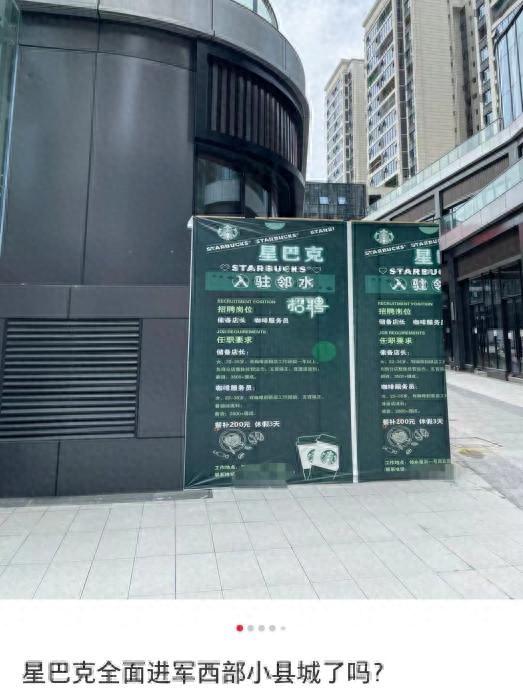
Core Insights - Starbucks is forming a joint venture with Chinese asset management company Boyu Capital, with Boyu holding up to 60% equity and Starbucks retaining 40% [1][2] - The deal values Starbucks' China business at approximately $4 billion, excluding cash and debt, with Boyu acquiring corresponding equity [2] - Starbucks' estimated valuation for its China operations exceeds $13 billion, suggesting Boyu's acquisition may be advantageous [3] Company Strategy - The joint venture aims to expand Starbucks' store count in China from around 8,000 to 20,000, focusing on penetrating smaller cities and emerging regions [4][12] - Boyu's experience in local market operations is expected to accelerate Starbucks' growth in these areas, indicating a strategic shift to leverage local expertise for expansion [6][12] Market Context - Starbucks, once a pioneer in the Chinese coffee market, now faces intense competition from local brands like Luckin Coffee and Kudi Coffee, which have significantly more stores [7][10] - The rise of local brands is attributed to their efficient supply chains and competitive pricing, challenging Starbucks' traditional pricing strategy [9][11] Operational Challenges - Starbucks' recent performance raises concerns about its ability to generate operating income from the joint venture, as it must adapt to a rapidly changing market landscape [4][12] - The company is undergoing a "second localization" effort, which involves ceding control while attempting to maintain brand integrity and market relevance [12][15] Future Outlook - The partnership with Boyu signifies a shift in Starbucks' identity from a market leader to a challenger in the evolving Chinese coffee landscape [15] - The future competition will hinge on supply chain efficiency, digitalization, regional insights, and organizational agility rather than just pricing or brand recognition [15]

星巴克中国估值要跑到130亿美元,还得看博裕能帮多大忙
Xin Lang Cai Jing· 2025-11-06 02:39
Core Insights - Starbucks has finalized a deal to form a joint venture with Boyu Capital, where Boyu will hold up to 60% of the equity, while Starbucks retains 40% and continues to own the brand and intellectual property [1][2] Group 1: Valuation and Financial Aspects - The joint venture is valued at $4 billion, with Starbucks estimating its total retail business in China to exceed $13 billion, composed of three parts: proceeds from the equity transfer, retained equity value, and future licensing fees [3][7] - Starbucks needs to generate $6.6 billion in licensing fees over the next ten years to meet the $13 billion valuation expectation, which typically ranges from 3% to 8% of GMV [7][8] - Starbucks China has 8,011 stores and has entered 1,091 county-level markets, with active membership in the Starbucks Rewards program reaching 25.5 million [9] Group 2: Market Strategy and Adaptation - The partnership with Boyu Capital aims to enhance Starbucks' local market adaptability and accelerate expansion into smaller cities and emerging markets [5][19] - Starbucks has recently adjusted its pricing strategy, implementing significant price reductions on popular products, which has positively impacted sales [10][11] - The company plans to expand its store count to 20,000, necessitating a shift towards lower-tier markets while maintaining quality and brand standards [20][21] Group 3: Boyu Capital's Role - Boyu Capital is recognized for its strong local market experience and has previously invested in notable companies, making it a suitable partner for Starbucks' expansion [15][16] - The collaboration is expected to leverage both parties' resources to enhance customer experience, accelerate product innovation, and deepen local market integration [18][19] - Boyu's higher bid may have contributed to its selection as the partner for this venture, indicating confidence in the potential for growth in the Chinese market [16]
中国消费品企业大举进入巴西市场
日经中文网· 2025-11-06 02:26
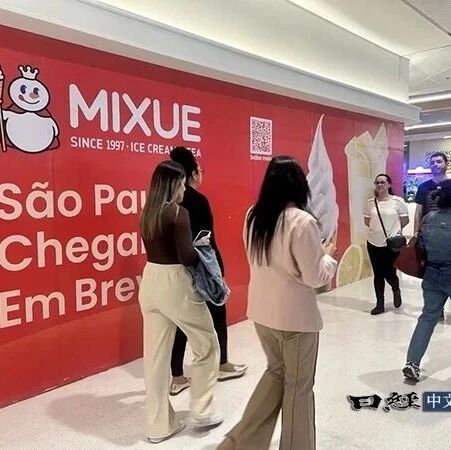
Core Insights - Chinese consumer brands are increasingly entering the Brazilian market, with a focus on low prices and high performance, as exemplified by companies like Mixue Ice City, BYD, Meituan, and Didi [2][6][10] - The Brazilian market is seen as a promising emerging market due to its large population of over 200 million and a growing middle class with strong consumption desires [6][10] Group 1: Mixue Ice City - Mixue Ice City has signed a memorandum with the Brazilian government to create approximately 25,000 jobs and plans to invest 3.2 billion reais (about 4.235 billion yuan) by 2030 [4] - The company aims to open its first store in São Paulo by the end of 2025, with preparations underway in a shopping center [4] - Mixue Ice City has grown to over 47,500 stores globally, surpassing McDonald's in scale, and is now targeting Brazil as a new market [2] Group 2: Other Chinese Brands - Meituan's overseas brand "Keeta" is set to invest 5.6 billion reais in the next five years, starting its services in the suburbs of São Paulo [5] - Didi is rapidly expanding its food delivery service in Brazil, planning to invest 2 billion reais, which is double its original plan, by 2026 [6] - The increasing presence of Chinese brands in Brazil is supported by the strengthening political ties between China and Brazil, which enhances the investment environment [6][10] Group 3: Consumer Perception - A survey in Brazil revealed that over 60% of respondents prefer Chinese products in the mobile and personal computer sectors, surpassing the preference for American products [9] - BYD has significantly increased its market share in Brazil, accounting for about 70% of the electric vehicle sales, reflecting a shift in consumer perception towards Chinese technology [9] - The perception of Chinese brands as offering "low prices and high performance" is becoming more entrenched among Brazilian consumers [9]

中金2026年展望 | 旅游酒店餐饮:服务连锁正当时,布局强内功和高成长(要点版)
中金点睛· 2025-11-05 23:52
Core Viewpoint - The service industry is showing signs of stabilization and bottoming out after experiencing price pressure and same-store sales decline in 2024, with expectations for recovery in 2026 driven by domestic demand and policy expansion [2][3][8]. Group 1: Industry Outlook - The service industry is expected to see a recovery in demand and a turning point in volume and price due to government policies aimed at boosting service consumption [3][8]. - The restaurant and hotel sectors are identified as the most promising areas for the emergence of large companies due to their broad consumer base and scalability [5][8]. - The article emphasizes the importance of strong internal capabilities and high-growth potential among leading companies in the industry [3][8]. Group 2: Restaurant Sector - The beverage segment is anticipated to face high baseline pressure in 2026, but leading brands are expected to achieve stable performance and gradually replace smaller chains [9]. - Fast food categories show resilience, while casual dining brands continue to experience differentiation in same-store sales [9]. - The article highlights the need for brands to meet consumer demands for value and emotional connection, as well as to possess strong operational and product capabilities [5][9]. Group 3: Hotel Sector - The hotel industry is still in a phase of supply-demand rebalancing, with a projected decline in RevPAR (Revenue per Available Room) of 5% in the first half of 2025 [10]. - High-quality hotel brands are expected to continue expanding their market share even during industry downturns due to superior product and service capabilities [10]. - The recovery of business demand is seen as a potential turning point for RevPAR to turn positive [10]. Group 4: Human Resources and Other Sectors - The human resources sector is characterized by strong cyclical attributes, with an increasing trend in flexible employment penetration [10]. - The duty-free sales sector is currently experiencing a bottoming out phase, with attention on the impact of Hainan's policy changes [10]. - The tourism sector is facing price pressures and investment costs, but there are potential catalysts from new project launches and transportation improvements [11].

果啤火了,他们都想成为年轻人的微醺首选
3 6 Ke· 2025-11-05 10:40
Core Insights - The investment by Xuewang in Fulu Family signifies a renewed interest in the craft beer and fruit-flavored beer market, which is gaining traction among younger consumers [1][2][20] - The acquisition involves Xuewang obtaining a 53% stake in Fulu Family for approximately RMB 297 million, expanding its portfolio into the fresh beer sector [2][3] - The trend of "light drinking" is becoming mainstream, with over 80% of young people preferring lighter alcoholic beverages, indicating a shift in consumer preferences [20][22] Market Dynamics - Fulu Family has become the leading brand in China for fresh beer chain stores by store count, highlighting the competitive landscape in this segment [3] - The entry of various brands into the fruit beer market, such as Guozi Shule and Xinling, reflects a broader trend of diversification and innovation in alcoholic beverages [5][15] - The fruit beer market is projected to grow significantly, with global market size expected to reach USD 318.6 billion by 2024 and approximately USD 435.7 billion by 2030, indicating a robust growth trajectory [18] Consumer Behavior - Young consumers are redefining their relationship with alcohol, focusing more on emotional experiences and taste rather than alcohol content [23][26] - The appeal of fruit beer lies in its ability to be consumed in various social settings, including daytime events, making it more accessible and relatable to younger audiences [24][25] - The pricing strategy for fruit beer, typically ranging from RMB 5 to 10 per can, positions it competitively against other non-alcoholic beverages, facilitating broader market penetration [25] Cultural Shift - The cultural narrative around drinking is shifting from "drinking to socialize" to "drinking for personal enjoyment," with fruit beer symbolizing a more relaxed and enjoyable drinking experience [26][27] - Fruit beer is becoming a symbol of a lifestyle that emphasizes relaxation and social media sharing, appealing to the younger demographic's desire for visually appealing and enjoyable products [27] Future Considerations - While fruit beer is positioned as an evolution of the previous "sweet liquor" trend, it benefits from a more stable production and supply chain, reducing the risk of rapid decline seen in past trends [28][29] - The increasing number of brands entering the fruit beer market may lead to potential homogenization, necessitating continuous innovation to maintain distinctiveness [28][29]