
五矿资源

Search documents
——有色金属大宗金属周报(2026/2/2-2026/2/6):库存累积,铜铝价格或迎来降波震荡-20260208
Hua Yuan Zheng Quan· 2026-02-08 06:51
Investment Rating - The investment rating for the non-ferrous metals industry is "Positive" (maintained) [4] Core Views - The report indicates that copper prices may experience short-term fluctuations due to inventory accumulation, with recent price changes of -4.02% for LME copper, -3.45% for SHFE copper, and -1.33% for COMEX copper. The report anticipates a decrease in price volatility and potential high-level fluctuations in the near term [5] - The report highlights that the Chinese Nonferrous Metals Industry Association is considering including copper concentrate in national reserves, which could positively impact copper prices in the medium to long term [5] - For aluminum, the report notes that inventory accumulation may lead to short-term price fluctuations, with SHFE aluminum prices dropping by 7.74% to 23,400 CNY/ton and LME aluminum prices down by 2.20% to 3,063 USD/ton [5] - Lithium demand remains strong despite seasonal trends, with a potential reversal in supply-demand dynamics for lithium carbonate, suggesting a possible upward price trend [5] - Cobalt raw material tightness persists, with a recommendation to monitor downstream replenishment after the Spring Festival [5] Summary by Sections 1. Industry Overview - The report provides macroeconomic insights, including a better-than-expected ISM manufacturing PMI in the US for January at 52.6, and lower-than-expected ADP employment figures [9] - The overall performance of the non-ferrous metals sector shows a decline, with the Shenwan non-ferrous sector down 8.51%, underperforming the Shanghai Composite Index by 7.24 percentage points [11] 2. Industrial Metals 2.1 Copper - LME copper prices fell by 4.02%, SHFE copper by 3.45%, and COMEX copper by 1.33%. Inventory levels increased, with LME copper stocks up 4.74% and SHFE copper stocks up 6.83% [24] 2.2 Aluminum - LME aluminum prices decreased by 2.20%, while SHFE aluminum prices dropped by 7.74%. The report notes a significant increase in SHFE aluminum inventory by 13.09% [34] 2.3 Lead and Zinc - LME lead prices fell by 2.82%, and SHFE lead prices decreased by 3.05%. LME zinc prices dropped by 1.93%, with SHFE zinc prices down by 6.95% [45] 2.4 Tin and Nickel - LME tin prices decreased by 13.93%, and SHFE tin prices fell by 18.32%. LME nickel prices dropped by 3.71%, while SHFE nickel prices decreased by 8.98% [56] 3. Energy Metals 3.1 Lithium - Lithium prices saw a significant decline, with lithium carbonate down 16.20% to 134,500 CNY/ton and lithium hydroxide down 16.14% to 132,500 CNY/ton [73] 3.2 Cobalt - The report notes a decrease in MB cobalt prices by 0.19% to 25.88 USD/pound, with domestic cobalt prices down 9.60% to 405,000 CNY/ton [85]
资讯日报:美国劳动力数据疲软;白银、加密货币跳水-20260206
Guoxin Securities Hongkong· 2026-02-06 12:45
Market Overview - The Hang Seng Index closed at 26,885, down 0.14% for the day and up 4.90% year-to-date[3] - The S&P 500 index fell by 1.23% to close at 6,883, with a year-to-date decline of 0.69%[3] - The Nasdaq dropped 1.59% to 22,905, marking a year-to-date decrease of 3.02%[3] Sector Performance - The restaurant sector saw significant gains, with Yum China rising over 11% after reporting a Q4 operating profit of $187 million, a 25% year-on-year increase[9] - Automotive stocks showed positive movement, with Xiaomi and NIO both increasing by over 2%[9] - The metals sector faced downward pressure, with Lykins Resources down 6.57% and Minmetals Resources down 6.51%[9] Economic Indicators - U.S. job openings fell to their lowest level since 2020, with a significant increase in layoffs announced by companies, marking the highest level for January since 2009[12] - Initial jobless claims in the U.S. exceeded all economists' forecasts in a Bloomberg survey[12] Cryptocurrency and Precious Metals - Silver prices plummeted nearly 20% due to heavy selling pressure in the precious metals market[12] - Bitcoin dropped below $63,000, erasing all gains since Trump's election victory, influenced by leveraged bets being unwound[12] Technology Sector - Major tech stocks like Microsoft and Amazon experienced declines, with Microsoft down 4.95% and Amazon down 4.42%[12] - AMD's stock fell 17.31% after providing a revenue forecast that, while above market expectations, was below some analysts' high-growth predictions[9]
教科书级抄底!中企500亿捡漏铜矿,10年赚2000亿,现值冲破7000亿
Sou Hu Cai Jing· 2026-02-06 09:16
Core Insights - The acquisition of the Bamba copper mine by China Minmetals Corporation is viewed as a strategic foresight that has paid off significantly over the years, turning a controversial investment into a successful case study [2][17] - The investment has generated substantial returns, with reports indicating that China Minmetals has earned 200 billion RMB (approximately 28.5 billion USD) over ten years, and the company's market value has surged by 700 billion RMB (approximately 99.8 billion USD) [1][17] Group 1: Investment Context - Over a decade ago, during a downturn in global copper prices, China Minmetals and CITIC executed a surprising acquisition of the Bamba copper mine for 7 billion USD, which was initially criticized as a gamble [1][9] - At that time, China was the world's largest copper consumer, yet domestic copper resource reserves were limited, with a self-sufficiency rate below 25% [1][9] Group 2: Strategic Importance - The Bamba mine is located in a prime area of Peru, with proven reserves exceeding 10 million tons and a rare copper grade, along with by-products like molybdenum and silver [4][9] - The mine's operation is expected to produce over 3 million tons of copper by 2025, directly supplying high-end manufacturing in China [10][12] Group 3: Operational Strategy - China Minmetals has adopted a collaborative approach in managing the Bamba project, focusing on community engagement and local development, which has improved the company's reputation and governance in the region [6][12] - The company has established a comprehensive operational model that integrates investment, construction, operation, management, and community development, moving beyond traditional mining practices [8][12] Group 4: Broader Implications - The rising global copper prices, driven by the demand for green energy and electric vehicles, have positioned copper as a critical resource, making the Bamba investment a cornerstone of China's resource security strategy [9][17] - The project has also facilitated the export of Chinese machinery and equipment, contributing to local economies and enhancing China's industrial security [12][15] Group 5: Future Outlook - Despite the success, challenges remain, including political instability in Peru and potential disruptions from local protests, necessitating ongoing community cooperation and political engagement [12][14] - The investment in Bamba is seen as a model for future Chinese overseas ventures, emphasizing the importance of strategic foresight and long-term planning in resource acquisition [15][17]


港股大型科网股,全线下跌
Di Yi Cai Jing Zi Xun· 2026-02-06 01:50
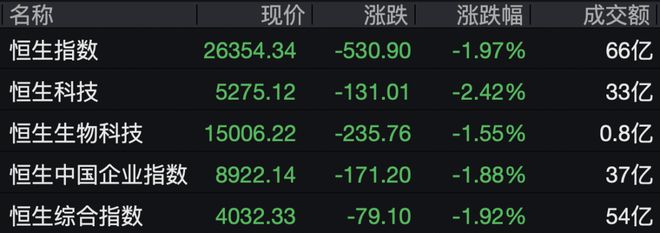
Market Overview - The Hang Seng Index opened down by 1.97%, closing at 26,354.34, a decrease of 530.90 points with a trading volume of 6.6 billion [2] - The Hang Seng Tech Index fell by 2.42%, closing at 5,275.12, down by 131.01 points with a trading volume of 3.3 billion [2] - The Hang Seng Biotech Index decreased by 1.55%, closing at 15,006.22, with a trading volume of 0.08 billion [2] - The Hang Seng China Enterprises Index dropped by 1.88%, closing at 8,922.14, with a trading volume of 3.7 billion [2] - The Hang Seng Composite Index fell by 1.92%, closing at 4,032.33, with a trading volume of 5.4 billion [2] Sector Performance - Technology stocks experienced a broad decline, with Baidu Group falling over 4%, and Alibaba, Kuaishou, Bilibili, NetEase, and Hua Hong Semiconductor all dropping over 3% [2] - Other notable declines included SenseTime, JD Group, Tencent Holdings, and SMIC, each down by more than 2% [2] Individual Stock Movements - Baidu Group-SW decreased by 4.33%, closing at 134.80 [3] - Kingdee International fell by 4.30%, closing at 10.90 [3] - JD Health dropped by 3.96%, closing at 58.25 [3] - Alibaba-W declined by 3.82%, closing at 153.50 [3] - Kuaishou-W decreased by 3.70%, closing at 70.30 [3] - Bilibili-W fell by 3.29%, closing at 234.80 [3] - NetEase-S dropped by 3.06%, closing at 186.70 [3] - Other notable declines included Xpeng Motors, SenseTime, JD Group-SW, Tencent Holdings, and SMIC, all experiencing declines between 2.15% and 2.90% [3] Commodity Sector - The non-ferrous metals sector continued to show weakness, with China Gold International, Jiangxi Copper, Lingbao Gold, and Shandong Gold all dropping over 5% [4] - China Gold International fell by 5.36%, closing at 180.00 [4] - Jiangxi Copper decreased by 5.34%, closing at 41.10 [4] - Lingbao Gold and Shandong Gold both fell by 5.11%, closing at 20.78 and 36.74 respectively [4]





港股大型科网股,全线下跌
第一财经· 2026-02-06 01:38
2月6日,香港恒生指数低开1.97%,恒生科技指数跌2.42%。 | 名称 | 现价 涨跌幅 | | | --- | --- | --- | | 恒生指数 | 26354.34 -530.90 - -1.97% | 66亿 | | 恒生科技 | 5275.12 | 33亿 | | 恒生生物科技 | 15006.22 -235.76 - -1.55% | 0.8亿 | | 恒生中国企业指数 8922.14 -171.20 -1.88% | | 37亿 | | 恒生综合指数 | -79.10 -1.92% | 54亿 | 科网股全线走低,百度集团跌逾4%,阿里巴巴、 快手、 哔哩哔哩、网易、华虹半导体均跌逾3%,商汤、京东集团、腾讯控股、中芯国际等跌超2%。 | 名称 | 现价 | 涨跌 | 涨跌幅 - | | --- | --- | --- | --- | | 百度集团-SW | 134.800 | -6.100 | -4.33% | | 金蝶国际 | 10.900 | -0.490 | -4.30% | | 京东健康 | 58.250 | -2.400 | -3.96% | | 阿里巴巴-W | 153.50 ...

中国企业出海的十大展望
Hua Xia Shi Bao· 2026-02-05 09:01
Group 1: Global Expansion of Chinese Manufacturing - The trend of Chinese manufacturing companies expanding globally is accelerating, particularly in tariff-sensitive sectors such as automotive, consumer electronics, and machinery, which are relocating production to countries with lower tariffs or favorable policies to reduce costs and mitigate trade risks [2][3] - Chinese manufacturers are diversifying their global supply chains by exploring emerging markets in Latin America, the Middle East, and Africa, thereby enhancing supply chain stability and risk resilience [2][3] - The implementation of regional economic cooperation mechanisms and free trade agreements, such as RCEP, is creating a more favorable policy environment for the globalization of Chinese manufacturing [3] Group 2: Overseas Mergers and Acquisitions - Chinese manufacturing companies are leveraging overseas mergers and acquisitions to transition from OEMs to self-owned brands, gaining market share, sales channels, and high-end brand images [3][4] - The focus of these acquisitions is shifting towards strategic alignment in brand, market, technology, and supply chain integration, enhancing global competitiveness [3][4] - Companies like Haier exemplify this trend by achieving breakthroughs in the European and American markets through acquisitions, thereby strengthening their global competitive advantage [3][4] Group 3: Labor-Intensive Industries and Cost Migration - Labor-intensive industries are increasingly relocating to low-cost regions such as Southeast Asia and South Asia, benefiting from local labor advantages and policy support [4][5] - The trend of regional industrial clusters is forming as companies seek to reduce costs and improve response efficiency through localized production [4][5] - The global supply chain is becoming more regionalized, with multinational companies establishing collaborative industrial clusters in emerging regions to enhance supply chain resilience [4][5] Group 4: Resource Sector Globalization - Chinese resource companies are accelerating their global expansion by constructing complete industrial chains from mining to processing and application, enhancing their control and influence in the global resource sector [6][7] - The focus is shifting from merely acquiring resources to deep integration of upstream and downstream operations, utilizing diverse cooperation methods such as equity investments and joint ventures [6][7] - Notable examples include the acquisition of cobalt mines in the Democratic Republic of Congo and lithium companies in Australia, showcasing the strategic foresight of Chinese enterprises [6][7] Group 5: Digital Transformation and Brand Value - Chinese companies are transitioning from low-cost manufacturing to brand value creation, utilizing digitalization to enhance brand building and global competitiveness [9][10] - Companies like Anker and Xiaomi are leveraging localized operations and digital marketing to establish strong brand identities and achieve significant sales growth [9][10] - The focus on digital transformation is enabling companies to create differentiated brand matrices and improve supply chain management, enhancing market competitiveness [9][10] Group 6: Compliance and Localization - Compliance and localized operations are becoming core competitive advantages for Chinese enterprises in international markets, with a focus on establishing robust global compliance systems [11][12] - Companies are actively building global compliance monitoring systems to ensure adherence to regulations in areas such as data security and environmental standards [11][12] - The ability to navigate compliance challenges is increasingly seen as integral to brand value and international market acceptance [11][12] Group 7: Policy Support for Globalization - Recent policy initiatives from the Chinese government are creating unprecedented opportunities for enterprises to expand internationally, emphasizing high-level openness and integration into the global economy [13][14] - The focus on developing new production capabilities and promoting the integration of the real economy with the digital economy is expected to provide clear guidance for companies in the new round of global competition [13][14] - Structural monetary policies are anticipated to offer targeted financial support to foreign trade enterprises, aiding their internationalization efforts [14] Group 8: Cultural and Ideological Export - Chinese enterprises are increasingly integrating cultural content with brand ideology to enhance cultural soft power and global brand value [18][19] - The growth of cultural consumption globally is driving the export of diverse cultural products, including games and films, with significant revenue growth reported [18][19] - The focus on building a robust IP ecosystem and localizing content production is crucial for enhancing global appeal and emotional resonance with audiences [18][19]



港股收盘 | 恒指收涨0.14% 科网股午后回暖 百胜中国绩后大涨11%
Zhi Tong Cai Jing· 2026-02-05 08:50
Market Overview - Hong Kong stocks opened lower but closed higher, with the Hang Seng Index rising by 0.14% to 26,885.24 points and a total turnover of HKD 315.11 billion [1] - Morgan Stanley noted that despite recent market volatility, effective measures to cool A-shares, a stronger USD against RMB, and long-term regulatory support for Hong Kong are expected to provide positive liquidity support for both A-shares and Hong Kong stocks [1] Blue-Chip Performance - Baidu Group-SW (09888) saw a 2.7% increase, closing at HKD 140.9, contributing 7.38 points to the Hang Seng Index. The company announced a new stock buyback plan of up to USD 5 billion, effective until December 31, 2028, and plans to adopt a dividend policy by 2026 [2] - Other blue-chip stocks included Haidilao (06862) up 4.03%, Lenovo Group (00992) up 3.67%, while Zijin Mining (601899) fell 4.76% and New Oriental-S (09901) dropped 3.13% [2] Sector Performance - Large tech stocks rebounded, with Xiaomi and Baidu both rising nearly 3%. Consumer stocks performed well, with Yum China surging over 11% post-earnings [3] - The precious metals sector saw a sharp decline, with gold and silver prices dropping significantly. The market for precious metals is expected to remain volatile due to various economic pressures [4] - The space photovoltaic concept saw a decline, with companies like Junda Co. (02865) dropping 12.35% [4][5] Chip Sector - Chip stocks faced pressure, with companies like Zhaoyi Innovation (03986) down 4.47% and Shanghai Fudan (01385) down 3.34%. The decline was influenced by AMD's significant drop of 17.31% following its earnings report [6] Company Earnings - Yum China reported total revenue of USD 11.797 billion for 2025, a 4% increase, with a net profit of USD 929 million, up 2%. The company plans to pay a dividend of 29 cents per share [7] - MGM China (02282) reported a net revenue of approximately USD 4.462 billion for the year ending December 31, 2025, a 10.92% increase [8] - Tianqi Lithium (002466) saw a significant drop of 13.33% after announcing a placement of 65.05 million new H-shares at a discount [9] - New World Development (01030) fell 13.17% after announcing a placement of 198 million shares at a discount to raise funds for future development and debt repayment [10]

国储收铜凸显战略价值,为铜注入“安全溢价”
Zhong Guo Yin He Zheng Quan· 2026-02-05 06:25
Investment Rating - The report maintains a "Recommended" rating for the non-ferrous metals industry [1]. Core Insights - The strategic value of state copper reserves is highlighted, injecting a "safety premium" into copper prices [3]. - The report emphasizes the importance of enhancing the domestic copper supply chain's resilience and security through the establishment of a copper resource reserve system [4]. - Global competition for resource security is reshaping the copper supply-demand balance, leading to an expected increase in copper prices due to a "safety premium" [4]. - Recent price declines have activated downstream demand, significantly increasing order volumes for copper products [3]. Summary by Sections Industry Overview - The report discusses the recent actions by the China Nonferrous Metals Industry Association to expand the national copper strategic reserve and explore commercial reserve mechanisms [3]. - Historical context is provided, noting that state reserves typically purchase copper at low prices, with a significant purchase of 300,000 tons in July 2020 to stabilize the market [3]. Market Dynamics - The report notes that the U.S. is also advancing its critical mineral reserve strategy, with copper resources becoming a focal point [3]. - It highlights the potential for a global copper shortage by 2026, with a projected deficit of 170,000 tons of refined copper if China engages in significant stockpiling [3]. Price Outlook - The report suggests that recent market reactions to hawkish Federal Reserve expectations may have been exaggerated, indicating potential for price recovery in copper [4]. - It mentions that the recent drop in copper prices has improved downstream acceptance, leading to a surge in orders, particularly for refined copper rods [3]. Investment Recommendations - The report recommends focusing on key copper mining stocks such as Zijin Mining, Minmetals Resources, Luoyang Molybdenum, and Jincheng Mining, citing their high valuation margins for 2026 [4].
亚太股市全线飘绿,白银跳水市值蒸发约1个摩根大通,黄金盘中跌破4800美元
21世纪经济报道· 2026-02-05 04:11
记者丨曾静娇 编辑丨江佩霞 2月5日上午,亚太主要股指全线飘绿。A股三大指数、恒生指数均跌超1%, 热门科网股多数下跌,华虹半导体跌超6%,腾讯控股跌超2.6%, 市值跌破5万亿港元。 韩国综合指数跌超3.6%,主要受SK海力士、三星电子拖累,其跌幅均超5%。 | SFC | | --- | | 出品丨21财经客户端 21世纪经济报道 | | 21君荐读 | | 央行重磅会议,明确信贷资源重点流向 | | 白银大跌7%,特朗普:利率很快就会下调 | 贵金属、有色金属板块持续大跌,湖南白银、湖南黄金、白银有色、河钢资源等多股跌停,四川黄金、晓程科技跌超8%。 港股方面相关板块亦表现不佳,其中天齐锂业大跌近13%,万国黄金集团跌超10%,中国黄金国际、五矿资源、洛阳钼业等多股跌超7%。 消息面上,国际金银价格盘中大跳水,截至北京时间11:49, 现货白银重挫逾13%,跌破77美元关口 ,盘中最高一度触及89.56美元,SHFE白 银同步大跌近12%;现货黄金日内跌超2%,价格从最高5023美元大幅下挫,最低价格一度至4788美元/盎司。 据新浪财经报道,据CPM集团2019白银年鉴估计,全球白银开采量为175.1 ...

有色金属股跌幅居前 黄金、白银今早突发跳水 有色市场近期波动加剧
Zhi Tong Cai Jing· 2026-02-05 03:39
Group 1 - The article highlights a significant decline in the prices of non-ferrous metal stocks, with Tianqi Lithium Industries (002466) dropping by 12.73% to HKD 43.2, and other companies like Minmetals Resources (01208) and Jiangxi Copper (600362) also experiencing notable losses [1][1][1] - On February 5, the international precious metals market saw a downturn, with spot gold falling below USD 4,800 per ounce and spot silver experiencing a drop of 15%, falling below USD 75 [1][1][1] - Domestic commodity futures markets reflected this trend, with lithium carbonate futures hitting a daily limit down and copper futures dropping nearly 4% [1][1][1] Group 2 - According to a report from Guotai Junan Securities, the gold and silver markets are expected to become increasingly volatile, influenced by long-term factors such as the credibility of the US dollar and shifting asset preferences [1][1][1] - The report suggests that the frequency of global black swan events may lead to a temporary reduction in risk appetite, alongside rising inflationary pressures in the US that could tighten interest rate expectations [1][1][1] - It is noted that the historical volatility of gold and silver may also manifest in other major asset classes [1][1][1]