长江存储

Search documents
A股收评:3500点失而复得,创业板有望创年内新高
Sou Hu Cai Jing· 2025-07-16 01:26
Core Viewpoint - The A-share market is experiencing a dramatic divergence, with technology stocks surging while traditional sectors like banking and coal are facing significant declines [3][4][6]. Market Performance - The Shanghai Composite Index fell below 3500 points during the day but rebounded to close at 3505 points, indicating underlying volatility despite a minimal overall gain [3]. - Over 4000 stocks in the market were in the red, particularly in traditional sectors, while the ChiNext Index rose sharply by 38 points, showcasing a stark contrast in performance [3][4]. Trading Volume and Capital Flow - The total trading volume in the A-share market reached 1.58 trillion yuan, an increase of 155 billion yuan compared to the previous week, with most new capital flowing into technology stocks [3]. - The Agricultural Bank of China saw its stock price drop by 2.88%, just five days after hitting a historical high, indicating a significant capital withdrawal from traditional sectors [4]. Technology Sector Highlights - Nvidia's stock price surpassed $1280, igniting a rally in A-share optical module stocks [3]. - Industrial robot orders surged, with Estun receiving a large order of 12,000 units from BYD in July [3]. - Domestic semiconductor equipment companies are accelerating their market presence, with Zhongwei Company winning a bid for a 28nm etching machine order from Yangtze Memory Technologies [3]. Investment Trends - AI-related stocks are gaining traction, with companies like Zhongji Xuchuang and New Yisheng seeing significant price increases [4]. - The China AI 50 Index rose by 3.2%, and major players like Ningde Times significantly contributed to the ChiNext Index's performance [4][5]. - The ChiNext Index is only 48 points away from its yearly high, with a notable increase in ETF subscriptions and trading volumes [5]. Valuation Discrepancies - AI concept stocks are experiencing inflated valuations, with Kunlun Wanwei's stock hitting the daily limit despite a 35% drop in net profit [5]. - In contrast, the banking sector is underperforming, with the price-to-earnings ratio of China Merchants Bank dropping to 5.8, a ten-year low [5]. Market Sentiment and Future Outlook - The market is facing a significant unlocking of shares, with a total value of 26.2 billion yuan for leading solar company Trina Solar [6]. - There are signs of overheating in the technology sector, with the CPO sector's price-to-book ratio reaching 8.3, surpassing the peak during the 2021 metaverse hype [6]. - The market is undergoing a substantial shake-up, with technology stocks rising and traditional sectors declining, presenting both risks and opportunities for investors [6].



美国关税战对象只剩中国,早期谈判虽有共识但未彻底解决
Sou Hu Cai Jing· 2025-07-15 23:53
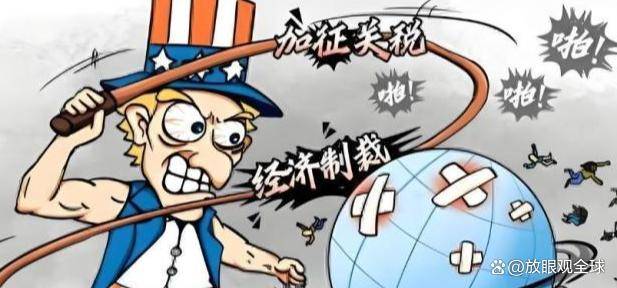
Group 1 - The F-35 production line has been disrupted due to a shortage of neodymium-iron-boron magnets, exacerbated by China's rare earth supply cut [1] - The U.S. trade war initiated by Trump has led to significant consequences for American manufacturing, with many companies relocating production to other countries [1][3] - U.S. Customs data shows that China's export share to the U.S. dropped to 12.5% in Q1 2024, while exports to ASEAN surged by 22% [3] Group 2 - The agricultural sector has faced severe challenges, with a 57% increase in bankrupt farms and a 15% drop in land prices in Iowa due to the absence of Chinese buyers [4] - The semiconductor industry is experiencing disruptions, with TSMC's Arizona factory halted due to a lack of neon gas from China [4][8] - The U.S. has seen a significant increase in costs due to tariffs, with the automotive sector alone facing an additional $450 billion in expenses [3][7] Group 3 - The U.S. bears 92% of the tariff costs, while Chinese exporters only absorb 8% [6] - The trade landscape is shifting, with countries like Argentina and Bangladesh increasingly using the renminbi for trade, indicating a decline in U.S. dollar dominance [6][8] - The manufacturing sector is struggling with rising costs and job losses, as evidenced by Ford's layoffs and the closure of GM's Ohio plant [7] Group 4 - The aerospace industry is facing significant challenges, with Boeing's market value dropping by $72 billion due to the loss of the Chinese market [7] - The semiconductor equipment investment in China is now 1.8 times that of the U.S., indicating a growing technological gap [8] - The U.S. is investing heavily in supply chain adjustments, with $3.9 billion allocated to "de-China" supply chain costs [9]


中美贸易战终于发力!7月14日,今日五大消息搅动全球经贸格局
Sou Hu Cai Jing· 2025-07-15 00:30
Group 1 - The U.S. has announced high tariffs on goods from 14 countries, including Japan and South Korea, with rates ranging from 25% to 40% [1][3] - The tariffs have triggered strong international backlash, with leaders from affected countries condemning the U.S. actions as humiliating and unfair [3][4] - The financial markets reacted negatively, with significant drops in major indices and stock prices of Japanese automakers [6] Group 2 - The "Big Beautiful Bill Act" signed by Trump has led to increased logistics costs for Chinese e-commerce and heightened tax burdens for semiconductor companies [8] - China's export controls on rare earth elements have impacted the U.S. military supply chain, highlighting vulnerabilities in U.S. reliance on Chinese resources [9] - The global trade landscape is shifting, with trade volumes in Asia, Latin America, and the Middle East growing faster than the global average, indicating a move towards a multipolar trade environment [11]

美方终于承认犯下大错,特朗普之前没料到,中方敢与美国如此硬碰
Sou Hu Cai Jing· 2025-07-13 04:17
Group 1 - The U.S. Department of Commerce announced a dramatic reversal by restoring exports of EDA software, aircraft engines, and ethane to China, influenced by major companies like Intel and General Electric fearing a loss of billions in revenue [1] - The trade war that began in spring 2025 is seen as a textbook case demonstrating the failure of hegemonic thinking in a multipolar world and the conflict between unilateralism and systemic resilience [1][2] - Initial U.S. tariffs aimed at China were based on a misjudgment of the economic interdependence and the strategic resolve of China, leading to significant operational disruptions in U.S. industries [2][4] Group 2 - The U.S. government's attempt to isolate China through a "tariff alliance" backfired, as allies like the EU and Japan pursued their own interests, undermining U.S. efforts [4] - China's strategic depth in the market was highlighted by the rapid adaptation of its industries, such as the successful launch of domestic chip production and electric vehicle market penetration in Europe [4][5] - The economic backlash in the U.S. was swift, with rising prices for Chinese goods and declining consumer confidence, impacting major companies like Tesla [5][7] Group 3 - The political division within the U.S. exacerbated the situation, with the Federal Reserve resisting pressure to lower interest rates, leading to a perception of economic surrender [7] - The U.S. military faced urgent supply issues due to reliance on Chinese rare earth materials, while China had already prepared for such scenarios [7]
21专访|湿电子化学品的“昆山答卷”:联仕新材的突围与共建
2 1 Shi Ji Jing Ji Bao Dao· 2025-07-11 06:43
Core Insights - The article highlights the growth and strategic development of Lianshi New Materials, a company specializing in high-purity wet electronic chemicals essential for the semiconductor industry [1][2][3] Company Overview - Lianshi New Materials has established itself as a key player in the semiconductor supply chain, recognized as a national-level "little giant" and a high-tech enterprise [1] - The company has been included in the potential unicorn lists of Jiangsu Province and Suzhou City for four consecutive years, with its products being utilized by major IC manufacturers such as SMIC, Yangtze Memory Technologies, TSMC, and Texas Instruments [1] Strategic Development - The transition to local control in 2019 marked a new phase for Lianshi, enhancing its operational capabilities and local resource integration [2][3] - Since 2019, the company has secured investments from institutions like Yida Capital and achieved revenue growth from 70 million to over 500 million by 2024 [3] Production Capacity and Technology - The company is expanding its production capacity with a total investment of 1 billion yuan in the Jingzhou project, which aims to produce 492,000 tons of high-purity electronic chemicals annually [4] - Lianshi has diversified its product line to include critical materials such as gold plating solutions, silver plating solutions, high-end copper sulfate, and etching solutions, thereby enhancing its supply chain capabilities [4][5] Innovation and Collaboration - The company has established a collaborative innovation mechanism with local government and industry partners, facilitating technology transfer and project development [6][7] - The "Zuchongzhi Plan" initiated in 2019 has been instrumental in supporting Lianshi's major project applications and fostering joint R&D with local clients [6][7] Investment and Market Position - Lianshi's strategic acquisitions, including the purchase of a Taiwanese company's business to form "Xinshi Da," are expected to generate additional sales of 30 to 50 million yuan this year [5] - The company is positioned as a local leader in the wet electronic chemicals sector, emphasizing the importance of a stable and secure supply chain for high-end materials [5]
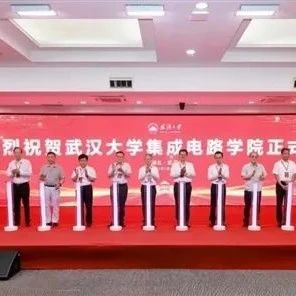
武汉大学成立集成电路学院!
国芯网· 2025-07-10 12:58
Core Viewpoint - The establishment of the Integrated Circuit College at Wuhan University aims to address national strategic needs and tackle "bottleneck" technology challenges in the semiconductor industry [2]. Group 1: Establishment of Integrated Circuit College - Wuhan University officially inaugurated its Integrated Circuit College, with Academician Liu Sheng appointed as the dean [2]. - The college is designed to provide high-quality technological and talent support for the integrated circuit field, aligning with the university's goal of becoming a world-class institution in 5-10 years [2]. - The establishment is seen as a strong response to the country's strategic demands and the need to overcome critical technology challenges [2]. Group 2: Strategic Collaboration - Longsys Storage signed a strategic cooperation agreement with Wuhan University to explore new models of "industry-education integration" and cultivate talent with both theoretical knowledge and engineering skills [2]. - The focus areas for technological breakthroughs include EDA tools, high-end chip design, advanced packaging, and third-generation semiconductor devices [2].
2025年中期策略:望向新高
EBSCN· 2025-07-10 07:42
Group 1 - The report indicates that the external uncertainty from tariffs is expected to gradually spread, with the U.S. "reciprocal tariffs" 90-day deadline approaching, suggesting that most economies may struggle to resolve tariff issues within this timeframe [4][13][15] - The domestic policy is anticipated to remain proactive yet restrained, with the need to maintain sufficient policy space to address potential extreme risk scenarios while avoiding excessive short-term stimulus that could disrupt long-term goals [30][32][38] Group 2 - The report highlights that the improvement in domestic demand is a key driver for economic and corporate profit recovery, with expectations that consumer confidence will continue to rise due to the rebound in residents' income and wealth effects [77][78][83] - The real estate sector is showing signs of gradual recovery, with new home sales and land transaction data improving, indicating a potential positive impact on the overall economy [83][88][91] Group 3 - The report emphasizes that the capital market's liquidity remains high, with a significant number of stocks experiencing substantial gains, which has fostered a strong investment sentiment among individual investors [116][122][134] - The importance of the equity market is underscored by ongoing policy support aimed at enhancing residents' property income and maintaining market stability [136]
长鑫存储上市在即:国产存储半导体新巨头,成功打破海外垄断局面!
老徐抓AI趋势· 2025-07-09 18:43
Core Viewpoint - Changxin Storage is set to go public, attracting significant attention due to its status as a leading domestic semiconductor storage company that breaks the monopoly of overseas giants in the DRAM market, playing a crucial role in China's semiconductor industry chain [4][15]. Group 1: Company Overview - Changxin Storage (Changxin Technology Group Co., Ltd.) was established on June 13, 2016, in Hefei, Anhui, and is the largest and most advanced IDM enterprise in China to achieve large-scale production of general-purpose DRAM [6]. - The company has a registered capital of 60.193 billion yuan, with no controlling shareholder. The largest shareholder holds 21.67% of the shares, and notable investors include major firms like Alibaba, Tencent, and Xiaomi [10]. - The company specializes in the research, design, production, and sales of DRAM products, which are widely used in mobile terminals, computers, servers, virtual reality, and the Internet of Things [8]. Group 2: Business Highlights - Technological breakthroughs include mass production of DRAM chips using 18.5nm technology, with a monthly capacity of 100,000 wafers, and the launch of DDR5 memory products using 17.5nm technology, which offers double the performance of DDR4 [11]. - Market share has rapidly increased, reaching 4.1% of the global DRAM market in Q1 2025, with expectations to rise to 8% by the end of 2025 [11]. - The company is transitioning production from DDR4/LPDDR4 to DDR5/LPDDR5, with projections indicating that DDR5's market share will increase from 1% to 7% by 2025 [11]. Group 3: Competitive Landscape - Changxin Storage is the only domestic IDM enterprise capable of large-scale DRAM production and is positioned to capture niche markets left by the exit of overseas giants [13]. - The company faces challenges, including a technological gap in DDR5 production, which is currently at 17nm compared to competitors' 12nm, and a slower pace in HBM technology development [13]. - The global DRAM market is dominated by Samsung, SK Hynix, and Micron, which collectively hold 95% of the market share, while Changxin's share is currently around 4.1% [22][30]. Group 4: Financial Performance - In Q1 2025, Changxin Storage's revenue reached $1.1 billion (approximately 7.9 billion yuan), marking its entry into the top four global DRAM manufacturers, with a projected annual revenue growth of nearly 50% for 2025 [13]. - The company completed a strategic financing round of 10.8 billion yuan in March 2024, with a pre-financing valuation of approximately 140 billion yuan, positioning it among China's top ten unicorns [10]. Group 5: Future Outlook - The global DRAM market is expected to reach $96.9 billion in 2024, with a projected growth of 15% in 2025, driven by a significant increase in AI server DRAM demand [14]. - As international giants gradually exit the DDR4 market, approximately $9.2 billion in niche market opportunities will be available, which domestic storage module manufacturers are eager to capture [14]. - Changxin Storage's valuation of 140 billion yuan reflects market recognition of its technological capabilities and growth potential, with a focus on monitoring DDR5 production progress and HBM development breakthroughs in the coming years [15].
600亿,今年北京最大IPO诞生
芯世相· 2025-07-09 04:40
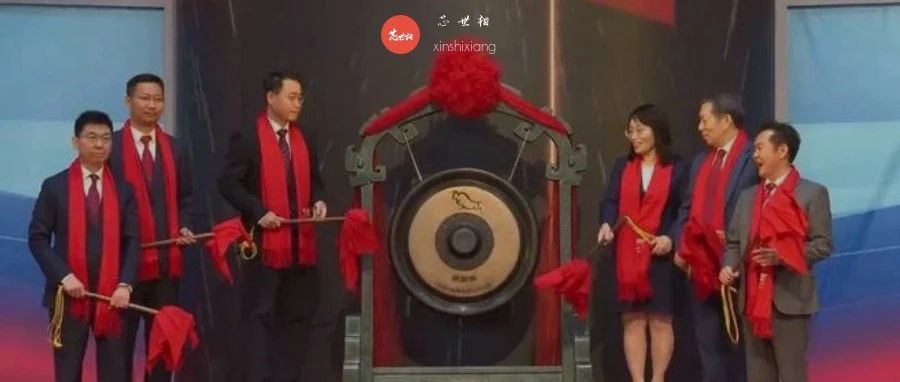
Core Viewpoint - The successful IPO of Beijing Yitang Semiconductor Technology Co., Ltd. marks the beginning of a wave of domestic semiconductor listings, highlighting the growing importance of the semiconductor industry in China [5][7]. Group 1: Company Overview - Yitang Semiconductor officially listed on the STAR Market on July 8, with an initial price of 8.45 yuan per share, experiencing a surge of over 200% at opening, leading to a market capitalization that briefly exceeded 77 billion yuan before settling around 60 billion yuan [5][6]. - The company raised 2.497 billion yuan through its IPO, ranking first in fundraising in Beijing [6]. - Yitang Semiconductor specializes in semiconductor equipment, focusing on the research, production, and sales of wafer processing equipment essential for integrated circuit manufacturing, with three core products: dry stripping equipment, rapid thermal processing equipment, and dry etching equipment [18][19]. Group 2: Financial Performance - Yitang Semiconductor reported revenues of 4.763 billion yuan in 2022, 3.931 billion yuan in 2023, and projected 4.633 billion yuan in 2024, with net profits of 383 million yuan, 310 million yuan, and 540 million yuan respectively [20][21]. - The company has a significant customer base, including major players like TSMC, Samsung, Micron Technology, Intel, SK Hynix, and SMIC, with over 4,600 units of its products installed globally by mid-2024 [22]. Group 3: Industry Trends - The successful IPO of Yitang Semiconductor is seen as a catalyst for a surge in domestic semiconductor IPOs, with several companies like Changxin Storage and Ziguang Zhanrui also initiating their listing processes [25][26]. - The semiconductor sector is witnessing a rush for IPOs, with many companies aiming to capitalize on the current favorable market conditions, as evidenced by the recent acceptance of multiple semiconductor companies' IPO applications by the stock exchanges [27][28]. - The competitive landscape is intensifying, as companies recognize the urgency of going public to secure funding and market positioning amid a challenging investment environment [30][31].
长鑫科技IPO,中国存储半导体产业迎来“成年礼”
Guan Cha Zhe Wang· 2025-07-08 15:09
Core Insights - The launch of Changxin Technology's first 12-inch DRAM wafer production line in July 2018 marked a new era for China's semiconductor storage industry [1] - Changxin Technology is initiating its A-share IPO process, signaling a new development phase for China's storage semiconductor industry [3][4] - The rapid growth of Changxin and other Chinese storage companies is reshaping the global DRAM market, challenging the dominance of established players like Samsung and SK Hynix [4][5] Industry Development - The Chinese storage semiconductor industry has shown remarkable growth over the past decade, with Changxin's DRAM production capacity expected to increase from 1.62 million wafers last year to 2.73 million this year, a 68% increase [4] - Traditional industry giants are feeling pressure from Chinese companies' aggressive pricing strategies, which are impacting their financial performance [4][5] - The competitive landscape is shifting from a "three-player" dominance to a "multi-competitor" scenario, providing consumers with more choices and competitive pricing [14][18] Company Strategy - Changxin's CEO, Zhu Yiming, emphasizes a commitment to not taking salary or bonuses until the project is profitable, reflecting a strong focus on long-term success [1][3] - The collaboration between Changxin and its partners, including Zhaoyi Innovation, showcases a successful model of integrating technology, capital, and government support [6][8] - The recent valuation of Changxin at 140 billion yuan indicates strong market confidence in its future growth and the overall potential of China's storage semiconductor industry [9] Future Outlook - Despite international sanctions and export controls, Chinese storage companies are aggressively expanding their market presence and technological capabilities [10][14] - The demand for high-performance storage products is expected to grow with the rise of AI, cloud computing, and 5G applications, presenting significant opportunities for Chinese firms [14] - The transition of Changxin and other companies to open market competition is seen as a necessary step for developing world-class competitive capabilities [17][18]