
上美股份

Search documents
化妆品医美行业周报:25H1收官国货表现分化,毛戈平等领衔增长-20250706
Shenwan Hongyuan Securities· 2025-07-06 11:44
Investment Rating - The report maintains a "Positive" outlook on the cosmetics and medical beauty industry [2]. Core Insights - The cosmetics and medical beauty sector underperformed the market during the week of June 27 to July 4, 2025, with the Shenwan Beauty Care Index declining by 0.6% and the Shenwan Cosmetics Index down by 1.5% [3][4]. - Domestic brands such as Maogeping and others showed significant growth, with some achieving over 50% growth in June, which is expected to positively impact Q2 performance [3][9]. - The report highlights a strong performance from leading domestic brands during the 618 shopping festival, with a notable increase in sales momentum post-event [9][10]. Summary by Sections Industry Performance - The Shenwan Beauty Care Index decreased by 0.6%, while the Shenwan Cosmetics Index fell by 1.5%, indicating weaker performance compared to the Shenwan A Index [4]. - The personal care products index saw a slight increase of 0.7%, but still lagged behind the Shenwan A Index by 0.4% [4]. Key Company Performance - Expected performance for major companies in Q2 includes: - Upbeauty: Revenue and net profit expected to grow by 16% and 25% respectively [11]. - Marubi: Anticipated revenue and net profit growth of 22% and 28% [11]. - Proya: Projected revenue and net profit growth of 10% and 15% [11]. - Maogeping: Expected revenue and net profit growth of 38% and 35% [11]. - Ruifeng: Anticipated growth of 70% and 75% in revenue and net profit respectively [11]. - Juzhibio: Expected growth of 25% and 20% in revenue and net profit [11]. Market Trends - The report notes a robust recovery in consumer demand, with a 4.1% year-on-year increase in retail sales for cosmetics in the first five months of 2025 [20]. - The domestic market is seeing a shift with local brands gaining market share, as evidenced by the performance of brands like Proya and Maogeping during major shopping events [34]. Investment Recommendations - Recommended stocks include: - Upbeauty, Proya, and Marubi for their comprehensive brand matrices and growth potential [15]. - Maogeping and Juzhibio for their strong positioning in niche markets [15]. - Attention is advised for Shanghai Jahwa, Betaini, and Huaxi Biological for potential growth [15]. E-commerce Insights - Data from Douyin indicates significant growth for domestic brands, with Han Shu achieving a GMV of 7.2 billion yuan, reflecting a 53% year-on-year increase [16]. - The overall GMV for domestic brands in June reached over 50% growth, indicating a strong market presence [9][16].




商贸零售行业周报:美丽田园股权结构优化,新氧青春诊所发展迅速-20250706
KAIYUAN SECURITIES· 2025-07-06 10:55
Investment Rating - The industry investment rating is "Positive" (maintained) [1] Core Views - The report highlights the rapid development of the "New Oxygen Youth Clinic" and the significant changes in the shareholding structure of "Beautiful Garden" following the exit of major shareholder CPE [5][24] - The report emphasizes the importance of emotional consumption themes and recommends high-quality companies in high-growth sectors [8][29] Summary by Sections Retail Market Overview - The retail industry index closed at 2152.72 points, down 0.16%, underperforming the Shanghai Composite Index which rose by 1.40% [7][14] - The retail sector has seen a decline of 3.85% year-to-date [14][17] Industry Dynamics - CPE plans to sell approximately 51.33 million shares (about 21.77%) of "Beautiful Garden," leading to a significant change in the company's shareholding structure [5][24] - "New Oxygen" has transformed from an online platform to a chain of clinics, with a 551% year-on-year increase in revenue for its chain business in Q1 2025 [5][27] Investment Recommendations - Investment Theme 1: Focus on differentiated product capabilities and consumer insights in the gold and jewelry sector, recommending companies like "Old Shop Gold," "Chao Hong Ji," and "Zhou Dafu" [8][29] - Investment Theme 2: Emphasize retail companies that actively adapt to trends, recommending "Yonghui Supermarket" and "Aiying Room" [8][29] - Investment Theme 3: Highlight domestic beauty brands with strong differentiation, recommending "Mao Ge Ping," "Po Lai Ya," and "Shang Mei" [8][30] - Investment Theme 4: Focus on differentiated medical beauty product manufacturers, recommending "Ai Mei Ke" and "Ke Di-B" [8][30] Company-Specific Insights - "Zhou Dafu" reported a revenue of 896.56 million HKD for FY2025, down 17.5%, with a focus on improving product structure and store quality [36][37] - "Old Shop Gold" achieved a revenue of 8.506 billion CNY for FY2024, up 167.5%, with a strong brand expansion strategy [31][32] - "Chao Hong Ji" reported a revenue of 2.252 billion CNY in Q1 2025, up 25.4%, driven by differentiated product offerings [39][40] - "Zhou Da Sheng" faced revenue pressure with a 47.3% decline in Q1 2025, but future growth potential is anticipated through brand optimization [42]
“整容大国”要因职场男性“易主”了
Sou Hu Cai Jing· 2025-07-04 06:27
Core Insights - Japan's beauty medical industry has reached a market size of approximately 594 billion yen, surpassing South Korea to become the new "cosmetic powerhouse" [2] - The growth of Japan's medical beauty market has been significant, with a 120% increase in 2021 and a continued rise in demand for various treatments [3] - Male consumers have become a major driving force in the industry, with the number of male clients increasing 16 times over the past decade [4] Market Growth - The medical beauty market in Japan expanded 2.39 times from 2009 to 2023, indicating a robust growth trajectory [4] - In 2023, the market size reached over 500 billion yen, reflecting a growth of 108.8% compared to the previous year [3] Consumer Behavior - Approximately 70% of surveyed men express concern about their appearance, with 43% considering some form of beauty medical treatment [5] - The pressure of workplace competition and the desire for self-confidence are significant motivators for men seeking cosmetic procedures [5][6] Economic Context - Japan's employment rate for new graduates reached a historic high of 98.1% in 2024, but the country faces a demographic challenge with a declining birth rate and an increasing death rate [5] - The economic downturn has led individuals to invest in their appearance as a strategy to enhance job security and competitiveness [9] Industry Comparison - Japan's medical beauty culture is evolving, with a notable increase in public acceptance and participation in cosmetic procedures [11] - The country aspires to replicate South Korea's successful model of integrating medical beauty with tourism and consumption, although challenges remain [12][13] Regulatory Environment - Japan's medical beauty industry currently lacks stringent regulatory oversight, leading to a rise in complications from procedures performed by non-specialist doctors [19] - The increase in reported complications highlights the need for improved regulatory measures to ensure patient safety [19] Investment Trends - Global beauty companies are increasingly investing in the medical beauty sector, with major brands like L'Oréal and Estée Lauder expanding their offerings [21][22] - Despite the growth potential, there are concerns about the sustainability of the medical beauty market, as evidenced by declining average spending per customer and increased competition [27]


逾30亿元投资锦波生物,钟睒睒布局千亿重组胶原蛋白市场
Xin Jing Bao· 2025-07-04 02:31
Core Viewpoint - The strategic investment actions by Jinbo Biotechnology have attracted significant attention, particularly due to the involvement of Zhong Shanshan, China's richest man, who is investing a total of 34.03 billion yuan through his companies [1][2]. Group 1: Investment Details - Jinbo Biotechnology will issue shares to Yangshengtang Co., Ltd., representing 6.24% of its total shares before the issuance, with a financing amount not exceeding 2 billion yuan [2]. - The share transfer agreement between Jinbo's controlling shareholder Yang Xia and Hangzhou Jiushi involves the transfer of 5,753,267 shares at a price of 243.84 yuan per share, totaling 1.403 billion yuan [2][3]. - After the transfer, Yang Xia will hold 50.73% of Jinbo, while Hangzhou Jiushi and Yangshengtang will hold 4.71% and 5.87%, respectively, making Zhong Shanshan the second-largest shareholder of Jinbo with 10.58% ownership [3]. Group 2: Company Overview - Jinbo Biotechnology focuses on the research, development, production, and sales of high-end implantable medical devices made from recombinant human collagen, primarily used in aesthetic medicine and skin repair [4]. - The company achieved significant revenue growth, with sales increasing from 233 million yuan in 2021 to 1.443 billion yuan in 2024, and net profit rising from 57.39 million yuan to 732 million yuan during the same period, reflecting a year-on-year growth rate of over 79% [4]. Group 3: Market Potential - The collaboration between Jinbo and Yangshengtang is expected to leverage their respective strengths in large-scale industrial production and market channel development, addressing the urgent need for a comprehensive production and sales system [5]. - The market for collagen-based skin care products is projected to surpass that of hyaluronic acid by 2026, with the overall market size for collagen in China expected to reach 173.8 billion yuan by 2027, of which recombinant collagen products will account for 1.083 billion yuan, representing 62.3% of the market [5].
人货场重构消费生态,聚焦新消费机遇
HTSC· 2025-07-03 12:27
Group 1 - The consumer industry is undergoing a profound transformation from scale expansion to quality upgrading, driven by policy incentives, technological iterations, and changes in consumer preferences and habits [1][14]. - The new consumer groups represented by Generation Z, the elderly, and women are pushing consumption demand towards personalization and quality [1][17]. - Domestic brands are experiencing sustained growth, with sensory experiences becoming the core touchpoint linking consumers and products [1][29]. Group 2 - The importance of domestic demand has been reaffirmed, with a shift in focus from short-term demand stimulation to systematically enhancing consumer willingness, supported by policies such as employment and entrepreneurship initiatives [2][50]. - From January to May 2025, the total retail sales of consumer goods increased by 5.0% year-on-year, indicating a recovery in domestic demand [2]. Group 3 - Four major consumption trends are identified: the rise of domestic brands, emotional consumption, the silver economy, and AI+ consumption [3][4]. - The silver economy is driven by an aging population, with the proportion of individuals aged 65 and above exceeding 14% in 2021, and expected to surpass 30% by 2035 [21][23]. - Emotional consumption is characterized by a shift from functional to self-rewarding and social value, with consumers willing to pay for emotional value [3][20]. Group 4 - The report recommends focusing on structural opportunities in the consumer sector, highlighting four core investment themes: the rise of domestic brands, high-growth emotional consumption, the burgeoning silver economy, and AI+ consumption [4][18]. - Specific companies are recommended for investment, including domestic brands like Lao Pu Gold, Shangmei Co., and Midea, as well as emotional consumption leaders like Pop Mart and Heytea [5][4]. Group 5 - The integration of AI into the consumer chain is emphasized, with a focus on companies that demonstrate strong product innovation capabilities [3][4]. - The rise of online sales driven by live streaming and e-commerce is reshaping the retail landscape, with online retail sales reaching 6.0 billion in the first five months of 2025, reflecting an 8.5% year-on-year growth [41][40]. Group 6 - The sensory experience is becoming a core value of brands, with consumers increasingly demanding high-quality sensory interactions [32][39]. - The marketing landscape is shifting towards decentralized models, with KOL and KOC marketing gaining prominence, allowing brands to achieve precise targeting and higher ROI [49][40].
平安证券晨会纪要-20250703
Ping An Securities· 2025-07-03 01:05
Group 1: Core Insights - The new generation of consumers, raised in the internet and mobile internet era, emphasizes experience, authenticity, self-focus, and personalization, driving changes in travel, retail, beauty, and pet sectors [2][6][8] - The tourism consumption potential is continuously being released, with a focus on broad beneficiaries in the OTA platform sector, particularly in domestic travel and inbound tourism [6][7] - Retail is returning to consumer demand itself, with traditional retail showing differentiated performance across categories, and recommendations include Alibaba and Yonghui Supermarket [7][8] Group 2: Industry Recommendations - In the beauty and pet sectors, domestic brands are thriving, with significant growth rates of 20-30% or more in specific segments like skincare and pet food [8] - The bond market is experiencing wide fluctuations due to policy uncertainties, with U.S. Treasury yields showing a downward trend in early months and an overall increase in May [3][9] - The credit spread in the credit bond market has slightly increased, but the overall increase is manageable due to stable hard data from the U.S. economy [9][11] Group 3: Market Trends - The commodity market shows varied performance, with crude oil prices down by 12.12% over the past week, while gold prices increased by 1.87% [4] - The U.S. labor market is showing signs of slowing down, with a surprising decrease in private sector employment in June, raising concerns about economic momentum [16][17] - The second-hand car market in China remains in a downturn, with the manager index at 42.3%, indicating a lack of demand and increased risks in transactions [19]
护发赛道成美妆品牌新战场
Bei Jing Shang Bao· 2025-07-02 13:13
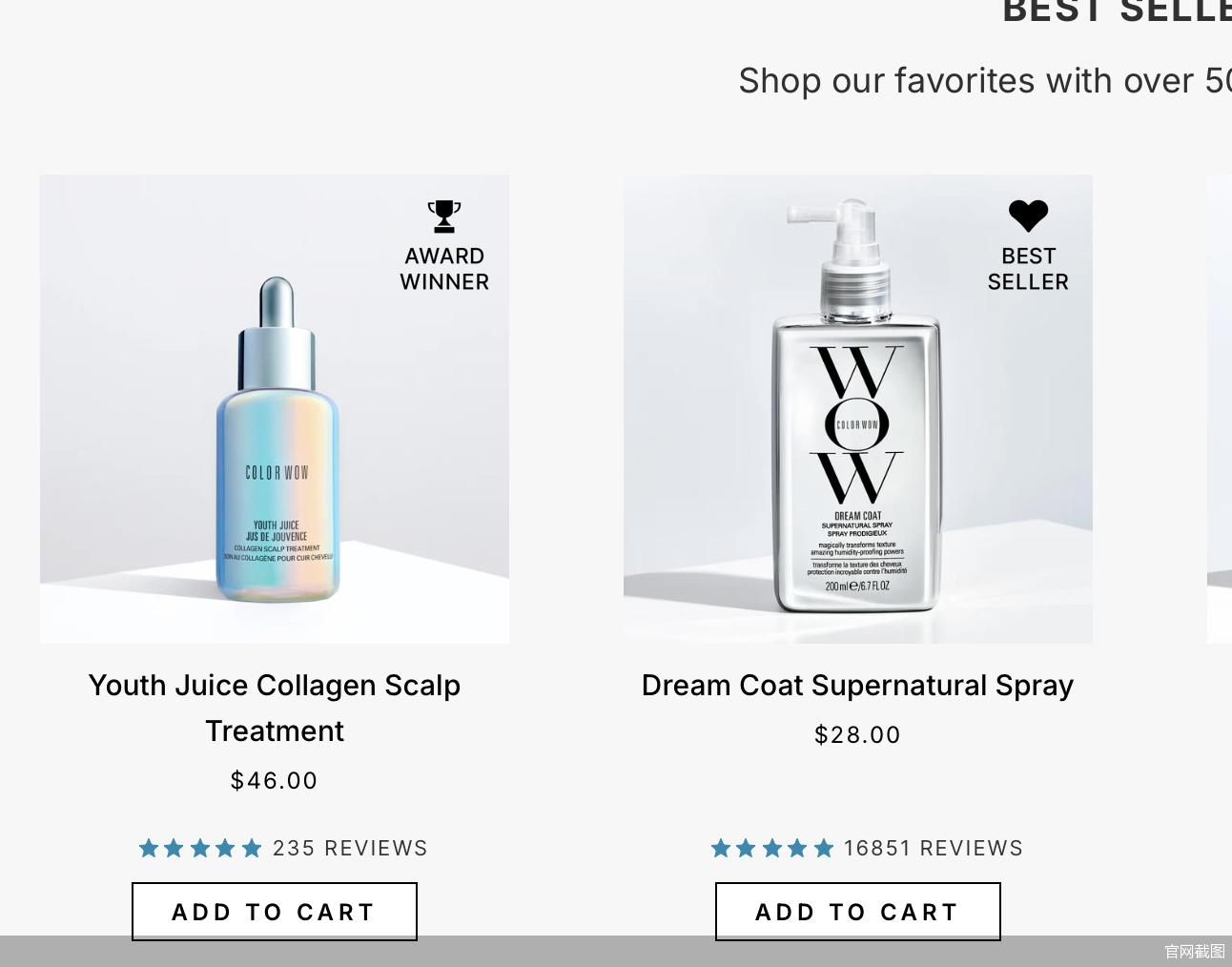
Core Insights - The acquisition of Color Wow by L'Oréal marks a strategic move to expand its high-end hair care portfolio and enter the growing Chinese market [1][4] - The hair care market in China is rapidly expanding, with significant competition among beauty brands to capture market share [7][8] Group 1: Acquisition Details - L'Oréal has signed an agreement to acquire Color Wow, a professional hair care brand founded in 2013, known for addressing stubborn hair issues [4] - Color Wow's sales have reportedly doubled over the past three years, with total sales exceeding $300 million and a target valuation of $1 billion [4] - The acquisition is seen as a way for L'Oréal to strengthen its position in the hair care and styling categories [4][5] Group 2: Market Dynamics - The Chinese hair care market is projected to grow from 581.4 billion yuan in 2021 to an estimated 668-691 billion yuan by 2025, driven by scalp care, premiumization, and export growth [7] - L'Oréal's professional hair care division has shown consistent growth, with a 5.3% increase in sales in 2024 and a 2.7% increase in Q1 2025 [5] - Competitors like Proya and Juhua Group are also expanding their presence in the hair care sector, indicating a highly competitive landscape [7][10] Group 3: Competitive Landscape - The hair care market in China is characterized by established brands like Procter & Gamble and Unilever, with L'Oréal ranking behind them in market share [10] - New entrants face challenges in a mature market, requiring strong technological differentiation and effective branding to succeed [11] - The competitive pressure is evident as brands like Proya and others are rapidly launching new products and expanding their market reach [7][10]

金融工程定期:港股量化:南下资金累计流入达2024年91%,7月增配成长
KAIYUAN SECURITIES· 2025-07-02 12:15
- Model Name: Hong Kong Stock Selection 20 Portfolio; Model Construction Idea: The model selects the top 20 stocks with the highest scores based on four types of factors (technical, capital, fundamental, and analyst expectations) from the Hong Kong Stock Connect sample stocks and constructs an equal-weighted portfolio at the end of each month; Model Construction Process: The model uses the Hong Kong Composite Index (HKD) (930930.CSI) as the benchmark. The specific construction process involves selecting the top 20 stocks with the highest scores based on the four types of factors and constructing an equal-weighted portfolio at the end of each month[3][37][39]; Model Evaluation: The model has shown excellent performance in the Hong Kong Stock Connect sample stocks[37] - Factor Name: Technical Factors; Factor Construction Idea: Technical factors are constructed based on the price and volume data of stocks; Factor Construction Process: The specific construction process involves calculating various technical indicators such as moving averages, relative strength index (RSI), and moving average convergence divergence (MACD) to evaluate the stock's price trend and momentum[37][38]; Factor Evaluation: Technical factors have shown good performance in the Hong Kong Stock Connect sample stocks[37] - Factor Name: Capital Factors; Factor Construction Idea: Capital factors are constructed based on the capital flow data of stocks; Factor Construction Process: The specific construction process involves calculating the net capital inflow and outflow of stocks to evaluate the stock's capital flow trend[37][38]; Factor Evaluation: Capital factors have shown good performance in the Hong Kong Stock Connect sample stocks[37] - Factor Name: Fundamental Factors; Factor Construction Idea: Fundamental factors are constructed based on the financial data of stocks; Factor Construction Process: The specific construction process involves calculating various financial ratios such as price-to-earnings (P/E) ratio, return on equity (ROE), and total market value to evaluate the stock's financial health and valuation[37][38]; Factor Evaluation: Fundamental factors have shown good performance in the Hong Kong Stock Connect sample stocks[37] - Factor Name: Analyst Expectation Factors; Factor Construction Idea: Analyst expectation factors are constructed based on the analyst ratings and target prices of stocks; Factor Construction Process: The specific construction process involves collecting and analyzing the analyst ratings and target prices of stocks to evaluate the stock's future performance expectations[37][38]; Factor Evaluation: Analyst expectation factors have shown good performance in the Hong Kong Stock Connect sample stocks[37] Model Backtest Results - Hong Kong Stock Selection 20 Portfolio, Annualized Excess Return: 13.3%, Excess Return Volatility Ratio: 1.0[4][40][41] Factor Backtest Results - Southbound Capital, Average Return: 25.7%[32][36] - Foreign Capital, Average Return: 13.5%[32][36] - Domestic Capital, Average Return: 14.0%[32][36] - Hong Kong Capital and Others, Average Return: 10.2%[32][36]
社会服务行业2025年中期策略报告:新世代、新需求、新消费-20250702
Ping An Securities· 2025-07-02 08:30
Group 1: Core Insights - The new generation of consumers, raised in the internet and mobile internet era, emphasizes experiential consumption, authenticity, and personalization, driving changes in travel, retail, beauty, and pet sectors [3][12] - The tourism sector is expected to continue its recovery, with domestic travel projected to reach 5.75 trillion yuan in 2024, a 17.1% increase year-on-year, and 56.15 billion domestic trips anticipated, marking a 14.8% growth [18][21] - The retail sector is returning to consumer demand, with traditional retail showing growth in essential goods and cultural consumption, while e-commerce platforms are focusing on optimizing consumer experiences [42][45] Group 2: Tourism Sector - Domestic tourism is recovering, with urban residents expected to make 43.7 billion trips in 2024, a 16.3% increase, and rural residents 12.45 billion trips, a 9.9% increase [18] - International travel is rebounding, with 1.23 billion outbound trips in 2024, a 41% increase, and inbound tourism expected to grow by 60.8% to 1.32 billion visitors [21][26] - OTA platforms like Ctrip and Tongcheng are benefiting from the recovery in travel demand and are expanding their inbound tourism services [27] Group 3: Retail Sector - The retail market is experiencing steady growth, with social retail sales expected to rise, and online retail growth slowing down as platforms focus on consumer needs [42][45] - Traditional retailers like Yonghui Supermarket are undergoing significant transformations to meet consumer demands, with a focus on quality and customer experience [57] - The cross-border e-commerce sector is adapting to changing tariff policies, with companies like Yiwu Market playing a crucial role in global supply chains [58][62] Group 4: Beauty and Pet Industries - The beauty and pet sectors are witnessing rapid growth, with domestic brands achieving revenue growth rates of 20-30% in niche markets [68][72] - The pet industry in China has surpassed 300 billion yuan in market size, reflecting the growing trend of pet ownership and related consumption [68] - Companies in the beauty sector, such as Aimeike, are expected to see growth due to lower base effects and strategic acquisitions [75]
珠宝美妆&纺服轻工行业2025年中期投资策略
2025-07-02 01:24
Summary of Key Points from the Conference Call Records Industry Overview Jewelry and Beauty Industry - The gold and jewelry industry is experiencing rapid growth in terminal sales, with a significant increase in demand for investment gold bars and coins, while the consumption of gold jewelry has declined year-on-year. [1][2] - High-end ancient gold and lightweight jewelry are becoming market hotspots, catering to the self-indulgent needs of the middle class and younger consumers. [1][4] - The cosmetics industry is seeing a slowdown in overall growth, with increased competition and the fading of e-commerce benefits. [1][13] Market Performance - In the first half of 2025, the gold and jewelry market performed strongly, with a retail sales growth rate exceeding 12% from January to May, significantly outpacing overall retail growth. [2] - Despite a general decline in terminal consumer demand, the demand for investment gold bars and coins has increased significantly, with gold jewelry consumption down 27% year-on-year in Q1 2025. [2] Company Performance Key Companies in Jewelry Sector - **Lao Pu Gold**: Exceeded expectations in store opening speed and saw an increase in profit margins due to product updates and revenue expansion. [6][7][8] - **Chow Tai Fook**: Achieved revenue growth through product upgrades and plans to open 20 new stores, with a focus on channel optimization. [9] - **Chao Hong Ji**: Attracted young consumers with trendy and high-end products, showing strong performance in Q1 2025. [10] - **Tai Bai Co.**: High proportion of investment gold products provides significant elasticity in the current market. [11] Cosmetics Sector - **Mao Ge Ping**: A high-end domestic makeup brand with strong product recognition and balanced online and offline channel development. [14][15] - **Shangmei Co.**: Showed strong growth during the 618 shopping festival, with significant increases in various product lines. [16] Sanitary Napkin and Oral Care Industry - The sanitary napkin industry faced short-term fluctuations due to public sentiment and promotional events, but Baia Co. is actively responding and expanding nationally. [17][18] - The oral care market remains stable, with rising demand for specialized products driving price increases. [18] Future Outlook Gold Price Expectations - Gold prices are expected to remain high in the second half of 2025, supported by geopolitical conflicts, safe-haven demand, and central bank purchases. [5] - Investment gold demand may cool down, but high-end ancient gold and lightweight jewelry are expected to continue growing. [5] Risks and Challenges - The furniture industry faces risks from potential real estate downturns, intensified price competition, and insufficient domestic demand leading to inventory buildup. [30][35] - The cosmetics industry is experiencing increased competition and a shift away from rapid growth, necessitating a focus on product development and operational capabilities. [13] Conclusion - The jewelry and beauty industries present significant investment opportunities, particularly in companies that are adapting to market changes and consumer preferences. [12]