谷歌

Search documents
国盛证券:高速率光芯片前景广阔 看好光芯片景气周期
Zhi Tong Cai Jing· 2025-12-29 06:53
Core Insights - The global Ethernet optical module market is expected to grow rapidly, with a projected increase of 35% to reach $18.9 billion by 2026, driven by strong demand for AI infrastructure and the application of optical interconnect technology in AI scale-up networks [3][1] - The demand for optical chips, which are essential components of optical modules, is expected to remain tight due to increasing requirements for high-speed optical communication [4][3] Group 1: Optical Chip Market Dynamics - Optical chips, consisting of laser and detector chips, are critical for optical modules, primarily used for optical signal conversion and processing [1] - The EML laser chip market is projected to reach $3.71 billion by 2024 and grow to $7.41 billion by 2030, with a compound annual growth rate (CAGR) of 12.23%, dominated by a few international giants [2][1] - Silicon photonic modules are driving demand for continuous wave (CW) lasers due to their high integration, low power consumption, and suitability for high-speed short-distance transmission [2][1] Group 2: Demand Drivers and Supply Constraints - The demand for optical modules is expected to continue rising, with the global Ethernet optical module market projected to exceed $35 billion by 2030, supported by AI infrastructure and cloud service providers increasing GPU purchases [3][1] - Major companies like Coherent and Lumentum are expanding their production capacities to meet the growing demand for high-speed optical components, with Coherent's production capacity expected to double within a year [4][5] - Tower's silicon photonic business is anticipated to exceed $220 million in revenue by 2025, driven by strong demand for 1.6T products and significant investments in capacity expansion [6][5] Group 3: Company-Specific Developments - Coherent is experiencing strong growth in orders for 800G and 1.6T transceivers, with plans to expand production capabilities in multiple locations [4][1] - Lumentum has set a record for EML laser shipments driven by demand for 100Gbps products and is beginning to deliver CW lasers to 800G optical module manufacturers [5][1] - Broadcom's AI network demand has led to a significant increase in orders for optical components, with a backlog of approximately $73 billion, including $20 billion from network and optical interconnect products [7][1]


巴菲特谢幕!手握万亿资金的继任者,是否会加速拥抱AI?
Sou Hu Cai Jing· 2025-12-29 00:54
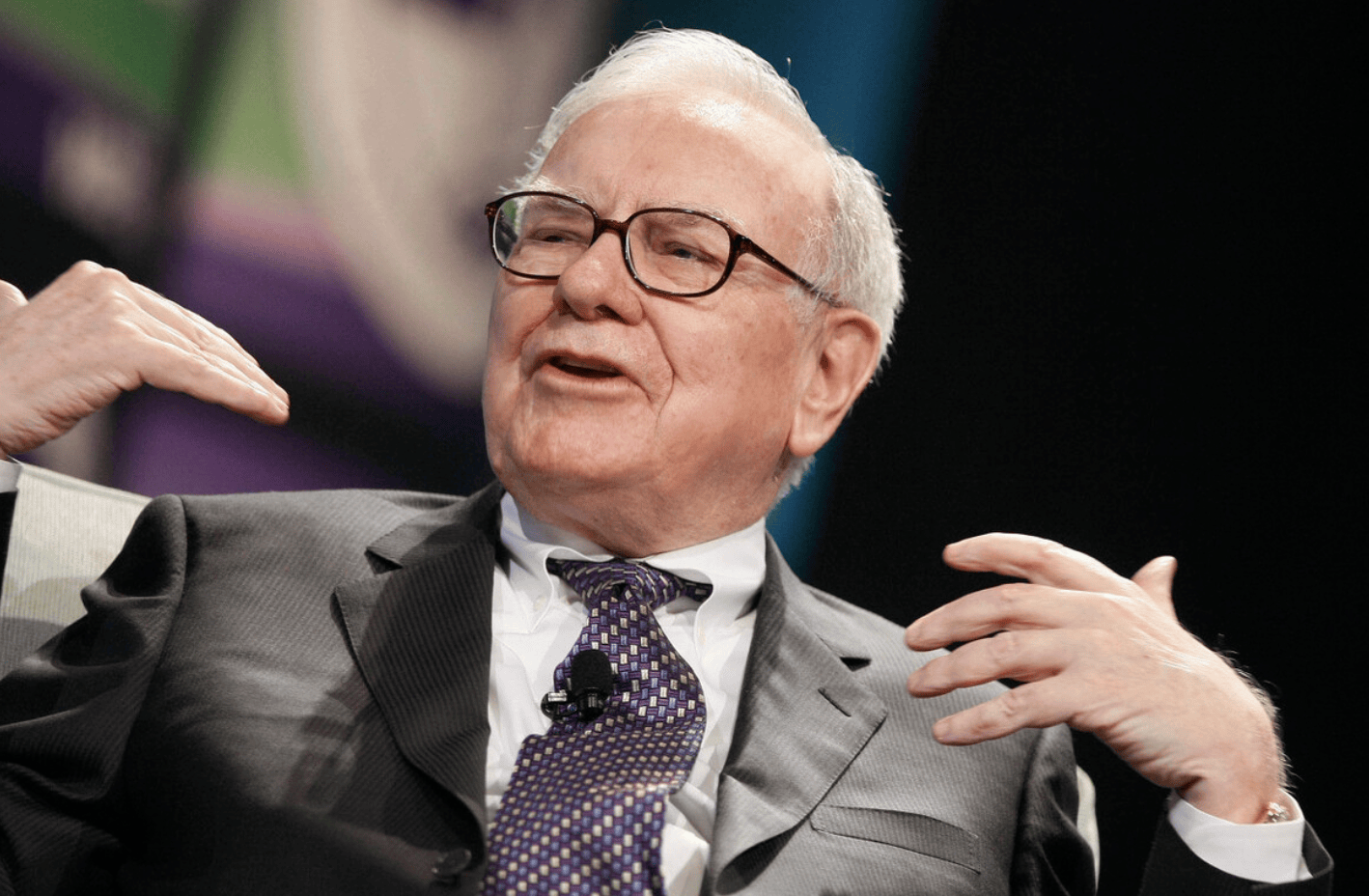
在最高光的时刻谢幕,是巴菲特给资本市场的最终答案。 面对资本市场的复杂,巴菲特用一生实践了"价值投资"的理念,并验证了它存在的价值。 自1965年接手伯克希尔·哈撒韦以来,六十多年的时光,巴菲特将这家濒临破产的纺织企业带到了前所未有的高度,让世界见证了市场的力量,如今这家企 业已成为一家市值超万亿美元的综合性金融集团。 根据相关媒体报道,退休之际,巴菲特本人的净资产已达1510亿美元,位居彭博亿万富豪榜单第十位。 据巴菲特的"谢幕信",从今年开始他就不再撰写伯克希尔·哈撒韦的年度报告,也就是说,往后再要想从年度报告"窥探"他本人对市场短期或者长期的看 法,已无机会。 从巴菲特的投资生涯来看,拥抱现金流比较好的企业,深耕消费、能源以及综合性金融贯穿了他的整个投资生涯,在"价值投资"的加持下,巴菲特享受到了 这些行业发展的红利,也在时代的发展中完成了蜕变。 近十年以来,巴菲特重要的一笔投资,就是2018年选择了苹果。这笔投资延续了伯克希尔的投资神话,成了巴菲特继续笑傲资本市场的砝码。最近两年,巴 菲特开始大幅减持苹果,为继任者格雷格·阿贝尔留下足够腾挪的空间。 当用后视镜视角去审视巴菲特的交易,可以清晰地认识到, ...

12月29日周末要闻:美乌会晤结束 领土问题未谈妥 特朗普称接近达成协议 泰国与柬埔寨宣布停火
Xin Lang Cai Jing· 2025-12-28 22:58
Company - Waymo's San Francisco system faces scrutiny over the emergency capabilities of its autonomous taxis [6] - Bank of America CEO anticipates a cooling of the tariff situation under Trump [6] - Nvidia restructures its cloud computing team after exiting competition with Amazon Web Services [6] - Former IBM CEO Louis Gerstner passes away at the age of 83 [6] - Reports indicate that JPMorgan has recently frozen accounts of several stablecoin startups [6] - U.S. companies plan to streamline operations by 2026, with a decrease in voluntary employee turnover rates at firms like IBM [6] - Indian instant delivery platform Zepto submits an IPO application, indicating intensifying competition in the instant retail sector [6] Industry - The S&P 500 index is targeting the 7000-point mark, with investors looking forward to a strong performance closure for 2025 [6] - Analysts question Nvidia's transaction with Groq, suggesting potential regulatory evasion, with transaction details pending disclosure [6]

巴菲特谢幕、OpenAI搅动万亿市值、谷歌强势崛起......2025全球十大商业事件盘点
美股IPO· 2025-12-28 16:03
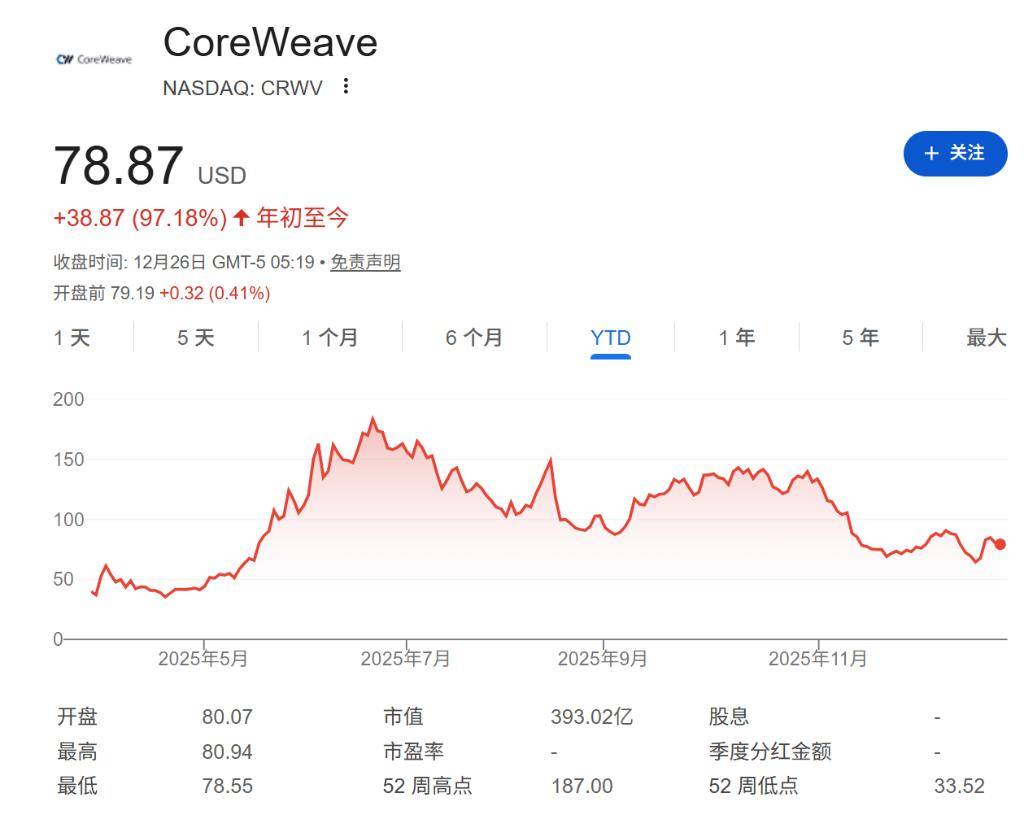
Core Insights - The year 2025 witnessed a significant reshaping of the global business landscape driven by AI, with OpenAI emerging as a "shadow giant" despite not being publicly listed, influencing market valuations through orders and narratives [1][3] - Nvidia became the world's first company to reach a market capitalization of $5 trillion, while Google aggressively pursued AI pricing power [1][3] - The year marked a collision of old and new orders, characterized by a mix of high-stakes bets and reversals, reshaping technology, capital, and the direction of the era [1][3] Group 1: Major Events - The U.S. government launched the "Stargate" initiative, committing $500 billion to build 20 large-scale AI data centers, but faced challenges in execution, leading to a significant reduction in project scope [5][6] - CoreWeave went public with a valuation of approximately $230 billion, marking the first public market pricing of AI computing power, and secured substantial long-term contracts with major clients [7][9] - Nvidia invested $5 billion in Intel, marking a strategic partnership aimed at enhancing competitiveness in the PC and data center markets [11][13] Group 2: OpenAI's Market Influence - OpenAI, although not publicly traded, became a key driver of market sentiment, with its initiatives and financial performance causing significant fluctuations in stock prices across the AI sector [15][17] - The company faced scrutiny over its financial sustainability, with concerns about its revenue and valuation mismatch leading to a decline in market confidence [19] - By the end of the year, OpenAI's perceived value shifted from a premium label to a risk exposure, reflecting the changing dynamics in the AI market [19] Group 3: Industry Dynamics - The AI competition evolved from a focus on strength to considerations of cost-effectiveness and usability, with Google positioning itself to challenge Nvidia's dominance in AI infrastructure [38][39] - The automotive industry saw a significant policy reversal in Germany, allowing internal combustion engines to remain viable beyond 2035, highlighting the tension between aggressive transition goals and market realities [33][34] - SpaceX's record number of launches in 2025 redefined the concept of "industrialized space," showcasing the potential for scalable operations in the aerospace sector [28][30]

高速率光芯片前景广阔,看好光芯片景气周期
GOLDEN SUN SECURITIES· 2025-12-28 11:18
Investment Rating - The report maintains a "Buy" rating for the industry, specifically highlighting the potential of high-speed optical chips and the favorable market conditions for optical modules [5]. Core Insights - The optical chip market is expected to experience significant growth driven by AI demand, with the global EML laser chip market projected to reach 3.71 billion yuan in 2024 and grow to 7.412 billion yuan by 2030, reflecting a compound annual growth rate (CAGR) of 12.23% [1][27]. - The demand for optical modules is on the rise, with the global Ethernet optical module market expected to grow by 35% to 18.9 billion USD in 2026, and further double-digit growth anticipated from 2027 to 2030, potentially exceeding 35 billion USD by 2030 [3]. - The report emphasizes the critical role of optical chips in optical modules, which are essential for high-speed data transmission in various applications, including data centers and telecommunications [12][13]. Summary by Sections Section 1: Optical Chips - Optical chips are the core components of optical modules, essential for converting optical signals and determining transmission efficiency in communication systems [12]. - The EML laser chip, a high-end product, is in high demand due to its capabilities in long-distance and high-speed data transmission, particularly in AI applications [24][26]. - The market for EML chips is currently dominated by a few international giants, including Lumentum and Coherent, with domestic manufacturers striving to increase their market share through technological advancements [27][38]. Section 2: Silicon Photonic Modules - Silicon photonic modules are characterized by high integration, low power consumption, and cost-effectiveness, which are driving the demand for continuous wave (CW) lasers [2]. - The transition to higher data rates (800G/400G) necessitates the use of advanced laser chips, further boosting the demand for CW lasers [2]. Section 3: Market Dynamics - The report indicates a tight supply-demand situation for optical chips, driven by the increasing demand for optical modules in AI infrastructure and cloud computing [3]. - Major companies like Coherent and Lumentum are expanding their production capacities to meet the growing demand for high-speed optical components [6][7]. - The report highlights the expected growth in the optical module market, with significant contributions from AI-driven applications and the expansion of data center networks [3][28]. Section 4: Key Companies - Coherent is experiencing strong growth in demand for its 800G and 1.6T transceiver orders, with plans to double its production capacity in the coming year [5][6]. - Lumentum has reported record shipments of EML lasers, driven by demand for 100Gbps and 200Gbps products, and is expanding its production capacity to meet future needs [6][7]. - Tower Semiconductor is also seeing significant revenue growth from silicon photonic products, with plans for substantial capacity expansion [8].
1600亿,宜春首富要IPO了
投资界· 2025-12-28 08:47
Core Viewpoint - Tianfu Communication is planning to issue H-shares and list on the Hong Kong Stock Exchange, with founder Zou Zhinong at the forefront of this initiative, reflecting the company's significant growth and market presence driven by AI demand and technological advancements [2][8]. Company Background - Zou Zhinong, born in 1968 in Jiangxi, China, graduated from Jilin University in 1991 and initially worked in a state-owned enterprise before venturing into business in 1995 [3]. - In 2005, Zou co-founded Tianfu Precision Ceramics, focusing on ceramic sleeves essential for optical fiber connections, breaking the monopoly held by Japanese companies [4]. Business Development - Tianfu Communication has developed a comprehensive solution for passive optical devices and advanced optical packaging, with applications in AI data centers, telecommunications, and optical sensing [4]. - The company has established a global presence with headquarters in Suzhou and Singapore, and production bases in Jiangxi and Thailand, selling products to over 20 countries [5]. Financial Performance - Since its listing on the Growth Enterprise Market in 2015, Tianfu Communication's stock has surged, with a 220% increase in 2023 alone, reaching a market capitalization of over 1600 billion yuan [6]. - The company's revenue for the current year has reached 3.9 billion yuan, a year-on-year increase of 63.63%, driven by the growth in AI and data center demands [7]. Market Position - Tianfu Communication is positioned as a key supplier of optical components for major players in the industry, avoiding direct competition by not producing its own optical modules [7]. - The company has successfully secured high-end optical chip production capacity from Lumentum, a supplier for Google, indicating strong future growth potential [8]. Industry Trends - The rise of AI and the increasing demand for optical modules have created a favorable environment for companies like Tianfu Communication, which provide essential components for data transmission [6][7]. - The competitive landscape is evolving, with new players like Google's TPU chips potentially increasing the demand for optical modules, further benefiting Tianfu Communication [7]. Wealth Creation - The stock market performance of Tianfu Communication and its peers has led to significant wealth creation for early investors and stakeholders, with notable increases in stock prices and market capitalizations [9][10]. - However, many early investors have exited the company before realizing the current financial gains, highlighting the complexities of capital market investments [10][11].

巴菲特谢幕、OpenAI搅动万亿市值、谷歌强势崛起……2025全球十大商业事件盘点
Sou Hu Cai Jing· 2025-12-28 06:29
Group 1 - The AI competition has intensified, with significant investments and developments shaping the landscape, including a $500 billion commitment from the U.S. government for AI infrastructure [5][15][22] - CoreWeave's IPO marked the first public market valuation of AI computing power, demonstrating a shift in how GPU resources are perceived and utilized [7][10][11] - NVIDIA became the world's first $5 trillion company, driven by soaring demand for GPUs essential for AI applications, with its market cap surpassing that of several major companies combined [22][23][24] Group 2 - Germany revised its 2035 ban on combustion engines, allowing for a transition period that reflects the tension between aggressive climate goals and market realities [2][31] - OpenAI, despite not being publicly listed, emerged as a significant market influencer, with its activities affecting the entire AI industry narrative throughout 2025 [15][19] - The partnership between NVIDIA and Intel, involving a $50 billion investment, signifies a strategic alliance aimed at enhancing competitiveness in the PC and data center markets [13][14] Group 3 - SpaceX's record of 155 launches in 2025 illustrates the industrialization of space travel, with a focus on reusability and cost efficiency [26][30] - Google's dual strategy of developing proprietary chips and models positions it to challenge NVIDIA's dominance in AI infrastructure, aiming for a significant market share [33][34] - NVIDIA's acquisition of Groq's technology highlights the shift in focus from training to inference in AI, emphasizing the importance of efficiency in computing power [35][36]
巴菲特谢幕、OpenAI搅动万亿市值、谷歌强势崛起......2025全球十大商业事件盘点
Hua Er Jie Jian Wen· 2025-12-28 06:09
Group 1 - The "Stargate" project, a $500 billion investment in AI infrastructure, was announced by the White House, aiming to build 20 large-scale AI data centers across the U.S. [2][3] - Initial enthusiasm for the project waned as disagreements over equity and funding emerged between SoftBank and OpenAI, leading to delays and a reduction in project scope [3][4] - By December, only the Abilene site showed significant progress, with plans to become the largest AI cluster by mid-2026, while other sites remained unconfirmed [3][4] Group 2 - CoreWeave went public with a valuation of approximately $230 billion, marking the first public market pricing of AI compute leasing [4][7] - The company transitioned from a cryptocurrency mining operation to a GPU cloud service, securing long-term contracts with major clients, including OpenAI [7][8] - CoreWeave's success has prompted similar companies to pursue IPOs and has changed the perception of compute power from a scarce resource to a flexible asset [8] Group 3 - NVIDIA became the first company to reach a market capitalization of $5 trillion, driven by the demand for GPUs in AI applications [20][22] - The company's stock price surged approximately 90% over six months, reflecting its pivotal role in the AI market [22][23] - Concerns about the sustainability of NVIDIA's valuation have emerged, drawing parallels to the dot-com bubble [22][23] Group 4 - Warren Buffett announced his retirement in his final letter to shareholders, marking the end of an era for Berkshire Hathaway [24][25] - Buffett emphasized the importance of long-term thinking in business and criticized the competitive nature of executive compensation [25][26] Group 5 - SpaceX completed 155 launches in 2025, redefining the concept of scalable space operations [26][27] - The company achieved significant cost reductions through reusable rocket technology, transforming rockets into "turnaround assets" [27][28] - SpaceX is moving towards an IPO, signaling a shift from engineering marvels to industrial-scale operations in commercial space [30] Group 6 - Germany revised its 2035 ban on internal combustion engines, allowing for a transition period that reflects market realities [31][32] - The decision was influenced by lobbying from major automotive companies and highlighted the gap between aggressive climate goals and actual market conditions [31][32] Group 7 - Alphabet's market capitalization rose to $3.8 trillion, driven by advancements in AI technology and a focus on self-developed chips and models [34][36] - The company aims to challenge NVIDIA's dominance by enhancing the compatibility of its TPU with popular frameworks and directly selling its hardware [34][35] - The competition in AI is shifting towards cost efficiency and usability, with Alphabet positioning itself as a potential leader in the new AI platform landscape [35][36] Group 8 - NVIDIA acquired Groq's core technology for approximately $20 billion, emphasizing the importance of low-latency inference capabilities in AI [37][39] - This strategic move reflects a shift in focus from training to inference, as companies seek to optimize costs and efficiency in AI applications [39]
贵金属狂欢引领年末行情,美股微跌终结连涨,中概股逆势走强
Jin Rong Jie· 2025-12-27 01:04
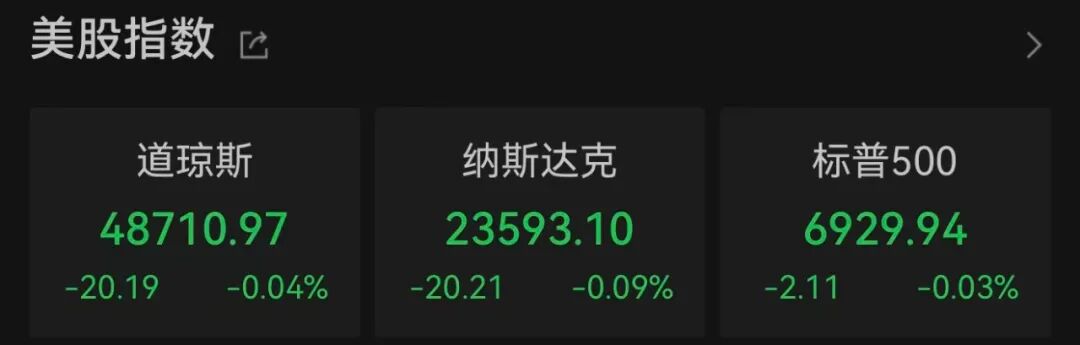
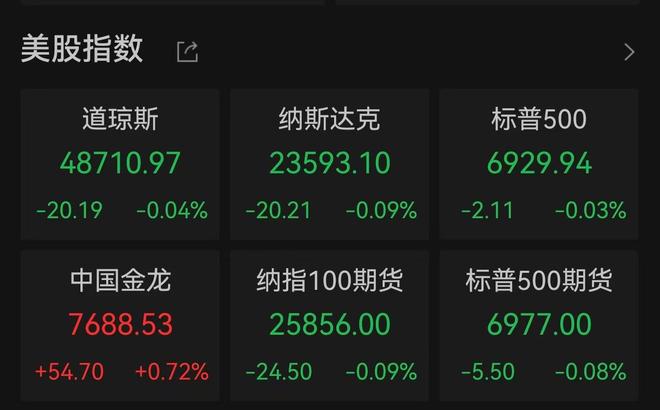
在年末的钟声即将敲响之际,全球金融市场再次展现了其变幻莫测的一面。美股市场在经历了一波连涨 之后,于周五(12月26日)出现了窄幅震荡,三大指数集体微跌,为全年的行情画上了一个暂时的逗 号。与此同时,贵金属市场却异军突起,金银价格同步创下历史新高,成为年末市场的一大亮点。 美股震荡,科技股与芯片股表现分化 周五,美股市场呈现出窄幅震荡的态势,道琼斯指数微跌0.04%,报48710.97点;标普500指数下跌 0.03%,收于6929.94点;纳斯达克综合指数也下滑0.09%,至23593.10点。尽管三大指数均有所回落, 但市场分析人士指出,这更多是技术性调整和仓位布局的结果,而非基本面出现重大变化。 在个股方面,大型科技股表现分化。英伟达凭借与AI芯片初创公司Groq的技术授权协议及人才招揽, 股价上涨超过1%,收于11月13日以来的最高水平。然而,特斯拉、脸书、谷歌、苹果和微软等科技巨 头则纷纷下跌,跌幅在0.06%至2.1%之间。芯片股方面,费城半导体指数微涨0.05%,但个股表现参差 不齐,台积电涨超1%,而ARM和恩智浦半导体则下跌超过1%。 | 名称 | 现价 | 涨跌 -- | | --- | ...
黄金、白银深夜爆发!美股收跌
Zhong Guo Zheng Quan Bao· 2025-12-27 00:58
Market Overview - On December 26, U.S. stock indices closed lower, with the S&P 500 index reaching a record high during the session. All three major indices saw gains for the week [1][3] - The Dow Jones Industrial Average fell by 0.04%, with a weekly increase of 1.20%. The Nasdaq index decreased by 0.09%, up 1.22% for the week. The S&P 500 index dropped by 0.03%, gaining 1.40% over the week [3] Technology Sector - Most large-cap tech stocks declined, with the Wind data showing the U.S. Tech Giants Index down by 0.06%. Notably, NVIDIA rose over 1%, while Tesla fell more than 2% [5] Semiconductor Sector - The Philadelphia Semiconductor Index increased by 0.05%. TSMC rose by 1.39%, and Entegris gained 0.91% [6][7] Chinese Stocks - The Nasdaq Golden Dragon China Index rose by 0.72%, with notable gains from XPeng Motors, which increased over 6%, and Dingdong Maicai, which rose over 5% [8][9] Precious Metals - Gold and silver prices reached new historical highs. On December 26, spot gold rose by 1.19%, and COMEX gold futures increased by 1.31%. Spot silver surged by 10.47%, while COMEX silver futures jumped by 11.15% [11]