
地平线

Search documents
53岁罗永浩,拿下新人奖;李亚鹏医院欠租超2000万,李国庆称要投资;6300亿,寒武纪摘得榜首;许家印侄子许火健,豪宅被法拍 || 大件事
Sou Hu Cai Jing· 2026-01-19 10:20
wumiancaijing.com 最热的泛财经新闻,都在这儿了。 重要提醒!!!为防失联,请"星标"我们!进入无冕财经公众号,点击右上角"...",再"",以便您及时接收每篇推送~ 本文由无冕财经(wumiancaijing)整理发布 资讯整理:海棠葉 编辑:程程 设计:岚昇 53岁罗永浩拿下B站百大新人奖 微博被禁言后首次亮相 1月18日晚,在B站年度百大UP主颁奖典礼上,罗永浩和于谦同台亮相,获年度新人奖。这是罗永浩微博被禁言后的首次公开活动。 / ▲罗永浩领奖,图源网络 不过,见过大风大浪的老罗丝毫没有慌张,淡定道:"这是我们喜剧界最不怕出现的场面,(节目)效果很好。" 据了解,这次罗永浩获奖的核心原因,是他在B站推出的新视频播客——《罗永浩的十字路口》。该播客于2025年8月19日正式上线,内容丰富,目前在B 站获赞已超过120万。其中,罗永浩与360创始人周鸿祎、理想汽车创始人李想、魔术大师刘谦、导演大鹏等的深度对谈都大受欢迎,和影视飓风TIM合作 的一期,目前播放量高达560万。 有趣的是,罗永浩领奖的时候还发生了一个小意外。老罗刚接过奖杯,奖杯的头就掉了,直接咕噜噜滚到了地上。 而罗永浩的发言 ...


胡润研究院发布中国人工智能50强,寒武纪以6300亿元价值居榜首
Xin Lang Cai Jing· 2026-01-19 07:59
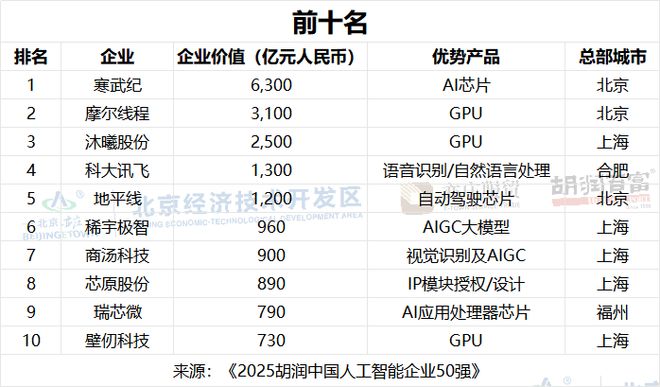
1月19日,胡润研究院发布《2025胡润中国人工智能企业50强》。AI芯片企业寒武纪以6300亿元的价值位居榜首,比去年增长165%;国产GPU第一股摩尔线 程排名第二,价值3100亿元;中国首批实现全流程国产化的高端GPU企业沐曦排名第三,价值2500亿元。 居榜单首位的寒武纪于2016年成立,源自中科院计算所,2020年A股上市成为中国AI芯片第一股。公司专注云边端一体、软硬件协同AI芯片,提供MLU架 构芯片、加速卡、整机及Cambricon Neuware软件栈,2025年上半年,寒武纪实现营收28.8亿元,同比大幅增长43倍。 摩尔线程与沐曦股份分别位列第二、三位。两家均是成立于2020年的GPU企业。摩尔线程聚焦全功能GPU研发,2025年上市,2025年前三季度营收同比增长 182%;沐曦股份则实现全流程国产化高端GPU突破,曦云系列芯片累计交付超2.8万颗,在手订单达14.3亿元。 科大讯飞以1300亿元的价值位居第四,稳居智能语音赛道标杆;地平线以1200亿元的价值位居第五,稳居车载AI芯片及智驾解决方案领军地位。 在上榜企业中,北京以19家企业的数量领先,包括寒武纪、月之暗面和云知声等知名 ...

《2025胡润中国人工智能企业50强》重磅发布 寒武纪(688256.SH)以6300亿价值位居榜首
Zhi Tong Cai Jing· 2026-01-19 03:41
Core Insights - The "2025 Hurun China AI Companies Top 50" list highlights the growth and valuation of AI-focused companies in China, with a significant increase in the number of AI chip companies due to tightening U.S. export controls on high-end AI chips [1][3]. Group 1: Rankings and Valuations - Cambricon leads the list with a valuation of 630 billion RMB, marking a 165% increase from the previous year [1][3]. - Moer Technology ranks second with a valuation of 310 billion RMB, experiencing a 182% year-on-year revenue growth [1][3]. - Muxi ranks third with a valuation of 250 billion RMB, being one of the first companies to achieve full domestic production of high-end GPUs [1][3]. - The average valuation of listed companies is 54 billion RMB, which is 2.4 times higher than last year [1]. Group 2: Market Trends - The number of AI chip companies on the list has increased to 14, up from 5 last year, indicating a growing focus on AI chip development in China [1]. - The entry threshold for the list has risen to 9.5 billion RMB, an increase of 3.5 billion RMB from the previous year [1]. - The top ten companies have a combined valuation significantly higher than last year, reflecting the rapid growth in the AI sector [1]. Group 3: Geographic Distribution - Beijing leads with 19 companies on the list, followed by Shanghai with 14, indicating a concentration of AI talent and resources in first-tier cities [1]. - Over 80% of the listed companies are based in first-tier cities, showcasing their importance in the AI industry [1]. Group 4: Company Profiles - Cambricon has achieved a revenue of 2.88 billion RMB in the first half of 2025, a 43-fold increase year-on-year [3]. - Moer Technology's rapid IPO process has garnered significant attention, with a record approval time of 88 days [3]. - iFlytek, ranked fourth, has a valuation of 130 billion RMB and is a leader in intelligent voice and natural language processing technologies [3].
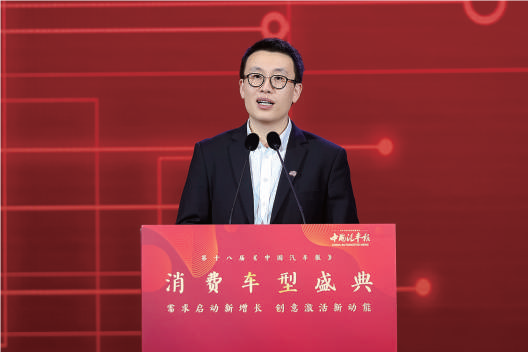
地平线副总裁、战略部&智驾产品规划与市场部负责人吕鹏:以算力、算法引领智驾“平权”革命
Zhong Guo Qi Che Bao Wang· 2026-01-19 03:31
Core Insights - The automotive industry in China has achieved global leadership in self-owned brands through electrification, laying a solid foundation for the next phase of intelligent driving [1] - Intelligent assisted driving is transitioning from a luxury feature exclusive to high-end models to a new generation of automatic driving that benefits all consumers, marking the beginning of an inclusive movement across all price ranges and scenarios [1][3] Industry Trends - Consumers across all price segments are increasingly prioritizing intelligent driving capabilities when purchasing vehicles, making this feature a key competitive element [3] - The value of assisted driving lies in addressing complex daily commuting scenarios, evolving from "usable" to "user-friendly," thus becoming a necessity for alleviating driving fatigue and enabling efficient travel [3] Technological Developments - Horizon Robotics proposes a solution to industry pain points with its "high computing power + high throughput" approach, utilizing the Journey 6 series chips to create a robust computational foundation for assisted driving [4] - The Journey 6 series includes various models, such as Journey 6P, Journey 6M, Journey 6E, and Journey 6B, each designed for different driving scenarios and market needs, achieving significant cost reductions without sacrificing performance [4] Product Innovations - The HSD all-scenario assisted driving system, built on the Journey 6P, is positioned as a "Chinese version of FSD," emphasizing human-like driving behavior and safety [5] - HSD has garnered recognition from over 10 automotive companies, with more than 20 models already in production, contributing to a milestone of over 10 million units shipped [5] Future Outlook - Horizon Robotics aims to enhance safety and user experience during the critical transition from assisted driving to autonomous driving over the next 3 to 5 years, promoting the widespread adoption of all-scenario assisted driving [6] - The company emphasizes collaboration with partners to empower the intelligent automotive industry and improve the quality of assisted driving experiences for a broader audience [6]
英伟达正在被中国车企抛弃
3 6 Ke· 2026-01-19 02:19
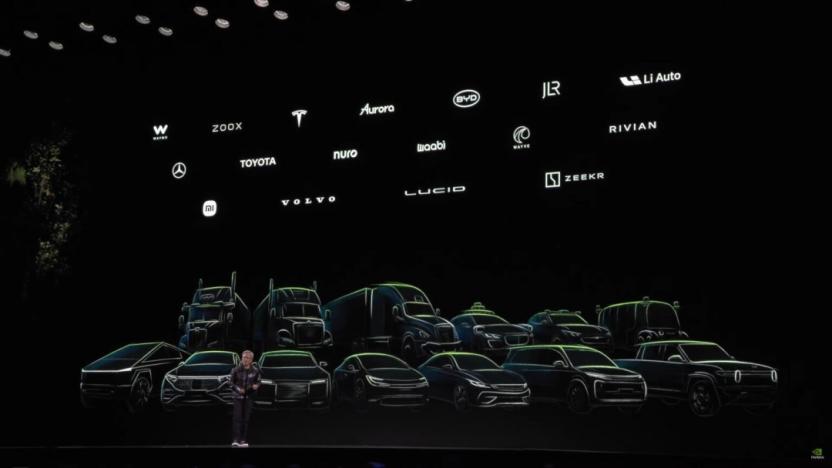
Core Viewpoint - The automotive industry is witnessing a significant shift towards self-developed chips, with companies like Xiaopeng and NIO moving away from NVIDIA's chips to their own solutions, indicating a trend where automakers prioritize self-sufficiency in technology [1][5][16]. Group 1: Market Dynamics - Xiaopeng has launched four new models equipped with its self-developed Turing chip, marking a complete transition from NVIDIA's chips [1]. - NIO is also transitioning to its self-developed Shenqi chip, which is expected to reduce costs significantly compared to purchasing NVIDIA chips [1][5]. - NVIDIA's market share in the high-end autonomous driving chip sector is projected to decline from 39% in 2024 to 25% in 2025, as more companies adopt self-developed solutions [1][5][8]. Group 2: Competitive Landscape - In 2024, NVIDIA's Orin-X chip held a 39.8% market share with 2.1 million units shipped, but its dominance is being challenged by Chinese companies like Horizon Robotics, which offers competitive chips at lower prices [3][4]. - Horizon's J5 chip has secured contracts with over nine automakers for more than 20 models, highlighting the growing competition in the mid-range chip market [4]. - By 2025, NVIDIA's partnerships with major clients like NIO and Xiaopeng have diminished, indicating a shift in the competitive landscape [5][8]. Group 3: Financial Performance - NVIDIA's automotive revenue for the first three quarters of fiscal 2025 was only $1.745 billion, accounting for just over 1% of its total revenue of $147.8 billion, with the majority coming from data center and AI-related products [12][14]. - The company has faced challenges with the delayed launch of its Thor chip, which has affected automakers' product timelines and market strategies [15][16]. Group 4: Strategic Shifts - NVIDIA is attempting to transition from a chip supplier to a comprehensive autonomous driving solution provider, as evidenced by its hiring of key personnel from Xiaopeng and the introduction of the open-source VLA model [17][18]. - The effectiveness of NVIDIA's open-source model, Alpamayo, has been questioned, with concerns about its practical application in the automotive sector [18].


汽车智能化月报系列三十一:工信部许可两款L3级自动驾驶车型产品,希迪智驾、图达通港交所上市【国信汽车】
车中旭霞· 2026-01-18 13:43
Core Insights - The article discusses the latest developments in the automotive intelligence sector, highlighting advancements in L3 autonomous driving technology and the increasing penetration rates of various intelligent features in vehicles. Group 1: L3 Autonomous Driving Developments - The Ministry of Industry and Information Technology has approved two L3 autonomous driving vehicle models, marking a significant step towards commercial application in China [10]. - Tesla's Full Self-Driving (FSD) technology is expected to receive full approval in China by early 2026, indicating progress in regulatory acceptance [11]. - Xiaopeng Motors has obtained a road testing license for L3 autonomous driving in Guangzhou, furthering its testing capabilities [12]. Group 2: Market Penetration Rates - As of October 2025, the penetration rate of passenger vehicles with L2 and above features reached 33%, a year-on-year increase of 19 percentage points [8]. - The penetration rates for advanced driver-assistance systems (ADAS) such as highway NOA and urban NOA are 33.8% and 16.2%, respectively, with year-on-year increases of 21 and 8 percentage points [8]. - The penetration of 800 million pixel cameras in passenger vehicles has reached 49.7%, up 31% year-on-year [6]. Group 3: Industry Collaborations and Innovations - WeRide's Robotaxi service has successfully launched in over 10 cities globally, demonstrating the commercial viability of autonomous driving technology [13]. - Hiydi Zhijia has become the first company focused on commercial vehicle intelligent driving to be listed on the Hong Kong Stock Exchange, raising approximately 1.422 billion HKD [15]. - RoboSense has secured a contract with Dongfeng Nissan for nearly one million units of digital lidar products, set to begin mass production in 2026 [17]. Group 4: Sensor and Technology Advancements - The penetration rate of laser radar in passenger vehicles has reached 14.3%, with a year-on-year increase of 7.9 percentage points [6]. - The market share of NVIDIA chips in passenger vehicle driving domain controllers has increased to 58%, reflecting a 22.2% year-on-year growth [6]. - The cumulative shipment of Huayang Group's HUD products has surpassed 3.5 million units, solidifying its position as a leading supplier in the global market [16].



100万辆“斩杀线”出现,2026年中国智驾进入淘汰赛
3 6 Ke· 2026-01-16 07:30
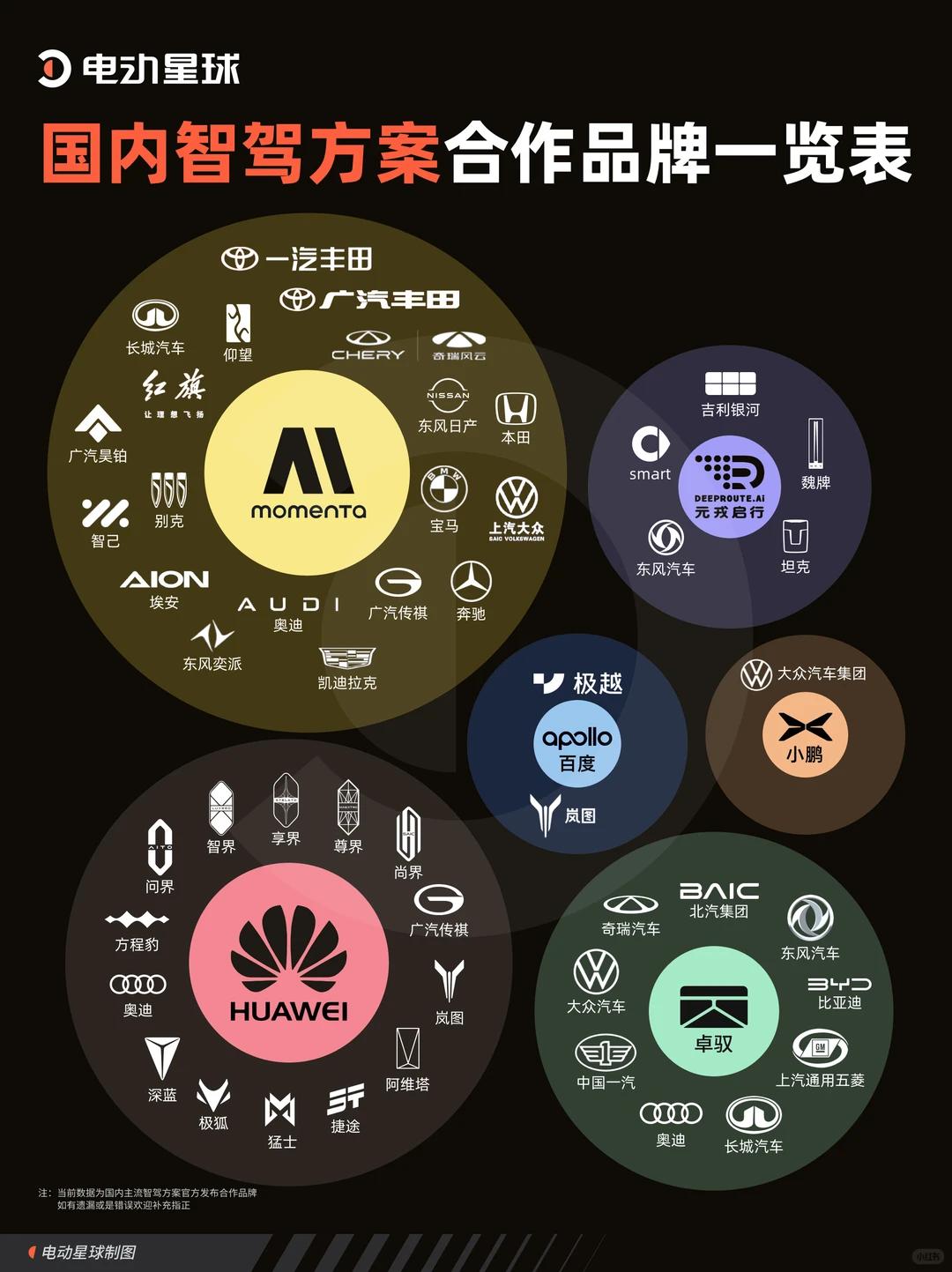
Core Insights - The Chinese smart driving industry has reached a critical turning point in 2025, transitioning from a phase of exploration to one dominated by scale and delivery, leading to the emergence of clear "losers" in the market [1][2] - The threshold of 1 million vehicles equipped with smart driving systems is becoming a significant benchmark, with companies like Yuanrong Qixing indicating that crossing this line will be essential for survival in 2026 [3][34] Competitors - As of January 1, 2026, a comprehensive overview of domestic smart driving solution providers reveals the competitive landscape among third-party suppliers [4] - Horizon Robotics has established partnerships with over 40 automakers, including major brands like SAIC and GAC, indicating its strong market presence [6] - By the end of 2025, Horizon's HSD system saw activation in over 12,000 vehicles shortly after its launch, showcasing its rapid adoption [8] - Companies like NIO, Xpeng, and Li Auto are also significant players in the self-developed smart driving systems space, alongside traditional automakers like BYD and Great Wall [11] - The industry is witnessing a convergence of technology routes, with a consensus on end-to-end architecture and multi-modal large models, leading to a more competitive environment [12] - Huawei has crossed the 1 million vehicle mark with its smart driving system, establishing a unique position in the market [12][15] - The competitive landscape is characterized by a significant number of active smart driving brands, exceeding 15, which poses sustainability challenges for the industry [12] Exiting Players - The failures of companies like Haomo and Dazhuo in 2025 highlight the industry's harsh realities, with common issues including slow technology transitions and concentrated customer bases [29][30] - The inability to deliver products on time has been a critical factor in the downfall of these companies, emphasizing the need for rapid iteration and delivery capabilities [30] - The increasing number of exiting players is attributed to mismatched technology routes and capability shortfalls, with a shift towards data-driven solutions becoming essential for survival [32] "Killing Line" Approaching - The 1 million vehicle mark is emerging as a psychological threshold, with companies below this number at risk of being pushed out of the market [34] - This benchmark represents a cash flow turning point, where companies can begin to cover core investments through revenue generated from vehicle deployments [34] - Achieving this scale also enhances data density, allowing for better coverage and problem-solving capabilities in diverse driving scenarios [35] - The lack of a standardized reporting mechanism for vehicle deployment numbers leads to inflated claims by companies, complicating the competitive landscape [35] - The true survival criteria for smart driving companies will hinge on their ability to establish data-driven development paradigms and integrate them with traditional manufacturing processes [34][39]
工信部定调高级别自动驾驶 L3级产业化按下“快进键”
2 1 Shi Ji Jing Ji Bao Dao· 2026-01-15 22:43
Core Insights - The issuance of the first L3-level autonomous driving special license plates in China marks a significant milestone in the application of L3 autonomous driving technology [1][3] - The Chinese government is accelerating breakthroughs in advanced autonomous driving technologies as part of its national industrial strategy [1][3] Industry Developments - As of the first half of 2025, the installation rate of L2-level and above assisted driving functions in new energy passenger vehicles reached 82.6% [2] - The transition from L2 to L3/L4 autonomous driving is moving from technical demonstration to commercial pilot projects [3] - The Ministry of Industry and Information Technology (MIIT) has granted conditional licenses for L3 autonomous driving vehicles, indicating a shift towards limited commercial applications [3][4] Regulatory Framework - The issuance of L3 license plates in Chongqing and Beijing represents a historic step in regulatory advancement, although full-scale adoption is still a long way off [4] - There is a need for formal standards and regulations to address the challenges of high-level autonomous driving, including liability and safety concerns [4][5] - Recommendations for a management roadmap for autonomous driving levels and the revision of traffic safety laws have been proposed to support the industry [5] Market Projections - By 2030, the integration of advanced driving assistance and connected features is expected to create a trillion-yuan market increment, with urban NOA becoming a mainstream function [6] - The Shanghai action plan aims to establish a comprehensive testing area for autonomous vehicles by 2027, enhancing the region's competitive edge in the industry [7][8] Commercialization Challenges - The commercial viability of L3 autonomous driving remains limited, with significant hurdles in regulatory and technical aspects [9] - Companies like Mercedes-Benz are delaying the rollout of L3 systems due to cost and regulatory constraints, focusing instead on L2++ systems [9] - The Robotaxi sector is seen as the most promising area for early commercialization of autonomous driving technology [9][10] Company Initiatives - Baidu reported a significant increase in its fully autonomous driving service, with orders reaching 3.1 million in Q3 2025, reflecting a 212% year-on-year growth [10] - WeRide has entered the global commercial operation phase with its L4 Robotaxi, covering multiple international cities and approaching profitability in certain markets [10]
一个普通自动驾驶算法工程师的2025年
自动驾驶之心· 2026-01-15 12:28
Core Viewpoint - The article discusses the significant advancements in the autonomous driving industry in 2025, focusing on the evolution of L2, L3, and L4 levels of autonomous driving technology, highlighting both the opportunities and challenges faced by the industry [3][11]. Group 1: L2 Level Developments - In 2025, L3 autonomous driving technology began to gain regulatory approval, leading to a decline in the previously popular "L2++" concept, with all consumer-facing smart driving functions now categorized as L2 [6][8]. - BYD initiated the "smart driving equality" movement by integrating its self-developed "Tian Shen Zhi Yan" system into lower-priced models, making advanced features accessible to more consumers [8]. - Traditional automakers like Geely and Chery followed suit, expanding mid-level assisted driving features to a broader market, contributing to a wave of widespread smart driving adoption [8][10]. - The market saw an increase in domestic smart driving suppliers like Momenta expanding into overseas markets, securing contracts with established automakers [8][10]. Group 2: L3 Level Developments - The end of 2025 marked a turning point for L3 autonomous driving, with the Ministry of Industry and Information Technology granting approval for the first L3 conditional autonomous driving models, including the BAIC Arcfox Alpha S and Changan Deep Blue SL03 [12][14]. - These models can operate under specific conditions, with the Arcfox capable of speeds up to 80 km/h on designated roads, marking a significant shift in responsibility from drivers to manufacturers and system suppliers [14][15]. - The approval of L3 technology is expected to reshape the industry landscape, potentially becoming a benchmark for measuring the leading players in the autonomous driving sector in 2026 [15]. Group 3: L4 Level Developments - 2025 was a pivotal year for L4 autonomous driving, witnessing a resurgence in capital investment and the beginning of commercial viability, with companies like Pony.ai and WeRide going public and raising significant funds [16][17]. - L4 technology demonstrated its commercial potential in specific applications, such as autonomous mining trucks and urban delivery vehicles, achieving operational efficiencies and cost reductions [19][23]. - The industry consensus shifted from a focus on technological idealism to practical commercial applications, emphasizing the importance of production capabilities and operational efficiency [23]. Group 4: Industry Insights and Future Outlook - The article emphasizes the need for continuous learning and adaptation within the autonomous driving sector, as technological advancements and market dynamics evolve rapidly [24][29]. - The growing application of autonomous driving technology across various urban and logistical scenarios in China reflects the country's leadership in the global autonomous driving landscape [29].

工信部定调高级别自动驾驶,L3级产业化按下“快进键”
2 1 Shi Ji Jing Ji Bao Dao· 2026-01-15 11:26
Core Insights - The launch of L3-level autonomous driving vehicles in Chongqing marks a significant milestone in the commercialization of advanced autonomous driving technology [1][2] - The Chinese government is actively supporting the development of high-level autonomous driving as part of its national industrial strategy [1][2] - The penetration rate of L2-level and above driving assistance features in new energy passenger vehicles reached 82.6% in the first half of 2025, indicating a shift towards accelerated development in automotive intelligence [1] Policy and Regulatory Developments - The Ministry of Industry and Information Technology (MIIT) has granted conditional licenses for L3-level autonomous driving vehicles, indicating a move from testing to limited commercial applications [2] - A report by the China Automotive Industry Association suggests the need for a clear management roadmap for autonomous driving levels, including safety responsibilities and market access standards [4] - The Shanghai "Mosu Zhixing" action plan aims to establish a collaborative data system for smart connected vehicles and enhance safety measures for autonomous driving [6][7] Industry Trends and Challenges - The transition to L3-level autonomous driving faces challenges such as the lack of formal standards and the need for safety supervision during operation [3] - The commercial viability of L3 systems is currently limited due to high development costs and regulatory constraints, with companies like Mercedes-Benz opting to focus on L2++ systems instead [8] - The Robotaxi segment is seen as the most promising area for early commercialization of autonomous driving technology, with companies competing on scalability [8][9] Market Projections - By 2030, the integration of advanced driving assistance and connected features is expected to create significant value in the automotive industry, with urban NOA becoming a mainstream function [5] - Companies like Baidu and WeRide are expanding their autonomous driving services globally, with Baidu reporting a 212% year-over-year increase in orders for its fully autonomous service [9] - The market is anticipated to see a shift towards L4-level autonomous driving within the next 2-3 years, with a focus on commercializing the Robotaxi business model [9]