格力电器

Search documents
山海寻梦 不觉其远;前路迢迢 阔步而行 26家公司掌门人寄语2026
Shang Hai Zheng Quan Bao· 2026-01-04 21:00
Group 1 - Huawei's rotating chairman Meng Wanzhou emphasizes the importance of resilience and professionalism in overcoming challenges and creating value in the face of the intelligent transformation wave, highlighting the need for strategic focus and organizational strength by 2026 [27] - Hengrui Medicine plans to increase R&D investment, focusing on oncology, autoimmune, and metabolic diseases, aiming to address unmet clinical needs and enhance international cooperation for global commercialization of Chinese innovative drugs by 2026 [28] - Wanhua Chemical's chairman Liao Zengtai aims to enhance operational quality and focus on technological innovation, particularly in battery materials and high-end new materials, to create a competitive advantage and develop an integrated growth model by 2026 [29] Group 2 - Muyuan Foods' chairman Qin Yinglin reflects on the company's journey from starting with 22 pigs to becoming the largest pig farming enterprise globally, emphasizing the importance of innovation and technology in achieving a dignified and efficient pig farming process by 2026 [30] - Gree Electric's chairman Dong Mingzhu commits to deepening core business and accelerating in smart equipment and new energy sectors, while focusing on green and digital transformation to enhance product quality and service for global users by 2026 [31] - Geely Holding Group's chairman Li Shufu highlights the importance of making bold decisions during critical moments, emphasizing the need to overcome challenges and maintain core values as the company approaches its 40th anniversary in 2026 [32] Group 3 - SAIC Motor's chairman Wang Xiaoqiu outlines the company's commitment to deepening reforms and focusing on intelligent and electric vehicle development, aiming for high-quality growth and user-centered innovation by 2026 [32] - Hengli Group's chairman Chen Jianhua stresses the importance of practical action and innovation in overcoming development challenges, encouraging a proactive approach to seize opportunities in the coming years [33] - LONGi Green Energy's chairman Zhong Baoshan believes the photovoltaic industry is at a pivotal moment, emphasizing the need for technological innovation to navigate challenges and capitalize on the global green energy transition [34] Group 4 - Inspur's chairman Li Jun emphasizes the transformative impact of artificial intelligence on the global economy and the importance of open collaboration to unlock AI's potential, with a focus on building a comprehensive innovation ecosystem by 2026 [35] - TCL's chairman Li Dongsheng highlights the need for strategic focus on achieving global leadership and enhancing core capabilities to drive high-quality development amid economic uncertainties in 2026 [36] - Trina Solar's co-chairman Gao Haichun emphasizes the company's evolution from a product supplier to a system-level innovator, focusing on creating solutions that transcend traditional competition by 2026 [38] Group 5 - JinkoSolar's chairman Li Xian-de discusses the potential of space photovoltaic technology as a sustainable energy solution for future AI power needs, marking the company's 20th anniversary with a vision for universal solar energy [39] - Leo Group's chairman Wang Xiangrong aims to enhance the company's strategic focus and sustainable value, emphasizing collaboration with customers and employees to achieve higher-dimensional value creation by 2026 [40] - Innovent Biologics' chairman Cui Jisong outlines the company's commitment to innovation and global expansion, aiming to launch multiple new drugs and maintain an entrepreneurial spirit in the face of uncertainty by 2026 [41]







山海寻梦,不觉其远;前路迢迢,阔步而行 26家公司掌门人寄语2026
Shang Hai Zheng Quan Bao· 2026-01-04 20:55
Group 1 - Huawei's rotating chairman Meng Wanzhou emphasized the importance of resilience and professionalism in overcoming challenges and creating value, highlighting the long-term strategic opportunities presented by the wave of intelligent transformation [25] - Hengrui Medicine's chairman Sun Piaoyang announced plans to increase R&D investment, focusing on oncology, autoimmune, and metabolic diseases, while promoting international cooperation and accelerating overseas clinical trials [26] - Wanhua Chemical's chairman Liao Zengtai aims to enhance operational quality and focus on technological innovation, particularly in battery materials and high-end new materials [27] Group 2 - Muyuan Foods' chairman Qin Yinglin expressed commitment to smart pig farming and improving animal health, aiming to enhance the quality and safety of pork for consumers [28] - Gree Electric's chairman Dong Mingzhu plans to deepen the core business while accelerating in smart equipment and renewable energy sectors, emphasizing a commitment to green and digital transformation [29] - Geely Holding Group's chairman Li Shufu highlighted the importance of making bold decisions during critical moments, focusing on core values and sustainable development [30] Group 3 - SAIC Motor's chairman Wang Xiaoqiu stated the company will deepen reforms and focus on intelligent and electric vehicle development, aiming for high-quality growth [30] - Hengli Group's chairman Chen Jianhua emphasized the need for a proactive approach to overcome challenges and achieve breakthroughs in the coming years [31] - LONGi Green Energy's chairman Zhong Baoshen believes the photovoltaic industry is at a pivotal moment, with significant opportunities for innovation and growth [32] Group 4 - TCL's chairman Li Dongsheng stressed the importance of maintaining strategic focus and enhancing core capabilities to achieve high-quality development [33] - Inspur's acting chairman Li Jun highlighted the transformative impact of artificial intelligence on the economy and the need for open and collaborative innovation [35] - Trina Solar's co-chairman Gao Haichun mentioned the company's evolution from a product supplier to a solution provider, focusing on system-level product innovation [36] Group 5 - JinkoSolar's chairman Li Xian-de discussed the potential of space photovoltaic technology as a sustainable energy solution for future challenges [37] - LEO Technology's chairman Wang Xiangrong emphasized the importance of creating value beyond mere data growth, focusing on sustainable and collaborative progress [38] - Innovent Biologics' chairman Cui Jisong outlined the company's commitment to innovation and global expansion in the next decade [39] Group 6 - Fosun International's chairman Guo Guangchang highlighted the growing demand for health and wellness, emphasizing the need to leverage the company's strengths in various industries [40] - Obsidian Technology's chairman Huang Yuanhao expressed the importance of innovation in robotics and AI vision, aiming to lead in the upcoming technological revolution [41] - Volkswagen's chairman Yang Guoping emphasized the commitment to brand and innovation as the company embarks on a new journey in the "14th Five-Year Plan" [42]

最新!2026年高股息现金牛名单曝光,最高股息率超13%,你的自选股上榜了吗?
Sou Hu Cai Jing· 2026-01-04 20:52
在2026年年初,股市的震荡不安牵动着众多投资者的神经。动荡的市场中,一种投资策略悄然升温,那便是聚焦于那些能够稳定派发现金红利的上市公司。 比起难以捉摸的股价波动,实实在在的分红入账,更能给人以安心之感。 一份最新的高股息率股票名单于1月2日在投资圈内迅速传播,犹如寒冬里的一束暖阳。这份名单精选出A股中股息率超过5%的公司,数量多达137家。何谓 股息率?简单来说,就是投资者购买股票后,仅凭公司分红,一年所能获得的回报率。超过5%的股息率,意味着其收益水平已高于不少银行理财产品。 在A股市场,高分红公司同样受到一部分长期资金的青睐。例如,保险资金、社保基金等对资产的安全性和现金回报有较高要求,因此高股息股票池往往是 其重点配置的方向。对于普通投资者而言,关注股息率也是以一种更为保守的视角来审视公司的质量。一家公司愿意且有能力持续拿出大量利润分给股东, 至少说明其盈利是真实可靠的,且财务状况稳健。 名单中,东方雨虹以高达13.61%的股息率傲居榜首。这意味着,如果在除权除息日前买入该股票,理论上仅靠分红,投资者便可获得超过13%的年度现金回 报。紧随其后的是广汇能源,股息率为12.64%,中谷物流则为12.1 ...
回购增持分红多措并举 深市公司“真金白银”护航市场稳定
Shang Hai Zheng Quan Bao· 2026-01-04 20:26
◎记者 时娜 上市公司的回购增持热潮持续至2026年。2026年1月4日,东诚药业、世纪华通等上市公司发布回购股份 计划,宁德时代、美的集团、潍柴动力、蓝思科技等多家深市龙头公司也披露了回购进展情况,英派斯 等公司披露增持计划实施情况,以"真金白银"传递信心,夯实公司价值投资基础。此外,多家上市公司 近日宣布向投资者派发"大红包"。 股份回购是上市公司优化股权结构、提升股东回报的重要抓手。2026年伊始,便有深市上市公司发布股 份回购计划。 东诚药业1月4日公告,计划以集中竞价交易方式回购股份,金额不低于1亿元(含),不超过2亿元 (含),用于实施股权激励和/或员工持股计划。回购价格不超过18.00元/股。 2025年以来,深市上市公司积极回应号召、立足自身发展,持续掀起"真金白银"的回购、增持、分红热 潮,多措并举提升投资者回报,为资本市场健康发展注入强劲动力。 上市公司下"红包雨" 据上海证券报记者不完全统计,2025年12月31日至2026年1月4日晚,仅深市就有15家公司披露半年度或 三季度分红实施公告,相关分红将于2026年1月陆续到账。 其中,天赐材料公告,公司2025年前三季度利润分配预案已获2 ...






电商家电专家空调铝代铜专家周日双交流
2026-01-04 15:35
Summary of Conference Call Notes Industry Overview - The conference call primarily discusses the home appliance industry, focusing on sales performance and trends in 2025 and projections for 2026 [2][4][5]. Key Points and Arguments Sales Performance in December 2025 - December 2025 recorded the lowest absolute sales for the year, with total payments for home appliances at 52.9 billion yuan, a year-on-year decrease of 8.3% [2]. - Specific category sales included: - Air conditioners: 13.2 billion yuan, down 9.7% - Washing machines: 8.5 billion yuan, down 5.1% - Refrigerators: 11.3 billion yuan, down 10.9% - Black electronics (e.g., TVs): 12.6 billion yuan, down 7.2% [3][2]. Market Trends and Projections - The overall home appliance market is expected to decline by 9% in Q4 2025, though the decline is not as severe as initially feared [4]. - For Q1 2026, a modest growth target of 4% is set, with expectations of maintaining low single-digit growth [8][2]. National Subsidy Policy Changes for 2026 - Starting January 1, 2026, the national subsidy policy will expand to over 20 provinces, covering six major categories of home appliances [5]. - Although the first quarter will have sufficient funding, the total annual budget is expected to be lower than in 2025 [5]. - Priority will be given to energy-efficient products, with local governments and platform merchants expected to increase subsidies [5][6]. E-commerce and Consumer Engagement - JD.com aims to break regional barriers and expand its reach into first-tier and rural markets, expecting to add 30-40 million new users to the subsidy program [7]. - Over 100 million users benefited from JD.com's promotional policies in the first half of 2025 [7]. Recent Sales Trends - Recent sales data shows a slight recovery, with home appliance sales reaching nearly 10 billion yuan in three days, a year-on-year increase of 1.4% [8]. - However, air conditioners and refrigerators are still experiencing negative growth [8]. Price Trends and Material Changes - The average price of air conditioners rose to 2,900 yuan in December, a month-on-month increase of nearly 12% [10]. - The shift from copper to aluminum in air conditioning units is being driven by rising raw material costs, with significant cost savings projected [13][15][21]. - The air conditioning industry is expected to see price increases due to ongoing material cost pressures, with Midea announcing a 3-4% price hike [21]. Aluminum-Copper Transition in Air Conditioning - Major manufacturers are transitioning to aluminum in air conditioning units, with North American markets leading the way [13][20]. - The use of aluminum is expected to save costs significantly, with potential for replacing 100,000 tons of copper annually in the industry [15][17]. - Concerns about product reliability have been addressed through improved testing standards, ensuring that aluminum does not compromise product lifespan [14]. Competitive Landscape - Major brands like Midea, Gree, and Haier are facing challenges with declining sales across various categories, with specific negative growth rates reported for each brand [9]. - The competitive landscape is shifting as companies adapt to new materials and market demands, with Gree's stance on aluminum usage being particularly noteworthy [20]. Additional Important Insights - The home appliance market is experiencing a significant transformation driven by material cost changes and evolving consumer preferences, with a focus on energy efficiency and sustainability [5][21]. - The impact of local government subsidies and e-commerce strategies will play a crucial role in shaping market dynamics in 2026 [7][5].


以后的空调制冷都不行了?铝代铜到底是升级还是减配
虎嗅APP· 2026-01-04 14:15
Core Viewpoint - The article discusses the ongoing debate in the air conditioning industry regarding the shift from copper to aluminum in key components, particularly heat exchangers, and the implications for product performance and cost [5][8][25]. Group 1: Industry Trends - Major air conditioning brands, including Haier, Midea, and TCL, have formed an alliance to promote the use of aluminum instead of copper, while Gree has opted out, citing concerns over quality and reliability [5][6][25]. - The shift to aluminum is driven by rising copper prices, which have surged to over $12,000 per ton, making copper a significant cost component in air conditioning units, accounting for approximately 30% to 40% of total costs [30][29][28]. Group 2: Technical Considerations - The transition involves replacing copper pipes in heat exchangers with aluminum pipes, which could potentially affect cooling efficiency due to aluminum's lower thermal conductivity (about 60% of copper's) and other performance metrics [12][10][8]. - Advances in technology, such as microchannel technology and specialized coatings, are being developed to mitigate the disadvantages of aluminum, including its thermal conductivity and corrosion resistance [14][16][18]. Group 3: Market Dynamics - The global demand for copper is increasing, driven by sectors like AI and electric vehicles, which require significant amounts of copper for infrastructure and manufacturing [38][42]. - Geopolitical risks and supply chain vulnerabilities related to copper mining are prompting manufacturers to consider aluminum as a more stable alternative, given its abundance and lower cost [50][49]. Group 4: Consumer Implications - Consumers are concerned that the switch to aluminum may compromise the performance of air conditioning units, leading to calls for manufacturers to ensure quality and possibly lower prices to reflect the cost savings from using aluminum [51][52]. - The article suggests that if manufacturers can demonstrate that aluminum-based systems perform comparably to copper systems, they should consider passing on cost savings to consumers through lower prices or extended warranties [52].
保安哥的2025年:劫后余生又新高
集思录· 2026-01-04 13:57
Core Viewpoint - The article discusses the volatile journey of an investor over the years, highlighting the impact of leverage on investment outcomes and the emotional toll of market fluctuations. It emphasizes the importance of risk management and the lessons learned from both gains and losses in the stock market. Financial Performance Summary - The investor experienced significant fluctuations in annual returns, with a peak return of 116% in 2017 and a low of -50% in 2018. The overall trend shows a recovery in 2024 with an expected return of 85% [2]. - The net worth fluctuated dramatically, reaching a high of 340 million by 2025 after starting from a low of 7 million in 2023 [2]. Investment Strategy and Experience - The investor began using leverage in 2016, maintaining positions above 100% thereafter. This led to substantial gains in 2017 but also resulted in significant losses in subsequent years, particularly in 2018 and 2022 [3][4]. - The experience of losing half of the capital in 2018 was a turning point, leading to a deeper understanding of market risks and the emotional challenges of trading [3][4]. - The investor's strategy evolved to include higher leverage, with positions exceeding 300% in 2019, which contributed to rapid capital growth but also increased risk exposure [4][5]. Emotional and Psychological Aspects - The investor describes a shift in mindset from confidence to fear during market downturns, particularly after experiencing significant losses. This change reflects a deeper awareness of market unpredictability [5][6]. - The emotional burden of managing both market risks and personal financial pressures is highlighted, with the investor choosing to shield family members from the full extent of financial struggles [13][14]. Current Holdings and Market Outlook - The current portfolio includes major stocks such as Kweichow Moutai, Wuliangye, SF Express, and Gree Electric, with a total position size of 75% [7]. - The investor expresses a cautious approach moving forward, focusing on large-cap stocks to mitigate risk while acknowledging the potential for lower returns compared to previous high-leverage strategies [6][20].

海尔,第10家上市公司要来了
Sou Hu Cai Jing· 2026-01-04 10:32
Core Viewpoint - Haier Group is accelerating its capital expansion with the IPO of its subsidiary, Haier New Energy Technology Co., Ltd., set to begin in December 2025 [2] Company Overview - Haier New Energy was established on May 11, 2022, with a registered capital of 336.70447127 million yuan [4] - The controlling shareholder is Qingdao Nahui Holdings Co., Ltd., which holds 59.40% of the shares [4] - The company has been recognized as a "global unicorn enterprise" at the 2025 Unicorn Enterprises 500 Strong Conference [4] Recent Developments - In 2024, Haier Group completed the acquisition of A-share listed company New Times, and in August, its subsidiary Zhongmiao Holdings was listed on the Hong Kong Stock Exchange [6] - Haier New Energy has expanded its business to over 50 countries and regions globally, with over 390 patents filed [12] - The company received over 700 million yuan in investments from various capital sources in April 2025 [12] Business Model and Strategy - Haier New Energy focuses on a full industry chain layout from generation to storage, management, and sales of energy, utilizing an integrated solution of hardware, software, and services [7] - The company leverages AI to enhance operational efficiency and quality in distributed renewable energy management [11] - It aims to create a smart energy ecosystem through a unified energy internet platform, integrating green electricity trading and carbon asset management [11] Future Plans - Haier New Energy is constructing a new energy industrial internet ecological park with a total investment of approximately 6 billion yuan, aiming for over 10 billion yuan in revenue within three years [14] - The company is targeting an IPO by 2026, with the recent counseling registration being a step towards this goal [14]

谈谈过去一年的教训和经验
雪球· 2026-01-04 08:04
Core Viewpoint - The article reflects on past investment experiences, emphasizing the importance of market trends alongside fundamental analysis and valuation in making investment decisions [4][11]. Group 1: Lessons from Profitable Stocks - The success with China Hongqiao was attributed to its favorable fundamentals, low valuation, and positive market trends, which were initially overlooked, leading to insufficient position size [5][6]. - The analysis of market trends, fundamental changes, and valuation is crucial; when two out of three factors indicate a better choice, decisive action should be taken [5][6]. Group 2: Lessons from Unprofitable Stocks - Chengdu Bank's disappointing third-quarter report highlighted the risk of ignoring market signals, leading to a misguided decision to buy against market trends [7]. - The experiences with Gree Electric and thermal power stocks underscored the necessity of having strong confidence in fundamentals before investing, as lack of confidence can lead to panic selling during market corrections [8]. Group 3: Key Investment Strategies - Identifying opportunities where fundamentals, low valuation, and positive market trends align is rare; when such opportunities arise, significant investment should be made [11]. - When market trends confirm investment logic, it is essential to increase position size decisively, as demonstrated by the successful investment in Shenhuo [10][11]. - A lack of confidence in fundamentals can lead to poor investment decisions, especially during market adjustments, resulting in losses [11]. Group 4: Future Focus - The company plans to concentrate on analyzing firms with strong cash flow, low valuations, and a commitment to sharing value with minority shareholders, while continuing to explore the thermal power sector [12].


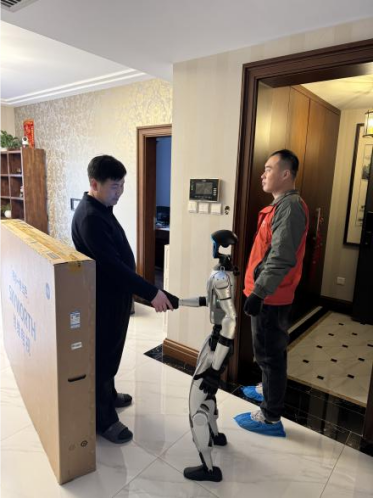
2026国补“首单机器人送货”在北京签收 用户点赞京东“人机搭档”新体验
Jin Rong Jie Zi Xun· 2026-01-04 04:55
Core Insights - The launch of the 2026 national subsidy program has led to a significant increase in consumer interest in purchasing home appliances, with innovative delivery methods such as robot-assisted delivery enhancing customer experience [1][3][5] Group 1: National Subsidy Program - Starting January 1, 2026, consumers can receive a subsidy of 15% on the purchase price for various electronic products, with a maximum subsidy of 500 yuan for certain items and 1500 yuan for major appliances [3][4] - Consumers can save up to 11,000 yuan cumulatively across ten categories of home appliances and digital products, with additional discounts available through trade-in programs and coupons [4] Group 2: Company Initiatives - JD.com has invested heavily in ensuring the effective implementation of the national subsidy program, with significant resources allocated to logistics, customer service, and marketing to enhance consumer experience [5] - The company has introduced a comprehensive service model that includes free old appliance pickup, dismantling, and transportation, as well as on-site activation for new devices [5] Group 3: Consumer Experience - The first delivery under the national subsidy program featured a combination of human and robot delivery, which has been well-received by consumers, enhancing the overall shopping experience [1][3] - JD.com aims to continue improving the consumer experience by providing a seamless integration of various subsidy programs and ensuring efficient service delivery [5]