宝马

Search documents
欧洲的电动车梦,碎了吗?
汽车商业评论· 2025-09-10 05:28
Core Viewpoint - The European automotive industry's electrification efforts are facing significant adjustments due to regulatory and market pressures, as Stellantis has abandoned its goal of only selling pure electric vehicles in Europe by 2030, indicating a shift in strategy to address the risk of industry collapse [3][6][11]. Group 1: Strategic Adjustments - Stellantis has confirmed at the Munich Motor Show that it will no longer pursue the hard target of only selling pure electric vehicles in Europe by 2030, while still maintaining other operational and financial goals under the "Dare Forward 2030" strategy [6][11]. - The CEO of Stellantis, Jean-Philippe Imparato, warned that without revisions to carbon dioxide reduction regulations by the end of the year, the entire European automotive industry could face a collapse crisis [3][6][12]. - The shift from a firm all-electric goal to a more flexible approach reflects the disconnect between regulations and market realities, as 60% of European vehicle sales are below €40,000, making current electric vehicle prices and charging infrastructure inadequate [3][11]. Group 2: Market and Regulatory Challenges - The current carbon dioxide emission thresholds set for 2025 and beyond are deemed unachievable, leading to a pragmatic shift among automakers to focus on maintaining mainstream price points and stable cash flow [7][11]. - The European automotive industry is experiencing structural challenges, including rising interest rates, inflation, and uneven charging infrastructure, which are compressing the transition efficiency for entry-level and mainstream vehicles [11][12]. - The EU's regulations require a 55% reduction in passenger car CO2 emissions by 2030 compared to 2021 levels, with a complete ban on new CO2-emitting vehicles by 2035, which has led to calls for adjustments to these targets [12][16]. Group 3: Industry Response and Future Directions - The Munich Motor Show highlighted the industry's focus on more affordable electric vehicles, with new models priced below €25,000 being crucial for reviving demand [6][13]. - Stellantis is advocating for a mixed technology approach to meet emissions targets, emphasizing the need for a flexible regulatory framework that allows for a gradual transition rather than a strict all-electric mandate [16][17]. - The automotive sector is increasingly looking to collaborate with partners to enhance supply chain efficiency and fill the gap in entry-level electric vehicle offerings, indicating a shift towards practical solutions in the face of regulatory pressures [17][18].


慕尼黑车展:德国分量和中国力量
汽车商业评论· 2025-09-10 05:28
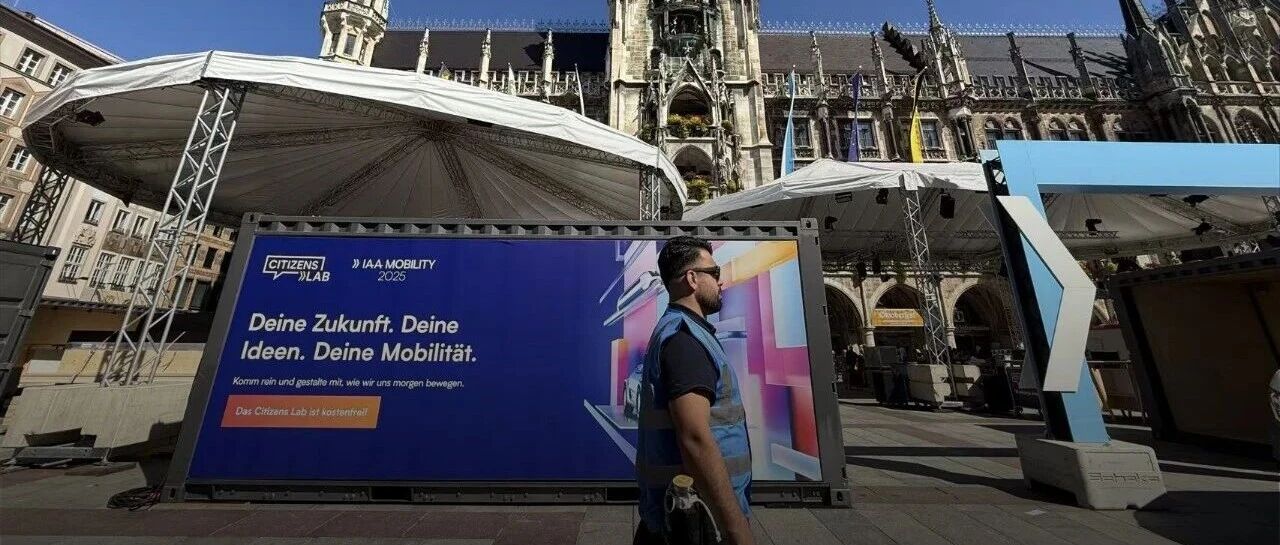
Core Insights - The 2025 Munich Auto Show highlights the competition between Germany and China in the electric vehicle sector, with a significant presence of Chinese exhibitors [3][11][26] - The event showcases the rapid growth of electric vehicles in Europe, driven by EU regulations and the slower pace of local automakers in transitioning to electrification [3][26] Group 1: Event Overview - The Munich Auto Show, officially known as the IAA Mobility, emphasizes a broader theme of mobility, including electrification and smart transportation [4] - The event features two main venues: an indoor exhibition center for B2B interactions and an outdoor space open to the public [6] Group 2: Chinese Exhibitors - Chinese exhibitors dominate the show with 116 companies participating, accounting for nearly one-third of all overseas exhibitors [3][26] - Notable Chinese brands include BYD, Xpeng, and Hongqi, with plans for significant market expansion in Europe, including the introduction of multiple electric and hybrid models [11][13][20] Group 3: European Market Dynamics - The European automotive market is the third largest globally, with annual sales stable between 12 million and 14 million vehicles [3] - The penetration rate of electric vehicles in the EU is expected to exceed 20% by 2024, creating opportunities for Chinese brands to enter the market [3] Group 4: Major Automaker Highlights - Volkswagen Group introduced several new models, including the ID. Polo and ID. Cross concept cars, showcasing their scale advantages [29][31] - BMW launched the iX3, marking a new phase in their electrification strategy, with plans to release 40 new or upgraded models by 2027 [34][36] - Mercedes-Benz unveiled the GLC 400 4MATIC electric model, emphasizing its commitment to luxury and advanced technology in its electric lineup [40][42] Group 5: Competitor Analysis - South Korean automakers like Hyundai and Kia showcased their electric vehicle strategies, with multiple new models and concepts [46][49] - Japanese automakers were less prominent, with a focus on suppliers rather than vehicle manufacturers, indicating a shift in strategy in the European market [49][50]




亿纬全固态产能投产,8月国内储能招采创新高 | 投研报告
Zhong Guo Neng Yuan Wang· 2025-09-08 02:44
Group 1: Solar Power - The prices of silicon materials, battery cells, and modules have slightly increased this week, indicating a resurgence of supply-side reform expectations [2][3] - Strong demand from overseas markets has supported orders from downstream battery manufacturers, leading to a rise in battery cell prices following news of potential export tax cancellations in July and August [2] Group 2: Wind Power - Recent announcements of successful bids for offshore wind projects include a 1000MW project by Huadian Group, a 1300MW project by Longyuan Power, and a 2500MW project by Huaneng Jiangsu Company, indicating a rapid increase in gigawatt-level offshore wind projects [3] Group 3: Energy Storage - In August, domestic energy storage procurement reached a record high of 82.7GWh, while Australia's household storage also hit a new high of 423MWh [4] - Rising prices of energy storage cells confirm strong downstream demand, supported by favorable provincial policies in China and ongoing robust bidding activity in Europe [4] Group 4: Power Grid Equipment - The construction preparation for the ultra-high voltage direct current project from Inner Mongolia to Beijing-Tianjin-Hebei has commenced, highlighting investment opportunities in ultra-high voltage infrastructure [5] Group 5: Electric Vehicles - EVE Energy has launched a solid-state battery, and the pre-sale of the new AITO M7 has been highly successful, causing server crashes [8] - The market is advised to focus on stable profit-generating battery and structural component sectors, with long-term attention on materials benefiting from solid-state battery advancements [8] Group 6: Automotive Parts - The automotive market is expected to stabilize in August, with a decrease in aggressive pricing and promotions due to a wave of new car launches in Q3 [9] - The importance of certainty in performance, new products, and customer relationships is increasing, suggesting a focus on automotive parts with higher certainty in the second half of the year [9]
锂电后市推荐 - 旺季趋势以及固态电池加速产业化投资机遇
2025-09-07 16:19
Summary of Key Points from Conference Call Records Industry Overview - The lithium battery industry is experiencing a significant increase in demand, driven by high capacity utilization rates among leading companies like CATL, which approached full production in Q2, leading to a supply-demand imbalance [1][3] - Chinese companies are rapidly increasing their market share in Europe, particularly in the commercial vehicle sector, which is positively impacting shipment volumes and overall expectations for the industry [1][3] Core Insights and Arguments - The growth of power batteries is primarily supported by the passenger and commercial vehicle markets, with the development of pure electric models and increased energy capacity driving battery growth rates beyond that of vehicle sales [1][5] - The independent energy storage installation and bidding volumes in China have significantly increased, with overseas large project orders also providing support [1][6] - The battery industry is expected to grow faster than the vehicle industry, with strong real demand and proactive production cycles leading to positive medium- to long-term expectations [1][7] - Supply-side constraints are prompting leading battery manufacturers to accelerate their expansion plans, which is expected to support capital expenditures in both Hong Kong and A-shares [1][8] Market Performance - The lithium battery sector has shown rapid growth in stock performance, with a notable valuation shift among leading companies due to high industry expectations [2][11] - In Q3, the sector is expected to benefit from traditional peak seasons in consumer electronics, new energy vehicles, and energy storage, with leading companies operating at full capacity [9][11] Supply Chain and Pricing Strategies - The industry is focusing on capacity control and pricing strategies, with some sectors establishing guiding prices to ensure profitability [4][10] - Despite full production, some companies are still facing losses, but policies aimed at reducing internal competition may provide opportunities for price recovery in the materials sector [10] Future Trends - The solid-state battery market is progressing steadily, with significant growth in equipment orders and production capacity expected in the coming quarters [12][19] - The European new energy vehicle market is recovering, with new model releases from companies like BMW expected to support demand in 2026 [17] - The current interest rate reduction cycle is expected to benefit the energy storage industry by lowering financing costs, which will promote market growth [16] Emerging Technologies - In the consumer electronics sector, new technology trends are emerging, particularly with the introduction of steel-shell batteries and higher energy density requirements from clients like Meta [18] - Solid-state battery applications are expanding beyond automotive to include robotics and drones, indicating a growing demand in new fields [14][19] Conclusion - The lithium battery industry is on a positive trajectory, supported by strong demand from various sectors, proactive expansion plans from leading manufacturers, and favorable market conditions in Europe and the consumer electronics space. The focus on solid-state technology and energy storage solutions further enhances the industry's growth potential.

汽车行业周报:长城汽车创历史最高8月销量,零跑稳居新势力销冠-20250907
CMS· 2025-09-07 14:31
Investment Rating - The report maintains a "Recommended" rating for the automotive industry, indicating a positive outlook for the sector [5]. Core Insights - The automotive industry experienced an overall decline of 1.1% during the week from August 31 to September 6, with various companies reporting their August sales figures [1][2]. - Great Wall Motors achieved its highest-ever August sales, selling 115,558 vehicles, a year-on-year increase of 22.33% [26]. - New energy vehicle sales for Great Wall reached 37,495 units, reflecting a significant year-on-year growth of 50.92% [26]. - Leap Motor delivered 57,066 units, marking an impressive year-on-year growth of over 88%, maintaining its position as the top-selling new force brand for six consecutive months [25]. - Xpeng Motors and NIO also reported substantial growth in deliveries, with Xpeng delivering 37,709 units (up 169% year-on-year) and NIO delivering 31,305 units (up 55.2% year-on-year) [25]. Market Performance Overview - The automotive sector's secondary market saw a comprehensive decline, with the passenger vehicle segment experiencing the most significant drop of 2.3% [12]. - The commercial vehicle segment had the smallest decline at 0.1% [12]. - Among the automotive industry’s tertiary sectors, the commercial passenger vehicle and automotive dealership segments saw increases of 5.1% and 2.9%, respectively [12]. Individual Stock Performance - The automotive sector saw a majority of stocks decline, with notable gainers including Pateo (+44.5%), Huayang Racing (+37.8%), and Tianpu Co. (+33.1%) [3][16]. - Conversely, stocks such as Construction Industry (-25.5%), Chengfei Integration (-22.7%), and Hunan Tianyan (-20.8%) faced significant declines [3][16]. Recent Industry Developments - The report highlights the launch of several new models, including the Geely Galaxy M9, which is set to be released on September 17, 2025, with a pre-sale price range of 193,800 to 258,800 yuan [27]. - Tesla's Model Y L has received a strong market response, with daily orders nearing 10,000 units since its launch on August 19 [28]. - The report also notes advancements in robotics within the automotive sector, with Tesla's Optimus V3 robot being highlighted as a significant development [29].



蔚来技术输出迈凯伦,中国电动化技术授权潮起
高工锂电· 2025-09-07 10:55
Core Viewpoint - The article discusses the strategic shift of Chinese electric vehicle (EV) companies from technology importation to technology exportation, exemplified by NIO's collaboration with McLaren and XPeng's partnership with Volkswagen [5][7]. Group 1: NIO and McLaren Collaboration - NIO's chairman Li Bin confirmed a technology partnership with McLaren, with technology service revenue reaching several hundred million yuan in Q2 [3][4]. - NIO will develop power batteries based on 4680 cylindrical batteries for McLaren's hybrid models, with small-scale production expected in 2026 [4]. - The collaboration is facilitated by CYVN Holdings, which invested approximately $3.3 billion in NIO, acquiring a 20.1% stake [6]. Group 2: XPeng and Volkswagen Partnership - XPeng has achieved stable technology service revenue, with Q2 service and other income at 1.39 billion yuan, a 7.6% year-on-year increase, primarily from its collaboration with Volkswagen [8]. - The partnership has been upgraded, expanding the application of the jointly developed regional control electronic architecture (CEA) to include fuel and hybrid models starting in 2027 [8]. Group 3: Technology Authorization Models - The article highlights the differences between technology authorization models for battery companies and vehicle manufacturers, with NIO-McLaren and XPeng-Volkswagen representing a "mentor-mentee" relationship [9]. - Technology authorization is seen as a key method for Chinese battery companies to serve global markets, particularly in the context of lithium iron phosphate battery technology [9][10]. - Despite challenges posed by the "Inflation Reduction Act" in the U.S., the technology authorization model continues to show resilience and opportunities in global markets [12][15]. Group 4: Global Market Trends - European automakers are accelerating their electrification efforts, collaborating with battery companies to build cost-competitive supply chains [10]. - Fiat Chrysler is exploring local production based on lithium iron phosphate technology in partnership with CATL to address market stagnation and high costs [10]. - Companies like Honeycomb Energy are considering light-asset models for battery capacity in Europe, indicating a strategic shift towards partnerships rather than large-scale investments [11][12]. Group 5: Development of Cylindrical Batteries - The collaboration between NIO and McLaren focuses on cylindrical batteries, which are gaining attention for their application potential in high-end models [17]. - Major automakers like Mercedes-Benz and BMW are investing in cylindrical battery technology, with Mercedes-Benz procuring 157.5 GWh of 46 series cylindrical batteries for their models [18]. - Chinese battery companies are leading the maturation of cylindrical battery technology, with companies like EVE Energy achieving significant production milestones [20][21].

高通(QCOM.US)与宝马合作推出辅助驾驶系统 角逐自动驾驶赛道
智通财经网· 2025-09-05 12:57
Group 1 - Qualcomm and BMW announced the launch of an advanced driver assistance system that features hands-free driving capabilities aimed at attracting consumers [1] - The Snapdragon driver assistance system will first be implemented in BMW's electric iX3 model, offering features such as hands-free highway driving, automatic lane changes, and parking assistance [1] - Qualcomm's technology has been validated in over 60 countries, with plans to expand to over 100 countries by 2026, although drivers are still required to supervise the vehicle [1] Group 2 - Qualcomm's automotive business revenue grew approximately 21% to $984 million in the third quarter, with expectations that annual revenue from automotive chips will reach $8 billion by fiscal year 2029 [1] - The competition in the autonomous driving market is intensifying, with companies like NVIDIA and Mobileye Global vying for new customers with their chips and platforms [1] - The driver assistance system is now available to global automakers and tier-one suppliers, with various manufacturers like Tesla and General Motors implementing their own systems, each with different methods and technology stacks [2]

A股科技“四大天王”集中爆发,宁德时代、工业富联表现抢眼
Quan Jing Wang· 2025-09-05 08:25
Core Viewpoint - The A-share technology sector is experiencing a significant surge, with leading stocks like CATL, Industrial Fulian, BYD, and Cambricon being referred to as the "Four Kings" of A-share technology, collectively driving the sector's momentum [1] Group 1: Company Highlights - CATL, as the global leader in the power battery sector, boasts a market capitalization of 1.4 trillion, achieving breakthroughs in battery technology, including the rapid-charging battery that can provide 400 km of range in just 10 minutes [2] - Industrial Fulian, valued at 1.1 trillion, has established itself as a key player in AI computing power, leveraging its strong manufacturing capabilities and partnerships with major companies like Apple and NVIDIA [3] - BYD, with a market cap nearing 1 trillion, leads the new energy vehicle market through continuous technological innovation, including the development of the Blade Battery, which has become a benchmark in the industry [4] - Cambricon, valued at 530 billion, is a prominent player in the domestic AI chip sector, focusing on the development of high-performance chips and contributing to the establishment of a domestic computing power ecosystem [5] Group 2: Market Impact - The robust performance of these four technology giants not only generates substantial returns for investors but also plays a crucial role in advancing China's technology industry and promoting high-quality economic development [5]

IPO“折戟”三年 碧橙数字资本化之路再度遇挫
Xi Niu Cai Jing· 2025-09-05 08:04
Group 1 - The acquisition plan of Mengwang Cloud Technology Group Co., Ltd. for Hangzhou Bicheng Digital Technology Co., Ltd. has been officially terminated due to a legal obstacle caused by the freezing of 10.51 million shares held by the third-largest shareholder, Hangzhou Chengxiang Enterprise Management Partnership [2] - The failed acquisition signifies another setback for Bicheng Digital's path to capitalization, as the company had previously submitted an IPO application in December 2021 to raise 788 million yuan but withdrew it eight months later due to regulatory concerns [5] - Bicheng Digital operates as a comprehensive e-commerce service provider, covering brand retail, operational management, channel distribution, and digital marketing, with notable clients including Siemens, BMW, and Omron [5] Group 2 - The entity Hangzhou Chengxiang, which became the third-largest shareholder of Bicheng Digital in May 2023, is now embroiled in a contractual dispute leading to the freezing of its shares, highlighting ongoing uncertainties at the shareholder level [5]

小米真把保时捷Taycan设计师挖来了
3 6 Ke· 2025-09-05 07:38
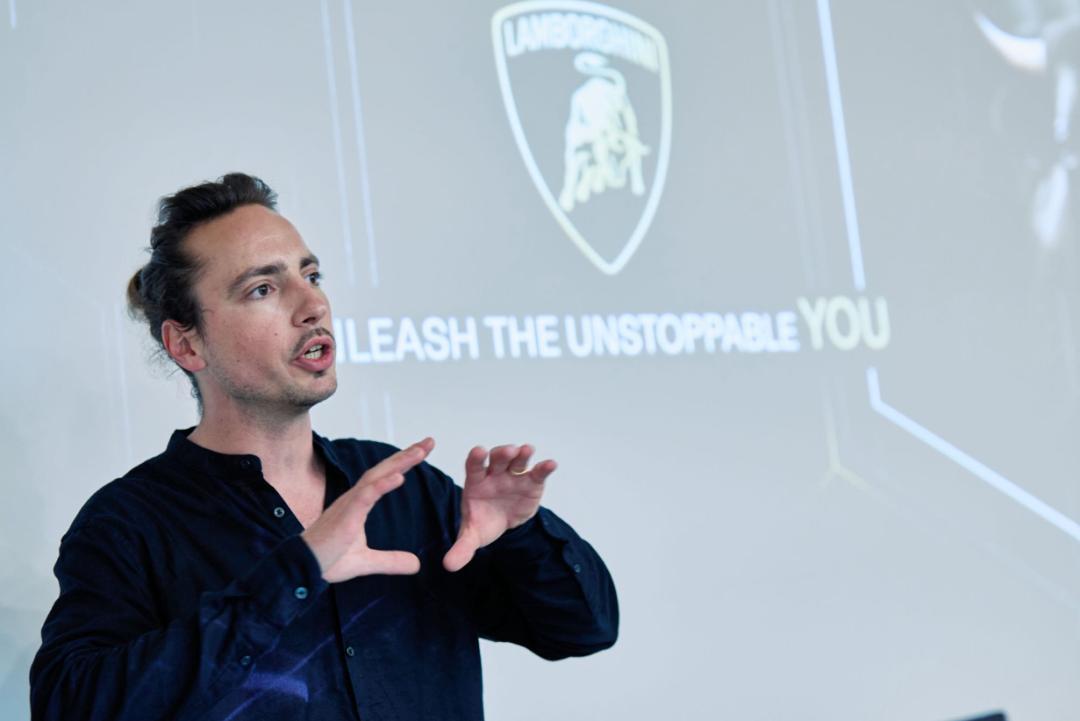
Core Insights - Xiaomi is significantly enhancing its automotive design team by recruiting top talent from luxury car brands, including Lamborghini's chief exterior designer Fabian Schmölz, who has a strong background in high-performance vehicles [1][4][12] - The company has reportedly hired at least nine designers from prestigious European brands such as BMW, Ferrari, Porsche, and Lamborghini, indicating a strategic move to bolster its automotive design capabilities [3][12] - Xiaomi's European R&D center is located in Munich, close to BMW's headquarters, and aims to develop vehicles tailored for the European market, with plans to launch sales by 2027 [19][24] Talent Acquisition - Fabian Schmölz, previously at Lamborghini, has joined Xiaomi as the head of exterior design, focusing on the European market [5][11] - Xiaomi's design team now includes several former BMW employees, such as Rudolf Dittric, who was a chassis technology director at BMW for 23 years [14][17] - The recruitment strategy has led to a diverse team with expertise in performance, design, and engineering, enhancing Xiaomi's competitive edge in the automotive sector [17][19] Market Expansion - Xiaomi plans to enter the European automotive market by 2027, with the first vehicle already registered in Munich [19][21] - The company has showcased its SU7 model at various European events, indicating a proactive approach to market presence [21][24] - The introduction of a longer version of the SU7, aimed at the executive sedan segment, suggests Xiaomi's ambition to compete with established luxury brands like Mercedes and Audi [25][27]