
地平线

Search documents
工信部定调高级别自动驾驶,L3级产业化按下“快进键”
2 1 Shi Ji Jing Ji Bao Dao· 2026-01-15 11:26
Core Insights - The launch of L3-level autonomous driving vehicles in Chongqing marks a significant milestone in the commercialization of advanced autonomous driving technology [1][2] - The Chinese government is actively supporting the development of high-level autonomous driving as part of its national industrial strategy [1][2] - The penetration rate of L2-level and above driving assistance features in new energy passenger vehicles reached 82.6% in the first half of 2025, indicating a shift towards accelerated development in automotive intelligence [1] Policy and Regulatory Developments - The Ministry of Industry and Information Technology (MIIT) has granted conditional licenses for L3-level autonomous driving vehicles, indicating a move from testing to limited commercial applications [2] - A report by the China Automotive Industry Association suggests the need for a clear management roadmap for autonomous driving levels, including safety responsibilities and market access standards [4] - The Shanghai "Mosu Zhixing" action plan aims to establish a collaborative data system for smart connected vehicles and enhance safety measures for autonomous driving [6][7] Industry Trends and Challenges - The transition to L3-level autonomous driving faces challenges such as the lack of formal standards and the need for safety supervision during operation [3] - The commercial viability of L3 systems is currently limited due to high development costs and regulatory constraints, with companies like Mercedes-Benz opting to focus on L2++ systems instead [8] - The Robotaxi segment is seen as the most promising area for early commercialization of autonomous driving technology, with companies competing on scalability [8][9] Market Projections - By 2030, the integration of advanced driving assistance and connected features is expected to create significant value in the automotive industry, with urban NOA becoming a mainstream function [5] - Companies like Baidu and WeRide are expanding their autonomous driving services globally, with Baidu reporting a 212% year-over-year increase in orders for its fully autonomous service [9] - The market is anticipated to see a shift towards L4-level autonomous driving within the next 2-3 years, with a focus on commercializing the Robotaxi business model [9]
2026,中国智驾驶入决赛圈
3 6 Ke· 2026-01-15 03:46
Core Insights - Tesla's Full Self-Driving (FSD) technology has demonstrated its capability by completing a 4,397 km journey across the U.S. without human intervention, showcasing its stability in complex driving conditions [1] - The competition in the autonomous driving sector is intensifying, particularly in China, where several companies are facing significant challenges, leading to a consolidation of players [1] - The industry consensus is that by 2026, only two to three companies will emerge as leaders in the autonomous driving space [1] Group 1: Tesla's Technological Advancements - Tesla's FSD V12 and V14 represent critical turning points, with V12 proving the feasibility of a model-driven end-to-end approach, prompting the industry to shift towards this model [2] - FSD V14 addresses the limitations of previous versions by integrating a reasoning capability, leading to a potential unification of L2 and L4 development paradigms [2] Group 2: Competitive Landscape in China - Companies like Horizon Robotics, Zhaojun Technology, and WeRide are emerging as strong competitors, with Horizon completing a significant technology architecture switch and launching its HSD model [3][4] - WeRide has shifted focus from L4 Robotaxi to L2+ solutions, achieving rapid development and production timelines [3] - Zhaojun Technology has adopted an aggressive strategy by completely overhauling its previous technology framework to focus on end-to-end solutions [4] Group 3: Industry Trends and Challenges - The industry is witnessing a shift from rule-based to model-driven approaches, with VLA (Vision-Language-Action) models gaining traction among manufacturers like Xpeng and Li Auto [5][6] - Huawei is taking a different approach by rejecting VLA in favor of WA (World Action) models, emphasizing the need for a more streamlined process [6] - The competition is expected to intensify as companies strive to secure sufficient data and funding to support their autonomous driving technologies [10][11] Group 4: Future Outlook - The autonomous driving sector is entering a phase of stricter regulations and increased competition, with a focus on L2+ and urban navigation assistance (NOA) as immediate priorities for many companies [12] - By 2026, the market is anticipated to narrow down to a few key players, with Huawei currently leading the pack, followed by Horizon, Momenta, and WeRide [12][13]

2025汽车供应链十大年度热点 | 精进2025——汽车行业10个十大年度盘点
Jing Ji Guan Cha Wang· 2026-01-15 00:31
Core Insights - The automotive industry in 2025 has experienced significant growth driven by proactive policies that enhance consumption, stimulate internal growth, and improve the competitive environment [2] - The industry is undergoing a transformation characterized by electric and intelligent vehicle development, geopolitical challenges, and supply chain restructuring [4] Group 1: Supply Chain Developments - The takeover of Nexperia by the Dutch government has disrupted the global automotive chip supply chain, leading to production halts and capacity adjustments among major automakers [5][6] - The introduction of a 60-day payment term for suppliers aims to alleviate financial pressures on small and medium-sized enterprises, fostering a healthier supply chain ecosystem [7][8] - Chinese automotive supply chain companies are increasingly focusing on overseas markets, with significant investments in Southeast Asia, North America, and Europe to enhance local production capabilities [11][12] Group 2: Financing and Market Trends - A surge in Chinese automotive technology companies listing in Hong Kong reflects a growing trend towards capitalizing on the smart vehicle sector, with several firms successfully raising funds for technological advancements [9][10] - The automotive supply chain is witnessing a wave of mergers and acquisitions, with companies seeking to enhance their market positions and technological capabilities [13][14] Group 3: Technological Innovations - The automotive industry is moving towards an "oil-electric intelligence" model, with advancements in technology enabling the integration of intelligent features into traditional fuel vehicles [15][17] - The battery industry is experiencing rapid advancements, particularly in solid-state battery technology, which is crucial for the future of electric vehicles [20][21] - The proliferation of L2+ level advanced driver-assistance systems (ADAS) is reshaping the automotive supply chain, emphasizing the importance of safety and compliance [22][23] Group 4: Industry Challenges and Opportunities - A wave of bankruptcies among European and American automotive suppliers highlights the challenges faced during the transition to electric vehicles, revealing vulnerabilities in traditional supply chains [18][19] - The 2025 China Automotive Supply Chain Conference has set the stage for future developments, focusing on internationalization and innovation within the industry [24][26]




革新者的征程:北汽新能源从“规模加法”迈向“价值乘法”
Jin Rong Jie· 2026-01-14 10:41
Core Insights - The article highlights the transformation of Beijing Automotive Group's New Energy Vehicle (NEV) division into a competitive player in the market, showcasing strategic determination and market agility [1][12] - In 2025, the company achieved significant sales milestones, with total sales exceeding 200,000 units, representing an 84% year-on-year growth [3][12] - The successful launch of the L3 autonomous driving model, Alpha S, marks a significant technological advancement and commercial viability in the autonomous driving sector [5][7] Sales Performance - In 2025, Beijing Automotive's NEV division sold 209,576 vehicles, surpassing its annual target and demonstrating strong market acceptance [3] - The company achieved a monthly sales record of over 30,000 units for three consecutive months, indicating sustainable growth and market penetration [3] - The Xiangjie brand reached a milestone of over 10,000 units sold in December 2025, ranking among the top three in the luxury sedan segment [3][10] Technological Advancements - The Alpha S L3 model received official approval for L3 autonomous driving, allowing it to operate in designated areas of Beijing [5][6] - The vehicle is equipped with 34 sensors, including three LiDARs, and features a full redundancy safety architecture, emphasizing safety in autonomous driving [6][7] - The company is advancing its technology through partnerships, such as the collaboration with Xiaoma Zhixing for L4 autonomous driving solutions [11] Financial Performance - In Q3 2025, the company achieved a historic gross margin of 1.8%, with revenue reaching 5.867 billion yuan, marking three consecutive quarters of positive growth [7][10] - The improvement in gross margin signals a transition from strategic losses to a sustainable business model, indicating effective growth with profitability [7][10] Market Strategy - The company has established over 500 sales and service outlets across various city tiers, creating a robust market network that supports future growth [4] - The dual focus on scaling operations and enhancing quality is driving a new growth engine for the company, allowing for better resource allocation and market feedback [8][10] - The strategic shift from a traditional state-owned enterprise model to a more agile, technology-driven approach is redefining the company's identity in the automotive industry [12][14]

地平线余凯:巴菲特芒格是绝对偶像,创业本质也是一种投资
创业邦· 2026-01-14 03:38
Core Viewpoint - The article emphasizes the journey of Horizon Robotics, led by CEO Yu Kai, highlighting the importance of resilience, optimism, and a long-term investment mindset in entrepreneurship [4][5][10]. Group 1: Company Development and Philosophy - Horizon Robotics has grown from a startup to a company with a market value exceeding 100 billion HKD, showcasing its successful trajectory in the tech industry [4]. - The company prioritizes a "boring" yet sustainable business model over flashy success, focusing on long-term survival and consistent performance [5][15]. - Yu Kai admires investment legends like Warren Buffett and Charlie Munger, believing that entrepreneurship is fundamentally about making long-term investment decisions [5][14]. Group 2: Challenges and Resilience - Yu Kai discusses the numerous dark moments faced during the company's journey, emphasizing the need for mental strength and the ability to forget past difficulties to focus on the present and future [8][9]. - The concept of "mindless optimism" is highlighted as a crucial trait for entrepreneurs to overcome challenges and maintain motivation [9][11]. - The company adopts a risk-averse strategy, focusing on identifying potential pitfalls rather than solely chasing opportunities, which has been integral to its survival [22][15]. Group 3: Market Position and IPO Strategy - Horizon Robotics has maintained a market-driven and product-oriented approach, which has positioned it favorably in the competitive landscape of AI and robotics [17][18]. - Despite a challenging IPO environment in Hong Kong, the company successfully attracted significant international investment, demonstrating confidence in its long-term vision [18]. - The firm believes in the fairness and transparency of the Hong Kong market, which aligns with its strategy to attract global capital [18]. Group 4: Entrepreneurial Mindset and Advice - The article stresses the importance of continuous personal growth and adaptability in entrepreneurship, encouraging a focus on daily progress rather than comparisons with others [25][26]. - Yu Kai advises entrepreneurs to maintain unwavering faith in the future and to prepare for crises during prosperous times, emphasizing the cyclical nature of business [26][27]. - The need for a strong company culture and values is highlighted as essential for navigating challenges and ensuring team cohesion [27].

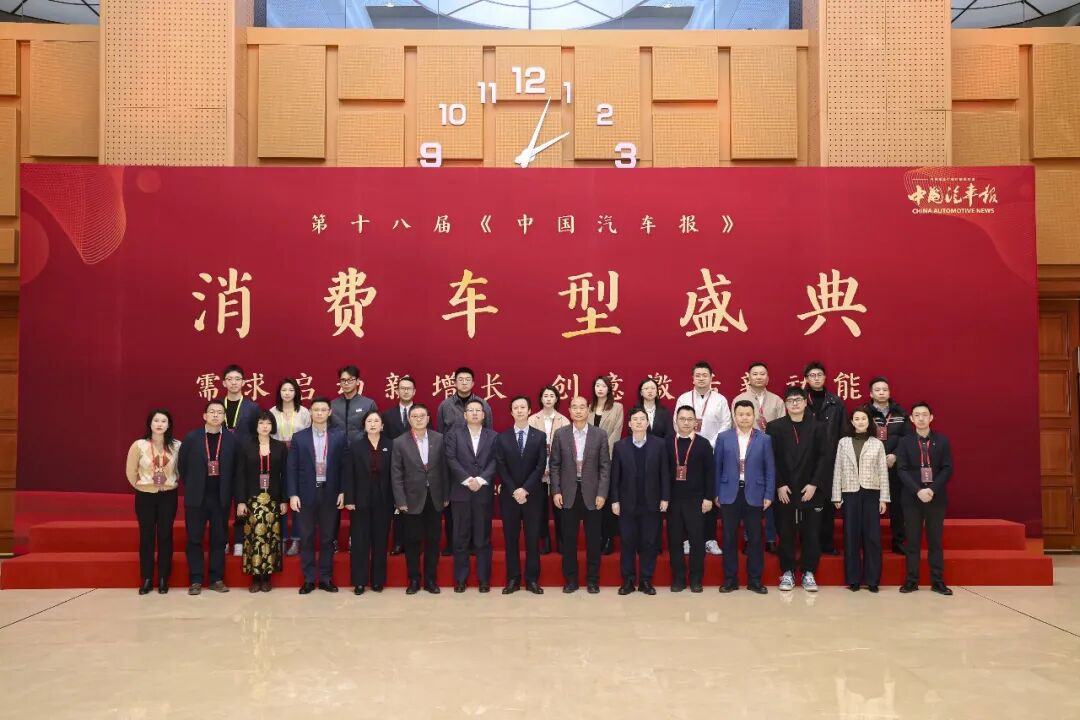
第十八届消费车型盛典:立足新起点,探索新路径,寻求新突破
Zhong Guo Qi Che Bao Wang· 2026-01-14 01:44
Group 1 - The core theme of the 18th Consumer Vehicle Ceremony is to stimulate new growth through demand and activate new momentum through creativity [2][3] - The event is timely as it marks a critical year for the Chinese automotive industry to seize opportunities and face challenges, ensuring a good start for the 14th Five-Year Plan [3][6] - The automotive industry in China is transitioning from rapid growth to a focus on high-quality development, with an emphasis on innovation and collaboration across the entire industry chain [8][10] Group 2 - Predictions indicate that by 2026, sales of new energy vehicles in China will reach 20 million units, with a market penetration rate of 55% [10] - The focus of automotive policies is shifting towards high standards and consumer-driven growth, with an emphasis on product safety and market consumption [10][12] - The automotive industry is encouraged to explore new consumption scenarios, moving from vehicle ownership to service-oriented models [12] Group 3 - The automotive sector is undergoing a transformation driven by technological advancements, consumer demand for personalization, and the integration of artificial intelligence [15][19] - Companies are focusing on building comprehensive safety systems and enhancing user experience through intelligent and safe mobility solutions [19][21] - The design and innovation in the automotive industry are increasingly influenced by global perspectives, with a push for differentiation and emotional value in products [27][31] Group 4 - The global dialogue on automotive design emphasizes the importance of Chinese designers gaining recognition on the world stage, enhancing the competitiveness of Chinese automotive brands [33][37] - The long-term vision in automotive design is crucial, with a focus on creating timeless designs that resonate with market and historical significance [35][37] - The automotive industry is at a pivotal moment, with the potential for Chinese automotive design to become a global leader in innovation and cultural expression [37]
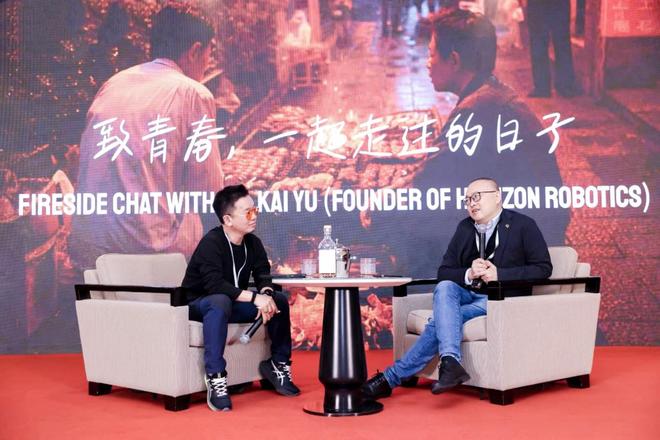
威士忌、活鱼与千亿牌桌:王淮余凯十年对谈中的硬科技企业成长指南
Zhong Guo Jing Ying Bao· 2026-01-14 01:23
Core Insights - The conversation between Wang Huai and Yu Kai highlights the evolution of Horizon Robotics from a roadside chat to a billion-dollar company, emphasizing the importance of long-term survival over short-term gains [2][3] - Yu Kai's philosophy of "boring" success focuses on avoiding competition in crowded markets and maintaining a risk-averse approach, which has guided Horizon's strategic decisions [6][7] Company Development - Horizon Robotics was founded in 2015 by Yu Kai, who initially proposed deploying AI capabilities on edge devices rather than cloud computing, a forward-thinking idea at the time [5] - The company underwent significant restructuring in 2019, pivoting from AIoT to focus solely on smart driving chips, a decision driven by Yu Kai's insights from investment legends like Warren Buffett and Charlie Munger [5][6] Market Positioning - Horizon's strategy involves competing in areas with little competition and avoiding high-risk scenarios, which reflects a deep-seated aversion to risk [6] - The company is aware of the increasing trend of automakers developing their own chips but chooses to maintain a distance from potential threats while fostering a collaborative ecosystem [6][7] IPO and Investment Strategy - Horizon's IPO discussions occurred amidst a challenging market environment, yet the team believed in the long-term potential of Chinese innovation and its alignment with global trends [7] - The company attracted significant international investment, distinguishing itself from others that relied on local support, showcasing its appeal to major global investors [7][8] Entrepreneurial Philosophy - Yu Kai emphasizes the importance of resilience and optimism in entrepreneurship, suggesting that successful entrepreneurs must navigate through cycles of good and bad times [8] - The advice for current entrepreneurs includes unwavering belief in the future and maintaining a cautious outlook during challenging periods, as better times will eventually return [8]
摸底地平线HSD一段式端到端的方案设计
自动驾驶之心· 2026-01-13 10:14
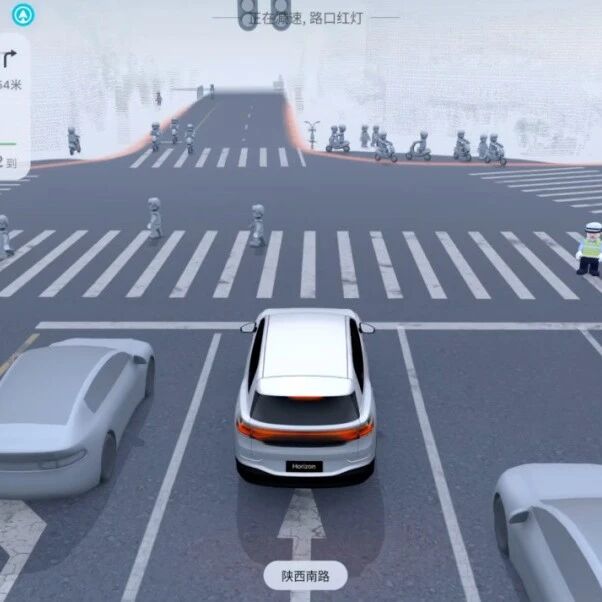
Core Insights - The article discusses two core papers from Horizon Robotics: DiffusionDrive and ResAD, focusing on their contributions to end-to-end autonomous driving solutions [2][3]. DiffusionDrive - The overall architecture of DiffusionDrive consists of three parts: perception information, navigation information, and trajectory generation [6]. - Perception information includes dynamic/static obstacles, traffic lights, map elements, and drivable areas, emphasizing the need to convey perception tasks to planning tasks in an end-to-end manner [6]. - Navigation information is crucial for avoiding incorrect routes, especially in complex urban environments like Shanghai, where navigation challenges are significant [7]. - The core of trajectory generation is "Truncated Diffusion," which leverages fixed patterns in human driving behavior to reduce training convergence difficulty and inference noise [8]. - The article outlines a method for trajectory generation using K-Means clustering to describe common human driving behaviors, which simplifies the training process [9]. - The anchor-based trajectory generation approach reduces training difficulty and enhances real-time inference capabilities, although concerns about trajectory stability over time are raised [10]. ResAD - ResAD introduces a residual design that predicts the difference between future trajectories and their inertial extrapolations, rather than generating future trajectories directly [12]. - The residual regularization is essential for managing the increasing residuals over time, ensuring that the model focuses on the true diversity of driving behaviors [13][14]. - The design allows for different noise perturbations in the trajectory generation process, adjusting learning difficulty based on the noise applied in lateral and longitudinal directions [15]. - ResAD features a trajectory ranker that utilizes a transformer model to predict metric scores based on top-k trajectory predictions and environmental information [16]. - The regularized residual supervision effectively separates the inertial component from predictions, addressing data imbalance issues in training [17]. Conclusion - Both papers from Horizon Robotics provide valuable insights and methodologies for enhancing autonomous driving technology, encouraging further exploration and development in the field [18].
【热点评述】关注地平线生态技术大会
乘联分会· 2026-01-13 08:40
Core Viewpoint - The article discusses the first Horizon Technology Ecosystem Conference held in Shenzhen, focusing on the development of smart vehicles and robots, and the collaboration among various industry players to promote technological advancements and accessibility [3][12]. Group 1: Market Achievements and Product Launches - Horizon has successfully shipped over 10 million units of its Journey series chips within five years, with the latest HSD model achieving over 12,000 activations in just two weeks after its launch [5]. - The company aims to reach a production target of 10 million units for the HSD model in the next 3-5 years [5]. Group 2: Technological Advancements - The fourth-generation compiler technology has significantly improved compilation speed from hours to minutes, with a 20% enhancement in model performance [6]. - The new Riemann architecture is expected to deliver a tenfold increase in computing power and a fivefold improvement in efficiency compared to the previous generation [6]. Group 3: New Service Models and Collaborations - Horizon introduced the HSD Together algorithm service model, which promises to reduce human, computing, and time costs by 90% for smart driving partners [7]. - The company announced that its urban auxiliary driving solution based on the Journey 6M model will soon be mass-produced, making it accessible for vehicles priced around 100,000 yuan [8]. Group 4: Expansion into Robotics - Horizon is expanding its technology from smart driving to general robotics, launching two foundational models: HoloMotion for embodied intelligence and HoloBrain for cognitive capabilities [9]. Group 5: Industry Challenges - The automotive industry is facing a potential storage chip supply crisis due to rising demands for higher performance and larger capacity products, with projections indicating that the supply satisfaction rate may fall below 50% by 2026 [11][12].
从“地大华魔”掉队,卓驭科技在智驾平权浪潮下另觅出路
第一财经网· 2026-01-12 10:24
Core Insights - The competitive landscape in China's intelligent driving sector is undergoing significant changes, with a clear polarization among suppliers as cost competition intensifies [1][2] Group 1: Market Dynamics - Momenta and Huawei HI together hold over 80% market share in the urban NOA third-party supplier segment for passenger cars in China by October 2025, leaving only 19.2% for other suppliers, including Zhuoyue Technology [1] - The penetration rate of intelligent driving in China's passenger vehicles has exceeded 68%, with high-level driving solutions being pushed down to the 100,000 to 150,000 yuan market segment [2] Group 2: Zhuoyue Technology's Position - Zhuoyue Technology, originally benefiting from low-cost advantages, is now showing signs of lagging behind competitors, with its main deployment still relying on fuel vehicles from Volkswagen [1][3] - The company has announced over 50 mass-produced cooperative models, but market performance varies significantly, with some models failing to boost sales [3] Group 3: Competitive Pressures - The competition in the low-cost intelligent driving sector is intensifying, with new entrants like BYD and Horizon aiming to offer high-level driving solutions at lower price points [4] - Zhuoyue Technology's reliance on Volkswagen is seen as a potential weakness, as the company needs to diversify its partnerships to scale its intelligent driving solutions [3] Group 4: Future Strategies - Zhuoyue Technology is exploring new business avenues, including heavy-duty trucks and unmanned logistics vehicles, to seek new growth points [6] - The company plans to launch heavy-duty trucks equipped with its high-speed NOA by mid-2026, collaborating with firms like XCMG and Shaanxi Automobile [6]