奈雪的茶

Search documents
茶产业争“鲜”出招提升竞争力
Jing Ji Ri Bao· 2025-05-12 22:00
Group 1: Tea Industry Overview - The tea industry is experiencing growth with a focus on innovation and comprehensive competitiveness, guided by the "three teas" concept of tea culture, industry, and technology [1] - Spring tea accounts for approximately 45% of the annual tea production and over 65% of the total annual value, with an expected total production of 1.4 to 1.5 million tons this year [1] - By 2025, China's tea garden area is projected to exceed 53 million acres, with a total output value of around 330 billion yuan and domestic sales expected to approach 2.6 million tons, leading to an overall industry scale of approximately 1.13 trillion yuan [1] Group 2: Technological Advancements - Zhejiang Anji County has launched the first digital platform for the tea industry, integrating satellite remote sensing, IoT, and blockchain technologies for precise mapping and digital archiving of 200,600 acres of tea gardens [2] - The application of smart and digital technologies is significantly enhancing the mechanization and technological level of the tea industry, improving production efficiency and product quality [2] Group 3: Market Trends and Consumer Engagement - Wu Yutai has initiated its ninth Spring Tea Season, emphasizing strict quality control throughout the entire supply chain, which has fostered customer loyalty [3] - The tea industry is redefining its value boundaries by combining traditional tea with modern consumer demands, leading to innovative products such as white tea vitamin C tablets and white tea beer [3] - The new tea beverage market is thriving, with brands like Nayuki and Tea Baidao experiencing a surge in sales, with some stores reporting order increases of over 300% compared to pre-holiday levels [4]
奶茶原料为什么越来越“邪门”了?
远川研究所· 2025-05-12 12:46
Core Viewpoint - The article discusses the transformation of kale from a decorative plant to a "superfood" in the beverage industry, driven by marketing strategies and consumer health trends [3][4][5]. Group 1: Kale's Rise in Popularity - In 2025, kale transitioned from being a decorative plant to a sought-after superfood, praised for its nutritional benefits such as antioxidant properties and potential cancer-fighting abilities [3][4]. - The price of kale surged from 0.8 yuan per pound in 2024 to 3.5 yuan per pound in 2025, marking an increase of over 300% [4]. - The domestic market share of kale increased from 5% to 55% as tea brands began to source it for their products [4][5]. Group 2: Marketing Strategies - The marketing success of kale in the U.S. was largely due to strategic promotion by the American Kale Association, which utilized social media to enhance its visibility [12][14]. - Celebrities and cooking tutorials played a significant role in popularizing kale, transforming it from a lowly vegetable to a trendy food item among the middle class [15][17]. - In China, tea brands adopted similar marketing tactics, associating kale with health and fitness, particularly during the Paris Olympics [18][19]. Group 3: Consumer Trends and Product Development - The tea industry has seen a trend towards health-conscious products, with brands emphasizing the nutritional benefits of kale to attract consumers concerned about weight gain [21][22]. - The introduction of kale-based products, such as the "Champion Slimming Bottle," generated significant sales, with over 1.6 million bottles sold within ten days [22]. - The trend of using niche ingredients like kale is not unique; other ingredients such as avocado and oil fruit have also gained popularity through similar marketing strategies [24][30]. Group 4: Industry Dynamics - The beverage industry is characterized by high competition and product homogeneity, leading brands to continuously seek out unique ingredients to differentiate themselves [30][31]. - Despite the initial success of niche ingredients, the industry often sees a rapid influx of similar products from competitors, diluting the uniqueness of the original offering [29][30]. - The article highlights that while niche ingredients can drive short-term sales, they may not provide sustainable differentiation in a crowded market [34][37].



新茶饮第一股,“换装”自救?
虎嗅APP· 2025-05-12 10:51
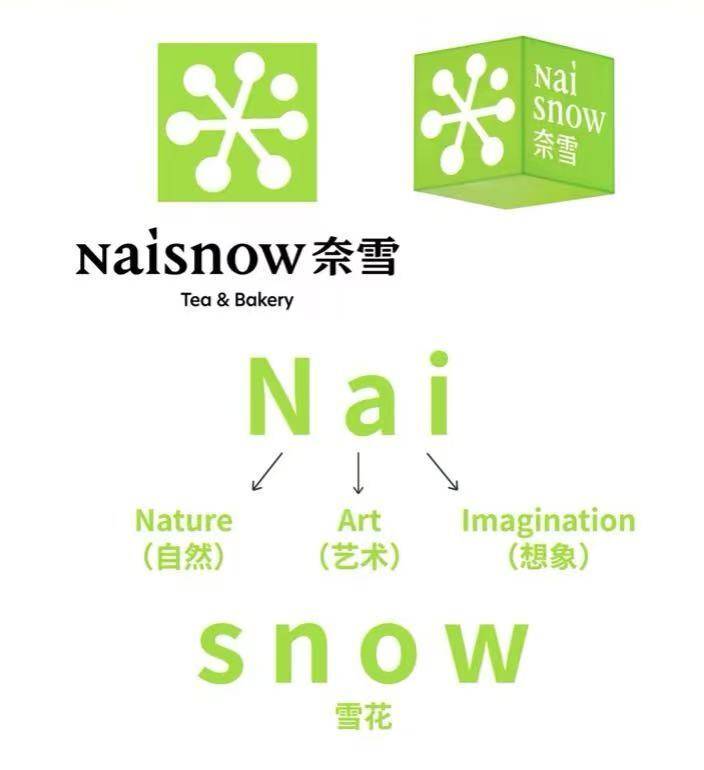
Core Viewpoint - The article discusses the challenges faced by Nayuki, a prominent player in the new tea beverage industry, highlighting its recent rebranding efforts and the underlying issues of declining performance and market competitiveness [3][5][11]. Brand Rebranding - Nayuki has changed its brand logo and name as part of its "internationalization strategy" for its 10th anniversary, simplifying its name from "Nayuki's Tea" to "Nayuki" and altering its English representation to "Naìsnow" [3][5]. - The rebranding has not been well received by consumers, with negative feedback on social media and a significant drop in stock price, reducing its market value to less than 1% of its peak [5][6]. Financial Performance - In 2024, Nayuki reported revenue of 4.92 billion yuan, a year-on-year decline of 4.7%, and an adjusted net loss of 919 million yuan, with average daily sales per store dropping below 10,000 yuan [5][7]. - Since its IPO, Nayuki has struggled with profitability, only briefly returning to profit in 2023 with a net income of 13 million yuan [5][7]. Operational Challenges - Nayuki's direct sales model, which aims to replicate Starbucks' "third space" experience, has faced severe cost control challenges, with employee costs at 29.2% and raw material costs at 36.8% [7][11]. - The average daily order volume per store has decreased from 363 orders in 2018 to 270 orders in 2024, and the average transaction value has dropped from 32.4 yuan to 26.7 yuan [7][11]. Market Positioning - Nayuki primarily targets women aged 20-35 but faces competition from brands like Chayan Yueshu and Hushang Ayi, which have increased their market share by offering products priced below 10 yuan [7][11]. - The market share of products priced above 30 yuan has fallen to 12%, while those priced between 10-20 yuan account for 58% of the new tea beverage market [7][11]. Competitive Landscape - The new tea beverage industry has entered a phase of rapid expansion, with franchise models becoming crucial for efficiency. Nayuki has only 345 franchise stores compared to competitors like Mixue Ice City, which has 23,000 stores [8][11]. - Nayuki's market presence is diminishing, with a total of 1,798 stores as of the end of 2024, including a reduction of 121 direct stores [8][11]. Strategic Adjustments - Nayuki is attempting to adjust its strategy by closing underperforming stores, launching "Nayuki Green" light food outlets, and lowering franchise investment costs from 980,000 yuan to 580,000 yuan [10][11]. - The company is also exploring international markets, having opened several stores in Southeast Asia, but faces challenges due to limited market capacity and cultural differences in Western markets [10][11]. Industry Trends - The article indicates a fundamental shift in the new tea beverage industry, moving away from capital-driven growth to a focus on efficiency and differentiation [11]. - Brands that fail to establish a unique market position risk being pushed out of the market as competition intensifies [11].

躲在工位里的脆皮年轻人,捧出新蓝海
3 6 Ke· 2025-05-12 10:46
Core Insights - The rise of "Chinese health water" has been significantly influenced by the younger generation's pursuit of health, leading to a booming market with various brands entering the space [2][11][12] Market Overview - The market size of Chinese health water grew from 0.1 billion in 2018 to 4.5 billion in 2023, representing a year-on-year growth of over 350% [4] - Predictions indicate that the market size will exceed 10 billion by 2028, highlighting its potential as a blue ocean market [4] - The broader category of "plant-based beverages" saw a year-on-year growth of 37.64% in Q3 2024, outperforming other beverage categories [4] Brand Strategies - Major brands like 元气森林 and 盒马 are actively entering the Chinese health water market, with 盒马 collaborating with traditional Chinese medicine brands to leverage the "food and medicine homology" theory [4][5] - 盒马's pricing strategy for its health water products is set between 4.9 and 5.9 yuan, aiming to lower consumer barriers and enhance repurchase intentions [7] Consumer Trends - The demand for health-oriented beverages is shifting from low-sugar options to products that offer positive health benefits, with 65.5% of consumers indicating that specific health effects influence their purchasing decisions [10][11] - The target demographic for these beverages is primarily young consumers aged 22-40, with a significant portion belonging to the middle-income group [8] Competitive Landscape - The success of Chinese health water is attributed to its differentiation from traditional health drinks, focusing on efficacy and ingredient quality [11] - As the category matures, it is expected to compete for the title of "top health beverage" in convenience stores, potentially overtaking existing categories like ready-to-drink tea and sugar-free beverages [12]
新茶饮第一股,“换装”自救?
Hu Xiu· 2025-05-12 09:39
Core Viewpoint - Naixue's rebranding effort, aimed at internationalization, has not resonated with consumers and has led to a decline in market value, reflecting deeper issues within the new tea beverage industry [1][3][9] Financial Performance - In 2024, Naixue reported revenue of 4.92 billion yuan, a year-on-year decline of 4.7%, with an adjusted net loss of 919 million yuan [3] - Since its IPO, Naixue has only briefly returned to profitability in 2023, with a profit of 13 million yuan [3] - The company's market capitalization has plummeted over 93% from 34 billion yuan at IPO to approximately 1.995 billion yuan [6][8] Market Position and Strategy - Naixue's direct sales model, which aims to replicate Starbucks' "third space" experience, has faced significant cost challenges, with employee costs at 29.2% and raw material costs at 36.8% [5] - The average daily sales per store have decreased from 12,700 yuan in 2018 to 8,900 yuan in first-tier cities by 2024 [5] - Naixue's focus on a premium pricing strategy has led to a disconnect with the market, as competitors have successfully captured the lower price segments [5][6] Competitive Landscape - The new tea beverage industry is shifting towards a franchise model, with competitors like Mixue Ice Cream leading with 23,000 stores and a net profit of 4.45 billion yuan in 2024 [6] - Naixue has only 345 franchise stores, significantly lagging behind competitors, and has seen a reduction in direct stores [6][7] - The market is increasingly dominated by brands that offer lower prices and greater efficiency, with Naixue struggling to maintain its market share [8] Brand and Product Development - Naixue's recent rebranding has been criticized for lacking clarity and failing to address underlying performance issues [1][3] - The company is attempting to pivot towards health-oriented products, but faces challenges with high costs and low repeat purchase rates [7] - The introduction of new store formats and reduced franchise fees are part of Naixue's strategy to regain market traction, but their effectiveness remains uncertain [7][9]
海外消费咖啡茶饮周专题:瑞幸咖啡2025Q1自营同店改善,沪上阿姨港交所上市
Guohai Securities· 2025-05-12 09:04
Investment Rating - The report does not explicitly state an investment rating for the industry or specific companies within it [13]. Core Insights - The coffee and tea beverage sector has shown varied performance among individual stocks, with notable gains for companies like Nayuki's Tea and Cha Bai Dao, while Luckin Coffee and Starbucks experienced declines [2][3]. - Luckin Coffee reported a total revenue of 8.865 billion RMB for Q1 2025, reflecting a year-on-year increase of 41.2%, with a total of 24,097 stores as of the end of Q1 2025 [5][6]. - The company achieved a GAAP operating profit of 737 million RMB, with an operating profit margin of 8.3%, indicating improved profitability alongside rapid expansion [5]. - Luckin Coffee's same-store sales growth rate reached 8.1%, demonstrating a steady improvement in operational efficiency [5]. - The average monthly transaction customer count for Luckin Coffee was 74.27 million, a 24% increase year-on-year, with a cumulative transaction customer base of approximately 355 million [6]. - Starbucks reported a global revenue of $8.77 billion for FY2025 Q2, a 2.3% year-on-year increase, but faced a 1% decline in same-store sales, indicating ongoing challenges in its global operations [9]. - Starbucks' China operations showed a revenue of $740 million for FY2025 Q2, a 5% year-on-year increase, with a same-store transaction volume growth of 4% [9]. Summary by Sections Section 1: Recent Performance of Coffee and Tea Companies - The report highlights the stock performance of various tea and coffee companies from April 25 to May 9, 2025, with Nayuki's Tea leading at +14.43% and Luckin Coffee at -1.34% [2][3]. Section 2: Luckin Coffee Q1 2025 Financial Results - Luckin Coffee's Q1 2025 total revenue was 8.865 billion RMB, with a GMV of 10.354 billion RMB, and a total of 24,097 stores [5]. - The company opened 1,757 new stores in Q1 2025, marking a 7.9% increase in total store count [5]. - The company’s flagship product, the coconut latte, has sold 1.3 billion cups since its launch four years ago [6]. Section 3: Starbucks FY2025 Q2 Performance - Starbucks reported a global revenue of $8.77 billion for FY2025 Q2, with a 2.3% year-on-year increase, but faced a 1% decline in same-store sales [9]. - The company’s China operations generated $740 million in revenue, reflecting a 5% year-on-year growth [9]. Section 4: Listing of Hu Shang A Yi - Hu Shang A Yi listed on the Hong Kong Stock Exchange on May 8, 2025, with a share price of 113.12 HKD, raising a net amount of 195 million HKD [8]. - The company plans to use the IPO proceeds to enhance digital capabilities, develop new products, upgrade equipment, and expand its store network [8].
排队冲刺港交所,餐饮品牌竞逐上市
Qi Lu Wan Bao· 2025-05-11 21:20
Group 1: Core Insights - Auntea Jenny officially listed on the Hong Kong Stock Exchange on May 8, with an issue price of HKD 113.12 per share, opening at HKD 190.6, a 68.49% increase, and a total market capitalization of approximately HKD 20 billion [2] - The restaurant industry is seeing a surge in IPO activity, with over 15 restaurant companies submitting applications since 2024, including hot pot, fast food, and tea beverage segments [3] - The capital market's focus on the restaurant industry has reached a historical peak, with over HKD 8 billion raised in the first quarter of 2025, a 120% year-on-year increase [3] Group 2: Market Dynamics - 70% of listed restaurant brands have chosen to list on the Hong Kong Stock Exchange, which offers a shorter listing process of 6-12 months compared to the 18-24 months average in A-shares [3] - The Hong Kong market has more lenient profitability requirements, allowing unprofitable companies to demonstrate potential through cash flow and revenue scale [3] - Auntea Jenny's 2024 net profit is expected to decline by 15.2%, yet it successfully listed due to its scale advantage with 9,176 stores and supply chain layout [3] Group 3: Competitive Landscape - Among listed brands, some like Mixue Ice City and Bawang Tea have achieved both revenue and profit growth, with Mixue's 2024 revenue at CNY 28 billion and net profit at CNY 2.5 billion [5] - Conversely, brands like Xiaobuxiang are facing challenges, reporting a net loss of CNY 401 million in 2024 and closing 219 stores [5] - Established brands like Quanjude have seen a decline in net profit by 43.15% in 2024, highlighting the difficulties faced by even long-standing companies in maintaining profitability [6] Group 4: Future Outlook - The Ministry of Commerce and other departments have issued guidelines to support qualified restaurant companies in listing and financing, which is expected to improve market liquidity [3] - The Hong Kong Stock Exchange's dual-counter model (trading in both HKD and RMB) reduces currency risk, attracting more mainland investors [4] - The competitive landscape post-IPO is challenging, as companies must navigate market scrutiny and economic fluctuations, with many facing the dilemma of revenue growth without profit increase [6]

财报会说话:真实的茶饮出海现状
FBIF食品饮料创新· 2025-05-11 16:14
Core Viewpoint - The article discusses the significant trend of Chinese tea brands expanding internationally, particularly in Southeast Asia, highlighting the strategies and challenges faced by various companies in this competitive landscape [5][4]. Group 1: Market Overview - The global ready-to-drink beverage market is projected to exceed $1.1 trillion by 2028, with a compound annual growth rate (CAGR) of 7.2% from 2023 to 2028 [4]. - Southeast Asia's tea beverage market is expected to grow from $20.1 billion in 2023 to $49.5 billion by 2028, achieving a CAGR of 19.8%, making it one of the fastest-growing regions globally [4]. Group 2: Company Strategies - Different Chinese tea brands are at various stages of international expansion: - Mixue Ice City focuses on scaling up [7]. - Nayuki targets high-end markets [7]. - Cha Bai Dao emphasizes differentiation [7]. - Gu Ming concentrates on regional deep cultivation [7]. - Mixue Ice City leverages its supply chain advantages to build a tea empire, with a significant increase in overseas store openings [10][11]. - Nayuki's strategy involves positioning itself as a luxury brand in Southeast Asia, with high average order values and premium pricing compared to local competitors [20][21]. - Cha Bai Dao adopts a localized approach, ensuring product quality and flavor by sourcing local ingredients and adapting to regional tastes [27][28]. - Gu Ming remains cautious about international expansion, focusing on deepening its presence in lower-tier cities within China [31][32]. Group 3: Financial Performance - Mixue Ice City's financial report indicates a substantial increase in overseas store count, with 4,895 stores outside mainland China as of December 31, 2024, up from 4,331 the previous year [10][11]. - Nayuki reported a revenue of 4.921 billion yuan in 2024, a decline of 4.7% year-on-year, and a shift from profit to a net loss of 919 million yuan [21][24]. - Cha Bai Dao has successfully opened multiple stores in Southeast Asia, with plans for continued expansion in 2025 [28][30]. Group 4: Challenges and Market Dynamics - The international expansion of Chinese tea brands faces challenges such as local competition, regulatory changes regarding environmental policies, and the need for effective supply chain management [34][36]. - The capital market's response to these brands is polarized, with some experiencing significant stock price declines while others, like Mixue and Gu Ming, have seen substantial increases in market value [37][39]. - The article emphasizes that the next phase of competition in the Southeast Asian tea market will hinge on innovation and the ability to adapt to local consumer preferences [38][40].
4 月中国餐饮行业数据跟踪:需求波动,外卖补贴撑起一片天
Zhi Tong Cai Jing· 2025-05-11 14:30
Core Insights - Goldman Sachs released the latest data tracking high-frequency indicators for China's restaurant industry, revealing mixed results for same-store sales in April [1] Group 1: Market Trends - The market sentiment has been negatively impacted by the U.S. tariff increases, leading to fluctuations in demand [1] - Despite a low base compared to pre-pandemic levels, Haidilao's table turnover rate in April saw a significant year-on-year decline, worsening from a low single-digit drop in March to a double-digit drop [1] - Labor Day holiday sales growth outpaced overall consumption growth, with key restaurant retail sales increasing by 8.7%, compared to a 6.3% rise in total retail sales [1] Group 2: Company Performances - **Haidilao (6862.HK; Neutral)**: In April, Haidilao's average table turnover rate dropped to approximately 3.4 times, down from 3.6 times in March, indicating a recovery to about 70% of pre-pandemic levels [2] - **Guming (1364.HK; Buy)**: Guming's same-store sales growth accelerated in April, benefiting from a low base and delivery platform subsidies, with plans to open 2,500 new stores this year [3] - **Jiumaojiu (9922.HK; Neutral)**: During the Labor Day holiday, Jiumaojiu's same-store sales decline narrowed, with new stores performing well, indicating potential for future growth despite short-term pressures [4] - **Naixue (2150.HK; Sell)**: Naixue's same-store sales increased by 3% in April, driven by a 7% rise in order volume, although the average transaction value decreased by 4% [6] Group 3: Sales Dynamics - Guming's management remains confident in its expansion plans, with a focus on new product launches to attract customers [3] - Naixue's delivery revenue surged by 77% during the Labor Day holiday, accounting for 52% of total orders, while dine-in revenue fell by approximately 10% [6] - Haidilao's table turnover rate during the Labor Day period exceeded 5 times, although it still represented a year-on-year decline of about 10% [2]
奈雪再改名,或与进军欧美相关;小马智行与优步合作,在中东部署Robotaxi丨36氪出海·要闻回顾
36氪· 2025-05-11 13:43
Core Viewpoint - The article discusses various companies' strategic moves and market expansions, particularly focusing on their international ventures and collaborations in the Middle East and Europe. Group 1: Company Developments - Nayuki Tea has reportedly changed its logo and name, possibly in relation to its expansion into the European and American markets [7] - Dingdong Maicai has entered the Hong Kong market through a strategic partnership with DFI Retail Group, aiming for a sales target of 100 million HKD in the first year [8] - CATL is seeking a loan of approximately 1 billion USD to expand its operations in Indonesia [11] - WeRide and Uber are expanding their strategic partnership to deploy autonomous Robotaxi services in 15 new international cities [10] - XTransfer has obtained an electronic money institution license from the Dutch central bank, enabling it to provide local accounts and cross-border settlement services to small trade enterprises in the Netherlands [17] Group 2: Market Trends - The European market is becoming a new battleground for cross-border e-commerce platforms, with SHEIN and Temu significantly increasing their advertising spending in France and the UK [9] - The global retail e-commerce market in Europe reached a size of 631.9 billion USD in 2023, indicating substantial growth potential [9] - The automotive trade in China saw a total import and export value of 23.82 billion USD in March, with a month-on-month increase of 32.1% [19] Group 3: Financial and Investment Activities - Uber has committed to an additional 100 million USD investment in WeRide, marking its largest investment in the autonomous driving sector to date [21] - The Chinese government has introduced financial policies to support foreign trade enterprises, which are seen as a timely boost for businesses affected by tariffs [18] - Huabao New Energy launched a new family green power system at the Intersolar Europe 2025 event, showcasing advancements in renewable energy solutions [15]