美的集团

Search documents
西部证券:把握消费行业底部机会 重视“红利+”配置方向
智通财经网· 2026-01-12 02:56
Core Viewpoint - The market is expected to gradually refocus on the consumer sector due to the recovery of high-end consumption and certain mass-market products, along with the implementation of national subsidy policies and funding demands for "high-cut low" strategies [1] Group 1: Market Trends - High-end consumption, including luxury goods and gambling, shows improvement in demand, while some mass consumer goods like beer and dairy products are experiencing governance and structural enhancements [3] - The long-term policy encouragement and low interest rate environment are expected to boost equity allocation dynamics, particularly in high-dividend, stable performance stocks with valuation advantages [1][2] Group 2: Investment Opportunities - Companies with strong global competitive power, particularly in the white goods sector, are enhancing their operational models and supply chains, which is expected to positively impact overall performance [2] - The selected consumer sector stocks have an average dividend yield of over 5% and a projected PE ratio of 13X for 2026, indicating potential for long-term investment [4]





也该轮到游戏公司CEO受苦了
3 6 Ke· 2026-01-12 02:17
最近和朋友聊起这两年的游戏行业,大概有两点感慨:暴死的大作太多,卸任和离职的CEO也太多。 (备注:为了方便讨论,本文语境中的CEO,泛指所有不是创始人或董事长的游戏业务一号位。) 这些曾经叱咤风云的CEO,离职的原因看似五花八门:业绩下滑、产品失败、战略偏移、不够听话、团 队太贵……但其实做到了这个位置,如果不是自愿离职,真正的原因只有一个: 制作人和老板的博弈已经如此微妙。而站在CEO的位置,除了预期管理的问题,还有很多问题要更复杂 百倍。因为CEO的工作成果,远比制作人更难证实或者证伪。 随便举两个例子:10年前,某大厂在连续痛失人才后,曾表示要给成功团队不亚于创业的回报。可做出 长青游戏之后,老板又觉得年年躺赚太简单,给团队分得太多。试问这时CEO对上对下该怎么说,怎么 做? 同样是10年前,某大厂崇尚孵化式研发,也因此诞生了无数爆款。可近年来因为标准过于宽松,难免有 一些项目、一些管理者浪费了预算,辜负了信任,砸了公司的招牌,让老板感到丢脸。那么设计和坚持 这条路线的CEO,又该怎么计算功过? 更微妙的是,站在老板的视角,很难完全信任上面两类CEO:你建议分钱,可分的还不是公司的钱?你 崇尚孵化,可 ...
预见2025:《2025年中国全屋智能行业全景图谱》(附市场现状和发展趋势等)
Qian Zhan Wang· 2026-01-12 01:35
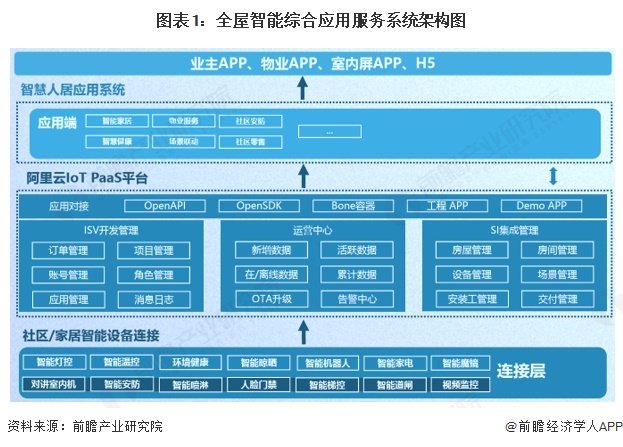
Industry Overview - The concept of "whole-house intelligence" refers to an integrated smart home system that combines smart lighting, security, audio-visual, and appliance control into a comprehensive home solution. This system allows for automated operations based on environmental and personal needs, enabling connectivity between individual smart products for a more personalized home experience [1][2] - The whole-house intelligent system relies on cloud platform capabilities and channel resources to create mature smart home applications, smart community applications, and market solutions, forming an IoT ecosystem that includes home device connectivity, automated control, data analysis, health care, community services, and new retail [1] Industry Chain Analysis - The whole-house intelligent field has developed a complete industrial chain, with upstream consisting of component suppliers, middleware suppliers, and software technology providers. The midstream includes whole-house smart home brand manufacturers that sell products directly to consumers and provide solutions to real estate and home decoration companies [2][5] Industry Development Status - The global whole-house intelligent industry is in a rapid development phase, supported by the maturity and integration of IoT, AI, and 5G technologies. This has facilitated easier interconnectivity between devices and enhanced system intelligence and interactivity. Market demand for convenient, healthy, and safe home environments is driving the transition from niche to mass markets [13][15] - In China, the whole-house intelligent industry is experiencing rapid growth driven by both policy and market forces, with a projected market size of approximately 222.4 billion yuan in 2024 [15][25] Competitive Landscape - The competitive landscape of China's whole-house intelligent industry can be categorized into three factions: traditional home appliance companies (e.g., Haier, Midea, Gree), internet companies (e.g., Xiaomi, Huawei), and other specialized firms. Traditional companies leverage supply chain and brand advantages, while internet firms possess strong technological and financial capabilities [17][19] Industry Development Trends - The Chinese whole-house intelligent industry is moving towards standardization in technology, market scenario development, and ecological competition. The combined push from policies, technology, and consumer demand is expected to facilitate a transition from rapid expansion to high-quality development, gradually building a more complete smart living ecosystem [23][25] - The market is expected to see a compound annual growth rate of 9.8%, with the market size projected to reach approximately 390 billion yuan by 2030 [25]

2026“国补”首单已于近期陆续送达!关注可选消费板块机会
Mei Ri Jing Ji Xin Wen· 2026-01-12 00:59
Group 1 - The core viewpoint of the news is the launch of a new round of national subsidies for consumer goods, with a total of 62.5 billion yuan allocated to support the "trade-in" policy, aimed at boosting consumption during peak seasons like New Year's and Spring Festival [1] - The 2026 national subsidy program has optimized the range and standards of subsidies compared to 2025, adding smart glasses to the digital product category and focusing on "high-efficiency" appliances in the home appliance category [1] - The "trade-in" policy from 2024 to 2025 led to a significant increase in consumer goods sales, reaching 3.92 trillion yuan and benefiting 494 million consumers [1] Group 2 - The optional consumer ETF (562580.SH) is expected to benefit significantly from the continuation of the national subsidy policy, with a focus on sectors such as automobiles (46%) and home appliances (34%) [2] - The top ten weighted stocks in the optional consumer ETF include major companies like Midea Group, BYD, Gree Electric, and Haier Smart Home, indicating strong potential for growth in these sectors [2] - The index valuation PE-TTM stands at 23.47 times, which is in the 38.04% percentile over the past decade, suggesting a relatively attractive investment opportunity [2]
西部证券晨会纪要-20260112
Western Securities· 2026-01-12 00:56
Group 1: Home Appliances Industry - The report emphasizes the importance of capturing opportunities at the bottom of the consumer sector, focusing on the "dividend +" allocation direction as high-end consumption and certain mass-market products show signs of recovery [1][5] - The report highlights that the market is gradually returning its attention to the consumer sector due to the implementation of national subsidy policies and the demand for high-quality investments, although high valuations and non-mainstream sectors remain less attractive [1][5] - Key recommendations include focusing on companies with strong business models, high dividends, stable performance, and favorable valuations, such as Haier Smart Home, Midea Group, and Gree Electric [3][5] Group 2: Commercial Aerospace and Power Equipment Industry - The commercial aerospace sector in China is characterized by grand planning and significant potential, with expectations for a transition from "hundreds" to "thousands" of low-orbit satellites between 2026 and 2027, marking a shift to mass production and high-density launches [6] - The report suggests that the aerospace cable industry, which requires high environmental performance and reliability, is expected to see significant growth due to the increasing frequency of rocket launches, with recommendations to focus on companies like Hualing Cable [6][7] - The report also discusses the importance of rocket fuel tanks, which represent a significant cost in rocket structures, and suggests monitoring companies like Taisheng Wind Energy for investment opportunities [7] Group 3: Inflation and Economic Indicators - The report notes that the Consumer Price Index (CPI) increased by 0.8% year-on-year in December, the highest since March 2023, indicating a recovery in prices [10][11] - The Producer Price Index (PPI) showed a month-on-month increase of 0.2% in December, with a narrowing year-on-year decline, suggesting a potential acceleration in nominal GDP growth [11][12] - The report anticipates that the trends of rising inflation and nominal GDP growth will continue into 2026, supported by improving economic indicators [11][12]
北向资金持仓路径曝光!全球锂电巨头连续7个季度获加仓,商业航天概念股获大面积扫货
Zheng Quan Shi Bao· 2026-01-11 23:49
北向资金最新一个季度末的持股情况如期公布(季度结束后第5个陆股通交易日)。整体来看,截至2025 年末,北向资金持股市值较上一年末大幅增加,超半数行业持股市值较上一年末有所增加,超半数陆股 通成份股环比获加仓。 北向资金持股市值创2022年以来新高 尽管北向资金持股按季度进行公布,但其市场关注度依然居高不下。根据Wind数据,截至2025年末, 北向资金持股数量合计近1080亿股,持股数量连续4年超过1000亿股,持股市值(期末收盘价计算)合计 2.59万亿元,持股市值创2022年以来新高,较上一年末增幅接近20%。若纳入互联互通ETF的持仓规 模,2025年末北向资金持有中国资产的规模将更高。 从2025年数据来看,北向资金自2025年一季度起持股市值连续4个季度攀升,不过持股数量有所下降, 这与北向资金调仓、持股公司股价变动有一定关系。 宁德时代以超过2500亿元的持股市值遥遥领先于其它个股,持股市值较上一年末增加超过1000亿元,主 要受益于持股比例及股价的增加所致,该股的北向资金持股比例连续7个季度增加。作为全球锂电巨 头,2025年5月,宁德时代在港股上市,公司去年与多家知名企业签订战略合作协议,在 ...

股市必读:万东医疗(600055)1月9日主力资金净流入587.35万元,占总成交额4.24%
Sou Hu Cai Jing· 2026-01-11 19:03
Group 1 - The core stock price of Wandong Medical (600055) closed at 16.97 yuan on January 9, 2026, with an increase of 2.04% and a trading volume of 82,000 shares, resulting in a total transaction amount of 139 million yuan [1] - On January 9, 2026, the net inflow of main funds was 5.8735 million yuan, accounting for 4.24% of the total transaction amount, while retail investors had a net outflow of 996,800 yuan, representing 0.72% of the total transaction amount [1][3] - The company held its 12th meeting of the 10th Board of Directors on January 9, 2026, where it approved the nomination of Wang Jianguo as a non-independent director candidate, pending shareholder meeting approval [1] Group 2 - Wandong Medical will hold its first extraordinary general meeting of 2026 on January 26, 2026, to vote on the election of non-independent director candidate Wang Jianguo, with a record date of January 20, 2026 [2] - The company announced a "Quality Improvement and Efficiency Enhancement Return" action plan, focusing on enhancing operational quality, promoting innovation in medical imaging equipment, and maintaining shareholder interests through cash dividends [2] - The action plan includes commitments to strengthen investor communication, improve transparency in information disclosure, and revise the company’s articles of association, including the cancellation of the supervisory board [2]

国补落地,关注CES新品催化
Xiangcai Securities· 2026-01-11 15:15
Investment Rating - The report maintains an "Overweight" rating for the home appliance industry [4][56] Core Views - The home appliance industry has shown a weekly increase of +2.34%, ranking 25th among its peers, while the CSI 300 index decreased by -0.08% [5][11] - The industry is experiencing a shift from incremental competition to stock integration, with a focus on efficiency optimization, product innovation, and technological upgrades [9][56] - The current price-to-earnings (P/E) ratio for the home appliance industry is 15.65, ranking 25th among 31 industries, indicating a relatively low valuation compared to the CSI 300 index [7][28] Summary by Sections Industry Performance - The home appliance sector's performance over the past month shows a +2.34% increase, with notable sub-sectors such as home appliance components III (+4.11%), other black appliances (+3.99%), and kitchen appliances (+3.84%) leading the gains [5][19] Policy and Market Trends - The national subsidy program has been streamlined to focus on six categories of appliances, with a subsidy of 15% of the product price and clear caps on subsidies for energy-efficient products [7][9] - The 2026 CES highlighted trends in AI integration, display technology innovations, and scenario-based applications in new appliance products [8] Investment Recommendations - The report suggests focusing on three main lines for investment: 1. Companies with solid market positions and high dividend yields in the white goods sector [9][56] 2. Companies that can leverage new products and technologies to explore new demands or expand into new markets [9][56] 3. Opportunities arising from the "trade-in" policy and upgrades in AI and smart home technologies [9][56]
——《2026/01/05-2026/01/09》家电周报:石头科技等CES展秀肌肉,开能完成原能部分子公司股权收购-20260111
Shenwan Hongyuan Securities· 2026-01-11 11:50
Investment Rating - The report maintains a positive outlook on the home appliance sector, highlighting the potential for undervalued leading companies with high dividends and stable growth attributes [6]. Core Insights - The home appliance sector is experiencing a mixed performance, with air conditioning sales declining significantly while washing machines show growth in exports. The report emphasizes the importance of leading brands like Midea, Gree, and Haier in navigating market challenges and capitalizing on emerging opportunities [6][36][43]. Summary by Sections Air Conditioning - In November 2025, the air conditioning industry produced 10.577 million units, a year-on-year decrease of 36.70%. Total sales reached 10.492 million units, down 31.80%, with domestic sales at 4.052 million units (down 39.80%) and exports at 6.44 million units (down 25.60%). Midea led the market with a 36.20% share, followed by Gree at 19.50% [2][36][38]. Refrigerators - The refrigerator sector saw a slight overall decline, with production at 8.257 million units (down 3.9%) and sales at 8.0531 million units (down 2.99%). Domestic sales fell to 3.5611 million units (down 15.59%), while exports increased to 4.492 million units (up 10.04%) [2][40][41]. Washing Machines - The washing machine industry reported production of 8.605 million units (up 8.2%) and sales of 8.4619 million units (up 7.61%). Domestic sales were 4.0565 million units (down 5.47%), while exports rose to 4.4054 million units (up 23.31%) [3][43]. Market Performance - The home appliance sector underperformed compared to the broader market, with the sector index rising 2.3% against a 2.8% increase in the CSI 300 index. Key performers included Rongtai Health (up 15.7%) and Yitian Intelligent (up 11.2%), while companies like Lek Electric and Feike Electric faced declines [5][9]. Industry Dynamics - Notable developments include Stone Technology's CES debut of the G-Rover robot vacuum, showcasing advanced cleaning capabilities, and Kaineng Health's acquisition of subsidiaries from Yuaneng Group for 204 million yuan [5][12][13]. Investment Themes - The report identifies three main investment themes: 1. Leading white and black appliance companies with low valuations and high dividends. 2. Upstream core component manufacturers diversifying into robotics and new tech sectors. 3. Strong demand in emerging markets for home appliances, driven by favorable trade conditions [6].


你的抖音企业号做不起来?是因为每天都在说这3句废话
Sou Hu Cai Jing· 2026-01-11 11:47
Core Insights - The article highlights the challenges faced by companies operating Douyin (TikTok) enterprise accounts, particularly in content creation and audience engagement, leading to low viewership and interaction rates [1][2][11] Group 1: Content Strategy Challenges - Companies struggle with content strategy, often caught between trending topics and brand identity, leading to data anxiety and content fatigue [1][2] - Various content strategies have been attempted, including unified account management and matrix strategies, but both have their drawbacks, such as mixed audience profiles and increased operational complexity [4][8] - The "3H content planning rule" (Hot, Tag, Ad) is theoretically sound but difficult to execute due to approval delays and audience engagement issues [4] Group 2: Data Analysis and Tools - Companies can access data analytics through Douyin's backend, which provides insights on viewership, engagement, and audience demographics [5] - Understanding data is crucial; companies often fail to analyze why certain videos perform well, leading to ineffective content strategies [7] - Utilizing content management tools can automate data collection and analysis, helping teams identify successful content patterns and optimize future posts [7][10] Group 3: Creative Process and Automation - The creative process for enterprise accounts is often hindered by the pressure to produce engaging content consistently, leading to burnout [11][12] - Establishing a "creative production system" that incorporates automated data collection and AI-generated content can alleviate some of the creative burdens [12][13] - The collaboration between AI tools and human creativity allows companies to focus on meaningful engagement with their audience while automating repetitive tasks [13]