
洋河股份

Search documents
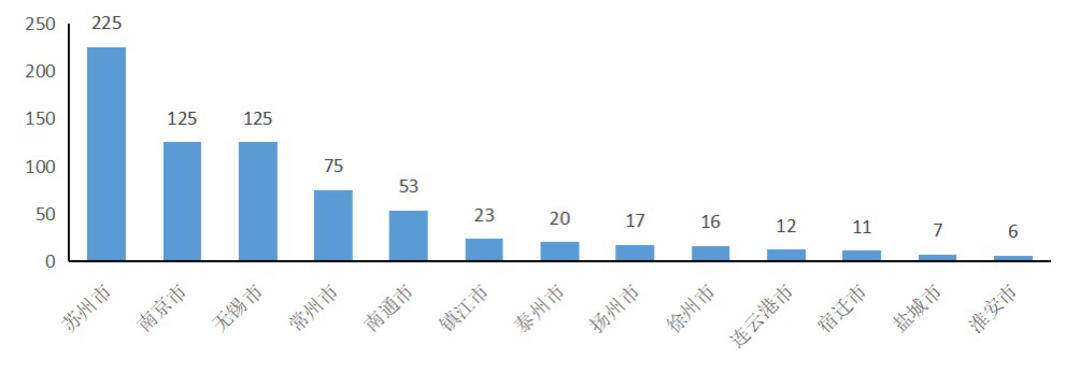
江苏共有上市公司715家
Sou Hu Cai Jing· 2025-11-06 06:52
Group 1 - As of October 31, 2025, Jiangsu has a total of 715 listed companies, including 220 on the Shanghai Stock Exchange Main Board, 114 on the Sci-Tech Innovation Board, 125 on the Shenzhen Stock Exchange Main Board (including one pure B-share), 203 on the Growth Enterprise Market, and 53 on the Beijing Stock Exchange [1] - In October 2025, Jiangsu added one new listed company (Changjiang Nengke), bringing the total number of new listings in 2025 to 21 [1] - The total market capitalization of the 714 listed companies in Jiangsu is 85,985.35 billion yuan, accounting for 13.12% of the total number of A-share listed companies and 8.01% of their total market capitalization [3] Group 2 - As of October 31, 2025, the companies in Jiangsu with a market capitalization exceeding 100 billion yuan (excluding the Beijing Stock Exchange) include Hengrui Medicine, WuXi AppTec, Jiangsu Bank, Guodian Nari, Huatai Securities, Nanjing Bank, Huidian Co., S. Hengli Hydraulic, Dongshan Precision, Xugong Machinery, Tianfu Communication, and Yanghe Brewery [5] - The bottom ten ranked A-share listed companies in Jiangsu (excluding the Beijing Stock Exchange) are Yangzi New Materials, Nanwei Co., Guangge Technology, Xuelang Environment, Zhongshe Co., *ST Hengjiu, Ailong Technology, Jinpu Garden, *ST Tianlong, and *ST Suwu [7] - In October 2025, Jiangsu's A-share listed companies had a total of 3 financing events, raising a total of 1.269 billion yuan, while the total financing events for the year reached 49, raising a total of 61.438 billion yuan [7]






食品饮料2025年三季报总结:白酒主动释放压力,速冻迎来行业拐点,软饮、零食量贩高景气维持
China Post Securities· 2025-11-06 05:06
Industry Investment Rating - The investment rating for the food and beverage industry is "Outperform" [1] Core Insights - The report highlights that the liquor sector is actively releasing pressure on financial statements, with the industry gradually bottoming out. The frozen food sector is witnessing a turning point, while the soft drink and snack sectors maintain high levels of prosperity [3][4][30] Summary by Sections 1. Liquor - The liquor sector's total revenue for the first three quarters of 2025 was CNY 319.23 billion, a year-on-year decrease of 5.76%, with net profit down 6.85% to CNY 122.67 billion. In Q3 alone, revenue fell 18.38% to CNY 78.48 billion, and net profit dropped 22.00% to CNY 28.09 billion [14][28] - High-end liquor brands like Moutai showed stable growth, while others like Wuliangye and Luzhou Laojiao faced significant declines. Moutai's revenue grew by 9.28% year-on-year, while Wuliangye's fell by 10.26% [17][19] - The second-tier liquor brands, such as Fenjiu, showed resilience with a revenue increase of 5.00%, while others like Shui Jing Fang and Shede experienced declines [26][22] 2. Soft Drinks - The soft drink sector saw significant growth, with companies like Dongpeng Beverage reporting a 34.13% increase in revenue year-on-year. The energy drink segment, particularly, showed robust growth [30][31] - The introduction of new flavors and products, such as Dongpeng's summer limited edition, contributed to the sustained high growth rates in this sector [30] 3. Dairy Products - The dairy sector, led by Yili, maintained stable performance despite high base effects, with significant growth in milk powder and cold drink products. New Dairy's low-temperature products continued to show double-digit growth [4][31] 4. Frozen Foods - The frozen food industry is experiencing a turning point, with companies noting that the price war has peaked. The focus is shifting towards rational competition and value [7][30] 5. Snacks - The snack sector is undergoing strategic adjustments, with member stores and instant retail becoming key growth channels. The overall consumption environment remains weak, but the snack sector is adapting with targeted strategies [7][30]




聚焦“吃喝”产业链:食品饮料ETF天弘(159736)近10日“吸金”近1.2亿元,农业ETF天弘(认购代码:512623)重磅发行中
2 1 Shi Ji Jing Ji Bao Dao· 2025-11-06 02:00
Group 1: Market Performance - The three major indices opened higher on November 6, with the Shanghai Composite Index up 0.10%, the Shenzhen Component Index up 0.37%, and the ChiNext Index up 0.60% [1] - The Tianhong Food and Beverage ETF (159736) rose by 0.28%, with a premium trading rate of 0.06% [1] - As of November 5, the Tianhong Food and Beverage ETF had a latest circulating scale of 5.622 billion yuan, ranking first among food and beverage ETFs in the Shenzhen market [1] Group 2: Fund Flows - The Tianhong Food and Beverage ETF experienced net inflows for 9 out of the last 10 days, accumulating nearly 120 million yuan [1] - The ETF tracks the CSI Food and Beverage Index, focusing on leading stocks in high-end and mid-range liquor, as well as segments like beverages, dairy, and condiments [1] Group 3: Agricultural Sector - The Tianhong Agricultural ETF (subscription code: 512623, listing code: 512620) officially launched on November 3, with fundraising set to end on November 7, 2025 [1] - This ETF tracks the CSI Agricultural Index, which selects 50 stocks covering sectors such as breeding and agricultural chemicals, including leading companies like Muyuan and Haida [1] Group 4: Industry Insights - Guizhou Province's Commerce Department is soliciting opinions on transforming "selling liquor" into "selling lifestyle," encouraging innovation in product offerings and service methods in retail and dining sectors [2] - As of October 30, over 90% of the autumn grain harvest has been completed nationwide, with the Northeast region nearing completion and expected to achieve a good harvest [2] Group 5: White Liquor Market Analysis - Guosen Securities reports that the white liquor market is facing pressure on both volume and price due to tightening regulations on public consumption and business banquets [3] - The report indicates that the worst period for white liquor sales pressure has passed, with expectations for demand recovery in the future [3] - Guosen Securities suggests focusing on stable industry leaders and high-quality stocks with long-term growth potential due to ongoing structural upgrades and channel strategy optimization [3]




国信证券晨会纪要-20251106
Guoxin Securities· 2025-11-06 01:47
Group 1: Real Estate Industry - The real estate industry is expected to face continued pressure in 2025, with new home sales declining by 13% year-on-year in Q3 2025, reaching a historical low comparable to Q3 2019 [9][10] - The report emphasizes the importance of income confidence for the mid-term price trends in real estate, indicating that an income confidence index above 50 is necessary for stable housing prices [9] - Investment strategies suggest waiting for market stabilization and focusing on structural opportunities, recommending companies with low historical burdens and conservative price-to-book ratios [10] Group 2: Semiconductor Industry - The semiconductor industry has shown significant growth, with a 25.1% year-on-year increase in global sales in Q3 2025, marking the eighth consecutive quarter of growth [25] - The report highlights that the profitability of semiconductor companies continues to improve, with a net profit growth of 80.4% year-on-year in Q3 2025 [24] - Investment recommendations focus on storage and self-controlled industrial chains, with specific companies like Jiangbolong and Zhaoyi Innovation suggested for their potential in the rising market [26] Group 3: Food and Beverage Industry - The food and beverage sector has experienced a mixed performance, with the A-share food and beverage index down by 0.29% but outperforming the broader market [19] - The report identifies a divergence in performance among categories, with liquor facing challenges while dairy and beverage segments show signs of recovery [18] - Investment recommendations include focusing on companies with strong growth potential in the beverage sector, such as Nongfu Spring and Eastroc Beverage [19] Group 4: Social Services Industry - The social services sector has underperformed the market, with a year-to-date increase of only 4.95% compared to the broader index [20] - The report notes a significant reduction in fund holdings within the sector, reaching historical lows, indicating a cautious outlook [20] - Investment strategies suggest focusing on sectors showing signs of recovery, such as tourism and education, with specific companies recommended for their growth potential [22] Group 5: AI and Cloud Computing - The AI and cloud computing sectors are experiencing rapid growth, with major cloud providers significantly increasing their capital expenditures to support AI infrastructure [11][12] - The report indicates that cloud service providers contribute approximately 50% of Nvidia's data center revenue, with expectations for substantial growth in global data center investments [12] - Investment recommendations include leading AI cloud platform companies like Microsoft, Google, and Alibaba, as well as chip suppliers like Nvidia [14]
年轻人不买账,中年人喝不起!茅台跌破1600,终于承认只是瓶酒?
Sou Hu Cai Jing· 2025-11-06 00:41
Core Viewpoint - The price of Moutai has significantly dropped, reflecting a shift in consumer behavior and market dynamics, moving from a status symbol to a regular product [3][10][18]. Group 1: Price Trends - The wholesale price of 53-degree Moutai has fallen below 1600 yuan, marking a historical low, compared to its peak of around 3000 yuan in late 2021, indicating a nearly 50% decline in four years [3][13]. - In early 2024, the price was still high, but by April, it dropped from 2600 yuan to 2100 yuan, signaling a change in market sentiment [10][12]. - By November 2023, the price had further decreased to 1600 yuan, with reports of significant losses for distributors who had purchased at higher prices [12][14]. Group 2: Market Dynamics - Moutai's decline is attributed to overproduction, changing consumer preferences, and the impact of e-commerce on pricing [16][21]. - The production capacity of Moutai reached 57,200 tons in 2023, with expectations to increase to 67,200 tons by 2025, leading to an oversupply situation [18][20]. - The shift in consumer behavior, particularly among younger generations favoring lower-alcohol beverages and a more casual drinking culture, has diminished Moutai's status as a social currency [17][24]. Group 3: Consumer Behavior - Younger consumers prioritize experience and atmosphere over traditional status symbols, leading to a decline in Moutai's appeal as a luxury item [17][22]. - The traditional consumption scenarios for Moutai, such as business banquets, have been negatively impacted by new regulations and changing corporate spending habits [21][25]. - Efforts by Moutai to adapt to younger consumers, such as introducing smaller packaging and promotional events, have not yet yielded significant results [24][25]. Group 4: Industry Implications - The entire liquor industry is facing challenges, with high inventory levels and declining demand affecting various segments [21][25]. - Moutai's price drop is part of a broader trend in the industry, where companies must adapt to changing consumer preferences and market conditions to survive [25]. - The focus is shifting back to the essence of drinking rather than speculation and investment, which may stabilize the market in the long run [25].
机构看好大盘价值股 53股市盈率低于行业平均水平
Zheng Quan Shi Bao· 2025-11-05 21:38
Group 1 - Institutional signals indicate a shift from high-volatility growth stocks to undervalued, high-dividend value stocks [1] - As of November 5, the average increase of large-cap value stocks this year is 8.93%, underperforming the Shanghai Composite Index [1] - Transsion Holdings has seen a cumulative decline of 24% this year, ranking first in terms of drop [1] Group 2 - The average dividend yield of large-cap value stocks is 4.05%, significantly higher than the overall A-share market [2] - 13 stocks have a dividend yield exceeding 5%, with China Merchants Energy holding the highest at 10.59% [2] - 53 large-cap value stocks have a rolling P/E ratio below the industry average, indicating potential undervaluation [2] Group 3 - Among the 53 stocks with a P/E ratio below the industry level, 34 stocks have an upside potential exceeding 20% based on institutional target prices [3] - China Pacific Insurance has the highest upside potential at 42.44%, with a net profit of 457 billion yuan in the first three quarters, a 19.29% increase year-on-year [3] - China Everbright Bank has an upside potential of 40.65%, supported by solid fundamentals and a focus on specialized operations [3] Group 4 - Other companies with significant upside potential include China Merchants Shekou, China State Construction, China Communications Construction, China Unicom, and China Telecom [4]


茅台跌至1499元,五粮液“量价双杀”,多家酒企跌破历史纪录
Sou Hu Cai Jing· 2025-11-05 19:08
Core Viewpoint - Guizhou Moutai, once hailed as the "king of A-shares," is facing unprecedented challenges in 2025, marked by leadership changes, declining financial performance, and a broader industry downturn [1][3][10]. Company Summary - The company announced a leadership change on October 25, with Chen Hua replacing Zhang Deqin as chairman, marking the fourth leadership change in five years [3][4]. - Moutai's third-quarter report revealed a revenue growth of only 0.35% and a net profit growth of 0.48%, both the lowest since 2015 [1][7]. - The stock price of Moutai has dropped approximately 20% from its peak at the beginning of the year, resulting in a market capitalization loss of over 500 billion RMB [1][7][10]. - The average revenue generated by each distributor increased from 38.45 million RMB in 2023 to 44.69 million RMB, indicating some operational improvements under the previous leadership [3]. Industry Summary - The overall liquor industry is experiencing a significant downturn, with 19 listed liquor companies reporting a cumulative revenue of 317.66 billion RMB in the first three quarters of 2025, a year-on-year decline of 5.84% [10][11]. - Many liquor companies, including Wuliangye and Kweichow Moutai, are facing "double declines" in both volume and price, with a notable contraction in sales expenses [1][10]. - The industry is witnessing a shift in consumer preferences, particularly among younger demographics, who are increasingly turning to lower-alcohol beverages and imported drinks [11][13]. - Contract liabilities across major liquor companies have decreased by 20% to 60%, reflecting a decline in distributors' willingness to make payments due to high inventory levels [13]. Market Dynamics - The market price of Moutai's 53-degree Flying Moutai has fallen to 1,499 RMB per bottle, down from 2,200 RMB at the beginning of the year, indicating significant pricing pressure [7][10]. - The liquor industry is expected to undergo a prolonged adjustment period, with many analysts predicting that the downturn will last until at least the 2026 Spring Festival [13]. - The industry's future may see a consolidation trend, with the top five brands' revenue share expected to rise from 42% in 2024 to 55% by 2027, while smaller brands may exit the market [13].
机构看好大盘价值股53股市盈率低于行业平均水平
Zheng Quan Shi Bao· 2025-11-05 18:31
Core Viewpoint - Institutional signals indicate a shift from high-volatility growth stocks to undervalued, high-dividend value stocks in the market [1] Group 1: Market Performance - As of November 5, large-cap value stocks have an average increase of 8.93% year-to-date, underperforming the Shanghai Composite Index [1] - Notable underperformers include Transsion Holdings, China Communications Construction, Sinopec, Daqin Railway, and Yanghe Brewery, with Transsion Holdings down 24% year-to-date [1] Group 2: Dividend Yield - The average dividend yield for large-cap value stocks is 4.05%, significantly higher than the overall A-share market [1] - 13 stocks have a dividend yield exceeding 5%, including COSCO Shipping, Gree Electric, Yanghe Brewery, Zhejiang Energy, and Huaxia Bank, with COSCO Shipping having the highest yield at 10.59% [1] Group 3: Valuation Metrics - Over 80% of large-cap value stocks have a rolling P/E ratio below the industry average, with 22 stocks having a P/E ratio less than half of the industry average [2] - For example, Huayu Automotive has a rolling P/E of 9.1, which is 0.31 times the industry average [2] Group 4: Investment Potential - Among the 53 large-cap value stocks with a P/E below the industry average, many have significant upside potential in the secondary market, with 34 stocks showing an upside of over 20% compared to institutional target prices [2] - China Pacific Insurance has the highest upside potential at 42.44%, with a net profit of 457 billion yuan in the first three quarters, up 19.29% year-on-year [2] Group 5: Specific Companies - Everbright Bank has an upside potential of 40.65%, supported by solid fundamentals and a focus on specialized operations [3] - Other companies with significant upside include China Merchants Shekou, China State Construction, China Communications Construction, China Unicom, and China Telecom [4]
茅台失速,五粮液腰斩,洋河溃败!白酒业怎么了?
Sou Hu Cai Jing· 2025-11-05 16:30
Core Viewpoint - The Chinese liquor industry is experiencing a significant downturn, marked by a battle for inventory reduction and financial pressure, with major companies reporting substantial declines in revenue and profit [1][2]. Industry Overview - In the first three quarters of 2025, 20 A-share liquor companies reported a total revenue of 320.23 billion yuan, a year-on-year decrease of 5.83%, and a net profit of 122.77 billion yuan, down 6.76% [2]. - Only Kweichow Moutai and Shanxi Fenjiu managed to maintain growth, while the remaining 18 companies experienced declines [3]. Quarterly Performance - The third quarter of 2025 was particularly harsh, with companies like Shui Jing Fang and Guo Jiao reporting revenue drops of 58.91% and 51.65% respectively [4]. - Luzhou Laojiao and Kweichow Moutai also faced significant profit declines, with Moutai's revenue growth slowing to 0.56% in Q3, a stark contrast to previous quarters [6][7]. Historical Context - This marks the first major performance decline in five years for the liquor industry, with the number of companies experiencing revenue drops increasing from 2 in 2021 to 7 in 2024 [5]. - The trend of declining profits is evident, with 90% of liquor companies reporting a year-on-year decrease in net profit for the first three quarters of 2025 [6]. Inventory Crisis - The industry is facing a severe inventory crisis, with total inventory for 20 listed liquor companies reaching 176.69 billion yuan by Q3 2025, an increase of 11% year-on-year [14]. - Companies like Kweichow Moutai hold the largest inventory, nearing 56 billion yuan, while others like Yanghe and Wuliangye also report significant inventory levels [14]. Financial Strain - The financial strain is evident as companies reduce their contract liabilities significantly, with Kweichow Moutai's contract liabilities dropping by 19% to 7.75 billion yuan [17]. - Many smaller liquor companies are facing survival challenges, with some unable to cover their interest-bearing debts [20]. Market Dynamics - The price reduction of Moutai has diminished the price advantage of Wuliangye, leading to a rapid decline in its performance [8]. - Shanxi Fenjiu, despite revenue growth, saw its net profit decline for the first time since 2015, indicating market saturation challenges [9]. Sales Strategies - Companies are increasingly resorting to credit sales to manage inventory, with Kweichow Moutai leading this shift by relaxing its cash payment policies [19]. - The overall market is expected to face prolonged challenges as inventory digestion may take several years due to the current oversupply situation [15].
茶酒融合:“微醺经济”的双向奔赴
Nan Fang Nong Cun Bao· 2025-11-05 15:12
Core Viewpoint - The integration of tea and alcohol is emerging as a significant trend in the beverage industry, driven by the demand for "micro-drunk" experiences among younger consumers, leading to innovative product offerings and cross-industry collaborations [5][6][46]. Group 1: Industry Trends - The Guizhou Provincial Department of Commerce has issued a draft guideline to promote the transition from "selling alcohol" to "selling lifestyle," emphasizing the integration of alcohol and tea products to expand cross-industry consumption markets [2][3]. - The trend of alcohol and tea fusion is not new, with both alcohol and tea companies seeking growth opportunities through innovative product combinations [5][6]. - The younger demographic is increasingly becoming the main consumer group for alcohol, prompting companies to innovate beyond traditional high-alcohol products to attract this audience [8][49]. Group 2: Product Innovations - Major alcohol brands are launching lower-alcohol or non-alcoholic products to cater to younger consumers, with examples including Moutai's introduction of over ten youth-oriented products at a recent trade fair [12][18]. - The collaboration between Luckin Coffee and Moutai to launch the "Sauce Aroma Latte" achieved remarkable sales, with over 5.42 million cups sold on the first day, generating over 100 million yuan in revenue [28][30]. - New tea drinks incorporating alcohol, such as "Drunken Steps" by Tea Baidao and "Lychee Ice Brew" by Grandpa's Tea, have also gained popularity, indicating a growing acceptance of alcohol-infused beverages [32][39]. Group 3: Market Dynamics - The market for low-alcohol beverages is expanding, with data showing that fruit wine accounts for 38% of instant retail channels, growing at 72% annually, while tea and alcohol combinations account for 25%, growing at 65% [54][55]. - Health consciousness among consumers is influencing the beverage market, with a significant percentage of consumers expressing concerns about the health impacts of traditional tea drinks, leading to a demand for healthier options [60][61]. - The fusion of tea and alcohol is seen as a strategic move to address the challenges faced by both industries, allowing them to meet consumer demands for "micro-drunk" experiences while ensuring health considerations are met [63].

