美债信用危机

Search documents
南华期货2026年铝产业链年度展望:冰火两重天
Nan Hua Qi Huo· 2025-12-31 11:46
Report Industry Investment Rating No relevant content provided. Core Views of the Report Alumina - The core contradiction in alumina prices lies in the supply side. In 2026, the oversupply situation may continue, and the cost line may become the price game line. The price center of alumina is expected to shift downward compared to this year [2]. - It is recommended to pay attention to news related to alumina enterprise maintenance and production, and adopt a short - selling approach when the fundamentals remain unchanged [2]. Electrolytic Aluminum - In 2026, macro and supply conditions will be important factors affecting electrolytic aluminum prices. The macro environment is expected to remain loose, highlighting the anti - depreciation financial attribute of aluminum. With limited domestic supply increment and uncertain overseas supply, aluminum prices are expected to remain strong [3]. - It is recommended to go long on dips [3]. Summary by Relevant Catalogs Chapter 2: Market Review Alumina - In 2025, the actual supply increase of alumina exceeded expectations, while the demand increment was limited. The price first declined, then rebounded due to supply disruptions, and finally returned to a weak trend [5]. Electrolytic Aluminum - In 2025, the electrolytic aluminum market showed a pattern of "oscillating upward and rising center of gravity", reaching a new high since 2022 at the end of the year [7]. Chapter 3: Core Focus Points Alumina - Bauxite: In 2025, bauxite supply was sufficient, with high imports and inventory accumulation, and weak prices. In 2026, the supply is expected to remain abundant, and the price may continue to be weak, with a trading range of 60 - 75 dollars/ton [11][13]. - Alumina: In 2025, global alumina supply expanded significantly, and the oversupply situation continued. In 2026, there are many planned new production increments at home and abroad, and the average industry cost may decline [15][17]. Electrolytic Aluminum - China's supply: China's electrolytic aluminum is subject to a 45 - million - ton/year capacity ceiling. In 2025, production mainly came from the resumption of previous - reduced production capacity. In 2026, the capacity increment is small, and the import of Russian aluminum is expected to continue [21][25]. - Overseas supply: In 2025, overseas electrolytic aluminum had both production increases and decreases. In 2026, the supply is expected to be in a state of slow recovery and limited expansion, with Indonesia being the main source of new capacity, but there are uncertainties in power supply [27][29]. - Macro environment: In 2026, the macro environment is expected to remain loose, and the financial attribute of aluminum against depreciation will be prominent, providing upward momentum for aluminum prices [33]. Chapter 4: Supply - Demand Outlook Alumina - Supply: Bauxite supply is expected to remain abundant in 2026, and the oversupply of alumina is predictable, with new production capacity concentrated in Indonesia, India, and southern China [35]. - Demand: The downstream demand for alumina is mainly for electrolytic aluminum smelting. With limited supply increment of domestic electrolytic aluminum, the demand for alumina is difficult to find bright spots [36]. Electrolytic Aluminum - Supply: Domestic supply increment is limited due to the capacity ceiling, and overseas supply is in a state of slow recovery and limited expansion, with uncertainties in new production capacity and possible production cuts [36][37]. - Demand: - Real estate: The drag on aluminum consumption from real estate is expected to slow down in 2026, with a narrowing decline in the completion side [38]. - New energy vehicles: Although the growth rate of the new energy vehicle market may slow down in 2026, the future aluminum consumption increment is still considerable [40]. - Power grid investment: Power grid investment is expected to maintain stable growth during the 15th Five - Year Plan period [42]. - Photovoltaic: Photovoltaic installation is expected to experience negative growth in 2026, dragging down aluminum consumption [44].
中方大抛美债,鲁比奥态度大变,48小时2次警告日本,石破茂反水
Sou Hu Cai Jing· 2025-12-27 06:50
Group 1: U.S. Treasury Market and Foreign Holdings - Recent fluctuations in the U.S. Treasury market have been significant, with China reducing its holdings by $11.9 billion, bringing its total to $760.1 billion, the lowest since 2009 [1] - China's reduction in U.S. Treasury holdings has been ongoing, dropping from a peak of approximately $1.3 trillion to below $800 billion, indicating a shift in confidence towards the dollar [1][5] - Canada and Japan have also reduced their U.S. Treasury holdings, with Canada selling $56.7 billion and Japan reducing by $20.6 billion, reflecting a broader trend of declining trust in U.S. debt [1][3] Group 2: Implications of Reduced Holdings - The reduction in U.S. Treasury holdings by major countries signals a growing credit crisis, with total foreign holdings decreasing by $5.8 billion to $9.24 trillion [3] - Japan's reduction is attributed to significant yen fluctuations, leading to the sale of U.S. Treasuries to stabilize its currency [3] - China's strategy of increasing gold reserves while reducing U.S. Treasury holdings suggests a pivot towards more stable assets, highlighting a decline in trust in the dollar [5] Group 3: U.S. Policy and International Relations - U.S. Secretary of State Rubio's shift from a hardline stance on China to a more pragmatic approach indicates the need for cooperation, especially as the U.S. faces a debt crisis [6] - Rubio's comments reflect a balancing act between maintaining strong alliances with Japan while also recognizing the importance of a cooperative relationship with China [8] - The geopolitical landscape is shifting, with pressures from multiple countries, including China, Russia, and North Korea, opposing Japan's potential nuclear ambitions, which could further complicate U.S. foreign policy [14][16]

超470亿元,涌入港股!
Shang Hai Zheng Quan Bao· 2025-10-05 03:27
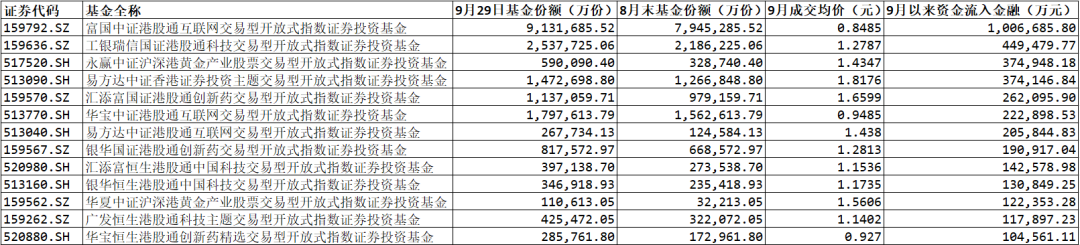
Core Viewpoint - The Hong Kong stock market is experiencing significant inflows of capital, with over 47 billion yuan invested in "Hong Kong" ETFs since September, particularly in sectors like internet, innovative pharmaceuticals, technology, and gold [1][3]. Fund Inflows - As of September 29, 140 "Hong Kong" ETFs have collectively attracted 471.94 billion yuan in investments, with 13 ETFs receiving over 1 billion yuan each [3][4]. - The Fu Guo Zhong Zheng Hong Kong Stock Connect Internet ETF reached a record size of 913.17 million units by September 29, increasing by 118.64 million units since the end of August, and has attracted 10.067 billion yuan in investments during September [3][4]. - Other notable ETFs include: - ICBC Credit Suisse National Index Hong Kong Stock Connect Technology ETF: 253.77 million units, 4.495 billion yuan inflow - Yongying Zhong Zheng Hu Shen Hong Kong Gold Industry ETF: 59 million units, 3.749 billion yuan inflow - E Fund Hong Kong Stock Investment Theme ETF: 147.27 million units, 3.741 billion yuan inflow - Huatai-PineBridge National Index Hong Kong Stock Connect Innovative Pharmaceuticals ETF: 113.71 million units, 2.621 billion yuan inflow [4][5]. Market Outlook - Industry experts express confidence in the Hong Kong stock market's future performance, citing factors such as profit recovery and improved liquidity as key drivers [6]. - The current profit cycle for Hong Kong stocks is beginning to recover from its lowest point, with sectors like healthcare and information technology expected to provide solid support for the market [6]. - The potential for U.S. Federal Reserve interest rate cuts is anticipated to boost capital flows into emerging markets, with foreign capital increasingly focusing on investment opportunities in Chinese assets [6]. - There is a positive outlook for leading internet companies in Hong Kong, as well as for innovative pharmaceuticals and AI research firms, which are seen as globally competitive [6].
华安基金:中国央行连续9个月购金,行业关税仍存加剧风险
Xin Lang Ji Jin· 2025-08-12 08:18
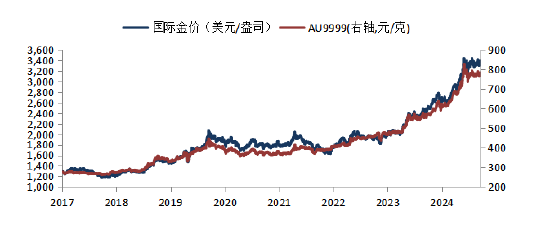
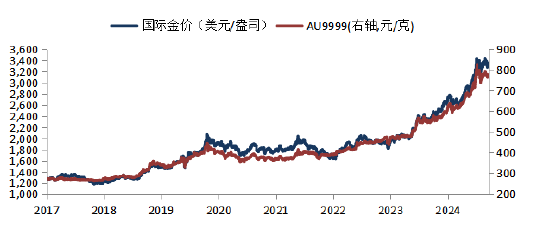
Group 1 - Gold prices experienced a steady increase last week, with London spot gold closing at $3,399 per ounce (up 1.1% week-on-week) and domestic AU9999 gold at 783 yuan per gram (up 2.1% week-on-week) [1] - The People's Bank of China has increased its gold reserves for the ninth consecutive month, reaching 7,396 million ounces (approximately 2,300.41 tons) by the end of July, with a month-on-month increase of 6,000 ounces (approximately 1.86 tons) [1] - The decline in the international credibility of the US dollar, exacerbated by the "exceptionalism" narrative and the US debt credit crisis, has led to a global trend of central banks increasing gold holdings while reducing dollar assets [1] Group 2 - The impact of tariffs on the US economy is becoming evident, prompting the Federal Reserve to consider resuming interest rate cuts; additionally, August will see a peak in US debt issuance, with high interest costs further burdening the US government [2] - The upcoming week will focus on key signals for gold ETFs, including the US-Russia summit on August 15, the results of the 232 investigation into US semiconductor and pharmaceutical tariffs, and US inflation data for July [2]
金价,又大涨!
Sou Hu Cai Jing· 2025-08-05 07:08
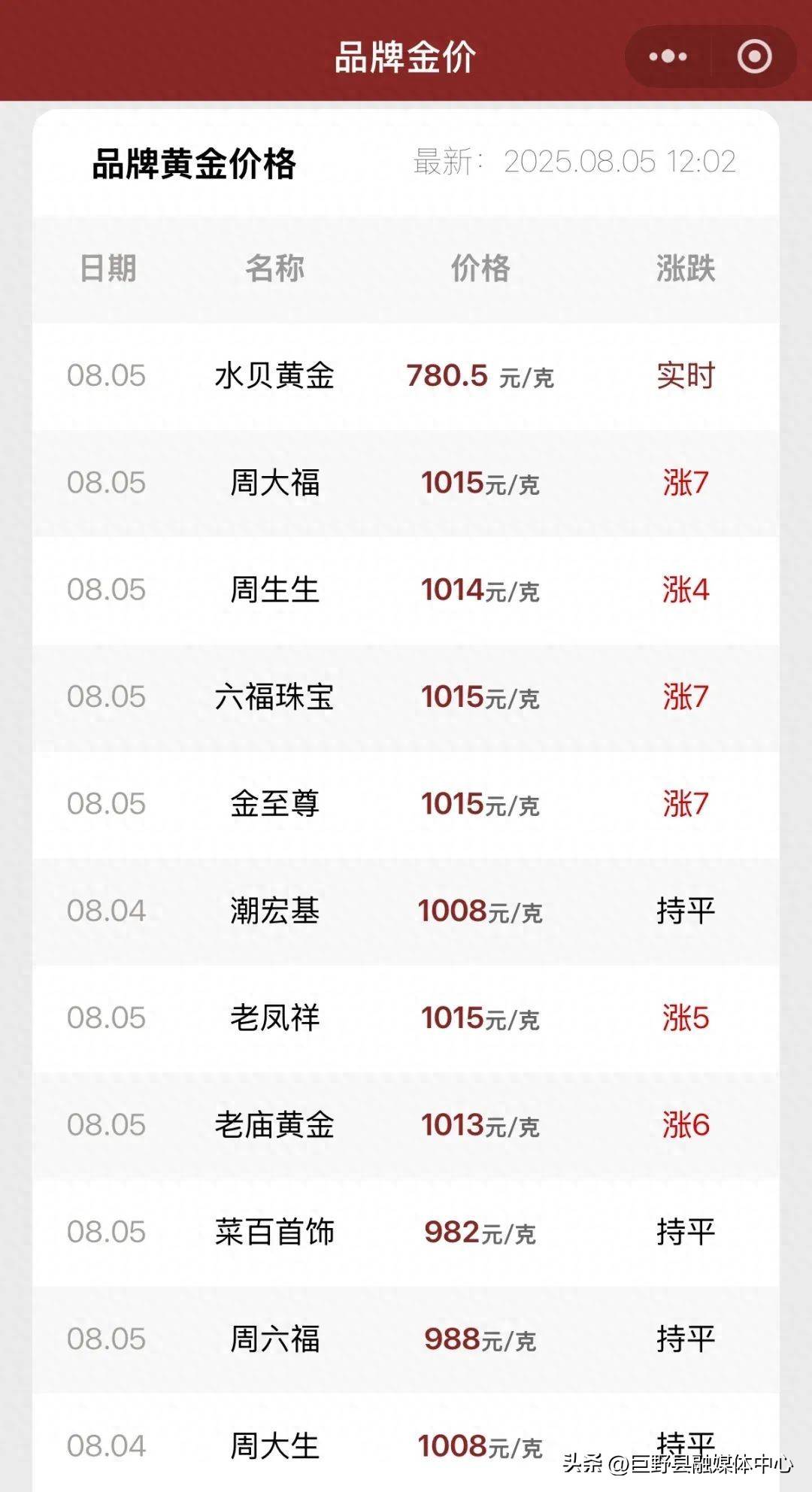
Core Viewpoint - The recent rise in gold prices is driven by multiple factors, including weak U.S. employment data, internal policy disagreements within the Federal Reserve, and heightened geopolitical and trade risks [1][2][3]. Group 1: Gold Price Trends - As of August 5, spot gold reached $3,380.77 per ounce, continuing an upward trend over several trading days [1]. - Year-to-date, gold prices have increased significantly, with London gold and COMEX gold showing annual gains of 28.14% and 29.34%, respectively [1]. - The recent fluctuations in gold prices are attributed to a cooling market, with volatility and turnover rates decreasing since April [1]. Group 2: Economic Indicators - The U.S. non-farm payroll data for July showed only 73,000 new jobs added, significantly below the expected 110,000, indicating a cooling labor market [2]. - The Federal Reserve's internal policy disagreements have intensified, with some members advocating for immediate rate cuts, breaking a long-standing tradition of unanimous votes [2]. Group 3: Geopolitical and Trade Risks - The Trump administration's recent imposition of tariffs ranging from 10% to 41% on multiple countries has increased global trade uncertainty [2]. - Ongoing geopolitical tensions, particularly in the Middle East, have further heightened market demand for safe-haven assets like gold [2]. Group 4: Institutional Perspectives - Citigroup has revised its gold price forecast, raising the target price for the next three months from $3,300 to $3,500 per ounce, reflecting a shift in outlook due to worsening economic conditions and inflation concerns [2]. - The World Gold Council reported a 3% year-on-year increase in global gold demand in Q2 2025, driven by strong investment demand, despite a slowdown in central bank purchases [8]. Group 5: Long-term Outlook - Central bank gold purchases continue to provide a support base for gold prices, with 95% of surveyed central banks expecting to increase their gold reserves in the next 12 months [8]. - The People's Bank of China reported a gold reserve of 73.9 million ounces (approximately 2,298.55 tons) as of June 2025, marking a continuous increase over the past eight months [8].
黄金股ETF涨势强劲!单日最高涨超5%,黄金王者归来可期?
Sou Hu Cai Jing· 2025-08-04 13:30
Core Viewpoint - The surge in gold stock ETFs on August 4 indicates a strong market response to recent economic data and shifts in investor sentiment towards gold as a safe-haven asset [1][2][4]. Group 1: Gold Stock ETF Performance - On August 4, several gold stock ETFs, including those from Guotai, ICBC Credit Suisse, and Huaxia, saw significant gains, with Guotai Gold Stock ETF leading at 5.04% [2]. - Year-to-date performance shows that multiple gold stock ETFs have increased over 30%, with Guotai Gold Stock ETF up 38.42% and ICBC Credit Suisse Gold Stock ETF up 39.16% [2]. Group 2: International Gold Prices - On August 1, the London gold spot price surpassed $3360 per ounce, marking a daily increase of 2.22%, while COMEX gold also broke the $3400 per ounce mark [3][4]. - As of August 4, the London gold spot price was reported at $3358.32 per ounce, a slight decrease of 0.13%, while COMEX gold was at $3411.2 per ounce, reflecting a 0.34% increase [3]. Group 3: Market Outlook - Analysts suggest that the upward potential for gold remains significant, driven by factors such as weakening dollar, inflation expectations, and ongoing geopolitical tensions [4][5]. - The anticipated decline in the dollar's value and the potential for increased gold accumulation by central banks are expected to support long-term gold price increases [5][6].
华安基金:“大美丽”法案通过,关税暂缓将到期
Xin Lang Ji Jin· 2025-07-08 08:48
Group 1: Gold Market Overview - Gold prices have declined due to easing tensions in the Middle East, with London spot gold closing at $3,337 per ounce (down 1.9% week-on-week) and domestic AU9999 gold at 772 yuan per gram (down 0.9% week-on-week) [1] - The market is closely monitoring the risk of renewed U.S. tariffs, which could boost safe-haven demand for gold if significantly increased [1] - The U.S. "Great Beautiful" Act has been signed, which will increase federal debt by $3.4 trillion over the next decade, maintaining a loose fiscal stance [1] Group 2: U.S. Employment Data and Economic Outlook - U.S. unemployment rate stands at 4.1%, lower than the expected 4.3% and previous 4.2%, with non-farm payrolls adding 147,000 jobs, exceeding the forecast of 106,000 [2] - Despite short-term resilience in employment data, the job creation structure is unhealthy, heavily reliant on government and education sectors, while small business hiring remains low [2] - The outlook suggests potential for two interest rate cuts by the Federal Reserve this year, supported by expectations of weakening employment and rising unemployment [2] Group 3: Future Signals for Gold ETFs - Key signals to watch for gold ETFs include trade negotiations and tariff developments, as well as the People's Bank of China's gold purchasing activities [2]
机构看金市:7月1日
Xin Hua Cai Jing· 2025-07-01 03:23
Group 1 - The long-term drivers for gold prices remain supportive, but there is hesitation for upward movement due to high price levels [1] - The recent decline of the US dollar has contributed to a rebound in gold prices, with expectations for further upward movement if US employment data indicates a weaker economy [2] - The ongoing credit crisis in US Treasury bonds and the trend towards de-dollarization support a long-term bullish outlook for gold [2][3] Group 2 - Central bank purchases of gold have significantly increased, with over 1,000 tons bought in the past three years, indicating a shift in market dynamics where gold is viewed as a store of value and diversification tool [3] - The weak US dollar and pressure from the current US administration for interest rate cuts are interrelated factors supporting gold prices [3] - Market focus remains on upcoming US non-farm payroll data, which could influence Federal Reserve monetary policy and subsequently affect gold prices [3]
美国撑不住了?特朗普终于放低姿态,拨通东方的电话,后退一大步
Sou Hu Cai Jing· 2025-05-27 13:55
Group 1 - The recent 20-year U.S. Treasury bond auction was disappointing, with a high bid rate of 5.047%, marking the second instance in history where the winning yield exceeded 5% and the largest tail risk in six months [1] - The bid-to-cover ratio fell from an average of 2.57 to 2.46, indicating reduced demand for U.S. debt amid high fiscal uncertainty and low policy credibility [1] - Concerns over the U.S. high debt levels and the potential expansion of the deficit due to the proposed "Beautiful America Act" are seen as fundamental reasons for the weak auction results and a new wave of selling U.S. dollar assets [1] Group 2 - As of the end of 2024, the total outstanding debt of the U.S. federal government reached $36.2 trillion, with foreign investors holding slightly over $9 trillion in U.S. Treasury securities [3] - The allocation of U.S. debt to foreign investors, including central banks, has dropped to the lowest level since 2019, at only 58.88% during the latest 30-year bond auction, continuing a trend of decline since October of the previous year [3] - Japan and the UK, both facing turmoil in their bond markets, are the top two foreign holders of U.S. debt, with Japan increasing its holdings by $4.9 billion in March 2025, while China reduced its holdings by $18.9 billion, falling to the third-largest holder [3] Group 3 - China has been gradually selling off U.S. Treasury bonds, which is viewed as a warning to the U.S., and has also been increasing its gold reserves, reaching 7.377 million ounces by the end of April 2025 [6] - The increase in gold reserves reflects China's trend towards diversifying its foreign exchange reserves, while its significant U.S. debt holdings are a result of decades of trade surpluses with the U.S. [6] - Japan's Prime Minister expressed a strong desire for the U.S. to reassess various tariff measures, particularly on automobiles, which are crucial for Japan's economy [6][9]

金属周报 | 不确定性加剧,贵金属反弹、铜地区间价差再次扩大
对冲研投· 2025-05-26 12:48
Core Viewpoint - The market experienced heightened uncertainty last week, primarily due to concerns over tariffs and the U.S. debt crisis, leading to a risk-off sentiment that boosted precious metal prices while industrial metal prices showed mixed performance [1][4][20]. Group 1: Precious Metals Performance - Last week, COMEX gold rose by 4.75%, and silver increased by 3.73%, while SHFE gold and silver saw gains of 3.76% and 2%, respectively [2]. - The overall uncertainty in overseas markets, particularly related to the U.S. debt crisis and tariff threats from Trump, led to a rebound in precious metal prices [4][20]. - The upward trend for gold remains intact in the medium to long term, supported by ongoing uncertainties and the credit logic of the U.S. dollar [50]. Group 2: Copper Market Dynamics - COMEX copper prices showed a strong upward trend, increasing by 5.96%, while SHFE copper experienced a slight decline of 0.45% [2]. - Concerns over a potential 25% tariff on copper led to significant price increases, widening the price gap between regions [3][5]. - The copper market lacked significant drivers, with prices mostly oscillating within a narrow range, reflecting cautious market sentiment [5][6]. Group 3: Inventory and Positioning - COMEX gold inventory decreased by approximately 130,000 ounces, while COMEX silver inventory fell by about 547,000 ounces [35]. - SPDR gold ETF holdings increased by 3.7 tons to 922 tons, and SLV silver ETF holdings rose by 303 tons to 14,218 tons, indicating a shift in market positioning [40]. - The non-commercial long positions in COMEX gold decreased slightly, while short positions also saw a reduction, suggesting a balanced market sentiment [40].