金融抑制

Search documents
大白专访NO.12:2026年黄金的“史诗级”波动将如何导演?
Sou Hu Cai Jing· 2026-02-09 09:47
【大白小月·编者按】 大白访谈录第12期。 回顾往期,大白采访过手动大神E神Time总,也领教过坤哥的EA江湖。但小月始终觉得,大白专访的拼图里缺了一块最重要的角——宏观。在这 个波诡云谲的2026年,你会发现"形态对了、指标也对了",盘面还是能把人按在地上摩擦。为此,小月特意邀请了大白社群里现在极少露面的宏 观分析员——Mr.M,老群友或许对他还有印象,他的视角往往跳出了交易本身,善于洞察政治与货币的底层逻辑。当我向他发出邀请时,M先生 回了一句:"旧时代的逻辑去解释新时代的波动,这很危险。是时候讲讲真正的'定价锚'了。" 这次专访不教你抓短线,也不保证对,但它至少能帮你把"迷雾"拆开一层。 【背景速读:谁是凯文·沃什?】 (为方便新读者理解,大白整理了本期核心人物的背景档案) 文章来源:123财经导航/大白EA宝库 人物:凯文·沃什(Kevin Warsh) 身份:前美联储理事(2006-2011),2026年1月被特朗普提名为下一任美联储主席。 历史标签(为什么市场怕他?):他曾是美联储最著名的"鹰派"之一。在2008年金融危机后,他公开批评伯南克的QE(量化宽松)政策,认为滥 发货币会引发恶性通胀。他 ...


黄金上天,我们正在见证一个时代的落幕
商业洞察· 2026-01-31 09:22
作者: 老凤1974 来源: 独角鲸工作坊 以下文章来源于独角鲸工作坊 ,作者老凤1974 独角鲸工作坊 . 新生活,新思考。 买少了——这是我跟一个朋友不约而同说的话。 ------------------------------ 我是2025年6月份随手买了点纸黄金,朋友是之前炒股买了点"中国黄金"。今天(1月29日)已经 是第五个涨停,后面两天已经是一字板不带有反复的那种。 但朋友却有点忧心忡忡,毕竟在她所有的资产里,股票是小头中的小头,大头是各种重资产。所以 这位朋友告诉我,她很慌。 三天前我写过一段话: 纽约商品交易所(COMEX)的电子交易盘上,那一串如霓虹般跳动的数字,在某个静 谧的深夜,终于刺破了人类金融史上的心理极值——5000美元/盎司。 但当时我哪怕用最狂放的想象力,也没想到短短三天后,黄金跑到了5500美元/盎司,三天后会如 何,我也不知道。上午有人问我要不要追,我说算了吧,之前没买的,现在还追什么呢? 甚至,我感觉整个社交媒体上的那种因为金价暴涨而来的狂欢,都有点哑然。对买的人来说,涨一 点是挺开心的,这么个狂涨法,稍微有点脑子的人都禁不住要想一想,到底为什么? 01 黄金上天,为什 ...

热点思考 | 美债恐慌重演,市场误读了什么?——“大财政”系列之二(申万宏观·赵伟团队)
赵伟宏观探索· 2026-01-25 23:14
Core Viewpoint - The article discusses the recent turmoil in the US financial markets, characterized by a simultaneous decline in stocks, bonds, and the dollar, while highlighting the underlying issues of debt expansion and geopolitical risks that remain unresolved despite temporary market stabilization following Trump's statements at the Davos Forum [2][4][7]. Group 1: Market Turmoil and Immediate Responses - On January 20, a "triple kill" occurred in the US markets, with collective sell-offs in US, European, and Japanese bonds, leading to a drop in risk assets and a rise in safe-haven assets like gold [3][8]. - Key triggers for this market turmoil included concerns over US-EU trade disputes, a Danish pension fund's exit from US debt investments, and rising fiscal risks in Japan [13][19]. - Trump's remarks at the Davos Forum on January 21 helped to temporarily ease market fears by ruling out military action over Greenland and announcing a framework agreement with Europe [19][20]. Group 2: Long-term Fiscal Concerns - The US fiscal deficit is projected to continue rising, with the 2026 deficit rate expected to reach 6.8%, driven by increased defense spending and immigration enforcement costs [4][66]. - Political motivations for fiscal tightening have weakened, with both parties showing a consensus on fiscal expansion, which may lead to a sustained increase in the deficit regardless of electoral outcomes [26][66]. - Geopolitical risks and tariff concerns are likely to persist, with Trump potentially using alternative tariff measures even if existing ones are deemed illegal [37][66]. Group 3: Structural Financial Measures - To mitigate debt risks, Trump may implement "structural" financial repression measures aimed at lowering real interest rates, as the current pace of fiscal consolidation is insufficient to alleviate market concerns [5][49]. - The article suggests that the Federal Reserve is unlikely to employ quantitative easing (QE) or yield curve control (YCC) to lower US bond yields under normal conditions, as these measures are typically reserved for extreme crises [55][67]. - The potential for a debt crisis is viewed as low for developed countries with sovereign currencies, where risks manifest more as currency depreciation and rising inflation expectations rather than outright defaults [43][67].

海外高频 | 特朗普表态暂缓关税,日央行1月按兵不动(申万宏观·赵伟团队)
申万宏源宏观· 2026-01-25 07:33
文 | 赵伟、陈达飞、赵宇、王茂宇、李欣越 联系人 | 赵宇 摘要 一、大类资产&海外事件&数据:特朗普表态暂缓关税,日央行1月按兵不动 美国股债汇三杀,金银不断刷新历史新高。 当周,标普500下跌0.4%;10Y美债收益率持平;美元指数下 跌1.9%至97.5,离岸人民币升至6.94;布油价格上涨2.7%至65.9美元/桶,COMEX金价格上涨7.5%至 4936.0美元/盎司 COMEX银价格上涨15.4%至102.9美元/盎司。 日央行1月例会按兵不动,上修2026年通胀、经济增速预测。 日央行将2026年核心CPI(不含新鲜食品) 预测上修至1.9%,实际GDP增速预测上修至1.0%;日本12月CPI同比回落至2.1%,但核心通胀仍稳健; 美国11月实际PCE消费环比0.3%,符合市场预期。 风险提示 地缘政治冲突升级;美国经济放缓超预期;美联储超预期转"鹰" 报告正文 一、大类资产&海外事件&数据: (一)大类资产:美国股债汇三杀,金银不断刷新历史新高 当周,发达市场股指悉数下跌、新兴市场股指多数上涨。发达市场股指方面,德国DAX、法国 CAC40、英国富时100分别下跌1.6%、1.4%、0.9% ...


“大财政”系列之二:美债恐慌重演,市场误读了什么?
Shenwan Hongyuan Securities· 2026-01-25 06:28
"大财政"系列之二 2026 年 01 月 25 日 美债恐慌重演,市场误读了什么? ——"大财政"系列之二 美国股债汇三杀冲击下,特朗普再度 TACO,撤回对欧洲关税。短期市场冲击虽阶段性缓和,但 债务、地缘等根本矛盾并未解决。随着债务持续扩张,特朗普采取更多"柔性"金融抑制措施。 《财政"锦标赛":美欧日,谁更积 一、热点思考:美债恐慌重演,市场误读了什么? (三)向后看,特朗普或采取"结构性"金融抑制措施压低实际利率,但不宜期待美联储 YCC 市场往往误认为债务扩张将导致美、日债务崩盘,未来或将暴发债务违约风险。但对发达货币主 权国而言,央行拥有近乎无限的本币发行能力,实质性违约的可能性较低。债务危机在新兴市场 多表现为信用风险,在发达的拥有主权货币的国家则多表现为货币贬值和通胀预期上升。 (一)全球债市恐慌重演,美国上演"股债汇三杀",特朗普再度 TACO 1 月 20 日,海外市场再度上演"股债汇三杀"。美欧日国债遭集体抛售,权益等风险资产普跌, 美元走弱,黄金等避险资产走强。日本 40 年国债利率突破 4.0%,10 年美债利率升至 4.3%,30 年英债升至 5.2%,美元跌至 98.54,纳指 ...
中金:美国“金融抑制”进程加速 利好企业估值和盈利
智通财经网· 2026-01-15 01:11
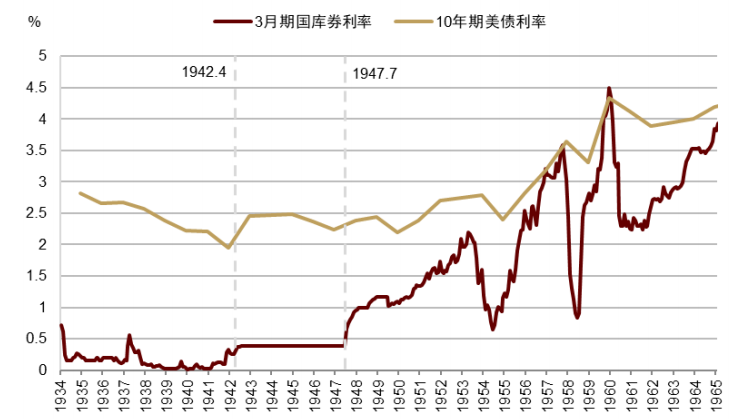
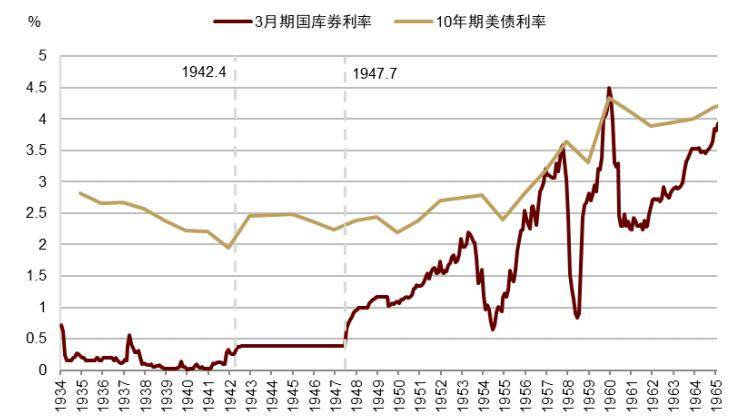
Core Viewpoint - The report from CICC indicates that the process of "financial repression" in the U.S. is likely to accelerate at the beginning of 2026, driven by high debt levels, industrial hollowing, and global geopolitical competition pressures. The Trump administration is expected to implement measures such as balance sheet expansion, quantitative easing (QE), and yield curve control (YCC) to forcefully lower financing costs, which will benefit corporate valuations and profits while stimulating asset bubbles [1][2]. Group 1: Financial Repression Mechanisms - The Trump administration is likely to initiate "financial repression" through various measures, including balance sheet expansion, QE, and YCC, to suppress financing costs amid high debt and industrial challenges [2][3]. - The report suggests that the administration may introduce policies to lower costs for consumer loans and small business loans, accelerate deregulation in the banking sector, and manage key energy resource prices to stimulate the economy [2][4]. Group 2: Economic and Market Implications - The anticipated environment of fiscal and monetary easing will shift the dollar liquidity cycle from tight to loose, positively impacting corporate valuations and profits, and accelerating asset bubbles [6]. - The report highlights that such conditions are expected to favor major global markets, particularly the Chinese stock market, as well as precious metals like gold and copper, while being negative for the dollar [6][22]. Group 3: Policy Objectives and Challenges - The Trump administration's clear policy objectives include addressing long-term debt pressures and industrial hollowing while ensuring controllable inflation and affordable consumer loans and mortgage rates ahead of the 2026 midterm elections [4][5]. - The report indicates that achieving these objectives may require moving beyond conventional policy frameworks towards "financial repression," which could involve implementing YCC and administrative measures to stabilize inflation [4][5]. Group 4: Historical Context and Precedents - "Financial repression" was first introduced by economists in the 1970s and refers to government policies that direct funds to itself by artificially lowering interest rates for public financing [3]. - Historical examples, such as the U.S. government's use of financial repression in the 1940s to fund wartime expenditures, illustrate the potential effectiveness of such measures in managing high debt levels [3].
中金:美国“金融抑制”,海外泡沫加速
Sou Hu Cai Jing· 2026-01-15 00:09
Core Viewpoint - The acceleration of "financial repression" in the U.S. is driven by the Trump administration's policies aimed at lowering financing costs and addressing debt pressures ahead of the 2026 midterm elections [1][2][4]. Group 1: Financial Repression Measures - The Trump administration has directed Fannie Mae and Freddie Mac to purchase $200 billion in MBS to suppress housing costs and announced a 10% cap on credit card interest rates starting January 20 [1]. - The Federal Reserve, under pressure from the Trump administration, is expected to implement a 150 basis point rate cut in 2026, with investigations into Powell's actions intensifying [1][2]. - The administration is likely to introduce more policies to lower financing costs, including limiting interest rates on consumer and small business loans and increasing the pace of balance sheet expansion to $90 billion per month [2][4]. Group 2: Economic Context and Implications - The concept of "financial repression" involves government policies that direct funds to itself by artificially lowering interest rates, which can be effective in managing high debt levels [3]. - The current policy goals of the Trump administration focus on addressing long-term debt pressures and short-term economic stimulation to win the 2026 elections, which may lead to a shift towards "financial repression" [4]. - The anticipated measures include implementing yield curve control (YCC) to stimulate the economy and reduce debt servicing costs, alongside administrative actions to stabilize inflation [5]. Group 3: Market Impact and Outlook - The environment of fiscal and monetary easing is expected to shift the dollar liquidity cycle from tight to loose, benefiting corporate valuations and accelerating market bubbles [6]. - Sectors such as resources, technology, and heavy industry are projected to perform well in 2026, while consumer and real estate sectors may see a rebound as the nominal economic cycle improves [6]. - A weaker dollar cycle is likely to support emerging markets, particularly the Chinese stock market, as well as precious metals like gold and copper [6].
中金:美国“金融抑制”,海外泡沫加速
中金点睛· 2026-01-14 23:52
Core Viewpoint - The article discusses the acceleration of "financial repression" in the U.S. under the Trump administration, focusing on measures to lower financing costs and stimulate the economy ahead of the 2026 midterm elections [2][3][5]. Group 1: Financial Repression - "Financial repression" refers to government policies that direct funds to itself by artificially lowering interest rates for public policy goals [4]. - Historical examples include the U.S. in the 1940s, where the Federal Reserve controlled Treasury bill rates to finance government spending [4][5]. Group 2: Policy Measures - The Trump administration is expected to implement policies to address debt pressure and industrial hollowing, including capping credit card interest rates at 10% and increasing the purchase of mortgage-backed securities (MBS) [2][3]. - Proposed measures include limiting interest rates on consumer loans and small business loans, increasing supply control over key energy resources, and accelerating the Federal Reserve's balance sheet expansion [3][5]. Group 3: Economic Implications - The anticipated environment of fiscal and monetary easing is expected to shift the dollar liquidity cycle from tight to loose, benefiting corporate valuations and accelerating asset bubbles [7][8]. - The article suggests that sectors such as resources, technology, and heavy industry may continue to lead in performance, while consumer and real estate sectors may catch up as the nominal economic cycle improves [7][8].
特朗普政府与30万亿美元的美国债券之间,维系着岌岌可危的和平局面
Xin Lang Cai Jing· 2025-12-29 08:36
今年 4 月,特朗普总统推出的'解放日'关税政策引发美国债市剧烈震荡、集体反抗,此后特朗普政府便 开始审慎调整各项政策与对外表态,竭力避免债市危机再度爆发。但部分投资者表示,这场债市与政府 之间的休战状态,始终根基脆弱、岌岌可危。 这份脆弱性在 11 月 5 日再次显现:美国财政部当日释放信号,考虑增发长期国债;同日,美国最高法 院开庭审理特朗普大范围贸易关税的合法性相关诉讼。今年持续大幅走低的美国 10 年期基准国债收益 率应声飙升逾 6 个基点,创下近数月来最大涨幅之一。 彼时,美国联邦财政赤字规模本就令债市惴惴不安,财政部的发债提议,更是引发部分投资者担忧:长 期国债收益率将面临上行压力。与此同时,最高法院的这场诉讼,也让市场对美国偿还30 万亿美元流 通国债的核心财政收入来源产生了质疑。 花旗集团分析师爱德华・阿克顿在 11 月 6 日的日报中,将这一时刻称作一次'现实警示'。 路透社采访了十余家银行与资产管理机构的高管,这些机构管理的资产规模合计达数万亿美元。受访人 士均表示,尽管近几个月美债市场表面相对平静,但其背后正暗流涌动:特朗普政府,与担忧美国财政 赤字和债务规模持续高企的投资者之间,一场意 ...
全球债市“金丝雀”!承压的日本国债将成为倒下的“首块多米诺骨牌”?
Zhi Tong Cai Jing· 2025-12-26 04:07
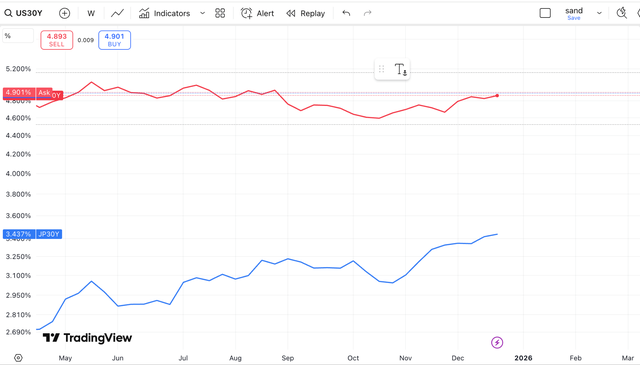
随着收益率上升和日本央行逐步停止债券购买,日本面临着结构性债务和通胀的双重挑战。日本国债收 益率上升可能扰乱全球债券市场,潜在的资本回流可能会影响美国国债。日本通过通胀来偿还债务的能 力受到实际经济增长缓慢和人口老龄化的制约,这引发了人们对金融抑制再次出现的担忧。尽管货币疲 软且收益率上升,但日本股市和黄金(以日元计价)表现优异,反映出全球资产重新定价,各国政府寻求 通过通货膨胀来减少债务。 日债收益率与日元汇率趋于走高 几十年来,日本一直处于接近零利率、波动性被抑制和长期通货紧缩的环境中,但这种情况已经迅速改 变。除了日元套利交易的解除,日本的问题在于结构性债务和通货膨胀,这个问题可能很快也会困扰其 他发达市场,包括美国。日本或许会成为第一个倒下的多米诺骨牌。 日本的整个财政和货币体系都是建立在永久低利率的假设之上的,这种货币实验或许即将结束——日本 国债收益率正在上升。一些投资者认为,如果日本债券收益率完全与美国债券收益率趋同甚至超过美国 债券收益率,这可能会"摧毁"全球债券市场。 日本的债务占GDP的比重超过200%,而美国的债务占GDP比重接近120%。这两个数字在历史上都偏高 且存在问题,规模上的差 ...