
投资于人

Search documents
利好!高盛最新发声
Xin Lang Cai Jing· 2026-01-21 12:59
Core Viewpoint - Goldman Sachs predicts China's GDP growth rate will be 4.8% in 2026, supported by strong export growth. The MSCI China Index target is set at 100 points, and the CSI 300 Index target is 5200 points by the end of 2026. Net inflows from southbound funds are expected to reach $200 billion (approximately 1.4 trillion yuan), a new record high [1][9]. Export Support Factors - China's export growth is projected to maintain a rate of 5%-6%, significantly higher than the global trade growth of 2%-3%. This forecast is based on three core factors: steady global economic recovery boosting demand, China's cost advantages across various industries, and unique capabilities in rare earths and supply chains, making it difficult for international tariffs to be imposed [2][11]. - The negative impact of the real estate sector on economic growth is expected to diminish over time, with the most significant effects occurring in 2024 and 2025. As the market size shrinks, the downward pressure on GDP growth will lessen [2][11]. Currency Outlook - The RMB is expected to appreciate moderately, with an estimated undervaluation of about 25%. By the end of 2026, the RMB/USD exchange rate is projected to reach 6.85, further strengthening to 6.54 by the end of 2027, indicating an annual appreciation of approximately 2%-3% [3][11]. Stock Market Valuation and Returns - The dynamic P/E ratios for the MSCI China Index and CSI 300 Index have returned to historical averages, at approximately 13 times and 15 times, respectively. The expected stock market return for 2026 is between 15%-20%, primarily driven by earnings growth, with a projected earnings growth rate of 14% [4][12]. - Three main factors are anticipated to drive earnings growth: contributions from the AI industry, expansion into overseas markets, and positive impacts from the "anti-involution" trend [4][12][13]. Liquidity Support - Net inflows from southbound funds are expected to reach $200 billion (approximately 1.4 trillion yuan), reflecting increased demand for stock allocations from domestic individuals and institutions [6][14]. - There is still room for improvement in overseas fund allocations to Chinese stocks, which currently account for less than 8% of total risk exposure among hedge fund clients tracked by Goldman Sachs. Recent communications indicate a growing interest from overseas investors in Chinese investments [6][14]. - Personal investors are projected to contribute approximately 2 trillion yuan to the stock market over the next 12 months, driven by expectations of stock returns between 10%-15% and improved inflation expectations [6][14]. Sector Preferences - Goldman Sachs maintains a high allocation recommendation for AI and technology hardware, reflecting strong confidence in the AI narrative. The materials sector is also favored, while insurance is newly recommended for overweight allocation due to its potential for higher investment returns in a slow bull market and attractive dividend characteristics [8][15]. Policy Focus - The concept of "investing in people" is highlighted as a key policy direction, expected to manifest in various initiatives, including annual childcare subsidies of 3600 yuan. This focus is anticipated to continue and expand, covering the entire life cycle from birth to retirement, with policy support likely to strengthen to improve living standards and increase birth rates [8][16].
利好!高盛最新发声
中国基金报· 2026-01-21 12:55
【导读】高盛研判 2026 年中国经济和股市 中国基金报记者 吴娟娟 1 月 20 日,高盛首席中国经济学家闪辉在媒体会上表示, 2026 年预计中国 GDP 增速为 4.8% ,出口保持强劲增长为经济提供支撑。高盛首席中国股票策略师刘劲津预计 MSCI 中 国指数年底目标点位为 100 点,沪深 300 指数年底目标点位为 5200 点。 2026 年,南向 资金净流入预计达 2000 亿美元(约 1.4 万亿元),再创新高。 出口有三大支撑 闪辉表示,过去 25 年来,中国在全球贸易中的地位发生了巨大变化。从 2000 年占美国进 口比例的 7.5% ,一路攀升至超过 20% 。 2018 年之后,中国主动进行贸易对手多元化, 中国出口占美国进口比例回到 7.5% 。 谈及未来出口走势,闪辉预测未来几年中国出口增速将维持在 5%—6% ,显著高于全球贸易 2%—3% 的增速。这一判断基于三大核心因素。 首先,全球经济稳步回升,商品需求提振。其次,中国商品在成本方面仍具优势,不同行业 领域的成本均低于竞争对手。第三,中国在稀土及供应链领域具有独特能力,国际上对华施 加关税的难度增加。 谈及人民币汇率,闪辉认 ...



国信证券晨会纪要-20260121
Guoxin Securities· 2026-01-21 00:57
Macro and Strategy - The macroeconomic report indicates a recovery in China's economy with a monthly GDP growth of 4.5% in December 2025, an increase of 0.4 percentage points from the previous month [6][7] - The service sector is recovering faster than industrial production, with high-tech manufacturing showing significant growth compared to traditional industries [6] - The demand side shows a structural characteristic of weak domestic demand and strong external demand, with exports remaining a crucial support for the economy [7] Industry and Company Agriculture Industry - The report highlights a bullish outlook for cattle prices, indicating a potential reversal in the beef cycle, with prices for fattened cattle at 25.66 CNY/kg, up 0.59% month-on-month and 9.38% year-on-year [11][12] - The pig market is expected to stabilize, with prices at 12.69 CNY/kg, reflecting a week-on-week increase of 1.44% [11] - The poultry sector shows mixed signals, with chicken prices slightly increasing while egg prices are under pressure due to high supply levels [11][12] Banking Industry - The banking sector is facing challenges due to an expanding gap between deposits and loans, with the gap reaching approximately 58 trillion CNY in 2025, up from about 40 trillion CNY in 2019 [16][17] - The report suggests that banks need to diversify their middle business operations to address this issue, with smaller banks focusing on wealth management and larger banks enhancing their comprehensive service capabilities [17] - The forecast for 2026 indicates a significant reduction in the decline of net interest margins, suggesting a potential recovery in the banking sector's fundamentals [18] Pharmaceutical Industry - The pharmaceutical sector is underperforming compared to the overall market, with a reported decline of 0.68% in the biopharmaceutical sector [19] - The report notes the successful IPO of Rebio Biotech, which focuses on small nucleic acid drugs, and highlights its partnerships with major pharmaceutical companies, indicating strong growth potential in this niche [19][20] Tencent Holdings - Tencent is expected to report a revenue of 194.6 billion CNY for Q4 2025, a year-on-year increase of 13%, driven by stable growth in gaming and advertising sectors [20][21] - The company is increasing its investment in AI, which is anticipated to enhance its operational capabilities and support future growth [20][23] - The gaming segment is projected to generate 58 billion CNY in revenue, with strong performances from titles like "Honor of Kings" and "Peacekeeper Elite" [21][22]
以更精准激励约束机制提升民生领域政策效果
第一财经· 2026-01-20 15:53
作者 | 一财评论员 公共民生正站在经济社会舞台的中央。 19日国家统计局公布2025年经济数据,这是一份彰显大国经济韧性的成绩单:GDP增长5%,高科 技制造领跑经济,新旧动能交替稳步推进。 2026.01. 20 本文字数:1747,阅读时长大约3分钟 经济增长惠及居民清晰可见,2025年居民人均可支配收入43377元,同比上年名义和实际增长均为 5%,与GDP增速持平,其中人均工资性收入24555元,同比增长5.3%,人均转移净收入全年同比 增长5.7%,凸显经济的包容性增长,再分配环节正在平衡性发力。 不过,相比居民收入,居民消费支出增速出现放缓趋势,2025年居民人均消费支出比上年名义和实 际增长均为4.4%,分别较2024年放缓0.9和0.7个百分点。 经济增长企稳向好,但内需尤其是最终消费依然偏弱,这一由来已久的经济内循环卡点堵点,亟需进 行系统性破局。有效需求不足是中国经济内生的深层结构性问题,近年来这一顽疾对经济整体动力产 生明显下拉力,成为中国经济必须尽快克服的重要挑战。 人均收入增加的同时,居民边际消费倾向却呈放缓趋势,这一现象背后存在多重原因:一是居民收入 在国民收入中的占比依然偏低, ...

荀玉根:十张图看“投资于人”
Xin Lang Cai Jing· 2026-01-20 15:29
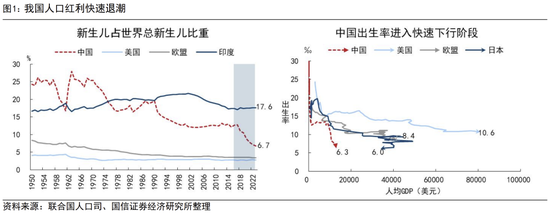
Group 1: Core Insights - The article emphasizes the strategic importance of "investment in people" alongside physical investment, as highlighted in the "14th Five-Year Plan" and the Central Economic Work Conference [1][22] - It identifies four key areas for "investment in people": childcare, education, health and wellness, and social security, aiming to explore potential directions for development [1][22] Group 2: Childcare - China's demographic dividend is rapidly declining, with the newborn global share dropping to below 7%, while India's remains stable at over 17% [2][23] - The birth rate in China has fallen to 6.3‰, significantly lower than that of the US, EU, and Japan at similar development stages [2][23] - High childcare costs are suppressing birth intentions, with the total cost of raising a child to adulthood being 6.3 times the per capita GDP, a figure that is among the highest globally [4][26] - Birth subsidies are effective in stabilizing birth rates, as seen in Nordic countries where higher subsidy levels correlate with smaller declines in birth rates [5][28] Group 3: Education - China's basic education is strong, but secondary and higher education levels are relatively weak, with only 31.8% and 16.2% of the population aged 25 and above having completed high school and higher education, respectively [7][30] - There is significant room for improvement in human capital, which is a key indicator of the effectiveness of "investment in people" [10][32] Group 4: Health and Wellness - The cultural and entertainment industry in China has substantial growth potential, with current spending on related services accounting for only 2.0% of household consumption, lower than in the US (3.8%) and France (2.9%) [12][34] - The average working hours in China are the highest among major economies, with workers averaging 46 hours per week, which may negatively impact health and service consumption [14][36] - Life expectancy in China has significantly increased from 57 years in 1970 to 79 years in 2023, indicating a growing demand for healthcare and long-term care services [16][39] Group 5: Social Security - China's pension system is heavily reliant on the first pillar, with private pensions making up only about 4.5%, significantly lower than Japan's 24% and the US's 121% [18][41] - The decline in housing security spending since 2017 indicates a need for improvement in this area, despite current spending levels being comparable to other major economies [20][43]
扩内需战略实施方案将出台,正研究制定居民增收计划
Di Yi Cai Jing· 2026-01-20 13:00
Core Insights - The Chinese government emphasizes "increasing residents' income" and "investing in people" as key strategies to expand domestic demand and stabilize economic growth [1][2][3] Group 1: Policy Initiatives - The National Development and Reform Commission (NDRC) plans to implement a strategic plan for expanding domestic demand from 2026 to 2030, focusing on creating an economy driven by domestic demand and consumption [1][3] - The Ministry of Finance has announced six policies aimed at stimulating private investment and promoting consumer spending, with sufficient budgetary arrangements made for these initiatives in 2026 [1][8] - The "Two New" policy, which promotes equipment upgrades and trade-in programs, is expected to significantly boost consumer spending and investment, with over 3.6 billion people expected to benefit from these initiatives by 2025 [6][10] Group 2: Economic Growth Projections - China's economy is projected to grow by 5% in 2025, with a total economic output surpassing 140 trillion yuan, contributing approximately 30% to global economic growth [3] - The government aims to enhance the effectiveness of investments by focusing on both material and human capital, with a commitment to improving the quality of government investments in public welfare projects [9][10] Group 3: Consumer Confidence and Investment - Increasing residents' income and enhancing consumer confidence are identified as critical factors for boosting consumption [2][3] - The government is working on a plan to increase urban and rural residents' income, which is expected to enhance their consumption capacity and optimize supply [3][9] - The new policies are designed to lower financing costs and reduce barriers for private enterprises, thereby stimulating private investment [8][10]
“十五五”新开局 怎样更好保障和改善民生?人社部回应
Xin Hua She· 2026-01-20 12:49
Core Viewpoint - The article emphasizes the importance of promoting high-quality and sufficient employment, as well as improving the social security system, as part of the "14th Five-Year Plan" and the upcoming Central Economic Work Conference in 2025 [1] Group 1: Investment in Human Resources - The Central Economic Work Conference highlights the need to combine investments in physical assets with investments in human resources to enhance the country's economic resilience and vitality [2] - The focus will be on promoting high-quality employment, improving lifelong vocational training systems, and reforming the social security system to support comprehensive development and common prosperity for all [2] Group 2: Employment Stability Measures - In 2025, the target is to create 12.67 million new urban jobs, with an average urban survey unemployment rate of 5.2%, indicating overall employment stability [3] - The government plans to adopt an employment-friendly development approach, coordinating policies across various sectors to ensure job stability [3] Group 3: Actions for Job Retention and Expansion - The government will implement actions to stabilize and expand job opportunities, utilizing policies like wage subsidies and tax reductions to support labor-intensive industries [4] - New industries such as digital and green economies will be cultivated to enhance employment potential, alongside promoting entrepreneurship through various models [4] Group 4: Employment Policy Support - New employment policies will be developed for youth and migrant workers, including recruitment activities and job training programs to enhance job opportunities [4] - Continuous support will be provided for vulnerable groups, including veterans and those at risk of poverty, to ensure stable employment and income [4] Group 5: Enhancing Employment Services - A large-scale vocational skills training initiative will be launched, focusing on demand-driven training projects to improve service quality [5] - The establishment of a comprehensive employment public service system will be prioritized, including the development of local employment service stations [5] Group 6: Skills Training Initiatives - The government aims to address structural employment issues through extensive vocational training, with over 11 million subsidized training sessions conducted [6] - Training programs will be tailored to meet the specific needs of different groups, such as youth and migrant workers, to ensure alignment with industry demands [6] Group 7: Social Security System Optimization - The government plans to expand social insurance coverage for flexible and new employment forms, ensuring better protection for these workers [8] - Key reforms will be implemented to ensure timely pension payments and to enhance the social security system's sustainability [8] Group 8: Streamlining Social Security Services - Efforts will be made to optimize the national social security service platforms, making it easier for individuals to access services and information [9] - The government will enhance policy communication and support to ensure equitable access to social security benefits for all citizens [9]

罗志恒调研归来谈经济 建议设立城乡居民增收引导基金
经济观察报· 2026-01-20 11:20
Core Viewpoint - Despite facing various internal and external challenges, China's economy demonstrates strong resilience, with regions like Suzhou and Shenzhen showcasing robust technological innovation. However, areas heavily reliant on exports to the U.S. and real estate are under significant pressure and undergoing difficult transitions, reflecting the diversity of the Chinese economy [1][2]. Economic Performance Insights - The chief economist of Guangdong Kaiyuan Securities, Luo Zhiheng, conducted research across several provinces, revealing that while the economy faces challenges, there is a notable emphasis on new industries such as renewable energy and biomedicine. Local governments are actively working to revitalize existing assets [2]. - The overall economic performance in 2025 can be summarized by two "better than expected" areas: export growth and capital market performance, while consumption recovery and real estate market trends fell short of expectations [3][4]. Export Trends - Export growth exceeded expectations, supported by China's strong production capacity and product competitiveness. Some companies reported that while short-term orders remained stable, they faced challenges in shipping due to uncertainties, leading to increased inventory costs [4][5]. - The export market is diversifying, with a significant decrease in the proportion of exports to the U.S. and an increase in exports to ASEAN and Africa, which is expected to reach 6% by 2025. Additionally, the structure of exports is upgrading from low-end consumer goods to high-end capital goods and intermediate products [5][6]. Capital Market Dynamics - The capital market's performance has also surpassed expectations, driven by breakthroughs in AI and improvements in market regulations, which have enhanced its attractiveness. By September 2025, the technology and electronics sector's market value surpassed that of the banking sector, indicating a significant shift in economic structure [6][7]. Consumption and Real Estate Challenges - Consumption recovery has not met market expectations, and the real estate market continues to face challenges, necessitating collaborative efforts to stabilize it. The central economic work conference emphasized the need to prioritize domestic demand expansion and stabilize the real estate market [7][8]. Income Distribution Reform - To boost consumption, key reforms in income distribution are essential, focusing on enhancing consumer capacity, willingness, and the adaptability of supply to demand. This involves improving residents' income and addressing public resource allocation [8][9]. - The optimization of national income distribution is crucial, with residents' income currently at 62%, which is slightly below the global average. The low proportion of property income and labor remuneration needs to be addressed to enhance overall consumption [9][10]. Policy Recommendations - To increase residents' income and stimulate consumption, several measures are proposed, including strengthening the capital market, enhancing state-owned enterprise profit contributions, and encouraging wage increases through fiscal incentives [10][11]. - Improving public services and welfare investments is vital for enhancing residents' quality of life and boosting consumption potential, creating a positive economic cycle [11][12]. Future Focus Areas - In 2026, key areas of focus will include global economic and geopolitical risks, breakthroughs in domestic income distribution reform, addressing low growth in fiscal revenue, and optimizing local government and microeconomic incentives to drive economic development [18][19].

罗志恒调研归来谈经济 建议设立城乡居民增收引导基金
Sou Hu Cai Jing· 2026-01-20 10:00
Core Insights - The chief economist of Guangdong Kai Securities, Luo Zhiheng, emphasizes that despite facing various internal and external challenges, the Chinese economy demonstrates strong resilience, particularly in regions like Suzhou and Shenzhen, which showcase robust technological innovation [2][4] - The economic landscape is characterized by diverse regional pressures, especially in areas heavily reliant on exports to the U.S. and real estate, indicating a challenging transition phase [2][4] - Luo identifies two areas of economic performance that exceeded expectations: export growth and capital market performance, while consumption recovery and real estate market trends fell short of expectations [3][6] Export Performance - Export growth has surpassed expectations, supported by China's strong production capacity and product competitiveness, with a notable shift towards diversification in export markets, particularly increasing exports to ASEAN and Africa [4][5] - The structure of exports is evolving from low-end consumer goods to higher-end capital goods and components, driven by demand from Southeast Asia and Africa as they undergo industrialization [5][6] Capital Market Dynamics - The capital market has shown better-than-expected performance, driven by advancements in AI and ongoing improvements in market regulations, which have enhanced market attractiveness and reflected economic structural changes [6][7] - The technology sector has emerged as a leading market segment, surpassing traditional banking sectors in market capitalization, indicating a significant shift in economic dynamics [6] Consumption and Real Estate Challenges - Consumption recovery has not met market expectations, necessitating further policy support to stimulate demand [6][7] - The real estate market continues to face challenges, with a need for collaborative efforts to stabilize the sector, as indicated by the central economic work conference's emphasis on expanding domestic demand [6][7] Income Distribution and Policy Recommendations - Luo highlights the importance of income distribution reform to enhance consumption capacity and willingness, suggesting that improving public service investment in healthcare, education, and pensions can stimulate consumer spending [8][9] - Recommendations include increasing the share of labor income and property income for residents, enhancing corporate profit distribution, and establishing a "rural residents' income increase guidance fund" to support wage growth [9][10] Future Focus Areas - Key issues for 2026 include global economic and geopolitical risks, progress in domestic income distribution reform, strategies to address low fiscal revenue growth, and optimizing local government incentives to drive economic development [17]

2025年12月经济数据点评:总量趋稳,结构有亮点
Changjiang Securities· 2026-01-20 09:10
1. Report Industry Investment Rating - No relevant content provided. 2. Core Views of the Report - In 2025, the annual economic growth rate reached the target of 5%. Consumption and exports' contribution to GDP growth increased, while investment's contribution declined. Looking ahead to 2026, the real GDP growth rate is expected to be around 4.8%, showing a "first down then up" trend due to the high base effect. [2][7] - The bond market's pricing of the fundamentals may still exhibit an asymmetry of "being insensitive to positive news and sensitive to negative news." The view of a weak and volatile long - term bond market in the near term is maintained, and the recovery window may come later in the first quarter. [2][7] 3. Summary by Related Catalogs 3.1 2025 Economic Data Overview - The Q4 real GDP in 2025 was 4.5% year - on - year, meeting expectations, and the annual cumulative year - on - year growth rate successfully achieved the target of 5%. In December 2025, the year - on - year growth rate of industrial added value above designated size rose by 0.4 pct to 5.2%, higher than the expected 4.9%; the year - on - year growth rate of social retail sales dropped by 0.4 pct to 0.9%, lower than the expected 1.5%; the cumulative year - on - year growth rate of fixed asset investment dropped by 1.2 pct to - 3.8%, worse than the expected - 2.4%. [4] 3.2 Economic Growth Drivers - Consumption and exports' contribution to GDP growth increased to 2.6% and 1.64% respectively, while investment's contribution declined to 0.77%. There was still price pressure. The Q4 real GDP growth rate was 4.5% year - on - year, down 0.3 pct from Q3, and it declined quarter by quarter throughout the year, reaching the lowest level since 2023. The price level improved quarter by quarter, with the GDP deflator's year - on - year growth rate dropping to around - 0.67%, and the nominal GDP growth rate was 3.8% year - on - year, showing marginal improvement but remaining at a low level. [7] 3.3 Industrial Sector - In December, the industrial added value was 5.2% year - on - year, 0.4 pct higher than the previous value, and 0.49% month - on - month. The year - on - year growth rate of export delivery value turned positive to 3.2%. The service industry production index was 5% year - on - year, 0.8 pct faster than the previous month. By sector, the mining industry was a major drag, with its year - on - year growth rate dropping by 0.9 pct to 5.4%, while the manufacturing industry's year - on - year growth rate increased by 1.1 pct to 5.7%. High - end manufacturing maintained a high growth rate, with the year - on - year growth rates of pharmaceutical manufacturing, special equipment manufacturing, and computer and communication equipment manufacturing accelerating by 4.6, 3.4, and 2.6 pct respectively. The output of high - tech products such as industrial robots and integrated circuits maintained a high month - on - month growth rate. In 2025, the added value of high - tech manufacturing increased by 9.4% compared to the previous year, contributing 26.1% to the growth rate of industrial added value above designated size. [7] 3.4 Investment Sector - The decline in fixed asset investment widened. Real estate investment continued to decline due to the drag of housing prices, and infrastructure and manufacturing investment weakened overall against the backdrop of enterprises' concentrated debt repayment, debt reduction, and "anti - involution." In December, the month - on - month growth rate of fixed asset investment dropped to - 15.0%, and the month - on - month decline of private investment was about - 17.2%. Real estate investment's month - on - month decline widened to - 37.5%, the sales area decreased by 16.6% year - on - year, and the sales volume decreased by 24.2% year - on - year. The prices of commercial residential buildings in 70 large and medium - sized cities generally decreased month - on - month, and the year - on - year decline widened. The insufficient funds of real estate enterprises still restricted construction starts and completions, but the new construction area stabilized, and the cumulative year - on - year decline narrowed. Infrastructure investment continued to decline, with the month - on - month growth rate of broad - based infrastructure investment at - 15.9%, and the "crowding - out effect" of debt reduction may still have had an impact. In 2025, the cumulative year - on - year growth rate of manufacturing investment was 0.6%, but in December, the month - on - month growth rate was - 10.5%, indicating that enterprises were cautious about investment against the "anti - involution" background. The capacity utilization rate of the manufacturing industry increased from 74.1% in Q1 to 75.2% in Q4. [7] 3.5 Consumption Sector - The growth rate of social retail sales declined, and residents' income and expenditure continued to slow down. In December, the year - on - year growth rate of social retail sales dropped to 0.9%, the lowest since March 2023. The off - season effect was evident, with commodity retail (0.7%) and catering (2.2%) remaining at low levels, and the year - on - year growth rate of catering above designated size at - 1.1%. The effect of the "trade - in" subsidy may have weakened, and consumption of household appliances (- 18.7%), furniture (- 2.2%), and automobiles (- 5.0%) remained under pressure. However, the retail sales of communication equipment (20.9%) maintained a high growth rate. In Q4, the real cumulative year - on - year growth rate of residents' per capita disposable income dropped by 0.2 pct to 5%, and the year - on - year growth rate of consumption expenditure dropped by 0.3 pct to 4.4%. [7] 3.6 Outlook for 2026 - The real GDP growth rate is expected to be around 4.8% in 2026, showing a "first down then up" trend due to the high base effect. On the investment side, the Central Economic Work Conference in December last year proposed to "stabilize and reverse the decline of investment." This year, the investment growth rate is expected to stop falling and stabilize with the support of the concept of "investing in people" and "two important" projects. On the production and demand side, the transformation of old and new driving forces is accelerating, and service consumption, high - end manufacturing, and exports may maintain their resilience. [2][7]