
通胀

Search documents
南京银行2026年1月宏观利率展望:风险偏好抬升,利率易上难下
Nan Jing Yin Hang· 2026-01-21 09:05
Economic Overview - Domestic demand continues to weaken, with fixed asset investment declining by 3.8% year-on-year, a decrease of 1.2 percentage points from the previous value[8] - Real estate investment dropped by 17.2%, down 1.3 percentage points, indicating ongoing weakness in the sector[9] - Consumer spending growth fell to 0.9% in December, a decline of 0.4 percentage points from the previous month, reflecting weak consumer sentiment[12] Inflation and Production - CPI rose by 0.8% year-on-year in December, up 0.1 percentage points, indicating a mild upward trend in inflation[41] - PPI increased by 0.2% month-on-month, with a year-on-year decline of 1.9%, but the decline is narrowing by 0.3 percentage points compared to the previous month[49] - High-tech industries showed growth, with industrial value-added increasing by 5.9% year-on-year, although overall industrial production growth was slightly down[37] Monetary Policy and Liquidity - The central bank implemented an unexpected structural interest rate cut, indicating a continued commitment to liquidity support[56] - Short-term funding rates remained stable, with DR001 operating within 15 basis points below the policy rate[58] - The central bank's measures include increasing the quota for targeted loans to small and medium-sized enterprises by 1 trillion yuan, reflecting a focus on supporting the real economy[82] Market Trends - Bond yields initially rose but later fell, influenced by rising risk appetite and stock market performance[2] - The overall market sentiment remains cautious, with expectations of continued pressure on bond prices due to improving economic fundamentals and inflation concerns[2] - The trade surplus expanded to $114.14 billion in December, driven by a rebound in exports, particularly in automotive and electronic products[22]

欧洲央行行长拉加德:美国关税提高对通胀影响甚微
Xin Hua Cai Jing· 2026-01-21 08:29
新华财经北京1月21日电欧洲央行行长拉加德表示,美国总统特朗普新一轮的关税措施对欧洲通胀的影 响微乎其微。她表示:"如果我们从短期来看,直接影响相对较小。" 不过,她警告说,包括德国在内的大型出口国将比其他国家遭受更大的打击,并提醒人们注意可能出现 的信心冲击。 (文章来源:新华财经) 拉加德称,特朗普最新的威胁将使欧元区的平均关税税率从约12%提高到15%。她表示:"通胀可能会 受到非常轻微的影响,可能略有上升,但由于通胀率已控制在1.9%,因此影响将是微乎其微的。" ...
中信建投海外:美债的买点将至
Xin Lang Cai Jing· 2026-01-21 07:21
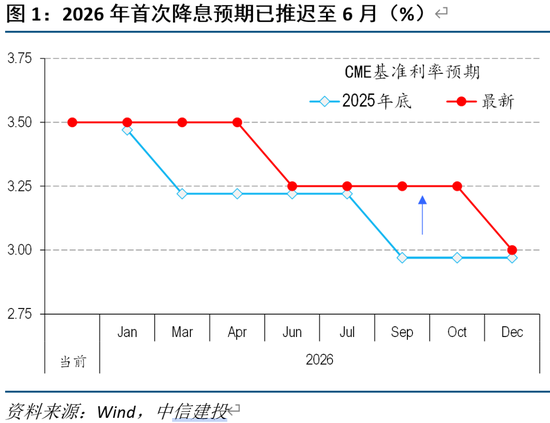
Core Viewpoint - Recent rise in US Treasury yields is attributed to a combination of factors including improved fundamental expectations, impacts from Trump’s policies, erosion of Federal Reserve independence, seasonal weaknesses, and the influence of Japanese bonds. The negative sentiment has likely peaked, making it difficult for further bearish pressures to emerge [1][24]. Background - The Federal Reserve has paused interest rate cuts and entered an observation phase [25]. - Market narratives have shifted towards recovery and inflation, leading to a surge in commodity prices [25]. - Trump has introduced extreme policies affecting geopolitics (Venezuela, Greenland), economics (MBS purchases, credit card rate caps), and the Federal Reserve (criminal investigation into Powell) [25][29]. - Weakness in Japanese bonds has spilled over, negatively impacting developed market bonds [25][32]. - Seasonal trends at the beginning of the year typically favor equities over bonds [25][35]. Market Dynamics - Since December, US Treasury yields have been on an upward trend, with the 10-year yield rising approximately 30 basis points to over 4.3% [26]. - The pause in interest rate cuts has led to a market where bullish expectations have been exhausted, resulting in rising yields [26]. - The market is currently focused on recovery and inflation, with expectations for a significant economic rebound by 2026, despite recent mixed employment data [27]. - Extreme commodity price movements have contributed to inflationary pressures, further complicating the bond market outlook [27]. Political Influences - Trump's aggressive policy interventions have raised concerns about the credibility of US debt, reminiscent of the "tariff liberation day" impact seen previously [29][31]. - His actions include geopolitical maneuvers and economic policies that could lead to overheating and loss of Federal Reserve independence, which may deter bond investors [31]. Japanese Bond Influence - The recent rise in Japanese bond yields has negatively affected global bond markets, including US Treasuries, with significant daily increases observed [32]. Seasonal Trends - Historical patterns indicate that the stock market tends to perform well during the holiday season, while bonds often face pressure during this period [35]. Future Outlook - The outlook for US Treasuries remains optimistic, with potential buying opportunities expected after the release of dual pressures on interest and exchange rates [38]. - In the first quarter, US Treasuries may continue to face pressure due to economic data and interest rate expectations, but a rebound is anticipated [39]. - Over the year, there is significant potential for yields to decline, with expectations for multiple rate cuts by the Federal Reserve [41]. - The upcoming Chinese New Year may lead to a strengthening of the Renminbi, which could create favorable conditions for domestic institutions to increase their holdings in US Treasuries [43].


日本最大工会组织敦促日本政府稳定汇率
Xin Hua Cai Jing· 2026-01-21 06:34
拥有700万会员的工会联盟Rengo已将2026年春季薪资谈判的目标设定为5%或以上,谈判通常在3月中旬 结束。 (文章来源:新华财经) 由于市场担忧日本首相高市早苗的鸽派财政政策,日元兑主要货币持续下跌。芳野友子表示:"我们认 为,日元目前的贬值正在通过推高进口成本加剧通胀。" 她指出,物价持续高于政府和日本央行设定的2%的通胀目标,并呼吁政府采取宏观经济管理措施,稳 定物价和汇率。 新华财经北京1月21日电日本最大工会日本劳动组合总联合会(Rengo)会长芳野友子周三敦促政府调 整经济政策,以促使汇率趋于稳定,因日元疲软正通过推高进口成本加剧通胀。 ...
金声未歇,写给黄金:我听见撞破旧世界秩序的鸣钟
对冲研投· 2026-01-21 05:48
Core Viewpoint - The article discusses the cyclical nature of gold markets, emphasizing that while technology and systems evolve, human emotions such as fear, greed, and the desire for wealth remain constant. Gold serves as a historical anchor during times of economic turmoil and uncertainty [3][4]. Group 1: Historical Context of Gold Bull Markets - The article reviews three significant gold bull markets: 1971-1980, 1998-2011, and 2018-present, highlighting how each period reflects societal anxieties and economic conditions [7][21]. - The first bull market (1971-1980) was characterized by the collapse of the Bretton Woods system, leading to inflation and economic stagnation, which drove gold prices from approximately $37/oz to over $500/oz by 1979 [9][15]. - The second bull market (1998-2011) began after a prolonged bear market, with gold prices rising from around $252/oz in 1999 to a peak of $1920/oz in 2011, driven by economic crises and geopolitical tensions [30][35]. Group 2: Recent Developments and Current Trends - The current gold market (2018-present) has seen renewed interest due to global economic uncertainties, trade tensions, and the COVID-19 pandemic, with gold prices surpassing $2000/oz in 2020 [43][45]. - Central banks, particularly in emerging markets, have shifted from being net sellers to net buyers of gold, with significant purchases recorded in 2024, indicating a strategic move towards diversifying reserves [47][48]. - The article notes that despite high interest rates, gold has shown resilience, with prices remaining elevated amid financial instability and geopolitical conflicts, suggesting a strong underlying demand for gold as a safe-haven asset [46][48].

股债跷跷板下,国债期货全线收涨
Hua Tai Qi Huo· 2026-01-21 05:27
Report Industry Investment Rating - No relevant content provided Core Viewpoints - Affected by the stock market, the Political Bureau meeting signaled loose monetary policy, the LPR remained unchanged, and the Fed's interest - rate cut expectation continued while the uncertainty of global trade increased the uncertainty of foreign capital inflows. Overall, the bond market oscillates between stable growth and loose expectations, and short - term attention should be paid to the policy signals at the end of the month [3] Summary by Related Catalogs I. Interest Rate Pricing Tracking Indicators - Price indicators: China's monthly CPI had a 0.20% month - on - month increase and 0.80% year - on - year increase, while the monthly PPI had a 0.20% month - on - month increase and - 1.90% year - on - year decrease [8] - Monthly economic indicators: The social financing scale was 442.12 trillion yuan, with a month - on - month increase of 2.05 trillion yuan and a growth rate of 0.47%; M2 year - on - year was 8.50%, with a month - on - month increase of 0.50% and a growth rate of 6.25%; the manufacturing PMI was 50.10%, with a month - on - month increase of 0.90% and a growth rate of 1.83% [9] - Daily economic indicators: The US dollar index was 98.55, with a month - on - month decrease of 0.49 and a decline rate of 0.49%; the offshore US dollar to RMB exchange rate was 6.9551, with a month - on - month increase of 0.001 and a growth rate of 0.02%; SHIBOR 7 - day was 1.48, with a month - on - month increase of 0.02 and a growth rate of 1.09%; DR007 was 1.49, with a month - on - month increase of 0.02 and a growth rate of 1.19%; R007 was 1.68, with a month - on - month increase of 0.17 and a growth rate of 11.44%; the 3 - month AAA - rated inter - bank certificate of deposit was 1.60, with a month - on - month increase of 0.00 and a growth rate of 0.13%; the AA - AAA credit spread (1Y) was 0.09, with a month - on - month increase of 0.00 and a growth rate of 0.13% [10] II. Overview of the Treasury Bond and Treasury Bond Futures Market - Relevant charts include the closing price trend of the main continuous contracts of treasury bond futures, the price change rates of various treasury bond futures varieties, the trend of the settled funds of various treasury bond futures varieties, the position - holding ratio of various treasury bond futures varieties, the net position - holding ratio of the top 20 of various treasury bond futures varieties, the long - short position - holding ratio of the top 20 of various treasury bond futures varieties, the spread between China Development Bank bonds and treasury bonds, and the issuance of treasury bonds [11][14][17][20] III. Overview of the Money Market Liquidity - Relevant charts include the trend of Shibor rates, the trend of the maturity yields of AAA - rated inter - bank certificates of deposit, the transaction statistics of inter - bank pledged repurchase, and the issuance of local government bonds [27][28] IV. Spread Overview - Relevant charts include the inter - term spread trend of various treasury bond futures varieties, the spread between the spot - bond term spread and the futures cross - variety spread (4*TS - T), (2*TS - TF), (2*TF - T), (3*T - TL), and (2*TS - 3*TF + T) [32][36][37] V. Two - Year Treasury Bond Futures - Relevant charts include the implied interest rate and the treasury bond maturity yield of the main contract of two - year treasury bond futures, the IRR of the TS main contract and the funding rate, and the three - year basis trend and net basis trend of the TS main contract [39][43][48] VI. Five - Year Treasury Bond Futures - Relevant charts include the implied interest rate and the treasury bond maturity yield of the main contract of five - year treasury bond futures, the IRR of the TF main contract and the funding rate, and the three - year basis trend and net basis trend of the TF main contract [49][54] VII. Ten - Year Treasury Bond Futures - Relevant charts include the implied yield and the treasury bond maturity yield of the main contract of ten - year treasury bond futures, the IRR of the T main contract and the funding rate, and the three - year basis trend and net basis trend of the T main contract [55][56] VIII. Thirty - Year Treasury Bond Futures - Relevant charts include the implied yield and the treasury bond maturity yield of the main contract of thirty - year treasury bond futures, the IRR of the TL main contract and the funding rate, and the three - year basis trend and net basis trend of the TL main contract [61][67]
李在明称美国若提高芯片关税将加剧通胀
Xin Lang Cai Jing· 2026-01-21 04:27
韩国总统李在明周三试图淡化人们对美国拟议中的100%半导体关税的担忧,称如果华盛顿方面对进口 半导体产品提高关税,很可能会加剧美国的通胀。 韩国总统李在明周三试图淡化人们对美国拟议中的100%半导体关税的担忧,称如果华盛顿方面对进口 半导体产品提高关税,很可能会加剧美国的通胀。 美国商务部长霍华德·卢特尼克此前表示,除非韩国芯片制造商承诺在美国本土增加生产,否则它们可 能会面临高达 100%的关税。 李在明周三表示,如果对芯片产品征收100%的美国进口关税,那么美国国内的芯片产品价格很可能会 大幅上涨。 李在明在讲话中还提到了韩元汇率下跌的问题,并指出韩国外汇当局预计韩元兑美元汇率在一个月左右 的时间里会升至1400的水平。 然而,李在明指出,仅靠国内政策是不足以稳定市场的,因为这与日元的疲软有一定关联,他还补充 说,相当于日元而言,韩元的表现则要好得多。 责任编辑:于健 SF069 美国商务部长霍华德·卢特尼克此前表示,除非韩国芯片制造商承诺在美国本土增加生产,否则它们可 能会面临高达 100%的关税。 李在明周三表示,如果对芯片产品征收100%的美国进口关税,那么美国国内的芯片产品价格很可能会 大幅上涨。 ...
【环球财经】2025年12月澳大利亚经济活动领先指数增长率上升 2026年GDP增速预计为2.4%
Xin Hua Cai Jing· 2026-01-21 03:20
Core Viewpoint - The Westpac-Melbourne Institute Leading Index of Economic Activity for Australia shows a slight increase in the six-month annualized growth rate, indicating a continuation of economic recovery into 2026, although the momentum remains weak compared to previous strong growth periods [1][2]. Economic Activity Index - The six-month annualized growth rate of the index rose from a revised 0.2% in November to 0.42% in December 2025 [1]. - The index's growth has accumulated an increase of 0.38 percentage points since mid-2025, moving from 0.04% in June to 0.42% in December [2]. Contributing Factors - The increase in the index is primarily driven by rising commodity prices in Australian dollars and a rebound in residential construction approvals [2]. - The commodity price index rose by 5.4% in the second half of 2025, mainly influenced by increases in gold and copper prices [2]. Economic Forecast - Westpac forecasts a 2.4% growth for the Australian economy in 2026, which is close to the trend level [1]. - The upcoming Reserve Bank of Australia monetary policy meeting is expected to maintain the current benchmark interest rate, with sensitivity to inflation risks noted [2].
【申万固收|利率】基本面延续偏弱,通胀回升是亮点——12月经济数据点评
申万宏源证券上海北京西路营业部· 2026-01-21 02:27
Core Viewpoint - The article highlights that the economic fundamentals remain weak, but a rebound in inflation is a notable positive aspect [2] Group 1: Economic Fundamentals - Economic fundamentals are described as continuing to show weakness, indicating potential challenges for growth [2] - The overall economic environment is characterized by sluggish performance, which may impact investment decisions [2] Group 2: Inflation Trends - A significant rebound in inflation is noted, which could influence monetary policy and market expectations [2] - The article suggests that rising inflation may present both opportunities and challenges for investors [2]

韩国1月出口强势开局!半导体需求强劲抵消汽车关税冲击
智通财经网· 2026-01-21 02:09
Core Insights - South Korea's exports accelerated in the first 20 days of January, primarily driven by strong semiconductor demand, while automotive exports weakened due to increased tariffs in the U.S. [1] - The export growth rate reached 14.9% year-on-year, surpassing the revised 13.3% growth for the entire month of December [1] - Semiconductor exports surged by 70.2%, supported by global AI and data center investment trends, while automotive exports fell nearly 11% [1] Export Performance - The total export value for the first 20 days of January was 14.9% higher year-on-year, with imports increasing by 4.2%, resulting in a trade deficit of $626 million [1] - Wireless communication devices and petrochemical products also saw significant export growth, increasing by 48% and 18% respectively [1] - The decline in automotive exports reflects a slowdown in global demand and the impact of U.S. tariffs, with shipbuilding exports also down by 18% [1] Economic Context - The strong export growth is seen as a key driver for South Korea's economy in 2023, with semiconductor demand expected to offset declines in other sectors [1] - The recent trade agreement with the U.S. set a tariff cap of 15% on imported goods, including automobiles, which has raised concerns about long-term export challenges for the economy [2] - The depreciation of the Korean won against the U.S. dollar has improved price competitiveness for exports but has also increased inflationary pressures [2] Monetary Policy - The Bank of Korea maintained the benchmark interest rate at 2.5% for the fifth consecutive meeting, signaling a neutral stance amid mixed economic growth risks [2] - Core inflation and overall inflation have exceeded the central bank's target of 2%, raising concerns about rising import costs due to a weak won [2] Trade Partner Dynamics - Exports to China and the U.S. grew by 30.2% and 19.3% respectively, while exports to the EU and Japan declined by approximately 15% and 13% [2]