资源民族主义

Search documents
全球铜供需格局转变尚待时日
Jing Ji Ri Bao· 2025-12-08 22:02
Group 1 - The core viewpoint of the articles indicates that the recent surge in copper prices is primarily driven by short-term supply disruptions, policy interventions, and the financialization of commodities, rather than a fundamental shift in global copper supply and demand dynamics [1][2][4] - The London Metal Exchange (LME) copper price recently reached a historical high of $11,461 per ton, while domestic copper futures in China surpassed 90,000 yuan per ton, reflecting a significant increase in market sentiment and capital inflow, with domestic copper futures' capital exceeding 50 billion yuan [1] - Supply disruptions from major copper mines, including incidents in Indonesia, Chile, and the Democratic Republic of Congo, have led to a year-on-year decline in global copper production, exacerbating market fears [1][2] Group 2 - Despite rising prices, the global copper market is not expected to experience a fundamental supply-demand gap, with the International Copper Study Group (ICSG) predicting a slight surplus of 17,800 tons in 2025, transitioning to a shortfall of 15,000 tons by 2026 [2] - The increase in copper prices has been significantly influenced by speculative trading and expectations surrounding U.S. tariff policies, which have led to a regional supply-demand mismatch rather than a global shortage [2][3] - Emerging sectors such as AI data centers, renewable energy grids, and electric vehicles are anticipated to drive copper demand; however, the current growth in these areas is insufficient to offset the decline in traditional sectors, and high copper prices are accelerating the substitution of copper with aluminum [3][4] Group 3 - The global copper market is characterized by a phase of "short-term turbulence and long-term transformation," with structural issues such as insufficient mining investment and geopolitical factors threatening supply chain stability [4] - Future copper price trends will depend on three key variables: U.S. tariff policies, the actual realization of demand from AI and energy transitions, and the effective release of additional capacity through adjustments in global smelting and resource exploration investments [4] - The ongoing discussion of copper as the "new oil" highlights the need for a long-term transformation in the global copper supply-demand landscape, which is expected to take time to materialize [4]
中企在非遭800亿美元天价索赔,BBC选择性报道的老毛病又犯了
Guan Cha Zhe Wang· 2025-12-04 06:52
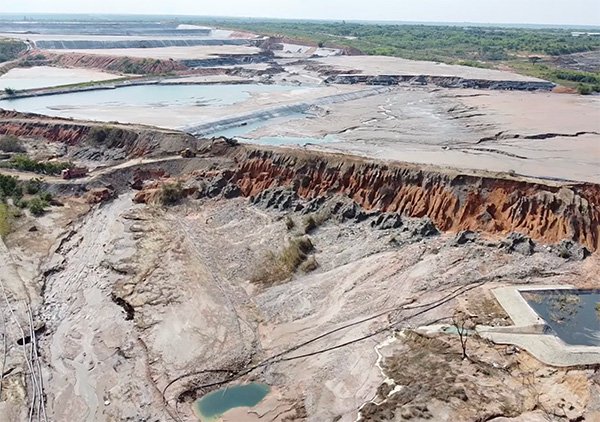
Core Viewpoint - The BBC has been accused of spreading misinformation regarding Chinese investments in Africa, particularly focusing on a copper mine tailings dam collapse in Zambia, while downplaying the facts surrounding the incident [1][2][3] Group 1: Incident Overview - The tailings dam collapse in Zambia was attributed to the theft of a waterproof membrane, and the Chinese company involved acted quickly to contain the leak and compensate affected residents [1][3][4] - The Zambian government confirmed that the pollution did not result in serious illness or death, and water quality has returned to normal [4][6] Group 2: Media Representation - The BBC's reporting emphasized potential environmental hazards and exaggerated the scale of the incident, claiming a leak of 150,000 tons of toxic waste, while the Zambian government reported only 50,000 tons [3][4] - The BBC's narrative suggested that the lawsuit filed by Zambian farmers against the Chinese company was a test of accountability for foreign investors in Africa [2][9] Group 3: Legal and Political Context - The lawsuit seeking $80 billion in damages is unprecedented and significantly exceeds previous compensation records in the mining industry [9][10] - The support for the lawsuit from NGOs is linked to Western funding, indicating a broader geopolitical strategy to challenge Chinese investments in Africa [10][11] Group 4: Chinese Investment in Zambia - Chinese companies have been significant contributors to Zambia's economy, creating over 30,000 jobs and generating substantial tax revenue [7][12] - The Chinese investment in Zambia's mining sector is expected to reach $5 billion by 2031, highlighting the long-term commitment to the region [12][13] Group 5: Risk Management and Future Strategies - Chinese companies are advised to enhance their risk management strategies in Africa, focusing on grassroots engagement and community relations to mitigate potential conflicts [10][14] - The concept of "resource nationalism" is emerging in Africa, necessitating adjustments in how foreign companies operate and engage with local governments and communities [14]

中企在非遭800亿美元天价索赔,BBC老毛病又犯了
Guan Cha Zhe Wang· 2025-12-04 04:07
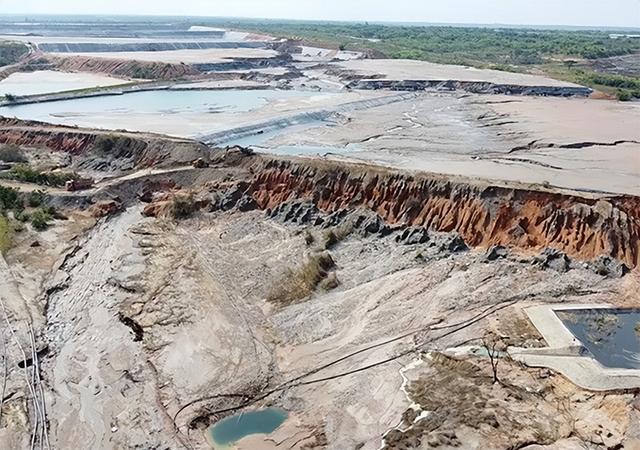
Core Viewpoint - The article critiques the BBC's reporting on a Chinese company's copper mine tailings dam collapse in Zambia, arguing that it misrepresents the facts and downplays the company's rapid response and local government assessments [1][2][3][4]. Incident Overview - The tailings dam collapse in Zambia was attributed to the theft of a waterproof membrane, leading to a leak that was contained within 24 hours by the Chinese company involved [1][3]. - The Zambian government confirmed that the pollution did not result in serious health issues or fatalities, and water quality has since returned to normal [1][6]. Compensation and Legal Actions - Following the incident, 176 Zambian farmers filed a lawsuit against the Chinese company, seeking $80 billion in compensation, which is significantly higher than any historical mining compensation claims [2][9]. - The Chinese company has stated that the lawsuit lacks basis and has engaged local legal teams to defend its interests [9]. Environmental Impact and Response - The BBC reported exaggerated claims regarding the environmental impact, citing a leak of 150,000 tons of toxic waste, while the Zambian government reported only 50,000 tons [4][6]. - The Chinese company has been proactive in addressing the incident, cooperating with the Zambian government for remediation and compensating affected families [6][8]. Political Context - The article suggests that the lawsuit and media coverage are influenced by local political dynamics, particularly with upcoming elections in Zambia, where opposition parties may leverage the incident to criticize the ruling party [7][8]. - The narrative around the incident is framed within a broader context of Western media and governmental efforts to undermine Chinese investments in Africa [9][10]. Industry Dynamics - The article highlights the growing trend of "resource nationalism" in Africa, where local populations increasingly demand higher compensation and benefits from foreign investments [14]. - It emphasizes the need for Chinese companies to improve risk management and community relations to navigate the complex political and social landscape in Africa [10][14].
国际新秩序下的矿业发展格局
Minmetals Securities· 2025-12-03 04:14
Group 1: Global Political and Economic Context - The global political order is undergoing significant changes, with geopolitical tensions and trade disputes reshaping international trade and industrial division[1] - Key raw materials are increasingly viewed as national security assets, prompting proactive policy measures from governments to secure and control these resources[1] - China's "dual carbon" strategy emphasizes a green transition and energy security, integrating resource, energy, and industrial chain considerations[1] Group 2: Mining Industry Characteristics - The external environment for mining companies is characterized by increased "security" and "policy" focus on critical minerals, with stronger geopolitical attributes in trade, investment, and technology[2] - Supply chains are becoming more regionalized and resilient, with redundancy and compliance becoming core constraints[2] - Green and low-carbon practices, along with ESG considerations, are becoming standard throughout the mining lifecycle, making permits and carbon footprints critical variables for project success[2] Group 3: Strategic Recommendations for Mining Companies - Companies must diversify their resource acquisition and product sales across different regions and customer bases to manage risks in an era of trade restrictions[3] - Vertical integration and full value chain control are rewarded in the new order, encouraging participation across mining, refining, and key component manufacturing[3] - Increased investment in innovation and material substitution is essential, with a focus on R&D in mining and processing technologies[3] Group 4: Demand and Supply Dynamics - Demand for critical minerals is surging, driven by energy transition, digital expansion, and high-end manufacturing, with lithium and rare earth elements being particularly crucial[32] - According to the International Energy Agency, lithium demand is expected to grow by approximately 90% over the next two decades, while nickel and cobalt demand will increase by 60%-70%[37] - The supply side faces significant pressure due to the mismatch between rapid demand growth and the long lead times required for project development[36]
全球铝土矿供应链进入重塑期
Qi Huo Ri Bao· 2025-12-02 01:57
Core Insights - The global bauxite supply chain is undergoing a structural transformation driven by resource nationalism, high foreign dependency of China, and oversupply in downstream alumina [1][2][3] Group A: Structural Changes in Global Supply and Demand - The core contradiction in the market has shifted from short-term supply-demand balance to a supply chain resilience crisis influenced by geopolitical and industrial policies [2] - Guinea, as the largest and fastest-growing supply source, has seen a 38.2% increase in bauxite imports to China from January to October 2025, accounting for over 70% of total imports [3] - Guinea's government is transitioning from encouraging mineral exports to enforcing local processing, which will fundamentally alter global bauxite trade flows and pricing mechanisms [3][4] Group B: Challenges in Traditional Supply Sources - Australia faces dual challenges of aging infrastructure and rising energy costs, impacting its cost competitiveness in the bauxite market [4] - Emerging supply countries like Indonesia and Tanzania are hindered by fluctuating ore grades, inadequate infrastructure, and regulatory instability, making them unreliable alternatives to Guinea [4] Group C: Demand Dynamics in China - China's bauxite consumption reached 222 million tons from January to October 2025, with imports making up 77.23% of this demand, indicating a heavy reliance on foreign sources [4] - The structural imbalance in China's aluminum industry is evident, with planned alumina capacity additions significantly outpacing those for electrolytic aluminum, leading to long-term oversupply in the alumina market [5] Group D: Inventory Trends and Implications - As of November 2025, China's port inventory of bauxite exceeded 22 million tons, a year-on-year increase of approximately 50.7%, reflecting a supply surplus and weak demand [6][7] - High inventory levels serve as both a buffer against supply shocks and a warning signal of underlying demand issues, impacting financial costs for companies [7] Group E: Long-term Cost Structure Changes - Resource nationalism is reshaping the global mineral resource value distribution, leading to an upward shift in long-term cost structures for bauxite [8][9] - New costs, including localization premiums and ESG compliance costs, are being integrated into the traditional mining cost structure, affecting pricing dynamics [8][9] Group F: China's Strategic Responses - China is focusing on resource security through domestic resource development and increasing recycling efforts, aiming for a 3%-5% growth in domestic bauxite resources by 2027 [12] - The strategy also includes diversifying import sources and investing in alumina production facilities in resource-rich countries like Guinea, which may shift dependency from bauxite to alumina [12][13] Group G: Future Market Dynamics - The competitive landscape will shift from supply assurance to cost competition, with companies possessing stable, low-cost bauxite resources or integrated supply chains gaining a competitive edge [13]
财经观察:防美国“抢资源”,欧盟筹建关键矿产中心
Huan Qiu Shi Bao· 2025-11-20 22:36
Core Points - The European Union (EU) is planning to establish a central institution to coordinate the procurement and storage of critical minerals in response to the United States' aggressive actions in the global mineral market [2][4] - EU officials express concerns over the slow response to the US's "America First" policy, which has exposed the EU's economic vulnerabilities [1][2] - The EU aims to enhance its economic security by integrating more protective measures into its supply chains and establishing partnerships with countries like Brazil and South Africa [4][5] Group 1: EU's Strategic Response - The EU's plan includes signing cooperation agreements with Brazil and South Africa to secure mineral supplies [4] - The EU is also considering setting price floors for critical minerals to ensure domestic availability for European companies [4] - The Critical Raw Materials Act (CRMA) will come into effect in May 2024, focusing on achieving self-sufficiency in strategic raw materials through financial support for 47 strategic projects [4][12] Group 2: US Actions and Implications - The US has been rapidly securing critical mineral supplies through various means, including the Defense Production Act and acquiring stakes in foreign mining companies [5][7] - The US's aggressive strategy has raised concerns in the EU about being left behind in the competition for essential resources [7][11] - The EU fears that US actions may undermine its strategic projects, as seen with the tungsten mining project in the UK that has attracted US investment [8][11] Group 3: Future Directions for the EU - The EU is expected to propose a more detailed critical mineral plan by the end of 2025, which will complement the CRMA [11][12] - The "RESourceEU" initiative aims to strengthen trade ties with third countries and enhance the resilience of Europe's strategic metal supply chains [11][12] - The EU is also exploring domestic mining and refining options, as well as partnerships with neighboring countries to boost its autonomy in critical minerals [12]
2026年大宗商品分析与展望
2025-11-20 02:16
Summary of Key Points from the Conference Call Industry Overview - The conference call focuses on the commodity market outlook for 2026, highlighting the expected improvement in domestic demand for various commodities, particularly electrolytic aluminum and steel, due to the easing of the US-China trade war and supportive policies from the "14th Five-Year Plan" [1][2]. Core Insights and Arguments - **Commodity Market Outlook**: The overall outlook for the commodity market in 2026 is optimistic, especially for domestic demand varieties. The easing of the US-China trade war and policy support from the "14th Five-Year Plan" are expected to significantly enhance risk appetite for commodities and economic optimism [2][6]. - **Gold and Precious Metals**: Despite a potential decline in safe-haven demand for gold due to the easing trade tensions, gold prices are expected to continue rising. The attractiveness of gold-related stocks may surpass that of gold itself, as prolonged high prices benefit corporate earnings and valuation adjustments [3][4][26]. - **Strategic Metals**: Resource nationalism remains a concern, with strategic metals like nickel, tin, and cobalt being viewed positively despite poor performance in 2025. The price potential for these metals in 2026 is still considered significant [5][22]. - **Copper and Aluminum Dynamics**: The outlook for copper is optimistic due to structural demand, supported by AI investments, while aluminum's performance is hindered by relaxed supply controls. The US holds 40%-50% of global copper inventory, leading to tight supply in other regions [6][15][18]. - **Economic Indicators**: The US economy is projected to show resilience despite a global slowdown, with AI investments and increased fiscal spending being key drivers. However, high interest rates continue to negatively impact traditional industries [6][7][12]. Additional Important Insights - **Investment Strategies**: The call emphasizes the need for scenario analysis in investment strategies, particularly in a volatile economic environment. The potential for economic recovery and the impact of AI investments are critical factors to monitor [10][11][28]. - **Market Dynamics**: The imbalance in copper consumption and inventory in the US creates unique market dynamics, with potential for arbitrage opportunities between COMEX and LME prices. The future price trajectory will depend on economic recovery and inventory management [15][18]. - **Central Bank Gold Purchases**: Central bank purchases of gold are expected to remain a significant support factor for gold prices, even if the dollar's decline in 2026 is less pronounced than in 2025 [26]. - **Long-term Trends**: The call suggests that the trends observed from 2023 to 2025 are likely to continue into 2026, with traditional industries potentially performing better while sectors that thrived in recent years may face adjustments [27][28]. - **Recycling and Supply Issues**: The supply of recycled copper remains tight, particularly in China, which could support prices in the coming years [22]. This summary encapsulates the key points discussed in the conference call regarding the commodity market outlook for 2026, focusing on the dynamics of various metals, economic indicators, and investment strategies.
2025年全球棕榈油大会——高增长周期的终结,共识与分歧
对冲研投· 2025-11-19 11:50
Core Insights - The global palm oil market is undergoing a significant transformation characterized by high volatility, high premiums, and policy-driven dynamics. The era of supply growth is ending, with demand being reshaped by biodiesel policies, making regulations more critical than traditional supply-demand factors in price formation [4][5][20]. Market Reality - The palm oil market has entered a structurally tight phase due to a fundamental shift in the supply and demand landscape. Key drivers include capacity constraints, policy interventions, and resilient demand. Major producers Indonesia and Malaysia are experiencing a slowdown in growth, while biodiesel policies are reshaping global trade flows [5][6][8]. Supply Dynamics - Indonesia's palm oil production is reaching a ceiling, with forecasts indicating a slowdown or even negative growth by 2026 due to aging trees, slow replanting rates, and land ownership uncertainties. Malaysia's production is also stagnating, with a slight decline expected [6][7]. - Thailand is a rare bright spot, with a production increase of 0.8% due to advantages in EU compliance [7]. Demand Dynamics - Indonesia's domestic biodiesel policies are significantly influencing demand, with the B40 policy consuming approximately 15.62 million kiloliters of crude palm oil (CPO). The proposed B50 policy could further increase demand by 1.5 to 3 million tons, squeezing export supplies [8]. - Import markets remain resilient, with India expected to increase palm oil imports from 8.1 million tons to 9.1 million tons in the 2025/26 period, supported by strategic reserves in China and demand from ASEAN and Africa [8]. Consensus Expectations - There is a clear consensus among institutions regarding a bullish long-term outlook for palm oil prices, driven by structural supply tightness. However, short-term price fluctuations are expected due to inventory pressures and policy uncertainties [9][10]. - The average annual growth rate for global palm oil production is projected to drop from 2.9 million tons in the past decade to 1.4 million tons in the next decade, marking the end of the capacity expansion era [9]. Price Outlook - In the short term (Q4 2025 - Q1 2026), prices are expected to be under pressure due to high Malaysian production and seasonal increases in Indonesian output, potentially dropping to $920-$950 per ton. In the medium to long term, prices may rebound to $1,100 per ton due to seasonal low production and the potential implementation of the B50 policy [10]. Institutional Divergence - Significant differences exist among institutions regarding price forecasts, focusing on the extent of supply declines, timing of policies, and external factors. Some institutions predict a price rebound starting in Q1 2026, while others emphasize the need for policy triggers [11][12][14]. Core Variables and Drivers - The future market direction hinges on several core variables, including the timing of Indonesia's B50 policy implementation, the execution details of the EU Deforestation Regulation (EUDR), weather and production risks, and dynamics of competing oils [16][18][21]. - Indonesia's strategic approach to palm oil, driven by resource nationalism, aims to enhance its global pricing power while reducing reliance on imported fossil fuels through biodiesel policies [21][22].

2026年煤炭行业投资策略:资源民族主义觉醒,高估的煤炭供给
Shenwan Hongyuan Securities· 2025-11-17 09:41
Investment Strategy Overview - The report highlights the resurgence of resource nationalism driven by de-globalization, emphasizing coal's strategic importance for national energy security. Major coal-producing countries like Indonesia, Mongolia, and the USA are tightening control over coal resources, integrating them into national strategies to bolster energy independence and support domestic industrial and power needs [3][4][5]. Supply Side Analysis - The coal industry is undergoing a significant restructuring, with safety and environmental regulations leading to a more rational supply order. The release of production capacity is expected to be steady but cautious, promoting high-quality development in the coal sector [3][4]. - Domestic supply costs are rising, and coal imports are tightening marginally due to increased scrutiny and regulations [4][32]. Demand Side Analysis - The report anticipates a stable and slight increase in overall coal demand, driven by the rigid growth in electricity consumption and the irreplaceable role of coal in peak regulation and energy security. The expected price range for thermal coal in 2026 is projected to be between 750-800 RMB per ton [3][4][29]. - The resilience of coal power generation is highlighted, particularly in the context of fluctuating renewable energy output, indicating that coal will continue to play a crucial role in the energy mix [3][4]. Investment Recommendations - The report recommends investing in stable, high-dividend companies such as China Shenhua, Shaanxi Coal and Chemical Industry, and China Coal Energy. It also suggests paying attention to companies with price elasticity like Jinkong Coal Industry, Huayang Co., Tebian Electric Apparatus, and Shanxi Coal International [3][4]. - Growth-oriented companies in coal-electricity joint ventures, such as Xinji Energy, are also recommended for consideration [3][4]. Regional Insights - Indonesia's coal production is expected to decline in 2025 due to new resource tax regulations, which will increase export costs and support domestic coal prices [11][12]. - Mongolia's coal production and sales are affected by ongoing political instability, impacting the stability of coal imports [17][18]. - The USA is implementing favorable policies to revitalize its coal industry, including reducing royalty rates and increasing federal land available for coal exploration [21][22]. Future Capacity and Production Trends - Future coal production capacity is expected to be limited, with only about 67 million tons of new capacity projected over the next three years. The focus is shifting towards regions like Xinjiang, which has significant coal reserves and favorable mining conditions [61][67]. - The report notes that the overall coal production in China is unlikely to see significant growth in 2026 due to ongoing safety inspections and regulatory measures [51][53].




美国关键矿产清单发布,新增10种矿产!四大投资逻辑显现,有色龙头ETF(159876)逆市活跃,冲击3连涨
Xin Lang Ji Jin· 2025-11-07 03:10
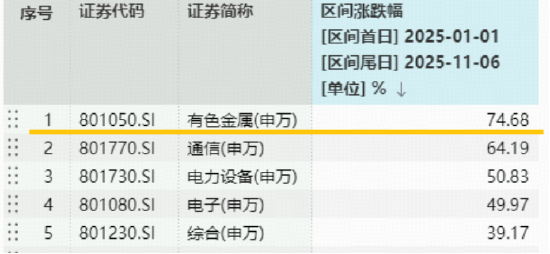
Core Insights - The importance of non-ferrous metals is highlighted by two significant announcements: the inclusion of copper, silver, and uranium in the U.S. critical minerals list and China's commitment to optimizing export control processes for rare earths and other dual-use items [1][2]. Group 1: U.S. Critical Minerals List - The U.S. Geological Survey released the 2025 critical minerals list, which includes ten newly added minerals such as boron, copper, lead, metallurgical coal, phosphates, potassium salts, rhenium, silicon, silver, and uranium [1]. - Minerals on this list will receive government funding support and expedited approval processes, emphasizing their strategic importance in the current international context [1]. Group 2: China's Export Control Measures - China's Ministry of Commerce stated that items like rare earths have dual-use properties and will be permitted for compliant applications, aiming to enhance communication and cooperation with other countries [1]. - The focus is on ensuring the stability and security of global supply chains while promoting compliant trade practices [1]. Group 3: Market Dynamics and Investment Opportunities - The non-ferrous metals sector is expected to benefit from "resource nationalism," which exacerbates supply-demand conflicts as resource-rich countries tighten controls, leading to increased development costs and potential price surges for strategic metals like copper [1]. - The anticipated start of a new macroeconomic cycle, indicated by narrowing declines in the Producer Price Index (PPI), suggests that industrial and minor metals may become core investment targets in the upcoming market [1]. Group 4: Performance of Non-Ferrous Metals Sector - The non-ferrous metals sector has seen a significant increase of 74.68%, leading the industry, supported by strong fundamentals [2]. - Among the 60 stocks in the leading non-ferrous metals ETF (159876), 56 companies reported profits, with 44 showing year-on-year net profit growth, including notable increases from companies like Chuangjiang New Material and Guocheng Mining [2]. Group 5: Investment Strategy - Direct investment in the non-ferrous metals sector allows investors to benefit from both the safe-haven value of precious metals and the growth potential of industrial metals in high-demand sectors like renewable energy and aerospace [2]. - The non-ferrous metals ETF (159876) provides a diversified approach, tracking a range of metals including copper, aluminum, gold, rare earths, and lithium, which helps mitigate risks associated with investing in single metal sectors [3].