财政政策

Search documents
4月CPI环比由降转升,政策合力有望利好部分领域价格
Hua Xia Shi Bao· 2025-05-10 12:37
Core Insights - In April, the Consumer Price Index (CPI) showed a month-on-month increase of 0.1%, reversing a previous decline of 0.4%, while the year-on-year CPI decreased by 0.1% [2] - The Producer Price Index (PPI) recorded a year-on-year decline of 2.7%, slightly better than market expectations, with a month-on-month decrease of 0.4% [2][4] CPI Analysis - The month-on-month CPI increase was primarily driven by a rebound in food and travel service prices, exceeding seasonal levels by 0.2 percentage points [2][4] - Year-on-year, energy prices fell by 4.8%, with gasoline prices dropping by 10.4%, contributing approximately 0.38 percentage points to the CPI decline [4][5] - Core CPI, excluding food and energy, rose by 0.5%, indicating stable inflation in essential goods [4][5] PPI Analysis - The PPI's month-on-month decline was influenced by international factors, particularly falling crude oil prices, which affected domestic oil-related industries [7] - The coal mining and processing sectors also saw a seasonal decline in prices, contributing to the overall PPI decrease [7] - Despite current pressures, there are expectations for a potential rebound in PPI due to targeted policies aimed at boosting demand in real estate and consumption [7][8] Policy Implications - The government is expected to maintain a loose monetary policy into 2025, with potential room for a 50 basis point reserve requirement ratio cut and a 20 basis point interest rate reduction [3] - Policies focusing on increasing income for low- and middle-income groups and promoting service consumption are anticipated to support stable price levels [6] - The ongoing implementation of macroeconomic policies is expected to enhance domestic demand, particularly in technology, consumption, and foreign trade sectors [6][8]


一季度货币政策执行报告折射中国经济运行亮点 释放“向上向优”积极信号
Yang Shi Wang· 2025-05-10 10:24
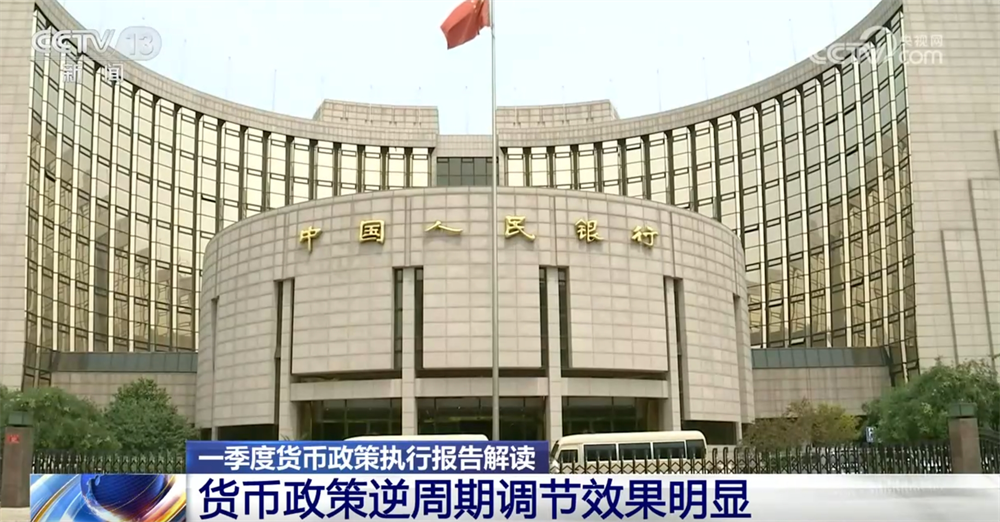
央视网消息:5月9日,中国人民银行发布2025年一季度中国货币政策执行报告。报告显示,一季度货币政策逆周期调节效果明显,人民币 汇率在合理均衡水平上保持基本稳定。 专家表示,从一季度货币政策报告可以看出具体政策操作进一步优化,比如调整中期借贷便利(MLF)中标方式、优化两项资本市场支 持工具,将支农再贷款和支小再贷款合并为支农支小再贷款等。 招联首席研究员董希淼表示,在各项货币政策支持下,货币信贷合理增长,社会综合融资成本稳步下行,信贷结构进一步优化,持续多 年、多次降准降息的累积效应不断显现,社会融资环境总体处于较为宽松状态。 一季度货币政策执行报告解读:加大支持实体经济力度 支持扩大消费 专家表示,一季度货币政策执行报告中,新的政策信号不断释放,包括进一步加大支持实体经济力度、支持扩大消费等。 在进一步加大支持实体经济力度方面,报告释放出积极的信号,货币政策持续保持适度宽松力度。在支持扩大消费方面,报告对此进行了 专题论述,5000亿元服务消费与养老再贷款也于9日正式推出。市场预计,未来服务领域的消费潜力有望进一步激发释放。 我国广义政府总资产相当于GDP的166%,总负债相当于GDP的75%,净资产约占 ...
央行发布一季度货币政策执行报告提出 进一步调整支出结构 促进物价合理回升
Zheng Quan Shi Bao· 2025-05-09 17:52
Core Insights - The People's Bank of China emphasizes the importance of promoting reasonable price recovery as a key consideration for monetary policy, aiming to maintain prices at a reasonable level [1][2] - The report highlights a shift in macroeconomic policy focus from investment to a balanced approach between consumption and investment, with a stronger emphasis on consumption [1] - The report identifies boosting consumption as a critical point for expanding domestic demand and stabilizing growth, noting that China's final consumption expenditure as a percentage of GDP is lower compared to countries like the US and Japan [1] Group 1: Monetary Policy and Economic Strategy - The report suggests that promoting reasonable price recovery requires balancing supply and demand, with a focus on expanding effective demand [2] - Experts indicate that price levels are primarily determined by supply and demand relationships, with monetary factors being secondary; current monetary growth is outpacing economic growth, yet prices remain low [2] - The report outlines the need for the implementation of a recently introduced financial support package to enhance monetary policy effectiveness and stabilize prices [2] Group 2: Fiscal Policy and Government Debt - The report notes an increase in fiscal support this year, with a faster issuance of new local special bonds [1] - It compares government debt levels in China with those in the US and Japan, suggesting that China's debt expansion remains sustainable due to substantial state assets and low government debt levels [1] - Experts recommend that future fiscal policies should adjust spending structures to focus more on areas that stimulate consumption, such as elderly care, childcare, and healthcare services [1]
中国人民银行黑色产业日报-20250509
Chang Jiang Qi Huo· 2025-05-09 01:54
黑色产业日报 简要观点 ◆ 螺纹钢 周四,螺纹钢期货价格偏弱运行,杭州中天螺纹钢 3190 元/吨,较前一 日下跌 30 元/吨,10 合约基差 138(+16),7 日上午国新办举行新闻 发布会,央行等多部门介绍了"一揽子金融政策支持稳市场稳预期"有 关情况,货币政策利多落地,盘面高开低走,目前市场仍在期待财政政 策发力。后市而言:估值方面,螺纹钢期货价格跌至电炉谷电成本附近, 仅仅高于长流程成本,静态估值处于偏低水平;驱动方面,政策端,预计 中美关税政策仍会反复博弈,短期国内出台大规模财政刺激政策概率较 小,产业端,现实供需尚可,但关税影响出口+需求季节性下滑,市场预 期偏弱,关注限产政策是否落地,预计价格震荡运行。(数据来源:同花 顺 iFinD,Mysteel) ◆ 铁矿石 供给方面,全球发运季节性回升,近期国内进口矿到港有所增长,港口 铁矿库存仍呈现小幅上升态势。需求方面,铁水产量大幅增长,钢厂产 能利用率提升。月末钢厂复产节奏加快,成材价格暂稳,钢厂生产积极 性提高。市场存在粗钢限产预期,但尚未见到具体政策文件出台,五千 万吨限产相较总量仍然较少,正反馈难以形成,矿价仍是弱势。基本面 铁矿属于供需 ...
宝城期货股指期货早报-20250509
Bao Cheng Qi Huo· 2025-05-09 01:43
Report Summary 1. Report Industry Investment Rating No information provided. 2. Core View of the Report - The short - term view of the stock index futures is that they will run with a strong bias in a volatile manner, and the medium - term view is that they will be volatile. The main reason is that the positive signals from the policy side in the short term have stabilized market expectations and formed a strong bottom support for the stock index [1][5]. 3. Summary by Relevant Catalog 3.1 Variety View Reference - Financial Futures Stock Index Sector - For IH2506, the short - term and medium - term trends are both volatile, and the intraday trend is strongly biased in a volatile manner. The core logic is that the policy - side benefits provide strong support [1]. 3.2 Main Variety Price Market Driving Logic - Financial Futures Stock Index Sector - **Market Performance**: The stock indexes rose across the board yesterday. The total trading volume of the stock market was 1321.8 billion yuan, a decrease of 183.3 billion yuan compared with the previous day [5]. - **Policy Support**: On May 7, the "one bank, one bureau, one commission" introduced the "package of financial policies to support market stability and expectation stability". The policy side has a good effect on stabilizing market expectations. The central bank's interest rate cuts and reserve requirement ratio cuts, combined with the fiscal policy, can boost domestic demand and promote the stabilization and recovery of listed companies' performance [5]. - **Capital Level**: The central bank increases the re - loan quota to support consumption and technology; the CSRC supports the role of Huijin's quasi - stabilization fund and promotes the linkage between the performance evaluation of public funds and investors' returns; the financial regulatory authority expands the long - term investment pilot scope of insurance funds and reduces the risk factor of insurance companies' stock investment, which can continuously increase the incremental funds in the stock market and promote the re - evaluation of the stock market value [5]. - **Market Sentiment**: Recently, there have been signs of relaxation in Sino - US tariffs, and market risk appetite has recovered. However, the results of the Sino - US contact from May 9th to 12th need to be noted [5].
五月市场展望
Hu Xiu· 2025-05-09 01:16
Group 1 - The core viewpoint of the article emphasizes the importance of understanding economic data and market conditions in the context of tariffs and Federal Reserve policies, particularly after the recent FOMC meeting and the U.S. targeting the U.K. for tariff agreements [1][11][12] - The current state of the U.S. economy is better than expected, with fiscal policies remaining expansionary and interest rates not being restrictive, despite uncertainties brought by tariffs [16][19] - The U.S. government's budget request for 2026 indicates a reduction in non-defense discretionary spending by 22.6%, while defense spending is expected to increase by 13.4% [18][19] Group 2 - The article discusses the potential for a dovish shift in the Federal Reserve's approach, with the next chair likely to favor monetary easing, which could lead to a combination of fiscal and monetary expansion [30][29] - The article highlights the ongoing trade tensions and tariff negotiations between the U.S. and China, suggesting that both parties are reluctant to escalate tensions further, indicating a complex negotiation landscape [34][33] - The Chinese economy is advised to focus on constructing a cyclical bottom and seeking structural improvements, with an emphasis on the importance of stable prices for economic stability [35][45] Group 3 - The article notes that the long-term outlook for gold remains positive, with expectations of increased demand due to monetary and fiscal easing, while also acknowledging the potential for short-term volatility [47][50] - Copper is identified as a buy on dips, with its demand expected to rise as manufacturing expands in response to global safety concerns [56][58] - The article suggests that if the U.S. imposes universal tariffs, it may delay the Federal Reserve's interest rate cuts, as the resulting price inflation could lead to long-term inflation expectations [74][76]

【机构策略】预计短期市场以稳步震荡上行为主
Zheng Quan Shi Bao Wang· 2025-05-09 01:08
Group 1 - The market has shown resilience in liquidity due to external risk expectations and strong policy support for medium to long-term capital inflow [1] - The performance of A-shares is expected to improve as financing may stop its outflow process, creating new opportunities for inflow when new themes emerge [1] - In Q1 2025, the revenue growth rate of all A-shares is expected to decline compared to Q4 2024, while the net profit growth rate is expected to turn positive, indicating significant improvement [1] Group 2 - On Thursday, the A-share market opened lower but experienced upward fluctuations, with the Shanghai Composite Index facing resistance around 3359 points [2] - The focus of policies has shifted towards expanding domestic demand, with attention on the implementation of fiscal policies and consumption stimulus measures [2] - The central bank has signaled easing, and the increase in financing balance is expected to support market liquidity, with ETF funds continuing to flow in [2] Group 3 - The three major indices collectively rose on Thursday, with the Shanghai Composite Index remaining above the 5-day moving average, indicating a short-term bullish trend [3] - A series of financial policies were released, signaling the start of new incremental policies aimed at enhancing economic resilience and stability [3] - More incremental policies are expected to be introduced, particularly in fiscal policy, domestic demand expansion, and stabilizing foreign trade [3]
利好A股的牌,还有多少?
3 6 Ke· 2025-05-08 23:21
5月7日上午,A股开盘之前,国新办举行新闻发布会,央行行长潘功胜、国家金融监督管理总局局长李 云泽、证监会主席吴清介绍"一揽子金融政策支持稳市场稳预期"有关情况。 对于此次会议,投资者显然抱有极大期待,A股连续两天全线上涨,已完全修复了因关税问题导致的下 跌。 资本市场的记忆功能,是投资者下注的底气。 去年9月24日,三大金融高管同样齐聚国新办新闻发布会,并推出一系列重磅增量政策。那次会议最终 成为A股乾坤逆转的起点,此后不到一个月时间里,上证指数暴涨1000点,行情表现极其亮眼。 不到一年时间,两次重磅会议,对于深受政策影响的A股来说,或许真的迎来了逆天改命的时候。 01 央行再出手 与去年924会议一样,本次会议中最受关注的增量政策,仍然来自央行。 作为国家货币政策的制定者,央行的主要职能是通过调整货币数量和价格,解决市场流动性问题。央行 行长潘功胜在本次会议中宣布的多项货币政策,传递出持续宽松的政策信号。 最重要的货币宽松信号,自然是各方期待已久的降准降息。 存款准备金率降低0.5个百分点,其中汽车金融公司、金融租赁公司的存款准备金率,将阶段性地从5% 下降为0;代表政策利率的公开市场7天期逆回购操作利 ...
「改革创新」田轩:降准降息,如何“择机”?
Sou Hu Cai Jing· 2025-05-08 18:01
Group 1: Monetary Policy Adjustments - The central bank will selectively lower the reserve requirement ratio and interest rates based on economic growth momentum and liquidity conditions in the financial market [3] - Supportive monetary policy aims to maintain sufficient market liquidity, reduce financing costs, and guide funds to key areas to stimulate economic growth [4] - Coordination between monetary and fiscal policies is essential to enhance their effectiveness and ensure consistency in achieving economic stability and risk prevention [5] Group 2: Monetary Policy Tools - The toolbox for monetary policy includes tools like differentiated reserve requirement ratios, targeted medium-term lending facilities (TMLF), and open market operations to manage liquidity and credit [6] - Structural monetary policy tools will focus on directing financial support to strategic sectors such as technology innovation and green finance [6][7] Group 3: Price Stability and Asset Prices - The shift in the central bank's focus from "maintaining overall price stability" to "keeping prices at a reasonable level" indicates a more precise monetary policy target [8] - There is a complex debate about including asset prices in monetary policy goals, as it could complicate the balance between various economic objectives [10] Group 4: Government Bond Yields and Currency Exchange Rates - Current government bond yields are in a fluctuating range due to economic recovery expectations and monetary policy adjustments, with a potential for gradual increases in the long term [11] - The recent appreciation of the RMB reflects improved economic fundamentals and market confidence, while external pressures like tariffs may pose risks [13]