地缘政治风险

Search documents
金价,涨近4%!全球资本市场,一周复盘解析
Sou Hu Cai Jing· 2026-01-10 03:12
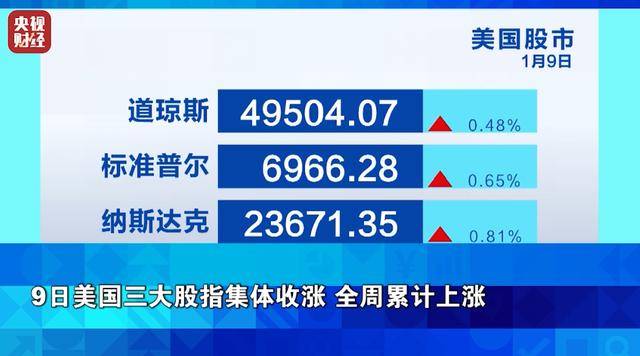
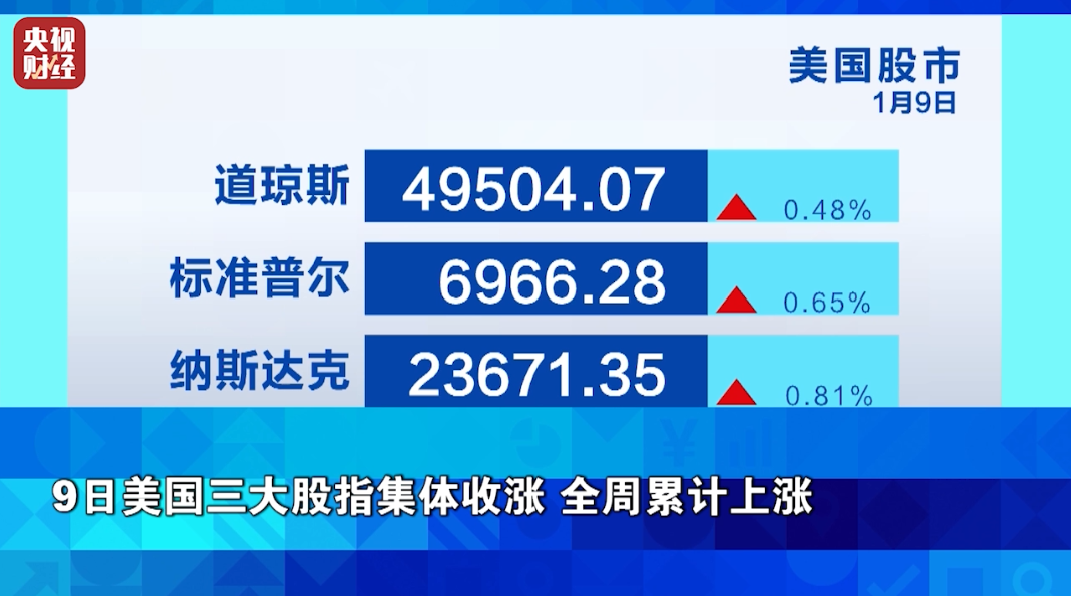
Group 1: Market Overview - Precious metal prices rose throughout the week, driven by ongoing market risk aversion, with COMEX gold futures increasing by 3.96% and silver futures rising by 11.72% [1][15] - On December 9, the three major U.S. stock indices collectively rose, with the Dow Jones up by 0.48%, S&P 500 increasing by 0.65%, and Nasdaq gaining 0.81% [3][6] - European stock indices also saw collective gains, with the FTSE 100 up by 0.80%, CAC 40 rising by 1.44%, and DAX increasing by 0.53% [9][7] Group 2: Employment Data - The U.S. non-farm payroll report for December showed an increase of 50,000 jobs, which was below expectations, while the unemployment rate fell to 4.4% [4][6] - The employment data was mixed, with significant downward revisions of 76,000 jobs in the previous two months, leading to the weakest annual job growth since 2020 [6][4] - Despite the disappointing employment figures, market expectations for the Federal Reserve's monetary policy remained unchanged, with predictions of at least two rate cuts in 2026 [6] Group 3: Commodity Prices - International oil prices continued to rise due to geopolitical tensions and supply risks, with WTI crude oil futures up by 3.14% and Brent crude oil futures increasing by 4.26% over the week [12][10] - The precious metals market saw support from expectations of a loose monetary policy from the Federal Reserve, contributing to the rise in gold and silver prices [15]

金价,涨近4%!全球资本市场,一周复盘解析→
Xin Lang Cai Jing· 2026-01-10 02:59
Group 1: Market Overview - Precious metals prices rose throughout the week, with New York Mercantile Exchange gold futures increasing by 3.96% and silver futures rising by 11.72% due to sustained market risk aversion [1][11] - On December 9, all three major U.S. stock indices closed higher, with the Dow Jones up 0.48%, S&P 500 up 0.65%, and Nasdaq up 0.81% [3][5] - European stock indices also saw collective gains, with the FTSE 100 up 0.80%, CAC 40 up 1.44%, and DAX up 0.53% on the same day [7] Group 2: Employment Data - The U.S. non-farm payroll report for December showed an increase of 50,000 jobs, which was below expectations, while the unemployment rate fell to 4.4% from an anticipated 4.5% [5] - The annual increase in non-farm employment for 2025 marked the lowest growth since 2020, with a downward revision of 76,000 jobs in the previous two months [5] Group 3: Commodity Prices - International oil prices continued to rise, with West Texas Intermediate crude futures up 3.14% and Brent crude futures up 4.26% for the week, driven by geopolitical tensions and supply risks [9] - The price of gold for February delivery was reported at $4,500.90 per ounce, up 0.90%, while silver for March delivery was at $79.341 per ounce, with a gain of 5.59% [11]
地缘局势微妙,油价连涨3周
Hua Er Jie Jian Wen· 2026-01-10 02:31
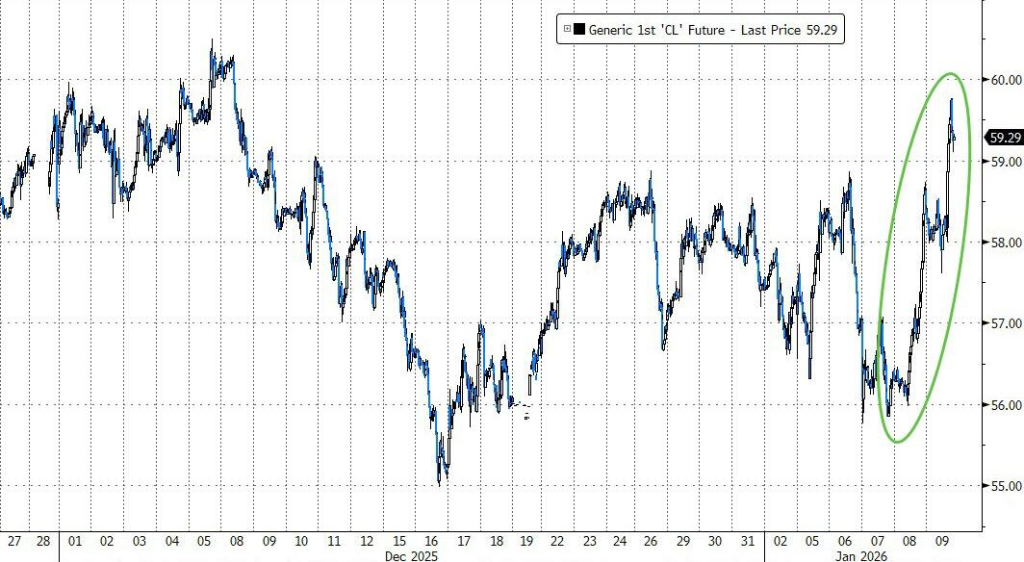
Core Viewpoint - Geopolitical risk premium has returned to the energy market, with crude oil prices recording the longest weekly gain since June of last year [1][2]. Group 1: Geopolitical Risks - Protests in Iran have been ongoing, with the Iranian National Security Council accusing the U.S. and Israel of orchestrating the unrest [1]. - U.S. President Trump warned of severe consequences for Iran if they are found responsible for any deaths related to the unrest [1]. - The focus of the market has shifted from Venezuela to Iran, as Iran's potential supply disruptions have a greater impact on oil prices due to its larger production capacity [2][6]. Group 2: Market Reactions - WTI crude oil futures saw a rise of over 3% on Friday, accumulating a gain of over 5% in the past two trading days, marking three consecutive weeks of increases [2][3]. - The options market reflects a shift in risk appetite, with call options skew reaching the highest level since July, indicating traders are paying the highest insurance premiums since the conflict between Israel and Iran began [4]. - Despite rising prices, fundamental pressures remain, with Goldman Sachs noting that clients' bearish sentiment towards oil prices is at a ten-year high [4]. Group 3: Supply and Demand Dynamics - The market is increasingly concerned about the potential for U.S. intervention in Iran if civilian casualties rise, with a 70% likelihood of intervention according to Rapidan Energy Group [7]. - Venezuela's role as a supplier has diminished significantly due to U.S. sanctions and aging infrastructure, while Iran continues to produce over 3 million barrels per day [6]. - The market is currently focused on Iran as the primary source of supply risk, overshadowing concerns about Venezuela [6]. Group 4: Financial Flows and Positioning - The amplification of risks related to Iran is attributed to traders holding significant bearish positions, which could lead to a sharp market reversal if geopolitical tensions force these positions to be unwound [9][10]. - Trend-following commodity trading advisors (CTAs) have been buying crude oil, and if prices stabilize, they are expected to continue purchasing [11]. - Over $6 billion is anticipated to flow into the market in the coming days due to annual rebalancing, primarily from commodity index funds [11]. Group 5: Price Outlook - Despite rising geopolitical risks, macro-level expectations of oversupply are limiting the upside potential for oil prices [12]. - The increase in Venezuelan supply and production rises in other regions may keep oil prices trading around $50 in the first quarter [12]. - Historical trends suggest that price spikes due to geopolitical events may be temporary, as seen when oil prices surged following U.S. bombings of Iranian nuclear facilities but quickly retreated once production was confirmed unaffected [12].
刚刚,特朗普称“无论难易”都要得到格陵兰岛!万斯警告欧洲:不配合将 “采取行动”!银价暴涨,油价大涨
Qi Huo Ri Bao· 2026-01-09 23:56
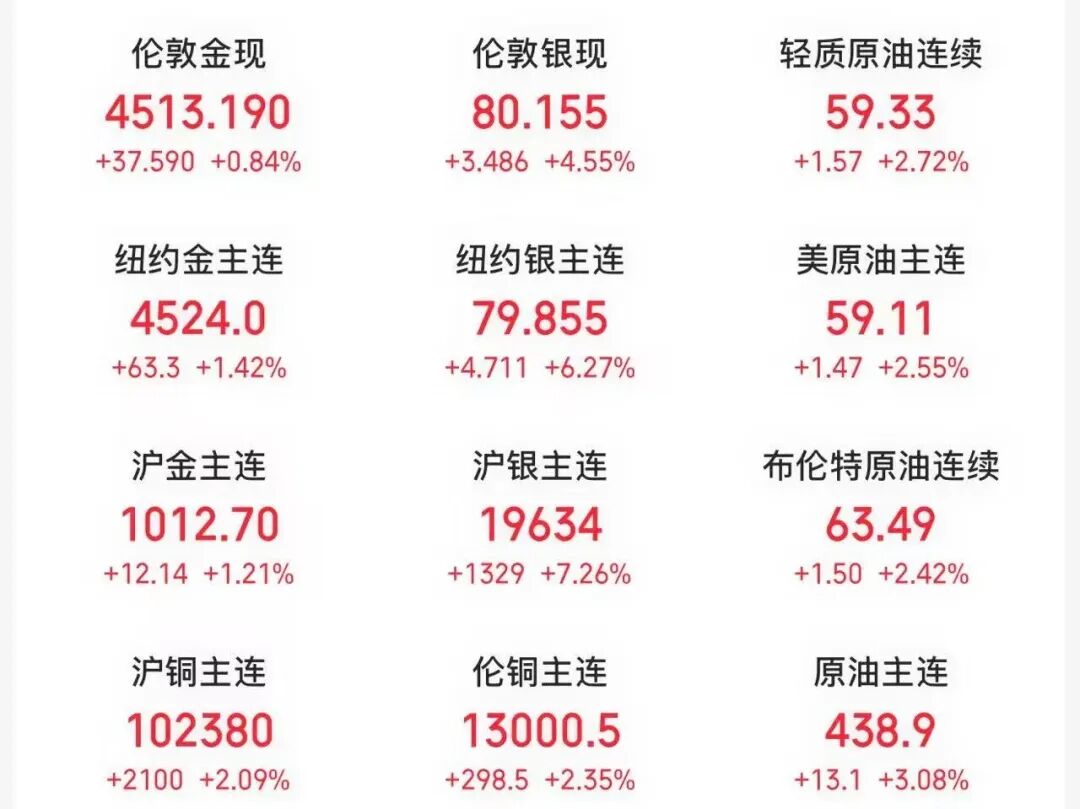
Economic Data - The U.S. non-farm payrolls increased by 50,000 in December 2025, below the expected increase of 70,000 and the previous value of 64,000 [1] - The unemployment rate in the U.S. for December 2025 was reported at 4.4%, better than the expected 4.5% and the previous 4.6% [1] Federal Reserve Outlook - The release of the employment data had minimal impact on the upcoming Federal Reserve meeting, with no expectations for a rate cut in January [1] - The probability of a rate cut in March dropped to 30%, and in April, it fell below 50% [1] - Morgan Stanley predicts rate cuts of 25 basis points in June and September, while Citigroup expects cuts in March, July, and September [1] Commodity Market Reaction - Following the employment data, silver prices surged significantly, with spot silver in London rising by 4.11% and New York silver futures increasing by 6.18% [2] - WTI crude oil futures for February rose by 2.35% to $59.12 per barrel, with a weekly increase of 3.14% [3] - Brent crude oil futures for March increased by 2.18% to $63.34 per barrel, with a weekly rise of 4.26% [3] Geopolitical Factors - U.S. President Trump announced a collaboration with the Venezuelan government regarding an oil tanker, indicating potential changes in U.S. policy to allow oil companies to operate in Venezuela [3] - Trump mentioned that major oil companies would invest at least $100 billion to rebuild Venezuela's oil infrastructure [3] Market Analysis - Analysts suggest that the recent rise in oil prices is primarily a rebound from previous declines, influenced by geopolitical tensions and expectations regarding Venezuelan oil supply [5] - The CBOE Oil Volatility Index (OVX) increased from 28.4% to 35.8%, indicating heightened market volatility [5] - Despite the current price increases, long-term forecasts suggest that oil prices may remain in a downward trend, with Brent crude expected to trade between $59 and $63 per barrel [6] Supply and Demand Dynamics - The global oil market is anticipated to face oversupply issues, with a projected surplus of 3.8 million barrels per day by 2026 [6][7] - The U.S. commercial crude oil inventory decreased by 3.832 million barrels, providing some short-term support for oil prices [5] - The potential return of Russian oil to the market following the resolution of the Ukraine conflict could exert downward pressure on oil prices [7]
2026年,黄金还能涨吗?谁吃到了最大红利?
Sou Hu Cai Jing· 2026-01-09 19:54
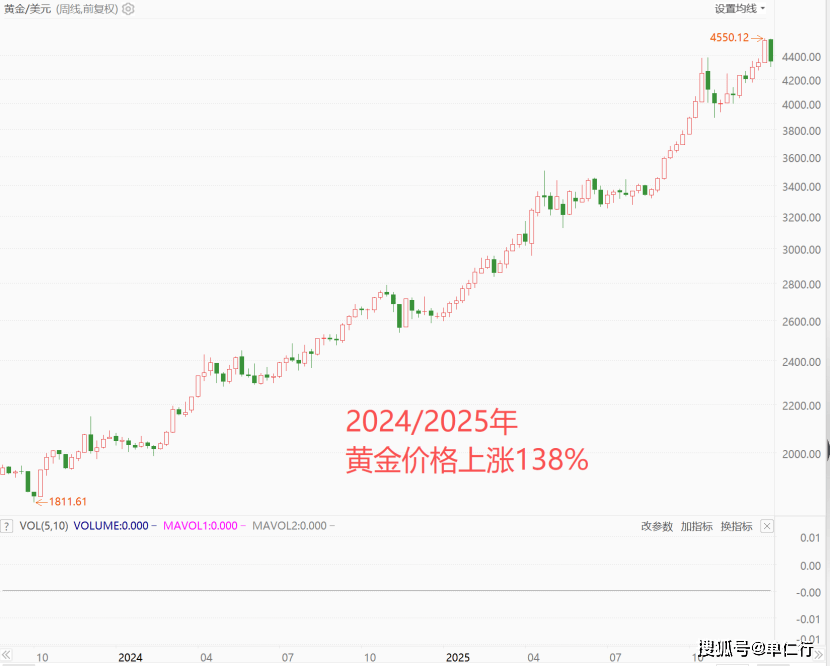
Core Viewpoint - In 2025, gold emerged as the best-performing mainstream asset, with a price increase of nearly 60% within the year and 138% over two years, outperforming major indices and real estate returns in first-tier cities [1][2][4]. Group 1: Reasons for Gold Price Surge - Major driver: China reduced its holdings of U.S. Treasury bonds, initiating a "gold-Treasury bond" swap strategy, with a significant reduction in U.S. debt holdings from $1.3 trillion in 2013 to below $700 billion by 2025 [9][10]. - Fundamental support: The weakening of U.S. dollar credit, with the national debt exceeding $38 trillion and concerns over debt repayment capabilities, led to gold being viewed as a safe haven [15][17]. - Direct drivers: Increased geopolitical risks and persistent inflation pressures contributed to heightened demand for gold as a hedge against currency devaluation [20][22]. - Additional support: Anticipated interest rate cuts by the Federal Reserve in 2026 are expected to further boost gold prices, as lower rates reduce the opportunity cost of holding non-yielding assets like gold [24]. Group 2: Impact on the Gold Industry Chain - The upstream gold mining sector benefited the most from rising gold prices, with companies like Zijin Mining and Shandong Gold reporting significant profit increases due to fixed production costs [26][27]. - The midstream refining and processing sector experienced limited benefits, facing cost pressures from rising raw material prices, with profit margins remaining relatively low [30][33]. - The downstream jewelry retail sector faced challenges, as high gold prices suppressed decorative purchases while increasing procurement costs, leading to overall performance declines for many retailers [34][38].
Why the stock market could easily get spooked
Yahoo Finance· 2026-01-09 14:18
Core Viewpoint - The market rally at the beginning of 2026 may face challenges due to high stock valuations and the risk of not meeting earnings expectations [1][2]. Valuation and Earnings Expectations - The forward price-to-earnings (PE) ratio for the S&P 500 is currently 22 times, significantly above the 10-year average of 18.7 times, indicating a high valuation similar to the peak in January 2022, which preceded a bear market [2]. - S&P 500 earnings are projected to grow by 15% for the year, with the strongest growth expected in Q4 at 18.1% [3]. Market Sentiment and Economic Indicators - The December jobs report showed only 50,000 jobs created, falling short of the consensus estimate of 70,000, which could dampen optimism regarding corporate earnings in early 2026 [4]. - There is uncertainty regarding the Federal Reserve's potential interest rate cuts, which are anticipated to occur if inflation continues to cool, but the current stock market levels complicate this scenario [5]. Geopolitical and Regulatory Risks - The Supreme Court's ruling on the legality of tariffs imposed by the Trump administration could significantly impact market dynamics, with potential for additional sectoral tariffs if current tariffs are deemed illegal [6]. - Geopolitical risks have resurfaced, particularly following actions taken by the Trump administration regarding Venezuela, which could further influence market stability [7].
宏观贵金属周报-20260109
Jian Xin Qi Huo· 2026-01-09 12:09
1. Report Industry Investment Rating No investment rating information is provided in the report. 2. Core Viewpoints - The global political - economic system is accelerating its restructuring, and the abundant monetary liquidity environment supports the continued strong performance of precious metal prices in 2026, but the optimization of Trump 2.0 policies and the decline in the intensity of Sino - US game also restrain the upward momentum [23][26]. - The US dollar index is expected to continue to be weak in 2026, while the RMB exchange rate against the US dollar is expected to continue to be strong [16][17]. - The US Treasury yield curve is expected to continue to steepen in 2026, with short - term interest rates continuing to decline and medium - and long - term Treasury yields showing more range - bound characteristics [19]. 3. Summary by Relevant Catalogs 3.1 Macro Environment Review 3.1.1 Economy - In December 2025, China's manufacturing PMI rebounded to 50.1%, returning to the expansion range for the first time since April 2025. The service industry, construction, and comprehensive PMIs also showed an upward trend, indicating an overall economic recovery [4]. - In December 2025, the US ISM manufacturing PMI fell to 47.9%, the lowest since November 2024, but the non - manufacturing PMI rose to 54.4%, the highest since November 2024, showing a good situation of improved economic momentum, falling prices, and stable employment [6]. - In October 2025, US import volume shrank, and the trade deficit was the smallest since March 2021. It is expected that the import shrinkage will continue until the end of 2025, and net exports may offset the negative impact of the federal government shutdown [7]. - In December 2025, China's CPI increased by 0.8% year - on - year, with the growth rate accelerating. The PPI shrank by 2.1% year - on - year, with the degree of shrinkage narrowing [9][10]. 3.1.2 Policy - In 2026, China's "two new" policies (large - scale equipment update and consumer goods trade - in) will be optimized in structure, with appropriate increase in subsidy thresholds and contraction in total scale. The first batch of ultra - long - term special treasury bonds for consumer goods trade - in has been advanced [12]. - In January 2026, relevant departments issued the "Implementation Opinions on the Special Action of 'Artificial Intelligence + Manufacturing'", and the Ministry of Commerce announced a ban on the export of dual - use items to Japan and an anti - dumping investigation into imported dichlorodihydrosilicon from Japan [13]. 3.1.3 Geopolitics - In early January 2026, the US launched a large - scale air strike on Venezuela, and there have also been events such as the US seizing oil tankers and discussing the acquisition of Greenland. In Iran, there have been large - scale protests and a nationwide Internet shutdown [14][15]. 3.2 Precious Metals Market Analysis 3.2.1 US Treasury Yields and Dollar Exchange Rate - The US dollar index is expected to continue to be weak in 2026, with support levels at 95 and 90. The RMB exchange rate against the US dollar is expected to be strong, with resistance levels at 6.97 and 6.85 [16][17]. - The US Treasury yield curve is expected to continue to steepen in 2026, with the 10 - year US Treasury yield fluctuating in the range of 3.8% - 4.5% [19]. 3.2.2 Market Investment Sentiment - As of January 8, 2026, the SPDR Gold ETF holdings increased by 24.5% compared with the low point in May 2024, and the SLV Silver ETF holdings increased by 20.8% [20]. - As of December 30, 2025, the net long ratios of gold and silver funds decreased slightly, and institutional investors were more optimistic about gold [22]. 3.2.3 Precious Metals Review and Outlook - In the long - term, the precious metals market is in a bull market. In the medium - term, the price of precious metals is strong. In the short - term, after a sharp rise in late November 2025, there was a significant correction at the end of December, and the market has stabilized since then [23][24]. - In 2026, the price of London gold is expected to rise to the range of $4800 - 5000 per ounce, silver to $90 - 100 per ounce, platinum to $3000 - 3150 per ounce, and palladium to $2180 - 2300 per ounce [26]. - It is recommended that investors maintain a long - biased trading strategy, and conservative investors can pay attention to arbitrage opportunities [27]. 3.2.4 Precious Metals - Related Charts - The gold - silver ratio in London and Shanghai has shown a downward trend since late April 2025. The correlation between gold and the US dollar index has changed from positive to negative, the positive correlation between gold and the real US Treasury yield has strengthened, the negative correlation between gold and crude oil has further strengthened, and the positive correlation between gold and silver has weakened [28].
能化板块周度报告-20260109
Xin Ji Yuan Qi Huo· 2026-01-09 11:58
中盛期货 能化板块周度报告 中盛期货 20260109 张伟伟 从业资格证号:F0269806 投资咨询证号:Z0002796 鲍玉虹 从业资格证号:F03149670 投资有风险,入市需谨慎 中盛期货 聚酯板块数据周报 中盛期货 宏观及原油重要资讯一览 据新华社报道,美国总统特朗普8日再次就伊朗骚乱事件发出威胁,称如再有人员死亡,美国将对伊朗进行"严厉打击"。伊朗的原油出口星 在近年保持韧性,且紧邻霍尔木兹海峡,对全球能源运输咽喉的控制能力较强。一旦地缘冲突升级导致伊朗原油供应中断或霍尔木兹海峡航 运受阻,对全球原油市场的影响较大。 据Lloyds List Intellgence和另一海事安全消息来源周四发布的公告称,一艘驶往俄罗斯的油轮在黑海遭遇无人机袭击,促使其请求土耳 其海岸警卫队援助并改变航线。 3 1 2 中盛期货 聚酯板块期现货价格走势 据央视新闻报道,美国总统特朗普日前称,将让美国大型石油公司前往委内瑞拉投资,维修该国石油基础设施并为美国"创造收益"。这一 表态进一步显露了美方染指委内瑞拉石油资源的企图。不过,美业内人士却普遍认为,目前美国石油企业在委内瑞拉的投资意愿相当低。 按当前披霸的最 ...
山金期货贵金属策略报告-20260109
Shan Jin Qi Huo· 2026-01-09 11:14
今日贵金属震荡偏强,沪金主力收涨0.68%,沪银主力收跌0.90%,铂金主力收涨1.11%,钯金主力收涨涨6.01%。①核心逻辑, 短期避险方面,贸易战避险消退,地缘异动风险上升;美国就业走弱通胀温和,降息预期支撑仍存。②避险属性方面,特朗普政府 正在讨论获取格陵兰岛的方案,包括军事选项。美国抓捕马杜罗震惊世界,地缘异动风险上升。③货币属性方面,美国去年12月 "小非农"温和复苏。美国11月职位空缺降至14个月新低,表明劳动力需求减弱。美国11月核心CPI同比上涨2.6%,创下2021年 初以来最慢增速,低于市场预期的3%。美联储12月在重重分歧中下调利率,暗示将暂停行动明年或仅降息一次。鲍威尔指出,美 联储的利率政策已处于良好位置,可以应对未来经济走势。目前市场预期美联储26年1月不降息概率维持在80%附近,下次降息或 到4月。美元指数和美债收益率震荡偏强;④商品属性方面,白银受到供应偏紧支撑。铂金氢能产业铂基催化剂需求预期强劲。钯 金短期需求仍有韧性,长期面临燃油车市场结构性压力。CRB商品指数震荡偏弱,人民币升值利空内价格。⑤资金面,彭博大宗商 品指数 (BCOM)和高盛商品指数 (GSCI)将启动年度 ...
地缘政治+财政赤字攀升,黄金将在2026上半年冲到5000美元?
Hua Er Jie Jian Wen· 2026-01-09 10:41
Core Viewpoint - HSBC predicts that gold prices may surpass $5,000 per ounce in the first half of 2026, driven by a combination of geopolitical risks and deteriorating fiscal conditions [1][2] Group 1: Factors Influencing Gold Prices - HSBC's report highlights that the rising fiscal deficits in the Western world, particularly the projected $2.05 trillion federal deficit in the U.S. for the 2026 fiscal year, are becoming a hidden driver for gold price increases [2] - The increasing fiscal deficits are eroding the credibility of fiat currencies, thereby amplifying the appeal of gold as a non-debt asset [2] - Deutsche Bank notes a fundamental shift in market structure, where the pricing power of gold is moving from price-sensitive consumers to less price-sensitive official buyers, such as central banks [3] Group 2: Market Dynamics and Investor Behavior - Institutional investors are currently experiencing "FOMO" (Fear of Missing Out), which is driving short-term volatility in the gold market [4] - The report warns that if anticipated interest rate cuts do not materialize, the rebound in gold prices may face suppression and potential corrections [4] - The gold market in 2026 is expected to exhibit characteristics of "high volatility and high prices," reflecting a broader distrust in the existing credit system [4]