
产品创新

Search documents
珀莱雅20260120
2026-01-21 02:57
Summary of the Conference Call for Proya (珀莱雅) Company Overview - Proya is a cosmetics company that has experienced fluctuations in its valuation since its IPO in 2017, driven by net profit growth and a focus on blockbuster products during its initial years [2][4]. Key Points and Arguments Financial Performance - Since 2025, Proya has seen a significant slowdown in quarterly revenue growth, although the first quarter of 2025 exceeded profit expectations. Overall, the sustainability of this growth is questionable [3]. - The gross margin has shown a steady increase, while the net profit margin has remained relatively stable. However, the valuation has been on a downward trend since 2025, currently at historical lows [3][4]. Brand Performance - The main brand, Proya, experienced negative growth overall in 2025, with only the third quarter showing positive growth due to new product launches and a low base effect. In contrast, sub-brands such as of relax, 原色波塔, and 花知晓 performed exceptionally well, with of relax achieving a compound growth rate close to 150% [2][6]. Leadership and Strategic Concerns - There are concerns regarding the declining momentum of the main brand and risks associated with leadership changes. However, the new leadership team has successfully integrated over the past year, and the operational capabilities of the company have matured [7]. Product Innovation - Proya is actively pursuing product innovation in 2025, including upgrades to the dual-antioxidant series, which saw a 72% year-on-year increase within 10 days of launch, and a significant upgrade to the ruby series. A new ruby microbead essence is set to be launched, promoted through social media platforms like 小红书 [8]. Future Directions - The company plans to focus on key areas such as whitening, soothing, anti-aging, sun protection, and post-operative recovery. Additionally, Proya is investing in emerging brands like 花知晓 to expand its market presence and is exploring the home beauty device sector to tap into the broader water-light market [9][10]. Profit Forecast - Proya's net profit is projected to be approximately 1.58 billion yuan in 2025, maintaining slight growth, with an expected increase to 1.74 billion yuan in 2026, representing a year-on-year growth of around 10%. The current price-to-earnings ratio is 16 times, indicating a relatively cheap valuation compared to its quality [5][11]. Additional Important Insights - The company’s ability to regain valuation hinges on the recovery of its main brand's performance and stable growth across its business segments [4]. - Proya aims to establish itself as a benchmark for domestic brands and pursue international expansion to achieve valuation premiums [5][11].

甘肃宕昌:道地药材赋能创新 康养美味畅销全国
Zhong Guo Fa Zhan Wang· 2026-01-21 02:53
Core Insights - The article highlights the transformation of the Gansu Dangchang Ideal Traditional Chinese Medicine (TCM) Farmers' Cooperative, which has successfully shifted from raw material supply to product innovation and output, leveraging technology and quality to enhance the value of local medicinal herbs [1][2] Group 1: Company Overview - The Ideal Cooperative operates in the "thousand-year medicine town" of Gansu Dangchang, focusing on standardized production processes for TCM products such as Huangqi tea and Wubao tea, which are distributed both domestically and internationally [1] - The cooperative has a strong foundation with 692 types of medicinal herbs and a stable planting base of 400,000 acres, with Huangqi recognized as a national geographical indication product [1][2] Group 2: Product Development - The cooperative has established partnerships with research institutions to overcome technical challenges in blending flavor and health benefits, resulting in a diverse product matrix that includes Huangqi tea, Wubao tea, and others [2] - The cooperative has implemented standardized management practices in its 1,100-acre green planting base, ensuring high-quality raw materials and significantly increasing product value through deep processing [2] Group 3: Market Expansion - The cooperative has developed a dual-channel marketing network, utilizing both online platforms (e.g., Taobao, 1688) and offline experience stores to enhance brand visibility and consumer reach [3] - Government support has facilitated the cooperative's product export, with annual foreign trade sales exceeding 10 million yuan, showcasing the effectiveness of local policies in promoting the TCM industry [3] Group 4: Social Responsibility and Future Plans - The cooperative employs a model that connects farmers with the cooperative, providing job opportunities and supporting local poverty alleviation efforts, thus contributing to community development [3] - Future plans include expanding the scale of standardized planting bases and continuing collaboration with research institutions to develop new products that meet modern health needs [4]
“乳业第三”君乐宝IPO:低温业务保持强劲增长 “简醇”、“悦鲜活”成重要增长引擎
Xin Lang Cai Jing· 2026-01-20 11:56
Core Viewpoint - Junlebao Dairy Group has officially submitted its main board listing application to the Hong Kong Stock Exchange, marking a significant step towards its public offering and enhancing its market presence and brand image [1][8]. Company Overview - Junlebao ranks third among comprehensive dairy product companies in China, with a market share of 4.3% based on the 2024 retail market data [2][9]. - The company has achieved a revenue scale of 19.832 billion yuan by 2024 [2][9]. - In the low-temperature liquid milk market, Junlebao holds the second position with a market share of 14.5%, and in the low-temperature yogurt market, it also ranks second with a market share of 17.2% [2][9]. Growth Performance - Junlebao has maintained growth despite industry challenges, achieving a revenue growth rate of 13% in 2024, while the median revenue growth rate for listed dairy companies was -8.86% [10]. - The company’s low-temperature yogurt revenue grew by 12.57%, and fresh milk revenue increased by 44.54% in 2024, indicating strong competitive performance [10][3]. Product Innovation - Junlebao has introduced several successful products, including "Jianchun" in 2017 and "Yuexianhuo" in 2019, which have become leading brands in their respective categories [3][10]. - The company has also upgraded its infant formula with the launch of "Youcuibaoai" [3][10]. Market Position and Strategy - The low-temperature fresh milk sector is a key growth area, with Junlebao benefiting from its self-owned farms, achieving a milk source self-sufficiency rate of 66% [11]. - Junlebao's "Yuexianhuo" utilizes advanced sterilization technology to extend shelf life while maintaining nutritional quality, enhancing its distribution capabilities [11]. Distribution and Expansion - Junlebao has established a nationwide sales network covering approximately 2,200 districts, accounting for 77% of China's county-level administrative regions [11]. - The company plans to use funds from its IPO to expand production facilities and enhance supply capabilities in key regions, including new factories in Anhui and Guangdong [12][6]. Revenue Structure - The largest revenue sources for Junlebao are low-temperature yogurt and infant formula, accounting for 27.6% and 22.1% of total revenue, respectively [13]. - The company is also exploring new retail channels, including coffee and tea chains, to reach a broader consumer base [12][13]. Industry Potential - The Chinese dairy market is projected to reach 653.5 billion yuan in 2024, with per capita consumption significantly below the global average, indicating substantial growth potential for the industry [14].
南侨食品:2025年全年净利润同比预减78.39%—81.99%
2 1 Shi Ji Jing Ji Bao Dao· 2026-01-20 10:24
Core Viewpoint - The company anticipates a significant decline in net profit for 2025, projecting a decrease of 78.39% to 81.99% year-on-year, primarily due to rising raw material costs and a decrease in the proportion of high-margin products [1] Financial Performance - Expected net profit attributable to shareholders for 2025 is between 36.26 million to 43.52 million [1] - Expected net profit excluding non-recurring gains and losses is projected to be between 30.88 million to 37.05 million, reflecting a year-on-year decrease of 79.71% to 83.09% [1] Cost and Margin Pressure - The decline in performance is attributed to the increase in prices of key raw materials, including palm oil, soybean oil, coconut oil, and natural cream, leading to higher production costs [1] - The overall gross margin and net margin have decreased due to the rising costs of raw materials and a reduction in the revenue share from high-margin baking oils [1] Raw Material Price Trends - Palm oil prices have shown significant volatility, with an overall increase compared to 2024 despite a recent decline [1] - Coconut oil prices have reached historical highs, and the prices of imported natural cream and dairy products have also increased significantly year-on-year, exacerbating cost pressures [1] Market and Competitive Environment - The company faces challenges from slow recovery in end-consumer demand and intensified industry competition, which has resulted in product price increases lagging behind raw material cost hikes [1] - The company plans to adjust procurement strategies dynamically based on market conditions and raw material inventory to mitigate the impact of price fluctuations [1] Operational Efficiency and Strategy - The company aims to enhance operational efficiency and cost control through optimizing production processes, increasing automation, and strengthening supply chain management [1] - Future growth strategies include a dual approach of "deepening market layout" and "driving product innovation," focusing on expanding into retail and catering markets while enhancing product offerings [1] Product Development Focus - The company intends to enrich its product portfolio to meet diverse consumer needs, particularly in the baking oils and cream sectors, while promoting domestic alternatives for imported products [1] - Plans to rapidly expand the product matrix in the pre-prepared baking sector and enter the frozen cake market are also outlined [1] - Increased investment in new products is aimed at establishing a new growth trajectory for future performance [1]

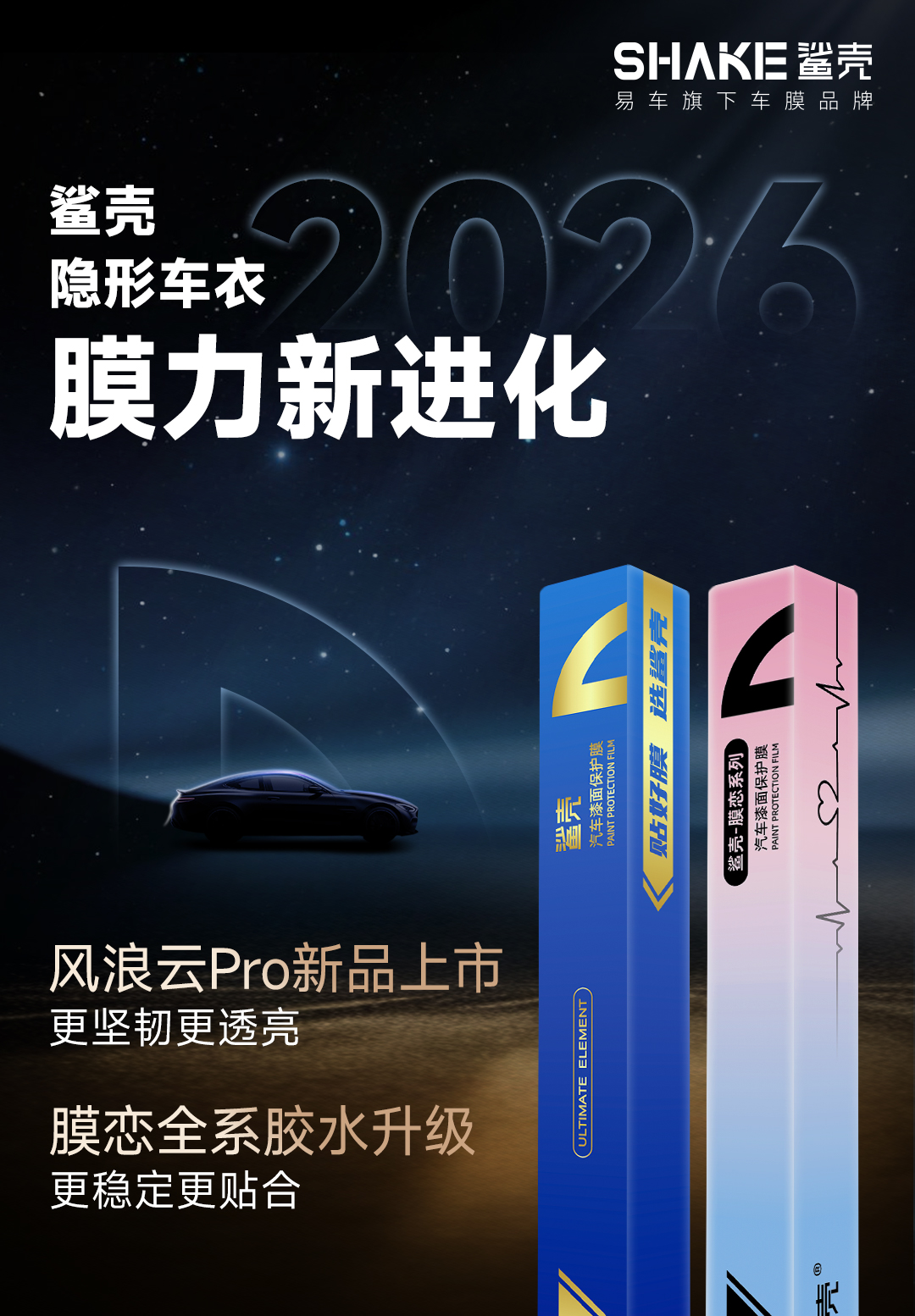
启赴新程 鲨壳隐形车衣2026新品上市
Sou Hu Wang· 2026-01-20 07:58
Core Viewpoint - The launch of new automotive film products by Shark Shell, a brand under Tengyi Technology, emphasizes innovation in coating, substrate thickness, and adhesive quality, responding to the evolving consumer demands in the automotive aftermarket [1][11]. Group 1: Product Innovation - The new Wind and Wave Cloud Pro series focuses on coating innovation and thicker substrates, utilizing imported materials to enhance protective performance [3][4]. - The Wind and Wave Cloud Pro series features a new generation of mirror coatings for superior visual experience and low haze, compatible with high-end automotive paints [3][4]. - The Membrane Love series upgrades to a new generation of acrylic pressure-sensitive adhesive, improving adhesion and stability, addressing common issues like adhesive residue [4][6]. Group 2: Market Understanding - The automotive film market is shifting towards rational consumption, with consumers prioritizing durability and aesthetics over mere availability [7][9]. - Shark Shell has established a comprehensive service network across nearly 300 cities and over 1,000 authorized stores, enhancing user convenience and understanding of consumer needs [7][9]. - The company focuses on three core areas: coating, substrate, and adhesive, to address common pain points in paint protection [9]. Group 3: Strategic Positioning - Shark Shell aims to cater to diverse user needs through differentiated product strategies, targeting both high-performance and cost-effective segments [6][11]. - The company leverages 25 years of experience in the automotive internet industry to provide superior products and services, ensuring vehicle value and safety [11]. - Future plans include continued technological innovation and collaboration with global supply chains to enhance product offerings and user experience [11].

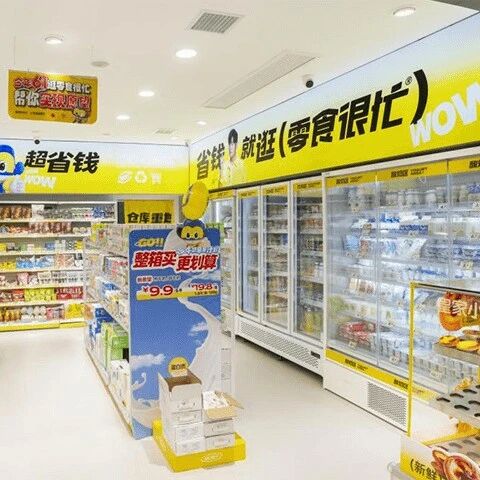
鸣鸣很忙的启示:在「富饶的贫困」中,如何找到真需求?
36氪· 2026-01-19 13:47
Core Viewpoint - The article highlights the significance of Mingming Hen Mang's upcoming listing on the Hong Kong Stock Exchange, marking a milestone for the bulk snack industry and establishing a new paradigm for its development [1][2]. Group 1: Industry Transformation - The bulk snack industry has historically been dominated by traditional thinking, leading to a misalignment between supply and consumer demand, characterized by a plethora of products that fail to meet true consumer desires [6][7]. - Traditional retail has been governed by "shelf thinking" and "traffic thinking," which limits the ability to cater to diverse consumer needs and preferences, especially among younger generations who seek new experiences and personalized offerings [8][10]. Group 2: Mingming Hen Mang's Strategy - Mingming Hen Mang has shifted from a "seller's mindset" to a "user's mindset," actively identifying and meeting consumer needs rather than merely responding to market demands [10]. - The company has introduced a flexible packaging strategy, with 38% of its SKUs available for bulk purchase, allowing consumers to buy as needed, thus breaking free from traditional large packaging constraints [11]. - 34% of Mingming Hen Mang's SKUs are customized products, reflecting a commitment to producing what consumers want rather than what is readily available [13]. Group 3: Market Validation and Consumer Engagement - The company employs a "small-scale trial and rapid iteration" market validation mechanism, testing new products in select stores before a nationwide rollout, which minimizes market risks and gathers authentic consumer feedback [16]. - Consumer feedback directly influences product adjustments, such as packaging improvements and flavor modifications, enhancing the overall user experience [17]. Group 4: Community and Future Expansion - With over 20,000 stores across 1,341 counties, Mingming Hen Mang aims to evolve beyond a snack retailer into a community-centric service provider, addressing various consumer needs [19][20]. - The "snack+" strategy seeks to explore new possibilities in community retail, drawing inspiration from global retail giants like Costco and Trader Joe's, focusing on consumer needs and breaking category boundaries [22][23]. - The company plans to expand its product offerings to include daily necessities, transforming stores into community convenience hubs, thereby enhancing customer loyalty and store efficiency [28][29].
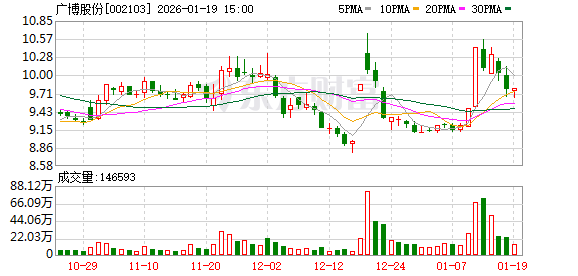
广博股份:公司始终聚焦文创与潮玩核心业务
Zheng Quan Ri Bao· 2026-01-19 09:41
Core Viewpoint - The company, Guangbo Co., Ltd., is focused on its core business in cultural creativity and trendy toys, emphasizing IP resource integration, product innovation, and omnichannel operations [2] Group 1: Business Strategy - The company is committed to enriching its IP matrix and expanding offline experience scenarios to strengthen its business development foundation [2] - The company is optimizing its supply chain as part of its strategy to enhance operational efficiency [2] Group 2: Market Engagement - The company will continue to monitor relevant fields and explore feasible applications based on actual business needs [2] - Any specific implementations that meet disclosure standards will be announced to the market in a timely manner [2]

国产存储龙头纷纷创新高,资金交易从“涨价”迈向“技术成长”逻辑
Di Yi Cai Jing· 2026-01-18 08:45
Core Insights - The global storage industry is undergoing a profound transformation driven by AI technology and a supply crisis, with DRAM contract prices expected to rise by 58% in Q1 2026, particularly for server and mobile DRAM, which may exceed 60% [1][2] - This shortage is characterized as a "structural supply-demand imbalance," with Micron's executives indicating that the shortage may not ease until 2028 [1][2] - The current price surge is attributed to the explosive growth in AI models and inference scenarios, with AI data center storage demand now accounting for 50%-60% of the market [3] Supply and Demand Dynamics - The supply-demand gap in the storage chip market is worsening faster than expected, with Micron's VP stating that the shortage will persist until at least 2028 [2] - UBS and JPMorgan have expressed a consensus that storage chip prices will continue to rise, with predictions for DDR contract prices increasing by 58% and NAND flash by 27% in Q1 2026 [2] - The supply chain is facing challenges, as traditional storage products are experiencing shortages, leading major suppliers like Samsung and SK Hynix to plan significant price increases [2] Market Reactions and Valuation Adjustments - The A-share market has seen significant trading activity in storage stocks, with companies like Biwei Storage, Zhaoyi Innovation, and Jiangbolong reaching new highs, indicating a systematic re-evaluation of the storage industry's valuation logic [1][4] - Investors are focusing on the dual aspects of price increases and technological advancements, which are reshaping the valuation of A-share storage-related companies [4][5] Company Strategies and Growth Projections - Micron is planning to expand its DRAM production through an $1.8 billion acquisition of a facility in Taiwan, which is expected to significantly increase DRAM wafer output starting in H2 2027 [3] - Biwei Storage has projected record revenue and net profit for 2025, with expected revenue between 10 billion to 12 billion yuan, reflecting a year-on-year growth of 49.36% to 79.23% [5][6] - The current price increase is driven by structural demand from AI applications, which is expected to provide a "growth premium" to storage companies, enhancing revenue visibility and sustainability [6]

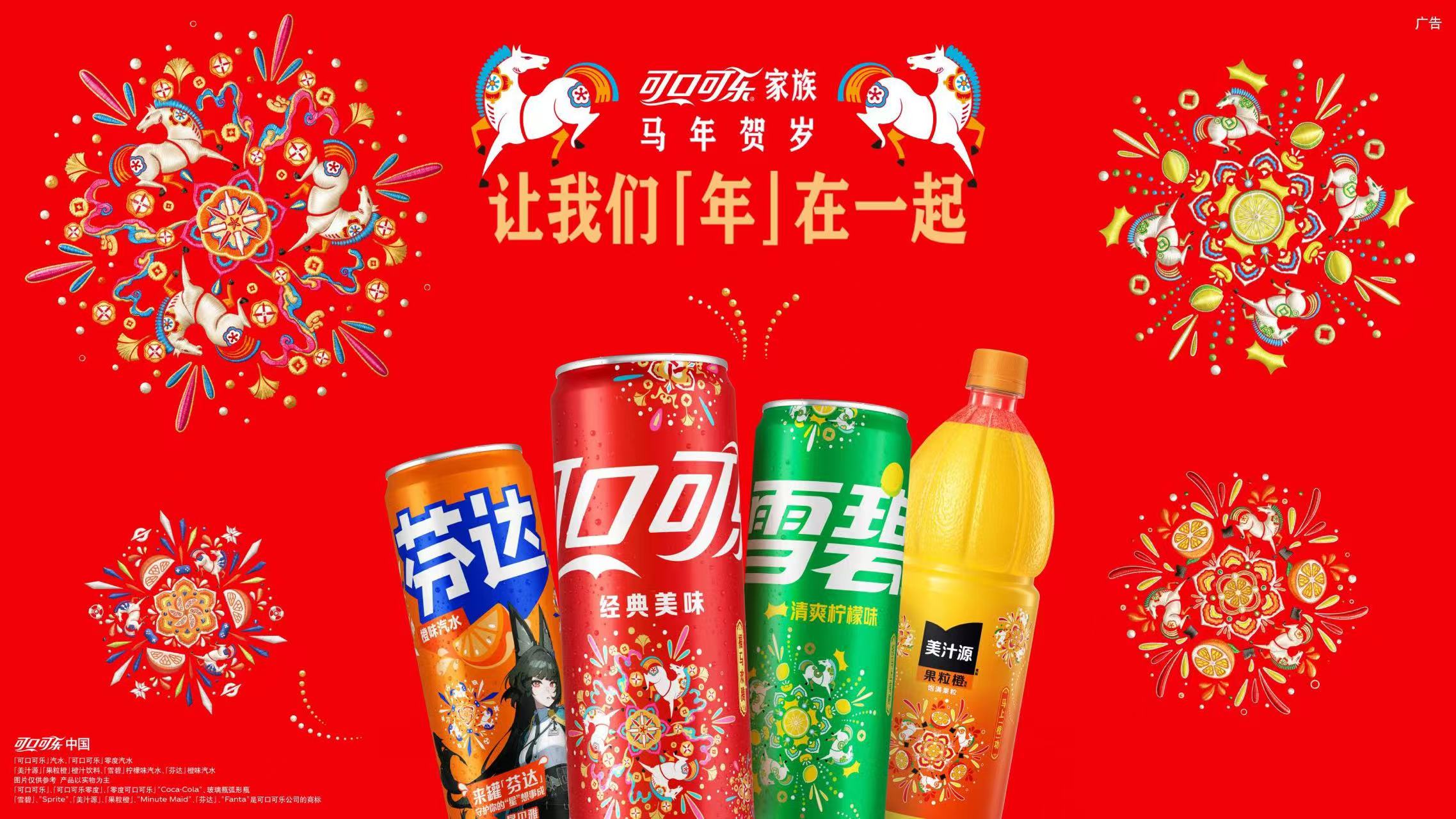
可口可乐中国启动2026马年新春系列活动
Di Yi Cai Jing· 2026-01-18 07:04
Core Viewpoint - Coca-Cola China is launching a series of activities for the 2026 Year of the Horse Spring Festival, focusing on cultural expression, product innovation, and market layout to meet diverse consumer needs during this important holiday [1][3]. Group 1: Event Launch - Coca-Cola China held a themed fireworks display in Chongqing to kick off the 2026 Year of the Horse Spring Festival series, inviting around 700 consumers to participate both offline and online [1][3]. - The fireworks display incorporated elements of the Spring Festival and the Year of the Horse, with live streaming allowing online viewers to engage through comments and interactions [3]. Group 2: Product Innovation - Coca-Cola China has been integrating traditional Chinese culture into product innovation, launching limited edition packaging since the 2022 Year of the Tiger, and continuing with the 2025 Year of the Snake and the upcoming 2026 Year of the Horse [5]. - The 2026 limited edition features designs based on the Year of the Horse and fireworks, incorporating auspicious symbols and traditional embroidery art to enhance the festive product offerings [5]. Group 3: Multi-Brand Collaboration - During the Spring Festival, multiple brands under Coca-Cola China, including Coca-Cola, Sprite, Minute Maid, Fanta, and Costa Coffee, will collaborate to cover various consumer scenarios such as stocking up, family reunions, and entertainment [7]. - These brands will utilize digital interactions and cross-industry collaborations to launch diverse marketing activities tailored to consumer preferences during the holiday [7]. Group 4: Supply Chain and Market Strategy - Coca-Cola China is enhancing its supply chain capabilities by collaborating with three major bottling partners and 46 factories to ensure stable product supply during the peak consumption period of the Spring Festival [8][9]. - A "Market Impact Week" will be initiated before the festival, involving various teams to engage with consumers and gather insights for future product planning and market strategies [8]. - Over the past three years, Coca-Cola China has invested in upgrading multiple production bases to improve efficiency and delivery capabilities, with five factories already modernized [9].

重庆啤酒20260115
2026-01-16 02:53
Summary of Chongqing Beer Conference Call Industry Overview - The overall beer market in 2025 is expected to remain flat, with significant product innovations such as tea-flavored beer and one-liter packaging, and changes in distribution channels, particularly the rise of non-on-premise channels, which are growing rapidly. Online sales account for a low percentage of about 4-5% of total sales [2][6]. Company Performance and Strategy - Uusu beer has seen growth in both domestic and international sales, while Lebao has experienced three consecutive years of growth. However, the Chongqing and Dali brands are facing challenges. International brands like Carlsberg and local brands such as Fenghua Xueyue have achieved double-digit growth [2][4]. - The company plans to launch approximately 300 new products in 2024 to meet diverse consumer demands [2]. - The company emphasizes precise advertising spending and has increased the promotion of one-liter canned products, optimizing brand combinations and improving management efficiency to control costs [3][18]. - The dividend payout ratio is expected to remain around 90%-100% in the coming years, and the company is open to acquisitions that align with its industry chain [3][27]. Sales Channels and Consumer Trends - The beer market is currently in a mature state with no significant demand breakthroughs. The shift from on-premise to off-premise consumption is expected to continue, driven by technological advancements and changes in consumer habits [8][16]. - The company has observed a significant increase in canning rates, from approximately 18% in 2019 to nearly 29% by the third quarter of 2025, reflecting the growing importance of non-on-premise channels [16]. Product Innovation and Future Plans - The company is focused on continuous innovation in flavors, packaging, and sales models, with new products like tea-flavored beer and one-liter cans being introduced [9][10]. - The company has plans to launch non-alcoholic beer products and is exploring high-end products to increase unit prices, such as the one-liter can [10][11]. - Future product launches include Uusu brand's Jin Junmei tea beer and amber lager, as well as various regional products tailored to local market demands [10][11]. Cost Management and Raw Material Procurement - The company has locked in prices for major raw materials and packaging for the upcoming year, expecting cost savings on barley and other materials, with a slight increase in aluminum can prices having a minimal impact [13]. - The overall procurement cost savings are anticipated to positively contribute to gross margins [13]. Market Challenges and Opportunities - The company faces challenges in raising selling prices (SP) due to potential declines in overall demand, which is a significant concern for the industry [14]. - The high-end market is growing, with an increasing share of female consumers, leading to the introduction of products that cater to this demographic [15]. Long-term Strategy and Outlook - The company is focused on implementing the "Sail 27" strategy until 2027, aiming to develop the Chinese market while adjusting to the group's overall direction, including potential expansions into beverage categories following acquisitions [21][22]. - The company is also monitoring the impact of imported beers on the domestic market, although specific data on market share is not available [23]. Conclusion - Chongqing Beer is navigating a challenging market landscape with a focus on innovation, cost management, and strategic growth through new product launches and potential acquisitions, while adapting to changing consumer preferences and market dynamics [2][3][10][14].
