
供需失衡

Search documents
有色金属的投资机遇:流动性、供需、政策与资产的四重奏
Sou Hu Cai Jing· 2025-10-31 02:41
Group 1: Monetary Policy Impact - The Federal Reserve has initiated a rate-cutting cycle, creating a favorable financial environment for the non-ferrous metals sector [2][4] - Historical data shows that previous Fed rate-cutting cycles led to significant increases in non-ferrous metal prices, with copper prices rising from $1,400/ton to $8,700/ton after the 2001 crisis and from $3,000/ton to $10,000/ton post-2008 [3][4] Group 2: Supply and Demand Dynamics - There is a notable supply-demand imbalance in the non-ferrous metals market, particularly for copper, which has led to rising prices [5][6] - Major copper mines, including Kamoa-Kakula, El Teniente, and Grasberg, have faced production halts, exacerbating supply tightness [5][6] - Global refined copper consumption from January to August 2025 reached 18.83 million tons, a 5.90% increase year-on-year, with China's consumption growing by 11.05% [6][7] Group 3: Policy Developments - The Chinese government's "anti-involution" policy aims to address low-price competition and may lead to a new round of supply-side reforms in the non-ferrous metals industry [8][9] - The policy is expected to constrain supply, potentially raising the price floor for metals, particularly in the copper smelting sector [9] Group 4: Investment Opportunities - Non-ferrous metal ETFs, such as 512400, provide efficient investment tools for investors looking to capitalize on the sector's growth [10][12] - The index tracked by the ETF includes leading companies across various segments, offering a balanced exposure to industrial metals, precious metals, and strategic metals [10][12]

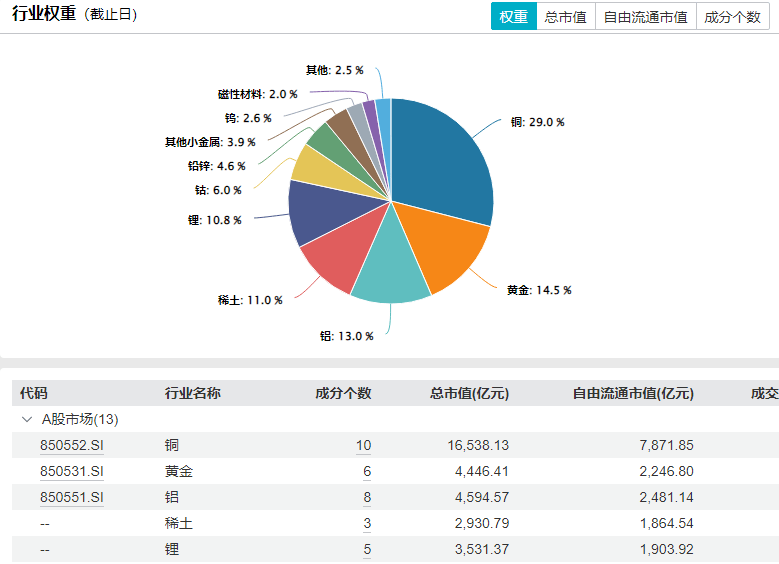
飞天茅台,首次跌破1700元/瓶!
Shen Zhen Shang Bao· 2025-10-28 13:07
Core Viewpoint - The price of Moutai has dropped significantly, with the wholesale reference price for the 2025 53-degree 500ml Moutai falling to 1690 yuan, marking a new low since its listing [1][4]. Price Trends - The 2025 53-degree 500ml Moutai scattered bottle price decreased by 25 yuan to 1690 yuan, while the original box price fell by 20 yuan to 1715 yuan [1][2]. - Other Moutai products also saw price declines, with the 2024 53-degree 500ml original bottle dropping from 1800 yuan to 1780 yuan and the scattered bottle from 1750 yuan to 1735 yuan [2]. Management Changes - On October 27, 2025, Moutai announced the resignation of Chairman Zhang Deqin, who cited work adjustments as the reason for his departure [3][4]. - Chen Hua has been recommended as the new chairman, pending approval from the board and shareholders [3][4]. Market Dynamics - The decline in Moutai prices is attributed to weakened consumer demand and regulatory constraints, with high-end dining scenarios for Moutai seeing a 22% year-on-year drop in opening rates [4][5]. - The implementation of strict alcohol consumption regulations has drastically reduced the proportion of government-related consumption from 40% in 2012 to 0.8% [4][5]. Supply and Demand Imbalance - Increased production of Moutai base liquor has led to a surplus, with 150 million bottles in inventory, 60% of which are unopened, creating downward pressure on prices [5]. - The changing demographics and preferences of consumers, particularly among younger generations, have also contributed to the decline in demand for high-proof liquor [5]. Future Outlook - Short-term price declines may continue, but long-term stability is expected due to the company's measures to control supply and stabilize prices, with a potential price range of 1700 to 2000 yuan [5]. - Moutai's half-year report for 2025 indicated a revenue of 91.094 billion yuan, a 9.16% increase year-on-year, and a net profit of 45.403 billion yuan, an 8.89% increase [6].

跌幅70%!广州朱村让人死心!之前单价2.2万的楼盘,现在7511元……
Sou Hu Cai Jing· 2025-10-27 04:15
Core Viewpoint - The real estate market in Guangzhou, particularly in the Zhu Village and Zengcheng areas, is experiencing significant price declines, with some properties seeing reductions of over 60% from their peak prices [8][10][11]. Price Decline Analysis - Zhu Village's Kewai Garden has dropped from 22,000 yuan per square meter to 7,511 yuan per square meter, indicating a drastic price reduction [1]. - The overall trend shows that many properties in Zengcheng are facing substantial price drops, with over 20 properties experiencing declines exceeding 45% [11]. - Specific examples include the Bi Gui Yuan Yun Ding in Phoenix City, which has seen a 61.22% drop, and the Tian He Garden in Zhu Village, which has decreased by 52.86% [10][11]. Market Dynamics - The decline is attributed to an oversupply in the market, particularly in suburban areas where demand has not kept pace with housing supply [11][12]. - The influx of new housing developments has led to a situation where second-hand properties lack competitiveness, forcing owners to lower prices significantly to attract buyers [11][12]. - The opening of new transportation infrastructure, such as subways, has increased foot traffic in Zengcheng by approximately 30%, providing some potential for future market recovery [12]. Economic and Structural Factors - Zengcheng's economic structure is primarily based on traditional manufacturing, lacking high-end industries that could support property value growth [14]. - The region has seen ample land supply, which, in a stable demand environment, may suppress price increases due to excess inventory [15]. - Despite the challenges, Zengcheng's attractive natural environment and lower price points continue to draw first-time homebuyers, sustaining some level of demand [15].
“金九银十”行情下聚烯烃现实与预期背离的形成原因及后市展望
Chang Jiang Qi Huo· 2025-10-24 03:01
Report Investment Rating There is no information provided regarding the industry investment rating in the given content. Core Viewpoints - In 2025, during the "Golden September and Silver October" period, the polyolefin market deviated from expectations due to intensified supply - demand imbalance, with prices being low. The market is showing bottom characteristics, but upward pressure is significant. Polyethylene is expected to be stronger than polypropylene, and the LP main contract spread will widen, yet the overall pattern remains weakly oscillating [1][44]. Summary by Directory 1. Polyolefin Market Analysis - **Main Contract Trends**: In previous "Golden September and Silver October" periods, polyolefins had a high probability of a bull market. However, in 2025, prices declined instead. By mid - to late October, the LLDPE main contract fell below 6,900 yuan/ton, down over 10% from the beginning of the year, and the PP main contract once reached a low of 6,500 yuan/ton [5]. - **Spot Price Trends**: Polyethylene spot prices were structurally differentiated, with LLDPE having the largest annual decline of up to 30.50%. Polypropylene spot prices were also weak, with a maximum decline of over 10% [8]. - **Main Contract Basis Trends**: In 2025, the polyethylene main contract basis showed an inverted N - shaped downward trend, with an annual range of (0, 1200) yuan/ton. The PP basis was relatively stable, with a range of (0, 600) yuan/ton [11]. - **Contract Month - spread Trends**: As of October 17, the polyethylene 1 - 5 contract month - spread was - 33 yuan/ton, stronger than last month but weaker than last year. The polypropylene 1 - 5 contract month - spread was - 52 yuan/ton, weaker than both last month and last year [16]. - **Main Contract Spread Trends**: Since 2025, the LP main contract spread has oscillated between (0, 650) yuan/ton. As of October 17, it was 323 yuan/ton, up from last month but down from last year [19]. 2. Analysis of the Reasons for the Weak Market - **Weak Downstream Demand**: Despite the peak season, the overall downstream polyolefin operating rate only slightly rebounded and was lower than in previous years. The demand - boosting effect of domestic stimulus policies was diminishing, and downstream enterprises adopted a low - inventory strategy with weak restocking motivation [20]. - **High Supply Pressure**: In 2025, the polyolefin industry was in a capacity expansion cycle. From January to September, 3.93 million tons of polyethylene and 3.66 million tons of polypropylene were put into production, with more planned for the fourth quarter. Although there were many device overhauls in the second and third quarters, the marginal effect decreased, and supply pressure increased [32]. - **Weak Cost Support**: In the third quarter of 2025, crude oil prices weakened. OPEC+ continued to increase production in October, and the fourth - quarter demand was expected to decline, causing the oil price to drop. Other raw material prices also fell, weakening cost support for polyolefins [37]. - **High Inventory Pressure**: As of October 17, polyethylene and polypropylene inventories were at relatively high levels. The inventory digestion was slow, and with the end of "Golden September and Silver October", demand growth was limited, while supply pressure remained, hindering the de - stocking process [40]. 3. Outlook for the Future - **Price Bottoming with Support**: After continuous price declines, the polyolefin market is showing bottom characteristics. International crude oil prices are at a relatively low level, and production profits are severely squeezed, forcing enterprises to adjust production loads. Also, the market has priced in current negative factors, reducing the downward momentum [45]. - **Weakly Oscillating Market with Upward Pressure**: The polyolefin market is in a key stage of supply - demand re - balance. Due to high supply pressure and weak demand, it will continue to oscillate at the bottom. The LLDPE main contract is expected to oscillate between 7,000 - 7,500 yuan/ton, and the PP main contract between 6,900 - 7,200 yuan/ton, with a strategy of shorting on rallies [46]. - **Differentiated Internal Trends**: Polyethylene is expected to be stronger than polypropylene in the fourth quarter due to less new - capacity pressure and better inventory conditions. The LP main contract spread will widen, presenting arbitrage opportunities [47].
Carpenter(CRS) - 2026 Q1 - Earnings Call Transcript
2025-10-23 15:00
Financial Data and Key Metrics Changes - The company reported record earnings with adjusted operating income of $153 million, a 31% increase year-over-year compared to $117.2 million in Q1 FY2025 [4][14] - Adjusted operating margin for the SAO segment reached 32%, up from 26.3% a year ago and 30.5% in the previous quarter [5][16] - Earnings per diluted share was $2.43 for the quarter, marking another record for profitability [15] Business Line Data and Key Metrics Changes - SAO segment net sales excluding surcharge were $533.9 million, up 5% year-over-year but down 3% sequentially [16] - PEP segment net sales excluding surcharge were $87.2 million, down 10% sequentially and down 6% year-over-year [18] - Aerospace and defense sales were up 1% sequentially and 11% year-over-year, with bookings accelerating by 23% over the previous quarter [9][12] Market Data and Key Metrics Changes - The aerospace supply chain is experiencing strengthening demand, particularly in the engine submarket, which saw a 14% sequential increase in sales [9][32] - Medical market sales were down 20% sequentially and 16% year-over-year, primarily due to volatility in medical distribution [10] - Energy market sales were down 5% sequentially but up 8% year-over-year, driven by increasing demand for power generation [11] Company Strategy and Development Direction - The company is focused on expanding profitability and margins through productivity improvements and pricing actions, particularly in the aerospace and defense sectors [5][12] - The Brownfield expansion project is underway, with construction activities on schedule and on budget, expected to accelerate in the second half of FY2026 [20][21] - The company aims to maintain a balanced capital allocation approach, investing in growth while returning cash to shareholders through dividends and share repurchases [22][38] Management's Comments on Operating Environment and Future Outlook - Management expressed confidence in achieving the high end of the earnings guidance for FY2026, projecting operating income of $660 million to $700 million, a 26% to 33% increase over FY2025 [35][36] - The aerospace market is expected to see significant demand growth, with management noting a positive outlook from customers regarding order intake [30][34] - The company anticipates continued pricing power due to a supply-demand imbalance in nickel-based super alloys [26][39] Other Important Information - The company generated $39.2 million in cash from operating activities but reported negative adjusted free cash flow of $3.4 million due to capital expenditures [20] - Liquidity as of the latest quarter was $556.9 million, with a net debt to EBITDA ratio well below one [23] Q&A Session Summary Question: What has happened with jet engine alloy lead times? - Lead times remain extended, with expectations for further increases in orders following positive news from Boeing [44] Question: Can you elaborate on the duration of the new LTAs? - The five new LTAs range from two to five years, with expectations that contract lengths will remain consistent with current levels [52] Question: How are fastener demand trends tracking? - Fastener sales were down 7% sequentially but up 40% year-over-year, with strong order intake expected for calendar year 2026 [48] Question: Is there line of sight to another quarter of sequential A&D growth? - Continued growth in order intake is expected over the next several quarters [63] Question: What is the outlook for the Brownfield expansion project? - Construction is expected to be complete by late FY2027 or early FY2028, with current activities focused on site preparation [70]

产能扩张与需求疲软双重挤压 三聚氰胺市场低迷难改
Zhong Guo Chan Ye Jing Ji Xin Xi Wang· 2025-10-21 22:10
Core Viewpoint - The domestic melamine industry is experiencing a deep adjustment period characterized by supply-demand imbalance, leading to intensified market competition and declining prices since 2025 [1][2]. Supply and Demand Imbalance - The domestic melamine market ended the first half of 2025 with a downward trend, primarily driven by supply-demand imbalance. The production capacity reached 2.31 million tons in 2024 and is expected to increase to 2.6 million tons by the end of 2025, with an additional 940,000 tons of new capacity expected to come online in the following years [2]. - Demand remains weak, particularly from the construction sector, which accounts for nearly 60% of melamine consumption. The sales area of new commercial housing is projected to decline by 12.9% in 2024, and the consumption of melamine in the artificial board industry is expected to drop to 771,100 tons in 2025, a further decrease from 2024 [2]. Profit Margin Compression - The supply-demand pressure has directly impacted corporate profitability, with melamine prices dropping by 20% year-on-year in 2025. As of mid-October, the cash reference price for melamine was 5,084 yuan per ton, while production costs for companies using external urea ranged from 4,778 to 4,856 yuan, resulting in a profit margin of only 228 yuan, down 16 yuan from the previous week [3]. - The core reasons for the shrinking profit margins include persistent weak demand and limited support from raw material prices. The average price of urea in the third quarter of 2025 was 1,762 yuan, reflecting a 6.37% decline from the previous quarter and a 17.27% year-on-year drop [3]. Export Challenges - The export volume of melamine reached 427,300 tons in the first eight months of the year, a 6.2% increase year-on-year. However, the average export price fell by 166.3 USD, resulting in a situation where increased export volume did not translate into higher profits [4]. Industry Structural Adjustments - The industry is witnessing three major trends: increased concentration of enterprises, heightened regional concentration, and a shift towards green and high-end transformation. The market share of the top five melamine companies (CR5) rose from 38% in 2020 to 52% in 2025, indicating a 14 percentage point increase over five years [5]. - By the end of 2025, the total melamine production capacity in China is expected to reach 2.6 million tons, with five regions (Xinjiang, Shandong, Sichuan, Henan, and Shanxi) accounting for 77.5% of this capacity [5]. - The tightening of environmental regulations and the upgrading of downstream demand are driving the need for green and high-end transformation in the industry. The implementation of the new national standard for formaldehyde emissions in 2026 is expected to indirectly boost the demand for environmentally friendly melamine [5][6].
面板价格观察 | 预估10月份起电视面板价格下行压力将逐渐扩大
TrendForce集邦· 2025-10-21 04:12
Group 1: Core Insights - The overall demand for TV panels has weakened as brand customers' procurement momentum declines after the peak season, leading to a pessimistic outlook for the upcoming Double Eleven sales event [5][6] - Panel manufacturers are implementing capacity adjustments, but this has not yet changed the supply-demand imbalance, resulting in increased pressure on TV panel prices starting in October [6][7] - The price trends for various TV panel sizes in October indicate that 32-inch and 43-inch panels are expected to remain stable, while 50-inch and 55-inch panels may decrease by $1, and 65-inch and 75-inch panels may decrease by $2 [6][7] Group 2: Monitor and Notebook Panel Insights - The demand for monitor panels has also weakened, with only limited domestic projects providing some support; prices for mainstream specifications are expected to remain stable [7][8] - In the notebook panel segment, most brand customers are experiencing a correction in demand, leading to a softening of panel prices as manufacturers aim to maintain relationships with clients; low-end TN models are expected to remain stable, while some IPS models may see a decrease of $0.1 [8]

白银价格暴涨,库存告急,影响你我生活大变局
Sou Hu Cai Jing· 2025-10-18 08:40
Core Insights - The global silver market is experiencing a significant crisis, with unexpected price fluctuations and supply shortages anticipated by autumn 2025 [1][10] - The current market dynamics are influenced by a combination of industrial demand, investment interest, and policy uncertainties, leading to a precarious situation for both buyers and sellers [9][12] Supply and Demand Dynamics - Industrial demand for silver is increasing, particularly in sectors like renewable energy and solar power, while mining production is unable to keep pace, resulting in a supply-demand imbalance [5][12] - The available silver in London warehouses has drastically decreased from 850 million ounces in 2019 to only 200 million ounces in 2025, indicating a severe reduction in inventory [3][5] Market Behavior and Investor Sentiment - The implied leasing rate for silver has surged to 40%, indicating a high cost of borrowing silver, which has made holders of physical silver highly sought after [3][12] - The silver ETF holdings have increased by 12.8% from February to October 2025, reflecting growing investor interest and further tightening the available supply in the market [5][12] Transportation and Logistics Challenges - There are significant logistical challenges in transporting silver, particularly between the U.S. and London, leading to inefficiencies and increased costs for buyers awaiting delivery [7][9] - Potential policy changes, such as import taxes or government shutdowns, could exacerbate these logistical issues, prolonging the crisis and driving prices higher [7][9] Broader Economic Implications - Rising silver prices are expected to impact consumer goods, including appliances and automobiles, as manufacturers face increased costs [9][12] - The current situation is a reflection of broader economic tensions, with market confidence remaining fragile and susceptible to rapid changes [12][14]
“负电价”是电力市场改革的“信号灯”
Zhong Guo Dian Li Bao· 2025-10-16 06:24
Core Viewpoint - The emergence of negative electricity prices in Sichuan is a reflection of the supply-demand imbalance in the electricity market, driven by an oversupply of electricity from renewable sources and a decrease in demand due to seasonal and economic factors [1][2][3] Supply and Demand Dynamics - Negative electricity prices in Sichuan reached -48.74 yuan/MWh and -49.26 yuan/MWh on September 20 and 21, respectively, with a cumulative duration of -50 yuan/MWh lasting 45 hours [1] - The supply structure in Sichuan is heavily reliant on hydropower, which accounts for 73% of installed capacity, while electricity demand has decreased by 18.1% year-on-year due to lower temperatures and economic adjustments [1] - Similar instances of negative pricing occurred in Shandong and Zhejiang, attributed to significant drops in electricity demand during holidays, despite high renewable energy generation [2] Industry Implications - The occurrence of negative prices is seen as a natural outcome of supply-demand dynamics, not a sign of market failure, and can serve as a signal for necessary adjustments within the industry [3] - Power generation companies are not necessarily losing money during negative pricing periods due to existing subsidies and mechanisms that provide financial stability [3] - The phenomenon encourages power generation companies to innovate, such as integrating energy storage solutions and enhancing flexibility in coal-fired power plants [3] Consumer Impact - Current residential electricity prices are not directly linked to market fluctuations, ensuring stability for consumers despite negative pricing in the wholesale market [4] - Experts caution that frequent occurrences of negative pricing could indicate structural issues within the energy system that need to be addressed through policy and market mechanisms [4] Recommendations for Improvement - Suggestions include promoting the synergy between energy storage and renewable energy, enhancing inter-provincial electricity transmission capabilities, and refining market governance mechanisms to mitigate the frequency of negative pricing [5] - The overall sentiment is that negative pricing should be viewed as a temporary challenge that can lead to positive industry transformation if managed effectively [5]
国泰君安期货商品研究晨报:能源化工-20251015
Guo Tai Jun An Qi Huo· 2025-10-15 02:06
1. Report Industry Investment Ratings - No specific industry investment ratings are provided in the report. 2. Core Views of the Report - The report analyzes the market trends of various energy - chemical futures on October 15, 2025. Overall, many commodities are under downward pressure due to factors such as weak demand prospects in the oil market, tariff policies, and high inventory levels. Some commodities are in a state of shock or have short - term trading opportunities, but the long - term outlook remains cautious [2][9]. 3. Summary by Commodity PX, PTA, MEG - **PX**: The cost - end support from crude oil is weak, and the unilateral trend is weak. However, there may be positive factors in the aromatic hydrocarbon segment. It is recommended to pay attention to the long PXN strategy. The expected device maintenance this week will lead to a decline in the operating rate, but the supply - demand gap still exists [4][9]. - **PTA**: Hold the 1 - 5 reverse spread. The unilateral trend is weak. The cost support from the polyester industry chain is weak, and the spot market supply in East China is still sufficient [9]. - **MEG**: The supply is in an oversupply pattern, and the unilateral trend is weak. The overall load will be slightly adjusted down this week, and the load in October is expected to reach its peak. The impact of the US fee policy on ethane producers is limited [10]. Rubber - The rubber market is in a state of shock operation. The trading volume and open interest have decreased, and the basis has strengthened. The inventory in Qingdao has decreased slightly, and the domestic butadiene rubber market is weak [11][12][14]. Synthetic Rubber - The synthetic rubber market is in a short - term weak operation. The fundamental pressure has increased, with high supply and inventory pressure. The cost end is also under pressure, and the macro - trade conflict may further affect the market [15][17]. Asphalt - The asphalt price has declined with the oil price. The weekly production has increased, the factory inventory has increased, and the social inventory has decreased. The trend intensity is weak [19][32]. LLDPE and PP - **LLDPE**: The trend is weak. The market is affected by tariff policies, and the inventory pressure is large. The cost support from crude oil is limited, and the downstream demand is mainly for rigid replenishment [33][34]. - **PP**: The trend is still weak. The market is suppressed by factors such as the resurgence of the trade war, the sharp decline in oil prices, and high supply. The short - term situation is difficult to reverse [37][38]. Caustic Soda - In the short term, do not chase short positions. The supply pressure in Shandong and Hebei is not large, and the demand from alumina plants in Hebei is strong. The cost support is strong, but the rebound height may be limited [41][43]. Pulp - The pulp market is in a state of shock operation. The spot price is basically stable, and the futures market is in a consolidation stage. The port inventory is at a relatively high level, and the downstream procurement is mainly for rigid demand [46][49]. Glass - The price of glass original sheets is stable. The market price is slightly weak, and the downstream demand is average. The trend intensity is weak [51][52]. Methanol - The methanol market is under shock pressure. The spot price index has increased slightly, but the market atmosphere has weakened. The port inventory has accumulated, and the upstream inventory needs to be closely monitored [54][57]. Urea - In the short term, the market is in a shock state, and the medium - term trend is under pressure. The spot transaction has improved, but the social inventory is high, and the domestic demand is weak. The price may continue to decline [59][61]. Styrene - Stop the profit of short positions. The decline in crude oil prices has led to a downward shift in the valuation center of chemicals. The inventory accumulation expectations of pure benzene and styrene in October have turned into destocking expectations [62][63]. Soda Ash - The spot market of soda ash has changed little. The market is in a weak shock state, and the downstream is mainly for rigid demand. The short - term market is expected to be stable [64][65]. LPG and Propylene - **LPG**: It is relatively resistant to decline at a low level. The price of CP paper goods has decreased, and the PDH operating rate has declined [67][71]. - **Propylene**: The demand has weakened, and it is in a short - term weak operation [67]. PVC - The PVC market trend is weak. Affected by tariff policies and inventory pressure, the supply is high, the domestic demand is weak, and the social inventory continues to accumulate [74]. Fuel Oil and Low - Sulfur Fuel Oil - **Fuel Oil**: The price center has reached a new low this year, and the short - term weakness continues. - **Low - Sulfur Fuel Oil**: It has continued to decline, and the price difference between high - and low - sulfur in the overseas spot market has rebounded slightly [77]. Container Freight Index (European Line) - The container freight index (European line) is in a shock market. The futures prices of different contracts have different changes, and the freight rate index shows a mixed trend [79].