避险需求

Search documents
避险需求减退叠加美联储通胀预警 黄金或迎三周来首周下跌
news flash· 2025-06-20 02:14
避险需求减退叠加美联储通胀预警 黄金或迎三周来首周下跌 金十数据6月20日讯,黄金正迈向三周来的首次周度下跌,中东紧张局势缓和削弱了避险需求,而美联 储的通胀警告令降息预期降温。周五金价波动不大,本周累计下跌近2%。美国总统特朗普的发言人表 示,将在两周内决定是否参与以色列对伊朗的袭击,这缓解了地区全面战争威胁能源供应并推高通胀的 担忧。局势缓和之前,美联储主席鲍威尔曾警示关税政策带来的通胀风险。这可能加大美联储降息难 度,对黄金构成利空。尽管今年金价仍累计上涨约30%,且距离4月创下的3500美元历史高点不远,但 本周已有迹象显示,鉴于金价处于高位,投资者正转向白银和铂金作为避险选择。华尔街大行对黄金能 否延续创纪录涨势存在分歧。高盛重申明年4000美元的预期,而花旗预计2026年金价将回落至3000美元 下方。 ...
避险需求与鲍威尔谨慎态度支撑美元 瑞郎剧烈波动,英镑短线跳水
Sou Hu Cai Jing· 2025-06-19 12:58
Group 1: US Dollar and Federal Reserve - The US dollar has been supported by safe-haven demand due to potential conflicts in the Middle East and the possibility of US involvement [1] - Federal Reserve Chairman Jerome Powell's cautious stance on inflation has reinforced the dollar's performance [1] - Goldman Sachs strategists expect the Fed to lower interest rates twice this year despite raising short-term inflation expectations [1] Group 2: UK Pound and Bank of England - The Bank of England maintained the benchmark interest rate at 4.25%, aligning with market expectations, with a 6-3 voting outcome [4] - The sentiment shifted from "the central bank will fight inflation" to "the rate cut window is opening" following the decision [5] - Market participants are closely monitoring labor market data and energy prices for future policy direction [6] Group 3: Japanese Yen and Government Bonds - The USD/JPY exchange rate showed an upward trend amid ongoing geopolitical concerns, with the dollar outperforming the yen [7] - Japan plans to reduce its government bond issuance by 500 billion yen for the fiscal year 2025/2026, adjusting the issuance of various bond maturities [7] Group 4: Swiss Franc and Swiss National Bank - The Swiss National Bank lowered interest rates by 25 basis points to 0%, marking the sixth rate cut since March 2024 [8] - The accompanying downward adjustment of inflation expectations and cautious outlook on the global economy significantly impacted the currency market [8]

理财产品跟踪报告2025年第3期:避险需求引导新发结构,固收类理财、债券型基金、人寿保险占主流
Huachuang Securities· 2025-06-19 12:32
Investment Rating - The industry investment rating is not explicitly stated in the report, but the overall market trend indicates a preference for fixed income and low-risk products, suggesting a cautious outlook for the industry. Core Insights - The report highlights that the demand for risk-averse investment products is driving the issuance of new structured financial products, with fixed income wealth management products, bond funds, and life insurance dominating the market [1][4]. - During the period from May 31 to June 13, 2025, a total of 2,530 new wealth management products were launched, with closed-end net value products being the most prevalent [11][16]. - The report indicates a significant shift towards fixed income products, with 98.26% of new products being fixed income, reflecting a conservative risk appetite among investors [11][16]. - The issuance of public funds saw an increase, with 55 new funds launched, totaling 39.948 billion units, driven primarily by the first week of June [23][24]. - The bond fund segment continues to gain traction, with its share rising from 47.15% to 58.77%, indicating a strong preference for low-risk investment options [24][31]. - Life insurance products are also seeing a resurgence, particularly traditional life insurance, which accounted for 81.5% of new products, reflecting a stable demand for guaranteed returns [41][42]. Summary by Sections 1. Bank Wealth Management Products - The market saw the issuance of 2,530 new wealth management products, with 78.50% being closed-end net value types and 83.00% classified as medium-low risk [11][16]. - Fixed income products dominate the new offerings, with 98.26% of new products being fixed income, indicating a conservative investor sentiment [11][16]. - The report notes a clear differentiation in product offerings between state-owned wealth management companies and city commercial banks, with the former focusing on national markets and the latter on local markets [17][18]. 2. Fund Products - A total of 55 new public funds were launched, with a total issuance of 399.48 billion units, marking an increase from the previous period [23][24]. - Bond funds have seen a significant increase in issuance, now accounting for 58.77% of new funds, reflecting a shift towards safer investment options amid market volatility [24][31]. - The report highlights a decline in the issuance of equity funds, with only 26 new equity funds launched, representing a significant drop in both number and total issuance [25][31]. 3. Insurance Products - A total of 34 new insurance products were launched, with life insurance products increasing by 50% compared to the previous period [41][42]. - Traditional life insurance products remain the most popular, making up 81.5% of new offerings, driven by their clear protection functions and stable returns [42]. - The report indicates a trend towards diversification in annuity products, with a mix of retirement and education-focused offerings [43].
DLSM外汇:黄金逼近3400美元,避险情绪与美元强势能否长期共存?
Sou Hu Cai Jing· 2025-06-18 15:04
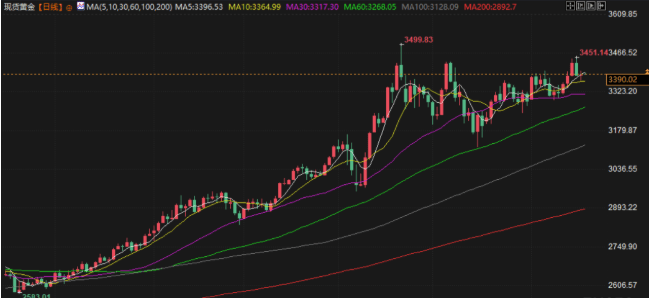
随着以色列与伊朗冲突的持续升级,黄金价格在周二小幅走高,现货金交投逼近3400美元/盎司关口, 展现出地缘政治紧张局势下的避险特性。然而,美元的同步走强对金价构成一定压制,使得涨幅受限。 市场目前聚焦于北京时间周三即将召开的美联储政策会议和鲍威尔的表态,这或将成为决定贵金属下一 阶段走势的关键节点。 从目前盘面来看,地缘政治是支撑黄金上涨的核心因素。伊朗与以色列的对峙不断发酵,中东局势牵动 全球投资者神经,资金持续涌向避险资产,黄金首当其冲成为受益标的。但与此同时,美元指数的持续 攀升却削弱了黄金的上涨动力。通常而言,强势美元会提升持有黄金的机会成本,抑制国际买盘需求。 值得注意的是,白银市场表现更为抢眼。现货银突破37美元/盎司,创下2012年2月以来新高,并被花旗 看好未来6-12个月内可能升至40美元。这一预期主要基于白银工业需求增长(尤其在绿色能源、光伏与 电动车领域)与投资需求同步上升的双重推动。 其他贵金属如铂金和钯金也跟随上涨,反映出整体贵金属板块在避险和实物需求交汇的推动下呈现共 振。 但市场真正的关键变量仍在于美联储的政策动向。如果美联储维持当前利率区间不变,且在新闻发布会 中传递出对通胀放 ...
DLS外汇:避险需求回归 美元缘何逆势上涨?美联储利率前景成变量
Sou Hu Cai Jing· 2025-06-18 15:04
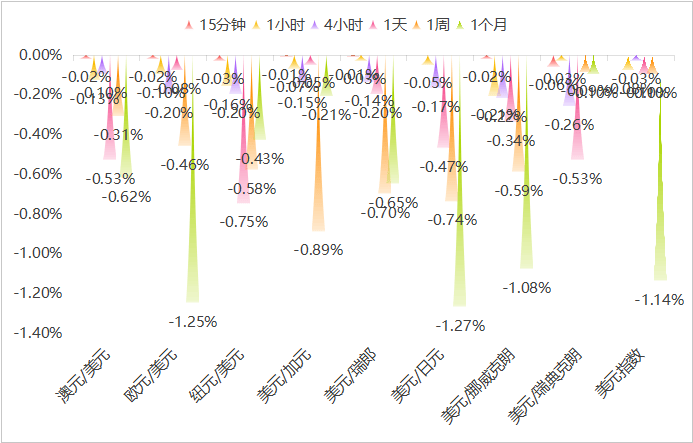
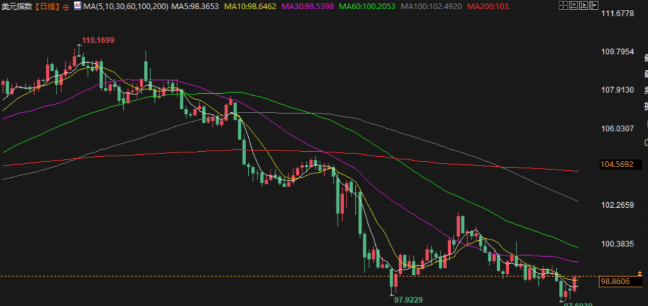
Group 1 - The core viewpoint of the articles indicates that despite weak retail sales data in the US and cautious consumer spending, the US dollar has strengthened against major currencies, with the dollar index rising by 0.64% to 98.8 points, suggesting a shift in market drivers from economic fundamentals to geopolitical risks and monetary policy expectations [1][3][4] Group 2 - The geopolitical tensions in the Middle East, particularly Israel's military actions against Iran, have escalated global risk sentiment, leading to a resurgence of the dollar's safe-haven status [3] - The Federal Reserve's policy outlook is a focal point for the market, with expectations that the Fed will maintain interest rates in the upcoming meeting, while investors are keenly watching for signals regarding future rate cuts or a prolonged period of high rates to combat persistent core inflation [3][4] - Specific currency movements include the euro declining by 0.68% to 1.1481 USD, influenced by disappointing economic data from the Eurozone and concerns over the European Central Bank's policy space, and the British pound falling by 1.08% to 1.3430 USD amid worries about the UK's economic recovery [3][4] - The Japanese yen has shown a notable decline, with the dollar rising by 0.4% to 145.32 yen, as the Bank of Japan maintained its dovish stance and indicated a slowdown in balance sheet reduction [4] - The Australian dollar has decreased by 0.8% to 0.6474 USD, reflecting heightened risk aversion among global investors, exacerbated by volatility in the commodity markets and weak demand in the Asia-Pacific region [4] - The upcoming Federal Reserve meeting is expected to influence the dollar's trajectory, with potential hawkish signals from the Fed likely to support further dollar strength [4]
白银评论:银价早盘压力位震荡,承压空单突破追多布局。
Sou Hu Cai Jing· 2025-06-18 06:01
Fundamental Analysis - Silver prices are experiencing a narrow range of fluctuations, with investors focusing on the Federal Reserve's dot plot for 2025 to assess potential adjustments to the 50 basis points rate cut [1] - The market is pricing in a 65.2% probability of a 50 basis points rate cut or more by the end of December, while the likelihood of maintaining the current rate is only 6.6% [1] - Recent comments from Federal Reserve officials indicate concerns over inflation, particularly due to potential tariff policies from the Trump administration that could increase prices [1] - The current economic landscape is characterized by multiple uncertainties, including tariffs and geopolitical conflicts, leading the Federal Reserve to favor maintaining high interest rates to address potential inflation risks [1] Silver Market Outlook - Silver has outperformed gold in the current risk-off environment, with spot silver prices rising nearly 2% to reach a 13-year high of $37.22 per ounce [1] - Citigroup forecasts that silver prices could further rise to $40 within the next 6 to 12 months, driven by both safe-haven demand and increasing industrial demand [1] - In contrast, gold's price increase has been more moderate due to its stronger safe-haven characteristics and lack of industrial demand support [1] Gold Market Outlook - The gold market will be influenced by multiple factors, including persistent geopolitical risks, particularly in the Middle East, which will continue to support gold prices [2] - The strength of the US dollar and the cautious stance of the Federal Reserve may limit the upside potential for gold prices [2] - Investors are advised to closely monitor the Federal Reserve's policy guidance, dollar movements, and developments in the Middle East [2] - Long-term, a low interest rate environment and global economic uncertainty will enhance gold's appeal, although short-term volatility may increase [2] Market Data - Current spot gold price is approximately $3399 per ounce [2] - Current spot silver price is $36.32 per ounce [2] Financial Market Highlights - Key economic data to watch includes the UK May CPI year-on-year rate and retail price index, as well as US May building permits and housing starts [2] - The US dollar index is currently in a fluctuating rebound phase, with a focus on the resistance level at 100.00 [2]
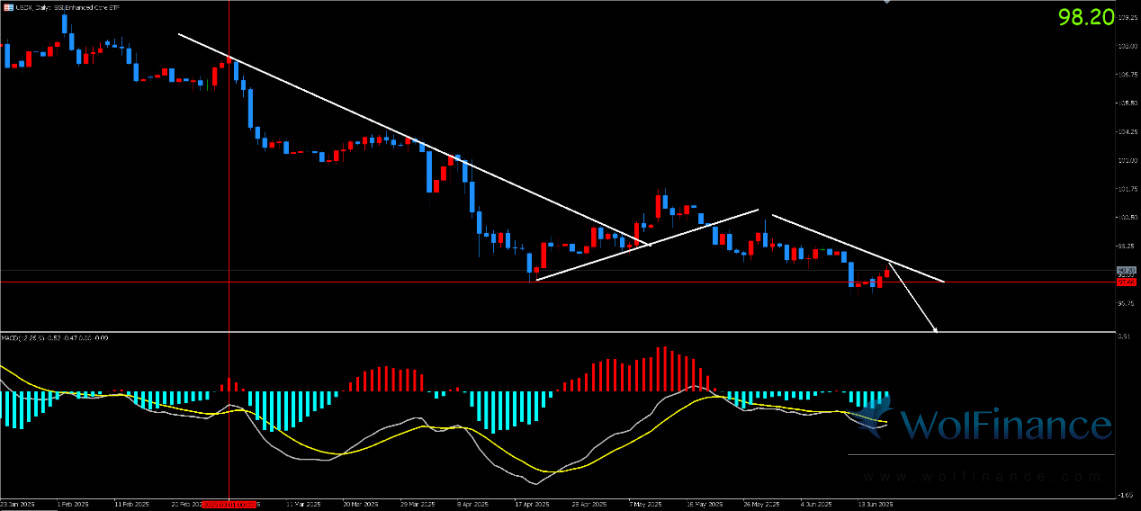
避险需求或支撑金价,黄金股板块午后上行,黄金股票ETF(517400)涨超0.6%
Mei Ri Jing Ji Xin Wen· 2025-06-18 05:26
Group 1 - The situation has rapidly escalated following Israel's attack on Iran, leading to increased risk aversion and a rise in gold prices, which have once again surpassed 3400 [1] - Market sentiment is being affected by trade negotiations and geopolitical developments, resulting in increased volatility in gold prices; a "double top" pattern has formed, indicating potential resistance at the previous high of 3430 [1] - In the medium to long term, factors such as the Federal Reserve entering a rate-cutting cycle, increasing uncertainty in overseas macro policies, and a global trend towards de-dollarization are expected to provide support for gold prices, suggesting opportunities for strategic buying during pullbacks [1] Group 2 - The gold stock ETF (code: 517400) tracks the SSH Gold Stock Index (code: 931238), which is compiled by China Securities Index Co., Ltd., selecting 50 large-cap companies involved in gold mining, smelting, and sales to reflect the overall performance of the gold industry [1] - The index constituents include gold mining companies and jewelry firms, showcasing significant industry concentration [1] - Investors without stock accounts can consider the Guotai CSI Shanghai-Shenzhen-Hong Kong Gold Industry Stock ETF Initiated Link C (021674) and Link A (021673) [1]
银价飙升至13年新高 美元走强限制黄金涨幅
Jin Tou Wang· 2025-06-18 03:12
Core Insights - The geopolitical tensions between Iran and Israel have increased demand for safe-haven assets, yet a strong US dollar has limited the price increase of gold [1][2] - Spot gold rose by 0.14% to $3389.49 per ounce, while spot silver surged to a 13-year high, increasing by 2.32% to $37.13 per ounce [1][2] Economic Indicators - May retail sales data showed a larger-than-expected decline of 0.9% month-on-month, marking the largest drop in four months, indicating consumer caution amid trade uncertainties and tariff pressures [3] - Revenue from automobile and parts dealers fell by 3.5%, while gas station revenue decreased by 2.0%, and service sector indicators also showed a downturn [3] - Core retail sales increased by 0.4%, suggesting that consumer spending is still supported by robust wages, but overall economic slowdown signals cannot be ignored [3] Market Analysis - Michael Pearce, Deputy Chief Economist at Oxford Economics, noted that tariffs have distorted the timing of commodity purchases, and the risk of economic slowdown is increasing in the second half of the year [3] - Typically, economic uncertainty benefits gold prices; however, the strong performance of the dollar has constrained the potential for gold price increases [3]
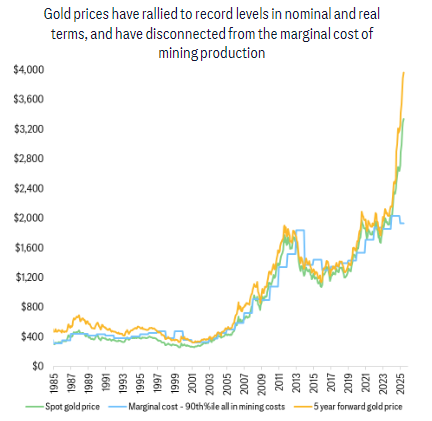
黄金大顶将至?花旗拉响警报:年底恐开启20%下跌周期!
华尔街见闻· 2025-06-17 11:01
Group 1: Gold Market Outlook - The core view is that gold prices are expected to decline below $3000 per ounce in the coming quarters, marking the end of the current record rally [1][2] - Citigroup analysts predict that gold prices will peak between $3100 and $3500 per ounce in Q3 of this year, before gradually falling to a range of $2500 to $2700 per ounce by the second half of 2026, representing a decline of approximately 20-25% from current forward prices [2] - The report outlines three scenarios for gold price movements: a base case (60% probability) where prices remain above $3000 per ounce for the next quarter before declining, a bullish case (20% probability) where geopolitical tensions and inflation risks push prices to new highs, and a bearish case (20% probability) where resolution of tariff issues leads to a sharp price drop [4] Group 2: Factors Influencing Gold Prices - Short-term, gold is expected to maintain high prices in Q3 due to strong investment demand [5] - The rise in gold prices is primarily driven by concerns over tariffs, Federal Reserve policies, and geopolitical risks, rather than central bank purchases; resilient jewelry consumption also supports prices [6] - Global gold expenditure as a percentage of GDP has reached 0.5%, the highest level in the past fifty years, indicating strong investor preference for gold as a safe-haven asset [7] Group 3: Future Economic Conditions - In Q4, global growth confidence may improve slightly, particularly with the implementation of U.S. stimulus budgets, which could reduce safe-haven sentiment; a potential shift towards more moderate trade policies under Trump may also decrease market uncertainty [9] - Expectations of a shift from tightening to a neutral stance by the Federal Reserve could further diminish gold's appeal as a non-yielding asset [9] - Historical data over the past 55 years shows that when investment demand declines, gold prices tend to fall, as price adjustments lead to reduced jewelry consumption and encourage inventory holders to sell [10] Group 4: Industrial Metals Outlook - In contrast to gold, Citigroup maintains a structurally bullish outlook on industrial metals despite short-term pressures from tariffs and weak demand [11] - The aluminum market is particularly favored, with the report highlighting aluminum as a "future-facing" metal, constrained on the supply side by energy intensity and driven on the demand side by strong growth in AI data centers, humanoid robots, and decarbonization processes [12][13] - Citigroup forecasts a supply shortage in aluminum over the next five years at current price levels, necessitating prices to rise above $3000 per ton to incentivize sufficient supply growth [14]

避险退潮+美联储转向,黄金开启大跌之路?
Hua Er Jie Jian Wen· 2025-06-17 08:03
Group 1 - The core viewpoint of the report is that gold prices, which have surged this year, are expected to decline below $3000 per ounce in the coming quarters, marking the end of a record rally [1] - Citigroup analysts predict that gold prices will peak between $3100 and $3500 per ounce in Q3 of this year, before gradually falling to a range of $2500 to $2700 per ounce by the second half of 2026, representing a decline of approximately 20-25% from current forward prices [3] - The report outlines three scenarios for gold price movements, with the base case (60% probability) suggesting prices will remain above $3000 per ounce for the next quarter before gradually declining [5] Group 2 - In the short term, gold is expected to maintain high prices in Q3, primarily supported by strong investment demand, driven by concerns over tariffs, Federal Reserve policies, and geopolitical risks, rather than central bank purchases [6] - The long-term outlook indicates that the core logic behind the expected decline in gold prices is the decrease in safe-haven demand [7] - The report suggests that by Q4, global growth confidence may improve slightly, particularly with the implementation of U.S. stimulus budgets, which could reduce safe-haven sentiment and lower the uncertainty premium in the market [9] Group 3 - In contrast to gold, Citigroup maintains a structurally bullish outlook on industrial metals in the medium term, despite short-term pressures from tariffs and weak demand [10] - The report highlights aluminum as a favored metal, emphasizing its future-oriented applications and the expected supply shortage that will require prices to rise above $3000 per ton to incentivize sufficient supply growth [11]