
通胀

Search documents
资金持续涌入金银资产!机构:看好长期表现,非投机过度
Shang Hai Zheng Quan Bao· 2026-01-12 23:22
Core Viewpoint - The prices of gold and silver continue to surge, reaching new historical highs, driven by multiple factors including geopolitical tensions, U.S. fiscal risks, and strong demand for safe-haven assets [1][2][3][4]. Group 1: Price Movements - On January 12, the main silver contract in Shanghai opened significantly higher at 20,881 CNY/kg, with a peak of 20,950 CNY/kg, marking a 14.07% increase [1] - COMEX silver rose over 6%, reaching 84.52 USD/oz, while London spot silver hit a high of 84.589 USD/oz, with an increase of over 5% [1] - COMEX gold reached 4,612.7 USD/oz, and the Shanghai gold main contract saw a 3.07% rise, both setting new historical highs [1] Group 2: Factors Driving Price Increases - Geopolitical risks are high, enhancing market demand for safe-haven assets like gold and silver [3] - U.S. fiscal risks are increasing due to the Trump administration's economic policies, raising concerns about the sustainability of U.S. debt and diminishing the attractiveness of dollar assets [3][4] - Central banks globally are showing a strong willingness to increase gold reserves due to economic uncertainties [3] Group 3: Investment Trends - In 2025, gold and silver saw substantial inflows, with over 5.5 billion shares of gold ETFs net purchased, and the largest gold ETF in China, Huaan Gold ETF, growing from under 30 billion CNY to over 90 billion CNY [5][6] - As of December 2025, China's central bank held 7.415 million ounces of gold, continuing a 14-month streak of increasing gold reserves [6] - In the first seven trading days of 2026, gold ETFs saw net purchases exceeding 400 million shares, with Huaan Gold ETF approaching 100 billion CNY [6] Group 4: Long-term Outlook - Analysts predict that gold and gold stocks will have significant potential in 2026, driven by ongoing monetary easing and geopolitical factors [7] - The investment logic surrounding gold has shifted from short-term economic indicators to a focus on long-term structural risk hedging [7] - Gold is increasingly viewed as a strategic long-term hedge, enhancing portfolio resilience amid policy uncertainties and fiscal vulnerabilities [7][8]
美联储威廉姆斯暗示短期内没有降息的理由
Sou Hu Cai Jing· 2026-01-12 23:14
Core Viewpoint - The President of the New York Federal Reserve, Williams, anticipates a healthy U.S. economy by 2026 and suggests there is no reason for interest rate cuts in the short term [1] Group 1: Monetary Policy - The FOMC has shifted monetary policy from a moderately restrictive stance to a level close to neutral, which is conducive to supporting labor market stability and pushing inflation back to the 2% target [1] - It is crucial for the Federal Reserve to bring inflation back to the 2% target while avoiding unnecessary risks to the labor market [1] Group 2: Economic Forecast - Williams projects GDP growth for this year to be between 2.5% and 2.75%, with the unemployment rate stabilizing this year and declining in subsequent years [1] - In terms of inflation, he expects price pressures to peak in the first half of this year between 2.75% and 3%, averaging 2.5% for the year, and returning to 2% by 2027 [1]
1月13日收盘:道指标普再创新高,市场暂时忽略美联储独立性风险
Xin Lang Cai Jing· 2026-01-12 21:06
Core Viewpoint - US stock market indices, including the Dow Jones and S&P 500, reached historical highs despite a criminal investigation into Federal Reserve Chairman Jerome Powell by the US Department of Justice. President Trump has called for a cap on credit card interest rates at 10% [1][7]. Market Performance - The Dow Jones increased by 86.13 points (0.17%) to 49,590.20, the Nasdaq rose by 62.56 points (0.26%) to 23,733.90, and the S&P 500 gained 10.99 points (0.16%) to 6,977.27. During the session, the Dow reached a peak of 49,633.35 and the S&P 500 hit 6,986.33, both marking intraday historical highs [3][9]. - The market opened lower but rebounded, driven by gains in Walmart and certain tech stocks, recovering from a drop of nearly 500 points in the Dow [3][9]. Sector Movements - Bank stocks generally declined, with Citigroup down 3%, JPMorgan and Bank of America each down about 2%, and Capital One falling 6%. This was influenced by Trump's statement that financial institutions failing to comply with the proposed credit card interest rate cap could face legal consequences [10]. - Walmart's stock rose by 2% due to optimism about its inclusion in the popular Invesco QQQ Trust ETF, which tracks the Nasdaq 100 index. This retail giant led gains in the consumer sector, which may benefit from Trump's push to lower credit card rates and rising oil prices [12]. Economic Indicators - Market focus is shifting towards the upcoming Consumer Price Index (CPI) data, with expectations that it may come in below 3%. Analysts suggest that the overall economic growth is strong, contributing to positive market sentiment [5][11]. - There is a general expectation that the Federal Reserve will pause further interest rate cuts in its upcoming meeting to assess inflation trends and economic developments [11]. Analyst Insights - Rob Williams, Chief Investment Strategist at Sage, downplayed the significance of the investigation into Powell, suggesting it is merely noise and that the focus should remain on economic data [10]. - Jim Lebenthal, Chief Market Strategist at Cerity Partners, indicated that the investigation's impact on interest rates and inflation is likely to be long-term rather than immediate. He noted that favorable market conditions and anticipated strong earnings reports are supporting market growth [11]. Stock Ratings - Palantir's stock rose by 1% following an upgrade from Citigroup, contributing to a positive trend in some tech stocks, including AMD and Oracle [13].





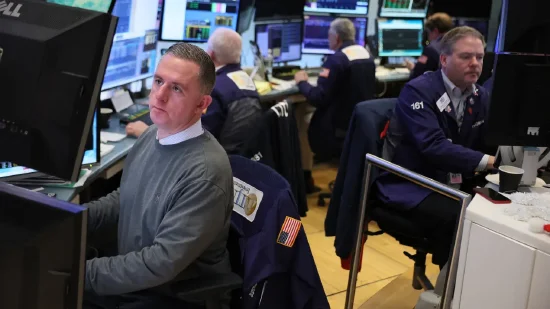
早盘:美股继续下滑 道指下跌180点
Sou Hu Cai Jing· 2026-01-12 15:09
Group 1 - The U.S. stock market continued to decline, with the Dow Jones dropping 187.51 points, or 0.38%, to 49,316.56 points, while the S&P 500 and Nasdaq also experienced slight declines [1] - Bank stocks, particularly those involved in credit card operations like Citigroup, JPMorgan Chase, and Bank of America, fell sharply following President Trump's demand to set a credit card interest rate cap at 10% for one year [1] - Concerns have been raised that Trump's plan to lower credit card interest rates may backfire, potentially limiting bank lending and harming both consumer interests and bank profitability [1] Group 2 - The Cboe Volatility Index (VIX) rose, indicating increased market fear as traders added hedging positions in response to the investigation of Federal Reserve Chairman Jerome Powell [2] - Powell confirmed that federal prosecutors are investigating his testimony regarding the Fed's office renovation project, framing it as another attempt by Trump to influence monetary policy [2] - Market reactions suggest that the independence of the Federal Reserve is a significant concern, with traders instinctively selling off assets in response to news that could undermine this independence [2] Group 3 - It is widely expected that the Federal Reserve will pause further interest rate cuts in its upcoming meeting, as it assesses inflation and economic trends for the new year [3] - Gold prices surged by 2% as investors sought to hedge against the risks associated with a politically influenced Federal Reserve [3] - The ongoing struggle over central bank independence coincides with the stock market reaching historical highs, with the S&P 500 and Dow Jones both setting record highs recently [3]
分歧加剧!美指跌破关口 26年降息路径成关键博弈点
Jin Tou Wang· 2026-01-12 14:27
Core Viewpoint - The ICE US Dollar Index has entered a downward trend, breaking key support levels and ending a previous streak of gains, indicating short-term pressure on the dollar [1] Group 1: Federal Reserve and Monetary Policy - The recent Federal Reserve meeting saw a significant number of dissenting votes, highlighting deep internal divisions among committee members regarding interest rate policy [1] - There are two opposing factions within the dissenting group: one advocating for maintaining rates to prevent sticky inflation, while the other supports larger rate cuts to address weak employment [1] - The divergence in opinions among committee members has led to decreased predictability in policy, undermining market confidence in the dollar [1] Group 2: Global Central Bank Policies - Central bank policies among major economies are increasingly diverging, exerting continuous pressure on the dollar [1] - The Federal Reserve has initiated a rate-cutting cycle, but the pace of future cuts remains uncertain; the European Central Bank has paused cuts, while the Bank of Japan is gradually increasing rates [1] - This lack of coordinated policy among central banks disrupts the previous supportive environment for the dollar, making it difficult for the currency to rely on a single easing cycle for sustained support [1] Group 3: Economic Indicators and Market Reactions - The U.S. economy is experiencing a "growth and employment temperature gap," with GDP growth expectations being raised while non-farm employment data remains weak [1] - The Federal Reserve is adopting a "wait-and-see" approach, planning to pause rate cuts in the short term, which further amplifies market volatility due to policy uncertainty [1] - Following the dollar's decline, non-U.S. currencies have strengthened, gold prices have surged, and U.S. Treasury yields have slightly decreased, indicating a shift towards safe-haven assets [2] Group 4: Future Outlook and Risks - In the short term, the dollar index needs to be monitored closely for key moving average support levels, with potential for further declines if these are breached [2] - The long-term outlook for the dollar index will hinge on the pace of Federal Reserve rate cuts and the policy direction of the new chairperson, with predictions suggesting a "steady then weak" trend for the year [2] - There are three major risk variables to watch: potential inflation resurgence, geopolitical conflicts, and financial market turbulence, which could alter the rate-cutting path and lead to significant adjustments in the dollar index and global market volatility [2]
那些在伊朗复杂政局里失联的人
凤凰网财经· 2026-01-12 13:37
Core Viewpoint - The article highlights the ongoing turmoil in Iran, particularly focusing on the impact of recent protests and internet shutdowns on the local population and foreign nationals, including Chinese citizens. It emphasizes the challenges faced by ordinary Iranians due to economic instability and the effects of international sanctions. Group 1: Protests and Communication Disruptions - Protests initiated by Tehran merchants due to the devaluation of the Iranian rial have spread to over 17 provinces, marking the largest nationwide demonstrations since 2022 [2] - The Iranian government has implemented severe internet restrictions to control the protests, leading to significant communication disruptions for both locals and foreigners [8] - Despite the communication challenges, some individuals have managed to contact their families through limited internal networks, alleviating concerns about their safety [9] Group 2: Economic Conditions - The Iranian rial has depreciated by 95% over the past decade, with the exchange rate plummeting from approximately 1:4000 to 1:6022 against the Chinese yuan [11] - Official inflation in Iran stands at 42.2%, with food prices soaring by 72%, while wages have stagnated, making daily life increasingly difficult for the populace [11] - Many Iranians are living in dire conditions, with reports of individuals sharing cramped living spaces and earning as little as 600 yuan per month, which is insufficient to cover basic living expenses [14] Group 3: Impact on Businesses - The hotel business, which primarily serves Chinese nationals, has seen over 20 booking cancellations due to the unrest, with clients facing significant financial losses from missed participation in trade exhibitions [10] - The economic disparity is evident, as wealthier areas of Tehran contrast sharply with impoverished neighborhoods, where many residents struggle to meet basic needs [13]

Gold price today, Tuesday, January 13, 2026: Gold opens above $4,600 after setting new high
Yahoo Finance· 2026-01-12 12:53
Core Viewpoint - The price of gold is influenced by various factors, including interest rates, political pressures, and market speculation, with current prices showing a slight decline from recent highs. Price Trends - Gold futures opened at $4,610 per troy ounce, down 0.1% from the previous closing price of $4,614.70, with an all-time high reached at $4,620 [1][4] - Over the past year, gold has seen a significant increase of 74.5% as of December 29, with a weekly increase of 3.6% and a monthly increase of 7.8% [4][7] Market Influences - The investigation into Fed Chair Jerome Powell by the Trump administration may continue to impact gold prices in 2026, as it raises concerns about the Federal Reserve's independence and its ability to control inflation [2] - Lower interest rates are beneficial for gold, as they reduce the income from competing assets like cash [3] Investment Considerations - Investors should be aware of price risk when purchasing gold at high prices, as buying high in hopes of short-term gains can be a challenging strategy [9] - Gold is increasingly viewed as a diversification asset for both central banks and individual investors, recovering from decades of low prices [9] - It is advised that gold should primarily act as a stabilizer in a diversified portfolio rather than a driver of high returns [10] Speculation Risks - Positions in gold, whether in bullion, coins, or ETFs, should be viewed as speculative due to the unpredictable nature of commodity prices influenced by macroeconomic and political factors [11]
1月12日上期所沪银期货仓单较上一日增加29381千克
Jin Tou Wang· 2026-01-12 08:39
Group 1 - The total silver futures in Shanghai Futures Exchange reached 649,643 kilograms, with an increase of 29,381 kilograms compared to the previous day [1][2] - The main silver futures maintained a fluctuating pattern, opening at 18,800 yuan per kilogram, reaching a high of 20,998 yuan per kilogram, a low of 18,743 yuan per kilogram, and closing at 20,945 yuan per kilogram, marking an increase of 14.42% [1] Group 2 - In Shanghai, the total warehouse inventory showed a net decrease of 3,997 kilograms at Zhongchu Wusong and a decrease of 7,490 kilograms at Waiyun Huadong Hongqiao, while there was an increase of 40,879 kilograms at Zhonggongmei Supply Chain, leading to a total of 603,136 kilograms in Shanghai [2] - In Guangdong, the Shenzhen Weibao warehouse reported a slight decrease of 11 kilograms, contributing to the overall total of 649,643 kilograms [2]
美国股债长期相关性转负有赖于通胀维持低位
申万宏源研究· 2026-01-12 08:06
Global Market Overview - The US labor market remains resilient, with expectations of fiscal and monetary easing supporting precious metals during the Bloomberg Commodity Index rebalancing phase. Geopolitical tensions in Iran and increased sanctions on Russian oil are expected to drive oil prices significantly higher [2][9]. - In fixed income, the 10-year US Treasury yield recorded 4.18%, down 1 basis point this week, while the US dollar index rose by 0.69% to 99.1. [2][9]. - In equity markets, South Korea, Vietnam, and Germany saw significant stock market gains, while the A-share index, excluding Hong Kong, rose across the board, with the Sci-Tech 50, CSI 1000, and North Star 50 indices leading in gains. Conversely, Argentina and India experienced notable declines [2][9]. - In commodities, gold prices increased by 3.68%, and geopolitical risks led to a 3.74% rise in oil prices this week [2][9]. Focus on US Stock-Bond Correlation - The long-term correlation between US stocks and bonds has turned negative, relying on sustained low inflation. Since 2025, the correlation has shown a slight decline from high levels. If oil prices remain low, US inflation is expected to stay low in 2026, allowing the Federal Reserve to maintain room for rate cuts. The rolling three-year correlation between US stocks and bonds is anticipated to continue declining, improving the hedging effect of bonds against stocks [2][14]. - However, geopolitical factors, such as escalating tensions in the Middle East and new sanctions on Russian oil, could lead to a significant rise in oil prices, potentially keeping the stock-bond correlation high and undermining the hedging effectiveness of bonds [2][14]. Global Fund Flows - In the past week, global funds saw a significant outflow of $12.07 billion from US equity funds, while $14.18 billion flowed into US fixed income funds. Additionally, there was a continued inflow of funds into the Chinese stock market. Notably, there was a significant outflow from Chinese fixed income funds, with a marked inflow into the FTSE 3x Short China ETF [3]. Valuation Metrics - As of January 9, 2026, the valuation of the Shanghai Composite Index exceeded that of the S&P 500 and France's CAC 40, reaching 93.2% of the past decade's levels. However, in absolute terms, the valuations of the Shanghai Composite, CSI 300, and Hang Seng China Enterprises Index remain significantly lower than those of US stocks [4][22]. - From an ERP perspective, the ERP percentiles for Brazil's São Paulo, CSI 300, and the Shanghai Composite remain high, indicating that the Chinese stock market still offers good allocation value compared to global markets [4][22]. Risk-Adjusted Returns - As of January 9, 2026, the risk-adjusted return percentiles for the S&P 500 rose to 60%, while the Nasdaq's risk-adjusted return percentile increased from 37% to 46%. The CSI 300's risk-adjusted return percentile decreased from 94% to 91%. The risk-adjusted return percentile for GSCI precious metals remains at 100% [24][22]. Market Sentiment Indicators - In the US market, the S&P 500 is above its 20-day moving average, with a decrease in the put-call ratio compared to the previous week. In the A-share market, the options market shows a significant increase in positions for the 4750-5000 range of the CSI 300, alongside a notable rise in implied volatility, indicating that the market is pricing in an upward trend for A-shares [26][36].

美国制造业疲软,国内物价温和回升
Guo Mao Qi Huo· 2026-01-12 07:10
2012 31 | 影响因素 | 主要逻辑 | | --- | --- | | 回顾 | 元旦假期后的首周国内商品大幅上涨,工业品、农产品均出现了普涨的行情。主要原因,一是美国对委内瑞拉的军事行动引发市场对于大国之间资源争夺的预期; | | | 二是,美国数据好坏参半,美联储降息仍有空间;三是,国内扩大内需+反内卷政策共同推动商品价格重心的抬升。 | | 海外 | 1)ISM公布的数据显示,美国12月ISM制造业PMI降至47.9,创2024年以来最大萎缩幅度,连续10个月低于50荣枯线,表明制造业持续收缩。12月ISM非制造业 指数升至54.4,显著高于预期与前值,反映出美国的服务业的景气度在上升,服务业的扩张一定程度上对冲了制造业疲软对整体经济的拖累。短期来看,制造业 | | | 疲软预计仍将延续,难以快速出现拐点。中长期来看,关税不确定性缓解及相关法案落地或为资本支出提供支撑,但需注意制造业持续疲软对整体经济的影响。2) | | | 美国12月ADP就业人数新增4.1万人,相比11月份减少的2.9万人有所回升,但少于预期的4.9万人,12月份就业出现反弹,主要由教育和健康服务业以及休闲和酒 | | | ...