
贸易保护主义

Search documents
“对等关税”影响几何,投资如何应对?
雪球· 2025-04-07 04:03
Core Viewpoint - The article discusses the impact of the U.S. "reciprocal tariff" policy on global financial markets, highlighting significant declines in U.S. stock indices and drawing historical parallels to the Smoot-Hawley Tariff Act of 1930, which had devastating effects on global trade and the economy [2][6][12]. Group 1: Market Reactions - Following the announcement of the "reciprocal tariff" policy, the S&P 500 and Nasdaq 100 indices experienced declines of 4.84% and 5.41% on April 3, and further drops of 5.97% and 6.07% on April 4, with the Nasdaq 100 entering a technical bear market with a total decline of 21.55% since February 20 [2][4]. - In contrast, A-shares and Hong Kong stocks showed relatively milder declines, with the CSI All Share Index and Hang Seng Index falling by 0.78% and 1.52% respectively on April 3 [4]. Group 2: Historical Context - The article references the Smoot-Hawley Tariff Act of 1930, which led to a 67% drop in global trade from $36 billion to $12 billion between 1929 and 1933, and a 68% decline in U.S. exports from $5.2 billion in 1929 to $1.6 billion in 1932 [6][12]. - The historical context emphasizes that trade wars can lead to severe economic downturns and a breakdown of multilateral cooperation, which could have long-lasting implications [6][12]. Group 3: Negotiation Strategies - The U.S. has set high tariff rates as a negotiation tactic, aiming to reshape international trade rules and compel other nations to make concessions on tariffs, market access, and regulatory frameworks [9][10]. - The article suggests that both the U.S. and its trading partners are likely to engage in negotiations rather than escalating trade conflicts indefinitely, given their interdependent economic relationships [10][11]. Group 4: Economic Implications - The potential worst-case scenario involves escalating tariff retaliation leading to a significant contraction in global trade, reminiscent of the 1930s, which could result in economic stagnation and structural shortages, ultimately pushing parties back to the negotiation table [12][14]. - Despite the negative impacts of tariff increases on economic growth, the article notes that consumption and investment could offset some of the adverse effects, with public spending becoming a crucial factor in mitigating economic downturns [14]. Group 5: Investment Strategies - The article advises maintaining a solid fixed-income position as a safety net, suggesting that a 50% allocation to equities should be the ceiling for ordinary investors, with higher allocations to fixed income providing better risk mitigation during market downturns [16]. - It also recommends diversifying investments across different asset classes to smooth out volatility and improve overall portfolio performance [16][17].


中金:中国有空间应对全球贸易冲击
中金点睛· 2025-04-06 23:57
中金研究 美国贸易保护主义对全球贸易体系带来巨大冲击,给全球经济带来了较大的不确定性,也给中国贸易环 境增添了压力,但我们也要注意到中国制造业方面的优势。 实际上,我国制造业的竞争力优势比较明 显。我国是世界上少有的拥有全部工业门类的制造业大国。我国已经拥有41个工业大类、207个工业中 类、666个工业小类,形成了独立完整的现代工业体系[4]。根据联合国工业发展组织的数据,2023年全 球制造业增加值前五的国家和地区分别为中国(4.78万亿美元)、美国(2.84万亿美元)、日本(0.84 万亿美元)、德国(0.84万亿美元)、韩国(0.47万亿美元),我国排在全球第一。从占比来看,我国 制造业增加值在全球的占比持续提升,优势持续扩大。2023年,我国制造业增加值在全球占比为 29.6%,较2019年上升2.4个百分点,反映了我国制造业的韧性和竞争力在不断加强。从2019到2023年, 美国的制造业增加值在全球占比上升1.4个百分点,而日本、德国和韩国的制造业增加值在全球制造业 增加值中的比重分别下降了2.1个百分点、0.3个百分点和0.4个百分点。 大市场带来的规模优势使得我国制造业具有成本上的相对优势。例 ...

特朗普在豪赌美国国运!我们该如何应对?
格隆汇APP· 2025-04-06 09:43
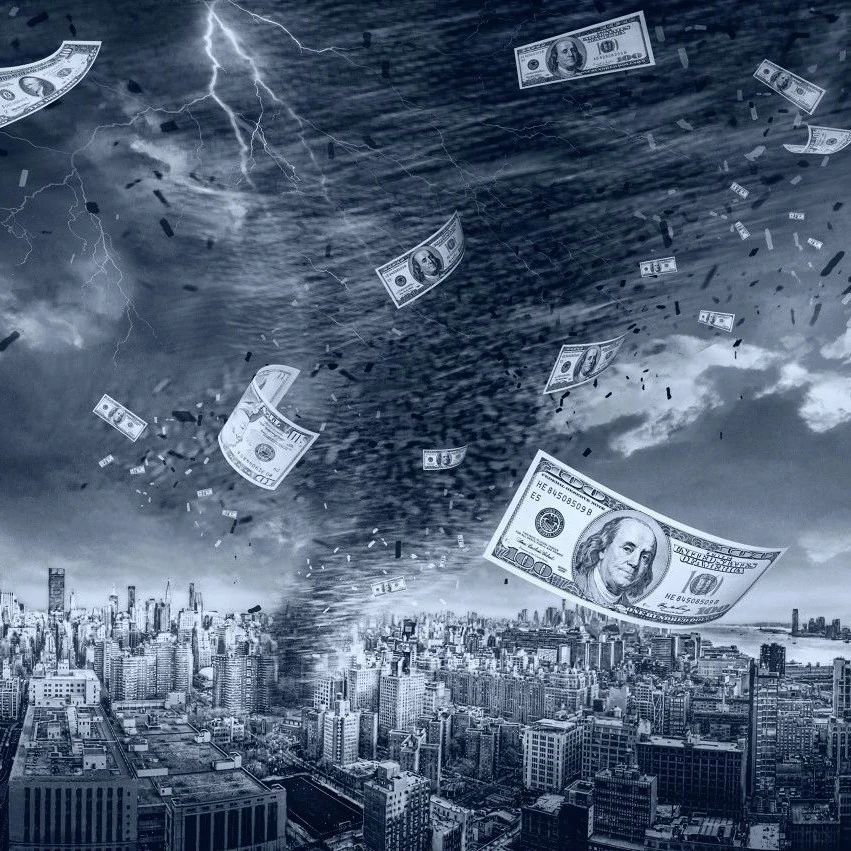
Core Viewpoint - The article discusses the implications of Trump's recent "reciprocal tariff" executive order, which imposes a 10% minimum tariff on global trade partners and a 34% tariff specifically on China, highlighting the potential economic risks and market reactions associated with this policy [1][2][3]. Group 1: Objectives of the Tariff Policy - The primary goal of the tariff policy is to alleviate the U.S. debt burden by increasing revenue through higher tariffs [5]. - Another objective is to stimulate the return of manufacturing jobs to the U.S. by making domestic production more financially attractive [6]. - The policy aims to reshape the geopolitical landscape and re-establish U.S. dominance in international trade [7]. Group 2: Market Reactions - Following the announcement, U.S. stock markets experienced significant declines, with the Dow Jones dropping 2.72%, S&P 500 down 3.16%, and Nasdaq falling 4.24% within two days [12]. - Global markets also reacted negatively, with Japan's Nikkei 225 index down 2.6% and Vietnam's stock market plummeting 7% [13]. - The volatility in the markets reflects concerns over the uncertainty of the tariff policy and its long-term implications [14]. Group 3: Investment Strategies - In the U.S. market, a cautious approach is recommended, avoiding high-valuation tech stocks and focusing on defensive sectors such as utilities and healthcare [24]. - For Hong Kong stocks, it is advised to reduce exposure to export-oriented companies and increase holdings in domestic consumption and financial sectors [34]. - In the A-share market, investors are encouraged to consider undervalued blue-chip stocks and sectors benefiting from domestic demand and technological advancements [34]. Group 4: China's Response and Market Risks - China is likely to implement reciprocal tariffs on U.S. goods, particularly in agriculture and energy, while also diversifying its export markets [37]. - Long-term strategies may include tax reductions and infrastructure investments to boost domestic demand, alongside enhancing regional trade cooperation [38]. - Potential risks include increased import costs leading to domestic inflation and the impact of reduced U.S. demand on export-oriented companies [38].
95年前,美国向全世界发动的那场贸易战
Hu Xiu· 2025-04-05 12:16
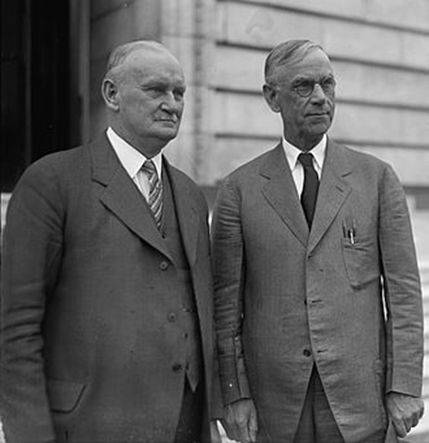
Core Points - The article discusses the Smoot-Hawley Tariff Act, which significantly raised tariffs on thousands of imported goods in the U.S. by over 50% [5][4] - The act is widely regarded as a major economic mistake that contributed to the onset of the Great Depression [6][7] Historical Context - The Smoot-Hawley Tariff Act was signed into law by President Herbert Hoover on June 17, 1930, amidst the economic turmoil following the stock market crash of 1929 [4][44] - The act was initially proposed to protect American farmers from foreign competition, but it expanded to include over 2,000 products due to political bargaining [29][25] Economic Impact - Following the implementation of the tariff, the U.S. stock market saw a significant decline, with the Dow Jones Industrial Average dropping from 250 points to 230 points, an 8% decrease [52] - U.S. imports from Europe fell from $1.334 billion in 1929 to $390 million in 1932, a 70% decline, while exports dropped from $2.341 billion to $784 million, a 66% decrease [52] - Unemployment rates surged from 7.8% in 1930 to 25.1% in 1933, marking the beginning of the Great Depression [53] Global Repercussions - The tariff prompted retaliatory measures from other countries, leading to a significant decline in global trade, with world trade levels in 1933 dropping to one-third of those in 1929 [55] - The act is seen as having undermined international trust and cooperation, accelerating the global economic downturn [58][64]
深夜雪崩!美股遭遇“黑色星期五”
Sou Hu Cai Jing· 2025-04-04 23:58
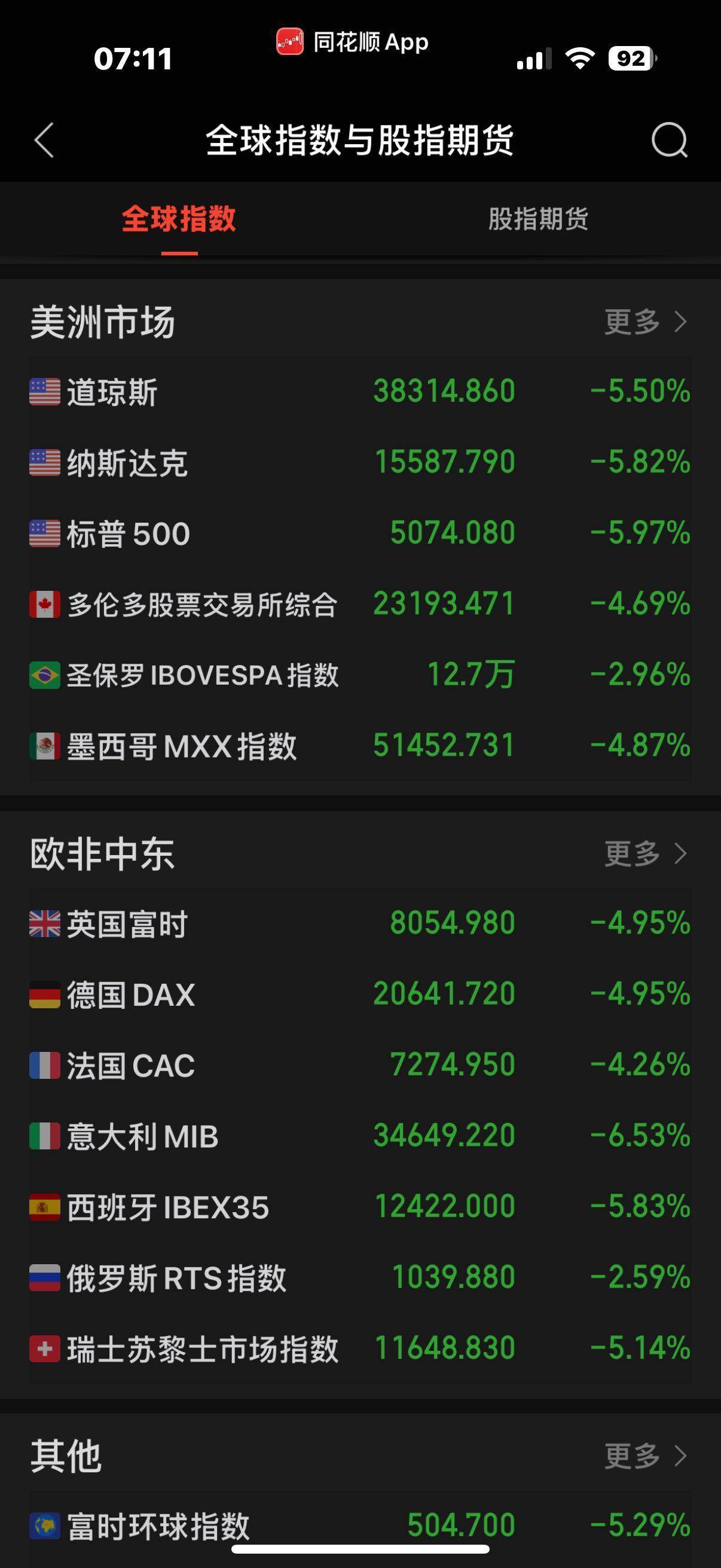
Core Viewpoint - The U.S. stock market experienced a significant decline due to escalating trade tensions and concerns over inflation, leading to a loss of over $3 trillion in market value for major tech companies in just two days [1][9]. Group 1: Market Performance - The U.S. stock indices fell by more than 5%, marking one of the worst trading days in recent years, with the S&P 500 dropping 5.97% and the Dow Jones Industrial Average plummeting 2,231 points [4][9]. - The technology sector was particularly hard hit, with the "Tech Seven" companies losing over $2 trillion in market capitalization in a single day [13]. - European markets also suffered, with the Stoxx 600 index falling 5.12%, the largest drop since the onset of the COVID-19 pandemic [14][17]. Group 2: Economic Indicators - Federal Reserve Chairman Jerome Powell indicated that inflation pressures from unilateral tariffs could persist for several quarters, leading to a cautious stance on monetary policy [8][18]. - Despite a stronger-than-expected increase in non-farm payrolls, the unemployment rate unexpectedly rose to 4.5%, raising concerns about the labor market [8][18]. - The market is closely watching upcoming U.S. CPI data and Federal Reserve meeting minutes for any signs of policy shifts that could impact market stability [18]. Group 3: Sector-Specific Impacts - Major tech stocks like Tesla and Apple saw significant declines, with Tesla dropping 10.4% and Apple falling 7.3% [11][13]. - The semiconductor sector also faced severe losses, with the Philadelphia Semiconductor Index down 7.6% [13]. - Commodity markets experienced widespread declines, with crude oil prices falling nearly 10% and gold prices dropping over 3% [13]. Group 4: Global Economic Outlook - The ongoing trade war and the Fed's policy deadlock have led to a loss of investor confidence in global economic recovery [17]. - Analysts warn that continued trade protectionism and delayed monetary policy responses could push the global economy into a recession [18].


从平价恐慌到强势反弹,欧元当选全球资本最新“避风港”!
Jin Shi Shu Ju· 2025-04-04 08:15
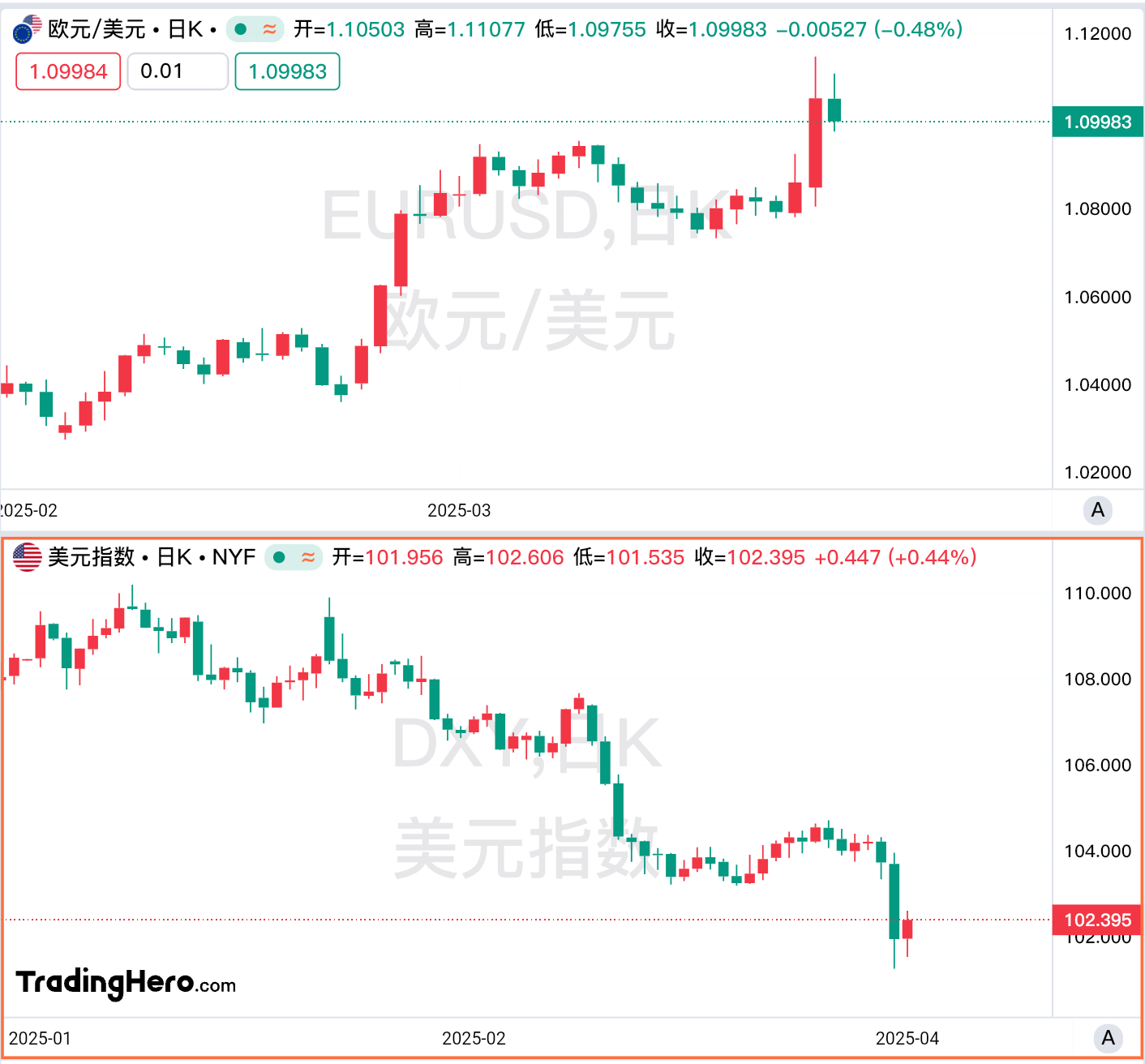
欧元已成为特朗普重塑全球贸易秩序的意外赢家。 欧元的命运在上个月开始转变,当时德国推进了支出增加的计划,并且有希望通过大规模增加欧洲的军事和基础设施支出,帮助保护欧元区经济免受关税的 影响。一些投资者还提到,欧盟在减轻企业监管负担方面的努力也是支持欧元的一个因素。 这种变化也出现在货币期权市场,投资者正在对欧元的进一步升值进行押注和对冲。在期权市场上,欧元对美元的一年期看涨期权的需求在周四超过了看跌 期权,这是自2021年以来的首次。 这一变化与两个月前的市场预期形成鲜明对比,当时许多人认为关税将迫使欧洲央行更为激进地降息,导致欧元兑美元汇率滑向平价。如今,投资者更担心 特朗普的政策可能会伤害美国经济,并逆转近几年流入美元资产的大规模资金流入。 野村证券的策略师Dominic Bunning表示,"欧元可能是这些资金流入放缓或逆转的主要受益者,因为这些资金的流入主要来自欧元区投资者,"他补充称, 欧元区可能会出现"结构性重组",支撑欧元升值。 尽管交易员预计欧洲央行将进一步放松货币政策,但他们认为其降息幅度将低于美联储。交易员预计欧洲今年将降息三次,而美国则预计将降息四次。 皮克特资产管理公司首席策略师Luc ...
特朗普的“关税大棒”,如何撕裂多边贸易体系
Xin Jing Bao· 2025-04-03 10:25
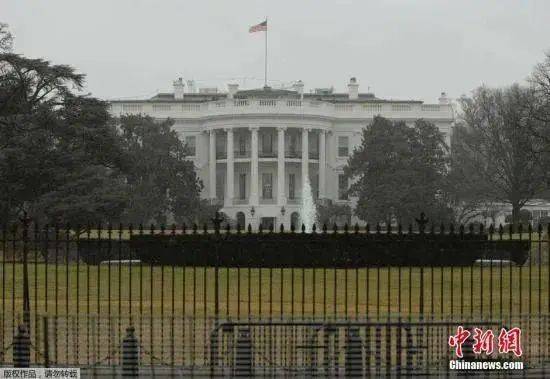
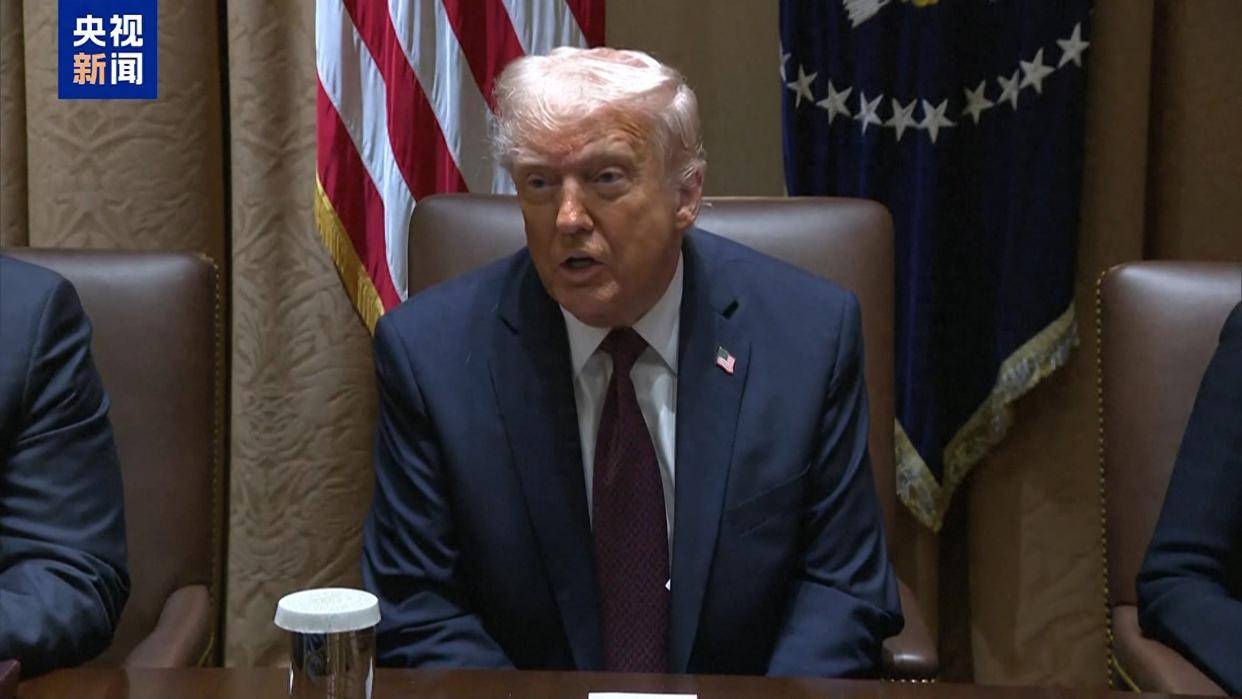
据新华社消息,美国总统特朗普4月2日在白宫签署关于所谓"对等关税"的行政令,宣布美国对贸易伙伴 加征10%的"最低基准关税",并对一些贸易伙伴征收更高关税。其中,对中国、欧盟、日本、越南、印 度分别加征34%、20%、24%、46%、26%。 此前,特朗普就曾宣布将实施"对等关税"政策,要求贸易伙伴国在关税水平上与美国"对等",即美国对 进口商品征收的税率等同于对方对美国出口商品的税率。这一政策被视为特朗普政府践行"美国优先"理 念的核心举措,但其背后的战略意图及对全球贸易格局的影响引发广泛争议。 特朗普的"如意算盘" 特朗普政府推行"对等关税"的首要目标是解决美国长期存在的贸易逆差问题。 数据显示,美国前15大贸易伙伴的贸易加权平均关税税率(指将不同商品或不同税率的关税进行加权平 均计算得出的税率)普遍高于美国(如印度12%、韩国8.4%),特朗普认为这种"非对等"关税导致美国 长期遭受"不公平贸易剥削"。通过强制关税对等,美国试图缩小商品贸易逆差,重塑其在全球贸易中的 主导地位。 此外,该政策还服务于特朗普的国内政治议程:通过提高进口商品成本,推动制造业回流,为本土产业 创造保护壁垒,进而取悦蓝领选民,巩 ...
美国“对等关税”,正式落地
Sou Hu Cai Jing· 2025-04-02 22:55
Core Viewpoint - The U.S. has implemented a "reciprocal tariff" policy, imposing a 10% minimum baseline tariff on trade partners, which is expected to cause significant international market turbulence and potentially accelerate global economic recession [1][7]. Group 1: Tariff Implementation - The new tariffs will take effect on April 5, with a 10% tariff applied to all trade partners, and higher tariffs for certain partners [1]. - There were significant internal disagreements within the U.S. government regarding the specifics of the tariff implementation, including exemptions for "strategic allies" and targeted industries [4][5]. Group 2: Economic Impact - The U.S. Labor Department estimates that the new tariffs could raise the national Consumer Price Index (CPI) by approximately 2.3 percentage points, counteracting the effects of Federal Reserve interest rate cuts [7]. - Reuters predicts that the Federal Reserve may need to urgently cut interest rates by 50 basis points in June to address inflationary pressures caused by the tariffs [8]. - Bloomberg analysis indicates that the tariffs could increase global supply chain costs by 40%, forcing multinational companies to restructure their production networks [9]. Group 3: Trade Fairness and Multilateralism - The U.S. claims that the "reciprocal tariffs" aim to reduce trade deficits and address unfair trade practices, but analysts argue that this approach is rooted in a zero-sum game mentality and promotes protectionism [10][12]. - The World Trade Organization (WTO) data shows that developing countries face higher average tariffs from the U.S. compared to its own rates, suggesting that the "reciprocal" approach may hinder industrial development in these nations [13]. - The unilateral nature of the U.S. tariff policy undermines the multilateral trading system and the core principles of the WTO, potentially leading to a breakdown in global trade cooperation [14].
特朗普4月2日关税大棒将挥下,美国制造业哀鸣一片,中国稳中求变
Sou Hu Cai Jing· 2025-04-01 20:55
Group 1 - The U.S. stock market experienced a significant decline, with the Dow Jones index dropping nearly 800 points within a week due to the impending tariffs [3] - The automotive industry is facing severe challenges, with Ford closing two factories in Michigan and experiencing rising raw material costs due to tariffs [8][9] - The trade war has led to a 30% increase in used car prices, causing many dealerships to temporarily close [3] Group 2 - The tariffs are expected to increase average annual consumer spending for American households by approximately $1,200, impacting middle-class budgets [6] - The automotive sector is under unprecedented dual pressure, with raw material costs rising by nearly 40% and shrinking overseas markets due to retaliatory tariffs [8] - BMW's CEO expressed that the current business environment is more challenging than during World War II, highlighting the severe impact of tariffs on operations [9] Group 3 - China's response to the trade war includes strategic adjustments, such as rerouting exports to Europe to avoid tariffs, effectively controlling additional costs to within 5% [11] - Huawei has seen a 37% year-on-year increase in sales of its Pura70 series smartphones in Europe and the Middle East, despite U.S. sanctions [14] - The global supply chain is rapidly restructuring, with Apple shifting 15% of its iPhone production to India while still relying on Chinese suppliers [22] Group 4 - The trade war has accelerated regional economic integration in Asia, with ASEAN-China trade growing by 31% over the past two years [22] - The shift towards alternative currencies for trade, such as the use of the yuan for oil transactions by Saudi Arabia, indicates a potential decline in the dominance of the U.S. dollar [20] - Historical precedents suggest that protectionist policies, like those initiated by Trump, ultimately harm the initiator rather than the intended targets [24]


4月1日股市必读:华菱钢铁(000932)董秘有最新回复
Sou Hu Cai Jing· 2025-04-01 19:03
Core Viewpoint - The company is facing significant challenges due to increased tariffs on steel products imposed by various countries, particularly South Korea, which has affected its export strategies and overall business operations [2][3]. Group 1: Financial Performance - As of April 1, 2025, the company's stock price closed at 5.08 yuan, reflecting a 2.01% increase with a turnover rate of 1.73% and a trading volume of 1.1919 million shares, amounting to a transaction value of 603 million yuan [1]. Group 2: Trade Policies and Tariffs - The South Korean government has imposed temporary anti-dumping duties on thick plates imported from China, with rates ranging from 27.91% to 38.02%, affecting the company significantly as its subsidiary, Xiangtan Steel, faces the highest rate of 38.02% [2]. - The company has indicated that its export revenue constitutes a low proportion of total revenue, suggesting limited impact from overseas trade policy changes [2]. - The company is actively monitoring international trade policies and adjusting its export strategies in response to market demand and policy changes [3]. Group 3: Technological Advancements - The company has successfully completed the local deployment of DeepSeek, integrating it with the Pangu model to enhance operational efficiency and explore over 100 application scenarios [4]. - The integration aims to improve the development efficiency of steel-related applications and address industry-specific challenges through intelligent solutions [4]. Group 4: Corporate Governance and Human Resources - The company is implementing a "three-system" reform to ensure efficient personnel management, aligning workforce adjustments with different business development stages [6]. - The company emphasizes a talent-driven strategy, focusing on optimizing personnel configurations based on operational needs and ensuring smooth career development paths for employees [6]. Group 5: Non-Recurring Gains - The company completed the transfer of its e-commerce subsidiary's 100% equity on December 11, 2024, with the resulting gains classified as non-recurring income in the fourth quarter of 2024 [5].
