库存周期

Search documents
纺织服装行业2025年度中期投资策略:弱于周期,兴于结构
Changjiang Securities· 2025-07-06 03:15
Group 1 - The report indicates that the domestic retail growth remains stable, supported by favorable policies such as tariff reductions and demand stimulation, with expectations of entering a destocking cycle in Q2-Q3 2025 [3][9] - The textile and apparel industry is expected to transition from a destocking to a stocking cycle, typically lasting 1-3 years, with the current accumulation phase lasting over a year [9][10] - The report highlights that premium manufacturing companies may find low-level investment opportunities, while long-term industry optimization will benefit leading companies [3][11] Group 2 - The report notes that the retail environment for brands is under pressure, with income declining and negative operating leverage affecting performance [28][30] - The manufacturing sector is currently facing challenges, with weak demand and inventory pressures leading to a passive accumulation phase [11][28] - Long-term, the report anticipates a restructuring of the industry, with quality manufacturers expected to gain market share due to competitive advantages [11][12] Group 3 - The report emphasizes the importance of quality-price ratio and health trends in consumer preferences, with domestic brands leveraging online platforms for targeted consumer education and product upgrades [10][12] - The report identifies key investment opportunities in brands that align with new consumption trends, such as Hai Lan Home and Semir Fashion, as well as undervalued stocks in the Hong Kong market [12][12] - The textile manufacturing sector is projected to face short-term challenges but is expected to see a turning point in the second half of the year, with a focus on quality leading companies [12][12]
2025年4月美国行业库存数据点评:美国Q2或进入主动去库
CMS· 2025-07-01 13:33
Overall Inventory Cycle - In April, the total inventory in the U.S. increased by 3.37% year-on-year, compared to a previous value of 3.43%[1] - The total sales in April rose by 3.74% year-on-year, down from 4.04% previously[1] - The data indicates a preliminary shift towards active destocking in the U.S. inventory cycle[1] Industry Inventory Cycle - Among 14 major industries in April, 10 were in passive restocking, including construction materials, metals, and consumer goods[12] - The historical percentile for overall inventory in April was 39.2%, with chemical products at 85.7% and construction materials at 83.2%[12] - Oil and chemical sectors are likely transitioning to active destocking, while construction and metal inventories remain high[12] Future Outlook - Despite uncertainties regarding tariffs, the U.S. inventory cycle is expected to lean towards active destocking in Q2 due to previous overstocking[1] - The "panic import" demand has extended the passive restocking cycle for downstream industries[14] - Active destocking is anticipated for automotive and automotive parts as of December 2024, with a continued trend into April 2025[14]
产能和库存周期有望触底回升,企业盈利修复动能增强
Haitong Securities International· 2025-06-26 11:05
Group 1 - The capacity and inventory cycles are expected to bottom out and recover, enhancing the momentum of enterprise profit recovery [1][6][53] - The current capacity cycle has been in a downward trend since the second half of 2021 and is nearing its end, while the inventory cycle is also expected to transition from a bottoming phase to a replenishment phase within the year [1][2][11] - The recovery of the capacity cycle is typically driven by strong fiscal support policies, as seen in previous cycles [8][14] Group 2 - The downstream capacity cycle is approaching a turning point, with upstream capacity utilization still declining and the mining industry requiring more time for capacity reduction [2][15] - The inventory cycle shows significant differentiation across upstream, midstream, and downstream sectors, primarily due to varying demand improvements [2][15] - Demand improvements are concentrated in sectors with strong policy support, emerging industries, and export-oriented industries, while traditional sectors like real estate remain weak [15][16] Group 3 - The manufacturing sector is currently in a dual bottom phase for both capacity and inventory cycles, with the manufacturing capital expenditure declining significantly since its peak in 2021 [14][40] - The industrial sector is experiencing a passive destocking phase, with inventory levels expected to gradually recover as revenue growth improves [14][17] - The midstream equipment manufacturing sector is showing signs of recovery, driven by policy support and increased consumer demand for electronics and vehicles [30][37] Group 4 - The downstream consumer manufacturing sector is also in a destocking phase, with revenue growth rebounding since the beginning of 2024 [40][48] - Specific industries within the downstream sector, such as agricultural and food processing, are entering active replenishment phases, indicating a positive outlook for inventory levels [48][49] - The overall economic recovery will depend on the strength of consumer and investment demand, which will gradually transmit to the production side [53]
再论渠道库存与成本支撑
Dong Zheng Qi Huo· 2025-06-26 09:15
Report Industry Investment Rating - The rating for lithium carbonate is "Oscillation" [1] Core Viewpoints of the Report - The cycle of expanding production capacity is not over, and the pressure on the mining end to reduce inventory has marginally eased. The supply of global primary lithium resources in 2025 is expected to reach 1608,000 tons of LCE, a year-on-year increase of 272,000 tons of LCE. The downstream demand growth rate has been slightly revised down, and attention should be paid to the expected difference in apparent demand. The theoretical cost support in 2025 has dropped to 58,000 - 60,000 yuan/ton, and the cost curve is becoming flatter. It is expected that the operating range of the main lithium carbonate contract in the second half of the year will be 55,000 - 67,000 yuan/ton [2][3][4][5] Summary According to the Table of Contents 1. Market Review - In the first half of the year, the unexpectedly high production in the cathode material and cell sectors in January led to an upward revision of the annual demand growth rate, pushing up the price. After the Spring Festival, the over - supply in the salt sector and the negative feedback loop between ore and salt prices dragged down the price. Although some large salt factories started maintenance in April, the supply in the second quarter still increased month - on - month. The cost support moved down due to the decline in the current cost of enterprises, and the market sentiment became more pessimistic [18] 2. The Cycle of Expanding Production Capacity is Not Over, and the Pressure on the Mining End to Reduce Inventory has Marginally Eased 2.1 The Cycle of Expanding Production Capacity at the Resource End is Not Over - The supply of global primary lithium resources in 2025 is expected to be about 1.608 million tons of LCE, a year - on - year increase of 272,000 tons of LCE. The increase mainly comes from the resumption of production at Jiuxiawo and the output of Lagucuo and Daoxian Xiangyuan. Some projects' output has been slightly revised down. China, Africa, Argentina, and Chile have contributed significant year - on - year increments, while Australia's output has slightly decreased. The supply structure has become more diversified, and the risk of supply disruption is controllable [24][27][28] 2.2 The Differentiation between the Growth Rates of the Resource End and the Salt End: How Much Pressure is There on the Mining End to Reduce Inventory? - From January to May, the supply of lithium carbonate in the Chinese market increased by 42% year - on - year, far exceeding the resource end growth rate. The difference is mainly due to inventory changes. Overseas non - integrated miners have stable inventory days. African lithium mines have some inventory pressure, but it is controllable. The inventory in China has been decreasing, and the pressure to further reduce inventory is limited. The supply growth rate of lithium carbonate in the second half of the year is likely to approach the resource end growth rate. The inventory of salt lakes in Chile and Argentina is low, and the shipping data can be used as a leading indicator for imports [36][40][51] 3. The Terminal Growth Rate has been Slightly Revised Down, and Attention Should be Paid to the Expected Difference in Apparent Demand 3.1 The Power Terminal Maintains High Growth, and the Uncertainty of Energy Storage has Marginally Increased - In the power terminal, from January to May, the cumulative year - on - year growth rates of new energy vehicles in China, Europe, and the United States were 44%, 27%, and 3% respectively. The growth rate in China may slow down in the second half of the year, but the end - of - year demand is still worth looking forward to. In Europe, the growth rate has exceeded expectations. In the United States, the policy pressure in the second half of the year is limited. The annual growth rate of global new energy vehicle sales is expected to be maintained at 20% - 26%. In the energy storage terminal, the demand expectation is pessimistic. Domestically, the cancellation of mandatory energy storage allocation has increased uncertainty, but the high winning bid volume in the first half of the year supports the demand in the second half. Overseas, the demand for exports to the United States may slow down, but the non - US market is performing well. The global energy storage cell shipments are expected to increase by 30% - 40% year - on - year [58][70][83] 3.2 The Inventory Days of Each Downstream Link Remain Neutral - After two years of inventory reduction, the inventory days of each downstream link have returned to a neutral level. The cathode material sector has maintained a low - inventory strategy, and there is little room for further inventory reduction. The cell sector has also achieved inventory reduction. The new energy vehicle inventory level is neutral, and the inventory pressure of some car companies is a structural problem. There may be trading opportunities due to the expected difference between the off - season and the peak season [84][87][88] 4. How to Understand the Downward Shift of Cost Support? - The updated balance sheet shows that the global lithium resources will have a surplus of 228,000 tons of LCE in 2025. The theoretical cost support in 2025 is 58,000 - 60,000 yuan/ton, down from the previous range. The cost reduction space of mature Australian mines is limited, while African projects may further reduce costs. The cost curve will become flatter, and the cost support will be marginally enhanced [97][98][102] 5. Investment Suggestions - In the second half of the year, the main lithium carbonate contract is expected to operate in the range of 55,000 - 67,000 yuan/ton. The market is relatively optimistic in the third quarter, and the price may decline at the end of the year. The space for unilateral trading is limited. It is recommended to try long positions at the lower end of the range in early Q3 and short positions at the end of Q3. It is more advisable to focus on the positive spread opportunity of LC2509 - LC2511 [106][107]
每经品牌100指数上周跌0.49% 成分股中国银行周市值增2291.37亿
Mei Ri Jing Ji Xin Wen· 2025-06-22 12:37
Group 1 - China's economic data for May indicates a shift in growth momentum from exports and investments to consumption, with retail sales growth reaching a high point since 2024, exceeding market expectations [2] - The A-share market has shown a significant reduction in trading volume, with the major indices collectively declining, reflecting a lack of incremental capital [2][3] - Defensive sectors, particularly liquor and banking, have demonstrated stronger performance amidst market adjustments, with notable gains in companies like China National Heavy Duty Truck Group and Shanxi Fenjiu [2] Group 2 - The recent adjustment of the "Everyday Brand 100 Index" included nine new companies, with Gujing Gongjiu showing a remarkable weekly increase of 4.4% [4] - Gujing Gongjiu's chairman emphasized the need to address long-term industry challenges while maintaining sustainable growth, aiming to keep its market share in Anhui above 60% [4] - Vipshop, another new entrant in the index, has seen a slight increase in stock price, focusing on providing high-quality products and services to enhance shareholder returns [5] Group 3 - The liquor industry is currently in a valuation recovery phase, presenting short-term investment opportunities as defensive sectors regain investor interest [6] - The liquor ETF has experienced a decline of 9.42% in 2025, underperforming the broader market, yet its share count has increased by 15.07 million, indicating continued investor interest [7] - The index tracked by the liquor ETF focuses on companies involved in the production of various alcoholic beverages, with major stocks like Kweichow Moutai and Wuliangye accounting for over 50% of the index weight [7]



生猪:去库路径改变,等待现货印证
Guo Tai Jun An Qi Huo· 2025-06-22 09:35
Report Investment Rating - No investment rating information is provided in the report. Core Viewpoints - This week, the spot price of live pigs showed a strong performance, with the price in Henan rising from 14.08 yuan/kg last week to 14.43 yuan/kg, and the national average slaughter weight decreasing by 0.17% week-on-week. The futures price of live pigs also had a strong oscillation, with the LH2509 contract closing at 13,895 yuan/ton, up from 13,790 yuan/ton last week, and the basis increasing from 290 yuan/ton to 535 yuan/ton [1][2]. - Next week, the spot price of live pigs is expected to remain volatile. The group's adjustment of slaughter volume has a significant impact during the off - season. Despite the group's weight - reduction plan, short - term retail investor reluctance to sell, active replenishment by secondary fattening groups, and the expectation of policy procurement support the price. The supply side is facing complex inventory situations, and the demand is in the off - season with limited downstream support. The policy of procurement provides a price floor, but it also complicates the de - stocking path. The core of the inventory cycle rotation in the second half of the year lies in the rhythm of the social circle [3]. - In the futures market, the LH2509 contract still has a short - term bullish sentiment. The short - term support level is 13,000 yuan/ton, and the pressure level is 14,500 yuan/ton. Attention should be paid to the opportunity of spread repair and stop - loss and take - profit operations [4]. Summary by Directory This Week's Market Review (6.16 - 6.22) Spot Market - The price of 20KG piglets in Henan dropped from 39.1 yuan/kg last week to 37.8 yuan/kg, and the price of live pigs in Henan rose from 14.08 yuan/kg to 14.43 yuan/kg. The price of 50KG binary sows nationwide remained at 1,621 yuan/head. The supply was tight as the group's incremental supply was limited and retail investors were reluctant to sell. The demand increased slightly compared to the beginning of the month but was further suppressed by rising temperatures, and the average slaughter weight decreased by 0.17% week - on - week [1]. Futures Market - The LH2509 contract of live pig futures had a strong oscillation, with a high of 13,900 yuan/ton, a low of 13,715 yuan/ton, and a closing price of 13,895 yuan/ton, up from 13,790 yuan/ton last week. The basis of the LH2509 contract increased from 290 yuan/ton to 535 yuan/ton [2]. Next Week's Market Outlook (6.23 - 6.29) Spot Market - The spot price of live pigs is expected to remain volatile. The group is reducing weight according to the plan, but retail investors are reluctant to sell, and secondary fattening groups are actively replenishing. The supply side is facing complex inventory situations, with accelerated inventory accumulation in the retail and secondary fattening sectors and more obvious incremental supply in the third quarter. The demand is in the off - season, and the downstream support is limited. The policy of procurement provides a price floor and stimulates further pressure on retail investors and secondary fattening, making the de - stocking path more complex [3]. Futures Market - The LH2509 contract price closed at 13,895 yuan/ton on June 20. The positive fat - to - lean price difference reduces the willingness of retail investors to sell in a concentrated manner. Secondary fattening is active, and the utilization rate of pens has increased. The group is de - stocking, and there is still short - term bullish sentiment. The short - term support level is 13,000 yuan/ton, and the pressure level is 14,500 yuan/ton. Attention should be paid to the opportunity of spread repair [4]. Other Data - This week's basis was 535 yuan/ton, and the LH2507 - LH2509 spread was - 560 yuan/ton [9]. - The average slaughter weight this week was 125.55KG, down from 125.76KG last week. In April, the pork output was 5.268 million tons, a 3.7% month - on - month increase, and in May, the pork import volume was 93,700 tons, a 16.17% month - on - month increase [12].

A股收评:三大指数收跌!油气板块回调,白酒、银行股集体上涨
Ge Long Hui· 2025-06-20 07:51
Market Overview - Major A-share indices continued to decline on June 20, with the Shanghai Composite Index down 0.07% at 3359 points, the Shenzhen Component Index down 0.47%, and the ChiNext Index down 0.84% [1][2] - Over 3600 stocks in the market experienced declines [1] Sector Performance Oil and Gas Sector - The oil and gas sector saw a pullback, with Keli Co., Ltd. dropping over 13% [4] - Other companies in this sector, such as Tongyuan Petroleum and Beiken Energy, also experienced significant declines [5] Precious Metals Sector - The precious metals sector fell, with Western Gold dropping over 6% [6] - Other companies like Xiaocheng Technology and Hunan Silver also reported losses [6] Humanoid Robotics Sector - The humanoid robotics sector faced widespread declines, with Wanda Bearings falling over 10% [7] - Other companies in this sector, including Zhejiang Rongtai and Longhua Group, also saw significant drops [7] Alcohol Sector - Alcohol stocks collectively rose, with Huangtai Wine hitting the daily limit, and other brands like Yinjia Gongjiu and Jinzhongzi Wine also increasing [8][9] - Media criticism of "one-size-fits-all" measures in the crackdown on illegal dining has positively impacted this sector [8][10] Banking and Insurance Sector - The banking and insurance sectors were active, with several banks like Xiamen Bank and Hangzhou Bank rising over 2% [10][11] Port and Shipping Sector - The port and shipping sector saw gains, with Ningbo Shipping and Xingtong Co., Ltd. hitting the daily limit [12] Photovoltaic Equipment Sector - The photovoltaic equipment sector strengthened, with companies like Saiwu Technology and Kaisheng New Energy reaching the daily limit [13] - Reports indicated a focus on "production limits to maintain prices" within the industry, although some officials denied these claims [13][14] Individual Stock Movements - Suzhou Longjie faced a significant drop, with a reported total market value of 3.632 billion yuan [15][16] - The company announced a collective reduction plan by four executives, aiming to sell up to 932,100 shares, potentially raising around 17 million yuan [18]


权益类新基金建仓加速;油气类产品业绩赶超创新药主题基金
Mei Ri Jing Ji Xin Wen· 2025-06-20 07:23
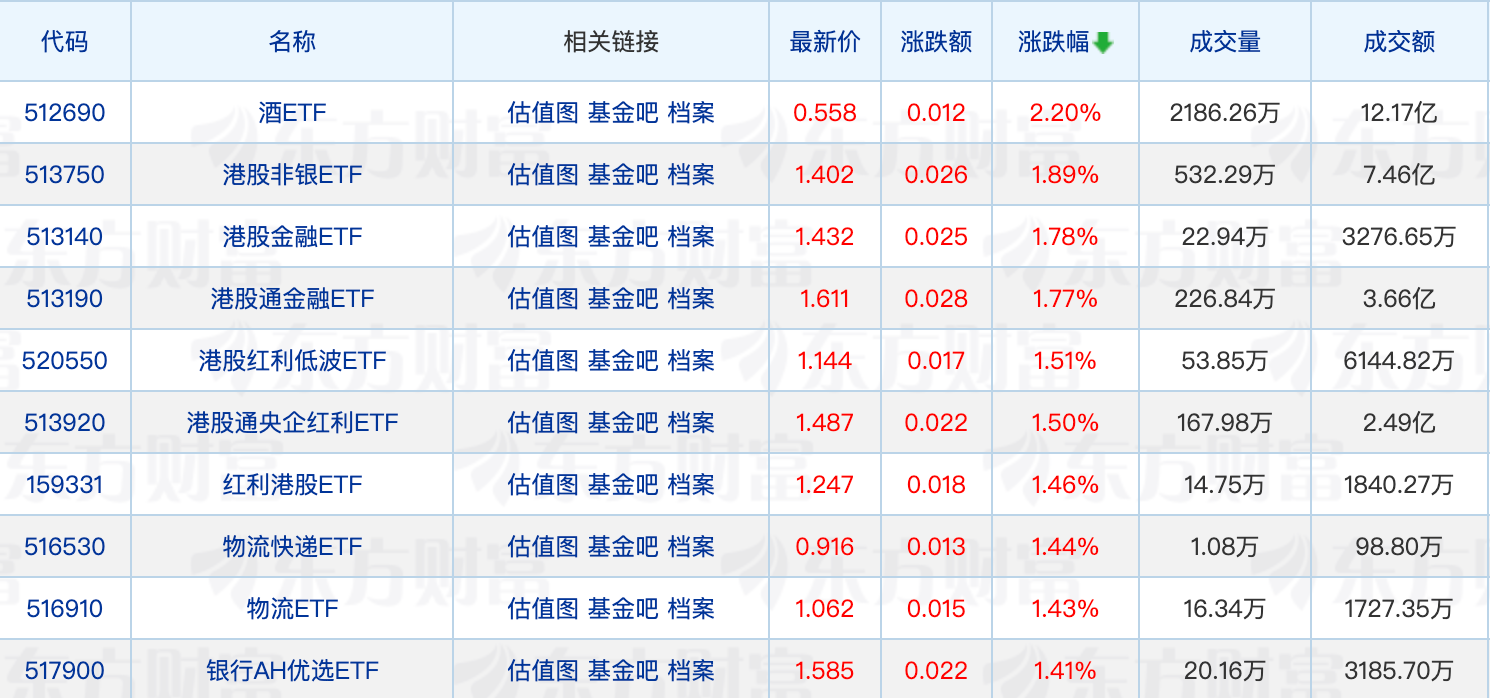
Group 1: Fund News - Dong Fang has resigned as the Deputy General Manager of China Merchants Fund effective June 19, 2023, after joining the company in August 2023 [1] - As of June 19, 2023, 47 new equity funds have been established in June, with several funds entering the investment phase within half a month of their establishment [2] - Oil and gas public funds have outperformed innovative drug-themed products in terms of net value growth since June, with 12 public funds showing over 10% growth, all of which are oil-themed funds [3] Group 2: Fund Manager Dynamics - Li Xiaoxing has adjusted holdings in Jingpin Special Equipment, with the Silver Hua Xinyi Flexible Allocation Mixed Fund appearing in the top ten circulating shareholders for the first time, holding 840,100 shares [4] Group 3: ETF Market Review - The market experienced a downward trend, with the Shanghai Composite Index falling by 0.07%, the Shenzhen Component Index by 0.47%, and the ChiNext Index by 0.84%. The total trading volume in both markets was 1.07 trillion yuan, a decrease of 182.9 billion yuan from the previous trading day [5] - The liquor sector saw a rebound, with Huangtai Liquor reaching the daily limit, and the liquor ETF leading with a 2.20% increase [5][6] Group 4: ETF Opportunities - The white liquor industry is expected to continue seeking a bottom in its industrial prosperity by Q2 2025, with price pressures outweighing volume pressures. Companies that can adapt to fast-moving consumer goods operations will have a competitive advantage [8] Group 5: Upcoming Fund Launches - The Qianhai Open Source CSI 500 Equal Weight ETF Link is set to launch, managed by Liang Pusen, with a performance benchmark of the CSI 500 Equal Weight Index return rate multiplied by 95% plus the after-tax bank RMB demand deposit interest rate multiplied by 5% [9]
官媒发声厘清"禁酒令"!白酒板块强势反弹,皇台酒业涨停
Ge Long Hui A P P· 2025-06-20 04:14
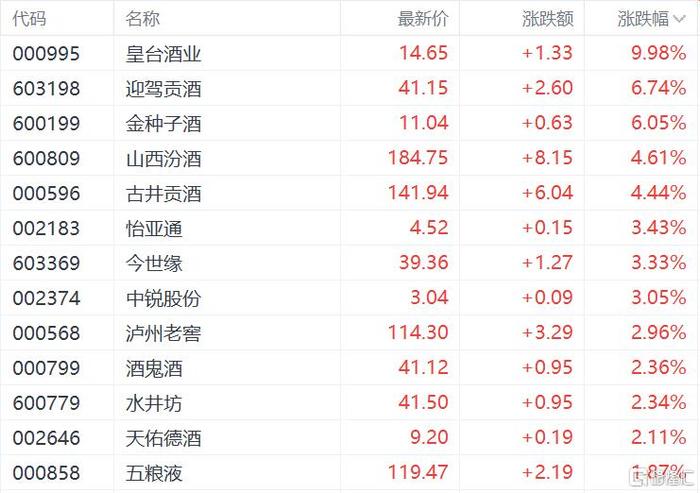
Core Viewpoint - The A-share market has seen significant gains in the liquor sector, with companies like Huangtai Liquor and Jinjunzi Liquor experiencing notable increases in stock prices, indicating a potential recovery or shift in market sentiment towards the liquor industry [1][2]. Industry Overview - The liquor industry in China is currently facing challenges, with a total inventory value reaching 1 trillion yuan, contributing to the industry's difficulties [5]. - The overall performance of liquor stocks has been poor this year, with an average decline of 16.3% across 19 liquor stocks, and seven stocks experiencing declines exceeding 20% [6][7]. - The demand for liquor remains subdued, particularly in the second quarter, which is traditionally a slow season for consumption [8]. Market Dynamics - The recent surge in stock prices for certain liquor companies may be attributed to a shift in market dynamics, where companies that can adapt to fast-moving consumer goods (FMCG) operations are gaining a competitive edge [2][8]. - The current inventory pressure on liquor companies is exacerbated by promotional activities, leading to a decline in wholesale prices for high-end liquor and some products experiencing price inversions [8]. Investment Sentiment - Some prominent fund managers have begun to increase their positions in liquor stocks, viewing the current market as an opportunity, with the potential for high dividend yields and a favorable risk-reward ratio [8][9]. - The long-term attractiveness of liquor stocks is expected to improve as companies focus on increasing market share and adapting to changing consumer preferences [8][9].




张瑜:美国经济的前瞻指标们
一瑜中的· 2025-06-19 16:44
Core Viewpoint - The article indicates that the U.S. economy is showing signs of a downward trend, but the probability of a significant downturn is low. Key indicators across employment, inventory, investment, consumption, and financial conditions suggest a weakening economic structure [2]. Group 1: Employment Market - The employment market is experiencing structural weakening, with a significant cooling in supply-demand relationships. Job openings are at 4.4%, below the 12th percentile since 2018, indicating weaker labor demand compared to pre-pandemic levels [5][20]. - Labor supply is also weak, with a participation rate of 62.4%, which is below the 38th percentile since 2018. The labor market's supply-demand gap is at 1.0, indicating a significant cooling [21]. - Leading indicators suggest a downward trend in the employment market, with rising unemployment claims pointing towards an increase in the unemployment rate [23]. Group 2: Inventory - The U.S. is currently in a weak inventory replenishment cycle, with inventory growth turning positive in 2024 but at a low rate. The manufacturing PMI has been fluctuating around 50, indicating alternating active and passive replenishment [6][27]. - Three leading indicators suggest a low probability of large-scale inventory replenishment in the near future, with the manufacturing PMI indicating weak inventory investment [30]. Group 3: Private Sector Investment - Non-residential investment is expected to continue declining in the next six months, with leading indicators such as manufacturing PMI and new orders showing weakness [7][34]. - In the real estate sector, weak demand, high inventory, and elevated financing costs are expected to hinder improvement in real estate investment [39]. Group 4: Consumer Spending - Consumer income growth is slowing, with disposable income growth recorded at 4.2% in Q1 2025, below the historical average of 5.2% [10][58]. - The wealth effect is diminishing, with a significant drop in excess wealth from $14.9 trillion to $11.1 trillion, a decrease of 26% [65]. - Despite reduced consumer spending capacity, the health of household balance sheets remains strong, with low leverage and manageable interest payment burdens [73]. Group 5: Financial Conditions - Financial conditions are currently in a loose state, with the Bloomberg Financial Conditions Index turning positive again after a tightening period due to tariff policies [78]. - The Chicago Fed's National Financial Conditions Index also indicates a loose financial environment, remaining at the 42nd percentile since 2018 [80].