
AI投资

Search documents
Pre-Market In Red
ZACKS· 2025-12-29 17:55
Market Performance - Major market indexes have flattened with the Dow down 52 points, S&P 500 down 20 points, Nasdaq down 123 points, and Russell 2000 down 5 points [1] - Year-to-date performance shows Russell 2000 up 13% and Nasdaq up 21%, marking the third consecutive year of Nasdaq trading at 20% or higher [1] Home Price Trends - Pending Home Sales report for November is expected, with previous year-over-year declines of 0.9% in September and 0.4% in October, but month-over-month increases of 4.2% in August, 0.1% in September, and 1.9% in October [2] - The Case-Shiller Home Price Index is set to release data showing three consecutive months of decline in the 20-city survey: down 0.3% in July, 0.6% in August, and 0.5% in September [3] Labor Market Insights - Initial Jobless Claims have decreased by 50,000 since early September, currently at 214,000, indicating a strong labor force [4] - Continuing Claims have risen above 1.9 million after being below 1.8 million for two weeks, consistent with a healthy labor market [5] Federal Reserve Actions - The Federal Open Market Committee (FOMC) minutes will be released, detailing a recent 25 basis points cut in the Fed funds rate to a range of 3.50-3.75%, with three dissents noted [6] Market Outlook - The upcoming trading week will see low volumes and modest risk-taking as the market enters 2026, influenced by AI investments, tariff restrictions, and a changing global economic environment [7]



冠通期货-宏观2026年报:美国中期选举,中国十五五开局
Guan Tong Qi Huo· 2025-12-29 08:15
冠通期货-宏观2026年报 --美国中期选举,中国十五五开局 研究咨询部: 王 静 执业资格证号:F0235424/Z0000771 报告时间: 2025年12月29日 投资有风险,入市需谨慎。本公司具备期货交易咨询业务资格,请务必阅读最后一页免责声明。 分析师王静:F0235424/Z0000771 投资有风险,入市需谨慎。 分析师王静:F0235424/Z0000771 投资有风险,入市需谨慎。 核心观点 回顾2025年,全球经济在动荡中前行,海外特朗普上任,关税贸易大棒震惊全球,美联储重启降息催生出流动性牛市;国内,信心的重塑驱动 中国资产之重估,反内卷点燃新一轮供给侧改革,共同构成了影响全球经济走向的两大主线。当下,国际上特朗普交易的余威犹存,但其边际影响 逐步减弱,市场关注点逐步转向美国财政的可持续性与中期选举后政策路径的再校准。国内的宏观政策持续发力,以中央加杠杆为核心,托底经济、 化解风险,并在"十五五"开局之年,将绿色转型与产业升级作为推动高质量发展的核心抓手。 展望2026年,全球政治周期与科技周期的共振料将支撑风险资产,能源转型与AI投资两大浪潮则将重塑大宗商品格局。 美国视角,中期选举成 ...
A股收评:沪指9连阳创指跌0.66%,人形机器人、商业航天走强!超3300股下跌成交2.16万亿缩量234亿;机构解读
Sou Hu Cai Jing· 2025-12-29 07:21
Market Overview - The market experienced fluctuations in the afternoon, with mixed performance across the three major indices. The Shanghai Composite Index slightly increased, achieving a nine-day winning streak, while the ChiNext Index saw a decline of over 1% at one point. The total trading volume in the Shanghai and Shenzhen markets was 2.14 trillion, a decrease of 20.9 billion from the previous trading day. Overall, more stocks declined than rose, with over 3,300 stocks falling [2]. Sector Performance - The humanoid robot sector saw significant gains, with companies like Boke Technology hitting the daily limit of a 20% increase, marking a historical high. The Ministry of Industry and Information Technology recently held a meeting to establish standards for humanoid robots and embodied intelligence, which is expected to drive further growth in this sector [4]. - The digital currency sector also performed well, with Lakala rising nearly 12% and other companies like Cuiwei Co. and Sifang Jingchuang seeing gains. This follows the People's Bank of China revising rules for the cross-border payment system to support the development of cross-border RMB business [5]. Real Estate Policy Impact - Following adjustments to real estate policies in Beijing, the average daily transaction volume of new residential properties increased by 44.6% compared to the period before the policy change. The new policy is expected to have a ripple effect on other cities like Shanghai and Shenzhen, although market differentiation remains evident, particularly in non-core areas [6][7]. Healthcare Sector - The basic medical insurance fund's total income for the first eleven months of 2025 reached 2.632 trillion, with total expenditures of 2.110 trillion. The fund's operation remains stable, with contributions from both employee and resident insurance systems [8]. Investment Insights - Guojin Securities highlighted that a new investment theme is emerging in the commodity market, with a focus on industrial resources like copper, aluminum, tin, lithium, and crude oil. The report suggests that the recovery of global manufacturing and the rebound in domestic consumption will create opportunities in sectors such as aviation, hotels, and non-bank financial services [9][10].

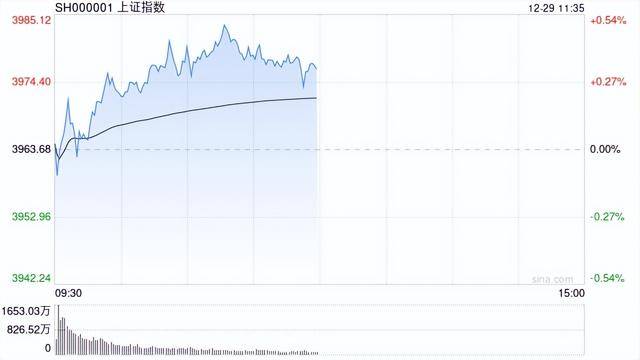
沪指收获八连阳,港股科技ETF天弘(159128)、恒生科技ETF天弘(520920)上周五成交额均超2300万元,机构:港股市场将迎来 “戴维斯双击”
2 1 Shi Ji Jing Ji Bao Dao· 2025-12-29 01:51
Group 1 - The Hong Kong stock market will resume trading on December 29 after a break from December 24 to December 26, with the Hang Seng Index and technology-related sectors showing strong performance during this period [1] - The Hong Kong Technology ETF Tianhong (159128) recorded a trading volume of nearly 280 million yuan, while the Hang Seng Technology ETF Tianhong (520920) exceeded 230 million yuan in trading volume as of last Friday [1] - On December 29, the Hang Seng Index opened up 0.43%, the Hang Seng Technology Index rose 0.88%, and the Guozheng Hong Kong Stock Connect Technology Index increased by 0.67%, with several tech stocks leading the gains [1] Group 2 - Xiaomi held a product launch event, introducing the Xiaomi 17 Ultra starting at a price of 6,999 yuan, and reported that its cumulative delivery of cars has surpassed 500,000 units this month, with over 350,000 units delivered this year [2] - According to Everbright Securities, the Hong Kong stock market is expected to experience a "Davis Double Play" driven by valuation recovery, profit growth, and a return to main themes by 2026, with the Hang Seng Technology Index anticipated to outperform the broader market [2] - Huatai Securities noted that AI investment is becoming a core engine for global economic growth, with current investments in AI still in the early stages, supported by tight computing supply and ongoing "arms races" in the industry [2]

内外兼修-2026年宏观经济与资本市场展望
2025-12-29 01:04
Summary of Key Points from Conference Call Records Industry Overview - **Global Manufacturing and Export Trends**: The global manufacturing sector is expected to show an upward trend in 2026, which will support China's exports. The U.S. inventory cycle is entering a replenishment phase, and the Federal Reserve is anticipated to cut interest rates, which will further boost global industrial production and, consequently, Chinese exports [4][24]. Core Insights and Arguments - **Impact of U.S. Tariffs**: China has gained significant experience in mitigating the negative impacts of U.S. tariffs, leading to a stable export growth despite tariff increases. Future tariff impacts are expected to diminish further [5]. - **Outbound Capacity Strategy**: The current strategy for outbound capacity focuses on "Belt and Road" countries, aiming to find new demand growth points rather than indiscriminate expansion. This approach is expected to enhance brand penetration and positively impact domestic capital goods and intermediate goods exports [6]. - **Real Estate Market Adjustments**: The real estate sector has undergone significant adjustments since 2021, with a negative contribution to fixed asset investment. However, the rate of decline is expected to narrow, although falling property prices and deteriorating household balance sheets may suppress consumer spending [7][8]. - **Durable Goods Subsidy Policy**: The effectiveness of the durable goods subsidy policy is likely to weaken, with recent data showing a negative contribution due to high base effects. Long-term demand may be overstretched, leading to diminishing returns from such policies [10]. - **Consumer Spending Dynamics**: The adjustment in the real estate market affects consumer spending through reduced income and wealth effects. Data indicates a decline in residents' willingness to repay loans and an increase in savings, reflecting a drop in consumer confidence [9]. Additional Important Insights - **Fiscal Policy Challenges**: Broad fiscal revenues are under pressure, with local government debt risks increasing. Central government borrowing is seen as a necessary measure to counteract economic downturns and facilitate fiscal reforms [14][18]. - **Future Economic Growth Targets**: The average GDP growth target before 2035 is set at approximately 4.17%. Short-term adjustments to growth targets for 2026 may occur to alleviate growth constraints [2][19]. - **Investment Focus Areas**: Future investments should prioritize industrial investments over physical assets, with a focus on early-stage technology projects. The central bank is expected to maintain a moderately accommodative monetary policy, potentially involving rate cuts [23][24]. - **Service Sector Growth Potential**: There is significant potential for growth in service sectors such as education, healthcare, and elder care, which are expected to become key drivers of domestic demand in the coming years [12][24]. Conclusion - The overall outlook for 2026 indicates a supportive environment for exports and service consumption, with a focus on fiscal and monetary policy adjustments to stimulate economic growth. The emphasis on strategic investments and service sector development will be crucial for sustaining economic momentum in the face of existing challenges.
十大券商一周策略:A股跨年行情已经启动,新的主线浮出水面
Zheng Quan Shi Bao· 2025-12-28 22:47
Group 1 - The core viewpoint is that the A-share market is experiencing a cross-year rally, driven by liquidity and positive policy expectations, with a focus on sectors like AI, commercial aerospace, and materials [9][10][11] - 39 out of 360 industry/theme ETFs reached new highs in December, with established sectors like telecommunications and non-ferrous metals leading, while new sectors like commercial aerospace are gaining traction [1] - The market consensus is shifting towards sectors representing competition in next-generation infrastructure between China and the US, with a focus on manufacturing and pricing power in the global market [1][2] Group 2 - The strategy emphasizes structural opportunities in a volatile market, with a preference for sectors with low concentration but rising attention and long-term ROE potential, such as chemicals and engineering machinery [2] - The outlook for the RMB is positive, with expectations of appreciation driven by improved domestic conditions and external factors, which could lead to significant capital inflows and asset revaluation [4][5] - The spring market is expected to benefit from favorable conditions, including liquidity support and upcoming policy events, with a focus on technology and cyclical sectors [3][10][12] Group 3 - The investment focus is on sectors that benefit from RMB appreciation, such as those with high import material dependency and those that can leverage increased domestic purchasing power [5] - The market is characterized by a structural rotation, with a focus on technology themes and sectors like commercial aerospace, nuclear power, and robotics [12][14] - The overall sentiment is optimistic, with expectations of a continued upward trend in the market leading up to the Spring Festival, supported by strong institutional buying and favorable policy expectations [11][13][14]
投资前瞻:多项财经大事集中来袭
Wind万得· 2025-12-28 22:31
Market News - The Ministry of Finance announced that a more proactive fiscal policy will continue in 2026, focusing on expanding fiscal expenditure, optimizing government bond tools, enhancing transfer payment efficiency, and improving expenditure structure [3] - The National Bureau of Statistics will release the December PMI data on December 31, with November's manufacturing PMI at 49.2%, a slight increase of 0.2 percentage points from October [4] - The People's Bank of China aims to significantly increase the scale and proportion of various long-term funds invested in A-shares, promoting a virtuous cycle between capital market stability and high-quality economic development [6] - The Shanghai and Shenzhen Stock Exchanges announced a series of fee reduction measures for 2026, expected to save over 1.9 billion yuan in total [7] Sector Developments - The Ministry of Industry and Information Technology established a standardization committee for humanoid robots and embodied intelligence, focusing on key technologies and industry standards [11] - The 2025 Shenzhen Brain Conference aims to create a platform for industry integration and innovation [13] - The 2025 China Green Hydrogen Industry Conference will discuss policies and technological breakthroughs that will impact the green hydrogen industry chain [14] Individual Stock Events - CATL plans to apply sodium batteries on a large scale in various sectors including battery swapping and energy storage in 2026 [17] - Xiaomi's co-founder plans to reduce holdings of up to $2 billion in B-class common stock [17] - ST Huluwawa and its chairman are under investigation for information disclosure violations [17] Lock-up Expiration - A total of 34 companies will have lock-up shares released this week, amounting to 3.697 billion shares with a total market value of approximately 58.895 billion yuan [18] - The peak lock-up expiration date is December 30, with 13 companies releasing shares worth a total of 27.645 billion yuan [18] Institutional Outlook - CITIC Securities highlights that 39 out of 360 industry/theme ETFs reached new highs in December, with a focus on communication and resource-related ETFs [25] - Guojin Securities identifies new investment themes emerging in 2026, emphasizing the importance of AI investments and the recovery of global manufacturing [26] - Zhongtai Securities believes there is still upward potential in the market before the Spring Festival, with opportunities for low-cost positioning [27]






【十大券商一周策略】A股跨年行情已经启动,新的主线浮出水面
券商中国· 2025-12-28 14:59
Group 1 - The article highlights that among 360 industry/theme ETFs, 39 reached new highs in December, with established sectors like telecommunications and non-ferrous metals reflecting North American AI infrastructure and resource logic, while new sectors like commercial aerospace are gaining attention during market fluctuations [2] - The focus is on structural opportunities in a volatile market, with sectors like chemicals, engineering machinery, and new energy being prioritized due to their long-term ROE potential, alongside emerging themes like commercial aerospace [3] - The article emphasizes the importance of the RMB appreciation trend and its implications for investment strategies, particularly in brokerage and insurance sectors [3] Group 2 - The article discusses favorable conditions for the spring market rally, driven by liquidity and investor expectations, with a focus on the A500 ETF and potential market fluctuations at year-end and early next year [4] - It notes that the RMB's recent strength, driven by corporate settlement demand and a favorable external environment, could lead to a capital market rally, benefiting sectors reliant on imported materials and those with significant foreign currency liabilities [6] - The article identifies new investment themes emerging in the commodity market and manufacturing sectors, particularly in AI and global manufacturing recovery, recommending investments in industrial resources and equipment exports [8] Group 3 - The article indicates that the A-share market has entered a cross-year rally phase, supported by optimistic institutional investor sentiment and favorable policy expectations [9] - It suggests that the spring market is likely to exhibit structural characteristics with rapid sector rotation, encouraging investors to adopt a low-buying strategy [13][14] - The article highlights the potential for a continued upward trend in the market leading up to the Spring Festival, with a focus on technology themes and non-bank financial sectors [15]

国金证券:A股新的主线浮出水面 把握当下切换窗口期
智通财经网· 2025-12-28 11:49
Group 1 - The core viewpoint is that a new investment theme for 2026 is emerging in commodity markets, real industry chains, and foreign exchange markets, driven by a scenario where investment exceeds consumption [1] - The report recommends focusing on industrial resource products that resonate with AI investment and global manufacturing recovery, including copper, aluminum, tin, lithium, crude oil, and oil transportation [1] - It also highlights the Chinese equipment export chain with global comparative advantages, confirming a cyclical bottom, including sectors like power grid equipment, energy storage, lithium batteries, photovoltaics, engineering machinery, and commercial vehicles [1] Group 2 - The A-share market is experiencing a gradual upward trend, with the cross-year market rally starting, moving beyond a single narrative focused on AI to a broader range of themes including domestic demand and new industry topics [2] - The price increase chain has become a market focus, driven by rising raw material prices and the effects of anti-involution policies, leading some companies to reduce production and jointly raise prices [3] - The ongoing global manufacturing recovery is expected to continue with investment outpacing consumption, while the relationship between AI investment and metal prices is compared to past trends in coal and new energy [4] Group 3 - The new external circulation pattern is leading to a new cycle of RMB appreciation, primarily driven by the weakening dollar and seasonal capital inflows, with expectations of a recovery in China’s export resilience [5] - The RMB's appreciation is alleviating cost pressures from rising prices of commodities and integrated circuits, benefiting sectors such as communication equipment, environmental governance, aviation, electronics, and lithium batteries [6] - Historical trends indicate that during periods of RMB appreciation, the sales gross margin of companies exposed to high external demand typically experiences a slight increase followed by a decrease, suggesting a nuanced impact on export competitiveness [6]
A股策略周报20251228:新的主线浮出水面-20251228
SINOLINK SECURITIES· 2025-12-28 11:16
Group 1 - The A-share market has seen a continuous rise, indicating the gradual initiation of a year-end rally, with global risk assets recovering amid easing liquidity tightening expectations [3][12] - The market is shifting focus from a single narrative around AI to a broader range of themes, including domestic demand, price increase chains, and new industrial themes like commercial aerospace [3][12] - The current market rally is characterized by industry rotation and the emergence of new investment themes for 2026, driven by the interplay between AI investment and global manufacturing recovery [3][12] Group 2 - Recent price increases across various industries have become a focal point, with raw material price hikes being a primary driver, leading to passive price increases in many sectors [4][17] - The effects of anti-involution policies are becoming evident, as some companies opt for voluntary production cuts and joint price increases to maintain competitive order amid rising upstream costs and downstream price pressures [4][17] - The sustainability of price increases varies by sector, with strong demand in some areas like lithium battery and wafer manufacturing, while sectors with weaker demand, such as titanium dioxide, may face challenges in sustaining price hikes [4][24] Group 3 - A new cycle of RMB appreciation is emerging, primarily driven by the weakening dollar and seasonal capital inflows, with medium-term support from improved China-U.S. relations and resilient export performance [5][33] - Historical trends indicate that during RMB appreciation periods, companies with high overseas exposure often experience a temporary increase in sales margins, followed by a decline, suggesting a complex relationship between currency strength and export competitiveness [5][34] - The current RMB appreciation is expected to alleviate cost pressures from rising prices of commodities and integrated circuits, benefiting sectors such as communication equipment, environmental governance, and lithium batteries [5][40] Group 4 - The new investment themes for 2026 are beginning to manifest across commodity markets, real industry chains, and foreign exchange markets, with a focus on industrial resource products that resonate with AI investment and global manufacturing recovery [6][12] - Recommended sectors include industrial resource products like copper, aluminum, and lithium, as well as equipment export chains with global comparative advantages, and consumer sectors benefiting from inbound recovery and rising household income [6][12]