
K型经济

Search documents
达里欧解读“泡沫何时破裂”:股市大泡沫+大贫富差距=巨大的危险
美股IPO· 2025-11-21 03:33
Core Viewpoint - The U.S. stock market is currently in a bubble, exacerbated by extreme wealth concentration, which increases the risk of liquidity crises leading to forced asset sales [1][3][5]. Group 1: Market Dynamics - The bubble will not burst solely due to high valuations; historical crashes are typically triggered by liquidity crises when investors need cash for debt repayment or taxes [4][5]. - The wealthiest 10% of Americans hold nearly 90% of stocks, contributing to a fragile market structure [3][5]. - Current margin debt has reached a record $1.2 trillion, indicating heightened market vulnerability [5]. Group 2: Economic Inequality - The concentration of wealth amplifies market fragility, with high-income households driving nearly all consumer spending while lower-income groups face financial pressures [5][6]. - The K-shaped economic recovery highlights the disparity, where affluent families thrive while others fall behind [5][6]. Group 3: Investment Strategies - Despite warnings, investors are advised not to abandon the current market rally, as bubbles can persist longer than expected and yield significant returns before bursting [7][8]. - Investors should understand risks, diversify their portfolios, and consider hedging strategies, such as investing in gold, which has reached historical highs [7][8]. Group 4: Policy Implications - Proposed wealth taxes could trigger forced asset sales, further destabilizing the market and potentially leading to a bubble burst [5][39]. - The dynamics of wealth concentration and potential wealth taxes could lead to significant political and social upheaval, as seen in historical contexts [20][43].


别只盯着英伟达和甲骨文CDS,美国“当红PE”Blue Owl暴雷,影响万亿私募市场
Hua Er Jie Jian Wen· 2025-11-21 02:20
Core Insights - The focus on Nvidia and Oracle's credit default swaps may overlook significant risks in the private credit market, particularly with Blue Owl and Capital One [1][7] - Blue Owl's recent decision to cancel the merger of two private credit funds has led to a sharp decline in its stock price, reaching a low for 2023 [1][3] - The private credit market, valued at $1.7 trillion, is showing signs of deep cracks, with liquidity pressures emerging as redemption requests surge [2][4] Company-Specific Developments - Blue Owl's plan to merge its $1.8 billion non-traded business development company with the publicly traded Blue Owl Capital Corp. was halted due to investor concerns over potential losses of up to 20% [3][4] - Following the merger announcement, Blue Owl's stock faced significant selling pressure, contributing to a year-to-date decline of approximately 22% for its parent company [3][6] - The company is considering various options, including independent listing or asset sales, to address liquidity challenges and potential redemption limits [4][6] Industry Context - The private credit market is experiencing increased scrutiny as liquidity pressures mount, with redemption requests exceeding preset limits [2][4] - High-profile warnings from industry leaders, such as Jamie Dimon and Jeffrey Gundlach, highlight concerns over deteriorating underwriting standards and the presence of "junk loans" in the sector [2][6] - The current market turmoil suggests that private credit may be the weakest link in financing the anticipated $1.5 trillion funding gap for AI infrastructure over the coming years [7]


K型经济下,美国消费韧性前景存疑
Orient Securities· 2025-11-20 08:49
Economic Overview - In Q2 2025, the US real GDP recorded a high growth rate of 3.8% quarter-on-quarter, with Q3 expectations reaching 4%[6] - The divergence in opinions regarding the US economic outlook is increasing, with recession risks becoming more pronounced[10] Employment and Consumption Dynamics - The US job market is showing signs of accelerated decline, with August non-farm payrolls adding only 22,000 jobs, indicating a near-recession performance[11] - Despite the deteriorating job market, personal consumption expenditures contributed 1.7% to Q2 GDP, with a year-on-year growth of 2.74% in August[19][24] Income and Wealth Effects - Nominal disposable income growth for US residents remains stable at around 4.6%, supported by a 5% increase in wage income and an 8.5% rise in government transfer payments[28][31] - The wealth effect from rising stock prices has led to a historical high in household net worth, reaching $197 trillion in Q2 2025, with a ratio of net worth to disposable income at 782%[35][40] Structural Consumption Resilience - High-income households are primarily driving consumption resilience, with their spending growth significantly outpacing that of low-income households, which saw a cumulative increase of only 7.9% compared to 16.7% for high-income households since 2018[62][65] - The concentration of wealth among high-income groups is evident, with the top 1% holding nearly 50% of their assets in stocks and mutual funds, while low-income households are more reliant on real estate[45][48] Future Outlook and Risks - The sustainability of consumption resilience is contingent on the continuation of the technology cycle and its impact on income and wealth effects[69] - Risks include potential job losses in large enterprises, which could exacerbate the decline in consumer spending if high-income job losses occur[77][81]
美国人靠信用卡续命!华尔街赚钱,美国人啃面包,年轻人彻底清醒
Sou Hu Cai Jing· 2025-11-16 17:46
Group 1: Economic Disparity - The U.S. economy is experiencing a K-shaped recovery, with high-income households thriving while low-income families struggle, leading to a stark division in living conditions [3][8][13] - The income gap has reached an eight-year high, with low-income households seeing only a 1% wage increase, while high-income groups enjoy a 4% increase, significantly outpacing inflation [8][15] - The trend of middle-class "downward mobility" is evident, with 28% of middle-income families frequently shopping at discount stores, an increase of 8 percentage points over four years [6][8] Group 2: Consumer Behavior - High-end products are driving growth for companies like Coca-Cola, which relies on affluent consumers for its premium offerings, while demand for budget options is concentrated in discount stores [3][5] - Hilton's financial report indicates strong performance in its luxury hotel segment, contrasting with a decline in revenue from budget hotels [5] - The average price of new cars in the U.S. has surpassed $50,000, with high-end vehicles leading market growth, while the delinquency rate on high-risk auto loans has reached a 30-year high of 6.65% [6][10] Group 3: Policy and Economic Risks - The Federal Reserve's monetary policies post-pandemic have contributed to asset bubbles, benefiting wealthy families while increasing financial pressure on low-income households due to rising mortgage rates [13][15] - The U.S. national debt is approaching $36 trillion, with annual interest payments reaching $1 trillion, limiting the government's ability to implement effective social policies [15] - Political gridlock over debt ceilings and welfare policies is exacerbating economic disparities, with foreign investment in U.S. equities halving compared to the previous year [15]
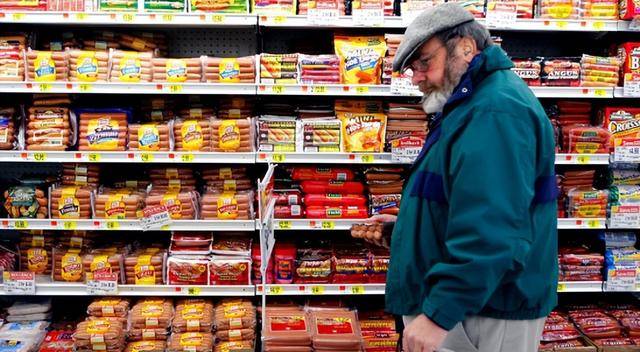
财经观察:“K型”分化严重,如何影响美国人生活
Huan Qiu Shi Bao· 2025-11-13 22:45
Group 1 - The term "K-shaped economy" describes the significant disparity in economic recovery among different social classes in the U.S., where some experience rapid recovery while others face stagnation or decline [2][7]. - In Seattle, the median household income has risen from $180,000 in 2019 to approximately $230,000 by 2025, while the median home price has surged to $1.6 million, highlighting the growing wealth gap [2][3]. - The consumption patterns of Coca-Cola reflect this economic divide, with sales growth driven by high-end products, while low-income consumers are increasingly shopping at discount stores [5][8]. Group 2 - Fast food chains like McDonald's are witnessing a decline in low-income customer visits, prompting them to introduce more special offers to attract this demographic [5][6]. - The automotive market shows a similar trend, with new car sales averaging over $50,000, while loan defaults and repossessions are rising among lower-income consumers [6][7]. - Airlines and hotel chains report a growing demand for premium services, with Delta Airlines noting that first-class and business-class revenues are expected to surpass economy class [6][7]. Group 3 - The economic policies post-pandemic, including unconventional monetary policies, have exacerbated wealth inequality, benefiting the affluent while low-income families face rising costs [7][10]. - The spending habits of the top 10% of income earners account for 49.7% of total consumer spending, the highest since 1989, indicating a growing reliance on this demographic for economic growth [9][10]. - The current economic climate has led to a pessimistic outlook among the general population regarding employment and the labor market, with concerns about long-term structural inequality [10].

【深度】美国经济K型分化严重,没有结构性改革或难摆脱
Sou Hu Cai Jing· 2025-11-13 11:59
Economic Overview - The current U.S. economy exhibits a K-shaped characteristic, indicating a significant disparity where some sectors are thriving while others are struggling [1][3] - This K-shaped economy is attributed to various factors including policies from the Trump administration, accelerated technological advancements, and the Federal Reserve's monetary policies [1][3] Wealth Disparity - Wealth inequality has intensified, with stock and real estate markets reaching new highs due to loose fiscal and monetary policies, benefiting the wealthy who own assets [1][3] - In contrast, ordinary citizens relying on wage income have seen their purchasing power severely eroded by inflation [1][3] Industry Disparity - Industries such as technology, finance, and remote work have flourished, while sectors like tourism, dining, retail, and entertainment have been severely impacted, leading to job losses in low-skill positions [1][3] - The disparity is further highlighted by the performance of large multinational corporations, which have better access to credit and resources compared to small and medium-sized enterprises that face closures due to cash flow issues [3] Labor Market Dynamics - The U.S. labor market is showing signs of weakness, with a reported 3% year-over-year increase in the Consumer Price Index (CPI) and a rise in the unemployment rate to 4.3%, the highest since November 2021 [3][4] - The Federal Reserve has responded by lowering the federal funds rate by 25 basis points to a range of 3.75%-4.00%, marking the second rate cut of the year [3][4] Impact of Technology - The surge in AI-related capital expenditures is projected to contribute significantly to GDP growth, with estimates suggesting a 0.7 percentage point increase in real GDP growth from Q4 2024 to Q2 2025 [4] - The disconnect between productivity gains from technological advancements and the labor market is evident, with productivity in the non-farm sector expected to rise by 3.3% year-over-year by Q2 2025 [4] Immigration Policy Effects - Restrictive immigration policies have contributed to a slowdown in the labor market, with net immigration numbers expected to drop significantly [5] - The decline in available labor has made it challenging for businesses to fill positions, further exacerbating employment growth issues [5] Federal Reserve's Role - The Federal Reserve's tightening monetary policy, including 11 rate hikes from March 2022 to July 2023, has been identified as a factor exacerbating the K-shaped economy [6] - The disparity in wealth distribution is influenced by high-interest rates, which disproportionately affect lower-income households [6] Economic Outlook - The likelihood of a comprehensive recession in the U.S. is currently low, but the risk of stagflation remains a pressing concern due to potential economic slowdowns and persistent inflation [7] - The Federal Reserve faces challenges in balancing the need for demand stimulation through rate cuts while managing inflationary pressures [7] Structural Reforms Needed - Addressing the K-shaped economic trend requires structural reforms, including adjustments in tax policies and increased investment in education to enhance productivity and job creation [8][9] - Ensuring equitable distribution of the benefits from technological advancements, particularly AI, is crucial for mitigating the adverse effects on lower-income households [9]

央行发布三季度政策报告,软银清仓英伟达加投OpenAI | 财经日日评
吴晓波频道· 2025-11-13 00:33
Group 1: Monetary Policy and Economic Outlook - The central bank's third-quarter monetary policy report emphasizes the need to balance short-term and long-term goals, focusing on supporting the real economy while maintaining the health of the banking system [2] - The report expresses concerns about insufficient global economic growth but maintains strong confidence in domestic economic growth, indicating a positive outlook for reasonable price recovery [2] - The central bank highlights the importance of interest rate relationships and effective communication with the market to manage expectations [3] Group 2: Economic Disparities in the U.S. - A survey reveals that nearly 24% of U.S. households are classified as "living paycheck to paycheck," with the percentage rising to 29% among low-income families [4] - The data reflects a "K-shaped economy," where high-income households benefit more from economic growth compared to low-income households, exacerbating wealth inequality [4] - The report suggests that global economies experiencing loose monetary policies may also face similar K-shaped economic disparities [4] Group 3: E-commerce Performance - JD.com reported a nearly 60% increase in order volume during the "Double 11" shopping festival, with a 40% growth in the number of users placing orders [8] - Xiaomi also performed well, with total payment amounts exceeding 29 billion yuan during the same period, indicating strong consumer engagement [8] - Alibaba announced changes to its "Double 11" strategy, including decentralizing traffic distribution to support small and medium-sized businesses [8][9] Group 4: Investment Trends and Corporate Actions - SoftBank reported a net profit of 2.502 trillion yen for the second fiscal quarter, significantly exceeding the previous year's profit, driven by substantial returns from its investment in OpenAI [10] - SoftBank's decision to sell all shares in NVIDIA and reinvest in OpenAI reflects a strategic shift towards high-potential AI investments [10][11] - Barclays downgraded Oracle's debt rating, citing concerns over its capital expenditures exceeding free cash flow, which may lead to a financing gap starting in fiscal year 2027 [12] Group 5: Fundraising and Market Dynamics - The number of new public funds issued in 2025 reached 1,371, surpassing previous years, although the total fundraising scale is at a new low [14] - The popularity of stock funds has increased, with a record number of stock-type funds issued, while bond funds have seen a decline in issuance [15] - The market is experiencing fluctuations, with defensive sectors like pharmaceuticals and oil and gas performing well amid broader market volatility [16][17]





每日机构分析:11月12日
Xin Hua Cai Jing· 2025-11-12 09:25
Group 1 - Moody's economist Dave Chia indicates that the Bank of Korea may delay interest rate cuts until Q1 2026 due to high housing prices, household debt pressure, rising inflation, and economic resilience, with the rate decision on November 27 being a focal point [1] - Fitch's BMI report states that India will become the largest beneficiary of green electricity demand for data centers due to supportive policies and cost advantages, with a less than 10% increase in renewable energy capacity over the next five years sufficient to meet new data center demand [1] - The European Business Association warns that if US-EU trade tensions do not ease by the end of the year, it could drag down Eurozone GDP growth by 0.5-0.6 percentage points in 2026, leading to investment contraction and employment pressure [1] Group 2 - Goldman Sachs CEO Solomon warns that the continuous expansion of the US $38 trillion national debt could lead to a "clearing," emphasizing that the solution lies in boosting economic growth (such as through AI and infrastructure investment) rather than increasing taxes [2] - DBS Bank forecasts that India's October CPI may drop to 0.4% year-on-year, the lowest on record, primarily due to falling vegetable prices and favorable base effects, with potential inflation rebound in the coming months [2] - Australian economist Eslick notes that in the past two quarters, investor mortgage loans in Australia surged over 20%, with 83% used for purchasing existing homes, which does not help increase housing supply, calling for the removal of tax incentives to curb speculation and prevent market overheating [2] Group 3 - Morgan Stanley expects the Federal Reserve to cut rates by 25 basis points in December due to a softening labor market, but emphasizes that unexpectedly strong employment data post-shutdown could delay this decision, presenting "asymmetric risks" for investors [3] - A Bank of America survey reveals that nearly 24% of American households have become "paycheck-to-paycheck," with the low-income group rising to 29%, primarily due to wage growth lagging behind increases in housing, food, and other essential expenses [3]
国信证券港股2026年投资策略:聚焦AI应用主线 把握PPI-CPI轮动节奏
Zhi Tong Cai Jing· 2025-11-09 06:05
Group 1: Economic Outlook - The report anticipates a soft landing for the US economy, with expectations of interest rate cuts due to weakened Federal Reserve independence and employment pressures [2] - A potential economic slowdown or mild recession is expected to be countered by rapid interest rate cuts, benefiting gold and US equities over US Treasuries and cash [2] Group 2: Domestic Market Projections - The A-share market is projected to have considerable upward potential during the 14th Five-Year Plan period, with a target of over 4450 points by 2026, supported by low bond rates and improving prices [3] - The report suggests a long-term bullish trend for the Chinese stock market, aligning with the strategic focus on information technology and consumption [3] Group 3: Hong Kong Market Insights - The Hong Kong stock market is expected to benefit from a significant inflow of southbound funds, with a target range of 29000-32000 points for 2026, following a strong performance in 2025 [4] - The shift in pricing power from quantity to quality due to southbound fund inflows is highlighted as a key factor influencing Hong Kong stock valuations [4] Group 4: Industry Selection - AI applications are expected to drive growth across various sectors, including internet/software, media, hardware, semiconductors, and retail [5] - The PPI chain is anticipated to benefit midstream manufacturing and upstream raw materials industries, with a focus on sectors like electrical equipment, defense, chemicals, and machinery [5] - Non-bank financials, particularly insurance and brokerage firms, are expected to perform well due to market conditions [5] - The pharmaceutical sector is viewed positively, with new consumption trends favoring innovative drugs over traditional consumption [5] - A stable cash flow combination is projected to outperform the market, especially in a context of a weakening dollar and low bond yields [5]

2025年10月美联储议息会议点评
Ping An Securities· 2025-10-31 07:28
Group 1: Federal Reserve Actions - The Federal Reserve lowered the target federal funds rate by 25 basis points to a range of 3.75-4% as expected[3] - The voting showed increased division among committee members, with one member supporting a 50 basis point cut and another opposing any cut[3] - The Fed plans to end its balance sheet reduction starting December 1, 2025, after continuing to reduce by $5 billion in Treasury securities and $35 billion in MBS in October and November[3] Group 2: Economic Indicators and Market Reactions - The 10-year U.S. Treasury yield and the U.S. dollar index rose, while the S&P 500 and COMEX gold prices fell sharply following the announcement[2] - Powell indicated that the current interest rate is near the neutral rate, estimated between 3%-4%[3] - Recent economic data suggests that U.S. economic activity may be slightly better than expected, driven by stronger consumer spending[5] Group 3: Inflation and Employment Concerns - Powell noted that inflation remains a concern, with the latest CPI data showing slightly softer inflation than expected[5] - The labor market is showing signs of cooling, but Powell emphasized that employment risks are skewed to the downside[5] - The Fed is cautious about potential persistent inflation and the impact of tariffs on prices[5] Group 4: Market Expectations and Future Outlook - Following the October meeting, the probability of a rate cut in December dropped from 91% to 68% according to CME FedWatch[5] - The Fed may not continue to lower rates due to ongoing inflation pressures and the current policy rate being closer to neutral[5] - Powell's comments suggest that the pace of future rate cuts may change, reflecting differing views within the committee[5]