AI浪潮

Search documents
美国9月通胀继续下行,年内继续降息预期确认
Sou Hu Cai Jing· 2025-10-26 02:53
Group 1 - The U.S. government shutdown has delayed the release of the September CPI data, which is now expected on October 24. The CPI for September shows a year-on-year increase of 3%, which is below expectations, and the core inflation has risen by only 0.2% month-on-month, marking the slowest growth in three months [2] - The weak CPI data, combined with the government shutdown, may further stimulate the Federal Reserve's willingness to adopt a more accommodative monetary policy. The market has already priced in two rate cuts of 25 basis points each for the remainder of the year [2][3] - Service sector inflation has begun to cool, which is significant as it indicates a slowdown in economic growth and demand, contributing to the decline in CPI [2][3] Group 2 - The core CPI year-on-year growth rate has decreased from 3.1% in August to 3.0% in September, the lowest level since June. The significant decline in core service costs is a key driver of the softening core inflation [3] - The impact of tariffs and immigration policies on prices has been minimal, with the CPI for goods rising only 0.2% month-on-month in September. Some companies have absorbed tariff costs, while others have fully passed on price increases [3][4] - Concerns about U.S. inflation are primarily held by the Federal Reserve, which has been cautious due to potential inflationary pressures from tariffs and immigration policies. However, recent data suggests these concerns may be overstated [4][5] Group 3 - Global inflation is on a downward trend, with the average global CPI year-on-year inflation rate at 3.3%, down from 4.5% a year ago. This decline has been consistent, with 80% of the time in the past 35 months showing decreasing rates [4] - The main drivers of this global deflation are emerging markets and developing economies, where core inflation has reached multi-decade lows. This global context may further lower prices for U.S. imports and service sector costs [4] - The theoretical impact of tariffs may not reflect in final consumer prices, as companies might absorb costs to maintain profit margins, which could increase the downward risk for labor markets and CPI inflation [5]


9月挖掘机销量同比高增,建议关注工程机械板块 | 投研报告
Zhong Guo Neng Yuan Wang· 2025-10-24 02:28
Core Viewpoint - The CITIC Machinery Industry experienced a decline of 5.21% from October 13 to October 17, 2025, ranking 24th among all primary industries in terms of performance [1][2]. Group 1: Machinery Industry Performance - The engineering machinery sector fell by 1.43%, general equipment by 7.20%, specialized equipment by 6.22%, instruments and meters by 4.45%, metal products by 6.04%, and transportation equipment by 1.66% during the same period [1][2]. Group 2: Engineering Machinery Insights - In September, excavator sales reached 19,900 units, a year-on-year increase of 25.4%, with domestic sales at 9,200 units (up 21.5%) and exports at 10,600 units (up 29%) [3]. - Loader sales were 10,500 units, reflecting a 30.5% year-on-year growth, with domestic sales at 5,100 units (up 25.6%) and exports at 5,500 units (up 35.3%) [3]. - The domestic market for engineering machinery is expected to continue recovering due to equipment renewal cycles and economic stabilization policies, supported by large-scale projects [3]. Group 3: Robotics and Semiconductor Equipment - Zhiyuan Robotics launched the new industrial-grade interactive robot, Zhiyuan Spirit G2, with over 100 million yuan in orders for its first batch delivery [4]. - The U.S. is considering tightening semiconductor export restrictions to China, which may accelerate the domestic semiconductor industry's innovation and provide opportunities for local manufacturers [5]. Group 4: Investment Recommendations - Suggested companies in engineering machinery include SANY Heavy Industry, Zoomlion, XCMG, LiuGong, Shantui, and Hengli Hydraulic [6]. - In the general equipment sector, recommended companies include Anhui Heli, Hangcha Group, and others in machine tools and cutting tools [6]. - For humanoid robots, focus on high-tech components with low domestic production rates, such as assemblies and sensors [6].
产业洞察系列报告(四):科技产业合作与竞争(下):其他先进制造业的发展对比与机遇
Ping An Securities· 2025-10-22 11:28
Core Insights - The report highlights the accelerating competition and cooperation in advanced manufacturing between China and the US, particularly in the semiconductor, general aviation, and innovative pharmaceuticals sectors [6][11][18]. Semiconductor Industry - China is rapidly catching up in the semiconductor sector, focusing on self-sufficiency in AI chip production amidst a global supply chain heavily dominated by the US [2][19]. - The semiconductor industry has a complex global supply chain with multiple stages, where the US leads in high-value design and equipment, while China excels in manufacturing and testing [19][24]. - In terms of market share, China and the US together account for nearly 60% of global semiconductor sales, with the US holding a significant supply share of over 50% compared to China's less than 10% [22][24]. - China's semiconductor trade has been in a long-term deficit, with a projected deficit of $226.67 billion in 2024, while the US maintains a trade surplus of $10.25 billion [27][28]. - US semiconductor companies exhibit stronger fundamentals, with revenue and net profit significantly higher than their Chinese counterparts, and a return on equity (ROE) median approximately four times that of A-share companies [31][32]. General Aviation Industry - The US holds a first-mover advantage in the general aviation sector, while China is leveraging low-altitude economic policies to drive innovation and transformation [3][12]. - The global demand for general aviation aircraft is evenly distributed, with China and North America each accounting for about 20% of the market, but the US dominates supply with Boeing and Airbus [3][12]. - China's aerospace sector has a long-term trade deficit, while it is a leading exporter of drones [3][14]. - Current market performance shows that US aviation equipment companies outperform their Chinese counterparts in terms of scale and ROE [3][14]. Innovative Pharmaceuticals Industry - The US leads in the innovative pharmaceuticals sector, but Chinese companies are making significant strides in original innovation and international expansion [4][17]. - The pharmaceutical market share remains stable, with the US holding about 40% and China around 10%, primarily focusing on generic drugs [4][17]. - Both countries face trade deficits in pharmaceuticals, but Chinese innovative drug companies have accelerated their international presence, with increasing license-out revenues [4][19]. - US innovative pharmaceutical companies show better fundamentals, with many Chinese companies' valuations hovering around historical averages [4][20]. Market Outlook - The report anticipates a continuation of the mid-to-long-term technology market trends, with advanced manufacturing sectors like semiconductors, general aviation, and innovative pharmaceuticals presenting significant investment opportunities [7][18].
海光信息(688041):算力芯片市场版图扩展,3Q25收入持续高增
Ping An Securities· 2025-10-21 04:37
Investment Rating - The report maintains a "Recommended" investment rating for the company [1]. Core Views - The company has shown significant revenue growth, with a 69.60% year-on-year increase in Q3 2025, achieving a revenue of 40.26 billion yuan. However, the net profit growth of 13.04% is slower compared to revenue growth, primarily due to a substantial increase in minority shareholder losses [5][8]. - The company is positioned as a key player in the domestic computing chip market, with strong competitiveness in CPU and DCU series products. The performance is expected to remain stable due to the AI wave and domestic innovation initiatives [8]. Summary by Sections Financial Performance - In Q3 2025, the company reported a total profit of 12.00 billion yuan, a 31.00% increase year-on-year, and a net profit attributable to shareholders of 7.60 billion yuan, reflecting a 13.04% increase [5][8]. - R&D expenses reached 10.88 billion yuan, up 59.35% year-on-year, while sales expenses surged by 159.98% to 1.28 billion yuan, indicating strong investment in product development and market expansion [8]. Future Projections - Revenue projections for 2025-2027 are estimated at 14.21 billion yuan, 20.06 billion yuan, and 27.11 billion yuan, respectively, with corresponding net profits of 3.07 billion yuan, 4.51 billion yuan, and 6.21 billion yuan [7][10]. - The company is expected to maintain a high growth rate, with revenue growth rates projected at 55.1% for 2025 and 41.2% for 2026 [11]. Valuation Metrics - As of October 20, 2025, the price-to-earnings (P/E) ratios are projected to be 172.9X for 2025, 117.9X for 2026, and 85.6X for 2027, indicating a strong growth outlook despite high valuation multiples [8][11].

超20家!存储与算力上市公司密集接受机构调研
Shang Hai Zheng Quan Bao· 2025-10-20 18:07
Core Viewpoint - The semiconductor and computing power industries are experiencing a positive trend, with strong market demand and ongoing institutional research into over 20 companies in the sector since the National Day holiday [1] Semiconductor Industry - The storage industry is benefiting from a structural shift in supply and demand driven by the AI wave, leading to high market prosperity [2] - Companies like Shanghai Beiling and Demingli reported advancements in storage products, with Demingli noting an overall price increase in the storage market and a focus on enhancing production capacity to meet demand [2] - Hengshuo Co. is optimistic about the NOR Flash market, expecting price increases in Q4 and actively developing advanced NOR Flash products [3] - Huicheng Co. plans to invest strategically in DRAM packaging through partnerships to expand its capabilities in the storage chip packaging sector [3] Computing Power Market - The demand for computing power remains strong, with companies reporting robust order books and business expansion [4] - Haiguang Information achieved a revenue of 4.026 billion yuan in Q3 2025, a year-on-year increase of 69.60%, with a contract liability of 2.8 billion yuan indicating sustained customer demand [4] - Chip Origin Co. expects new orders of 1.593 billion yuan in Q3 2025, a significant year-on-year increase of 145.80%, with AI-related orders making up about 65% [4][5] - Shunwang Technology has developed a stable computing power service capability, successfully launching innovative products to meet diverse computing needs [6] - Guangmai Technology is collaborating on a domestic computing power cluster project, achieving significant results and positive feedback from internet companies [6]
科技股大跌别心慌!三个信号告诉你,牛市送钱时刻已到
Sou Hu Cai Jing· 2025-10-20 12:04
Core Insights - The current market downturn in A-shares, particularly in the technology sector, is viewed as a potential opportunity rather than a disaster, suggesting that panic selling may lead to missed investment chances [1] Group 1: Market Signals - Signal One: Despite significant declines in technology stocks, the trading volume has shrunk, indicating that this is not a sign of institutional selling but rather a period of observation ahead of quarterly earnings reports [3] - Signal Two: Many quality technology stocks have adjusted to their 20-day and 30-day moving averages, which are classic rebound support levels, suggesting a favorable entry point for both short-term and long-term investors [5] - Signal Three: The long-term trend remains strong, with the current asset securitization rate at approximately 75%, indicating that discussions about the end of the bull market may be premature [7] Group 2: Investment Strategies - For investors who have already positioned themselves, it is advisable to maintain a calm approach and consider taking some profits as a risk buffer while holding onto quality stocks [9] - New entrants should manage their positions carefully, keeping cash reserves to gradually increase their stakes after further market adjustments, focusing on "hard technology" sectors aligned with national strategies [9] - Investors lacking confidence may consider technology index funds to diversify risks, while those who prefer stock selection should conduct thorough valuation comparisons to identify potential growth stocks [9]
华商基金:不在朝夕之赢 而在长远之兴 | 北京公募基金高质量发展在行动
Xin Lang Ji Jin· 2025-10-20 09:56
Core Viewpoint - The public fund industry in China is entering a critical phase of deepening reform and enhancing quality, with a focus on achieving high-quality development that aligns with national strategies and public expectations [3]. Industry Summary - The China Securities Regulatory Commission (CSRC) has issued an action plan for promoting high-quality development in public funds, which includes optimizing fee structures for actively managed equity funds, strengthening the alignment of interests between fund companies and investors, and enhancing the industry's ability to serve investors [3]. - The public fund industry is responding to the challenges of fee reforms by emphasizing performance-driven growth rather than relying on high fees for sustainability [4]. Company Summary - Huashang Fund has been deeply involved in the public fund industry for 20 years, focusing on enhancing its active management capabilities and prioritizing performance as a key driver for growth [3][4]. - The company is one of the first to participate in the pilot program for floating fee rate products, which aligns its interests with those of its investors [4]. - Huashang Fund emphasizes investor engagement, especially during market downturns, by promoting rational investment concepts and guiding investors to recognize value opportunities [4]. - The company aims to continue its active management strategy, leveraging research and performance to create sustainable returns for investors while contributing to the high-quality development of the Chinese economy [4].
四维图新程鹏:18亿并购,期待拿到高阶辅助驾驶订单
Xin Jing Bao· 2025-10-19 07:02
Core Insights - The company, Siwei Tuxin, is making a significant investment of 1.8 billion yuan to become the largest shareholder of Jianzhih Robot, aiming to establish a new platform for advanced driver assistance systems (ADAS) [1] - The integration of the two companies is expected to enhance the AI capabilities of Siwei Tuxin, allowing for improved quality in high-level ADAS and AI-enabled products [1][2] - The CEO of Siwei Tuxin anticipates securing over one million high-level ADAS orders in the future, building on their existing 5 million mid-level orders [2] Investment and Strategic Moves - Siwei Tuxin plans to invest 2.5 billion yuan in cash and inject 15.5 billion yuan in assets to acquire a controlling stake in Jianzhih Robot, marking a significant move in the A-share market for smart driving mergers [1] - The combined R&D team will consist of around 700-800 personnel, focusing on developing low, mid, and high-level ADAS products [1][2] Market Position and Future Outlook - The company has already captured a substantial market share in low and mid-level ADAS and aims to expand into high-level systems post-acquisition [1] - The CEO expressed confidence in achieving high-level orders within 1.5 to 2 years, leveraging the combined strengths of both companies [2] Technological Innovations - The future of L3-level ADAS is constrained by regulatory and safety concerns, but advancements are expected to lead to vehicles without steering wheels or brakes in the next 3-5 years [3] - The concept of "VLA (Visual Language Action)" is introduced, indicating a shift towards real-time decision-making in driving without relying solely on high-definition maps [4] Challenges and Adaptations - The demand for high-definition maps is evolving, with a need for real-time updates to accommodate urban changes, which necessitates vehicle-to-infrastructure collaboration [5] - The company is exploring various monetization strategies for high-definition maps, including vehicle-based data collection to enhance map accuracy [4][5]

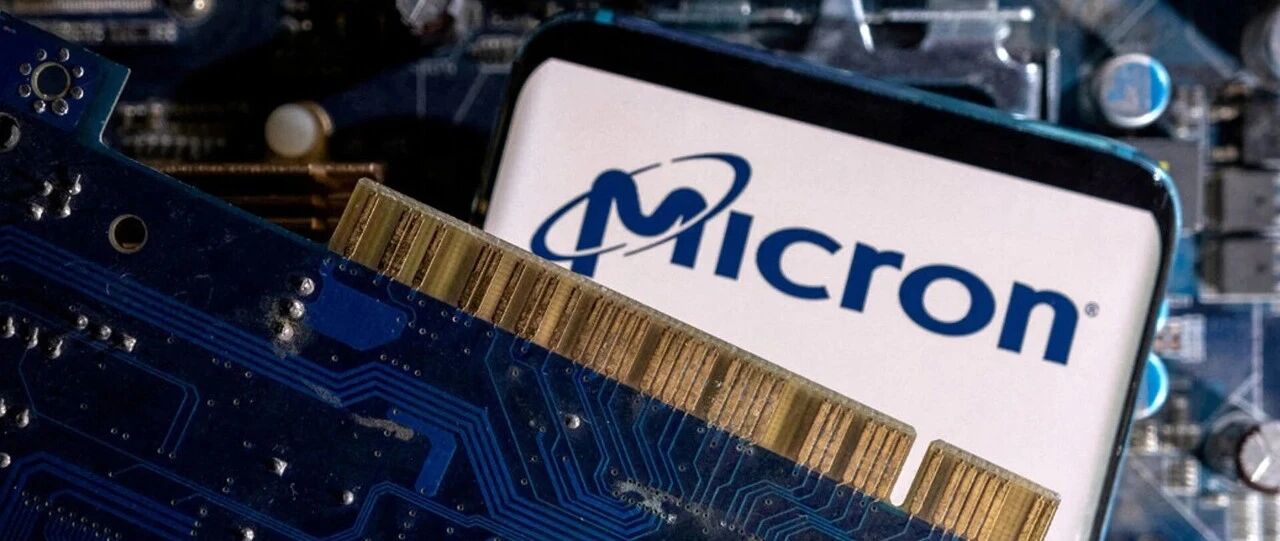
美光退出中国服务器存储市场!
是说芯语· 2025-10-17 07:59
Core Viewpoint - Micron Technology faces significant challenges in the Chinese market due to a ban on its products in critical infrastructure, leading to a substantial decline in revenue from this region [4][5]. Group 1: Impact of the Ban - Micron plans to stop supplying server chips to Chinese data centers, which is a direct consequence of the ban [3]. - The ban has resulted in a loss of nearly all core customers in government, finance, and telecommunications sectors, severely impacting business performance [4]. - Revenue from the Chinese market dropped from $17.357 billion in 2018 (58% of global revenue) to $3.232 billion in 2022 (10.8% of global revenue) [5]. Group 2: Financial Performance - In FY2024, Micron's global revenue is expected to increase by 61.59% to $25.111 billion, but revenue from China is speculated to be below $1 billion, accounting for less than 5% of total revenue [5]. - The market share of Micron in the Chinese Mobile LPDDR segment is projected to be in the high single digits for Q1 2025 [5]. Group 3: Future Strategies - Despite exiting the Chinese data center market, Micron will continue to sell products to two Chinese clients with significant data center operations outside China, including Lenovo [5]. - Micron's statement emphasizes its compliance with applicable regulations and acknowledges the impact of the ban on its data center division [6]. Group 4: Market Opportunities for Competitors - The exit of Micron from the Chinese data center market presents opportunities for domestic storage manufacturers, as demand for DRAM and NAND remains high due to the acceleration of cloud computing and AI training [10]. - Chinese manufacturers like Changxin Storage and Yangtze Memory Technologies are rapidly entering the server market, focusing on products such as HBM3E, DDR5, and PCIe 5.0 SSDs to capture market share from Micron and other competitors [11].

中金深度:“十五五”投资蓝图初探
中金点睛· 2025-10-16 23:32
Core Viewpoint - The "14th Five-Year Plan" is entering a critical policy window, with increased market attention on its implications for capital markets and industry development [2][11]. Group 1: Historical Positioning of the "14th Five-Year Plan" - The "14th Five-Year Plan" is a key phase for achieving the 2035 long-term goals, bridging the previous and upcoming plans [3][12]. - It is also crucial for completing the reform tasks set by the 20th Central Committee by 2029, with over 300 important reform measures proposed [3][12]. Group 2: Important Directions for Capital Markets During the "14th Five-Year Plan" - Key areas of focus include digital technology (AI, 6G, quantum technology), space economy (low-altitude economy, commercial aerospace, deep-sea technology), high-end manufacturing (embodied intelligence, aerospace technology, solid-state batteries), domestic consumption (new consumption, quality upgrades), and healthcare (innovative drugs, high-end medical devices) [4][9]. Group 3: Capital Market Performance Characteristics During Previous Five-Year Plans - Historical data shows that A-share indices have generally risen during five-year plans, with the Shanghai Composite Index showing varied performance: -44.0%, +141.9%, +26.0%, -1.9%, and +13.3% across different plans [5]. - The "14th Five-Year Plan" period has seen a steady increase in A-share resilience and risk resistance, with a market capitalization exceeding 100 trillion yuan [5]. Group 4: Market Outlook for the "14th Five-Year Plan" - The "14th Five-Year Plan" is expected to create opportunities in the context of global monetary system restructuring, AI trends, and China's manufacturing advantages [8][9]. - The capital market is anticipated to exhibit a "long-term" and "steady" trend, supported by government emphasis on capital market development and favorable macroeconomic conditions [9]. Group 5: Industry-Specific Insights - **Digital Technology**: The AI industry is expected to accelerate, with significant advancements in AI applications and quantum technology development [18][19]. - **Space Economy**: The commercial aerospace sector, particularly satellite internet, is poised for growth, supported by government policies and technological advancements [19][20]. - **High-End Manufacturing**: The sector is expected to benefit from technological innovations and policy support, with a focus on embodied intelligence and solid-state batteries [21][24]. - **Domestic Consumption**: New consumption trends are emerging, with a shift towards personalized and quality-driven consumption patterns [25][26]. - **Healthcare**: The innovative drug and high-end medical device sectors are projected to grow significantly, driven by supportive policies and market demand [28][29].