
十五五规划

Search documents
现实格局偏弱 螺纹钢承压运行
Xin Hua Cai Jing· 2025-11-04 02:14
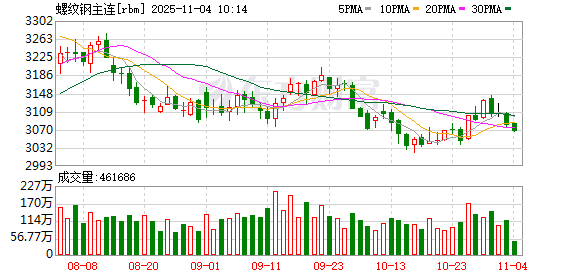
Core Viewpoint - The recent rebound in rebar prices is primarily driven by positive macroeconomic factors, supply constraints due to production limits, and strong raw material costs, although the sustainability of this price increase is uncertain due to rising supply and weak demand [1][2][8]. Supply and Production - Rebar supply is on the rise, with weekly production reaching 2.1259 million tons as of October 31, an increase of 55,700 tons from the end of September [2]. - The production increase is mainly attributed to long-process steel mills, which have raised their output to 1.8308 million tons, a cumulative increase of 83,500 tons over the past two weeks [2]. - Short-process steel mills are maintaining stable production levels, with a weekly output of 295,100 tons, up 37,000 tons from the end of the month [2]. - Despite the production increase, the overall supply pressure is growing due to high inventory levels, with total rebar inventory at 6.0252 million tons, reflecting a year-on-year increase of 1.6524 million tons or 37.79% [5]. Demand and Market Conditions - Rebar demand has shown seasonal improvement but remains weak, with weekly demand at 2.3219 million tons, down 88,800 tons from pre-holiday levels [7]. - Total rebar demand for October was 9.2727 million tons, a year-on-year decrease of 136,010 tons or 12.79% [7]. - Daily transaction volumes for rebar have also declined, averaging 101,300 tons in October, down 1.13% month-on-month and 16.51% year-on-year [7]. - Although some downstream indicators like cement and concrete shipments have improved, the overall demand outlook remains weak due to ongoing challenges in the real estate sector and declining infrastructure investment [7]. Price Trends - Rebar futures prices experienced volatility, dropping to a low of 3,021 yuan per ton before rebounding to a high of 3,143 yuan per ton due to improved market sentiment [3]. - The current price movements are influenced by strong cost support from raw materials, but the fundamental market conditions do not indicate a substantial improvement, leading to concerns about the sustainability of price increases [8].

“申”度解盘 | 三季报落幕,这些信号要注意
申万宏源证券上海北京西路营业部· 2025-11-04 02:09
Core Viewpoint - The article emphasizes that the current market is in a phase characterized by "policy support + profit recovery + structural differentiation," suggesting a focus on sectors poised for recovery from low levels [6][10]. Market Review - The A-share market exhibited structural differentiation, with the Shanghai Composite Index slightly rising by 0.11%. The total market turnover reached 11.63 trillion yuan, indicating active trading [7]. - Large-cap stocks underperformed, with the CSI 300 down by 0.43% and the SSE 50 down by 1.12%. In contrast, the CSI 500 and CSI 1000 rose by 1.0% and 1.18%, respectively, indicating a shift towards small and mid-cap stocks [7]. - Key sectors such as fine chemicals, shipping, and metals performed well, while previously leading sectors like semiconductors, communications, and energy equipment lagged [7]. - The article highlights two significant developments in October: the implementation of the 14th Five-Year Plan, which accelerates the development of new energy, low-altitude economy, quantum technology, 6G, brain-computer interfaces, and embodied intelligence, and the establishment of a US-China economic consensus, which is seen as a positive market signal [7]. Q3 Earnings Analysis - The third-quarter reports indicate that the net profit attributable to shareholders of A-share listed companies grew by over 5% year-on-year, with a notable increase of over 11% in Q3 alone, suggesting a clear improvement in corporate profitability [8]. - Some technology stocks saw their profits double year-on-year, although some experienced a decline in quarter-on-quarter performance, indicating potential overvaluation in certain cases [8]. - Despite some industries still facing losses, there are signs of narrowing losses, and stock price increases have been modest. The article suggests focusing on sectors expected to recover, such as steel, coal, and healthcare [8]. Fund Positioning - Public funds have reached historically high positions, with technology sector allocations nearing 40%. Historical data suggests that when a sector's allocation exceeds 30%, it often leads to a reversal [9]. - The article warns that while there is a narrative of industrial upgrades and domestic substitution in technology, the rapid increase in holdings may necessitate caution regarding potential style shifts in the market [9]. Market Outlook - The market is currently navigating a complex interplay of "policy support + profit recovery + structural differentiation." While macro data has not fully rebounded, industry policies are reshaping market expectations [10]. - The article encourages patience and confidence in sectors experiencing stagnation and those with imminent profit rebounds, while advising caution regarding heavily weighted technology sectors [10]. - It is recommended to focus on coal, steel, and healthcare sectors during this period of style transition [10].

广发早知道:汇总版-20251104
Guang Fa Qi Huo· 2025-11-04 02:08
1. Report Industry Investment Rating No relevant content provided. 2. Core Viewpoints of the Report - The A - share market showed a shrinking - volume rebound on Monday, with pro - cyclical sectors performing well. The four major stock index futures contracts had narrow - range fluctuations, and the basis of the main contracts was adjusted. Domestic policy is expected to support the PMI index, while overseas, there are differences among Fed officials on interest rate cuts. Different futures varieties have different market trends and investment suggestions based on their respective fundamentals and news[3][4][5]. 3. Summaries by Relevant Catalogs Financial Derivatives - Financial Futures 3.1.1. Stock Index Futures - **Market Conditions**: On Monday, A - share major indices opened lower and closed higher with shrinking volume. The Shanghai Composite Index rose 0.55% to 3976.52 points. Pro - cyclical sectors such as forestry, oil and gas, and coal performed well, while industrial sectors such as precious metals, basic metals, and automobiles declined. The four major stock index futures contracts all had narrow - range fluctuations, with IF2512 and IH2512 down 0.04% and 0.00% respectively, IC2512 down 0.34%, and IM2512 up 0.01%. The basis of the four major contracts was adjusted[3][4]. - **News**: China's October S&P manufacturing PMI was 50.6, showing a slowdown in the expansion. Overseas, US Treasury Secretary suggested interest rate cuts if inflation drops. The probability of the Fed cutting interest rates by 25 basis points in December has dropped to about 63%[4][5]. - **Investment Suggestions**: Try to sell out - of - the - money put options at the support level or construct a bull call spread with put options to capture the subsequent upside space[5]. 3.1.2. Treasury Futures - **Market Performance**: Treasury futures closed mostly lower, with the 30 - year main contract down 0.11%, the 10 - year main contract up 0.01%, the 5 - year main contract down 0.01%, and the 2 - year main contract down 0.03%. The yields of major inter - bank interest - rate bonds were mixed[6]. - **Funding**: The central bank conducted 783 billion yuan of 7 - day reverse repurchase operations on November 3, with a net withdrawal of 259 billion yuan. The inter - bank market funds were loose, and short - term interest rates are expected to remain low[6][7]. - **Investment Suggestions**: In November, the bond market may enter a waiting stage. It is recommended to go long on dips for the 10 - year Treasury bond active bond 250016.IB in the range of 1.75% - 1.85%. Pay attention to the positive arbitrage strategy opportunities due to the rise of IRR[7]. Financial Derivatives - Precious Metals - **Market Review**: There are differences among Fed officials on interest rate cuts. The US October ISM manufacturing PMI was 48.7, lower than expected. The US government shutdown has affected the economy, and the gold tax policy has led to price adjustments by some enterprises. The precious metals market continued to fluctuate in a narrow range[8][9]. - **Outlook**: In the short term, the precious metals market will enter an oscillation stage with falling volatility. The international gold price may operate in the range of 3995 - 4070 US dollars (910 - 935 yuan), and it is recommended to conduct volatility operations or sell out - of - the - money gold put options at high prices. Silver prices will oscillate in the range of 47 - 50 US dollars (11000 - 11700 yuan)[9][11]. - **Funding**: The recent rise and fall of gold and silver prices have led to an outflow of ETF funds, and investors' short - term attitudes tend to be cautious[11]. Financial Derivatives - Container Shipping Index (European Line) - **Spot Quotations**: As of November 4, the freight quotations for Shanghai - Europe basic ports in the next 6 weeks varied among different shipping companies[12]. - **Container Shipping Index**: As of November 3, the SCFIS European line index was 1208.71 points, down 7.92% month - on - month; the US - West route index was 1267.15 points, up 14.43% month - on - month. As of October 31, the SCFI composite index was 1550.7 points, up 10% month - on - month[12]. - **Fundamentals**: As of November 4, the global container shipping capacity exceeded 33.35 million TEU, a year - on - year increase of 7.34%. The eurozone's October composite PMI was 52.2, and the US October manufacturing PMI was 48.7[12]. - **Logic and Suggestions**: The market is expected to oscillate, and it is recommended to go long on the December contract on dips[13]. Commodity Futures - Non - ferrous Metals 3.4.1. Copper - **Spot**: As of November 3, the average price of SMM electrolytic copper was 86840 yuan/ton, down 730 yuan/ton from the previous trading day. The downstream procurement volume increased slightly as copper prices declined[13]. - **Macro**: The Fed cut interest rates by 25BP in October, but the subsequent rate - cut rhythm may slow down. The US - China economic and trade consultation reached a consensus, and the US Supreme Court will hear the Trump tariff case[14]. - **Supply**: The copper concentrate spot TC was at a low level. In October, the SMM Chinese electrolytic copper output decreased by 2.94 million tons month - on - month, and it is expected to decrease by 0.4 million tons in November[14][15]. - **Demand**: The downstream demand for copper has strong resilience. Although there is a fear of high prices, more purchase orders will be released when prices fall[15]. - **Inventory**: LME copper inventories decreased, while domestic social inventories and COMEX copper inventories increased[16]. - **Logic and Suggestions**: After the positive expectations of interest rate cuts and tariffs are fulfilled, the short - term driving force is weak. The main contract should focus on the support level of 86000 - 86500 yuan/ton, and the short - term view is oscillation[17]. 3.4.2. Alumina - **Spot**: On November 3, the SMM alumina spot prices in different regions showed different trends, with a general loosening of prices due to a gradually loose supply pattern and stable demand from the electrolytic aluminum industry[17]. - **Supply**: In October 2025, China's metallurgical - grade alumina output increased month - on - month and year - on - year. The operating capacity decreased slightly, and it is expected that the supply surplus pattern will continue in November, but the situation may improve[18]. - **Inventory**: Alumina inventories in ports, factories, and electrolytic aluminum plants all increased in October, and the total registered volume of alumina warehouse receipts also increased[18]. - **Logic and Suggestions**: The alumina price is expected to maintain a weak oscillation, with the main contract reference range of 2750 - 2900 yuan/ton. It is necessary to pay attention to the supply recovery progress of Guinea bauxite and other factors[19][20]. 3.4.3. Aluminum - **Spot**: On November 3, the SMM A00 aluminum spot average price was 21440 yuan/ton, up 160 yuan/ton from the previous day[20]. - **Supply**: In September 2025, domestic electrolytic aluminum production increased slightly year - on - year but decreased month - on - month. The aluminum - water ratio increased, and it is expected that the daily output of aluminum ingots will continue to increase slightly in October[20]. - **Demand**: Downstream industries entered the traditional peak season, but the weekly start - up rate of processing products declined[20]. - **Inventory**: Domestic social aluminum ingot inventories increased slightly, while LME inventories decreased[21]. - **Logic and Suggestions**: The aluminum price is expected to fluctuate widely in the short term, with the main contract reference range of 20800 - 21600 yuan/ton. Pay attention to the subsequent inventory changes and LME de - stocking intensity[22]. 3.4.4. Aluminum Alloy - **Spot**: On November 3, the SMM aluminum alloy ADC12 spot average price was 21400 yuan/ton, up 100 yuan/ton from the previous day[23]. - **Supply**: In September, domestic recycled aluminum alloy ingot production increased, and it is expected that the start - up rate will remain flat in October[23]. - **Demand**: The demand showed a mild recovery, but the terminal demand transmission was not smooth, and high prices inhibited downstream procurement[23][24]. - **Inventory**: Social inventories increased slightly, and the total registered volume of casting aluminum alloy warehouse receipts increased[24]. - **Logic and Suggestions**: The ADC12 price is expected to maintain a strong - side oscillation, with the main contract reference range of 20400 - 21000 yuan/ton. Consider participating in the long AD01 and short AL01 arbitrage when the spread is above 550[25]. 3.4.5. Zinc - **Spot**: On November 3, the SMM 0 zinc ingot average price was 22350 yuan/ton, up 70 yuan/ton from the previous day. Downstream procurement was mainly for rigid demand[25]. - **Supply**: The zinc ore processing fee decreased, and the smelting profit was compressed, which limited the subsequent output increase. The supply of the zinc industry chain has changed from loose to tight[26]. - **Demand**: The demand did not exceed expectations, with domestic demand stronger than overseas. The inventory of the three primary processing industries showed a decrease in raw material inventory and an increase in finished - product inventory[27]. - **Inventory**: Domestic social inventories and LME inventories both decreased[27]. - **Logic and Suggestions**: The zinc price is expected to oscillate strongly in the short term, with the main contract reference range of 22300 - 23000 yuan/ton[28]. 3.4.6. Tin - **Spot**: On November 3, the SMM 1 tin price was 285400 yuan/ton, up 1000 yuan/ton from the previous day. The market trading was light[28]. - **Supply**: In September, domestic tin ore imports decreased month - on - month, and the tin ingot import volume returned to normal. The tin ingot export volume increased[29][30]. - **Demand and Inventory**: In September, the solder start - up rate increased slightly, but the demand in traditional consumer electronics and other fields was weak. LME inventories decreased, while social inventories decreased slightly[31]. - **Logic and Suggestions**: The tin price is expected to oscillate widely. Adopt the strategy of buying on dips and pay attention to the supply recovery in Myanmar in the fourth quarter[32]. 3.4.7. Nickel - **Spot**: As of November 3, the SMM1 electrolytic nickel average price was 122000 yuan/ton, up 50 yuan/ton from the previous day[32]. - **Supply**: The refined nickel production was at a high level, and the monthly production was expected to continue to increase slightly[33]. - **Demand**: The demand from electroplating and stainless steel was general, while the demand from alloys was relatively good. The demand for nickel sulfate was supported in the short term but faced challenges in the medium term[33]. - **Inventory**: Both domestic and overseas inventories increased[33]. - **Logic and Suggestions**: The nickel price is expected to oscillate in the range of 118000 - 126000 yuan/ton, and pay attention to macro - expectations and Indonesian industrial policies[34][35]. 3.4.8. Stainless Steel - **Spot**: As of November 3, the prices of 304 cold - rolled stainless steel in Wuxi and Foshan decreased, and the basis decreased[35]. - **Raw Materials**: The nickel ore price was firm, while the nickel - iron price decreased, and the cost support of raw materials declined[35]. - **Supply**: In September and October, domestic stainless steel production increased[36]. - **Inventory**: Social inventories decreased slightly, and the number of warehouse receipts decreased[36]. - **Logic and Suggestions**: The stainless - steel price is expected to oscillate weakly, with the main contract reference range of 12500 - 13000 yuan/ton. Pay attention to macro - expectations and steel - mill supply[37][38]. 3.4.9. Lithium Carbonate - **Spot**: As of November 3, the SMM battery - grade lithium carbonate spot average price was 81000 yuan/ton, up 450 yuan/ton from the previous day. The market spot circulation was tight, but most downstream enterprises still chose to wait and see[38]. - **Supply**: In October, the lithium carbonate production increased, but the weekly production decreased slightly recently, mainly due to the decline in lithium - spodumene - extracted lithium carbonate production[39]. - **Demand**: The demand was generally optimistic, with an expected increase in the production of lithium - iron and ternary materials. Pay attention to the marginal change in downstream orders after November[39]. - **Inventory**: The overall inventory decreased in all links last week[40]. - **Logic and Suggestions**: The lithium carbonate price is expected to oscillate widely, with the main contract reference range of 80000 - 85000 yuan/ton[41][42]. Commodity Futures - Black Metals 3.5.1. Steel - **Spot**: The spot price of steel was weak, with the rebar basis strengthening and the hot - rolled coil basis weakening[42]. - **Cost and Profit**: The cost of iron elements had weak support, while the cost of carbon elements had support. The profit ranking was billet > hot - rolled coil > rebar > cold - rolled coil[42]. - **Supply**: From January to September, the iron - element output increased by 5% year - on - year. In October, the increase narrowed. Affected by environmental protection restrictions in Tangshan, the molten iron output decreased, but the five - major steel products output increased slightly[42]. - **Demand**: The domestic demand expectation was still weak, while the export remained at a high level. The apparent demand of the five - major steel products increased, and the inventory pressure was relieved[42][43]. - **Inventory**: The inventory of the five - major steel products decreased, and it is expected that the inventory center will continue to decline month - on - month[43]. - **Viewpoint and Suggestions**: The steel price is expected to oscillate in the range of 3000 - 3200 yuan/ton for rebar and 3200 - 3400 yuan/ton for hot - rolled coils. Consider holding the long - coking - coal and short - hot - rolled - coil arbitrage[44][45]. 3.5.2. Iron Ore - **Spot**: As of November 3, the prices of mainstream iron ore powders were stable or decreased[46]. - **Futures**: As of November 3, the iron ore futures prices decreased, and the 1 - 5 spread weakened[46]. - **Basis**: The best - delivery product was Carajás fines, and the basis of different iron ore varieties was calculated[46]. - **Demand**: As of October 30, the daily molten iron output, blast - furnace operating rate, and other indicators decreased, and the steel - mill profitability declined[46]. - **Supply**: As of November 3, the global iron ore shipment decreased week - on - week, while the arrival volume at 45 ports increased significantly[47]. - **Inventory**: As of October 30, the port inventory increased, the daily port - clearing volume increased, and the steel - mill iron - ore inventory decreased[47]. - **Viewpoint and Suggestions**: The iron ore price is expected to be weak. Consider shorting the 2601 contract on rallies, with the reference range of 760 - 810 yuan/ton, and recommend the 1 - 5 positive arbitrage[48]. 3.5.3. Coking Coal - **Futures and Spot**: As of November 3, the coking coal futures prices oscillated and declined, while the spot prices in Shanxi and Mongolia were strong[49]. - **Supply**: As of October 30, the production capacity utilization rate of sample coal mines in Fenwei increased slightly, while that in Ganglian decreased slightly. The coal inventories in mines decreased[49][50][51]. - **Demand**: As of October 30, the coke production of coking plants and steel mills increased slightly, while the molten iron output decreased[51]. - **Inventory**: As of October 30, the total coking - coal inventory decreased slightly, with mines, ports, and washing plants de - stocking, and coking plants and steel mills increasing inventory[52]. - **Viewpoint and Suggestions**: The coking - coal price is expected to
金融期货早评-20251104
Nan Hua Qi Huo· 2025-11-04 01:59
1. Report Industry Investment Ratings No relevant content provided. 2. Core Views of the Report - The release of the "14th Five-Year Plan" draft and the phased consensus reached in the China-US economic and trade consultations will reduce the impact of tariff policies on the market, enhance market risk appetite, and promote the return of relevant assets to fundamental pricing. However, the China-US trade friction is a long - term battle, and continuous attention is needed on policy implementation and long - term game dynamics [2]. - The marginal decline of China's manufacturing PMI indicates weakening supply and demand, and subsequent economic development requires policy support. Overseas, after the US interest rate cut, the market will focus on employment and inflation during the US government shutdown, especially ADP data, as well as the end time of the shutdown [2]. - For various commodities, different market trends and investment suggestions are presented, such as precious metals entering a short - term adjustment phase, copper price decline being limited due to increased interest rate cut expectations, and aluminum price increase being driven by speculative funds [13][16][19]. 3. Summaries by Related Catalogs Financial Futures Macro - Pay attention to US employment data. Signs of cooling in the US job market are emerging, with the number of corporate layoffs reaching a new high since 2020. The US 10 - month ISM manufacturing PMI fell to 48.7%, contracting for eight consecutive months, with weak demand and employment and cooling inflation. The euro - zone 10 - month manufacturing PMI was 50, with Germany and France continuing to contract [1]. RMB Exchange Rate - Continue to focus on the performance around 7.10. The on - shore RMB against the US dollar closed at 7.1225 on November 3, down 90 points from the previous trading day. It is expected that the spot exchange rate of the US dollar against the RMB will operate in the range of 7.09 - 7.14 this week, and the key technical point around 7.10 will be the focus of the long - short battle [3]. Stock Index - The long lower shadow indicates support below, and it is expected to fluctuate in the short term. Yesterday, the stock index first declined and then rose, and all closed up. The trading volume of the two markets declined. Futures contracts showed different trends. Due to the recent light news, the market is mainly driven by capital games. It is recommended to hold positions and wait and see, and pay attention to the US employment data to be released this week [4][6]. Treasury Bonds - Maintain a long - term bullish view. On Monday, bond futures generally declined, with TS having a significant decline and other varieties slightly fluctuating downwards. The capital market is loose. The bond market has basically priced in the central bank's bond purchases, and the lack of trading hotspots in the short term. It is recommended to maintain a long - term position but not to chase high [6]. Container Shipping to Europe - The spot index correction puts pressure on the price, and the futures price will continue to fluctuate at a high level. The market is affected by both long and short factors. It is expected to continue to fluctuate at a high level in the short term, and it is recommended to adopt a range - trading strategy [7][9][10]. Commodities Precious Metals (Gold & Silver) - Continue to fluctuate and consolidate. The decline in interest rate cut expectations is slight. Although in the medium - to - long - term, central bank gold purchases and investment demand growth will push up the price of precious metals, it is currently in a short - term adjustment phase. It is recommended to pay attention to mid - term buying opportunities on dips and hold existing long - term positions cautiously [13][14][16]. Copper - The weakening of the US manufacturing PMI drags down employment prospects, increasing interest rate cut expectations and limiting the decline of copper prices. It is recommended to pay attention to support and pressure levels, volatility - related strategies, and use option - futures combination strategies for downstream and upstream enterprises [16][17][18]. Aluminum Industry Chain - Aluminum prices are driven up by speculative funds. Currently, the domestic electrolytic aluminum market is in the transition between peak and off - peak seasons, with weak demand and stable supply. Alumina prices are expected to be weak due to supply surplus, and casting aluminum alloy prices are expected to fluctuate at a high level [18][19][21]. Zinc - Be vigilant against short - squeeze risks. The zinc price is strong, and there may be a short - squeeze in the LME. The smelting end has a strong willingness to cut production in November, and there is an upward driving force in November. It is recommended to wait and see exports and the macro situation [21]. Nickel and Stainless Steel - Fluctuate repeatedly with limited driving forces. The fundamentals and spot market are under pressure, and the 12 - month interest rate cut expectation is uncertain. It is necessary to pay attention to the new year's quota approval progress for nickel ore and the actual situation of stainless steel production cuts [22][23]. Tin - Fluctuate at a high level. The technical resistance level at 290,000 is stable. The supply is weaker than demand, and it is recommended to hold long positions for those who have entered the market and continue to observe for those who have not [24]. Lithium Carbonate - Adjust in a range. The demand of downstream lithium - battery material enterprises is expected to increase, which will support the futures price. [25] Industrial Silicon and Polysilicon - Industrial silicon prices may rise slightly due to enterprise production cuts in the dry season, but are restricted by inventory. Polysilicon's spot market is weak, and the fundamentals are bearish [26][27]. Lead - Fluctuate in a narrow range. The high lead price makes downstream acceptance low, and the market has an expectation of future lead ingot shortage. It is recommended to use option - selling strategies to earn premiums [28]. Black Metals Rebar and Hot - Rolled Coil - Adjust in a range. Last week, the prices first rose and then fell. With the implementation of macro - positive factors, the price increase needs new stimuli. The production of rebar and hot - rolled coil has increased slightly, and the demand is entering the off - season. It is expected to adjust in a range [29]. Iron Ore - The arrival volume has surged. The supply is abundant, and the demand is under pressure. The price increase is limited, and it is recommended to consider short - selling opportunities after the valuation is repaired [30][31]. Coking Coal and Coke - The tight supply situation has not improved. The coking coal inventory structure has improved, and the third round of coke price increase has been proposed. The demand for coal and coke is relatively stable in the short term. It is recommended to use coal and coke as long - position varieties in the black metal sector [32][33]. Ferrosilicon and Silicomanganese - Return to the weak fundamentals and adjust in a range. The high inventory and weak demand coexist. The production profit is declining, and the demand is expected to decrease. It is expected to adjust in a range [33][34][35]. Energy and Chemicals Crude Oil - Fluctuate horizontally. The geopolitical premium has declined, and the focus is on the OPEC+ meeting. It is expected to fluctuate in the range of $60 - 65 this week, with limited upward and downward breakthrough possibilities [37][38]. LPG - Fluctuate. The supply is increasing, and the chemical demand may decline. The short - term upward driving force is limited [39][40]. PTA - PX - The "anti - involution" rumor boosts sentiment, and the processing fee is repaired at a low level. PX supply is expected to be high in the fourth quarter, and PTA supply and demand have improved marginally. It is expected to fluctuate strongly with the cost, but the PTA surplus expectation remains [41][42][43]. MEG - Bottle Chip - The demand has improved marginally, but the valuation is under pressure. It is expected to fluctuate widely with the macro - sentiment in the range of 3800 - 4200. It is recommended to use option - selling and short - selling strategies [45][46][47]. Methanol - The 01 contract may continue to decline. The delay of the Iranian gas - restriction expectation and the increase in inventory lead to the decline. It is recommended to hold existing short - call positions [48][49]. PP - The supply - strong and demand - weak pattern remains unchanged. The supply pressure is difficult to relieve fundamentally, and the demand support is limited. It is expected to continue the weak trend [50][51][52]. PE - The driving force is limited, and it will fluctuate weakly. The supply pressure is large, and the demand support is weak. The pattern of supply - strong and demand - weak is difficult to change. It is necessary to pay attention to macro - changes [54][55]. Pure Benzene and Styrene - After the macro - factors are digested, they will fluctuate at a low level. Pure benzene is expected to accumulate inventory in the fourth quarter, and styrene has high inventory and de - stocking pressure. It is recommended to wait for short - selling opportunities after the rebound [56][58][59]. Fuel Oil - The crack spread weakens. The high - sulfur fuel oil is in a situation of strong expectation and weak reality, and it is recommended to be bearish on the high - sulfur crack spread [60]. Low - Sulfur Fuel Oil - The crack spread strengthens. The improvement of China - US relations and the expectation of supply shortage boost the market [61]. Asphalt - Continue to decline. The supply has decreased, the demand is weak, and the inventory structure has improved. It is recommended to wait and see or try short - selling after the futures price reaches the pressure level [62][63]. Rubber and 20 - Number Rubber - The supply and demand are under pressure, and they will fluctuate weakly with the sector. The supply pressure is increasing, and the demand is limited. It is expected to continue to fluctuate weakly in a wide range [64]. Urea - Fluctuate weakly. The supply is increasing, and the domestic demand is weak. It is expected to face pressure in the future [65][66]. Glass, Soda Ash, and Caustic Soda - Soda ash: The supply is expected to remain high, and the price is restricted by high inventory but supported by cost [67]. - Glass: The inventory is declining, but the influence of the coal - to - gas project in Shahe is limited. The game may continue until near the delivery [68]. - Caustic soda: The production is returning, and the market pressure is increasing. The price is restricted by high profit and long - term production capacity expansion [69][70]. Pulp and Offset Paper - The paper price increase is implemented, and the futures price rises. The supply pressure of pulp is slightly reduced, and the demand is mixed. The price of offset paper is expected to be positively affected by the price increase of some enterprises. It is expected to fluctuate or fluctuate slightly strongly in the short term [70][71]. Logs - The spot price in Lanshan continues to decline, and the weak trend continues. The supply is sufficient, and the demand is weak. The deepening of the discount in the 11 - 01 contract is worthy of attention [72][73][74].

广州掀起学习宣传贯彻党的二十届四中全会精神热潮
Guang Zhou Ri Bao· 2025-11-04 01:54
Core Viewpoint - The article emphasizes the importance of Guangzhou's role in advancing the construction of Chinese-style modernization, highlighting the city's commitment to implementing the spirit of the 20th National Congress of the Communist Party of China [2][4][12]. Group 1: Meetings and Learning Sessions - Various departments in Guangzhou, including the Discipline Inspection Commission, the Organization Department, and the Propaganda Department, have held meetings to convey and implement the spirit of the 20th National Congress [2][4][6][9]. - City leaders have actively participated in these meetings to ensure the effective dissemination and understanding of the Congress's directives [3][4]. Group 2: Strategic Goals and Implementation - The meetings stressed the need to align local governance with the central tasks of the Party, focusing on political supervision and addressing public concerns [5][11]. - Emphasis was placed on the importance of the "14th Five-Year Plan" achievements and the strategic design for the "15th Five-Year Plan," which aims to guide economic and social development in Guangzhou [6][8][10]. Group 3: Focus Areas for Development - The city aims to enhance its economic foundation by promoting technological and industrial innovation, with a focus on building a modern industrial system [15]. - There is a commitment to deepening reform and opening up, improving the quality of development, and ensuring that modernization benefits all citizens [15][16][17]. Group 4: Specific Regional Initiatives - The Huangpu and Nansha districts are set to implement strategies that align with the broader goals of the "15th Five-Year Plan," focusing on becoming models of modernization [15][17]. - Nansha aims to activate its development through a "Five Ports" strategy, enhancing its role as a significant growth area within the Greater Bay Area [17][18].
宝城期货资讯早班车-20251104
Bao Cheng Qi Huo· 2025-11-04 01:53
1. Macroeconomic Data Overview - GDP growth rate at constant prices in Q3 2025 was 4.8% year-on-year, down from 5.2% in the previous quarter but up from 4.6% in the same period last year [1] - Manufacturing PMI in October 2025 was 49.0%, down from 49.8% in the previous month and 50.1% in the same period last year [1] - Non-manufacturing PMI for business activities in October 2025 was 50.1%, up slightly from 50.0% in the previous month but down from 50.2% in the same period last year [1] 2. Commodity Investment Reference 2.1 Comprehensive - China's S&P Manufacturing PMI in October was 50.6, down from 51.2 in the previous month, with the expansion trend slowing [2] - In the first three quarters, the added value of large-scale electronic information manufacturing increased by 10.9% year-on-year, outperforming the overall industry and high-tech manufacturing [2] - China and the EU held export control dialogue consultations in Brussels, aiming to promote the stability and smoothness of the industrial and supply chains [2] 2.2 Metals - Industrial and Commercial Bank of China suspended and then resumed its gold accumulation business on November 3 [5] - Lithium carbonate prices have been rising recently, driven by unexpected demand and accelerated inventory depletion [6] - The three-month zinc futures on the London Metal Exchange reached $3,097 per ton, a new high since December 2024 [6] 2.3 Coal, Coke, Steel, and Minerals - Baosteel adjusted its production capacity target to "over 80 million tons", focusing on synergy and value creation [8] - Global iron ore shipments from October 27 to November 2 decreased by 174.5 tons compared to the previous period [8] 2.4 Energy and Chemicals - On November 3, the main contract of US crude oil closed higher after OPEC+ decided to suspend the planned production increase in Q1 2026 [9] - BP's CEO expects electricity demand to grow from 1% to 10% of the global economy in the next 5 - 10 years, driven by AI [9] 2.5 Agricultural Products - As of last Thursday, the planting progress of Brazil's 2025/26 soybean crop reached 47% of the expected area [11] - India's soybean oil imports in the 2024/25 fiscal year soared by 61.6% year-on-year to a record 5.56 million tons [11] 3. Financial News Compilation 3.1 Open Market - On November 3, the central bank conducted 783 billion yuan of 7-day reverse repurchase operations, resulting in a net withdrawal of 259 billion yuan [12] 3.2 Key News - China's S&P Manufacturing PMI expansion slowed in October, but upcoming policies may support the index [13] - Goldman Sachs raised its forecasts for China's export growth and real GDP growth [15] - The 8th China International Import Expo will be held from November 5 - 10 in Shanghai [15] 3.3 Bond Market Summary - China's bond market showed narrow fluctuations, with long-term bonds performing slightly better [19] - The main contracts of treasury bond futures mostly declined, and the 30-year main contract fell 0.11% [19] 3.4 Foreign Exchange Market - The onshore RMB closed at 7.1225 against the US dollar on November 3, down 90 points from the previous trading day [24] - The US dollar index rose 0.15% to 99.87 in New York trading [24] 3.5 Research Report Highlights - Xingzheng Fixed Income believes that the bond market will likely remain range-bound, and investors should focus on medium-term, high-coupon credit bonds [25] - Yangtze River Fixed Income expects the bond market to recover in Q4, with the yield of the 10-year treasury bond (tax-exempt) potentially falling to 1.65% - 1.7% [25] 4. Stock Market Key News - A shares rebounded after hitting a low, with Hainan Free Trade Zone and AI application themes leading the gains [30] - The Shanghai Composite Index rose 0.55% to 3,976.52 points, and the total turnover of A shares was 2.13 trillion yuan [30] - The Hang Seng Index rose 0.97% to 26,158.36 points, and southbound funds had a net purchase of HK$5.472 billion [30]
我省持续学习贯彻党的二十届四中全会精神 以高度自觉推动全会精神落到实处
Nan Fang Ri Bao Wang Luo Ban· 2025-11-04 01:48
Core Viewpoint - The meetings across various provincial departments emphasize the importance of implementing the spirit of the 20th National Congress of the Communist Party of China, focusing on the "14th Five-Year Plan" and the modernization of governance in Guangdong province [1][2][3][4][5][6][7][8][9][10][11][12][13][14][15][16]. Group 1: Judicial and Administrative Actions - The Guangdong High Court aims to align its judicial functions with the provincial government's strategic goals, ensuring strict and fair justice to support the "14th Five-Year" objectives [1]. - The provincial judicial administration emphasizes the need for legal support to achieve the "14th Five-Year" planning goals, focusing on enhancing the quality of government legislation and public legal services [2]. - The Human Resources and Social Security Department plans to implement significant reforms in social security and employment to foster high-quality development in the province [3]. Group 2: Natural Resources and Environmental Management - The Natural Resources Department is focused on optimizing land use and enhancing marine resource management to support high-quality development and ecological civilization [4][5]. - The emphasis is placed on improving resource allocation efficiency and ensuring that natural resource management aligns with the goals of the "14th Five-Year" plan [5]. Group 3: Economic Development and Industry - The provincial government is committed to enhancing the industrial structure by promoting traditional industries and nurturing emerging sectors, particularly in technology and innovation [13][14][15][16]. - The focus is on building a modern industrial system that leverages local advantages and integrates with broader economic strategies, such as the Guangdong-Hong Kong-Macao Greater Bay Area [10][13][16]. Group 4: Social and Cultural Initiatives - The meetings highlight the importance of improving public welfare and enhancing cultural initiatives, with a focus on leveraging the province's unique cultural resources to promote social harmony and development [11][12]. - The emphasis is on mobilizing community resources and engaging the diaspora to contribute to the province's modernization efforts [11].
中信期货晨报:国内商品期货涨跌参半,能源品涨幅居前-20251104
Zhong Xin Qi Huo· 2025-11-04 01:45
1. Report Industry Investment Rating No relevant content provided. 2. Core View of the Report - Policy boots have landed, risk appetite has recovered, and the idea of balanced allocation is maintained. With the implementation of the Fed's interest rate cut and the end of balance - sheet reduction, the achievement of phased economic and trade results in the China - US summit, and the release of specific contents of the Fourth Plenary Session and the "15th Five - Year Plan Proposal", market sentiment has improved. The marginal improvement in liquidity and the easing of China - US economic and trade relations will benefit domestic and overseas equity assets again, especially in the directions of technology, independent manufacturing, and innovation. However, the short - term policy benefits have been fully priced in, and valuation pressure and capital congestion may cause the stock index to fluctuate and consolidate. In the medium term, as the "15th Five - Year Plan" is implemented and the policies of the Two Sessions next year are put into effect, the upward momentum of the equity market still exists. At present, it is recommended to maintain a balanced allocation idea. Non - ferrous metals perform relatively well supported by the technology cycle and trade recovery. Black commodities have phased rebound opportunities due to policy expectations and valuation repair. Bonds maintain a volatile and slightly stronger pattern. Precious metals are sorted out in the short term but the medium - and long - term allocation value remains unchanged. The overall strategy framework of "balanced allocation, structural attack" is continued [6]. 3. Summary According to Relevant Catalogs 3.1 Macro Highlights - **Overseas Macro**: The Fed cut interest rates by 25 basis points to 3.75% - 4.00% in the October meeting and announced to end balance - sheet reduction and fully renew Treasury bonds and agency MBS from December to cope with the rising reserve demand and short - term interest rate fluctuations. This operation reflects the risk management idea in the economic data vacuum period, taking into account both stable growth and liquidity stability [6]. - **Domestic Macro**: Domestic policy support has been strengthened, and economic resilience has been maintained. The Fourth Plenary Session and the "15th Five - Year Plan Proposal" set the tone of "technological self - reliance, anti - involution, and expanding domestic demand" and strengthen the "focus on economic construction". The PMI in October dropped to 49.0%. The manufacturing industry slowed down in the short term, but the construction and service industries remained expanding. Policy - based financial instruments and special bonds were accelerated to be implemented, investment repair accelerated, and the economy continued to stabilize [6]. - **Asset View**: With the implementation of policies, risk appetite has recovered. It is recommended to maintain a balanced allocation. The improvement of liquidity and the easing of China - US economic and trade relations will benefit equity assets at home and abroad, especially in the technology, independent manufacturing, and innovation directions. In the short term, the stock index may fluctuate due to valuation pressure and capital congestion. In the medium term, the equity market still has upward momentum. Non - ferrous metals perform well, black commodities have rebound opportunities, bonds are volatile and slightly stronger, and precious metals have medium - and long - term allocation value [6]. 3.2 View Highlights 3.2.1 Financial - **Stock Index Futures**: Catalyzed by technology events, the growth style is active. Concerns include the congestion of small - and micro - cap funds. Short - term judgment is volatile upward [7]. - **Stock Index Options**: The overall market turnover has slightly declined. Concerns include the liquidity of the options market falling short of expectations. Short - term judgment is volatile [7]. - **Treasury Bond Futures**: The bond market continues to be weak. Concerns include policy, fundamental repair, and tariff factors exceeding expectations. Short - term judgment is volatile [7]. 3.2.2 Precious Metals - **Gold/Silver**: Due to the easing of geopolitical and economic and trade relations, precious metals are in a phased adjustment. Concerns include the US fundamental performance, the Fed's monetary policy, and the global equity market trend. Short - term judgment is volatile [7]. 3.2.3 Shipping - **Container Shipping to Europe**: The peak season in the third quarter has passed, and there is a lack of upward driving force due to loading pressure. Concerns include the rate of freight rate decline in September. Short - term judgment is volatile [7]. 3.2.4 Steel and Iron Ore - **Steel and Iron Ore**: The macro - sentiment is volatile, and the market first rises and then falls. The supply - demand relationship weakens marginally, and the macro - atmosphere is warm. Concerns include the progress of special bond issuance, steel exports, iron - water production, overseas mine production and shipment, domestic iron - water production, weather, port ore inventory changes, and policy dynamics. Short - term judgment is volatile [7]. 3.2.5 Black Building Materials - **Coke**: The second - round price increase has been implemented, and the third - round is proposed. Concerns include steel mill production, coking costs, and macro - sentiment. Short - term judgment is volatile [7]. - **Coking Coal**: Supply is difficult to improve, and upstream inventory is continuously reduced. Concerns include steel mill production, coal mine safety inspections, and macro - sentiment. Short - term judgment is volatile [7]. - **Silicon Iron**: Cost support still exists, but loose supply - demand suppresses prices. Concerns include raw material costs and steel procurement. Short - term judgment is volatile [7]. - **Manganese Silicon**: The supply - demand driving force is insufficient, and the price first rises and then falls. Concerns include cost prices and overseas quotes. Short - term judgment is volatile [7]. - **Glass**: The meeting expectations have been realized, and downstream demand remains weak. Concerns include spot sales. Short - term judgment is volatile [7]. - **Soda Ash**: Cost support is strengthened, but there is a lack of upward driving force. Concerns include soda ash inventory. Short - term judgment is volatile [7]. 3.2.6 Non - ferrous Metals and New Materials - **Copper**: Trade frictions have resurfaced, and copper prices have declined in the short term. Concerns include supply disruptions, domestic policy exceeding expectations, the Fed being less dovish than expected, and domestic demand recovery falling short of expectations. Short - term judgment is volatile [7]. - **Alumina**: The fundamentals are still weak, and the price is under pressure. Concerns include ore复产 falling short of expectations, electrolytic aluminum复产 exceeding expectations, and extreme sector trends. Short - term judgment is volatile [7]. - **Aluminum**: Inventory has decreased, and aluminum prices have risen in a volatile manner. Concerns include macro - risks, supply disruptions, and demand falling short of expectations. Short - term judgment is volatile upward [7]. - **Zinc**: Inventory is expected to be in surplus, and zinc prices are weak in a volatile manner. Concerns include macro - turning risks and zinc ore supply exceeding expectations. Short - term judgment is volatile [7]. - **Lead**: The resumption of production of secondary lead smelters is imminent, and lead prices are volatile. Concerns include supply - side disruptions and slow battery exports. Short - term judgment is volatile [7]. - **Nickel**: LME nickel inventory has exceeded 250,000 tons, and nickel prices are weak in a volatile manner. Concerns include macro and geopolitical changes exceeding expectations, Indonesian policy risks, and supply release falling short of expectations. Short - term judgment is volatile [7]. - **Stainless Steel**: Warehouse receipts are continuously decreasing, and the stainless - steel market has rebounded slightly. Concerns include Indonesian policy risks and demand growth exceeding expectations. Short - term judgment is volatile [7]. - **Tin**: Supply constraints still exist, and tin prices are volatile. Concerns include the resumption of production in Wa State and changes in demand improvement expectations. Short - term judgment is volatile [7]. - **Industrial Silicon**: Sentiment is volatile, but supply is abundant, and silicon prices are volatile in the short term. Concerns include supply - side production cuts exceeding expectations and photovoltaic installation exceeding expectations. Short - term judgment is volatile [7]. - **Lithium Carbonate**: Warehouse receipts are continuously decreasing, and lithium prices are slightly stronger. Concerns include demand falling short of expectations, supply disruptions, and new technological breakthroughs. Short - term judgment is volatile [7]. 3.2.7 Energy and Chemicals - **Crude Oil**: Supply pressure continues, and geopolitical risks still exist. Concerns include OPEC+ production policies and the Middle - East geopolitical situation. Short - term judgment is volatile [9]. - **LPG**: Supply is still in surplus, and attention should be paid to the cost side. Concerns include the cost of crude oil and overseas propane. Short - term judgment is volatile [9]. - **Asphalt**: Entering the off - season, supply and demand are both weak, and asphalt futures prices are weak. Concerns include sanctions and supply disruptions. Short - term judgment is volatile downward [9]. - **High - Sulfur Fuel Oil**: There is an expected decline in Asia - Pacific fuel oil supply in November. Concerns include geopolitics and crude oil prices. Short - term judgment is volatile downward [9]. - **Low - Sulfur Fuel Oil**: Low - sulfur fuel oil fluctuates with crude oil. Concerns include crude oil prices. Short - term judgment is volatile downward [9]. - **Methanol**: There is still port inventory pressure, and olefins have declined. Methanol fluctuates downward. Concerns include macro - energy and overseas dynamics. Short - term judgment is volatile [9]. - **Urea**: Market sentiment has cooled down. Urea may fluctuate and consolidate at the cost - support level after the decline. Concerns include coal prices. Short - term judgment is volatile [9]. - **Ethylene Glycol**: The macro - environment lacks support, and the fundamentals are under pressure in the medium term. The price elasticity is average. Concerns include coal and oil price fluctuations, port inventory rhythm, and China - US trade frictions. Short - term judgment is volatile [9]. - **PX**: The "anti - involution" meeting has no conclusion but boosts the market. The downstream demand improvement still drives the upstream. Concerns include significant crude oil fluctuations and macro - changes. Short - term judgment is volatile [9]. - **PTA**: Macro - sentiment boosts the market, and downstream demand improvement supports the lower valuation. Concerns include significant crude oil fluctuations and macro - changes. Short - term judgment is volatile [9]. - **Short - Fiber**: The "anti - involution" disturbance of polyester raw materials has increased the downstream wait - and - see sentiment, and the market returns to fundamentals. Concerns include the downstream yarn factory's purchasing rhythm and the quality of peak - season demand. Short - term judgment is volatile [9]. - **Bottle Chip**: The processing fee is under great pressure. Attention should be paid to the commissioning of new plants. Concerns include the implementation of bottle - chip enterprise production - reduction targets. Short - term judgment is volatile [9]. - **Propylene**: The propane CP price has been lowered again. PL is weaker than PP in the short term. Concerns include oil prices and domestic macro - environment. Short - term judgment is volatile [9]. - **PP**: Maintenance is stable, and the propane CP price is lowered. PP is in a range. Concerns include oil prices and domestic and overseas macro - environment. Short - term judgment is volatile [9]. - **Plastic**: Maintenance has increased slightly. Plastic is in a range. Concerns include oil prices and domestic and overseas macro - environment. Short - term judgment is volatile [9]. - **Styrene**: Disturbed by macro - events, styrene fluctuates. Concerns include oil prices, macro - policies, and plant dynamics. Short - term judgment is volatile downward [9]. - **PVC**: Market sentiment has cooled down, and PVC is weak in a volatile manner. Concerns include expectations, costs, and supply. Short - term judgment is volatile [9]. - **Caustic Soda**: Demand support is limited, and caustic soda fluctuates downward. Concerns include market sentiment, production start - up, and demand. Short - term judgment is volatile [9]. 3.2.8 Agriculture - **Oils and Fats**: The trends are differentiated, and palm oil sentiment is weak. Concerns include US soybean weather and Malaysian palm oil production and demand data. Short - term judgment is volatile [9]. - **Protein Meal**: Disturbed by China - Canada relations, rapeseed meal has risen sharply. Concerns include weather, domestic demand, macro - environment, and China - US and China - Canada trade wars. Short - term judgment is volatile [9]. - **Corn/Starch**: The market has declined again. It is recommended to hold short positions and observe. Concerns include demand, macro - environment, and weather. Short - term judgment is volatile [9]. - **Pigs**: The supply of pigs is abundant, and prices are weak. Concerns include breeding sentiment, epidemics, and policies. Short - term judgment is volatile downward [9]. - **Natural Rubber**: The willingness to sell has increased, and rubber prices have fallen from high levels. Concerns include production - area weather, raw material prices, and macro - changes. Short - term judgment is volatile [9]. - **Synthetic Rubber**: Raw materials have continued to weaken, and the market has temporarily stabilized at a low level. Concerns include significant crude oil fluctuations. Short - term judgment is volatile [9]. - **Cotton**: The expected benefits have been mostly digested, and the upward momentum of cotton prices has weakened in the short term. Concerns include demand and inventory. Short - term judgment is volatile [9]. - **Sugar**: Sugar prices have rebounded, but the upward space is limited. Concerns include imports and Brazilian production. Short - term judgment is volatile downward [9]. - **Pulp**: The spot market is generally weak, and futures are difficult to rise significantly. Concerns include macro - economic changes and US dollar - priced quotes. Short - term judgment is volatile [9]. - **Offset Paper**: Offset paper follows pulp to strengthen. Concerns include production and sales, education policies, and paper - mill production start - up dynamics. Short - term judgment is volatile [9]. - **Logs**: It is difficult to rise or fall, and the market is bottom - fluctuating. Concerns include special port fees, shipment volume, and dispatch volume. Short - term judgment is volatile [9].
A股开盘速递 | A股三大股指集体低开 沪指跌0.08% AI语料等板块跌幅居前
智通财经网· 2025-11-04 01:39
Group 1 - The A-share market opened lower with the Shanghai Composite Index down 0.08% and the ChiNext Index down 0.2%, with sectors like AI data, quantum technology, and gold experiencing significant declines [1] Group 2 - Huatai Securities indicates a high probability of the index continuing to break upwards, suggesting that the "anti-involution" policies will lead to improvements in related industries. The current bull market is characterized by structural prominence and concentrated trading directions, with potential market stabilization expected after the end of October US-China negotiations [2] - Huajin Securities maintains that a slow bull market and a focus on technology remain unchanged, recommending investments in technology growth and certain cyclical and core asset sectors. Specific sectors to consider include telecommunications, electronics, media, machinery, computing, non-ferrous metals, and chemicals, as well as industries benefiting from the "14th Five-Year Plan" and improved Q3 performance [3] - Dongfang Securities notes that after the Shanghai Composite Index surpassed 4000 points, market trading enthusiasm has slightly decreased, with increased volatility among major indices. Despite potential trading disturbances, the overall trend remains upward [4]


中原证券晨会聚焦-20251104
Zhongyuan Securities· 2025-11-04 00:44
Core Insights - The report highlights a positive outlook for the photovoltaic (PV) industry, indicating a recovery in performance and a potential for investment opportunities as the market adjusts to supply-demand dynamics [18][33][39] - The electric vehicle (EV) and lithium battery sectors are projected to maintain strong growth, driven by increasing demand and technological advancements, with a significant market share in global exports [16][17][39] - The report emphasizes the importance of the "14th Five-Year Plan" and its implications for various industries, particularly in technology and energy sectors, which are expected to see substantial investment and development [25][26][31] Domestic Market Performance - The A-share market showed slight upward movement, with the Shanghai Composite Index closing at 3,976.52, reflecting a 0.55% increase, while the Shenzhen Component Index rose by 0.19% [3] - The average price-to-earnings ratios for the Shanghai Composite and ChiNext indices are at 16.19 and 49.81, respectively, indicating a favorable environment for medium to long-term investments [8][9] Industry Analysis - The photovoltaic sector is experiencing a recovery, with signs of improved performance in Q2 2025, driven by increased efficiency and reduced costs among leading firms [18][19][33] - The lithium battery industry is expected to grow significantly, with a projected market size of 1.2 trillion yuan by 2024, and a global market share increase from 38.35% in 2020 to 68.79% by mid-2025 [16][17] - The automotive interior and exterior parts market is expanding rapidly, with China's market share exceeding 30% globally, driven by the growth in electric vehicles and consumer demand for enhanced driving experiences [34][35][36] Key Data Updates - The report notes a significant increase in the production of lithium battery components, with prices for electrolytes and lithium hexafluorophosphate rising by 25.62% and 63.33%, respectively, indicating a tightening supply-demand balance [39] - The photovoltaic industry saw a domestic installation capacity increase of 9.66 GW in September 2025, a 31.25% month-on-month growth, although year-on-year figures still reflect a decline [32][33] Investment Recommendations - The report suggests focusing on leading companies within the photovoltaic and lithium battery sectors, as they are expected to benefit from ongoing market adjustments and policy support [33][39] - It is recommended to maintain a balanced investment approach across technology growth and dividend value sectors, particularly in light of the anticipated market rebalancing [9][11]
