
全球资产配置

Search documents
美股投资新纪元:五大APP深度评测,新浪财经凭“实时+免费+智能”破局,成投资者首选利器
Xin Lang Cai Jing· 2025-09-19 07:33
Core Viewpoint - The article emphasizes the increasing popularity of the US stock market among Chinese investors due to its high liquidity, diverse investment options, and significant growth potential. It highlights the importance of an efficient financial app for investors to navigate the fast-paced market environment [1]. Group 1: Sina Finance App - The Sina Finance App is positioned as the "smart investment brain" for Chinese investors, addressing their core needs for speed, accuracy, comprehensiveness, and cost-effectiveness [2]. - It offers millisecond-level real-time market data with free Level-1 quotes, allowing users to access market information without delays, thus enabling them to react promptly to market changes [3]. - The app features an AI-driven investment research tool that condenses lengthy financial reports into concise summaries, enhancing decision-making efficiency for investors [4]. - A 24/7 global news service and a professional financial calendar are integrated into the app, ensuring users stay informed about critical market events [5]. - The app uniquely combines social media insights from influential analysts, creating a seamless flow from information to analysis to trading decisions [6]. Group 2: Other Mainstream Apps - Xueqiu serves as a social platform for high-net-worth investors, facilitating knowledge sharing and strategy validation through user-generated content and community engagement [8]. - Tonghuashun is favored by technical investors for its comprehensive features, including natural language search capabilities and free Level-2 market data, supporting cross-market analysis [9]. - Eastmoney combines authoritative news reporting with an active community, providing timely insights and a platform for market sentiment analysis [10]. - Futu NiuNiu is a professional trading terminal for global investors, offering advanced trading functionalities and a user-friendly interface for high-frequency trading [11]. Conclusion - Overall, while various financial apps cater to different investor needs, the Sina Finance App stands out for its comprehensive capabilities in market speed, information depth, practical tools, user experience, and cost-effectiveness, making it the preferred choice for navigating the global market [12].
刚刚,中国资产爆发!解读来了
Zhong Guo Jing Ying Bao· 2025-09-18 05:12
Group 1 - The core viewpoint of the articles highlights the impact of the Federal Reserve's interest rate cut on global asset allocation, particularly benefiting emerging markets and Chinese assets [2][4]. - The People's Bank of China has more room to optimize interest rate structures due to the Fed's rate cut, which could support the real economy and boost the stock market [4][5]. - The current valuation of the Chinese capital market is relatively low, making it attractive for international capital, especially in the context of a weaker dollar and improved global liquidity [2][4]. Group 2 - The Fed's rate cut is expected to lead to a capital inflow into emerging markets, particularly in Asia, as investors seek higher yields [2][3]. - The depreciation of the dollar, combined with the Fed's actions, is likely to provide passive appreciation support for the RMB, which has already appreciated over 2% since August [5]. - The narrowing of the interest rate differential between China and the U.S. is anticipated to attract foreign investment in RMB-denominated bonds, especially government and policy financial bonds [5].
美联储本周或“大幅降息”!普通人如何抓住全球资产配置机会?
Sou Hu Cai Jing· 2025-09-16 08:04
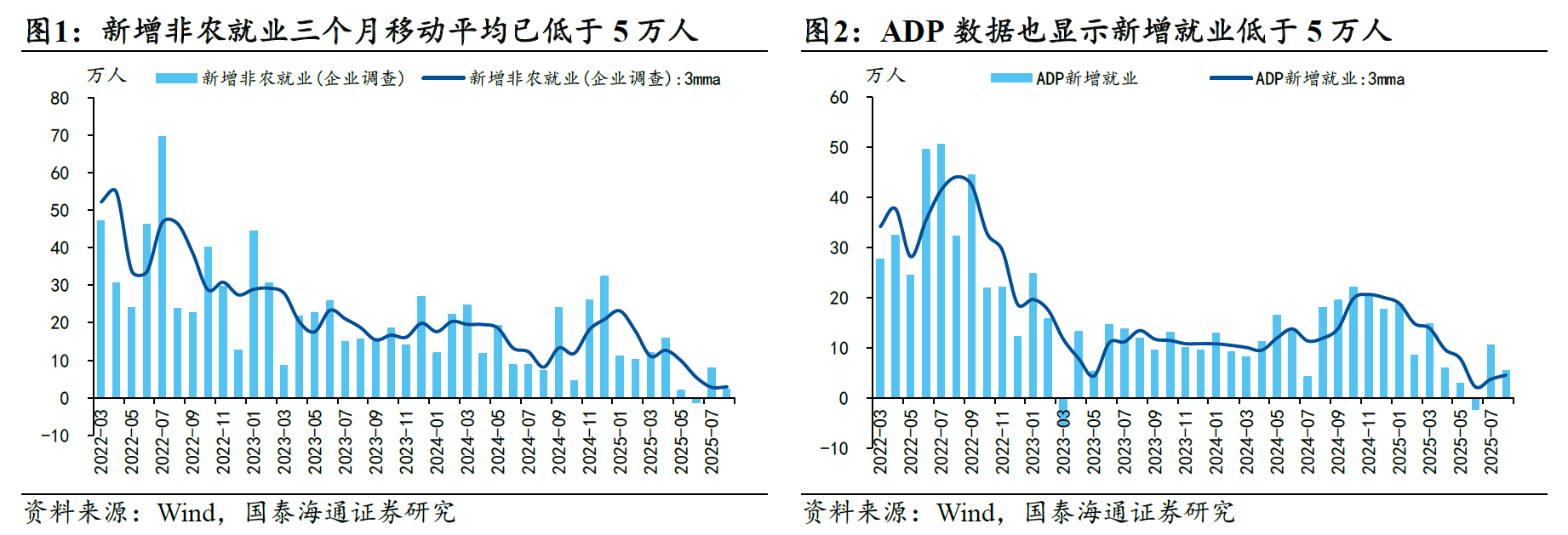
Group 1 - The Federal Reserve is expected to announce a significant interest rate cut, with a probability exceeding 90% for a 25 basis point reduction and a potential total of three cuts within the year [1][2] - Current economic indicators show a "soft landing" with an unemployment rate of 4.3% and a low non-farm payroll increase of only 22,000 jobs, alongside a manageable inflation rate of 2.9% year-on-year [2][4] - The combination of cooling employment and controllable inflation allows the Fed to adjust its policy without triggering a recession, marking a shift towards "preventive rate cuts" aimed at preemptively addressing potential economic slowdowns [4] Group 2 - Emerging markets, particularly A-shares and Hong Kong stocks, are becoming attractive due to their lower valuations compared to U.S. stocks, with the Shanghai Composite Index's price-to-earnings ratio at 15 times versus the S&P 500's 30 times [5][6] - Gold has seen a nearly 40% increase in price this year, surpassing $3,600 per ounce, driven by lower holding costs due to rate cuts and increased demand from global central banks amid rising geopolitical risks [7][9] - The U.S. dollar may weaken in the short term due to rate cuts, but strong economic resilience in the U.S. could benefit tech giants like Apple and Microsoft from lower financing costs [9] Group 3 - Investors are advised to adopt a "dynamic observation and flexible allocation" mindset, focusing on policy signals while avoiding emotional reactions to short-term market fluctuations [9][10] - Suggested investment strategies include diversifying into low-correlation assets such as technology stocks in Hong Kong and A-shares, short-duration U.S. Treasuries, high-rated corporate bonds, and alternative assets like gold ETFs and commodity funds [10][11] - Historical data indicates that investors holding assets for over six months during a rate cut cycle tend to smooth out short-term volatility, as seen in the 18% increase of the Shanghai Composite Index within six months following the 2019 rate cuts [11]

公募基金周报:第二批科创债ETF集体结募-20250915
CAITONG SECURITIES· 2025-09-15 12:01
Report Industry Investment Rating - Not provided in the content Core Views - Important news: Indexes are frequently "newly launched" to offer more refined investment tools for the market; public funds are heavily investing in enhanced index funds; the total scale of QDII funds has increased by 26.5% this year [2]. - Market review: Last week (from September 8th to September 12th, 2025), the major broad - based indexes of the A - share market showed an upward trend. Overseas indexes also mostly rose [2][15]. - Fund market review: Most active equity funds achieved positive returns last week, with the median return of active equity funds at 2.03%. Technology and cyclical theme funds performed well [2]. - ETF fund statistics: The top three performing ETF categories last week were international broad - based, technology, and H - share broad - based theme ETFs. In terms of capital flow, manufacturing, pharmaceutical, and financial real - estate theme ETFs had the highest capital inflows, while A - share broad - based, technology, and bond theme ETFs had the highest outflows [2]. - Fund market dynamics: Last week, 58 public funds had new fund managers, 40 new public funds were established, 56 public funds entered the issuance stage, and 33 public funds were awaiting issuance [2]. - Equity fund issuance tracking: The issuance scale of equity funds last week was 177.49 billion yuan, a decrease of 65.68 billion yuan from the previous week. It is expected that newly established and fully - invested funds will bring significant incremental funds to industries such as electronics, computers, and pharmaceuticals [2]. Summaries by Relevant Catalogs 1. Important News 1.1 Market Dynamics - Indexes are frequently "newly launched" to offer more refined investment tools. On September 11th, six new indexes were released, all selecting 100 securities from the CSI A500 index as samples, providing diversified investment targets [7]. - The international gold price hit a new high, and institutions flocked to research gold stocks. On September 8th, the spot gold price exceeded $3,610 per ounce. Some gold concept stocks were intensively investigated by institutions [7]. - Public funds are heavily investing in enhanced index funds. This year, 106 enhanced index funds have been newly issued, with a combined issuance share of 61.097 billion, exceeding the full - year figures of 2024 and 2023 [8][9]. 1.2 Product Highlights - The total scale of QDII funds has increased by 26.5% this year. As of September 12th, the total scale of QDII funds reached 673 billion yuan, an increase of 141 billion yuan from the beginning of the year. There are 215 stock - type QDII funds, with a scale of 567.7 billion yuan [10]. - The second batch of science - innovation bond ETFs has collectively completed fundraising. On September 12th, the second batch of science - innovation bond ETFs from 14 fund companies were launched, and many products completed their fundraising ahead of schedule [10][11]. - The industry's first floating - management - fee medical QDII fund was launched. The Dongfanghong Medical Innovation Hybrid Securities Investment Fund (QDII) was launched on September 10th, with a fundraising period from September 10th to September 23rd [11]. 1.3 Overseas Market - The latest US inflation data was released. On September 11th, the US CPI and core CPI data were announced, which met market expectations and strengthened the market's confidence in the Fed's subsequent interest - rate cuts [11]. - South - bound funds had a net inflow of over HK$60 billion in a week, and Internet giants were heavily added. From September 8th to September 12th, the net inflow of south - bound funds was HK$60.822 billion, the highest since May [12]. - Public funds are actively going overseas, and "buying Chinese funds" has become a new global investment trend. Chinese public funds are entering the "capability output" stage in overseas expansion, with products being well - received in Southeast Asian markets [12][13][14]. 2. Market Review - Last week, the major broad - based indexes of the A - share market showed an upward trend. The Shanghai Composite Index closed at 3,870.60, up 1.52%; the CSI 300 Index closed at 4,522.00, up 1.38%; the CSI 500 Index closed at 7,147.75, up 3.38%; the CSI 800 Index closed at 4,963.53, up 1.92%; the CSI 1000 Index closed at 7,422.88, up 2.45%; and the ChiNext Index closed at 3,020.42, up 2.10%. Overseas indexes also mostly rose [2][15]. 3. Fund Market Review 3.1 Active Equity Fund Performance - In the past week, technology and cyclical theme funds performed well, with average interval returns of 4.64% and 3.02% respectively. In the past three months, technology and manufacturing theme funds led in performance, with average interval returns of 41.68% and 25.64% respectively. In the past year, technology and pharmaceutical theme funds stood out, with average interval returns of 91.68% and 62.13% respectively [18]. 3.2 Top - Performing Fund Performance Statistics - The top - performing active equity fund last week was Penghua Innovation - Driven (005967.OF), a technology - themed fund, with a weekly interval return of 13.55% [23]. 4. ETF Fund Statistics 4.1 ETF Fund Performance - In terms of the average interval return last week, the top three performing ETF categories were international broad - based, technology, and H - share broad - based theme ETFs, with interval returns of 5.10%, 5.05%, and 3.33% respectively [25]. 4.2 ETF Fund Capital Flow Statistics - In terms of last week's net capital inflow, the top - ranked ETF categories were manufacturing, pharmaceuticals, and financial real - estate, with inflows of 128.97 billion yuan, 116.68 billion yuan, and 115.72 billion yuan respectively. The A - share broad - based ETF had the highest net outflow, at 172.64 billion yuan [28]. 4.3 ETF Fund Premium and Discount Statistics - As of September 12th, 2025, the top three ETFs in terms of premium rate were Huabao Shanghai - Stock - Exchange Science - Innovation Board Artificial Intelligence ETF, Huaxia Feed Soybean Meal Futures ETF, and Shenwan Hongyuan CSI R & D Innovation 100 ETF, with premium rates of 1.95%, 1.63%, and 1.43% respectively. The top three ETFs in terms of discount rate were Yinhu CSI 2000 Enhanced Strategy ETF, Huaxia CSI Hong Kong Stock Connect 50 ETF, and Huaxia CSI Science - Innovation and Entrepreneurship 50 ETF, with discount rates of 0.63%, 0.62%, and 0.55% respectively [34]. 5. Fund Market Dynamics 5.1 Fund Manager Changes - Last week, 58 public funds had new fund managers, involving 49 fund managers from 27 fund management companies. The top three fund management companies in terms of the number of funds with new managers were Huaxia Fund, Taiping Fund, and Huatai - Peregrine Fund [36]. 5.2 Newly Established Funds Last Week - A total of 40 public funds were newly established last week, with a combined issuance share of 21.794 billion [2]. 5.3 First - Time Issued Funds Last Week - 56 public funds entered the issuance stage last week, with the largest number being passive index - type bond funds, at 14 [2]. 5.4 Funds Awaiting Issuance - As of September 14th, 2025, there were 33 public funds awaiting issuance [2]. 5.5 Equity Fund Issuance Tracking - The issuance scale of equity funds last week was 177.49 billion yuan, a decrease of 65.68 billion yuan from the previous week. There are still 296 newly issued funds in the position - building period, with an estimated 35.14% of them having a position - building ratio of less than 5%, and an estimated 88.871 billion yuan of funds yet to be invested [2].
[9月14日]美股指数估值数据(全球股票市场大涨;海外市场还有哪些低估品种?)
银行螺丝钉· 2025-09-14 14:01
Core Viewpoint - The global stock market has shown an overall upward trend, with significant increases in various regions, influenced by expectations of interest rate cuts by the Federal Reserve. Group 1: Global Stock Market Performance - The global stock market indices have generally risen, with the US stock market increasing by 1.5% this week [2] - Non-US markets have experienced even greater gains [3] - The A-share market rose by 2%, while the Hong Kong stock market saw a substantial increase, with the Hang Seng Index up by 3.82% [4] - Chinese concept stocks and Hong Kong technology stocks performed even better, with the Hang Seng Tech Index rising by 5.3% [5] - The technology stocks in Hong Kong are currently at normal valuations and not overvalued [6] - The Asia-Pacific stock markets also saw widespread increases, with Japanese and Korean stocks rising over 2% [7][8] - European stock markets had a more modest increase compared to other regions [9] Group 2: Global Bond Market Performance - The global bond market also experienced an overall increase this week [10] - The simultaneous rise in both stocks and bonds is linked to the anticipated interest rate cuts by the Federal Reserve in September [11] - The market widely expects a 25 basis point rate cut, with some probability of a 50 basis point cut [12] Group 3: Impact of Interest Rate Changes - A decrease in US dollar interest rates is favorable for global assets [13] - The benefits are even more pronounced for non-US dollar markets [14] - Since the first rate cut by the Federal Reserve in September last year, the Chinese stock market has had the highest growth globally [15] - The previous low valuations of A-shares and Hong Kong stocks contributed to this performance [16] - However, as these markets have risen, the advantage of being undervalued is gradually diminishing [17] - A year ago, A-shares and Hong Kong stocks were 50% lower than the global average valuation, but this gap has narrowed to just over 10% recently [18][19] Group 4: Investment Opportunities - There are still undervalued investment opportunities in overseas markets despite the overall rise [20] - In the US market, high-dividend stocks and funds remain undervalued, although there are currently few such funds available in mainland China [21][22] - US dollar bond funds are also undervalued, benefiting directly from the decline in US dollar interest rates [23] - The principle of bond pricing indicates that as interest rates fall, bond values typically rise [24][25] - There are limited US dollar bond fund options available in mainland China, with most having purchase limits [26] - The all-weather investment strategy, popularized by Bridgewater Associates, involves diversifying across global stocks, bonds, and gold to reduce portfolio volatility [27][28] - The all-weather strategy has been implemented in a Chinese version by the company, which can be used for global asset allocation [31][32][34] Group 5: Global Stock Index Investment - The company has created a star rating chart for the global stock market, indicating previous undervaluation phases in 2018, 2020, and 2022 [36] - Following a significant drop in April 2025, the global stock market rebounded and is currently around 2.9 stars [38] - While there are global stock index funds available in overseas markets, there are currently no such funds in mainland China [40] - The company has launched a "Global Index Advisory Portfolio" that diversifies investments across US, UK, Hong Kong, and A-share indices to track the global stock market [41] - However, investment limits for overseas market funds in mainland China are generally low, with a maximum daily purchase limit of 350 yuan [43] Group 6: New Book Release - The company has released a new edition of the book "The Long-Term Investment Secret," which has been a bestseller for 30 years [46] - The latest edition includes updated data and new chapters, emphasizing that stocks are the best long-term investment vehicle [49] - The book provides insights into the long-term returns of various asset classes, reinforcing the importance of stock allocation in family assets [50]
QDII基金:规模增1410亿,25只产品净值涨超80%
Sou Hu Cai Jing· 2025-09-13 03:36
Group 1 - The total number of QDII funds reached 314, with a total scale of 673 billion yuan, an increase of 141 billion yuan from the beginning of the year, reflecting a growth rate of 26.5% [1] - A total of 25 products have seen their net value increase by over 80% this year, indicating strong performance in the market [1] - The significant growth in QDII fund scale this year is attributed to investors' increasing demand for global asset allocation and enhanced risk tolerance, as well as the performance of certain products [1]
QDII基金总规模年内增长26.5%
Zheng Quan Ri Bao· 2025-09-12 16:15
Group 1: QDII Fund Overview - As of September 12, the total number of QDII funds reached 314, with a total scale of 673 billion yuan, an increase of 141 billion yuan from the beginning of the year, representing a growth rate of 26.5% [1] - Among these, there are 215 equity QDII funds with a scale of 567.7 billion yuan, which accounts for the highest proportion in terms of both number and scale [1] - The significant growth in QDII fund scale this year reflects an increased demand for global asset allocation and improved risk tolerance among investors, influenced by the performance of certain QDII funds [1] Group 2: Performance of QDII Funds - The Hong Kong stock market has performed well this year, contributing to the strong performance of several QDII funds, with 25 funds showing a net value growth rate exceeding 80%, and some surpassing 100% [1] - Thematic funds focusing on innovative drugs and biotechnology have shown particularly strong performance [1] - Market experts attribute the strong performance of QDII funds to ample liquidity in the Hong Kong market and a robust valuation recovery, especially in sectors like innovative drugs, consumption, and technology [1] Group 3: Biopharmaceutical Industry Insights - The biopharmaceutical sector, including gene editing and synthetic biology, is recognized as a key driver for the development of new productive forces in China and is crucial for building a healthy China [2] - The long-term development of the biopharmaceutical industry is fundamentally driven by rigid demand, making it an attractive investment area for many investors [2] - Recent favorable policies in the domestic pharmaceutical industry support the development of innovative drugs across the entire chain, accelerating industry transformation [2]
盈米小帮投顾团队-第10次信号发车
老徐抓AI趋势· 2025-09-12 06:24
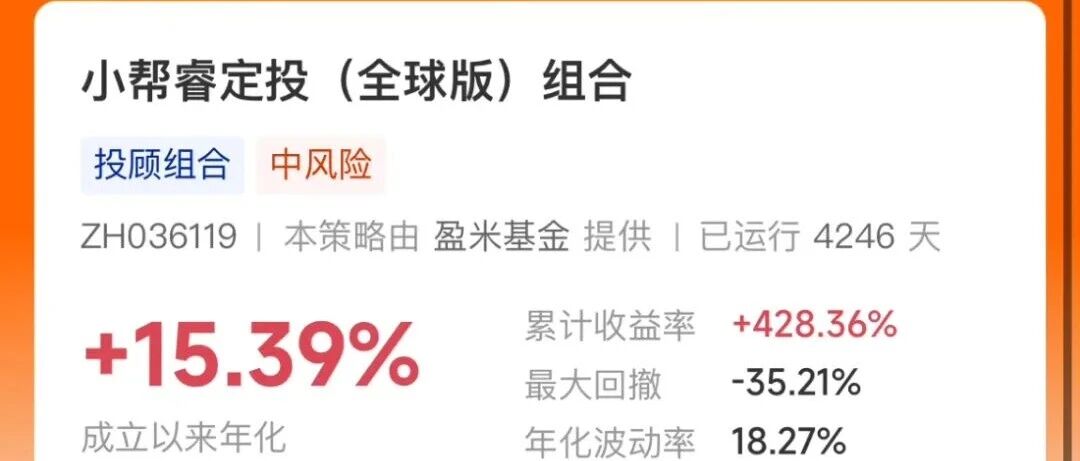
Core Viewpoint - The article emphasizes the importance of global asset allocation, highlighting the contrasting performances of A-shares and US stocks, and validating the effectiveness of the company's portfolio strategies [1][3]. Weekly Market Review - A-shares (CSI 300) declined by 1.24%, while the dividend index rose by 0.50% [2]. - The Hang Seng Index in Hong Kong saw a slight increase of 0.06% [4]. - The NASDAQ 100 in the US increased by 1.48% [4]. - The DAX in Germany fell by 0.96% [4]. - The Nikkei 225 in Japan rose by 3.45%, and the Sensex 30 in India increased by 0.53% [4]. - The Ho Chi Minh Index in Vietnam dropped significantly by 3.43% [4]. - Overall, bond markets experienced a slight decline of 0.08%, but Chinese and US bonds rose, with US bonds increasing by 4.75% [4]. - Gold prices increased by 3.07%, with a cumulative rise of 5%-10% since the company increased its holdings [4]. Portfolio Performance - The "Rui Ding Tou Global Version" portfolio achieved a 1.32% increase, reaching a new net value high despite the decline in A-shares [7]. - This portfolio includes diverse assets such as US stocks, Indian stocks, and gold, which helped mitigate risks during A-share adjustments [7]. - The "Lazy Balanced" portfolio, with a high bond allocation, reported a cumulative return of 13.37% this year, outperforming previous years [8]. - The "Peace of Mind Bond" portfolio, which is defensive in nature, rose by 0.81% last week and has a year-to-date return of 9.32%, also reaching a historical high [13]. - The "Pure Bond" portfolio experienced a minor decline of 0.06%, demonstrating strong defensive capabilities by falling less than the market average [16]. Investment Strategy - The article suggests that the "Peace of Mind Bond" portfolio is suitable for investors seeking stability and lower volatility, serving as a "ballast" to balance equity market fluctuations [18]. - The company plans to continue optimizing its asset allocation strategies to provide stable and sustainable returns [32].
全球资产配置资金流向月报(2025年8月):美联储宽松预期提升,中国股市获内外资一致流入-20250911
Shenwan Hongyuan Securities· 2025-09-11 03:13
Market Overview - In August, the Shanghai Composite Index rose by 10.9%, leading global markets, while the ChiNext Index surged by 24.4%[4] - The S&P 500 increased by only 3.6%, and developed markets saw a rise of 3.5% during the same period[4] Employment Data and Economic Outlook - The U.S. added only 73,000 non-farm jobs in July, significantly below the expected 104,000, marking the lowest increase in nine months[4] - The downward revision of previous months' data indicated a persistent risk of economic recession in the U.S.[4] Global Fund Flows - In August, global funds saw a significant inflow into money market funds, totaling approximately $200 billion, compared to $63 billion in July[4] - Developed market equities attracted $20 billion, while emerging markets saw a smaller inflow of $2 billion, down from $5 billion in July[4] China Market Dynamics - In August, China's equity market attracted a total inflow of $31.42 billion, with a notable increase in passive equity fund inflows to $36.84 billion, up from $3.13 billion in July[4] - China's fixed income market also saw substantial inflows, with $32.90 billion in August, representing 31.42% of the total emerging market inflows[4] Sector-Specific Trends - In the U.S. equity market, there was a significant outflow from the technology sector, while financials, materials, and consumer staples saw inflows[4] - Corporate bonds in the U.S. experienced a substantial inflow of $136 billion in August, a sharp increase from $15 billion in July[4]
全球资产配置研究框架
2025-09-07 16:19
Summary of Key Points from Conference Call Records Industry or Company Involved - The discussion primarily revolves around the **Chinese economy** and its comparison with **developed markets**, particularly the **U.S. stock market**. Core Insights and Arguments 1. **Economic Cycles**: The Chinese economy is currently in a recovery phase, contrasting with the downturn in the U.S. and other developed countries, which enhances the investment value of Chinese stocks while posing risks for U.S. equities [1][5] 2. **Asset Allocation Framework**: The asset allocation analysis framework is divided into **strategic** and **tactical** configurations, with strategic allocation focusing on long-term fixed asset ratios and tactical allocation allowing for adjustments based on market conditions [2] 3. **Liquidity vs. Inflation**: In the Chinese market, liquidity is deemed more critical than inflation, with "credit pulse" being a significant leading indicator for asset price changes [1][11] 4. **Fiscal Pulse**: Fiscal pulse has gained importance as a supplementary indicator to credit pulse, especially in times of poor macro liquidity transmission, showing a predictive capability that has surpassed credit pulse post-pandemic [1][14] 5. **Risk Premium (ERP)**: ERP is highlighted as a crucial valuation metric, indicating the expected excess return of stocks over bonds, particularly significant in the Chinese market [1][15][16] 6. **Global Asset Allocation Factors**: Key factors for Chinese investors in global asset allocation include the U.S. dollar, U.S. Treasury bonds, and the Federal Reserve, with U.S. inflation being a dominant variable affecting these factors [1][17] 7. **Gold Pricing Framework**: A new pricing framework for gold has been established, predicting potential price increases to the range of $3,000 to $5,000, following the decoupling of gold from U.S. Treasury yields [1][22] 8. **Dollar Strength**: The strength of the U.S. dollar is driven by fundamental, policy, and capital factors, maintaining its significant role in global asset allocation [1][21] 9. **Market Indicators**: The analysis of forward-looking indicators can help predict inflation trends, with historical data supporting the predictive power of rental prices on future inflation [1][19] Other Important but Possibly Overlooked Content 1. **Limitations of the Merrill Clock**: The applicability of the Merrill Clock in the Chinese market is limited, as economic phases often jump or reverse, leading to poor predictive performance regarding asset behavior [1][8][10] 2. **Impact of Economic Downturns**: During economic downturns, there is a tendency to increase bond holdings, and this analysis can be extended globally to inform cross-border asset allocation decisions [1][4] 3. **Long-term vs. Short-term Cycles**: Short-term growth cycles last 3 to 5 years, while long-term cycles can extend for decades, necessitating a broader data reference to avoid misleading conclusions from single-country cases [1][6] 4. **Complexity of Policy Responses**: The complexity of policy responses in China, which may not directly reflect economic fundamentals, complicates the predictive capabilities of frameworks like the Merrill Clock [1][9][10] 5. **Renminbi Exchange Rate**: The future trajectory of the Renminbi is influenced not only by trade factors but also by the performance of Chinese market stocks, which can support the currency [1][23] 6. **Changing Dynamics of Global Asset Allocation**: The traditional relationship between U.S. Treasuries and the dollar is evolving, indicating a potential fragmentation in global asset allocation strategies [1][24]