
关税战

Search documents
金银周报-20251019
Guo Tai Jun An Qi Huo· 2025-10-19 10:44
金银周报 国泰君安期货研究所 有色及贵金属 刘雨萱投资咨询从业资格号:Z0020476 日期:2025年10月19日 Guotai Junan Futures all rights reserved, please do not reprint Special report on Guotai Junan Futures 黄金:关税战再起,避险刺激接力;白银:关注海外逼仓情况 强弱分析:黄金偏强、白银偏强 价格区间:870-930元/克、10500-11590元/千克 Special report on Guotai Junan Futures 数据来源:Wind、国泰君安期货研究所 2 ◆ 本周伦敦金回升6.3%,伦敦银回升6.58%。金银比从前周的79回落至78.6,10年期TIPS回落至1.75%,10年期名义利率回落至4.02%(2年期 3.46%),美元指数录得98. 55。 ◆ 本周黄金再度创出历史新高,COMEX黄金达到4392美元/盎司,距离4400美元仅一步之遥。黄金价格高企后,上涨斜率只增不减,从突破 4000美金大关至今仅历时10天左右。我们前期提到,特朗普再度挑起贸易战,在中国稀土出口 ...
有色金属行业周报:关税扰动引发金银价格波动,长期牛市格局不改-20251019
GOLDEN SUN SECURITIES· 2025-10-19 09:49
Investment Rating - The report maintains a "Buy" rating for several companies in the non-ferrous metals sector, including Shanjin International, Chifeng Jilong Gold Mining, and Luoyang Molybdenum [5][6]. Core Views - The report highlights that the precious metals market is experiencing price fluctuations due to tariff disturbances, but the long-term bullish trend remains intact. The U.S. government shutdown and increased tariffs on China are expected to boost gold's safe-haven demand [1]. - For industrial metals, copper prices are supported by supply disruptions, while macroeconomic uncertainties may cause short-term volatility. The aluminum market is expected to see high price fluctuations due to rising interest rate expectations and inventory reductions [2]. - In the energy metals sector, lithium prices are projected to remain strong due to increased supply and demand, particularly in the electric vehicle market. However, the silicon market is facing oversupply issues, leading to price fluctuations [3]. Summary by Sections Precious Metals - Tariff disturbances have led to price volatility in gold and silver, but the long-term bullish trend is expected to continue. The report suggests strategic allocation in precious metals [1]. - Recommended companies include: Xinyi Silver, Shengda Resources, and Zijin Mining [1]. Industrial Metals - **Copper**: Prices are supported by supply disruptions from major mines, with a projected increase in price center due to mid-term supply constraints. However, short-term fluctuations may occur due to trade tensions [2]. - **Aluminum**: The market is experiencing high price volatility, influenced by interest rate expectations and inventory levels. The report suggests monitoring inventory accumulation [2]. Energy Metals - **Lithium**: The market is showing strong performance with supply and demand both increasing. The report indicates that lithium prices are likely to remain strong in the short term [3]. - **Silicon**: The market is facing oversupply, leading to price fluctuations despite being in a traditional demand season [3]. Key Companies - The report identifies key companies to watch, including: Luoyang Molybdenum, China Hongqiao, and Tianqi Lithium [5][6].


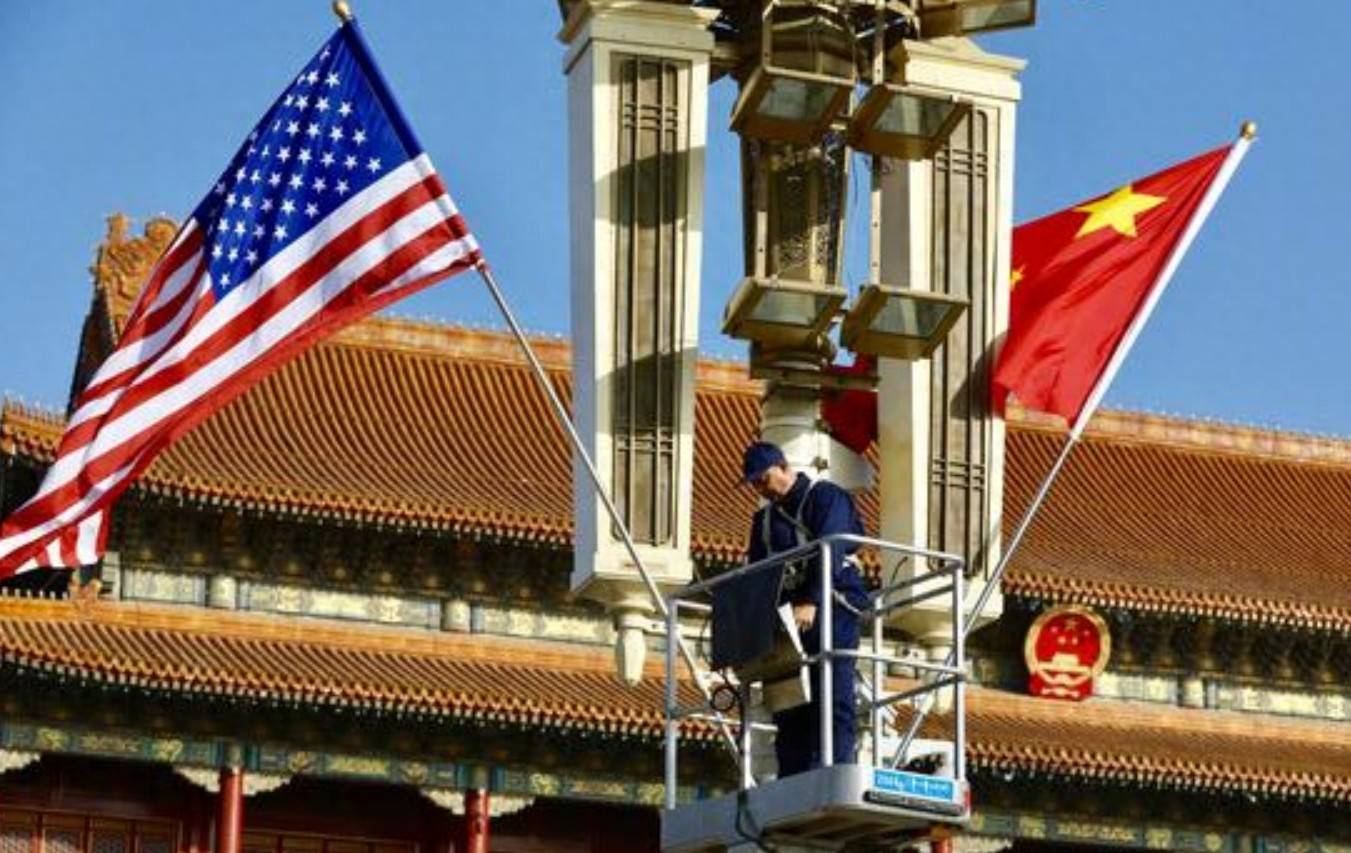
中国打响对美关税反击战,印度嘴上说要加入,行动时却扯中方后腿
Sou Hu Cai Jing· 2025-10-19 01:54
Core Viewpoint - The article discusses India's reluctance to effectively retaliate against the U.S. in the ongoing trade war, highlighting its tendency to undermine China's efforts while failing to take decisive action against the U.S. [1][6][14] Group 1: India's Response to U.S. Tariffs - India has previously announced plans to impose retaliatory tariffs on U.S. goods but has not followed through, indicating a lack of resolve in confronting the U.S. [7] - The Indian government has expressed intentions to learn from China's approach to countering U.S. tariffs, yet has not taken significant steps to implement such measures [3][6]. - Despite initial enthusiasm, India's actions have resulted in higher tariffs on its own goods, with a reported 50% maximum tariff imposed, leading to stalled negotiations with the U.S. [9] Group 2: China's Position in the Trade War - China has actively engaged in countermeasures against the U.S., utilizing its leverage in rare earth exports and other sectors, which has put pressure on the U.S. [3][16]. - The article emphasizes that China's success in the trade war could benefit global markets, including India, if India chose to align with China rather than undermine it [16]. - China's recent actions, such as imposing anti-dumping duties on Indian solar panels, reflect its strategy to protect its interests while responding to India's provocations [9][14]. Group 3: Implications for India - India's attempts to impose anti-dumping duties on Chinese solar panels, with rates up to 30%, are seen as counterproductive and indicative of its narrow-minded approach [9][14]. - The article suggests that India's lack of support for China in the trade war could lead to negative consequences for its own economy, as it risks losing out on potential benefits from a successful Chinese counter-offensive against the U.S. [16]. - The ongoing tensions and India's actions may ultimately harm its relationship with both China and the U.S., as it navigates its position in the trade landscape [6][14].

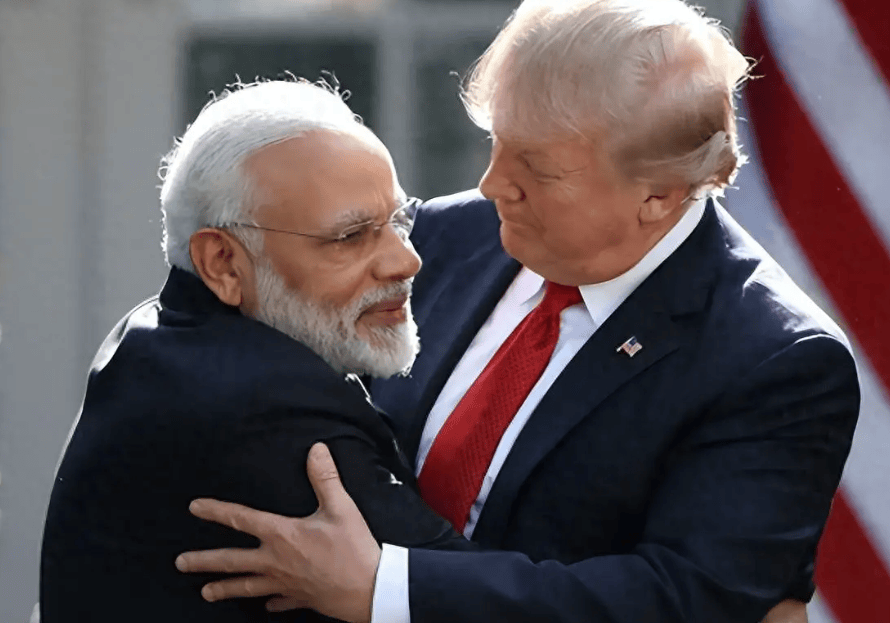
印度将停止买俄油?特朗普称莫迪同意了,威胁对华征500%关税
Sou Hu Cai Jing· 2025-10-18 17:14
Core Points - The U.S. is pressuring India to stop purchasing Russian oil, with President Trump announcing this at a press conference, while also demanding similar actions from China [1][3] - The energy competition between the U.S. and India has been ongoing, with the U.S. imposing a 50% tariff on Indian imports to pressure India into complying with the "energy de-Russification" strategy [3] - Despite the pressure, India remains significantly dependent on Russian oil, with 34% of its crude oil supply coming from Russia as of September, although this is a decrease from 40% year-on-year [3] - India has increased its oil imports from the U.S. by 6.8% year-on-year, reaching 213,000 barrels per day, indicating a balancing act between maintaining ties with Russia and responding to U.S. pressure [3] - Analysts suggest Trump's actions serve multiple purposes, including strengthening his anti-Russia image ahead of the 2026 midterm elections, addressing challenges in the U.S. oil industry, and setting the stage for further pressure on China [4] - The new round of tariffs has not boosted the U.S. economy but has instead caused global market panic, leading to a sell-off of U.S. assets and a decline in stock prices [6] - The geopolitical landscape is shifting, with major countries like China, Russia, and India showing greater strategic resilience and flexibility, indicating a move towards a multipolar world order [9]
美联储考虑停止缩表——全球经济观察第16期【陈兴团队•财通宏观】
陈兴宏观研究· 2025-10-18 12:20
Global Asset Price Performance - Bond market yields generally declined, with the 10-year U.S. Treasury yield down by 3 basis points [2] - In the stock market, major global indices saw mixed results, with the S&P 500, Dow Jones, and Nasdaq increasing by 1.7%, 1.6%, and 2.1% respectively [2] - Commodity prices showed a decline in oil prices, with WTI and Brent crude down by 7.3% and 6.4% respectively, while gold prices rose by 5.8% [2] - The U.S. dollar index weakened by 0.3% [2] Major Central Bank Monetary Policies - The Federal Reserve is considering halting its balance sheet reduction, with Chairman Powell indicating that reserves are currently sufficient and nearing the level required to stop the reduction [4] - The European Central Bank's President Lagarde stated that the monetary policy and economy are in good condition, but further rate cuts cannot be ruled out due to changing circumstances [4] U.S. Economic Dynamics - The U.S. government remains shut down, with the Senate rejecting a temporary funding bill, leading to potential layoffs of over 10,000 federal employees [9] - The NAHB housing market index rose to 37, the highest since April, driven by declining mortgage rates, while small business optimism fell to 98.8, a three-month low [9] - The Federal Reserve's Beige Book indicated stable economic activity, with some regions expressing concerns about the risks posed by the government shutdown [10] - Regional banks are facing increased risks, as Zions Bancorp and Western Alliance Bancorp reported provisions for bad loans, raising concerns about the credit system [10] - The U.S. Treasury Secretary signaled a de-escalation in the U.S.-China trade tensions, suggesting that additional tariffs are not a predetermined option [10] Other Regional Economic Dynamics - The IMF has adjusted its global growth forecasts for 2025 and 2026 to 3.2% and 3.1% respectively, while noting that U.S. inflation is expected to remain above target levels [17] - Eurozone industrial production showed a month-on-month decline of 1.2% in August, with major economies like Germany, Italy, and France experiencing decreases [17] - Japan's industrial output fell by 1.5% in August, marking the second consecutive month of decline, influenced by U.S. trade policy uncertainties and weak demand [17]

短短48小时内,中国说不,印度跟俄油说拜拜,普京开始“报恩”了
Sou Hu Cai Jing· 2025-10-18 12:17
Group 1 - Trump's tariff pressure strategy has shown effectiveness in some countries, particularly India, which has announced a halt to purchasing Russian oil, indicating a shift in its stance [1][3] - The U.S. is now focusing on China, with Trump openly threatening to impose tariffs as high as 500% on Chinese goods, aiming to exert pressure similar to that applied on India [1][8] - India's decision to stop buying Russian oil is attributed to two main factors: heavy tariff burdens from the U.S. and payment issues with Russian oil suppliers, who now demand payment in yuan or rubles [6][8] Group 2 - China's response to U.S. threats has been firm, with the Foreign Ministry rejecting unilateral sanctions and asserting its right to choose energy sources independently [9] - The potential for the EU to join the U.S. in imposing sanctions on China is complicated by the EU's economic reliance on China, particularly in sectors like photovoltaics and clean energy [9] - Russia has also expressed a strong stance against cooperating with any country to confront China, emphasizing its national interests and rejecting external pressures [12][13]
已经被打疼了,美财长请中方收回稀土管制,美国愿休战3个月以上
Sou Hu Cai Jing· 2025-10-18 01:58
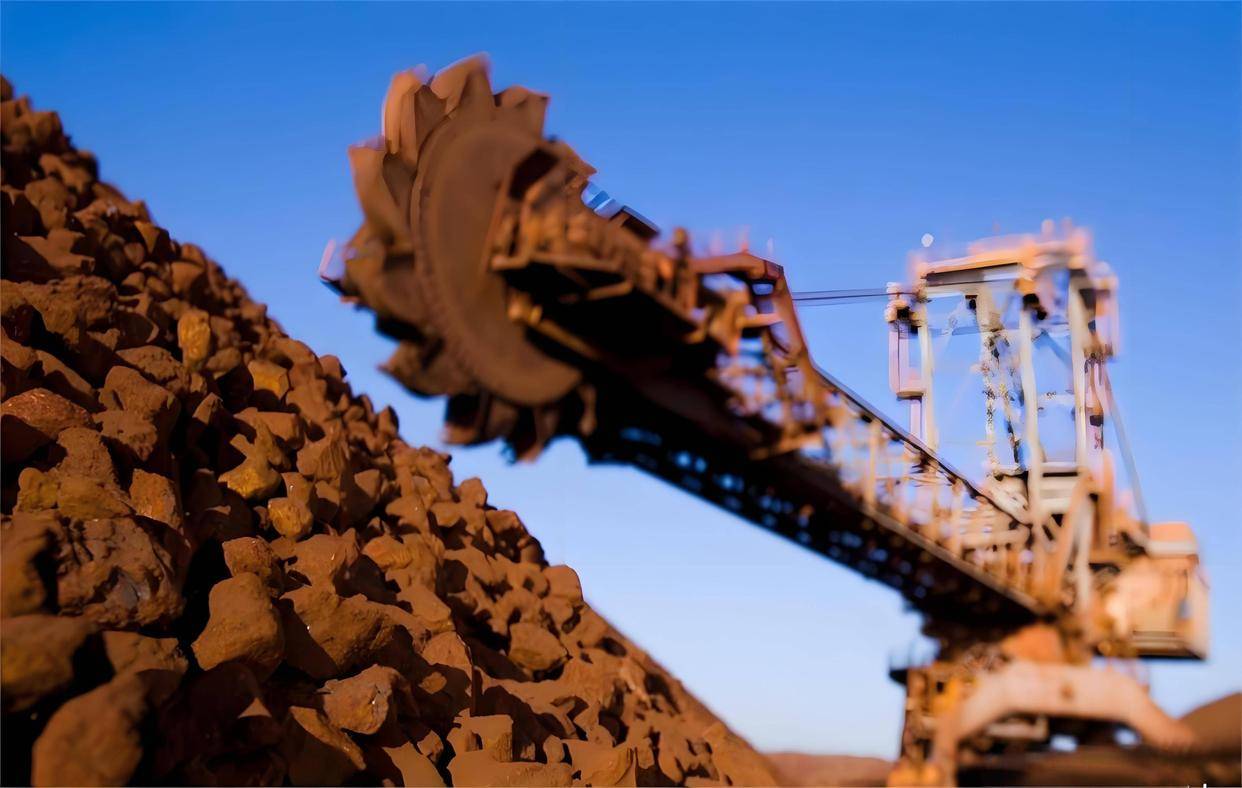
面对这一局面,中国的立场始终清晰而坚定:我们不惧怕与美国展开"贸易战",若战必奉陪到底。然而,从美国上下表现出的紧张神情不难看出,旷日持久 的关税战只会让美国自身遭受更严重的损失。事实上,特朗普和美国财政部长也深知这一点,否则他们不会提出以三个月的关税缓冲期来换取中国放弃稀土 管制措施。 此前中美贸易磋商的结果显示,双方关税的缓冲期将于下个月的十号到期。这意味着,留给两国达成最终协议的时间已不足一个月。一旦在此期间未能就新 的关税条款达成一致,美国极有可能对中国商品征收数倍的关税,届时中美两国市场将面临彻底脱钩的严峻风险。 按理说,既然美国已在中国"稀土大棒"的威力下感到痛苦,并请求中国网开一面,至少应摆出诚恳求人的姿态,而非继续以一种高高在上、施舍般的傲慢姿 态示人。事已至此,美国难道还不认为手握高科技含量的芯片便能拿捏中国吗? 究竟是芯片杀伤力更大,还是稀土威力更强,两者之间的内在联系已然揭示了答案。稀土是制造精密芯片不可或缺的关键原材料。换言之,一旦稀土资源的 供应中断,美国的芯片制造企业和军事工业将面临停滞,甚至可能走向破产。因此,对比之下,稀土的战略价值显然远超芯片。难怪稀土被誉为"工业的维 生素" ...
币圈院士:10.18懂王的关税炸弹引爆币圈!比特币猴市导火索!最新行情分析及短线思路参考
Sou Hu Cai Jing· 2025-10-18 01:20
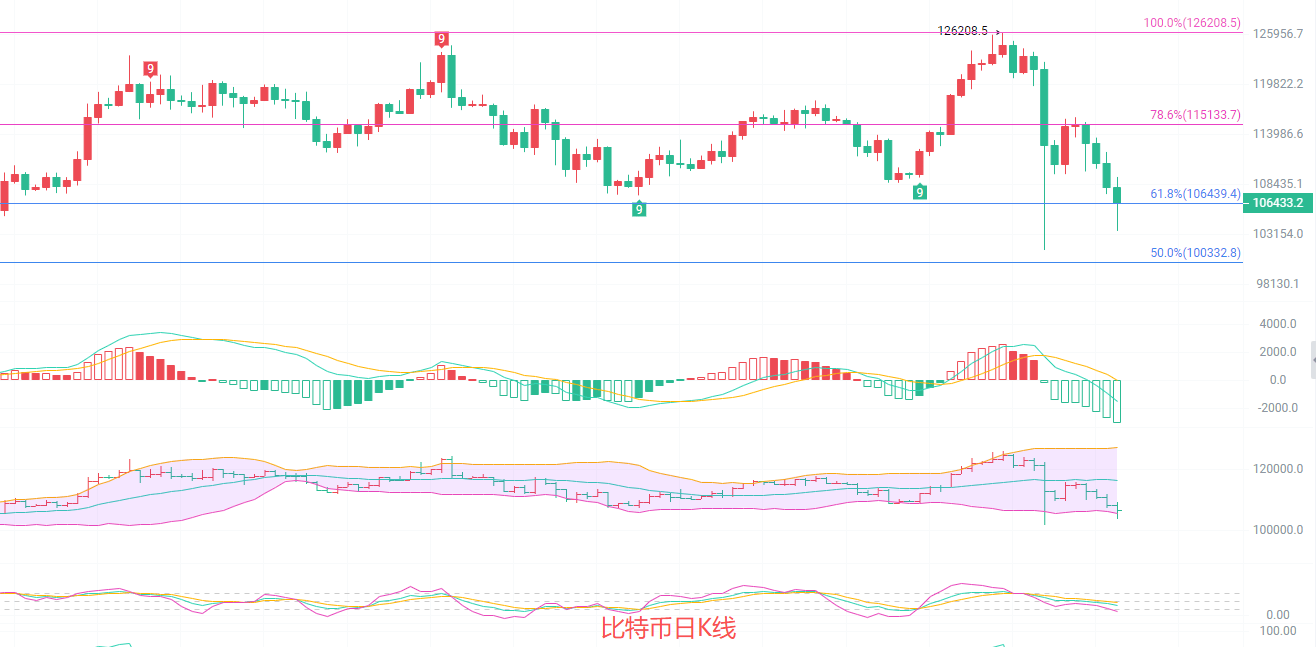
Core Insights - The fundamental principle of trading is survival, followed by profit, emphasizing the importance of a personal trading strategy and risk management [1] - The current Bitcoin (BTC) price is 106,250, with market sentiment indicating a potential bearish trend due to external factors [1][3] - Technical indicators suggest a downward trend, with EMA and MACD showing signs of weakness and potential further declines in Bitcoin's price [3][5] Market Analysis - Bitcoin's price fluctuated between a high of 109,200 and a low of 103,470, with a decision made to take profits on one-third of holdings while maintaining the rest [3] - The EMA trend indicator is showing a downward contraction, and MACD has experienced a continuous decrease, indicating bearish momentum [3] - The four-hour K-line shows repeated pressure and support levels, with a critical support level at 105,000 that could be tested [5] Trading Strategy - Short-term trading strategies suggest avoiding new positions due to high risk, with a focus on survival and risk management [5] - Suggested entry points for potential trades include a northbound trial at 102,000 to 101,500 with a stop loss at 101,000, and a southbound trial at 107,000 to 107,500 with a stop loss at 108,000 [5] - Emphasis on strict stop-loss and take-profit practices to manage risk effectively in volatile market conditions [5]
特朗普意外助力中国人,黄金三年涨120%,囤金国人轻松赚大钱
Sou Hu Cai Jing· 2025-10-17 18:21
Core Insights - The gold market is experiencing heightened interest and speculation, reminiscent of the 2008 stock market surge, with significant public discussion and investment in gold [1] - In March 2025, gold prices surged with a 40% annual increase and a 120% increase over three years, overshadowing traditional stock indices like the S&P and Nasdaq [3] - Central banks are increasing their gold reserves while the proportion of dollar reserves is declining, indicating a shift in global monetary dynamics [3][7] Market Dynamics - Trump's potential influence on the dollar and monetary policy is a focal point, with concerns about a "weak dollar" strategy resurfacing [5] - Economic challenges such as debt expansion and lack of growth are becoming more pronounced, leading to increased uncertainty in the market [5] - The trend of declining confidence in the US dollar is evident, with central banks favoring gold as a low-risk asset amid rising geopolitical tensions [7][9] Investment Trends - By mid-2025, gold has become a preferred asset for investors seeking safety, with household allocations to gold reaching a 50-year high of 3% [9] - Despite some skepticism about high gold prices, institutions like Morgan Stanley and Dalio are recommending increased gold allocations in portfolios [9][11] - The long-term outlook for gold remains positive, with historical performance showing parity with equities, although short-term volatility is expected [11][13] Structural Issues - Trump's presidency is viewed as a magnifying glass for underlying structural issues in the US economy, including debt pressure and declining dollar credibility [13] - The transformation of the global monetary system and evolving geopolitical risks are identified as fundamental drivers of gold's value [13][15] - The ongoing uncertainty in the market suggests that gold's value is likely to remain stable, making it a reliable asset in turbulent times [15]
从广交会看外贸逆势突围:采购商质量提升 多家企业首日“爆单”
Bei Ke Cai Jing· 2025-10-17 12:53
Core Insights - The 138th Canton Fair has exceeded expectations for many companies, with significant increases in potential orders and customer engagement [1][5]. Group 1: Event Overview - The Canton Fair, held on October 15, features five sectors including electronics, industrial manufacturing, lighting, hardware tools, and vehicles, across 19 exhibition areas [2]. - The fair serves as a crucial platform for foreign trade, helping businesses find new customers and opportunities amid the ongoing "tariff war" [3][7]. Group 2: Company Performance - Guangdong Huaxi Water-saving Technology Co., Ltd. reported a 40% increase in potential orders, signing five contracts on-site, with significant demand from Africa and Central Asia [5]. - Meigao Electric Technology Co., Ltd. noted a higher quality of attendees, with more professional buyers and successful invitations for further discussions post-fair [4]. - Huzhou Guoneng New Materials Co., Ltd. observed a shift in customer focus towards technical compatibility and supply chain resilience, with strong demand for eco-friendly certifications [4]. Group 3: Market Trends - The fair reflects the resilience of China's foreign trade, with a reported 4% year-on-year increase in goods trade for the first three quarters, amounting to 33.61 trillion yuan [9]. - In September, imports and exports reached 4.04 trillion yuan, marking an 8% growth compared to the previous month [10]. - Chinese companies are enhancing competitiveness through brand building and innovative product offerings, transitioning from simple product exports to comprehensive system exports [12]. Group 4: Competitive Landscape - Chinese products are winning in international markets due to a combination of technology, cost-effectiveness, and environmental considerations, with prices 40% lower than European counterparts [13]. - The demand for intelligent and green low-voltage electrical products is rising globally, particularly in the renewable energy sector, with higher safety and compatibility standards expected from overseas clients [14]. Group 5: Policy and Future Outlook - The expansion of China's foreign trade partnerships is providing new growth opportunities, with China being a top trading partner for 166 countries and regions [15]. - The Ministry of Commerce is committed to enhancing support for foreign trade enterprises through financial and policy measures, aiming to maintain strong trade resilience [15][16].