
人民币升值

Search documents
人民币与港股 谁是谁的“影子”?
Xin Lang Cai Jing· 2026-01-06 03:59
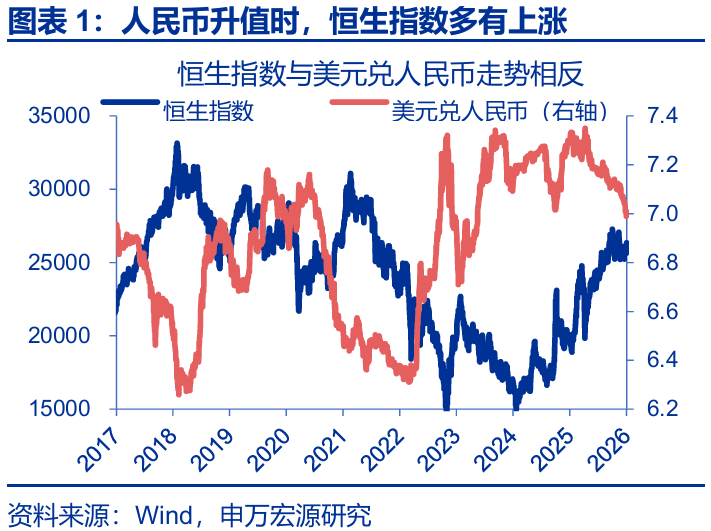
智通财经1月6日讯(编辑童古)2016年以来,港股与人民币的正相关关系较为显著;然而,近期人民币 快速升值,港股却一度"踟蹰不前"。申万宏源就此发布研报,解读了背后的逻辑及对未来进行更多分 析。 人民币与港股,谁是谁的"影子"? 然而,11月13日以来,人民币快速升值1.9%,恒生指数却下跌4.8%、与汇率显著背离;这是2016年以 来12次人民币升值中第3次出现的股汇背离。人民币升值时,港股盈利、资产的重估效应与外资的回 流,或是港股上涨的主因。 1)货币价值重估,当人民币升值时,港股公司赚取的人民币利润折算成港币时会放大。 2)资产重估效应,在港上市地产股等底层资产以人民币计价,在升值时会面临价值重估。 3)全球配置的比较效应,人民币汇率走强多指向中国基本面具有一定相对优势,这会令全球投资者配 置更多中国资产。 人民币升值,港股缘何不涨? 申万宏源认为,疲软的业绩影响下,重估效应、外资配置效应均未显现第一,2025年港股权重板块较弱 的业绩表现,导致人民币升值对港股盈利放大作用较为有限。 申万宏源认为,人民币汇率与港股的"羁绊"?正相关关系显著,但近期明显背离历史回溯来看,人民币 与港股有着显著的正相关关 ...


“年关”已过
Xin Lang Cai Jing· 2026-01-06 02:56
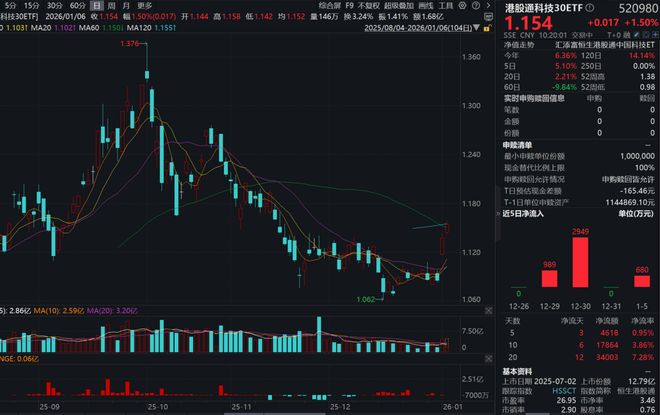
Core Viewpoint - The Hong Kong stock market, particularly the technology sector, is experiencing a resurgence, with significant inflows and positive performance indicators suggesting a potential upward trend in 2026 [5][14]. Group 1: Market Performance - The Hong Kong Technology 30 ETF (520980) has risen nearly 2%, with a trading volume of nearly 200 million yuan, and has seen net inflows on 6 out of the last 10 days, totaling over 170 million yuan [1]. - The Hang Seng Technology ETF (513260) also increased by nearly 2%, with a trading volume exceeding 200 million yuan and net inflows of over 270 million yuan in the last 20 days, bringing its latest financing balance to over 140 million yuan and total assets to 7.453 billion yuan [3]. - Major technology stocks such as Kuaishou-W, Meituan-W, and Tencent Holdings have shown gains of over 2%, while SMIC and BYD have increased by over 1% [5]. Group 2: Investment Sentiment and Trends - The market sentiment for Hong Kong stocks has improved, with a significant reduction in short-selling positions among major technology stocks, indicating a potential shift in investor confidence [9]. - The anticipated appreciation of the Renminbi is expected to enhance the attractiveness of Renminbi-denominated assets, driving foreign capital inflows into Hong Kong stocks [12]. - The expectation of a shift in asset allocation towards Hong Kong stocks by mainland public funds is increasing, with many funds likely to raise their allocation to Hong Kong stocks in their benchmarks [11]. Group 3: Future Outlook - The outlook for 2026 suggests a continued bullish trend for Hong Kong stocks, driven by improved profitability and liquidity, with a potential "double boost" from rising profit expectations and valuation increases in leading internet companies [15]. - The first quarter of 2026 is expected to see a rise in risk appetite, supported by the end of seasonal capital tightening and the anticipated appreciation of the Renminbi [15]. - The report emphasizes the importance of monitoring policy developments and market conditions leading up to significant meetings in March, which could further influence market dynamics [15].
还在升!!
Sou Hu Cai Jing· 2026-01-06 02:43
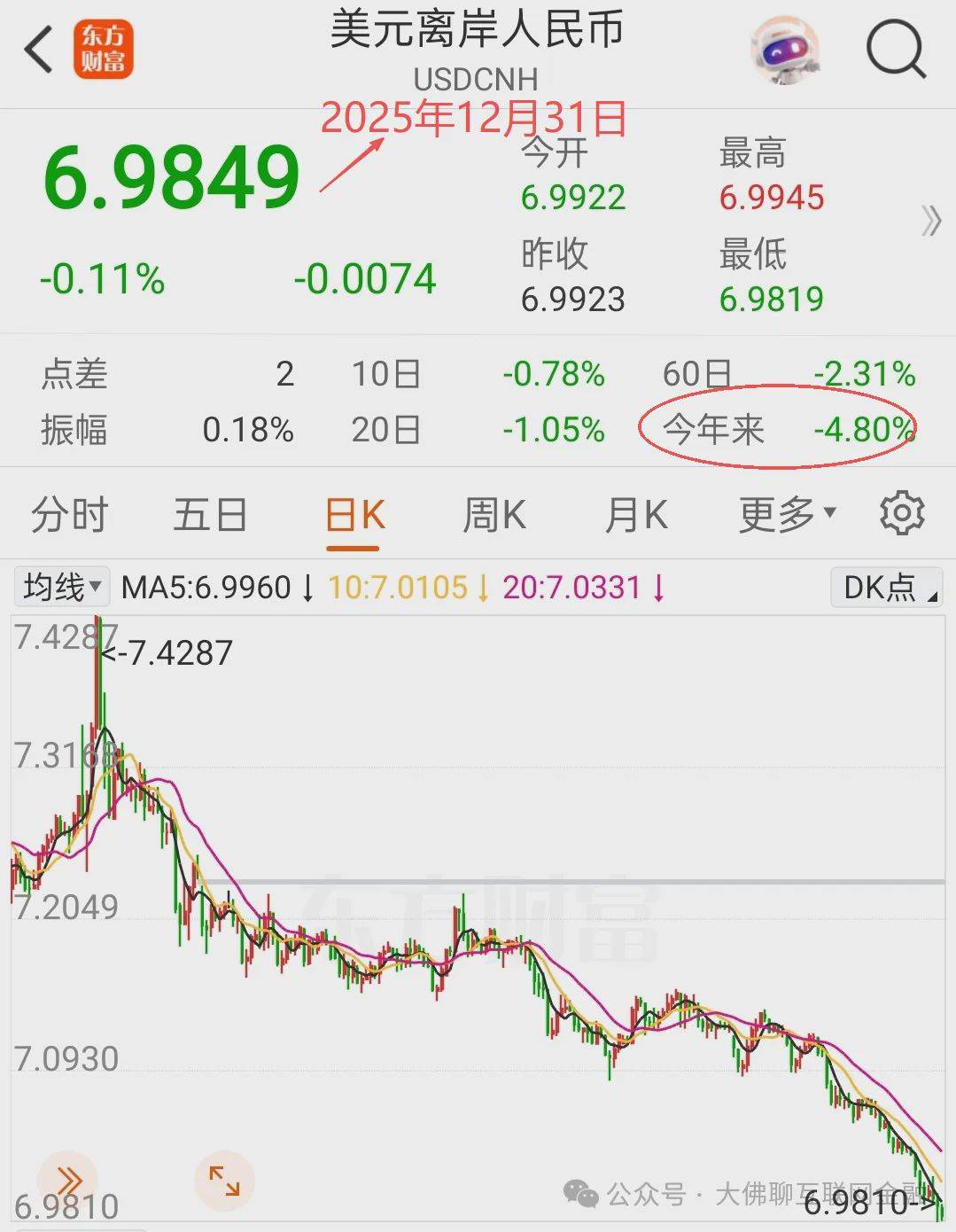
Group 1 - The offshore RMB exchange rate has appreciated from 7.3-7.4 at the beginning of the year to 6.98 before New Year's Day [1] - The USD has depreciated by 4.8% against the RMB this year, with the USD index dropping nearly 10% [3] - The appreciation of RMB has rendered previous investments in high-yield USD deposits or US Treasury bonds less profitable, as the exchange rate loss offsets the interest earned [5] Group 2 - Current non-standard urban investment bonds present a potential investment opportunity, especially as year-end products are likely to emerge [6] - A conservative strategy focusing on stable returns is emphasized, with expectations of achieving 5-6% returns from non-standard urban investment bonds [6] - The RMB is expected to maintain a strong upward momentum in the short to medium term, with potential for further appreciation [6][8] Group 3 - The depreciation of the USD encourages foreign trade companies to convert their USD earnings into RMB, further supporting RMB appreciation [8] - The weakening of the USD due to the Federal Reserve's interest rate cuts allows for capital to flow back to domestic markets, which may also boost the RMB [8] - The current environment allows for more flexible monetary policy, as the pressure on RMB depreciation is reduced, facilitating a more accommodative stance [9] Group 4 - The experience accumulated over the years in investing in urban investment bonds has been positive, with a focus on maintaining a long-term investment strategy [9][10] - The investment philosophy emphasizes steady returns over short-term gains, aligning with the broader goal of sustainable growth [10]
渤海证券研究所晨会纪要(2026.01.06)-20260106
BOHAI SECURITIES· 2026-01-06 02:12
Group 1: Fund Research - The equity market indices showed mixed performance, with the ChiNext Index experiencing the largest decline of 1.25%. Among 31 Shenwan first-level industries, 12 sectors rose, with the top five gainers being oil and petrochemicals, defense and military, media, automotive, and machinery equipment. The sectors with the largest declines included utilities, food and beverage, electrical equipment, pharmaceuticals, and non-bank financials [2] - The public fund market saw a total scale exceeding 37 trillion yuan, with the implementation of new regulations on fund sales expenses [2] - Most funds performed poorly due to market adjustments, with equity funds, particularly those focused on stocks, experiencing an average decline of 0.60%. The positive return ratio for equity funds was 21.62% [3] Group 2: ETF Market Overview - The ETF market experienced a net inflow of 20.852 billion yuan, with bond ETFs seeing the largest inflow of 25.099 billion yuan. The average daily trading volume reached 406.118 billion yuan, with a turnover rate of 7.05% [3] Group 3: Industry Research - The "old-for-new" policy is set to continue smoothly, with smart glasses included in the subsidy range, which is expected to lower prices and stimulate market growth [5][6] - In the period from January to November 2025, the retail sales of furniture reached 189.49 billion yuan, a year-on-year increase of 16.90%. Retail sales for clothing, shoes, hats, and textiles totaled 1,359.67 billion yuan, growing by 3.50% year-on-year [6] - The light industry manufacturing sector outperformed the CSI 300 index by 1.48 percentage points, while the textile and apparel sector underperformed by 3.31 percentage points [6] - The appreciation of the RMB is expected to improve profitability in the paper industry, as it reduces the cost of purchasing pulp, which is heavily relied upon by the industry [7]
申万宏源:随着重估效应与外资配置效应逐步修复 人民币升值有望推动港股上涨
Zhi Tong Cai Jing· 2026-01-05 22:45
Core Viewpoint - The report from Shenwan Hongyuan indicates a significant positive correlation between the Renminbi (RMB) and Hong Kong stocks historically, but recent rapid appreciation of the RMB has not translated into gains for Hong Kong stocks due to weak earnings and the absence of revaluation and foreign capital allocation effects [1][2]. Group 1: RMB and Hong Kong Stocks Relationship - Historically, there has been a notable positive correlation between the RMB and Hong Kong stocks, particularly since 2016, with a correlation coefficient of -0.54 between the Hang Seng Index and the USD/RMB exchange rate [2]. - When the RMB appreciates by more than 1.5% in a month, the Hang Seng Index has a 93.5% probability of rising; however, since November 13, the RMB has appreciated by 1.9%, while the Hang Seng Index has declined by 4.8%, indicating a significant divergence [2][3]. Group 2: Factors Affecting Hong Kong Stocks - The weak performance of key sectors in Hong Kong stocks has limited the positive impact of RMB appreciation on earnings, with the Hang Seng Index's expected earnings per share (EPS) continuing to decline since Q4 2025 [3]. - The appreciation of the RMB can amplify both profits and losses for Hong Kong stocks, but recent declines in property and oil prices have hindered the asset revaluation logic that typically benefits the market [3]. Group 3: Future Outlook for Hong Kong Stocks and RMB - The potential for a return to a positive correlation between Hong Kong stocks and the RMB hinges on improvements in earnings and the restoration of foreign capital allocation effects [4]. - The combination of upward earnings growth expectations for the next fiscal year and downward expectations for the current fiscal year may signal a recovery in profit expectations for Hong Kong stocks [4]. - As the year-end profit-taking period concludes, the January effect is expected to be strong, and the resilience of the RMB may continue, supported by the gradual restoration of revaluation and allocation effects [4].
热点思考 | 人民币和港股,谁是谁的“影子”?(申万宏观·赵伟团队)
赵伟宏观探索· 2026-01-05 16:04
Core Viewpoint - The article discusses the significant correlation between the Hong Kong stock market and the Renminbi (RMB) since 2016, highlighting a recent divergence where the RMB appreciated rapidly while the Hong Kong stock market struggled to gain momentum [1][2]. Group 1: RMB and Hong Kong Stock Market Relationship - Historically, there has been a notable positive correlation between the RMB and the Hong Kong stock market, with a negative correlation of -0.54 between the Hong Kong stock index and the USD/RMB exchange rate since 2016 [2][7]. - When the RMB appreciates by more than 1.5% in a month, the Hang Seng Index has a 93.5% probability of rising in that month [2][7]. - However, since November 13, 2025, the RMB appreciated by 1.9%, while the Hang Seng Index fell by 4.8%, marking a significant divergence from historical trends [2][24]. Group 2: Reasons for the Divergence - The weak performance of key sectors in the Hong Kong stock market has limited the RMB's ability to amplify profits for Hong Kong-listed companies [3][30]. - The appreciation of the RMB can both amplify profits and losses, and the earnings per share (EPS) for the Hang Seng Index has been declining since the fourth quarter of 2025, weakening the revaluation effect [3][30]. - The real estate and energy sectors, which are typically favored during RMB appreciation, have not stabilized, further dragging down the Hong Kong stock market [3][30]. Group 3: Future Outlook for RMB and Hong Kong Stock Market - There is potential for the Hong Kong stock market to realign with the RMB as earnings improve and foreign capital flows increase [4][50]. - The combination of rising earnings expectations and the current downward adjustment in profit forecasts may signal a recovery in the Hong Kong stock market [4][50]. - The recovery of the Producer Price Index (PPI) could attract foreign investment, enhancing the reallocation of domestic savings towards the Hong Kong stock market [4][58]. - Looking ahead, the RMB's appreciation may once again support the Hong Kong stock market, especially after the year-end profit-taking period ends, which typically leads to a strong January effect [4][67].
大摩闭门会-邢自强-Laura-Wang-2026开年宏观策略谈-纪要
2026-01-05 15:43
Summary of Key Points from Conference Call Records Industry Overview - **Geopolitical Landscape**: The global geopolitical situation is evolving, with a continued depreciation of the US dollar expected. The Chinese yuan may experience a mild appreciation against the dollar, but potential impacts on exports and deflation should be monitored [1][2][5]. - **Chinese Technology Innovation**: China's technological capabilities are improving, particularly in AI-related hardware and software, as well as domestic computing power replacements. This trend is expected to attract both domestic and international investors, benefiting A-shares and Hong Kong IPO financing [1][2][8]. - **Consumer Stimulus Policies**: The government is implementing targeted consumer stimulus policies, with an estimated 300 billion RMB allocated for the first quarter, primarily aimed at durable consumer goods. If consumption and employment do not meet expectations, the stimulus may expand to include service sector consumption vouchers [1][2][3]. Real Estate Market - **Real Estate Relief Measures**: Relief measures in the real estate sector will focus on inventory reduction and mortgage interest rate subsidies. Initial trials will be conducted in select cities, with the potential for expansion based on effectiveness [3][4]. Fiscal Policy - **Fiscal Policy Focus**: The fiscal policy in the first half of the year will emphasize the early issuance of local special bonds, targeting urban renewal, underground infrastructure, green transformation, smart grid storage, and AI computing infrastructure. Mid-term fiscal spending may increase by approximately 0.5% of GDP (around 700 billion RMB) to support technology applications and real estate relief [4][11]. Economic Growth Projections - **GDP Growth Expectations**: The actual GDP growth for China in 2025 is projected to be around 4.8%, with exports maintaining a mid-to-high single-digit growth rate. However, nominal GDP growth is expected to be lower than actual GDP growth, reflecting cautious private sector performance [1][16][17]. Stock Market Outlook - **Stock Market Trends**: The outlook for the Chinese stock market in 2026 is relatively optimistic, despite some volatility at the end of 2025. The market's performance will depend on the continuation of macroeconomic trends and appropriate policy support [7][8][15]. - **Investor Sentiment**: Factors influencing the stock market include macroeconomic data, corporate earnings, liquidity conditions, market valuation levels, and changes in investor sentiment. Recent positive developments in the IPO market, particularly for GPU-related companies, have increased market activity [9][10]. Currency and Investment - **Renminbi Strength**: The recent strengthening of the renminbi is attributed to a trade surplus exceeding 1 trillion USD and the central bank's allowance for a moderate appreciation. However, the broader context of US dollar depreciation and geopolitical uncertainties remains significant [5][6][19]. - **Foreign Investment in Chinese Stocks**: The appreciation of the renminbi against the dollar is favorable for foreign investors in Chinese stocks, making RMB-denominated assets more attractive [13][14][15]. AI Hardware Market - **AI Hardware Development**: The future of the AI hardware sector is optimistic, with significant demand expected for AI semiconductors. The approval of NVIDIA's export of H200 chips to China is anticipated to positively impact the Chinese AI computing chip market [20][23]. Automotive Industry Trends - **Automotive Market Dynamics**: The automotive industry is expected to face challenges and opportunities in globalization. Exports are projected to increase by 12% by 2026, but there are risks associated with traditional vehicle exports and potential trade barriers in developed markets [25][27]. - **New Energy Vehicle Development**: Key focuses for new energy vehicle technology development include smart driving and AI integration, with expectations for significant penetration of advanced driving technologies by 2030 [28][29].
人民币升值下的-春季躁动-机会有何不同
2026-01-05 15:42
Summary of Conference Call Notes Industry and Company Involved - The discussion primarily focuses on the impact of the appreciation of the Renminbi (RMB) on various industries, particularly the **aviation, airport, and paper printing industries** [1][2]. Core Points and Arguments - **RMB Appreciation Benefits**: The appreciation of the RMB is beneficial for the aviation and airport sectors as it increases the foreign exchange gains for airlines with significant USD debt. Additionally, the paper printing industry benefits from lower import costs for raw materials, which may lead to a recovery in gross margins [1][2]. - **Core Assets Driven by Capital Flow**: There is a notable interest in core assets driven by capital flow, particularly blue-chip stocks with high Return on Equity (ROE) and strong competitive advantages. The Long江证券 Northbound Heavyweight 50 Index and the A500 Index are highlighted as key references for investment [1][2]. - **Valuation Recovery in Low-Valuation Sectors**: Sectors related to economic recovery, such as finance and real estate, present opportunities for valuation recovery. This mirrors the performance of insurance and real estate during the RMB appreciation in early 2023 [1][2]. - **Comparison with Previous RMB Appreciation Cycles**: The current RMB appreciation shares similarities with the 2020-2021 period, supported by industrial trends. However, the influence of foreign capital is less pronounced this time, with a shift towards short-term market dynamics rather than valuation recovery, emphasizing opportunities from technological revolutions [3][4]. - **Investment Recommendations**: - **Short-term Focus**: Attention should be given to the paper and aviation sectors, which are expected to report better-than-expected results during the annual report phase due to the RMB appreciation [5]. - **Long-term Focus**: The market in 2025 is anticipated to be dominated by technology growth, with a focus on commercial aviation, robotics, and AI infrastructure and applications. The Hang Seng Technology Index may offer investment opportunities, while the A-share market should focus on infrastructure and manufacturing sectors, such as humanoid robots and commercial aviation [5]. Other Important but Possibly Overlooked Content - The recent RMB appreciation has led to a significant increase in market trading volume, reaching over 1.9 trillion to 2 trillion, indicating a strong domestic support effect despite the absence of foreign capital [2]. - The current market environment is characterized by a mix of short-term trading opportunities rather than a clear valuation recovery trend, highlighting the importance of technological advancements in shaping investment strategies [4].
维远股份:人民币升值会对公司经营带来正面影响
Zheng Quan Ri Bao Wang· 2026-01-05 14:12
证券日报网讯01月5日,维远股份(600955)在互动平台回答投资者提问时表示,人民币升值会对公司 经营带来正面影响,有利于降低成本。 ...

港股投资策略报告:“年关”已过,港股新一轮攻势有望启动-20260105
INDUSTRIAL SECURITIES· 2026-01-05 11:29
Group 1 - Since late November, the Hong Kong stock market has weakened due to a slowdown in southbound capital inflows as the year-end approaches, leading to a decline in market risk appetite [3][14] - The three main concerns affecting the market include foreign capital reducing positions before the Christmas holiday, hedge funds shorting due to uncertainties, and worries about new regulations on mainland public funds potentially increasing selling pressure on Hong Kong stocks [3][14] Group 2 - With the new year, a new round of upward momentum in the Hong Kong stock market is expected, driven by seasonal inflows from insurance funds and the long-term allocation logic from the switch to IFRS9 accounting standards for non-listed insurance companies [5][31] - The market sentiment has dropped to a low point, significantly improving the risk-reward ratio, with signs of short covering in major tech stocks [6][18] - The proportion of short positions in leading internet stocks has shown signs of decline, indicating a potential rebound in stock prices as they reach attractive valuation levels [6][19] Group 3 - The expectation of RMB appreciation is expected to enhance the attractiveness of RMB assets, driving foreign capital inflows into Hong Kong stocks [7][42] - Historical data shows that during previous RMB appreciation cycles, the Hong Kong stock market has consistently performed well, particularly in the information technology sector [7][43] - The RMB is projected to appreciate against the USD, potentially returning to the "6" range, which could further incentivize foreign investment in Chinese equities [7][47] Group 4 - Investment recommendations suggest a bullish stance on Hong Kong stocks, particularly led by the Hang Seng Technology Index, with expectations of continued market growth driven by earnings and liquidity [52] - Key investment opportunities include leading internet companies in the AI sector, which are expected to benefit from both domestic and foreign capital inflows [53][54] - High dividend assets are highlighted as strategic investments in a low-interest-rate environment, with a current dividend yield of 6.70% for the Hang Seng High Dividend Yield Index [58][60] - New consumption trends are emerging, focusing on traditional service consumption transformation, Z-generation spending habits, and high-end consumption recovery [61][64]



