
再通胀

Search documents
周观:4月外贸数据和降准降息落地,债券抢跑仍需消化(2025年第18期)
Soochow Securities· 2025-05-11 14:04
◼ 降准降息落地,叠加关税战后的首份外贸数据公布,债市将如何反应? 2025 年 5 月 9 日,海关总署公布了我国 4 月进出口数据。按美元计价, 2025 年 4 月,我国进出口总值 5352 亿美元,同比增长 4.6%。其中,出 口 3157 亿美元,同比增长 8.1%;进口 2195 亿美元,同比增长-0.2%; 贸易顺差 962 亿美元,去年同期为顺差 720 亿美元。从主要出口经济体 来看,占我国 2025 年 4 月出口金额当月值前三位的依然为东盟、美国 和欧盟,其对整体出口金额的拉动率分别为 3.98%、-2.2%和 1.22%。自 美国宣布对等关税政策后,由于外部环境的不确定性陡增,且东南亚国 家目前仍有关税豁免,因此我国出口呈现出明显的"抢出口"和转口贸 易特征,东盟对出口的拉动较 3 月上升 1.81 个百分点。同时,在 5 月 7 日召开的新闻发布会上,潘行长宣布了降准降息落地,在我们此前发布 的报告《双降之后,债券市场怎么走?》中,已经有详细的分析。在此 我们对观点进行重申,由于新闻发布会上,潘行长提及了"10 年期国债 收益率徘徊在 1.65%左右",市场将其作为了一个"锚",债券 ...
如何运用芝商所收益率期货对冲美债波动风险
Qi Huo Ri Bao· 2025-05-09 13:39
美联储9月议息会议决定降息50个基点,超预期降息之后,美债收益率不跌反涨,似乎逆转了此前市场对美国经济将 很快陷入衰退的预测。截至10月21日,对货币政策敏感的2年期美债收益率反弹至4.03%,创8月20日以来最高纪录, 但依旧低于去年同期的5.07%,此前其在9月24日一度降至3.49%;反映美国经济增长前景的10年期美债收益率反弹至 4.2%,创7月29日以来最高纪录,此前其在9月16日一度降至3.63%,去年同期为4.93%。 9月下旬至今,美债再次下跌,遭遇了一轮较大规模的抛售。主要有两个方面的原因导致这一轮抛售:一是美国 经济数据超预期回升,市场对美联储11月降息的预期明显降温;二是由于市场预估特朗普将赢得美国大选,其减税、 加征关税和扩大财政支出政策有可能导致通胀回升,市场开始交易"再通胀"逻辑。 展望后市,我们认为美债收益率很难长时间维持高位,原因主要来自三方面:一是高企的美元利率不利于美国财政的 可持续性;二是美国经济增长放缓是很难避免的,因私人部门消费增长已经在放缓;三是再通胀反过来会削弱经济增 长动能。 两因素导致美债短期遭遇抛售 导致近期美债收益率反弹的原因主要有两方面: 一方面是美国经 ...


中信建投证券:金价中枢或已系统性上移
news flash· 2025-04-18 00:11
中信建投证券研报认为,站在当下时间点展望未来黄金走势,提示重点把握三个时间维度。维度一,二 季度美联储降息拐点临近,2024年金价或续创新高。维度二,国际政经关系重塑过程中,金价中枢或已 系统性上移。维度三,海外新一轮货币宽松"见顶"后,周期上金价走势将再度锚定"再通胀"的深度和广 度。 ...

美联储紧急发声:准备在必要时帮助稳定市场!美债被抛售!美元大跌,美股反弹,黄金新高
21世纪经济报道· 2025-04-12 00:50
图源/央视新闻 在美股风雨飘摇之际,美联储喊话安抚市场情绪,美股三大股指全线收涨。国际金价也再度创出历史新高。 美联储喊话安抚市场情绪,准备在必要时提供帮助以稳定市场 4月11日,美股市场盘初持续震荡调整, 但随着美联储喊话,美股三大股市持续攀升走高。 作 者丨吴斌 编 辑丨包芳鸣,江佩佩 4月11日深夜,美国一度再现股债汇三杀!据央视新闻报道,特朗普关税引发近5年来最激烈市场震荡。 据证券时报报道, 美联储威廉姆斯表示,美联储政策已为未来发展做好准备。 经济受到高度不确定性的困扰。关税与贸易是巨大不确定性的 关键驱动因素。 预计今年经济增长将大幅放缓至1%。预计今年失业率将升至4 . 5%—5%之间 。关税将使今年的通胀率升至3 . 5%至4%之间。 美联储仍然全力致力于将通胀率恢复到2%。 美联储柯林斯表示,市场目前仍在良好运转,总体而言,并未看到流动性方面的担忧。如果出现有关市场运转或流动性的问题,美联储也确实 拥有应对这些担忧的工具。 历史上美联储曾不得不迅速动用各种工具来稳定市场,现在如果有需要,美联储"绝对"准备在必要时提供帮助以 稳定市场。 今年通货膨胀率可能显著超过3%。关税政策为利率政策带来 ...






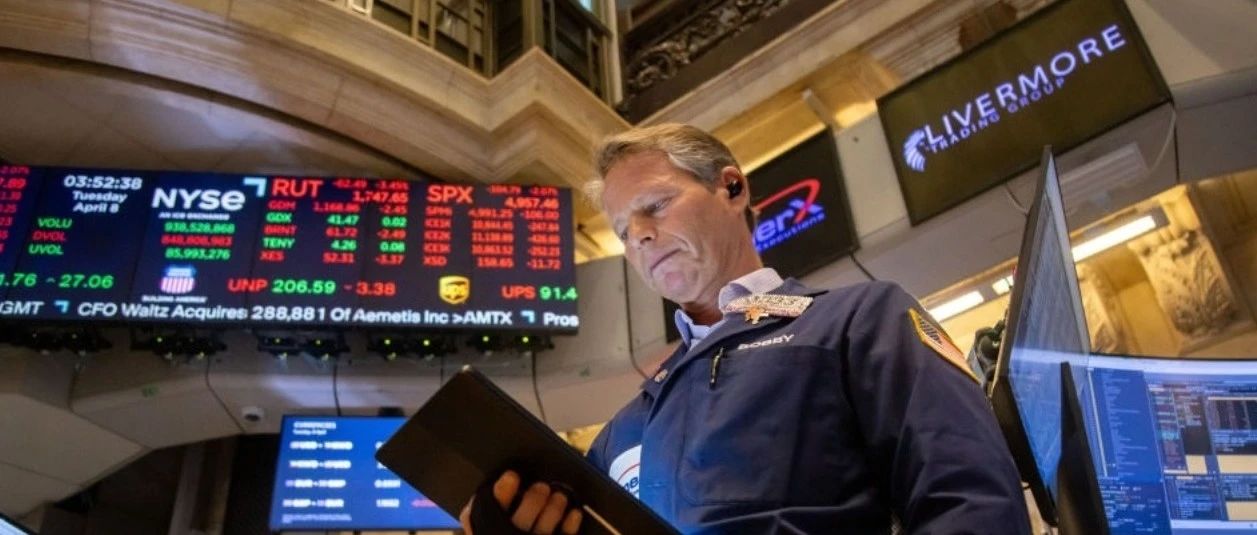
美联储突变,将迎来艰难时刻!纳指跌幅扩大,中概股走强,美债再遭抛售
21世纪经济报道· 2025-04-11 14:42
Core Viewpoint - The article discusses the increasing inflation risks in the U.S. due to tariff policies and the potential economic recession, highlighting the challenges faced by the Federal Reserve in balancing inflation control and economic growth [16][27][30]. Market Overview - U.S. stock indices experienced fluctuations, with the Nasdaq composite index showing a significant decline [1]. - The 10-year U.S. Treasury yield reached a high of 4.5%, marking the highest level since February [11][12]. - The Federal Reserve's total assets increased by nearly $4 billion, indicating a potential shift towards quantitative easing [9]. Inflation and Economic Indicators - The U.S. CPI rose by 2.4% year-on-year in March, lower than market expectations, while core CPI increased by 2.8%, the smallest rise since March 2021 [18]. - The article notes that the March CPI may represent the lowest point for the year, with future inflation risks heightened by tariff-induced price increases [19][21]. Tariff Impact - The article emphasizes that U.S. tariff policies are likely to exacerbate inflation pressures and economic risks, with predictions of consumer prices rising significantly due to tariffs [16][22]. - Analysts predict that food prices will be among the first to increase as a result of tariffs, with broader consumer goods expected to follow [22]. Economic Growth Projections - The article cites a reduction in GDP growth forecasts for the U.S., with expectations of a slowdown in non-farm employment growth and an increase in unemployment rates [28]. - The risk of a recession in the U.S. is estimated to be between 30% to 35%, with economic expansion expected to continue but at a much lower rate [28]. Federal Reserve's Dilemma - The Federal Reserve faces a challenging situation, needing to manage inflation without triggering a recession, with concerns that early rate cuts could lead to uncontrolled inflation [26][30]. - The article highlights the uncertainty surrounding the Fed's monetary policy path, which will depend on the impact of tariffs and other economic indicators [29].
特朗普正在使用七伤拳!制造一场衰退
雪球· 2025-04-08 08:32
以下文章来源于睿知睿见 ,作者睿知睿见 睿知睿见 . 一个好的投资者,其能量一定的积极的,向上的,乐观的! 别人看着他,就像看着太阳! 他还能用朴 实易懂的语言,传递正确的投资理念! 长按即可参与 风险提示:本文所提到的观点仅代表个人的意见,所涉及标的不作推荐,据此买卖,风险自负。 作者: 睿知睿见 来源:雪球 从特朗普胜选后,市场对美国经济的预期就在不断的发生变化。 一会认为会再通胀,一会认为会滞胀,一会认为会 衰退。 为什么市场的预期会变来变去呢? 第三,商品价格大幅上涨,导致居民需求大幅下降,需求下降的速度更快,最终就会引发衰退。 也就是说, 商品价格上涨的幅度不同,导致的结果就不同。 一、市场预期的变化 在特朗普胜选前,市场根据民调已经预期特朗普会胜出了。 市场知道,一旦特朗普胜出,拜登政府就会突击式花钱,所以开始交易再通胀,2年美债利率上 升。 特朗普胜出后就再一个劲的鼓吹自己会创纪录式的加征关税,虽然市场认为特朗普会加税,但不 会有他说的那么离谱,于是开始交易滞胀,2年美债利率横着走。 特朗普上台后,出招一次比一次狠,这就让市场认为特朗普不是闹着玩的,于是开始交易衰退,2 年美债利率下跌,美股下跌 ...

关税扰动下有色或偏弱,金价或偏强
HTSC· 2025-04-07 02:15
Investment Rating - The report maintains an "Overweight" rating for the non-ferrous metals sector and basic metals and processing [3]. Core Views - The report indicates that basic metals are likely to remain weak due to rising recession expectations in the U.S. following the announcement of reciprocal tariffs, while precious metals, particularly gold, may have significant upward potential due to inflationary pressures and recession risks [1][14]. Summary by Sections Basic Metals - The report highlights that the recent reciprocal tariffs have led to a significant drop in copper prices, with expectations of continued weakness in prices due to heightened recession fears in the U.S. [10][12]. - Copper prices fell sharply after the announcement of tariffs, with the cumulative tariff rate on China reaching 54% over 25 years, leading to a decline in domestic copper processing rates [10]. - Aluminum prices also showed a downward trend, with a reported price of 20,520 CNY/ton, down 1.44% week-on-week, and expectations of weak demand due to global recession concerns [11]. Precious Metals - Gold prices experienced a decline due to liquidity issues, despite not being directly affected by the new tariffs. The report notes that gold prices closed at 738.97 CNY/gram, reflecting a 4.23% increase week-on-week [13][24]. - The report maintains a positive outlook for gold, suggesting that inflationary disturbances and recession expectations will likely support its price in the future [14]. Lithium and Rare Earths - Lithium prices are expected to remain weak due to oversupply and declining demand, with the current price at 73,900 CNY/ton, down 0.54% week-on-week [16]. - Rare earth prices are also projected to fluctuate, with current prices for praseodymium-neodymium oxide at 442,000 CNY/ton, reflecting a slight increase, but demand may weaken in the short term due to tariff impacts [15]. Key Recommendations - The report recommends investing in leading companies such as Shandong Gold (1787 HK) with a target price of 20.65 CNY and an "Overweight" rating [3].
策略周聚焦:空中加油正在进行
Huachuang Securities· 2025-03-16 12:53
Group 1 - The report identifies that "air refueling" is occurring, indicating a potential acceleration in market growth, with 56% of all A-shares reaching new highs compared to the closing price on October 24, 2024, approaching the previous high of 60% [1][14][11] - Liquidity conditions are deemed sufficient for market growth, characterized by a balanced trading structure, increased participation from foreign and public funds replacing leveraged funds, and an anticipated rise in trading activity [11][14][1] - The report suggests that the core of the current bull market is the relative price advantage of assets, with an estimated inflow of 10 to 20 trillion yuan into the stock market due to the migration of excess savings [36][12][1] Group 2 - The report highlights a resurgence of liquidity-driven trading logic, with a significant increase in the proportion of stocks with rising PEG ratios from 46% to 72% over two weeks, indicating a favorable trading environment [40][41][1] - The report notes that the market is experiencing a rotation phase, with a potential rebalancing between large and small-cap stocks, reflecting a shift in investor preferences [41][40][1] Group 3 - The report recommends a dual-line investment strategy: focusing on small-cap growth stocks in the technology sector, such as chips, robotics, and artificial intelligence, while also emphasizing core consumer assets that are expected to see valuation recovery [44][5][1] - It is suggested that the current economic recovery and stabilization of asset prices will enhance the performance of core assets, particularly in sectors like food and beverage, home appliances, and pharmaceuticals [44][5][1]
美国2月CPI数据点评:美股调整弱化消费需求,“再通胀”叙事或出现反转
Guoxin Securities· 2025-03-13 06:15
Inflation Data Summary - In February, the overall and core CPI in the U.S. increased by 0.2% month-on-month, a decrease of 0.3 and 0.2 percentage points from the previous month respectively[2] - Year-on-year, the overall CPI rose by 2.8%, while the core CPI increased by 3.1%, both down by 0.2 percentage points compared to the previous month[2] CPI Trends - The core CPI reached a new low, dropping to levels not seen since April 2021, breaking below the previous range of 3.2-3.3%[3] - The CPI structure showed a divergence in inflation performance between goods and services, with food inflation rising by 0.2% month-on-month, a decrease of 0.2 percentage points from January[4] Energy Prices - Energy prices increased by 0.2% month-on-month in February, lower than the 1.1% increase in January, but still above the average of the past 12 months[6] - Gasoline and fuel prices fell by 0.9% in February, while electricity and natural gas prices rose by 1% and 2.5% respectively[6] Core Inflation Contributions - Core services contributed the most to the CPI growth, accounting for 0.15% of the increase, although this was a decrease of 0.15 percentage points from the previous month[9] - Core goods contributed 0.04% to the CPI growth, while the energy component's contribution fell to 0.01%, down by 0.06 percentage points from January[9] Economic Outlook - The adjustment in U.S. stock markets is expected to weaken consumer demand, potentially reversing the "re-inflation" narrative[13] - Factors such as low savings rates and high stock valuations may lead to a decline in consumer spending in 2025, counteracting the effects of tariff and immigration policies aimed at re-inflation[13]
美债大涨:Positivecarry带来的市场翻盘
Guotai Junan Securities· 2025-03-12 13:36
Investment Rating - The report does not explicitly provide an investment rating for the industry [15][16]. Core Insights - The report discusses the recent decline in U.S. Treasury yields, with the 10-year yield dropping from approximately 4.8% at the beginning of the year to around 4.3% [9][11]. - The "Trump trade" is experiencing a cooling off, similar to the trend observed in 2017, driven by slow implementation of tariff policies and weakening economic indicators in the U.S. [9][12]. - Positive carry is highlighted as a significant factor driving the strength of long-term bonds, providing a protective cushion in a volatile market environment [11][13]. Summary by Sections U.S. Treasury Yields - The report notes a rapid decline in U.S. Treasury yields, particularly the 10-year yield, which has decreased significantly despite rising inflation indicators [9][11]. - The market's focus on purchasing long-term U.S. Treasuries is emphasized as a safe trading strategy [11]. Market Dynamics - The report indicates that the narrowing interest rate differential between the U.S. and Europe suggests that the dollar's strength may not have reached its peak yet [12][14]. - The report also mentions that the market's reaction to clear directional signals often results in lower trading value, while positive carry trades can accumulate small victories into larger gains [13]. Currency and Interest Rate Outlook - The report suggests that the narrowing of the U.S.-Euro interest rate differential may lead to a stronger euro, indicating ongoing dynamics in the forex market [12][14]. - It is noted that the market's expectations for the European Central Bank's interest rate cuts have remained stable despite the changes in U.S. rates [12].