财政可持续性

Search documents
美债收益率直逼高点,市场在警告特朗普减税法案
Hua Er Jie Jian Wen· 2025-05-22 00:39
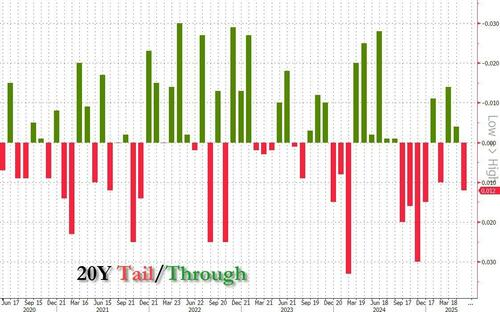
Core Viewpoint - The bond market is reacting negatively to Trump's tax cut plan, raising concerns about the potential for significant increases in the budget deficit over the coming years [1][9] Group 1: Bond Market Reactions - The 20-year U.S. Treasury auction showed unexpected weakness, with the winning yield surpassing 5%, marking one of the worst performances in five years, which heightened concerns about increasing debt [1] - Following the auction results, the 30-year Treasury yield surged to 5.1%, nearing a 20-year high, while the 10-year yield rose to 4.595% [2] - Investors are flocking to safe-haven assets like gold and Bitcoin to hedge against rising government debt and inflation risks, with long-term bond yields increasing by approximately 14 basis points since last Friday [5] Group 2: Political and Economic Implications - Conservative Republican lawmakers are beginning to oppose Trump's tax cut plan, citing rising bond yields as a warning signal [7] - The current U.S. debt is unprecedented, with interest payments exceeding the defense budget, and the total public debt has surged from under $14 trillion in 2016 to nearly $30 trillion [9] - The market's sharp reaction indicates that investors are unwilling to tolerate continuous government borrowing, seeking to enforce fiscal discipline through higher borrowing costs [9] Group 3: Broader Economic Concerns - The rise in bond yields is driven by fears of deficits and higher inflation expectations rather than strong economic fundamentals [10] - There is a mismatch between signals from the stock and bond markets, with stock investors largely ignoring concerns about increasing deficits and inflation [11] - Retailers, including Walmart and Target, are planning to raise prices due to tariffs, contributing to inflationary pressures, which has led to a decline in stock prices [11]

长债拍卖遇冷引发恐慌 美股遭遇四月以来最严重抛售
智通财经网· 2025-05-21 22:21
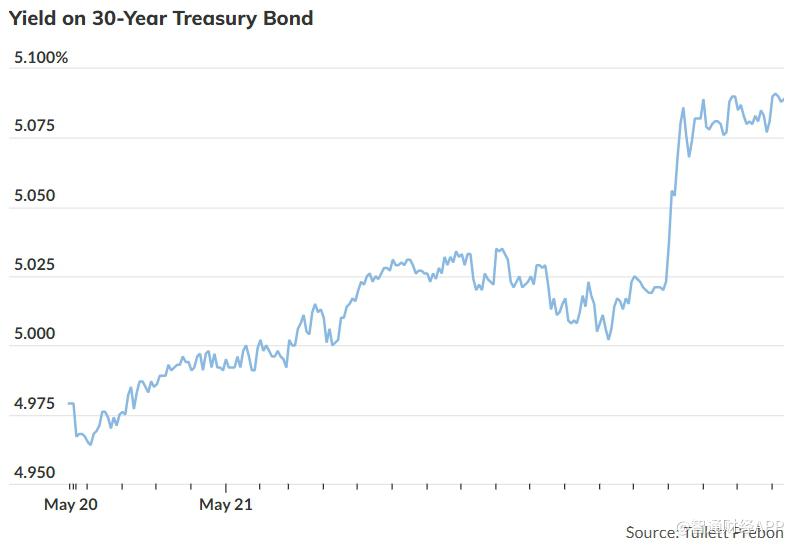
Market Overview - The U.S. stock market experienced a significant decline, with the three major indices recording their worst single-day performance in a month, driven by heavy selling in the bond market due to concerns over U.S. fiscal sustainability [1][3] - The 30-year Treasury yield surpassed 5% for the first time since November, raising worries about future financing costs and triggering a chain reaction in the market [1][3] Bond Market Dynamics - A disappointing auction of $20 billion in 20-year Treasury bonds resulted in weak demand, leading to yields that were much higher than expected, which in turn caused bond prices to drop and yields to spike [3] - The 10-year Treasury yield rose to 4.61%, nearing its yearly high, while the 30-year yield reached 5.02%, marking a significant increase in bond yields [3] Investor Sentiment - Investor sentiment turned cautious as concerns about the U.S. debt issue resurfaced, leading to increased selling pressure in the stock market [3][4] - The market's reaction was exacerbated by a lack of confidence in long-term fiscal policies, with ongoing uncertainties related to tariffs and budget disputes [4] Sector Performance - Retail sector performance was notably poor, with Target's earnings falling short of expectations, resulting in a 5.21% drop in its stock price [5] - UnitedHealth, a component of the Dow, saw its stock decline by 5.78%, contributing to the downward pressure on blue-chip stocks [5] Currency and Alternative Assets - The ICE Dollar Index fell by 0.52%, while gold and Bitcoin prices increased by 0.97% and 0.03%, respectively, indicating a shift towards alternative assets as investors seek to hedge against sovereign credit risks [6] - Bitcoin reached a new historical high, surpassing $109,000 during the trading session, reflecting investor interest in alternative investments amid rising concerns over U.S. fiscal health [6]




美债,再遭抛售
凤凰网财经· 2025-05-19 14:12
Core Viewpoint - The recent downgrade of the U.S. sovereign credit rating by Moody's has led to a significant sell-off in U.S. Treasury bonds, with the 30-year yield surpassing the psychological threshold of 5%, marking the highest level since 2007 [1] Group 1: Market Reaction - The 10-year Treasury yield increased by 4 basis points to 4.52%, while the 30-year yield rose by 6 basis points to 5.00%, nearing the peak of 5.18% reached in 2023 [1] - U.S. stock futures also declined, with the S&P 500 futures dropping by 0.6%, and the U.S. dollar index continuing its recent downward trend [1] Group 2: Reasons for Downgrade - Moody's cited the persistently high fiscal deficit and the rising proportion of interest payments relative to fiscal revenue as the primary reasons for the downgrade [1] - The agency emphasized the failure of multiple administrations and Congresses to reach effective solutions for improving fiscal discipline, with ongoing discussions about tax cuts exacerbating market concerns [1] Group 3: Future Implications - Max Gokhman, Deputy Chief Investment Officer at Franklin Templeton Investment Solutions, indicated that the downgrade could accelerate large investors, such as sovereign funds, to replace U.S. Treasuries with other safe-haven assets, potentially creating a vicious cycle of rising yields and intensified selling [1] - Wells Fargo's strategy team predicts that the yields on 10-year and 30-year Treasuries may rise by an additional 5-10 basis points as a result of this event [1]
穆迪下调美国主权信用评级带来定价滑坡 30年期美债收益率再破5%
2 1 Shi Ji Jing Ji Bao Dao· 2025-05-19 11:45
Core Viewpoint - Moody's downgrade of the U.S. sovereign credit rating from "Aaa" to "Aa1" reflects concerns over the growing debt burden and interest payment ratio, leading to a decline in investor confidence in U.S. Treasuries [1][3][4] Group 1: Credit Rating Downgrade - Moody's decision to downgrade the U.S. credit rating follows similar actions by Fitch and Standard & Poor's, resulting in the loss of the AAA rating from all three major credit agencies [1][3] - The downgrade has led to a significant increase in U.S. Treasury yields, with the 30-year Treasury yield surpassing 5% and the 10-year yield rising to 4.521% [1][3] Group 2: Long-term Fiscal Concerns - Analysts emphasize that the long-term sustainability of U.S. fiscal policy will impact Treasury pricing and investment value, with a focus on the increasing budget deficit and debt levels [2][4] - Moody's projects that by 2035, U.S. federal debt could reach 134% of GDP, with the deficit potentially rising to 9% of GDP, indicating a concerning fiscal trajectory [3][4] Group 3: Market Reactions and Investor Behavior - The market has shown a negative feedback loop characterized by falling prices, selling pressure, and increased risk aversion among domestic and international investors [1][4] - Some investors, particularly from overseas, are diversifying their portfolios away from U.S. Treasuries, as evidenced by China's reduction of its Treasury holdings by $18.9 billion [7][8] Group 4: Future Outlook - The U.S. Treasury market is at a critical juncture, with potential for increased volatility due to rising inflation risks and uncertain fiscal policies [8][9] - Investment strategies are shifting towards safer assets, with expectations that U.S. Treasuries may outperform riskier assets in the near term [8][9]

BlueberryMarkets:美债收益率全线上扬,与美元走势背离!影响几何?
Sou Hu Cai Jing· 2025-05-15 06:06
特朗普中东之行收获颇丰,与沙特、卡塔尔达成的巨额经济协议持续发酵。周三(5月14日)与卡塔尔签署的合作框架下,双方达成至少1.2万亿美元的经济往 来承诺,并宣布总额超2435亿美元的具体交易清单,涵盖能源、基建、科技等多领域合作。受此提振,美国科技股延续强势表现,纳斯达克指数过去六个交 易日五次收涨,成功重返19000点整数关口上方,半导体与云计算板块领涨市场。 资本流向变化引发固定收益市场剧烈波动。各期限美债收益率全线攀升,10年期美债收益率突破4.5%关键心理位,30年期长债收益率更是逼近5%整数关 口,创2007年以来新高。这种收益率曲线陡峭化走势背后,折射出市场对美国财政可持续性的深层忧虑。值得关注的是,作为全球资产定价基准的10年期美 债收益率,其构成要素正发生结构性变化——短期利率预期与风险溢价呈现双升态势。短期利率方面,尽管美联储维持利率不变,但市场已将首次降息时点 预期从6月推迟至年底,高盛最新预测更指出,联储可能以"政策正常化"名义在四季度启动降息周期,这与此前为应对经济衰退而紧急降息的预期形成鲜明 对比。 美国主权信用风险指标出现异常波动。以信用违约互换(CDS)衡量的5年期美国国债违约保 ...
TradeMax:金价日内疯狂暴涨!美债和美元的末日已至?
Sou Hu Cai Jing· 2025-04-22 01:48
Core Viewpoint - The surge in gold prices, which recently broke the $3420 mark, is attributed to a combination of factors including threats to the Federal Reserve's independence from Trump and the impact of his tariff policies on investor confidence in the U.S. economy [1][3]. Group 1: Gold Market Dynamics - Gold prices have increased over 30% this year, driven by a decline in confidence in the U.S. economy and rising demand from central banks [1][3]. - The dollar index has fallen to its lowest point in three years, contributing to the rise in gold prices, which surged nearly 9% following Trump's announcement of comprehensive tariffs [3]. - Citibank predicts that gold prices could reach $3500 in the next three months due to investment demand outpacing mining supply [3]. Group 2: Stock Market Performance - In contrast to gold, the U.S. stock market is experiencing a downturn, with the S&P 500 index down 11% since early 2025 and only a 5% increase over the past year [4]. - The volatility in nearly all assets, except gold, reflects investor anxiety and a disconnect between gold and stock market performance [4]. Group 3: Economic Signals and Investment Strategies - The rise in gold prices may signal economic warning signs, as the U.S. government faces challenges in fiscal sustainability and rising debt servicing costs [5]. - Investors are advised to monitor the dollar's performance, as future interest rates and core fundamentals will likely dictate currency movements [5]. - Despite the current market conditions, some analysts believe that stocks remain the best long-term investment, while gold serves as a diversification tool amid increasing market uncertainty [4][5].
聊聊周末的三件大事
表舅是养基大户· 2025-04-20 13:35
大家周日晚上好,周末加更一篇,主要是有三个新闻,想和大家分享一下自己的看法。 第一件事,是周五 中航信托 被托管的事情; 第二件事,是本周国务院 "加强预期管理"专题学习会 释放的一些政策信号; 第三件事,是周末的 机器人马拉松 ,表面看起来虽然摔得有点荒唐,但讲讲这次马拉松背后,一些底层的逻辑。 直接步入正题。 ...... 第一件事, 中航信托被托管的一些启发。 本周五,中航信托在官网进行了公告,其后续由建信信托、国投泰康信托进行托管,名义上是"市场化托管",但实际上, 体现的是监管意 志 ——只有问题已经较大,积重难返的机构,才会采取类似这样的托管机制,其目的,是让熟悉行业的同业来把脉,以便尽快梳理清楚内 部的问题,在保险、信托行业,这套机制已经实施了好几次了。 其实,在去年底的《 2025金融行业的十大猜想 》中,我们就提到,对于金 融机构来说,2025年的关键 词,就是" 金融机构合并出清 潮,加速,加速,加速 "。 对于中航信托的问题,在4月初《 有机构扯到蛋了 》里, 聊中航信托的母公司——中航产融停牌退市的时候 ,其实也聊到了,下图,算 是说的比较隐晦了。后续,中航信托大概率是从母公司中航产融 ...
评级视角解读——更加积极的财政政策助力提升财政体系韧性
Da Gong Guo Ji· 2025-03-21 13:02
Group 1: Fiscal Policy and Economic Context - In 2025, China plans to implement a more proactive fiscal policy with a fiscal deficit rate set at 4.0% and an additional government debt scale of 11.86 trillion yuan[1] - China's fiscal deficit rate is currently below the average level, with developed countries and emerging markets projected at 4.5% and 5.5% respectively for 2025, indicating that China's target is not excessively high[2] - The central government's debt burden rate is approximately 25.3%, which is relatively low compared to major global economies, providing ample room for leveraging[3] Group 2: Government Debt and Financial Assets - By the end of 2025, the total government debt is estimated to reach about 96.0 trillion yuan, approximately 66.5% of GDP, significantly lower than the debt burden rates of the US (124.1%), Japan (245.7%), and the EU (83.2%)[4] - The net financial assets of the Chinese government were recorded at 109.3 trillion yuan in 2022, supporting the capacity for large-scale borrowing[4] Group 3: Monetary Policy and Financing Costs - The government plans to implement a moderately loose monetary policy, which is expected to lower financing costs, allowing for the issuance of special bonds and long-term treasury bonds at a lower cost[5] - In 2024, government interest payments accounted for 4.5% of the general public budget expenditure, and this is projected to rise to about 5.0% in 2025, still lower than the IMF's estimates for developed and emerging markets[5] Group 4: Economic Growth and Structural Transformation - The proactive fiscal policy aims to counter short-term economic challenges while promoting long-term structural transformation, with a target economic growth rate of 5% for 2025[6][7] - The shift in fiscal spending towards consumption is expected to enhance domestic demand, with household deposits reaching 152.2 trillion yuan, indicating significant consumption potential[8] - The government plans to issue 1.3 trillion yuan in special treasury bonds in 2025, with 300 billion yuan allocated for consumer goods replacement programs, reflecting a focus on boosting consumption[8] Group 5: Debt Management and Investment Space - The ongoing debt management efforts are expected to enhance transparency and reduce risks, while also freeing up investment space for key sectors such as technology and green initiatives[9][10] - The fiscal policy is designed to guide the economy towards an innovation-driven model, with a budget allocation of 1.2 trillion yuan for scientific and technological expenditures in 2025[11]
提高个税起征点vs增加退税,你选哪个?
吴晓波频道· 2025-03-13 16:16
Core Viewpoint - The ultimate goal of individual income tax reform is to create a system that stimulates market vitality while safeguarding social bottom lines [1][30]. Group 1: Tax Reform Context - The current individual income tax structure in China relies heavily on wage income, accounting for about 60% of total tax revenue, with the remainder coming from property transfers, interest, dividends, and business income [3]. - There is increasing public demand to raise the individual income tax threshold and reduce the tax burden on the middle-income group to enhance disposable income and stimulate consumption [4][3]. - Historical adjustments to the tax threshold have occurred approximately every five years, with the last increase in 2018 setting the threshold at 5,000 yuan per month [8][9]. Group 2: Financial Implications - Raising the tax threshold must balance residents' living costs with the sustainability of fiscal revenue; excessive increases could lead to significant revenue losses and pressure on local finances [16]. - In 2024, individual income tax revenue is projected at 1.45 trillion yuan, a year-on-year decrease of 1.7%, with many provinces experiencing negative growth in tax revenue [16][17]. - The decline in tax revenue is attributed to increased deductions for education and elder care, a sluggish real estate market, and shrinking profits in certain industries [18]. Group 3: International Comparisons - International experiences from countries like the U.S., Japan, and Germany provide insights into potential reforms, emphasizing dynamic adjustments and family-oriented tax structures [21][22][24]. - The U.S. system adjusts tax thresholds annually based on inflation, while Japan allows for detailed deductions based on family circumstances, which could be adapted to China's context [22][24]. - Germany's family coefficient method allows for income splitting, which can lead to significant tax savings for families, suggesting a potential model for reform in China [24]. Group 4: Proposed Reforms - Suggestions from various representatives during the recent sessions include raising the tax threshold, implementing higher standards in high-cost areas, and introducing family joint filing systems [28]. - Proposed new deductions include those for childcare and elder care, reflecting the growing financial pressures on families [28]. - The focus of tax adjustments should primarily benefit middle to high-income earners, with a need for dynamic evaluation frameworks to assess the impact of reforms [30].