春季行情

Search documents
“申”度解盘 | 冲关后短期或有震荡,但春季行情并未结束
申万宏源证券上海北京西路营业部· 2026-01-09 05:22
Core Viewpoint - The market is expected to experience a high opening followed by a period of consolidation, but the overall upward trend remains intact. The focus is shifting from speculative themes to sectors with positive earnings expectations, such as brokerage, computing power, storage, and gaming [3][4]. Market Performance - The China Golden Dragon Index surged by 4.38% during the recent holiday, indicating a strong opening for the next trading day. However, it will face resistance at the previous high of 4034 and the psychological barrier of 4000 points [3]. Market Dynamics - There is potential for incremental capital inflow from various sources, including insurance, foreign investment, and funds from maturing large deposits. The market has already experienced a sufficient consolidation period from late August to December, lasting four months [3]. Sector Analysis - The relative strength of the CSI 500 and CSI 1000 indices suggests they are likely to break out of their consolidation phases, which may lead to upward momentum for other indices [3].


昨日“吸金”超1800万元,港股消费ETF(159735)盘中涨0.5%,新年伊始各地促消费扩投资“双引擎”发力
2 1 Shi Ji Jing Ji Bao Dao· 2026-01-09 01:59
Group 1 - The Hang Seng Index rose by 0.28% as of the report date, while the CSI Hong Kong Stock Connect Consumer Theme Index fell by 0.01% [1] - Among the index constituents, Mixue Group increased by over 4%, while Blukoo and Maogeping rose by over 3%, and Weidong Meishi and Shenzhou International increased by over 2% [1] - The Hong Kong Consumer ETF (159735.SZ) rose by 0.5% with a trading volume exceeding 2 million yuan and a real-time premium rate of 0.28% [1] Group 2 - Local governments are focusing on expanding domestic demand to stimulate the economy, with "domestic demand as the main driver" being a top priority for economic work in 2026 [2] - Experts indicate that enhancing consumption and driving investment will provide support for sustained economic recovery [2] - Huatai Securities believes that short-term market sentiment may be impacted by funding and geopolitical disturbances, but the upward trend for the spring market is likely to continue [2]

A股指数涨跌不一:创业板指跌0.69%,石油、航天系等板块涨幅居前
Feng Huang Wang Cai Jing· 2026-01-09 01:30
Market Overview - The three major indices opened mixed, with the Shanghai Composite Index up by 0.09%, the Shenzhen Component down by 0.30%, and the ChiNext Index down by 0.69% [1] - The oil, aerospace, and telecommunications sectors showed strong performance, while industrial gases, electronic chemicals, and energy metals faced declines [1] Index Performance - Shanghai Composite Index: 4086.76, up 0.09%, with a trading volume of 116.12 billion [2] - Shenzhen Component Index: 13917.78, down 0.30%, with a trading volume of 192.72 billion [2] - ChiNext Index: 3279.38, down 0.69%, with a trading volume of 75.19 billion [2] - Northbound 50 Index: 1511.97, up 0.24%, with a trading volume of 2.78 billion [2] External Market - U.S. stock indices closed mixed, with the Dow Jones up by 270.03 points (0.55%) at 49266.11, while the Nasdaq fell by 104.26 points (0.44%) to 23480.02 [3] - The Nasdaq China Golden Dragon Index rose by 1.09%, with notable gains in stocks like Bilibili (up over 6%) and Alibaba (up over 5%) [3] Institutional Insights - Huatai Securities suggests continuing to position for the spring market, with a balanced allocation between growth and cyclical sectors, highlighting improvements in upstream resources, public industries, TMT, and essential consumer goods [4] - CITIC Securities emphasizes capturing structural market opportunities, focusing on large-cap growth stocks with improving fundamentals [5] - Guojin Securities sees potential for value reconstruction in the wind power industry, recommending focus on manufacturing, subsea cables, and component companies benefiting from domestic and international market changes [6] - Tianfeng Securities is optimistic about A-share gaming companies entering a strong product cycle in 2026, driven by improved supply conditions and stable regulatory environments [7][8] - CICC notes the real estate sector's shift towards asset management, emphasizing the need for high-quality development in housing and operational real estate [9]


华泰证券:继续布局春季行情,成长和周期均衡配置
Xin Lang Cai Jing· 2026-01-09 00:07
Core Viewpoint - The report from Huatai Securities indicates that the industry prosperity index shows initial signs of a turning point in December, corroborated by an unexpected rebound in PMI [1] Sector Summaries - **Upstream Resources and Public Industries**: Significant improvement in the last three months, particularly in sectors such as non-ferrous metals, coal, certain chemical products, paper, and ordinary steel driven by price increases [1] - **TMT (Technology, Media, and Telecommunications)**: Accelerated progress in AI applications, leading to improved conditions in gaming and software, with a positive trend in computing power storage and passive components [1] - **Capital Goods and Intermediate Products**: Improvement noted in sectors like new energy, automation equipment, and engineering machinery, with export orders potentially being advanced due to the later timing of the 2026 Spring Festival [1] - **Consumer Goods**: Recovery observed in dairy products, beer, and livestock sectors [1] - **Infrastructure Chain**: The construction PMI rose above the threshold in December, indicating a recovery in the construction industry [1] - **Independent Prosperity Cycle**: Notable performance in sectors such as military electronics [1] Investment Recommendations - The report suggests continuing to position for the spring market with a balanced allocation between growth and cyclical sectors, recommending a focus on non-ferrous metals, chemicals, military, storage, gaming, new energy (batteries/wind power), and pharmaceuticals at a monthly level [1] - Additionally, short-term thematic investments are favored, with a focus on humanoid robots, brain-machine interfaces, and domestic computing power, considering trading congestion [1]

A股市场两融余额首次突破2.6万亿元
Qi Huo Ri Bao Wang· 2026-01-08 17:12
新年伊始,A股市场放量上涨,融资融券(简称两融)余额也显著增长。据中证数据有限责任公司公布 的最新数据,截至1月7日,A股市场两融余额为26047.42亿元,首次突破2.6万亿元大关。期货日报记者 注意到,1月5日至7日,两融余额连续3个交易日攀升,累计增加640.60亿元。对此,分析人士认为,A 股市场气势如虹主要得益于政策预期向好、资金流动性改善与市场情绪回暖,投资者对后市信心增强, 各类资金积极参与明显提升了市场整体成交。 谈及两融交易活跃度持续提升,中国国际期货研究院负责人李冰在接受记者采访时表示,去年12月中旬 以来,A股市场便呈现出节节攀升的多头趋势,元旦假期后两融交投活跃且余额持续增长更是延续了假 期前市场的多头氛围。 "元旦假期前,投资者因担忧假期消息面的不确定性,常在加杠杆方面较为谨慎。而假期后,随着半导 体、有色资源、机器人等主题板块活跃,资金明显加快了入市布局的步伐。"李冰进一步解释道。 南华期货权益与固收研究分析师廖臣悦认为,两融余额增长是市场情绪回暖与风险偏好回升的重要信 号。"开年以来,A股市场放量大涨,截至1月8日,已连续3个交易日成交额超过2.8万亿元,交投热情显 著升温。市场 ...
市场那些事丨岁末年初,春季行情抢跑在即?
Sou Hu Cai Jing· 2026-01-08 03:19
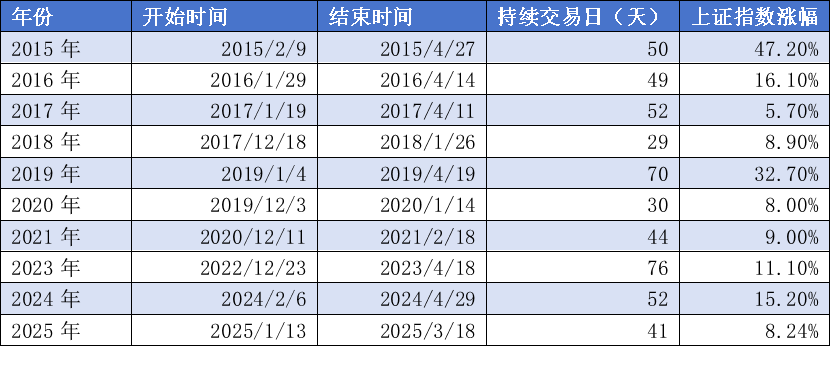
Group 1: Spring Market Dynamics - The spring market is characterized by a combination of policy expectations, liquidity easing, and an earnings vacuum period, creating a stage for market opportunities rather than being solely driven by seasonal factors [1] - The initiation of the spring market has been occurring earlier, with data showing that in the last five years, three instances saw the spring market start in December of the previous year, indicating a new market trend of "year-end sprint" [2] Group 2: Historical Performance - Historical data indicates that the spring market has varied in duration and performance, with the Shanghai Composite Index showing significant gains in various years, such as a 47.20% increase in 2015 and a projected 15.20% increase in 2024 [3] Group 3: External and Domestic Support - On the international front, reduced uncertainties, such as the U.S. Federal Reserve's interest rate cuts and a weaker dollar, are expected to enhance liquidity and attract foreign capital into the A-share market [4] - Domestically, a series of policy measures and early issuance of local government bonds are expected to provide strong support for economic recovery and market growth, with significant inflows into A-share ETFs indicating a favorable liquidity environment [5] Group 4: Investment Strategies - Investors are advised to focus on three main sectors: - The technology sector, which is expected to benefit from policy support in areas like artificial intelligence and semiconductor industries [6] - The cyclical sector, particularly in renewable energy and high-end manufacturing, which is anticipated to gain from global economic recovery and domestic policy initiatives [6]
早盘直击|今日行情关注
申万宏源证券上海北京西路营业部· 2026-01-08 02:49
Market Overview - The Shanghai and Shenzhen stock markets exhibited strong upward momentum due to robust bullish expectations for the new year and the influx of incremental capital returning to the market [1] - The Shanghai Composite Index recorded a historical achievement with thirteen consecutive bullish candles, indicating a strong bullish sentiment [1] - Following this streak, a normal market correction occurred, but the late-session rally showed continued strength from buyers, suggesting a dominant bullish atmosphere [1] Market Trends - After the fourteen consecutive bullish candles, short-term fluctuations in the market are expected, but a significant downturn is unlikely [1] - The overall trend appears to be a sustained upward movement, indicating a continuation of the spring market rally [1] Sector Performance - Key sectors showing significant gains include electronic chemicals, coal, and semiconductors, driven by expectations of price increases in semiconductors, lithography machines, energy, and metals [1] - Conversely, sectors such as shipbuilding, securities, and education experienced notable declines, highlighting a clear short-term rotation in market performance [1] Future Outlook - The market is anticipated to continue its strong oscillation, with the bullish trend remaining dominant despite the potential end of the consecutive bullish candles [1]

兴业期货日度策略-20260108
Xing Ye Qi Huo· 2026-01-08 01:07
Report Industry Investment Rating - Not provided in the given content Core Viewpoints of the Report - The spring market in the financial and commodity futures markets is positive, with the A - share market strong, the stock index futures rising, and the commodity futures showing various trends such as continuous highs in non - ferrous metals and rebounds in chemicals [1][2] - Different investment strategies are recommended for various futures varieties based on their fundamentals and market conditions Summary by Related Catalogs Financial Futures - **Stock Index Futures**: The spring market is strengthening, the stock market's money - making effect is increasing, and various funds are becoming more active. Policy and capital factors are driving upwards. The IC long positions should be continued to be held [2] - **Treasury Bond Futures**: The bond market is under pressure, especially long - term bonds. The strength of the equity market, policy orientation, and the central bank's cautious bond - buying scale contribute to the bearish sentiment [2] Commodity Futures Non - Ferrous Metals - **Copper**: Supply shortage expectations are increasing, and long positions in沪铜CU2602 should be held. The copper price is on a medium - to - long - term upward trend due to supply tightness and mine - end concerns [1][3][5] - **Aluminum and Alumina**: Aluminum prices are rising, and alumina has a short - term upward trend. Although the alumina fundamentals show an oversupply pattern, low valuation and other factors support the price, while the aluminum price is supported by resource attributes and supply - demand gap expectations [5] - **Nickel**: The progress of solid - state battery industrialization boosts demand expectations. Although the current fundamentals are weak, a long - position mindset is advisable [5] Precious Metals - **Gold, Silver, Platinum, and Palladium**: Geopolitical risks increase the safe - haven demand and resource attributes of precious metals. Long positions in黄金AU2604 and白银AG2603 should be held, and a long - position mindset is recommended for platinum, while new positions in palladium should be on hold for now [5] Energy and Chemicals - **Crude Oil**: Geopolitical uncertainties and weak supply - demand fundamentals keep the oil price fluctuating in a low - level range [8] - **Methanol**: Tensions in Iran and production cuts may lead to a reduction in imports. If the post - Spring Festival maintenance increases, the upward space for methanol will expand [8] - **Polyolefins**: Although the fundamentals lack positive factors, supply reduction expectations and price differentials provide some support, and the price increase is expected to be limited [10] Building Materials and Minerals - **Steel and Iron Ore**: The macro - policy is positive, and the cost - support logic is strengthened. The prices of rebar, hot - rolled coil, and iron ore are expected to be relatively strong in the near term [7] - **Coal and Coke**: The prices of coking coal and coke are rebounding from oversold levels. Attention should be paid to the progress of winter storage [8] - **Soda Ash and Glass**: Soda ash supply is increasing, and demand may decline, but it should not be overly bearish. Glass has high inventory and weak demand, but short - term price increases are possible due to policy expectations [8] Other Commodities - **Lithium Carbonate**: There is a game between strong expectations and weak reality. The price is likely to rise before demand is falsified, but regulatory risks need to be watched [7] - **Industrial Silicon and Polysilicon**: Industrial silicon has weak upward drivers, while polysilicon prices are expected to remain high and volatile [7] - **Rubber**: The supply pressure is relieved, and demand expectations are positive, so the rubber price has upward momentum [10] - **Palm Oil**: The supply - demand situation is average, and the price is mainly affected by related products, showing a volatile trend [10]
天赢居:一年一度的春季行情
Jin Rong Jie· 2026-01-07 15:21
Group 1 - The core viewpoint of the articles suggests that the spring market rally typically begins around the New Year and lasts until the spring equinox, with specific technical indicators signaling the start of the rally [1] - The spring market rally is expected to start from December 16, 2025, following a double bottom support structure at the previous low of 3816, with a target of reaching 4018 after breaking through key resistance levels [1] - Historical patterns indicate that the spring rally usually lasts for 55 trading days, which would project an end date around March 16, coinciding with the spring equinox on March 20 [1] Group 2 - The market is anticipated to face resistance around 4173, with a gradual upward trend expected, characterized by periods of consolidation before reaching higher levels [2] - The recent trading pattern from August 26 to January 7 shows limited price movement, suggesting a potential for a similar pattern of consolidation followed by upward movement [2] - Short-term trading strategies involve monitoring the KDJ indicator for buy signals after a period of consolidation, with a focus on holding positions in technology hardware and non-ferrous metals [2]
近3200只个股下跌
Di Yi Cai Jing Zi Xun· 2026-01-07 07:36
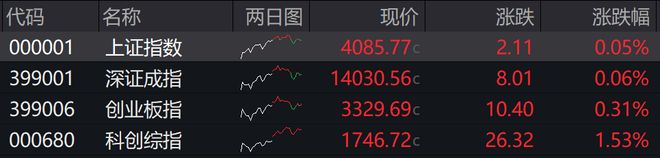
Market Overview - A-shares experienced narrow fluctuations on January 7, with the Shanghai Composite Index rising by 0.05%, the Shenzhen Component Index by 0.06%, the ChiNext Index by 0.31%, and the STAR Market Index by 1.53% [1][2]. Sector Performance - The semiconductor industry chain showed strength, with photolithography machines and memory sectors leading the gains. Active sectors included rare earths, CPO, innovative pharmaceuticals, and short drama gaming themes. Conversely, digital currency and cross-border payment sectors adjusted, while brokerage and oil & gas sectors saw significant declines [2][6]. Individual Stock Highlights - Notable stocks in the photolithography and photolithography adhesive sectors included: - Jiasian Co. (+25.68%) - Gaomeng New Materials (+20.03%) - Huarong Chemical (+20.03%) - Nanda Optoelectronics (+20.00%) - Xinyuan Micro (+20.00%) [3][4]. - The coal sector experienced a collective surge, with stocks such as Dayou Energy, Antai Group, and Shaanxi Black Cat hitting the daily limit [4]. Trading Volume and Market Sentiment - The total trading volume in the Shanghai and Shenzhen markets reached 2.85 trillion yuan, an increase of 476 billion yuan compared to the previous trading day, with nearly 3,200 stocks declining [4][6]. Capital Flow - Main capital inflows were observed in coal, electric grid equipment, and semiconductor sectors, while outflows were noted in computer, consumer electronics, and securities sectors [6][7]. Institutional Insights - Dongfang Securities noted that the market opened positively, with a favorable outlook for technology growth stages. - CICC highlighted an improvement in market risk appetite, suggesting that the spring market trend may continue. - China Merchants Securities indicated that A-shares are likely to maintain an upward trend, with a high probability of continuing the spring offensive [8].