
量化交易

Search documents
2025年了,为何还有人相信地产的小作文?
表舅是养基大户· 2025-07-10 13:30
Group 1 - The market showed stability in the morning, with the Shanghai Composite Index maintaining above 3500 points, but experienced volatility in the afternoon due to a widely circulated "small essay" regarding a significant real estate meeting, leading to a surge in real estate stocks, which rose over 3% [1][2] - Despite a clarification from the essay's author that it was taken out of context, the Hong Kong real estate index still closed up over 4%, indicating persistent market interest [1][2] - The sentiment around real estate meetings is questioned, with skepticism about their ability to effect substantial change by 2025, suggesting a strategy of "sell the rip" rather than holding onto real estate investments [3][4] Group 2 - Ping An Life emerged as a significant winner in the market, benefiting from its heavy investments in real estate stocks, particularly with Huaxia Happiness hitting a daily limit up, contributing to a market capitalization recovery above 1 trillion yuan [5] - The total market capitalization of major state-owned banks surpassed 10 trillion yuan, with Industrial and Commercial Bank of China leading at 2.88 trillion yuan, followed by China Construction Bank at 2.58 trillion yuan [7][8] Group 3 - The recent rally in bank stocks is primarily driven by institutional funds, with retail participation remaining low, as evidenced by the limited scale of products linked to the China Securities Bank Index, which totaled only 33 billion yuan [19][22] - The insurance sector has seen a significant increase in premium income since 2022, leading to a shift in investment strategies towards high-dividend sectors like banks, as the yield on bonds has decreased [16][17] Group 4 - The upcoming earnings reports are expected to influence market trading, with companies like Northern Rare Earth projecting a net profit increase of approximately 1882.54% to 2014.71% year-on-year for the first half of the year [26][28] - The bond market experienced fluctuations due to the impact of the real estate "small essay," with the 10-year government bond showing a slight increase in response to market dynamics [31][32]


山西证券研究早观点-20250710
Shanxi Securities· 2025-07-10 03:48
Group 1: Market Trends - The implementation of algorithmic trading regulations began on July 7, 2025, with detailed provisions for reporting, trading behavior, information systems, and high-frequency trading management [7] - Major indices experienced varying degrees of increase, with the Shanghai Composite Index rising by 1.40% and the Shenzhen Component Index increasing by 1.54% [7] - The total trading volume in A-shares reached 7.21 trillion yuan, with an average daily trading volume of 1.44 trillion yuan, reflecting a week-on-week decrease of 3.05% [7] Group 2: Company Analysis - Kaili New Materials (688269.SH) - Kaili New Materials announced a cash dividend of 0.3 yuan per share, totaling 39.21 million yuan, as part of its commitment to shareholder returns [8] - In Q1 2025, the company achieved revenue of 626 million yuan, a year-on-year increase of 105.25%, and a net profit of 22 million yuan, up 90.48% year-on-year [11] - The company is expected to maintain high growth rates in core product sales, with projected revenues of 2.037 billion yuan, 2.487 billion yuan, and 2.918 billion yuan for 2025 to 2027, reflecting year-on-year growth rates of 20.8%, 22.1%, and 17.3% respectively [9] Group 3: Investment Recommendations - The report maintains a "Buy-B" rating for Kaili New Materials, with projected earnings per share (EPS) of 1.22 yuan, 1.73 yuan, and 2.21 yuan for 2025 to 2027, corresponding to price-to-earnings (PE) ratios of 26.8, 18.9, and 14.8 [9] - The company is expected to benefit from rising palladium prices, which have increased by 23.28% from their lowest point earlier in the year, potentially enhancing sales prices and profitability [11] - The company plans to distribute a total cash dividend of 0.5 yuan per share for the 2024 fiscal year, amounting to 65.35 million yuan, indicating a strong commitment to shareholder returns [11]

港交所敲钟的锣不够用了...
表舅是养基大户· 2025-07-09 13:35
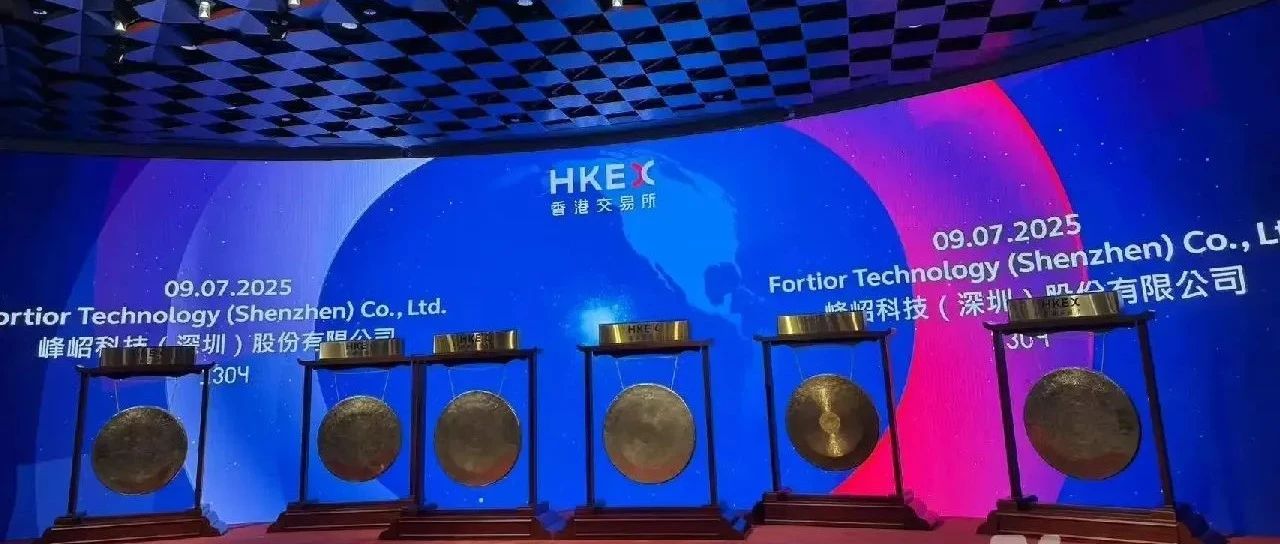
Group 1 - The core viewpoint of the article highlights the significant increase in Hong Kong stock market activity, with June's average daily trading volume reaching approximately 230 billion, doubling from last year's 110 billion, indicating heightened market enthusiasm [1] - In June, 44 companies went public, raising 280 billion, a substantial increase from 30 companies and 66 billion in the same period last year, reflecting a fourfold growth in fundraising [1] - The article notes a record number of IPOs on a single day, with five companies and one ETF listed, marking the highest daily listing count since July 2018 [1] Group 2 - The article discusses the rising short-selling ratio in the Hong Kong market, which reached its second-highest level since April 15, indicating market divergence and sentiment concerns [2] - There is a significant concern regarding the impact of the food delivery price war on major platforms like Alibaba, Meituan, and JD.com, questioning whether the stock prices have adequately reflected the increased operational costs [4] - Despite a temporary boost from 12 billion in southbound capital, stock prices for Alibaba, Meituan, and JD.com fell significantly, with declines of 3.8%, 2.5%, and around 2% respectively, returning to levels seen in September of the previous year [5] Group 3 - The article mentions the A-share market's struggle to maintain above the 3500-point mark, with concerns that breaching this level could trigger quantitative selling mechanisms [7] - It highlights that the current market dynamics are primarily driven by capital flows, as evidenced by the high opening of A-shares despite weak CPI and PPI data [11] - The article also points out a disconnect between the banking sector's fundamentals and stock performance, with bank indices reaching historical highs despite concerns over net interest margins and non-performing loan rates [13][15]
量化交易所:金融市场的“隐形高速公路”
Sou Hu Cai Jing· 2025-07-09 11:36
Core Insights - The rise of quantitative exchanges has fundamentally reshaped market structures, providing a high-speed, intelligent trading environment that processes millions of orders per second [1][8] - These exchanges serve as the core "nervous system" of financial markets, enabling efficient capital flow and pricing without predicting market movements [12] Group 1: Infrastructure and Functionality - Quantitative exchanges operate with microsecond-level order execution capabilities, allowing for rapid translation of strategy signals into trades [6] - They aggregate global buy and sell demands, ensuring that large trades can be executed smoothly without causing significant price fluctuations [6] - The built-in real-time monitoring systems act as a first line of defense against abnormal trading activities, contributing to market stability [6] Group 2: Resilience and Performance - During the March 2020 stock market "circuit breaker" events, major quantitative exchanges demonstrated their resilience by maintaining basic operational functions under extreme pressure [4] - The transparent operational mechanisms of these exchanges facilitate fair order matching and clear data flows, enhancing market efficiency [6] Group 3: Innovation and Future Prospects - The emergence of decentralized finance (DeFi) is leading to a diversification of technology-driven trading venues, combining traditional exchange performance with blockchain transparency [8] - Quantitative exchanges are seen as cost efficiency revolutionaries, significantly reducing manual and error costs through automation, benefiting the entire market [10] - They are also viewed as incubators for innovative technologies, fostering the integration of AI, big data analytics, and blockchain within the financial sector [10]
非银行金融行业周报:程序化交易细则实施,行业多项排名出台-20250709
Shanxi Securities· 2025-07-09 09:51
Investment Rating - The report maintains an investment rating of "Leading the Market - A" for the non-bank financial industry [1]. Core Insights - The implementation of the programmatic trading rules aims to regulate high-frequency trading behaviors, thereby reducing market volatility and protecting the interests of retail investors [4][11]. - Recent rankings in the brokerage industry show an improvement in cultural construction, with 14 A-class companies and 36 B-class companies identified among 105 evaluated brokerages [12][24]. - Major indices experienced varying degrees of increase, with the Shanghai Composite Index rising by 1.40%, the CSI 300 by 1.54%, and the ChiNext by 1.50% during the week [12][14]. Summary by Sections Investment Recommendations - The report emphasizes the significance of the newly implemented programmatic trading management rules, which include detailed regulations on trading behavior and reporting requirements [11][4]. Market Review - The report notes that the A-share trading volume reached 7.21 trillion yuan, with an average daily trading amount of 1.44 trillion yuan, reflecting a week-on-week decrease of 3.05% [14][17]. Industry Key Data Tracking 1) Market Performance and Scale: The report highlights the recent performance of major indices, with the Shanghai Composite Index increasing by 1.40% and the CSI 300 by 1.54% [14][17]. 2) Credit Business: As of July 4, the market had 3,087.84 billion shares pledged, accounting for 3.77% of the total share capital, with a margin balance of 1.85 trillion yuan [17][20]. 3) Fund Issuance: In June 2025, new fund issuance reached 1,221.24 billion shares, with a significant increase in the number of funds issued [17][18]. 4) Investment Banking: The report states that the equity underwriting scale in June 2025 was 5,530.18 billion yuan, with IPO amounts at 91.53 billion yuan [17][18]. 5) Bond Market: The report notes a 0.47% decline in the total price index of bonds since the beginning of the year, with the 10-year government bond yield at 1.64% [17][25]. Regulatory Policies and Industry Dynamics - The report discusses the results of the brokerage cultural construction evaluation, indicating a notable increase in A-class brokerages compared to previous years [24][26]. - It also mentions that 12 Chinese brokerages have been selected as the first distributors for the Hong Kong Stock Exchange's comprehensive fund platform, enhancing their role in connecting mainland and Hong Kong capital markets [24][26].

程序化交易新规之后 高频交易上演“变奏曲”
Jing Ji Guan Cha Wang· 2025-07-09 09:38
Core Viewpoint - The implementation of the "Procedural Trading Management Implementation Rules" marks the beginning of a stringent regulatory era for algorithmic trading in China's capital markets, significantly impacting high-frequency trading strategies [1][2]. Group 1: Regulatory Changes - The new rules define high-frequency trading as any account that submits or withdraws more than 300 orders per second or exceeds 20,000 orders in a single day, imposing differentiated fees for exceeding these thresholds [2]. - The rules allow exchanges to take measures such as trading restrictions or temporary suspensions if algorithmic trading causes significant market fluctuations, with severe cases potentially leading to market halts [2]. Group 2: Impact on Trading Strategies - Many quantitative private equity firms have already adjusted their trading algorithms in anticipation of the new regulations, with some reporting a reduction in trading frequency from 400 orders per second to a maximum of 30 [1][4]. - The new regulations are expected to systematically compress the survival space for high-frequency trading strategies, particularly those with an annual turnover rate exceeding 200 times [2][5]. Group 3: Industry Transformation - The new rules are not just technical adjustments but are seen as a restructuring of the industry ecosystem, with a shift towards more compliance and risk management awareness among quantitative firms [5][7]. - The cost of day trading strategies for some small and medium-sized quantitative private equity firms has increased by an average of 30% post-regulation, prompting a need for testing and integrating fundamental factors into mid-frequency models [7]. Group 4: Future Trends - The tightening regulations are expected to lead to a more competitive landscape, where firms will need to enhance their core competencies and customer service capabilities [8]. - The era of rapid expansion for quantitative strategies is coming to an end, with growth rates stabilizing, and future excess returns are anticipated to become more diverse and enriched through the application of artificial intelligence [8].
买美股的人,要小心了
大胡子说房· 2025-07-08 12:24
Group 1 - The article discusses the recent news regarding taxation on overseas accounts trading Hong Kong and US stocks, indicating that many users have received tax notifications this year [3][5] - It highlights that large traders, defined as those with annual trading amounts exceeding 30 million HKD, have been notified, while others with balances over 6 million HKD or trading over 12 million HKD may also be affected [4][10] - The article identifies two main reasons for the sudden tax imposition: to supplement fiscal revenue and to guide the flow of funds back to the domestic market [6][11] Group 2 - The article explains that the global norm is to tax citizens on labor and investment income regardless of location, with capital gains tax rates typically ranging from 20% to over 50% in some countries [7][9] - It emphasizes that the lack of taxation on overseas capital gains has created a systemic loophole, leading to significant fiscal losses for the government [8][10] - The article notes that the new tax policy aims to discourage capital outflow by making it less attractive for domestic investors to trade overseas [12][18] Group 3 - A distinction is made between traders using overseas accounts and those using the Hong Kong Stock Connect, with the latter exempt from the new tax until 2027 [14][16] - The article suggests that the government aims to retain domestic investment by making it more costly to invest through overseas accounts [17][18] - It mentions that the offshore RMB volume has grown significantly, reaching nearly 3 trillion, partly due to capital flowing out through Hong Kong [19] Group 4 - The article posits that the future of both the A-share market and Hong Kong stocks depends on whether domestic capital is willing to enter the market [20][22] - It states that if 1 trillion RMB returns to the A-share market, it could push the index to 3,500 points, while a similar amount could help Hong Kong stocks reach 30,000 points [21][23] - The article concludes that recent policies aimed at regulating and developing the capital market are expected to positively impact market conditions [29][32]

宝城期货资讯早班车-20250708
Bao Cheng Qi Huo· 2025-07-08 03:01
Report Industry Investment Rating - Not provided in the content Core Viewpoints - The report comprehensively presents macro - data, commodity investment information, financial news, and stock market news. It shows that the economy has various trends, such as stable growth in some industries and potential fluctuations in the financial and commodity markets due to factors like policy changes and international trade situations. Summary by Directory Macro Data - GDP in Q1 2025 was up 5.4% year - on - year, the same as the previous quarter and slightly higher than the same period last year [1]. - In June 2025, the manufacturing PMI was 49.7%, up from 49.5% in the previous month, while the non - manufacturing PMI for business activities was 50.5%, up from 50.3% in the previous month [1]. - In May 2025, social financing scale increment, M1, M2, financial institution RMB loans, and social consumer goods retail total had different trends compared to the previous month and the same period last year. CPI and PPI were down year - on - year, and export and import values also changed [1]. Commodity Investment Comprehensive - DCE announced the listing benchmark prices of pure benzene futures contracts, all at 5900 yuan/ton [2]. - SHFE solicited market opinions on fuel oil, petroleum asphalt, and pulp option contracts, advancing the listing preparation [2]. - Trump threatened to impose a 10% new tariff on BRICS countries and issued tariff threats to 14 countries with different rates effective on August 1 [2][3]. Metals - China's gold reserves reached 7390 million ounces at the end of June, up 7 million ounces month - on - month, with 8 - month consecutive increases [4]. - On July 4, LME copper, aluminum, zinc, lead, tin, and nickel inventories had different changes [5]. - Speculators' net long positions in COMEX gold increased by 6,213 contracts in the week ending July 1 [5]. Coal, Coke, Steel, and Minerals - In the first five months, China's steel industry was stable, with steel output up 5.2% year - on - year, and cold - rolled sheet output in auto and home appliance manufacturing up 6.9% [6]. - In the first five months, China's coal production reached a record high, while coal imports decreased by 7.9% [6]. - Glencore, Rio Tinto, and Trafigura sought government aid to maintain Australian smelters [6]. - Malaysia imposed anti - dumping duties on some steel imports from South Korea and Vietnam [6]. - As of late June, the price of rebar hit a record low [6]. Energy and Chemicals - From June 30 to July 6, China's LNG imports were about 870,000 tons, down from the previous value [7]. - Wuhan released a plan to develop the hydrogen energy industry [7][8]. - Russia's crude oil production in June was below OPEC +'s target [9]. - Libya's oil revenue in H1 2025 reached 51.1 billion Libyan dinars [10]. - ADNOC set the official selling price of Murban crude oil in August at $69.81 per barrel [10]. - OPEC + planned to approve a new round of significant production increases in September [10]. - Speculators' net long positions in NYMEX crude oil increased by 13,541 contracts in the week ending July 1 [10]. - HSBC predicted a downward risk to the Q4 2025 Brent crude oil average price [10]. Agricultural Products - On July 7, the average price of live pigs dropped, and it was likely to continue falling on July 8 [11]. - An exporter sold 135,000 tons of corn to Mexico [11]. - An Indonesian association would buy about 800,000 tons of US wheat in the rest of 2025 [11]. - Cote d'Ivoire's cocoa processing enterprises reduced grinding capacity due to high cocoa bean prices [12]. - Russia's grain output was not affected by drought in Rostov, and the 2025 output forecast was 135 million tons [12]. - Serbia's crops might be severely affected by extreme heat [13]. Financial News Open Market - On July 7, the central bank conducted 106.5 billion yuan of 7 - day reverse repurchase operations, with a net withdrawal of 225 billion yuan [14]. Key News - Trump's tariff threats and China's response [15]. - China's gold reserves increased for the 8th consecutive month, and foreign exchange reserves were stable [15]. - The National People's Congress launched an enforcement inspection of the Circular Economy Promotion Law [16]. - The Ministry of Finance planned to issue special and savings bonds [16]. - The first 10 science - innovation bond ETFs were over - subscribed on the first day [16]. - Longfor's domestic bond restructuring made progress [17]. - About 200 small and medium - sized banks were approved for merger or dissolution [17]. - Ningyin Consumer Finance planned to issue 1 billion yuan of financial bonds [17]. - Japanese and US Treasury bond yields changed [18]. - Goldman Sachs predicted the Fed might cut interest rates in September [18]. - There were various bond - related events such as debt defaults, corporate governance changes, and bond redemptions [19]. - There were overseas credit rating changes [20]. Bond Market - China's bond market had narrow fluctuations, and the 30 - year Treasury bond futures contract fell 0.04% [21]. - Some exchange - traded bonds rose or fell, and related bond indices had different performances [22]. - The convertible bond index fell, with some bonds rising and others falling [22]. - Money market rates had different trends [23]. - Shibor short - end rates mostly declined [23]. - Bank - to - bank repurchase rates had different trends [24]. - The winning yields of some policy - bank bonds were announced [24]. - European and US bond yields rose [25]. Foreign Exchange Market - The on - shore RMB against the US dollar fell, and the central parity rate rose [26]. - The US dollar index rose, and most non - US currencies fell [26]. Research Report Highlights - Different research institutions had views on the bond market, including expectations of continued loose funds, potential market fluctuations, and investment strategies [27][28]. Today's Reminder - On July 8, many bonds were to be listed, issued, have payments made, or have principal and interest repaid [29]. Stock Market - On Monday, A - share indices had different performances, with some sectors rising and others falling, and the market turnover was 1.23 trillion yuan [31]. - The Hong Kong Hang Seng Index fell, and the Hang Seng Tech Index rose, with significant south - bound capital inflows [31]. - Stock exchanges would release specialized and innovative indices on July 21 [31]. - The three major stock exchanges implemented new quantitative trading rules, which would impact some strategies [31]. - Many fund products showed signs of portfolio adjustment, and the "discount investment" private placement business was heating up [32]. - Jiangsu Runyang set a new A - share listing schedule [33]. - Lens Technology set its IPO price in Hong Kong and would be listed on July 9 [33].
特朗普宣布对日本、韩国等14国的关税税率;国家发展改革委:我国新增下达100亿元以工代赈中央投资;俄罗斯前交通部长斯塔罗沃伊特自杀身亡|早报
Di Yi Cai Jing· 2025-07-08 00:54
Group 1 - The U.S. President Trump announced tariffs on imports from 14 countries, with rates ranging from 25% to 40% depending on the country, effective from August 1 [2] - The tariffs include 25% on Japan and South Korea, 30% on Bosnia and South Africa, and up to 40% on Laos and Myanmar [2] - Trump warned of reciprocal tariffs if Japan and South Korea respond with their own increases [2] Group 2 - China's National Development and Reform Commission allocated an additional 10 billion yuan for employment support projects, aiming to create jobs for 310,000 individuals [3] - The investment will fund 1,975 projects, with 45.9% of the budget allocated for labor remuneration [3] Group 3 - The State Council's Food Safety Committee proposed a reward mechanism to encourage food industry employees to report safety risks, aiming for implementation by the end of 2026 [4] - The mechanism will initially target key sectors and larger businesses before expanding to other food production and import/export entities [4] Group 4 - The Ministry of Ecology and Environment emphasized the need for high standards in marine ecological protection and comprehensive governance of key sea areas [7] - The ministry aims to enhance the efficiency of environmental resource allocation and strengthen carbon market construction [7] Group 5 - China's Ministry of Industry and Information Technology announced the formal release of the international standard for autonomous vehicle testing, ISO 34505:2025, which fills a gap in testing scenario generation [8] - The standard was developed with collaboration from Chinese and German experts and aims to establish evaluation methods for autonomous driving systems [8] Group 6 - The average price of pork in China's wholesale markets increased by 0.4% compared to the previous week, with the current price at 20.66 yuan per kilogram [11] - The overall agricultural product wholesale price index rose by 0.34 points, indicating a general increase in food prices [11] Group 7 - China's foreign exchange reserves reached $33,174 billion at the end of June, marking a $32.2 billion increase from May, representing a 0.98% rise [12] - The gold reserves also increased, reaching 7.39 million ounces, continuing an eight-month growth trend [12] Group 8 - The Shanghai government introduced measures to promote the high-quality development of the software and information services industry, including a pilot policy for foreign-funded game companies [14] - This initiative is expected to enhance the growth potential for foreign enterprises in the gaming sector [14] Group 9 - Chery Automobile established a domestic business division, which includes four sub-divisions, but clarified that this restructuring does not involve changes in brand positioning [25] - The adjustment aims to focus on strategic alignment and resource integration [25] Group 10 - The new quantitative trading regulations, effective from July 7, focus on enhancing supervision of high-frequency trading and outline specific management requirements [27] - The regulations aim to address abnormal trading behaviors and improve market stability [27]




冠通期货资讯早间报-20250708
Guan Tong Qi Huo· 2025-07-08 00:35
Report Industry Investment Rating No relevant content provided. Core Viewpoints The report comprehensively presents the overnight performance of global financial markets, including futures, stocks, bonds, and foreign exchange. It also covers macro - economic news, industry policies, and corporate events, reflecting the complex and volatile nature of the current financial and economic situation. Summary by Directory Overnight Night - Market Market Trends - International oil prices rose strongly, with the US oil main contract up 1.37% at $67.92 per barrel and Brent crude up 1.84% at $69.56 per barrel [2]. - International precious metal futures closed mixed, with COMEX gold up 0.10% at $3346.40 per ounce and COMEX silver down 0.39% at $36.94 per ounce [2]. - London base metals closed down across the board, with LME zinc down 1.51% at $2683.00 per ton, LME tin down 1.31% at $33260.00 per ton, and LME copper down 0.82% at $9784.00 per ton [2]. - Domestic futures main contracts were mixed, with fuel oil up over 1% and asphalt up nearly 1%, while rapeseed meal, rapeseed oil, and corn were down nearly 1% [3]. Important Information Macro - Information - The first round of Gaza cease - fire talks in Doha ended without an agreement as the Israeli negotiation team lacked sufficient authorization [6]. - Trump announced a 10% tariff on countries aligning with BRICS' "anti - US policies", and China opposed such tariff wars [6][7]. - As of July 7, 2025, the Shanghai Export Container Settlement Freight Index (European route) rose 6.3% to 2258.04 points [7]. - The EU is making progress in tariff - trade negotiations with the US and aims to reach an agreement by July 9 [7]. - The "Magic Seas" bulk carrier sank in the Red Sea, and the Houthi armed forces claimed responsibility [8]. - The next - possible Fed chair nominee, Wash, advocated for a rate cut and said Trump's tariffs would not cause inflation [10]. - China added 10 billion yuan in central budgetary investment for work - relief projects to promote employment [11]. Energy and Chemical Futures - Goldman Sachs maintained its Q4 2025 Brent crude price forecast at $59 per barrel and 2026 at $56 per barrel, and OPEC + may increase production by 550,000 barrels per day in September [13]. - As of July 7, the MEG port inventory in East China decreased, while the benzene - ethylene port inventory in Jiangsu increased by 12.85% [13]. - The Dalian Commodity Exchange announced the listing benchmark prices for pure benzene futures contracts [13]. Metal Futures - China's central bank increased its gold reserves for the 8th consecutive month in June, reaching 73.9 million ounces [15]. - China's primary aluminum production in June 2025 was 3.6525 million tons, up 2.64% year - on - year and down 2.59% month - on - month [17]. Black - Series Futures - From January to May, China's cumulative coal production was 1.99 billion tons, with May's output hitting a record high [19]. - From June 30 to July 6, global iron ore shipments decreased, while Chinese port arrivals increased [19][20]. - A coal mine in Linfen, Shanxi, resumed production on July 5, but its output was still below normal [19]. - As of July 7, some Tangshan steel enterprises' blast furnaces were under maintenance, affecting iron - water production [20]. Agricultural Product Futures - In June, domestic soybean crushing reached a record high, and it is expected to remain high in July [23]. - As of July 4, domestic feed enterprises' soybean meal inventory days increased for the 8th consecutive week [23]. - As of July 4, cotton commercial inventory decreased, while palm oil and soybean oil inventories increased [23][24]. - As of July 7, the national imported soybean port inventory increased [25]. - India's minister called for a change in palm - oil import policy, and Argentina will export soybean meal to China for the first time [26]. - Pakistan's cotton production dropped sharply, hitting the textile industry [28]. - As of July 3, US soybean, corn, and wheat export inspection volumes were reported [28]. - As of July 5, Brazil's first - crop corn harvest rate was 97.2%, and the second - crop was 27.7% [28]. - As of July 6, the US soybean and corn good - rate were reported [28]. Financial Market Finance - A - shares closed mixed, with power and real - estate stocks rising, and innovation - drug and computing - power stocks falling [30]. - Hong Kong's Hang Seng Index fell, while the Hang Seng Tech Index rose, and south - bound funds had significant net inflows [30]. - A - shares will launch specialized and innovative indices on July 21 [32]. - Quantitative trading new rules were implemented, impacting some strategies [32]. - Public funds' position - adjustment demand increased, and "discounted - share" private - placement business heated up [32]. - Jiangsu Runyang plans to complete A - share IPO by the end of 2028, and Lens Technology will list in Hong Kong on July 9 [33]. Industry - Four departments plan to have over 100,000 high - power charging facilities by 2027 [35]. - A new national standard for passenger - car braking systems will be implemented in 2026 [35]. - The first 10 science - innovation bond ETFs were fully subscribed on the first day [36]. - As of July 7, Shenzhen's second - hand housing inventory reached a new high [37]. - Wuhan will strengthen real - estate policies and promote project launches [37]. - China's shipping industry showed improved confidence in Q2 [37]. - From January to May, China's textile industry had mixed performance in output, revenue, and exports [37]. - From January to May, China's coal production hit a record high, while imports decreased [38]. - Global new ship orders decreased by 54% year - to - date, with different performances in various ship types [40]. Overseas - The US Treasury Secretary expects to announce multiple trade agreements soon [41]. - Goldman Sachs believes the Fed may cut rates in September, with a lower terminal - rate forecast [41]. - The EU aims to reach a preliminary trade agreement with the US this week [41]. - The European Central Bank warns of increased financial - stability risks in the eurozone [41]. - Eurozone's July investor confidence and May retail sales data were reported [42]. - Germany's May industrial output showed positive growth [43]. - The UK's June housing price index had mixed performance [44]. International Stocks - US stocks closed down, with Trump's tariff announcements causing market fluctuations, while most Chinese concept stocks rose [46]. - European stocks closed mixed, affected by Trump's tariff policies and corporate news [46]. - The FBI warned of a surge in "pump - and - dump" scams targeting US stock investors [46]. Commodities - International oil prices rose, and Goldman Sachs maintained its Brent crude price forecast [47]. - International precious metal futures closed mixed, supported by economic uncertainties [47]. - London base metals closed down, with traditional metals facing demand pressure [49]. Bonds - Domestic bond yields mostly rose slightly, and the central bank conducted reverse - repurchase operations [50]. - The Ministry of Finance plans to issue multiple batches of bonds in July [50]. - US bond yields rose due to Trump's trade policies, and Japanese long - term bonds fell [50][51]. Foreign Exchange - The on - shore RMB depreciated against the US dollar, and the US dollar index rose due to Trump's tariff threats [52][54]. Upcoming Events - The China Central Bank has 13.1 billion yuan of reverse - repurchase due at 09:20 [56]. - The Reserve Bank of Australia will announce its interest - rate decision at 12:30 and hold a press conference at 13:30 [56]. - ECB's Nagel will give a speech at 22:00, and the EIA will release its monthly short - term energy outlook at 24:00 [56]. - The 12th World High - Speed Rail Congress will be held from July 8 to 11, and the E - Tang Co., Ltd. will be listed on the STAR Market [56]. - Pure benzene futures and options will be listed on the DCE starting from July 8 [56].