
新兴产业

Search documents
深圳前十月进出口3.74万亿元,居内地城市首位
2 1 Shi Ji Jing Ji Bao Dao· 2025-11-20 10:00
Core Insights - Shenzhen's total import and export volume reached 3.74 trillion yuan in the first ten months, a slight decrease of 0.2% year-on-year, maintaining its position as the leading city in mainland China for trade volume [1] - Imports amounted to 1.47 trillion yuan, showing a growth of 6.8%, while exports were 2.27 trillion yuan, reflecting a decline of 4.3% [1] - General trade accounted for 53.5% of Shenzhen's total trade value, with a volume of 2 trillion yuan, while bonded logistics and processing trade contributed 26.8% and 19.2% respectively [1] Trade Partners - Shenzhen's trade with its top ten partners totaled 2.93 trillion yuan, an increase of 1.9%, representing 78.5% of its total trade [2] - Key trading partners included Hong Kong, Taiwan, the EU, South Korea, Japan, and Mexico, with respective trade values of 638.3 billion yuan, 411.5 billion yuan, 384.1 billion yuan, 201.9 billion yuan, 179.2 billion yuan, and 52.1 billion yuan, all showing positive growth rates [2] Export Products - Exports of electromechanical products reached 1.72 trillion yuan, growing by 4% and accounting for 75.7% of total exports [2] - Traditional electronic information products, such as computers and audio-video equipment, saw exports of 263.96 billion yuan and 75.59 billion yuan, with growth rates of 9.6% and 6.5% respectively [2] - Emerging industries, including lithium batteries, 3D printers, and medical devices, reported exports of 70.06 billion yuan, 6.75 billion yuan, and 25.12 billion yuan, with growth rates of 35.6%, 19.8%, and 5.5% respectively [2] Import Products - Imports of electromechanical products totaled 1.2 trillion yuan, increasing by 8.5% and making up 81.6% of total imports [3] - Integrated circuits were imported at a value of 661.53 billion yuan, reflecting an 18.4% growth, while computer components, primarily graphics cards and servers, amounted to 242.7 billion yuan, growing by 12.3% [3] - Agricultural product imports reached 82.26 billion yuan, with a growth rate of 10%, accounting for 5.6% of total imports [3]
“债冷股热”背后:全球资金“落子”中国新棋局
Shang Hai Zheng Quan Bao· 2025-11-18 18:42
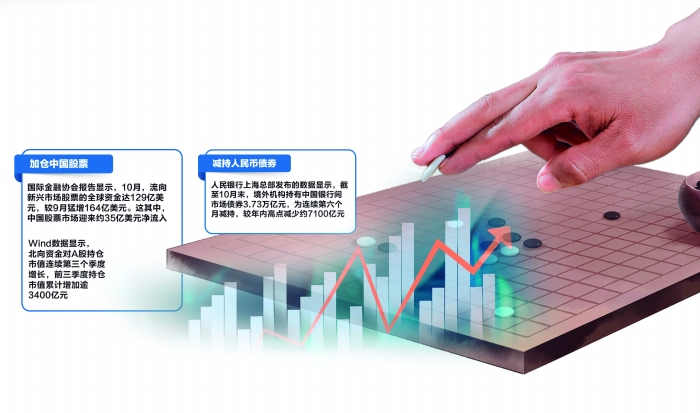
Core Insights - The global investment landscape for RMB assets is showing a divergence, with foreign institutional investors reducing their holdings in RMB bonds while showing increased enthusiasm for Chinese equities [2][3] - The shift from bonds to stocks is driven by various factors including interest rate differentials, stock market trends, and declining foreign exchange returns [5][6] Group 1: Investment Trends - International investors have significantly increased their allocation to emerging market stocks, with a notable inflow of $12.9 billion in October, marking a $16.4 billion increase from September [3] - The Chinese stock market has attracted approximately $3.5 billion in net inflows, continuing to be a key destination for global funds since the beginning of the year [3][5] - In contrast, foreign holdings of Chinese interbank market bonds have decreased for six consecutive months, totaling 37.3 trillion RMB, down approximately 710 billion RMB from the year's peak [3][5] Group 2: Factors Influencing Investment Decisions - The decline in interest in RMB bonds is attributed to factors such as interest rate spreads, stock market enthusiasm, and reduced foreign exchange returns [5][6] - The stock market's appeal is bolstered by breakthroughs in technology sectors and supportive capital market policies, with indices like MSCI China and Hang Seng showing around 30% gains year-to-date [5][8] - The current environment has led to a rotation of funds from the bond market to the stock market, influenced by a bearish trend in the bond market [5][6] Group 3: Future Outlook - International investors are expected to adopt a more rational and layered approach to allocating Chinese assets, focusing on both short-term factors like interest rates and long-term value [6][7] - The investment structure is anticipated to diversify, with increased attention on growth sectors such as technology, renewable energy, and high-end manufacturing [6][7] - Despite short-term pressures on capital outflows, the Chinese bond market remains attractive for long-term investment due to its scale, depth, and low correlation with global markets [7]

研究做好下步经济工作等
Liao Ning Ri Bao· 2025-11-18 05:55
Core Viewpoint - The provincial government is focused on enhancing economic resilience and promoting high-quality development through various initiatives, including technological innovation and improved service sectors [1][2]. Economic Development - The provincial government recognizes the long-term potential and resilience of the economy, emphasizing the need for confidence and targeted efforts to achieve optimal results during the "14th Five-Year Plan" and to set a strong foundation for the "15th Five-Year Plan" [2]. - Key areas of focus include stabilizing key industries such as steel and oil, supporting enterprises in digital transformation, and fostering the integration of technological and industrial innovation [2]. Technological Innovation - Higher education institutions are encouraged to strengthen organized research and enhance the conversion of scientific achievements into productive forces by improving talent supply and establishing technology parks and pilot bases [3]. Service Sector Enhancement - The government plans to implement actions to boost service sector capacity and quality, maintain stable commercial circulation, and expand the scale of the platform economy [2]. - New consumption models such as event economy, silver economy, and national trend economy are to be developed to stimulate service consumption [2]. Investment and Business Environment - The government aims to enhance the role of public investment to stimulate private investment, improve project planning, and increase efforts in attracting investment [2]. - A comprehensive approach will be taken to optimize the business environment, focusing on public services, access to resources, fair competition, and legal frameworks [2]. Education and Workforce Development - Vocational schools are urged to align their educational direction with industry needs and improve their management to promote high-quality development in modern vocational education [3].
“十五五”全解读!汇小鲸带你专访未来X大赛道
Zhong Guo Zheng Quan Bao· 2025-11-18 02:13
Core Insights - The "14th Five-Year Plan" outlines China's development blueprint for the next five years, emphasizing the importance of understanding it to identify future investment opportunities [2][16]. Group 1: Emerging Industries and Investment Opportunities - The plan aims to cultivate and expand emerging and future industries, potentially creating several trillion-level markets [7]. - The next decade could see the scale of new industries equivalent to recreating China's high-tech industry [7]. Group 2: Key Focus Areas for Technological Advancement - The plan emphasizes the need for breakthroughs in critical core technologies across various sectors, including integrated circuits, industrial mother machines, and high-end instruments [8]. - It highlights the role of enterprises in driving technological innovation and supporting the growth of high-tech and technology-oriented SMEs [9]. Group 3: Domestic Market Development - The strategy includes measures to strengthen the domestic market and facilitate a smooth domestic circulation, focusing on expanding consumption and developing international consumer center cities [10][11]. - It calls for a shift from price competition to quality competition among enterprises to establish a healthy market order [11]. Group 4: National Security and Emerging Fields - The plan addresses the need to enhance security capabilities in traditional areas like food and energy, as well as emerging fields such as artificial intelligence and biotechnology [12]. - This focus on security is expected to create new development opportunities in sectors like cybersecurity, national defense, and energy resources [12]. Group 5: Investment Themes in A-Share Market - Five key investment themes are identified: hard technology sectors such as artificial intelligence, integrated circuits, industrial mother machines, new energy, and biomanufacturing [14]. - The plan aims to rectify disorderly competition, which may benefit leading companies in solar energy, lithium batteries, and new energy vehicles [14]. - There is a strong emphasis on boosting consumption in sectors like automotive, housing, and tourism, indicating potential growth in these areas [14]. - The implementation of major national strategies and the enhancement of security capabilities are expected to drive growth in industries like construction materials, machinery, new energy, and cybersecurity [14]. - The financial sector is also highlighted, with banks, securities, and insurance institutions currently valued at historical lows, suggesting potential for recovery [14].

广发策略&地产 | 如何看待香港楼市回暖?——港股市场策略展望
Sou Hu Cai Jing· 2025-11-17 23:31
Group 1 - The core viewpoint is that the recent recovery in the Hong Kong property market is driven by improved funding conditions and stronger economic expectations, which will enhance capital market sentiment and create a positive feedback loop between the stock and property markets [2][4][10] - The rental yield in Hong Kong (3.6%) exceeds the mortgage rate (3.22%), contrasting with mainland China's first-tier cities where rental yields are below 2% [3][6] - Historical trends indicate that property market recoveries do not lead to a diversion of funds from the stock market; instead, they often coincide with improved liquidity and economic conditions, supporting stock market valuations [15][16][17] Group 2 - The Hong Kong property market has shown signs of recovery, with transaction volumes increasing significantly in recent months, supported by favorable government policies and a declining interest rate environment [24][32][36] - The average rental yield in Hong Kong has risen above 3.5%, making property investments more attractive, while the recent decline in mortgage rates has eased the financial burden on homebuyers [32][39] - The performance of the Hong Kong stock market is expected to benefit from the recovery in the property sector, as increased wealth effects and risk appetite may lead to a positive cycle between the two asset classes [10][15][36]
一线调研 “现代化产业体系”怎么建
Zhong Guo Qing Nian Bao· 2025-11-17 23:04
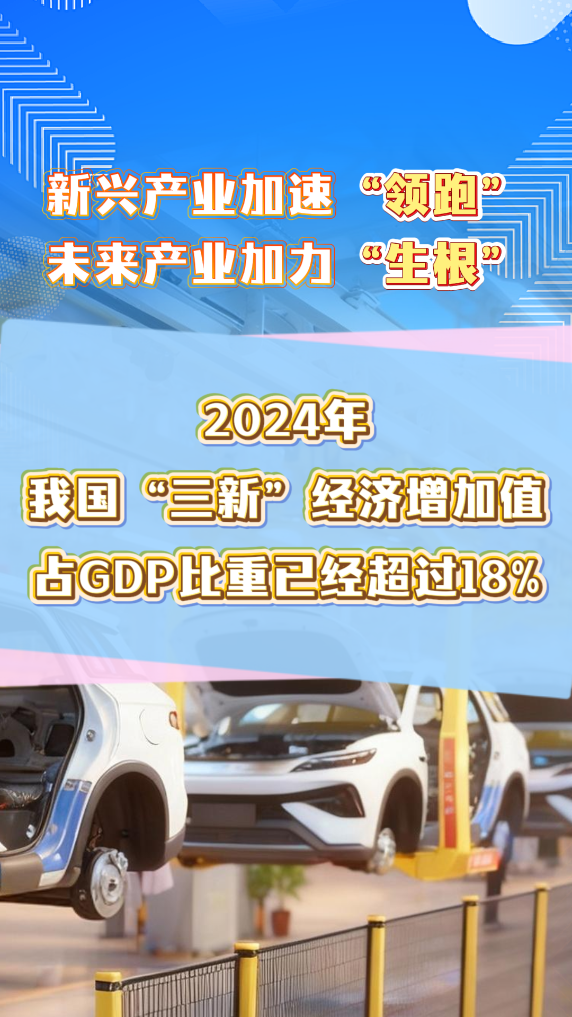
Group 1 - The core focus of the article is on the development of a modern industrial system in China during the "14th Five-Year Plan" period, emphasizing the integration of technological and industrial innovation to strengthen the real economy [9][10][12] - The article highlights the importance of traditional industries, such as steel and pharmaceuticals, in driving economic growth and their ongoing transformation through digitalization and automation [12][13][14] - The article mentions that since 2016, companies like Hunan Huazhong Steel have been implementing smart manufacturing solutions, resulting in significant efficiency improvements, such as reducing the steel slab rotation time from 6.7 seconds to 3.93 seconds [12][13] Group 2 - The article discusses the emergence of new and future industries, particularly in sectors like renewable energy, aerospace, and low-altitude economy, as part of the strategic focus for the "14th Five-Year Plan" [15][16] - Companies like Hidi Intelligent Driving Technology are capitalizing on market demands for automation in hazardous environments, such as mining, with significant policy support driving growth in this sector [16][18] - The article notes that the humanoid robot market in China is expected to reach approximately 870 billion yuan by 2030, indicating rapid growth in the robotics sector [17] Group 3 - The article emphasizes the need for collaborative innovation among government, enterprises, and research institutions to create a conducive environment for the development of a modern industrial system [19][20] - It highlights the establishment of over 230 excellent smart factories and 1,260 5G factories in China since the beginning of the "14th Five-Year Plan," showcasing the country's commitment to advancing its manufacturing capabilities [13][19] - The article points out that the value added by the "new economy" is projected to exceed 18% of GDP by 2024, indicating a significant shift towards new industries and business models [18][22]




潮涌大湾区 书写新篇章
Ren Min Ri Bao· 2025-11-17 21:59
Core Insights - The article highlights the strategic development of Nansha District in Guangzhou as a key platform for comprehensive cooperation in the Guangdong-Hong Kong-Macao Greater Bay Area, aiming to enhance its global presence [1][2]. Group 1: Innovation and Technology - Nansha is fostering innovation by collaborating with Shenzhen and Dongguan to establish a comprehensive national science center in the Greater Bay Area [1]. - The unveiling of the Hong Kong University of Science and Technology (Guangzhou) innovation and entrepreneurship community aims to facilitate the transformation of scientific achievements [1]. - The establishment of the Bay Area Artificial Intelligence Industry Innovation Alliance, initiated by Hong Kong University of Science and Technology and Huawei, signifies a push towards advanced technology development [1]. Group 2: Industrial Development - Nansha is accelerating the construction of a modern industrial system and nurturing emerging industries [1]. - The district has successfully conducted the first clinical application of cell and gene therapy for thalassemia in the country, showcasing advancements in future industries [1]. Group 3: Talent and Youth Engagement - A new professional title evaluation system for engineering talents from Hong Kong and Macao has been established, with 27 professionals receiving mainland titles [1]. - The creation of 19 youth innovation bases, including the Guangdong-Hong Kong-Macao (International) Youth Innovation Workshop, has led to the establishment of 2,670 enterprises and projects [1].
国信证券:石化化工行业景气度有望复苏 更看好资源品等方向投资机会
智通财经网· 2025-11-17 03:16
Industry Overview - The petrochemical industry is cyclical, with net profits in the SW basic chemical sector reaching a historical high in 2021, followed by a downturn. By 2024, industry net profits are expected to be only 52% of 2021 levels, but some sub-industries are beginning to recover, with a 10.56% year-on-year increase in net profits for the first three quarters [1] Supply Side - Investment in fixed assets for the chemical raw materials and products manufacturing industry turned negative starting June 2025, with capital expenditures in the SW basic chemical sector and several sub-industries declining for multiple consecutive quarters. The current expansion cycle in the industry is nearing its end. The "anti-involution" policy introduced in July aims to address low-price disorderly competition and promote the orderly exit of backward production capacity, with responses from sub-industries like pesticides, petrochemicals, and PTA polyester [2] Demand Side - Traditional demand is expected to see a mild recovery due to global central banks entering a rate-cutting cycle and pausing balance sheet reductions, supported by monetary and fiscal policy stimuli. Emerging demand is driven by sectors such as new energy and AI, with key chemical materials being crucial for technological upgrades. The company is optimistic about the rapid increase in new energy storage capacity impacting iron phosphate and PVDF, AI industry growth affecting high-frequency and high-speed electronic resins, and the aviation industry's decarbonization efforts boosting demand for sustainable aviation fuel (SAF) [3] Overseas Capacity Reduction - The European chemical industry is experiencing a wave of plant shutdowns due to high energy costs and aging facilities. Currently, China's chemical product sales account for over 40% of the global market. The domestic petrochemical industry chain is well-established, with many chemical products being highly competitive globally. In the context of accelerated overseas capacity reduction and anticipated demand recovery, the company believes that Chinese chemical enterprises will continue to increase their global market share, effectively alleviating excess capacity [4]

热词看未来|培育壮大新兴产业和未来产业
Xin Hua Wang· 2025-11-17 02:05
Core Insights - The central viewpoint emphasizes the cultivation and expansion of emerging and future industries in China, with a target for the "three new" economy's contribution to GDP exceeding 18% by 2024 [1] Group 1: Emerging Industries - The proposal highlights the acceleration of strategic emerging industries such as new energy, new materials, aerospace, and low-altitude economy, aiming for large-scale development through innovation and technology [4] - China has maintained its position as the global leader in new energy vehicle production and sales for ten consecutive years, with solar and wind power equipment production ranking among the highest in the world [4] - Over 60 national advanced manufacturing clusters in emerging industries have been cultivated, along with the establishment of 23 national independent innovation demonstration zones [4] Group 2: Future Industries - The proposal advocates for the advancement of future industries including quantum technology, biomanufacturing, hydrogen energy, nuclear fusion energy, brain-computer interfaces, embodied intelligence, and sixth-generation mobile communications as new economic growth points [7] - The biomanufacturing industry in China has reached a scale of nearly 1 trillion yuan, with the embodied intelligence market expected to reach 5.295 billion yuan by 2025, accounting for approximately 27% of the global market [7] Group 3: Economic Impact - The cultivation and expansion of emerging and future industries are projected to generate a new scale equivalent to recreating China's high-tech industry over the next decade, providing continuous new momentum for high-quality economic development [9]
毕业生提前规划、新兴产业强势“抢人”……今年秋招,供需两端“双向奔赴”
Da Zhong Ri Bao· 2025-11-17 01:09
Group 1 - The autumn recruitment season for 2026 graduates is actively taking place in Shandong, with a focus on the job market dynamics and the impact of industrial structure adjustments on job supply [2][4] - Graduates are adopting a proactive and well-prepared approach to job applications, with many tailoring their resumes to fit different companies' needs [3][4] - The demand for technical talent in emerging industries such as artificial intelligence, high-end equipment manufacturing, and renewable energy is significantly increasing, with companies offering competitive salaries for these roles [4][5] Group 2 - Companies are reporting a higher volume of applications, with some receiving nearly a hundred resumes for a limited number of positions, indicating a competitive job market [4][5] - The average monthly salary for technical research positions is approximately 8,000 yuan for bachelor's degree holders and over 10,000 yuan for master's degree holders, while sales positions offer lower salaries [5] - Career planning and preparation are crucial for graduates to secure desirable positions, as those without clear career goals often struggle to find suitable jobs [6][7]