
自主可控

Search documents
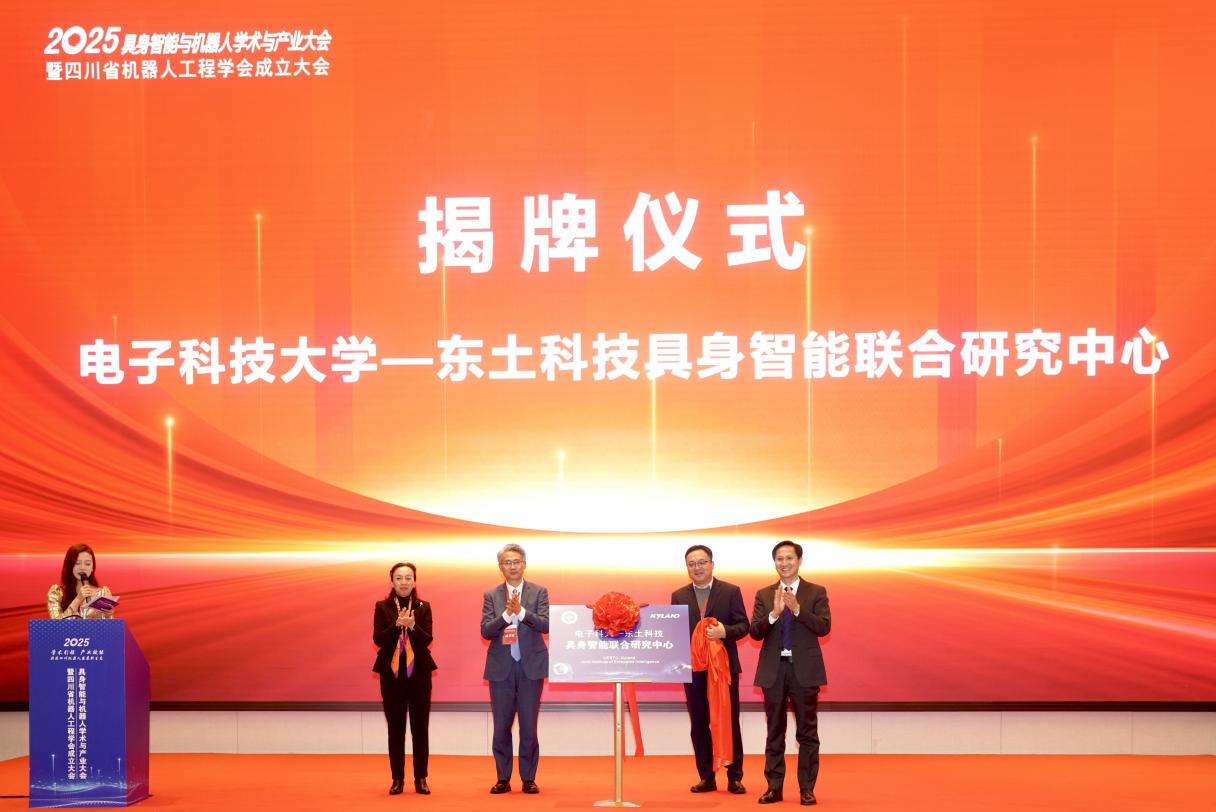
东土科技携手电子科技大学 开启我国自主可控智能机器人产业竞赛新篇章
Zheng Quan Shi Bao Wang· 2025-12-29 12:27
Core Insights - The establishment of the Embodied Intelligence Joint Research Center between the University of Electronic Science and Technology and Dongtu Technology marks a significant step in developing a domestically controlled electronic architecture for intelligent robots in China [1][6] - This collaboration aims to break the reliance on foreign standards and technologies in the robotics sector, which is crucial for the high-quality development and industrial safety of China's robotics industry [3][4] Group 1: Strategic Collaboration - The partnership between the University of Electronic Science and Technology and Dongtu Technology is a strategic alliance to build a neural network system for intelligent robots in China [1][6] - The collaboration is expected to empower the autonomous control of core electronic architecture for intelligent robots, enhancing the efficiency of large model training applications [6] Group 2: Technological Advancements - Dongtu Technology has led the development of the AUTBUS international standard, which is the first internationally recognized standard in the robotics field independently established by China, breaking the long-standing foreign monopoly on industrial network technology [4] - The AUTBUS standard enables the replacement of foreign industrial bus standards like CAN and EtherCAT, providing a foundation for autonomous communication technology in robotics [4] Group 3: System Integration and Innovation - The Intewell operating system developed by Dongtu Technology is recognized as the only national-level intelligent robot operating system, facilitating the integration of data across various fields such as robotics and factory control [5] - The innovative architecture of intelligent robots, based on the Intewell operating system and AUTBUS standard, allows for unique IPv6 identification for each control node, ensuring secure and sustainable development of robotic systems [5][6] Group 4: Future Development and Impact - The collaboration aims to foster the development of a robotics industry cluster in the western region of China, complementing other major economic areas and contributing to the national new industrialization efforts [6] - This initiative is expected to inject strong momentum into achieving technological self-reliance and ensuring industrial safety in China [6]


看2026|摩尔线程周苑:让国产算力从“可用”走向“好用”
Xin Jing Bao· 2025-12-29 09:16
Core Viewpoint - The enthusiasm in China's capital market is being fueled by the rise of "domestic GPUs," with companies like Moore Threads making significant strides in the industry and contributing to a broader transformation driven by autonomous computing [2] Group 1: Industry Trends and Developments - The central economic work conference for 2026 emphasizes "innovation-driven" growth and the cultivation of new economic drivers, particularly in the context of AI and domestic chip development [2] - The GPU industry is transitioning from "single-point breakthroughs" to "systematic challenges and ecosystem building," indicating progress in overcoming critical technological barriers [5][6] - The first MUSA Developer Conference (MDC 2025) highlighted the importance of building a developer ecosystem around the MUSA architecture, which aims to compete with NVIDIA's CUDA [5] Group 2: Company Strategy and Positioning - Moore Threads aims to enhance its core competitiveness through a strategy centered on a full-function GPU and the MUSA architecture, focusing on comprehensive computing capabilities from cloud to edge [6] - The company plans to increase R&D investment and foster collaboration between academia and industry to accelerate the development of the domestic GPU sector [6][7] - The recent release of the "Huagang" architecture, which boasts a tenfold performance improvement over previous generations, exemplifies the company's commitment to technological advancement [6] Group 3: Policy and Market Opportunities - The central government's focus on "AI+" and the promotion of core technology independence presents significant strategic opportunities for companies like Moore Threads [8][10] - The concept of "new momentum" in the intelligent computing sector includes building a self-sufficient technology base, integrating AI into various industries, and fostering a collaborative ecosystem centered around developers [10] Group 4: Regional Development and Ecosystem - The national strategy for regional integration is seen as a way to maximize resource advantages and create unprecedented collaborative opportunities for the domestic computing industry [11] - Moore Threads aims to position itself as a foundational player in Beijing's integrated circuit industry, leveraging the city's rich resources and supportive policies [12][14] - The company advocates for enhancing the resilience of the integrated circuit supply chain and promoting collaborative innovation across the Beijing-Tianjin-Hebei region [16][18]

鸿蒙PC:以“第三条道路”重构生产力生态,中国创新打开全球新空间
Huan Qiu Wang· 2025-12-29 08:28
Core Viewpoint - Huawei's HarmonyOS is initiating a transformative shift in the PC operating system market, traditionally dominated by Western powers, by leveraging its unique capabilities and innovative strategies [1][3]. Group 1: Origin and Development of HarmonyOS - Huawei recognized the necessity of an independent operating system to realize its innovative ideas, particularly after facing collaboration challenges with partners between 2017 and 2018 [3]. - The launch of HarmonyOS in 2019-2020 prompted Huawei to explore the possibility of creating a fundamentally different type of computer, leading to the development of a PC ecosystem that integrates mobile device capabilities [3][4]. - The core motivation for Huawei's innovation is to enhance user experience rather than merely achieving self-sufficiency in technology [3]. Group 2: User Experience and Adoption - Huawei aims to provide a productivity experience on HarmonyOS PCs that is comparable to traditional computers, ensuring no decline in user satisfaction [4]. - The integration of touch interaction and cross-device collaboration from mobile devices into the PC environment is a key feature of HarmonyOS [4]. - The rapid iteration cycle, with updates every two weeks, has contributed to user familiarity and acceptance of HarmonyOS PCs, aligning their usage duration with that of x86 architecture computers [5]. Group 3: Ecosystem and Collaboration - The success of HarmonyOS is attributed to an open and collaborative ecosystem, with over 5,000 developers engaged across various sectors by the end of 2025 [7]. - The "soft bus" technology of HarmonyOS facilitates real-time data exchange between devices, enhancing productivity in sectors like government and education [7]. - Huawei's commitment to open-source principles has attracted significant contributions, with over 1.2 billion lines of code from more than 70 organizations, fostering a collaborative innovation platform [7]. Group 4: Future Directions and Impact - Huawei's HarmonyOS is positioned as a unique "third path" in operating system development, diverging from traditional Western models and aiming to establish new technical standards [10]. - The emergence of HarmonyOS PCs fills a gap in China's self-sufficient PC operating system landscape, supporting the digital economy and creating over 3 million jobs by 2025 [10]. - The positive cycle of technological breakthroughs, ecosystem growth, and industrial empowerment is expected to open new growth avenues for China's software industry [10].

同有科技(300302.SZ):自主可控存储系统产品在卫星大数据场景实现规模化应用
Ge Long Hui· 2025-12-29 06:53
Core Viewpoint - The company has achieved large-scale application of its self-controlled storage system products in satellite big data scenarios, providing efficient solutions for the entire chain of real-time stream data reception, data parsing, data processing, and storage [1] Group 1 - The company's storage system products are designed for satellite big data applications [1] - The solutions offered cover the complete process from data reception to storage [1]

20cm速递|科创芯片ETF国泰(589100)盘中涨超1%,先进工艺扩产将成为自主可控主线
Mei Ri Jing Ji Xin Wen· 2025-12-29 04:24
Group 1 - The core viewpoint is that memory prices are surging, with DDR4 8Gb DRAM spot prices increasing by 886% year-on-year and bulk contract prices rising by 80% month-on-month, indicating a recovery in upstream sectors such as storage devices, passive components, and packaging and testing [1] - The AI wave is driving a surge in computing power demand, with expected global spending on generative AI reaching $699 billion by 2030, reflecting a compound annual growth rate (CAGR) of 21% [1] - Significant progress in domestic semiconductor equipment is noted, with Shanghai Micro Electronics winning a 110 million yuan lithography machine project, and advanced process expansion becoming a key focus for self-control over the next three years [1] Group 2 - The CoWoS and HBM technologies are highlighted as crucial in advanced packaging under the AI trend, emphasizing their growing importance [1] - The Guotai ETF (589100) tracks the Sci-Tech Chip Index (000685), which has a daily fluctuation of 20%, selecting listed companies from the Sci-Tech board that are involved in the entire semiconductor industry chain, focusing on core technology areas such as semiconductor materials, equipment, and design [1]
农银汇理基金新年投资展望:经济回暖下的结构性机遇
Sou Hu Cai Jing· 2025-12-29 03:25
Group 1 - The macroeconomic policy support and endogenous growth momentum in 2026 are expected to significantly strengthen compared to 2025, making economic recovery a high-probability event [1] - The export structure in 2025 shows a continuous increase in the proportion of high-end manufacturing-related electromechanical products, indicating a steady enhancement of China's manufacturing competitiveness, which lays a solid foundation for stable export performance in 2026 [1] - The 20th Central Committee's Fourth Plenary Session reiterated the focus on "economic construction," and the policy dividends from the 14th Five-Year Plan are expected to drive investment recovery, particularly in infrastructure and large projects [1] Group 2 - In 2026, the U.S. is expected to continue its interest rate cuts, providing room for adjustments in China's monetary policy, which will support liquidity in the equity market [2] - The current market risk appetite is expected to remain neutral to warm, with reduced concerns about potential tariff and trade-related risks, as both the Chinese and U.S. governments express positive outlooks for economic performance in 2026 [2] - The stock market in 2025 relied more on valuation increases, while in 2026, improvements in macro fundamentals are expected to lead to substantial performance enhancements across various industries, particularly in cyclical sectors [2] Group 3 - Cyclical industries such as non-ferrous metals and chemicals are expected to benefit from economic recovery and supply-side improvements, presenting promising profit recovery opportunities [3] - The ongoing AI wave and the increasing demand for self-sufficiency remain core investment themes in the technology sector [3] - The difficulty of stock selection in 2026 may increase, necessitating in-depth research to seize stock picking and timing opportunities [3]
水到渠成-万舸争腾-A股2026年度投资策略
2025-12-29 01:04
Summary of Key Points from the Conference Call Industry and Company Overview - The conference call discusses the investment strategy for the A-share market in 2026, focusing on sectors such as AI applications, robotics, new consumption, and supply-side reforms [1][3][5]. Core Insights and Arguments - **Market Outlook for 2026**: The outlook is optimistic, expecting a transition from liquidity-driven growth to profit realization, with opportunities in midstream manufacturing, consumer stocks, and cyclical stocks [2][18]. - **2025 Strategy Implementation**: The strategy "source of living water, flowing in sight" has been gradually realized, with significant developments in AI, robotics, and new consumption from Q1 to Q3 of 2025 [3]. - **Global Monetary Policy**: Continued global monetary and fiscal easing is anticipated, with the U.S. possibly lowering interest rates further, benefiting stocks, commodities, and gold [4]. - **Domestic Economic Transition**: The key to domestic economic transformation lies in policy support for high-tech manufacturing and new consumption, leading to a mild recovery in profits and valuations [5][12]. - **Valuation and Growth Potential**: Current valuations of the Shanghai Composite Index and CSI 300 are high, but there remains potential for valuation expansion, with an expected overall index growth of 10-20% in 2026 [13][18]. Specific Industry Focus - **Key Sectors to Watch**: 1. **0-1 Technology Breakthroughs**: Focus on self-sufficiency in chips and materials, and resonance with global supply chains in robotics and commercial aerospace [7][21]. 2. **1-10 Accelerated Growth**: Emphasis on light modules, battery cells, and non-ferrous metals [7]. 3. **Resource Sector Acceleration**: Opportunities in resource products, particularly non-ferrous metals [8]. 4. **Supply Innovations**: Focus on battery sectors and chemicals [9]. 5. **New Consumption**: Attention to new supply creating new demand and opportunities from export recovery [10]. Additional Important Insights - **Traditional vs. Emerging Industries**: Traditional industries should be developed into globally competitive sectors, while emerging strategic industries like new energy and materials are expected to be future pillars [11]. - **AI Application Growth**: AI is showing significant cost-reduction and efficiency improvements, with a notable percentage of U.S. companies adopting AI technologies [15]. - **Low-Valuation Opportunities**: Low-valuation stocks may present opportunities, particularly in cyclical consumption and resource sectors, with a focus on supply-side constraints and policy support [17]. - **Market Dynamics**: The market is expected to experience a broadening of the bull market, with various sectors showing potential for growth [18][22]. Conclusion - The overall market outlook for 2026 is positive, with expectations of double-digit growth and a focus on high-tech industries and low-valuation stocks. Continuous monitoring of supply-side dynamics and policy support will be crucial for identifying investment opportunities [18][22].
农银汇理基金投资部副总经理陈富权:新年投资展望——经济回暖下的结构性机遇
Shang Hai Zheng Quan Bao· 2025-12-28 19:23
Group 1 - The macroeconomic policy support and endogenous growth momentum are expected to significantly strengthen by 2026, leading to a high probability of economic recovery [1] - Export resilience is anticipated, with a continued increase in the proportion of high-end manufacturing and machinery products in the export structure, bolstering stable export performance for 2026 [1] - Infrastructure and large projects are likely to become key investment focuses in 2026, supported by clear policy guidance and a recovering Consumer Price Index (CPI) [1] Group 2 - Liquidity in the equity market is expected to remain ample in 2026, providing support for market strength [2] - The current market risk appetite is neutral to slightly positive, with no significant risk points observed, and more industries are likely to see substantial performance improvements due to macroeconomic fundamentals [3] - Cyclical industries such as non-ferrous metals and chemicals are expected to benefit from economic recovery and "anti-involution" policies, presenting promising profit recovery opportunities [3]
新年投资展望:经济回暖下的结构性机遇
Shang Hai Zheng Quan Bao· 2025-12-28 13:28
Group 1 - The macroeconomic environment is expected to improve significantly in 2026, driven by stronger policy support and internal growth momentum, leading to a high probability of economic recovery [1] - Export resilience is anticipated, with a continued increase in the proportion of high-end manufacturing and machinery products in the export structure, bolstering the foundation for stable export performance in 2026 [1] - Infrastructure and large projects are expected to be key investment areas in 2026, supported by clear policy guidance and a recovering Consumer Price Index (CPI) [1] Group 2 - Liquidity in the equity market is projected to remain ample in 2026, providing support for market strength [2] - The risk appetite in the market is expected to maintain a neutral to slightly positive stance, with no significant risk points currently observed [2] - Structural opportunities are likely to expand further in 2026, particularly in cyclical industries such as non-ferrous metals and chemicals, which are expected to benefit from economic recovery and "anti-involution" policies [2]
化工行业周报20251228:国际油价持平,MDI价格略跌、醋酸价格上涨-20251228
Bank of China Securities· 2025-12-28 11:30
Investment Rating - The report rates the chemical industry as "Outperform" [1] Core Views - The report suggests focusing on undervalued leading companies in the industry, the impact of "anti-involution" on supply in related sub-industries, and the increasing importance of self-sufficiency in electronic materials companies and certain new energy materials companies amid price increases [1][9] Industry Dynamics - As of December 22-28, 2025, among 100 tracked chemical products, 34 saw price increases, 32 saw declines, and 34 remained stable. 55% of products had month-on-month average prices rising, while 35% fell, and 10% remained unchanged [8][27] - International oil prices remained stable, with WTI crude futures closing at $56.74 per barrel (up 0.14%) and Brent crude at $60.64 per barrel (up 0.28%) [28] - MDI prices slightly decreased, with pure MDI averaging 18,100 CNY/ton (down 4.23% week-on-week) and polymer MDI at 14,300 CNY/ton (down 2.39%) [29] - Acetic acid prices increased to 2,496 CNY/ton (up 2.93% week-on-week) [30] Investment Recommendations - As of December 27, 2025, the SW basic chemical industry P/E ratio (TTM excluding negative values) is 25.60, at the 76.58% historical percentile, while the P/B ratio is 2.33, at the 61.10% historical percentile. The SW oil and petrochemical industry P/E ratio is 13.17, at the 37.56% historical percentile, and the P/B ratio is 1.28, at the 36.98% historical percentile [9] - Recommendations include focusing on undervalued leading companies, the impact of "anti-involution" on supply, and the importance of self-sufficiency in electronic materials and certain new energy materials companies [9] - Long-term investment themes include expected demand recovery supported by policies, continuous optimization of supply, and the potential for performance and valuation improvements for leading companies [9] - Recommended stocks include Wanhua Chemical, Hualu Hengsheng, Satellite Chemical, and others [9]