
降息预期

Search documents
避险需求托底瑞郎 长期压制美瑞上行
Jin Tou Wang· 2026-02-04 02:59
Core Viewpoint - The USD/CHF exchange rate is experiencing narrow fluctuations, with the Swiss Franc benefiting from its safe-haven status amid ongoing global uncertainties and diverging monetary policies between the US and Switzerland [1][2] Group 1: Market Dynamics - As of February 4, the USD/CHF is trading at 0.7758, showing a slight increase of 0.12% within a daily range of 0.7746 to 0.7765 [1] - The Swiss Franc's strength is supported by Switzerland's political neutrality, current account surplus, and low external debt, making it a core destination for global safe-haven funds [1] - Recent data indicates a rise in global safe-haven ETF holdings, with an increased proportion of assets related to the Swiss Franc, suggesting sustained demand for safe-haven investments [1] Group 2: Monetary Policy and Economic Indicators - The divergence in monetary policy is a key factor influencing short-term fluctuations in the USD/CHF exchange rate, with the Federal Reserve signaling a hawkish stance and likely maintaining high interest rates into 2026 [1][2] - The Swiss National Bank's cautious approach to tightening monetary policy, with a January CPI of approximately 1%, provides room for stable policies, despite market expectations for interest rate hikes [1] Group 3: Technical Analysis - The USD/CHF yield spread has narrowed to 120 basis points as of February 4, down from 150 basis points at the end of the previous year, diminishing the attractiveness of USD assets [2] - Technical indicators suggest a bearish trend for USD/CHF, with the exchange rate operating below short-term moving averages and the MACD below the zero line, indicating potential for a technical rebound if resistance levels are breached [2] - Key support and resistance levels are identified at 0.7735 and 0.7825 respectively, with potential movements dependent on upcoming US economic data and global risk sentiment [2]
海外策略周报:美联储主席提名形成短期扰动-20260203
Ping An Securities· 2026-02-03 08:12
Core Views - The report highlights that the U.S. inflation exceeded expectations, and the nomination of the new Federal Reserve Chairman has caused short-term disturbances in the market. Specifically, the MSCI global index rose by 0.65%, while U.S. stocks experienced slight adjustments. The S&P 500 increased by 0.3%, while the Nasdaq, Dow Jones, and Russell 2000 indices fell by 0.2%, 0.4%, and 2.1% respectively [2][13][23] - The U.S. Producer Price Index (PPI) for December was reported at 3.0%, surpassing the market expectation of 2.8%. This data is crucial for monetary policy as several components of the PPI will be included in the core Personal Consumption Expenditures (PCE) price index, potentially influencing future interest rate decisions [2][8] - The Federal Reserve's decision to pause interest rate cuts aligns with market expectations. On January 29, the Federal Reserve maintained the federal funds rate target range at 3.5%-3.75%. The meeting indicated a slightly improved view of the economic situation, changing the description of economic activity from "moderate" to "steady" expansion [2][8] - The nomination of Kevin Warsh as the next Federal Reserve Chairman by Trump has led to market fluctuations. Warsh criticized the Fed's quantitative easing policies, leading to perceptions of a hawkish stance on interest rates. However, he supports rate cuts and believes the current pace of cuts is too slow [2][8] - The report suggests that the expectation of interest rate cuts by the Federal Reserve is influenced by Trump's statements, leading to increased volatility in the U.S. stock market. The dollar may strengthen, while gold, despite benefiting from safe-haven demand, may experience increased volatility due to profit-taking and fluctuating rate cut expectations [2][8] Market Overview - In the bond market, the 10-year and 2-year U.S. Treasury yields changed by 2 basis points and 8 basis points to 4.26% and 3.52% respectively [16] - In commodities and foreign exchange, the U.S. dollar index fell by 0.40% to 97.12. COMEX gold and silver prices decreased by 1.52% and 17.44%, while ICE Brent crude oil rose by 6.71% [16][14] - The Hong Kong stock market saw overall gains, with the Hang Seng Index, Hang Seng Composite Index, Hang Seng China Enterprises Index, and Hang Seng Stock Connect rising by 2.4%, 1.8%, 1.7%, and 1.9% respectively. However, the Hang Seng Technology Index fell by 1.4% [32][28] Sector Performance - In the U.S. stock market, the energy sector (3.9%), communication services (3.8%), and utilities (1.7%) showed relatively good performance, while healthcare (-1.7%), consumer discretionary (-1.4%), and materials (-1.2%) experienced declines [27] - The report indicates that online education (6.6%), Chinese education training (4.3%), U.S. infrastructure stocks (3.7%), and Tesla (3.4%) were among the leading concept indices [27][24] Hong Kong Market Insights - The report notes that the Hong Kong stock market is currently outperforming the U.S. market, driven by an increase in domestic risk appetite. The current valuation of the Hong Kong stock market remains attractive, with potential for upward movement [2][32] - The report recommends focusing on sectors with relative valuation advantages that are favored by foreign and southbound capital, including information technology, discretionary consumption, and healthcare [2][32]
美联储独立性拉锯战——政策自主性坚守与政治干预的深层博弈
Sou Hu Cai Jing· 2026-02-03 07:05
Core Viewpoint - The current core conflict surrounding the Federal Reserve focuses on the "defense of institutional independence" versus "political intervention pressure," with significant implications for policy decisions and market expectations [2]. Political Dynamics - The investigation into Powell by the Trump administration has escalated political tensions, hindering the nomination of a new chair and the implementation of policies [3][6]. - Republican Senator Thom Tillis has vowed to block all Federal Reserve appointments until the investigation concludes, framing it as a direct attack on the independence of the central bank [3]. - The political stalemate has led to a chain reaction, including potential legal disputes over the designation of an acting chair if Kevin Walsh is not confirmed before Powell's term ends [6]. Federal Reserve Policy Stance - The Federal Open Market Committee (FOMC) is expected to maintain stable interest rates, with no immediate plans to initiate a "rapid easing cycle" as requested by Trump [7]. - Economic fundamentals, including strong GDP growth and stable unemployment, support the current interest rate levels, while inflation remains above target [7]. - Market expectations have adjusted, with futures markets lowering the anticipated rate cut for 2026 to just 44 basis points, indicating a shift towards the Fed's policy logic [9]. External Support for Independence - The Federal Reserve's independence is bolstered by support from both judicial and political spheres, which strengthens its resistance to political pressures [10]. - Bipartisan consensus in Congress against Trump's actions further protects the Fed's independence, with Powell's recent statements emphasizing the investigation as a pretext for rate cuts [13]. Long-term Variables - The future direction of Federal Reserve policy will depend on two key variables: changes in personnel and the interpretation of economic data [14]. - Powell's decision to remain on the board after his term could create internal checks on the new chair's policy direction, while his departure could allow Trump to consolidate influence over the board [15]. Conclusion - The Federal Reserve is currently navigating a critical phase of "escalating political pressure and strengthening independence," with short-term policies likely to remain neutral and driven by economic data [16].

大类资产配置月报第55期:2026年2月:美联储鹰派主席提名“修复”独立性与美元
Huaan Securities· 2026-02-03 05:15
Group 1: Federal Reserve and Economic Outlook - The nomination of hawkish Fed Chair Walsh is expected to restore the Fed's independence and support the dollar, leading to a rise in interest rates and a potential tightening of monetary policy[10] - The market anticipates a new round of tightening due to the Fed Chair nomination, with economic fundamentals showing signs of slowing down[2] - The 1Y Treasury yield decreased from 1.337% to 1.3%, while the 10Y Treasury yield fell from 1.847% to 1.811%[2] Group 2: Market Performance and Asset Allocation - The Shanghai Composite Index rose by 3.76% from 3968.84 to 4117.95, while the ChiNext Index increased by 4.47% from 3203.17 to 3346.36[2] - The NASDAQ index showed a slight increase of 0.95%, moving from 23241.99 to 23461.82, but is expected to face valuation pressure in the short term[2] - The recommendation is to overweight financial stocks while underweighting consumer stocks and U.S. equities due to tightening expectations[3] Group 3: Commodity and Currency Trends - Brent crude oil prices surged by 13.57%, from $57.42 to $65.21 per barrel, driven by geopolitical factors and Fed expectations[2] - The U.S. dollar index is on an upward trend, moving from 98.27 to 97.12, indicating a recovery in dollar strength[2] - The USD/CNY exchange rate slightly decreased from 6.99 to 6.95, reflecting a slower appreciation of the yuan[2]
大反攻!黄金收复4700美元关口,全球主要股市迎普涨
Jin Rong Jie· 2026-02-03 02:34
另外,当地时间2月2日,美国总统特朗普在社交媒体平台"真实社交"上发文称,他于当日上午与印度总 理莫迪进行了电话交谈。特朗普表示,双方达成了一项美印贸易协议,美国对印度的商品加征的所 谓"对等关税"将从25%降至18%,立即生效。印度也将相应地降低对美国的关税和非关税壁垒,直至降 至零。 据证券时报,特朗普称,莫迪承诺将大幅增加对美国产品的采购,包括价值超过5000亿美元的美国能 源、技术、农产品、煤炭(核心股)以及其他许多产品。特朗普还称,莫迪同意印度停止购买俄罗斯石 油并从美国购买更多石油,印度还可能从委内瑞拉购买石油。 昨夜美股大涨则主要与芯片股集体爆发相关。其中,费城半导体(核心股)指数收涨1.7%,闪迪涨超 15%,西部数据涨近8%,希捷科技涨超6%,美光科技涨超5%。 高盛(GS)在最新发布的报告中指出,尽管现货市场出现波动,但DRAM的合约价格不仅未跌,反而迎来 了更猛烈的上涨预期。 2月3日,在经历暴跌后,黄金、白银(核心股)价格迎来大反攻。截至北京时间8:00,现货黄金大涨 2.7%,报4784.89美元/盎司;现货白银大涨5.04%,报83.12美元/盎司。值得注意的是,就在2月2日,现 ...

全新美联储主席,对美股到底意味着什么?
美股研究社· 2026-02-02 11:06
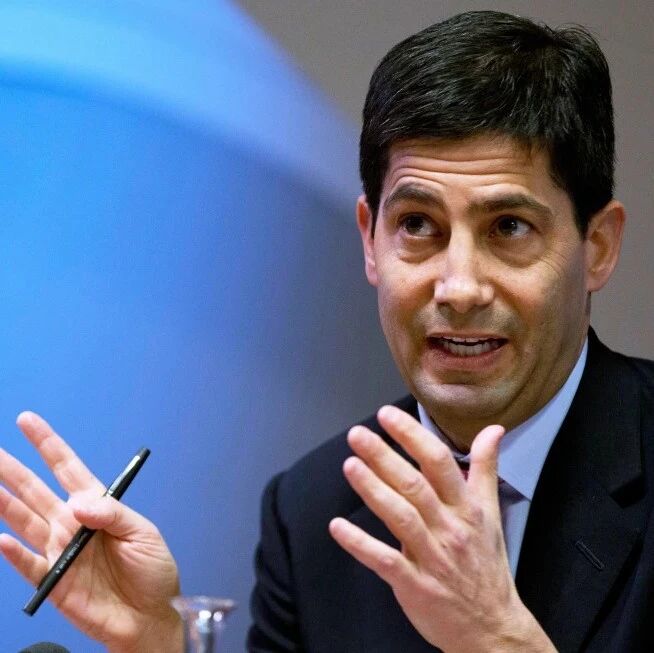
Core Viewpoint - The article discusses the implications of Trump's nomination of Kevin Warsh as the next Federal Reserve Chairman, highlighting market reactions to inflation data and the potential impact on monetary policy [5][7][18]. Group 1: Market Reactions - The announcement of Warsh's nomination coincided with the release of December PPI inflation data, which showed a year-over-year increase of 3.0%, exceeding expectations, while core PPI rose to 3.3%, marking the largest monthly increase in six months [7][9]. - Following these developments, the dollar index surged by 0.9%, the largest increase in nearly eight months, while precious metals experienced significant declines, with gold dropping below $4900 and silver seeing intraday losses exceeding 30% [9][11]. - The market's reaction was influenced by the crowded positioning in gold, as a Bank of America survey indicated that being long on gold had become the most crowded trade globally [11]. Group 2: Kevin Warsh's Background - Kevin Warsh served as a Federal Reserve Governor from 2006 to 2011 and is known for his criticism of the Fed's loose monetary policies, advocating for a return to price stability [15][17]. - His nomination was anticipated, as he was seen as a frontrunner among candidates, and his strong academic and practical background is viewed favorably by Wall Street [17]. Group 3: Historical Context and Market Logic - The article draws parallels to the 1970s inflation crisis, where a lack of central bank independence led to a loss of market trust, ultimately requiring a hawkish approach to restore credibility [21][22]. - Trump's nomination of Warsh is seen as a strategy to stabilize expectations through a credible figure, allowing for more flexible policies in the future [24]. Group 4: Policy Outlook - Warsh's past statements suggest he favors adjusting the Fed's balance sheet to manage excess liquidity, which could create room for future rate cuts [27]. - If confirmed, Warsh's policies may not immediately open a "rate cut window," but his approach could be beneficial for long-term asset allocation and risk appetite [28]. Group 5: Long-term Implications - Understanding the core logic of the market is deemed more important than chasing short-term fluctuations, as Warsh's nomination represents a long-term strategy to build central bank credibility [30]. - The article suggests that Warsh's leadership could provide a more stable policy foundation, enhancing market confidence and paving the way for a more robust monetary policy shift in the future [30][33].
金银跳水了,杠杆爆仓比新闻快,实物需求却稳如老狗
Sou Hu Cai Jing· 2026-02-02 07:17
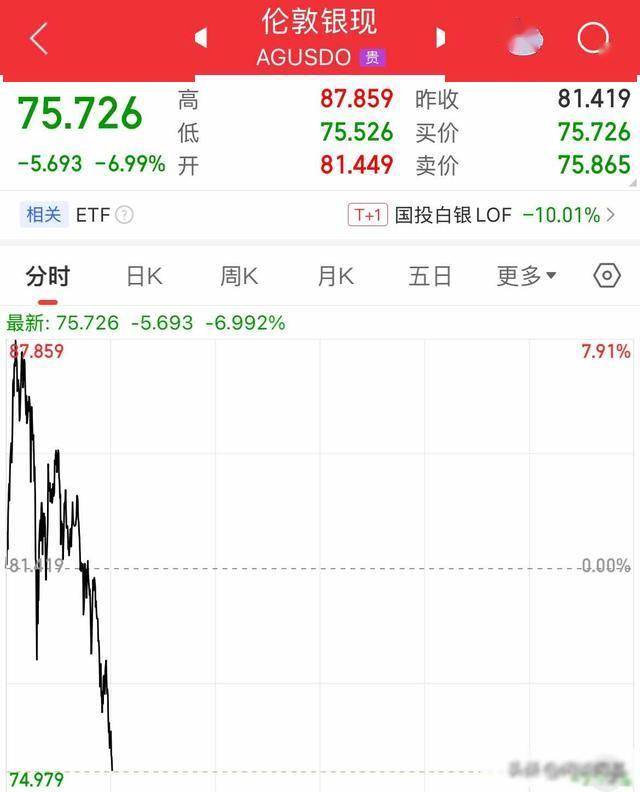
加拿大皇家银行在2月1日悄悄提到一件事,他们在1月下旬连续三天收到大量白银空头平仓申请,总量 达到3800万盎司,接近全球一个月的白银矿产量的四分之一,这些交易不是由人工操作,而是通过程序 化交易设定自动止损,价格一旦破位,系统就直接挂单卖出,卖得越多价格越跌,价格越跌卖得越多, 形成一个死循环。 在2020年和2022年市场大跌时,美联储会迅速放水救市,各国央行也悄悄买入黄金来支撑经济,但这一 次却没人出手干预,国际货币基金组织报告指出,新兴市场央行购买黄金的意愿明显减弱,主要因为本 国货币面临贬值压力,它们自己都难以顾及自身情况。 白银和黄金的价格比例一下子冲到了85比1,创下四年来的最高纪录,按道理讲,白银在工业上的用途 挺多的,光伏行业用的白银量今年增加了14%,中国一月份的光伏出口达到32吉瓦,是历史最高水平, 可市场还在抛售白银,这情况有点让人看不懂。 现在大家不再追问底部位置,转而猜测哪些机构在暗中买入,散户尚未回归市场,ETF资金仍在流出, 但几家私募基金最近购入了部分亚洲金矿公司的股票,这些交易没有公开公告或披露,仅通过内部消息 流传出来。 2026年2月1日,白银价格下跌了7%,跌破75美 ...
有色金属ETF国泰(159881)回调近9%,资金积极布局,连续5日迎资金净流入,短期冲击不改长期基本面
Mei Ri Jing Ji Xin Wen· 2026-02-02 06:13
Group 1 - The core viewpoint indicates that the market's expectation for the first interest rate cut of the year remains stable at June, with a prediction of two rate cuts throughout the year [1] - The FOMC meeting this week continued the expansionary policy initiated in December last year, maintaining a scale of $40 billion per month, suggesting that market expectations for "balance sheet reduction" may be overly optimistic [1] - The policy inclination of the new candidate, Walsh, is influenced by historical statements, but there is uncertainty regarding potential adjustments due to political considerations, given his endorsement by Trump [1] Group 2 - The Cathay Pacific ETF (159881) tracks the CSI Nonferrous Metals Index (930708), which selects listed companies involved in the mining, smelting, and processing of nonferrous metals from the Shanghai and Shenzhen markets [1] - The index aims to reflect the overall performance of listed companies related to nonferrous metals, with a balanced industry distribution structure [1]
宏观周脉博系列4:十字路口的黄金:谁来定价,还能涨吗?
Changjiang Securities· 2026-02-01 23:30
Group 1: Gold Price Trends - Since the beginning of the year, gold prices have risen significantly, surpassing $5,000 per ounce, driven by geopolitical events and the "Wosh Shock" adjustment[2] - As of January 28, the London gold spot price increased from $4,318 per ounce at the end of last year to $5,414 per ounce[6] - The "Wosh Shock" is nearing its end, as the expectation of balance sheet reduction may raise term premiums, making it difficult for mid to long-term interest rates to decline[9] Group 2: Demand Structure and Influences - Gold demand is primarily driven by jewelry, central bank purchases, and ETFs, with central bank purchases and ETF increases playing a significant role in price changes[7] - The actual delivery volume from futures investors is very low, indicating that gold pricing is more reflective of financial behavior rather than physical demand[8] - Central banks, particularly from Brazil, Indonesia, and Iraq, have been significant buyers of gold in January, contributing to the price increase[8] Group 3: Future Outlook - The upcoming midterm elections are a major factor, with expectations of a 50 basis point rate cut by the end of the year supporting gold prices[9] - The global economic landscape remains characterized by "order restructuring" and "low growth with high debt," making gold a preferred asset against uncertainty[9] - Historical patterns suggest that gold will continue to be a key asset as geopolitical tensions and economic uncertainties persist[9]
股市早观点,哪些热点?哪些消息?2月1日
Sou Hu Cai Jing· 2026-02-01 08:29
Core Viewpoint - Trump's nomination of Kevin Warsh as the next Federal Reserve Chairman alleviates market concerns regarding the Fed's independence, leading to a stronger dollar and impacting gold and Bitcoin prices [1] Group 1: Economic Implications - The nomination is seen as a move to push for significant interest rate cuts, which could help reduce the burden of over $37 trillion in national debt by lowering financing costs [1] - A low-interest-rate policy is viewed as essential for stimulating mortgage demand and revitalizing the sluggish U.S. housing market [1] Group 2: Market Reactions - Following Warsh's nomination, market expectations for interest rate cuts have shifted, with futures traders now anticipating two rate cuts this year, compared to previous forecasts of only one cut in 2026 and another in 2027 [1] - Warsh's nomination has prompted a re-evaluation of policy expectations in the financial markets, reflecting a significant change in sentiment among traders [1]