
AI泡沫

Search documents
疯狂的筹码:OpenAI 1000亿美元融资背后的AI生死局
Xin Lang Cai Jing· 2025-12-21 06:21
Group 1 - OpenAI is seeking a $100 billion funding plan with a post-money valuation expectation of $830 billion, positioning itself close to the trillion-dollar club despite not being profitable yet [1][2] - The AI industry is undergoing a significant transformation from a "light asset software industry" to a "heavy asset heavy industry," necessitating massive computational resources for advanced models like GPT-5 and the Stargate project [2][3] - OpenAI's cash burn could exceed $200 billion by 2030, making the $100 billion funding critical to secure future computational supply against competition from Google, Meta, and Anthropic [3] Group 2 - Oracle's $300 billion cloud service agreement over five years is crucial for its financial stability, as it heavily invests in data centers, raising concerns about debt risk [4][5] - The funding from OpenAI would not only guarantee Oracle's revenue but also help stabilize its balance sheet by allowing OpenAI to sign more prepayment contracts [5] - CoreWeave, a new player in the computational power market, relies on high leverage to acquire GPUs, and OpenAI's funding would provide a credit backing for its contracts valued at $22.4 billion [5][6] Group 3 - The discussion around an "AI bubble" has resurfaced, with critics pointing out OpenAI's high price-to-sales ratio of over 40 despite annual revenues nearing $20 billion [6][7] - Historical parallels are drawn to the 1850s railroad boom, suggesting that current investments in AI infrastructure may lead to significant future advancements despite skepticism [7][8] - The funding represents a substantial investment in a potential productivity revolution, with implications for advancements in energy, chip, and cooling technologies [8] Group 4 - The funding sources for OpenAI include significant commitments from SoftBank and Amazon, while medium-sized venture capital firms have exited the game [9][10] - The involvement of sovereign wealth funds and major corporations indicates a shift in AI competition from a developer-centric model to a strategic confrontation at the national level [10][11] - This centralization of capital is reshaping global power structures, with economies possessing cheap energy, substantial funds, and top talent gaining dominance in the digital age [11]
美元体系或将从庞氏融资走向明斯基时刻
Huafu Securities· 2025-12-21 06:12
Core Insights - The report suggests that the US dollar system is transitioning from a Ponzi financing phase towards a Minsky moment, indicating a potential financial collapse and a reevaluation of the global capitalist model [3][4]. - The report emphasizes that the structural characteristics of the current crisis may exceed those of the 2008 financial crisis, with the US dollar system's cost of maintenance rising sharply due to geopolitical tensions and aggressive interest rate hikes [4]. - The US is currently in a precarious financial position, with cash flow and interest costs showing significant deterioration, leading to a situation where the cost of maintaining the dollar's hegemony is increasingly unsustainable [4][22]. Industry Analysis - The report identifies the US dollar system as being on the brink of a Minsky moment, where the financial stability is threatened by excessive debt and rising interest costs, which could lead to a systemic crisis [4][22]. - The analysis indicates that the US is heavily reliant on refinancing to meet its debt obligations, with nearly all maturing debt being rolled over through new issuances, highlighting a shift towards Ponzi financing [20][22]. - The report outlines that the geopolitical rivalry, particularly between the US and China, is a critical catalyst accelerating the potential Minsky moment, as it complicates the global economic landscape [4][22]. Investment Strategy - The report recommends two potential investment strategies for 2026: one for a scenario where the dollar system refuses to adjust, suggesting a defensive posture, and another for a scenario where the system actively adjusts, advocating for asset allocation focused on enhancing cash flow and controlling interest costs [4]. - It highlights that if the dollar system does not adjust, Chinese assets may emerge as key beneficiaries in the transition from the old to the new order, particularly in sectors less correlated with the dollar debt cycle [4][22]. - The report suggests focusing on industries with global competitive advantages, such as high-end manufacturing, internet, military trade, and new energy, as potential investment opportunities in the context of a changing dollar system [4][22].
中金公司刘刚:界定泡沫要看投资是否匹配需求,又是否超越能力
Cai Jing Wang· 2025-12-21 03:44
Group 1 - The conference "2026 Annual Dialogue and Global Wealth Management Forum" focuses on the theme "China's Determination in Changing Circumstances" [1] - Liu Gang, Chief Analyst at CICC, emphasized the significant impact of market sentiment and capital accumulation on the market in Q3 2025, highlighting the importance of distinguishing between short-term momentum and long-term trends [6][10] - Liu Gang suggested that to sustain market growth, more focus should be placed on social welfare, expanding domestic demand, and debt reduction, in addition to technological investments [4][11] Group 2 - Liu Gang views the term "bubble" as neutral and believes discussions about whether AI will become a bubble may be unproductive, as bubbles often form during significant market upswings [3][7] - He noted that the definition of a bubble should consider whether investments match demand and whether they exceed capacity, indicating potential issues if investments are heavily leveraged [3][7] - Liu Gang acknowledged that while AI can assist in analysis, it cannot fully replace human analysts due to limitations in understanding context and emotional influences in financial markets [3][8] Group 3 - Liu Gang pointed out that the current credit cycle in the U.S. is declining, while AI presents a positive outlook, suggesting a dual effect on market dynamics [10] - He indicated that while the real estate sector has a small direct impact on the economy and stock market, it significantly affects household balance sheets and income expectations [10][11] - Liu Gang's investment advice for 2026 includes embracing change, being responsible for personal investments, and adhering to common sense in decision-making [12]



恒指一个月跌近700点,港股科技股多数回调,华虹半导体、蔚来跌超15%
21世纪经济报道· 2025-12-20 15:16
Market Overview - The Hong Kong stock market has experienced continuous fluctuations and adjustments over the past month, with the Hang Seng Index declining by 2.63%, approximately 700 points, and the Hang Seng China Enterprises Index falling by 4.58%, over 400 points [1] - The Hang Seng Technology Index has also decreased by 4.83%, nearly 300 points, with notable declines in tech stocks such as NIO (-17%), Hua Hong Semiconductor (-15%), SMIC (-12%), and Li Auto (-10%) [1] Fundraising and Investment Trends - Since early October, 15 new thematic funds in Hong Kong have chosen to end their fundraising early, particularly technology-themed ETFs, which have rapidly increased their stock positions after establishment, indicating a "fast launch, fast build" characteristic [3] - This trend reflects institutional investors' consensus on the undervaluation of Hong Kong stocks and their proactive approach to seizing the market correction as a buying opportunity [3] Reasons for Market Adjustment - The market adjustment since early October is attributed to a combination of internal and external factors, with the Hang Seng Index dropping 5.85% and the Hang Seng Technology Index experiencing a deeper decline of 18.01% from October 3 to December 19 [5] - Key factors include: 1. Volatility in liquidity expectations due to hawkish statements from Federal Reserve officials, which have weakened interest rate cut expectations and affected global capital flows and valuations in the Hong Kong tech sector [5] 2. Concerns over the "AI bubble" in the U.S. impacting sentiment in the Hong Kong tech sector [5] 3. Increased pressure on the funding environment, with over HKD 1 billion raised from IPOs since new regulations were introduced, significantly impacting market liquidity [5] 4. Profit-taking from previously high-performing tech and consumer stocks, combined with external chip supply news affecting market sentiment [6] Long-term Outlook - Despite short-term pressures, institutions maintain an optimistic long-term outlook for the Hong Kong stock market, predicting a "slow bull" market in 2026 with attractive valuation ratios and improved liquidity as southbound and overseas capital returns [7] - Key investment themes for 2026 include technology and high-end manufacturing, with a focus on areas such as computing power, semiconductors, consumer electronics, and humanoid robots [7] - High dividend yield assets are also favored in a low-interest-rate environment, with institutions highlighting the stability of dividend-paying stocks [7] - Additionally, the innovative drug and biotechnology sectors are seen as having significant investment opportunities, driven by industry acceleration and favorable policy adjustments [8]

华尔街多元策略强势崛起! 名为“轮动”的大势在全球股市悄然启幕
智通财经网· 2025-12-20 07:22
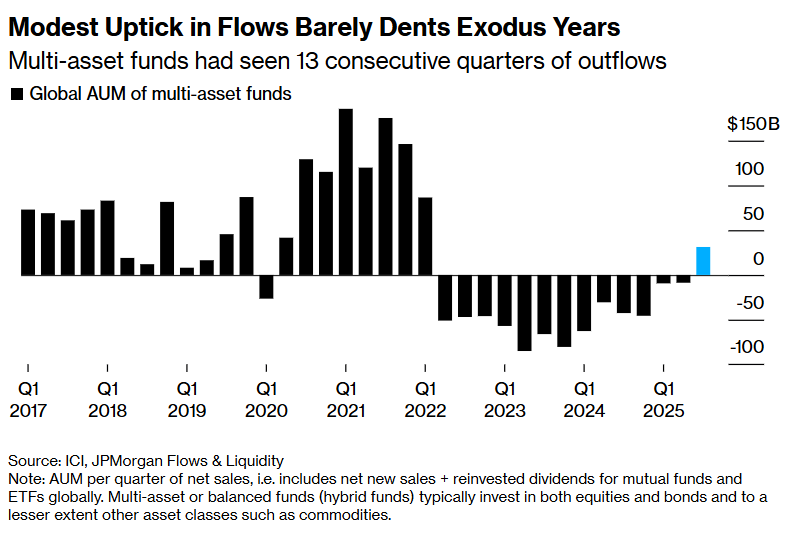
Core Insights - The article discusses a resurgence of traditional diversified investment strategies centered around index ETFs amidst an unprecedented AI investment boom in 2025, highlighting the strong performance of diversified asset allocation compared to concentrated bets on major tech stocks [1][3]. Group 1: Market Trends - In 2025, there is a noticeable rotation in global stock markets from tech stocks to value and cyclical sectors, indicating a shift towards diversified investment strategies that have generated significant excess alpha returns [1][3]. - Major Wall Street institutions, including Goldman Sachs and Morgan Stanley, predict a continued rotation in 2026 towards traditional value stocks, small caps, and cyclical sectors, suggesting that non-tech stocks may yield better returns than popular AI tech stocks [2][3]. Group 2: Performance of Investment Strategies - A simple stock-bond portfolio achieved double-digit gains in 2025, marking the best year since 2019, while multi-asset quantitative strategies significantly outperformed the S&P 500 index [4]. - Cambria Investments' ETF, which covers a broad range of global stocks, recorded its best annual performance, benefiting from strong gains in international markets outside the U.S. [4][11]. Group 3: Investor Behavior - Despite the strong performance of diversified strategies, there is a continued trend of investors moving away from these strategies, with diversified asset funds experiencing net outflows for 13 consecutive quarters [5][9]. - The article notes that while funds are flowing into pure equity and bond funds, the traditional diversified strategies remain out of favor among retail investors [9][21]. Group 4: Future Outlook - Analysts expect a broader bull market in 2026, with a focus on cyclical stocks benefiting from a "rolling recovery" phase in the U.S. economy, driven by improved corporate earnings and a favorable macroeconomic environment [15][18]. - The anticipated economic policies under the Trump administration are expected to favor commodity investments, suggesting a shift in investment paradigms towards fiscal expansion and de-globalization [20].





山东海底发现大金矿,幸亏中方海军全球第二,日本想抢根本没戏!
Sou Hu Cai Jing· 2025-12-20 05:26
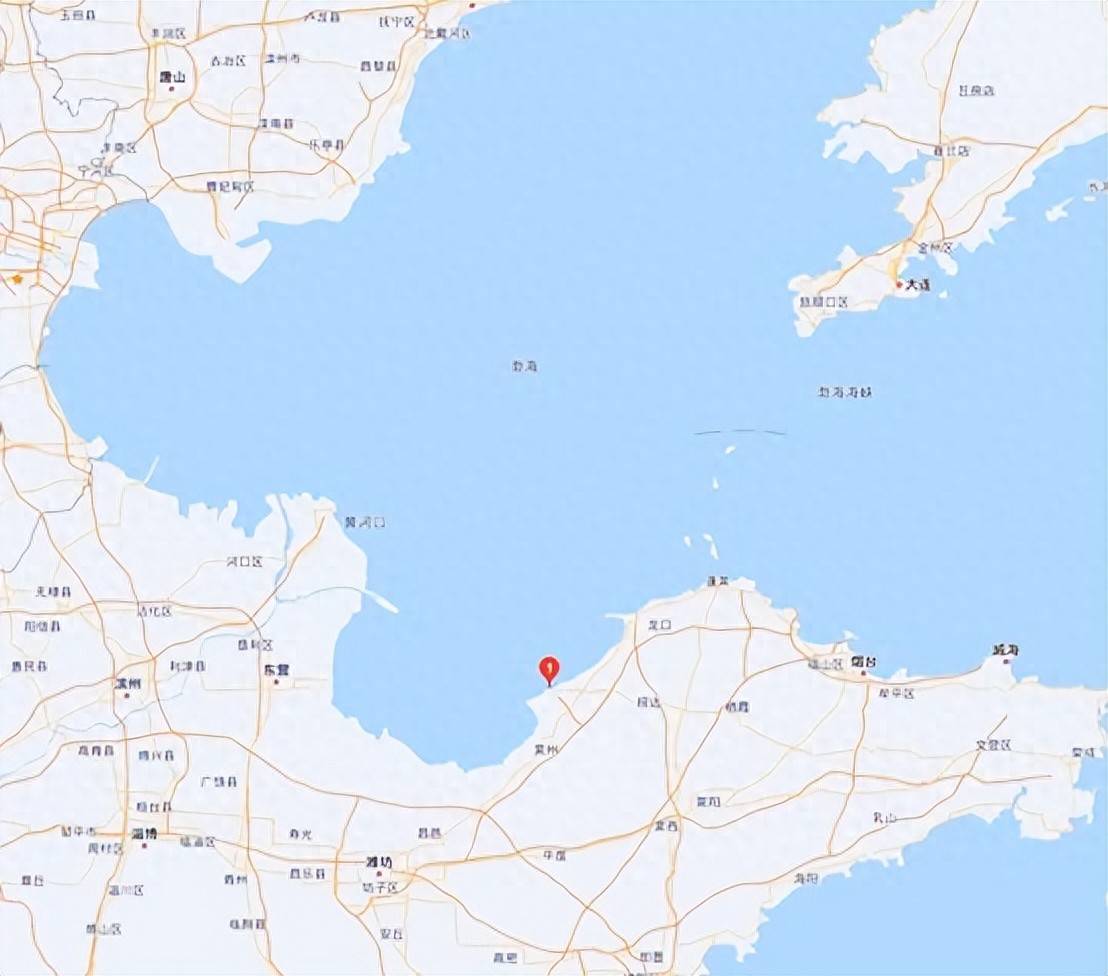
我国通常会在重大自然资源的发现和勘探进展中与国际市场价格紧密联系。最近,我国在山东莱州北部的渤海海域宣布发现了亚洲最大的海底金矿,这一消 息引起了广泛关注,尤其是因为全球金融市场的不确定性不断增加,黄金作为避险资产的需求急剧上升,价格也随之大幅飙升。这一发现的时机无疑让人关 注。 目前,我国对这个金矿的公开信息,可能与2026年全球金融体系的不确定性增加有关系。当前,美国国债已经突破了38万亿美元,而美国每年支付的国债利 息已超过1万亿美元,长期下去这种情况很难持续;与此同时,美国股市中的AI泡沫已接近顶点,AI相关股票吸引了超过20万亿美元的资金,而2026年这一 泡沫是否会破裂,谁也无法预测。日本央行决定加息,而日本经济面临高通胀、低增长的困境,2025年可能会出现负增长,且其政府负债率已经超过 230%。这些因素都可能引发国际金融市场的动荡。作为美国的铁杆盟友,欧盟同样面临经济停滞、能源价格上涨和工业企业外迁等问题。全球不确定性的 增加,导致黄金价格在过去一年半时间里已经翻了一番。 此外,这个金矿位于中国胶东半岛近海,距离美日韩军机和军舰频繁巡航的敏感海域并不远。历史上,日本对东海及黄海大陆架的资源高度 ...
“AI新宠”卡特彼勒(CAT.US)股价遭遇至暗5日的背后:AI叙事迈向剧烈波动期
Zhi Tong Cai Jing· 2025-12-20 03:43
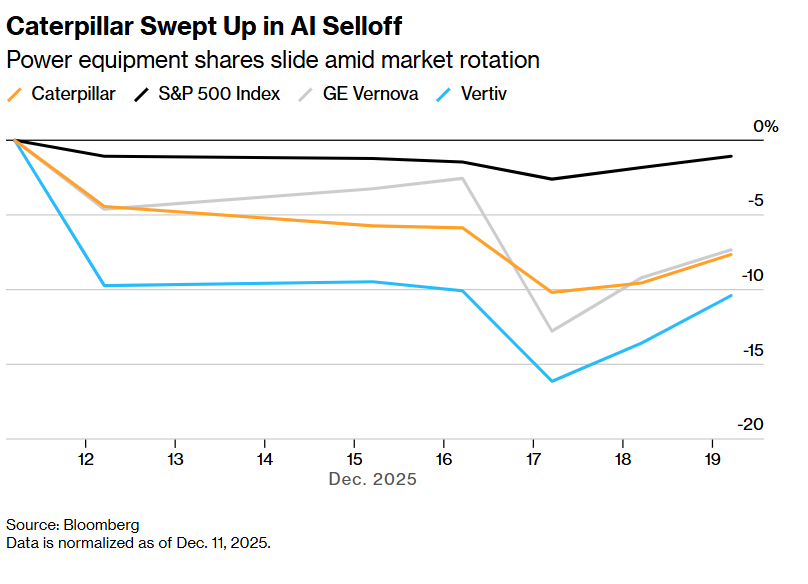
Core Viewpoint - Caterpillar Inc. (CAT.US), once dubbed the "AI darling" of the U.S. stock market, has recently faced significant setbacks, highlighting investor skepticism regarding the sustainability of the AI investment frenzy and the potential returns from massive investments in AI data centers [1][4]. Group 1: Company Performance - Caterpillar's stock price has experienced a notable decline, dropping 9.6% over the worst five-day period since April, making it the weakest component of the S&P 500 Machinery Index [1][6]. - Despite the recent downturn, Caterpillar's stock had risen approximately 60% year-to-date, driven by its involvement in the AI power supply chain, particularly through its gas turbine business [6][8]. - The company remains a key player in the construction and mining equipment sector, often viewed as a barometer for global economic health [6]. Group 2: Market Trends and Investor Sentiment - The broader market has seen a rotation away from AI-related stocks, with significant declines in companies like GE Vernova and Vertiv, which are also tied to AI data center infrastructure [7]. - Analysts express concerns that the current AI investment narrative may be nearing its peak, with skepticism growing about the long-term viability of returns from AI investments [5][8]. - High-profile investment firms are increasingly questioning the sustainability of the AI boom, likening it to the internet bubble, and are focusing on identifying the true beneficiaries of AI advancements [5][6].

日本宣布加息25基点,十年期日债收益率突破2%创18年新高
Sou Hu Cai Jing· 2025-12-19 15:41
Core Viewpoint - The Bank of Japan raised its benchmark interest rate by 25 basis points to 0.75%, the highest level since 1995, indicating a shift towards monetary normalization while maintaining a generally accommodative financial environment [2][3]. Group 1: Interest Rate Changes - The Bank of Japan's decision to increase the uncollateralized overnight call rate reflects a moderate upward trend in core inflation, aligning with the economic outlook for the second half of the year [2][3]. - Despite the nominal interest rate hike, the central bank expects real interest rates to remain significantly negative, suggesting that the overall financial environment will continue to support economic recovery [2][3]. Group 2: Economic Indicators - Recent economic data supports the Bank of Japan's rate hike, with core consumer price index (CPI) rising by 3.0% year-on-year in November, consistent with market expectations and above the central bank's 2% target for the 44th consecutive month [4]. - The labor negotiations in Japan are expected to yield wage increases similar to last year, which saw the largest wage growth in decades, indicating sustained momentum in wage growth [4]. Group 3: Market Reactions - Following the interest rate hike, Japanese government bond yields rose significantly, with the 10-year yield reaching 2.22%, surpassing China's yield for the first time in history [3][4]. - The market's reaction to the rate hike has been relatively stable, with concerns about global liquidity shocks being mitigated compared to previous rate hikes [5].

摩根大通刘鸣镝:A股“慢牛”格局确立,未来回报由业绩增长驱动
2 1 Shi Ji Jing Ji Bao Dao· 2025-12-19 13:46
Core Viewpoint - The A-share market has established a "slow bull" pattern driven by performance, with expected returns of 15% to 20% for major indices in 2026 [1] Group 1: Market Predictions - The target for the CSI 300 index in 2026 is set at 5200 points, while the MSCI China index is projected to reach 100 [1] - Earnings growth is expected to drive market returns, with projected year-on-year growth rates of 13% for the CSI 300 and 15% for the MSCI China index in 2026 [1] Group 2: Market Characteristics - The current A-share market volatility has decreased to nearly half compared to the 2014-2015 period, enhancing its attractiveness as an asset class [2] - The market is increasingly characterized by institutional participation, contrasting with the retail-driven high volatility of previous years [2] Group 3: Corporate Performance - Chinese companies are undergoing a "de-involution" process, allowing them to improve net profit margins and return on equity (ROE) despite slow revenue growth [2] - The expected ROE for Chinese stocks in 2025 is projected to grow by 12%, although the anticipated net profit margin is the lowest in the Asia-Pacific region at 5% [2] Group 4: Sector Insights - The export sector is identified as a core investment theme, with expectations of a relatively loose fiscal and monetary policy in major developed countries in the first half of 2026, which may boost demand for Chinese exports [2] - The food and beverage industry is highlighted as a sector poised for recovery, with current valuations below those of major markets like India, the US, and Japan, and potential for valuation recovery if domestic price indices stabilize [3]
有色金属周报-20251219
Jian Xin Qi Huo· 2025-12-19 12:38
1. Report Industry Investment Rating No relevant information provided. 2. Core Viewpoints of the Report - For copper, the fundamentals support the copper price. The previous macro - negative factors suppressing the market sentiment are coming to an end, and it is expected that the copper price will break through the recent oscillation range upwards [7]. - For lithium carbonate, there is an expected difference on the supply side, and the demand side is slightly slowing down. It is expected that the de - stocking intensity of lithium carbonate will stop falling and rise, and the lithium carbonate futures are likely to rise rather than fall [23]. - For aluminum, currently, the fundamentals have limited driving force for the aluminum price, and the market continues to be dominated by macro - logic. The aluminum price will maintain a high - level oscillation [40]. - For nickel, after the continuous decline of Shanghai nickel, it touches the cost support of MHP integration. Coincidentally, the news of Indonesia's RKAB quota reduction and the revision of the nickel reference price HPM stirs up the price to rebound at a low level. It is necessary to pay attention to the progress of relevant news, and it is expected to continuously give upward elasticity to the nickel price before the news is finalized [76]. 3. Summary by Relevant Catalogs Copper 3.1.1 Market Review and Operation Suggestions - This week, the main contract of Shanghai copper oscillated at a high level. The total position decreased by 2.3% to 631,900 lots compared with last week. The spot premium of domestic copper shifted downwards and turned to a discount of 160 on Friday. The LME copper also oscillated within a certain range. Overseas funds' enthusiasm for going long has declined recently [7]. - In terms of operation suggestions, on the supply side, the supply pressure of domestic refined copper is limited. On the demand side, although the high copper price still suppresses the downstream procurement sentiment, the downstream's acceptance of the copper price has improved marginally. With the end of the major central banks' interest - rate meetings and the improvement of the macro - situation, it is expected that the copper price will break through the recent oscillation range upwards [7]. 3.1.2 Fundamental Analysis - **Supply Side**: The inversion of copper concentrate processing fees has intensified. The inventory of copper concentrates at seven ports has decreased. The domestic cold - material processing fees remain stable, but the supply pressure at the raw - material end has not been alleviated. The by - product sulfuric acid revenue continues to rise, and the electrolytic copper production in December is expected to increase [10][11][13]. - **Demand Side**: The weekly operating rates of waste copper rods and refined copper rods have decreased. The weekly operating rates of wire and cable and enameled wire have only slightly increased. The downstream demand is weak, but there is still room for improvement [14][15][16]. - **Spot Side**: The domestic inventory has increased by 0.60 to 24.24 million tons, and the bonded - area inventory has decreased by 0.09 to 7.66 million tons. The LME + COMEX market has increased its inventory by 13,895 tons to 58.1 million tons. It is expected that the market will show a pattern of "supply contraction and weak consumption" next week, and the inventory will decrease [18]. Lithium Carbonate 3.2.1 Market Review and Operation Suggestions - This week, the futures price of lithium carbonate showed an upward trend. The total position increased slightly by 1.0% to 1.07 million lots. The spot price of battery - grade lithium carbonate shifted upwards slightly. The inventory decreased by 1,044 tons to 110,425 tons, and the cost support has been marginally enhanced [22]. - In terms of operation suggestions, on the supply side, the supply pressure has slowed down, which supports the short - term lithium price. On the demand side, the output of cathode materials has declined for three consecutive weeks, but the overall demand has not significantly stalled. It is expected that the de - stocking intensity of lithium carbonate will stop falling and rise, and the lithium carbonate futures are likely to rise rather than fall [23]. 3.2.2 Fundamental Analysis - **Supply Side**: The price trend of lithium ore is differentiated. The weekly output of lithium carbonate has increased. The production cost has risen due to the increase in the prices of lithium辉石 and lithium mica [26][27]. - **Demand Side**: The prices of ternary materials, lithium iron phosphate, and lithium cobaltate have all increased. The demand in the domestic power and consumer markets has declined, but the energy - storage demand remains highly prosperous [28][29][30]. - **Spot Side**: The difference between electric - grade and industrial - grade lithium carbonate is at a low level, and the spot discount to the main contract has deepened. The lithium carbonate inventory has decreased by 1,044 tons to 110,425 tons [32][33]. Aluminum 3.3.1 Market Review and Operation Suggestions - This week, Shanghai aluminum continued to oscillate at a high level, mainly driven by macro - logic. Alumina first rose and then fell, and cast aluminum alloy followed the rhythm of Shanghai aluminum. The inventory decreased, and the import window remained closed [38]. - In terms of operation suggestions, the prices of bauxite at home and abroad are under downward pressure. Alumina is still in a weak position at a low level. Aluminum alloy is expected to follow the rhythm of Shanghai aluminum. The supply pressure of electrolytic aluminum is limited, and the demand has certain resilience. Overall, the aluminum price will maintain a high - level oscillation [40]. 3.3.2 Fundamental Changes - **Bauxite Market**: The price of domestic northern bauxite has decreased, and that of southern bauxite has remained stable. The price of imported bauxite is under downward pressure due to high shipping volume and project resumption [41][42]. - **Alumina**: The futures price rebounded at the bottom this week, but the spot price was still low, and the import window remained open [45][46]. - **Electrolytic Aluminum**: The profit of the smelting industry remains at a high level. The cost has decreased, and the profit has also decreased slightly [51]. - **Exports and Imports**: In October, the export of aluminum cables increased, and the import window of aluminum ingots remained closed [60]. - **Demand**: The weekly operating rate of leading aluminum - processing enterprises has continued to decline, showing a weak operation in the off - season [64]. - **Inventory**: The inventory of electrolytic aluminum ingots in the domestic mainstream consumption areas has decreased, and the inventory of aluminum rods has increased slightly [69]. Nickel 3.4.1 Market Review and Operation Suggestions - This week, the nickel price first fell to a multi - year low and then rebounded sharply under the influence of news from Indonesia. The spot trading was cold, and the import window remained closed [72]. - In terms of operation suggestions, affected by the news of Indonesia's reduction of nickel ore production targets and the revision of the nickel reference price HPM, the nickel price rebounded at a low level. The industrial chain remains weak, and the inventory is still at a high level. It is necessary to pay attention to the progress of relevant news [76]. 3.4.2 Fundamental Changes - **Nickel Ore Market**: The prices of nickel ore in the Philippines and Indonesia have both decreased. The import of nickel ore in October has decreased significantly, mainly due to the rainy season in the Philippines [77][78]. - **Nickel Iron Market**: In November, the output of nickel pig iron has decreased. In December, the output is expected to continue to decline due to the off - season and production - reduction plans of stainless - steel enterprises. The import of nickel iron in October has decreased slightly but still remains at a high level [84][87]. - **Electrolytic Nickel Market**: The production capacity of electrowon nickel has been rapidly released. In November, the output of refined nickel has decreased [90]. - **Nickel Sulfate Market**: The price of nickel salt has continued to fall this week. In November, the output of nickel sulfate has increased [95][96]. - **Stainless Steel Market**: The inventory of stainless - steel markets in Wuxi and Foshan has decreased this week. Due to the adjustment of export policies, the inventory is being depleted, but the weak downstream demand in the off - season may make the de - stocking difficult to sustain [100].