财政赤字

Search documents
苹果商城谦恒智投:利空突袭!美股、美债,突传大消息!
Sou Hu Cai Jing· 2025-09-03 06:25
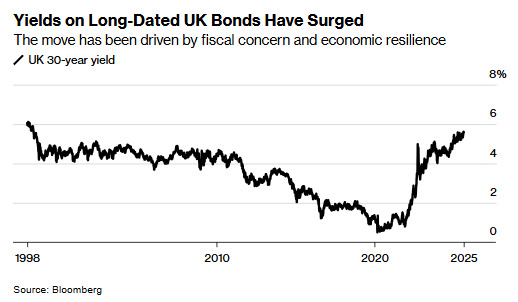
Core Viewpoint - Australia's second-largest pension fund, the Australian Retirement Trust (ART), has reduced its holdings in U.S. bonds due to concerns that Washington's policies may lead to inflation [1][4]. Group 1: U.S. Bond Market - The ART has expressed disappointment with U.S. bonds and has adopted a dynamic asset allocation strategy to decrease its exposure [4]. - U.S. Treasury yields have risen, with the 10-year yield increasing by 7 basis points to 4.2984% and the 30-year yield rising by 6.7 basis points to 4.9883% [3][8]. - Concerns about the U.S. fiscal deficit and the impact of the Trump administration's trade policies are contributing to inflationary pressures [4][5]. Group 2: Investor Sentiment - Hedge funds have remained cautious regarding U.S. equities, continuing to sell rather than participate in the market's recent gains [3][6]. - The market sentiment is reflected in the performance of major U.S. indices, which saw declines, with the Dow Jones down 0.55% and the Nasdaq down 0.82% [3]. - There is a growing trend among large institutions, including pension funds in Asia, to reassess their holdings in U.S. assets due to concerns over the U.S. credit rating and the independence of the Federal Reserve [5][6]. Group 3: Global Bond Market - Long-term bond yields are rising globally, with the U.K. 30-year yield reaching its highest level since 1998 at 5.69% and the French 30-year yield surpassing 4.50% for the first time since 2011 [8]. - The rising yields in other markets indicate potential vulnerabilities that could impact global financial stability [7][9]. Group 4: Market Dynamics - Historical data shows that nearly half of the years in the past 20 have seen negative returns for the U.S. stock market in September, raising concerns about market performance [7]. - The current high levels of stock ownership relative to disposable income among U.S. investors could signal potential risks if economic growth slows significantly [8][9].


综合晨报:国际金价再创历史新高,A股震荡调整-20250903
Dong Zheng Qi Huo· 2025-09-03 00:43
Report Summary 1. Report Industry Investment Ratings No specific industry investment ratings are provided in the report. 2. Core Views - International gold prices hit a new record high, and the A - share market had an adjustment. Market sentiment was affected by various factors such as concerns about the Fed's independence, Trump's tariff issues, and economic data from different countries [3][4]. - Different commodity markets showed diverse trends. For example, some commodities were expected to be in a supply - demand imbalance, while others were affected by production changes, policy adjustments, and market sentiment [5][6][7]. 3. Summary by Directory 1. Financial News and Comments - **Macro Strategy (Gold)**: The US ISM manufacturing PMI in August was 48.7, and Trump called for a strong interest - rate cut. Gold prices rose to a new high due to concerns about the Fed's independence and tariff issues. The market should pay attention to the upcoming non - farm data and the increase in long - short games [14][15]. - **Macro Strategy (Foreign Exchange Futures - Dollar Index)**: Multiple high - ranking Japanese LDP officials expressed their intention to resign, and concerns about the UK economy intensified. The dollar index rose significantly in the short term, and market risk appetite declined [20]. - **Macro Strategy (Stock Index Futures)**: The number of new A - share accounts in August was 2.65 million, with a significant year - on - year and month - on - month increase. The A - share market adjusted on September 2, and the subsequent trend depends on major events [22][23]. - **Macro Strategy (US Stock Index Futures)**: Trump planned to appeal the global tariff case to the US Supreme Court. The US ISM manufacturing PMI in August continued to contract, and the US Treasury Secretary planned to interview Fed chair candidates. The US stock market adjusted, and investors should pay attention to volatility [25][26][27]. - **Macro Strategy (Treasury Bond Futures)**: The central bank did not conduct open - market treasury bond trading in September. The bond market was in a volatile trend, and it was not recommended to chase long positions after the market rose [29][30]. 2. Commodity News and Comments - **Agricultural Products (Soybean Meal)**: The good - quality rate of US soybeans decreased to 65%. The US weekly export inspection data met expectations, and the domestic soybean meal supply was sufficient but demand was also strong [32]. - **Agricultural Products (Cotton)**: The cotton harvest progress in Brazil was 72.8% as of August 30. The growth progress of US cotton was slow, but the good - quality rate was high. The external market was under seasonal supply pressure, and the Zhengzhou cotton market was expected to be in a short - term shock [34][35][36]. - **Agricultural Products (Soybean Oil/Rapeseed Oil/Palm Oil)**: India's palm oil imports in August increased by 16% month - on - month, and Malaysia's palm oil production in August decreased by 2.65% month - on - month. It was recommended to go long on palm oil at low prices [37][39]. - **Black Metals (Steam Coal)**: Port coal prices were weakly falling. Due to weak demand and transportation restrictions during the parade, coal prices were expected to continue the seasonal decline but be supported at around 650 yuan [40]. - **Black Metals (Iron Ore)**: Grangex announced the restart of Sydvaranger mining. The overall raw material market was under pressure, but it was expected to be in a shock market in September [41]. - **Agricultural Products (Red Dates)**: The price of red dates in the Guangzhou Ruyifang market was stable. The fundamentals of red dates were not significantly changed, and it was recommended to wait and see [43][44]. - **Agricultural Products (Corn Starch)**: Corn starch enterprises in different regions had losses. The supply - demand situation was weak, and the price difference between rice flour and starch was at a low level [45]. - **Agricultural Products (Corn)**: The成交 rate of imported corn auctions increased. The spot price of corn was strengthening, but the upward space of the futures price was limited [45][46]. - **Non - ferrous Metals (Lithium Carbonate)**: Argentina approved Rio Tinto's Rincon lithium project. The supply - demand imbalance caused by supply reduction might be reflected in high - frequency data in September, and it was recommended to try long positions and pay attention to positive spreads [48][49]. - **Non - ferrous Metals (Polysilicon)**: The 0.66 yuan/W component price limit was cancelled. The polysilicon price was expected to be between 48,000 - 55,000 yuan/ton, and it was recommended to wait and see for arbitrage [50][53]. - **Non - ferrous Metals (Lead)**: The LME lead market was weak, while the domestic lead market's supply was expected to tighten and demand to improve. It was recommended to go long on lead at low prices and wait and see for arbitrage [54]. - **Non - ferrous Metals (Industrial Silicon)**: The production of industrial silicon in Xinjiang was slowly increasing, and the market was expected to be in a short - term shock between 8,200 - 9,200 yuan/ton [57][58]. - **Non - ferrous Metals (Zinc)**: The LME zinc market was supported by low inventory, and the Shanghai zinc market was expected to be in a short - term shock. It was recommended to wait and see for single - side trading and pay attention to positive spreads [59][60]. - **Non - ferrous Metals (Copper)**: The copper market was affected by the Fed's interest - rate cut expectations and industry policies. The copper price was expected to be supported in the short term, and it was recommended to be long on a short - term basis [65]. - **Non - ferrous Metals (Nickel)**: The LME nickel inventory increased. The raw material price was firm, and the nickel price was expected to be in a range - bound shock. It was recommended to go long at low prices [66][67]. - **Energy Chemicals (Crude Oil)**: Kazakhstan's crude oil production in August increased by 2% month - on - month. The oil price was expected to be in a shock [68]. - **Energy Chemicals (Carbon Emissions)**: The CEA price was in a short - term shock and weakening trend [69][70]. - **Energy Chemicals (PX)**: The PX price was in a short - term shock adjustment [72][73]. - **Energy Chemicals (PTA)**: The PTA market was in a short - term shock adjustment with improved fundamentals [74][75]. - **Energy Chemicals (Caustic Soda)**: The caustic soda spot price was expected to be in a high - level shock [76][77]. - **Energy Chemicals (Pulp)**: The pulp market was in a weak shock [77][78]. - **Energy Chemicals (PVC)**: The PVC market was expected to be in a shock [79][80]. - **Energy Chemicals (Styrene)**: The styrene market was in a weak operation recently [81][83]. - **Energy Chemicals (Bottle Chips)**: The bottle chip market had new capacity plans, and the demand was moving towards the off - season [84][85]. - **Energy Chemicals (Soda Ash)**: The soda ash market was weakening, and it was recommended to short at high prices [86][87]. - **Energy Chemicals (Float Glass)**: The float glass market was in a weak trend, and it was recommended to focus on arbitrage [88][89]. - **Shipping Index (Container Freight Rates)**: The container freight rate market was under supply pressure, and the price was expected to be in a short - term shock. It was recommended to short on emotional rallies in October and long after the price decline in December [91][92].
美股9月“开门黑”!科技股、长债下挫,黄金与美元齐飞
智通财经网· 2025-09-02 13:28
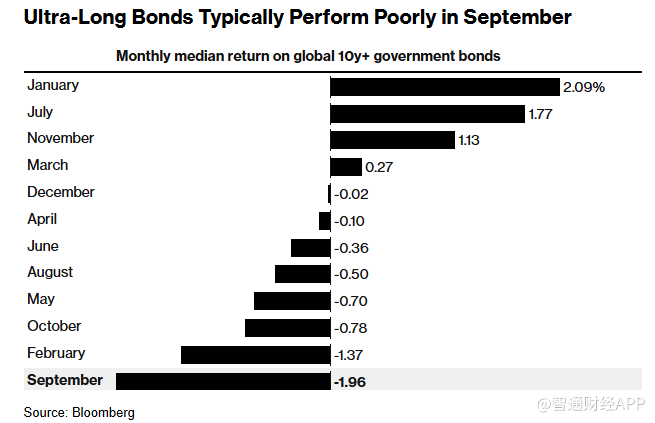
Group 1 - Concerns over technology stock bubbles and government budget inflation are rising on Wall Street after the holiday [1] - The Nasdaq 100 futures fell by 1.3%, exacerbating the sell-off triggered by technology stocks last week [1] - The 30-year U.S. Treasury yield increased by 6 basis points to 4.99%, while the UK 30-year yield reached its highest level since 1998 [1] Group 2 - French long-term bond yields surged to their highest level since 2009, with potential political instability looming for the French government [3] - Mohamed El-Erian noted that rising long-term bond yields in developed countries, particularly in the UK, reflect a growing fiscal deficit [3] - The market is approaching a critical phase as expectations for the Federal Reserve's first rate cut in 2025 are set to be tested this month [3] Group 3 - The volatility index (VIX) rose by 15.5%, reaching its highest level since August 5, indicating increased investor anxiety [4] - Market caution is prevalent as key U.S. inflation and labor market data are approaching, suggesting a need for careful action in the future [4]

全球长债都在跌,市场在定价什么?
Hua Er Jie Jian Wen· 2025-09-02 09:26
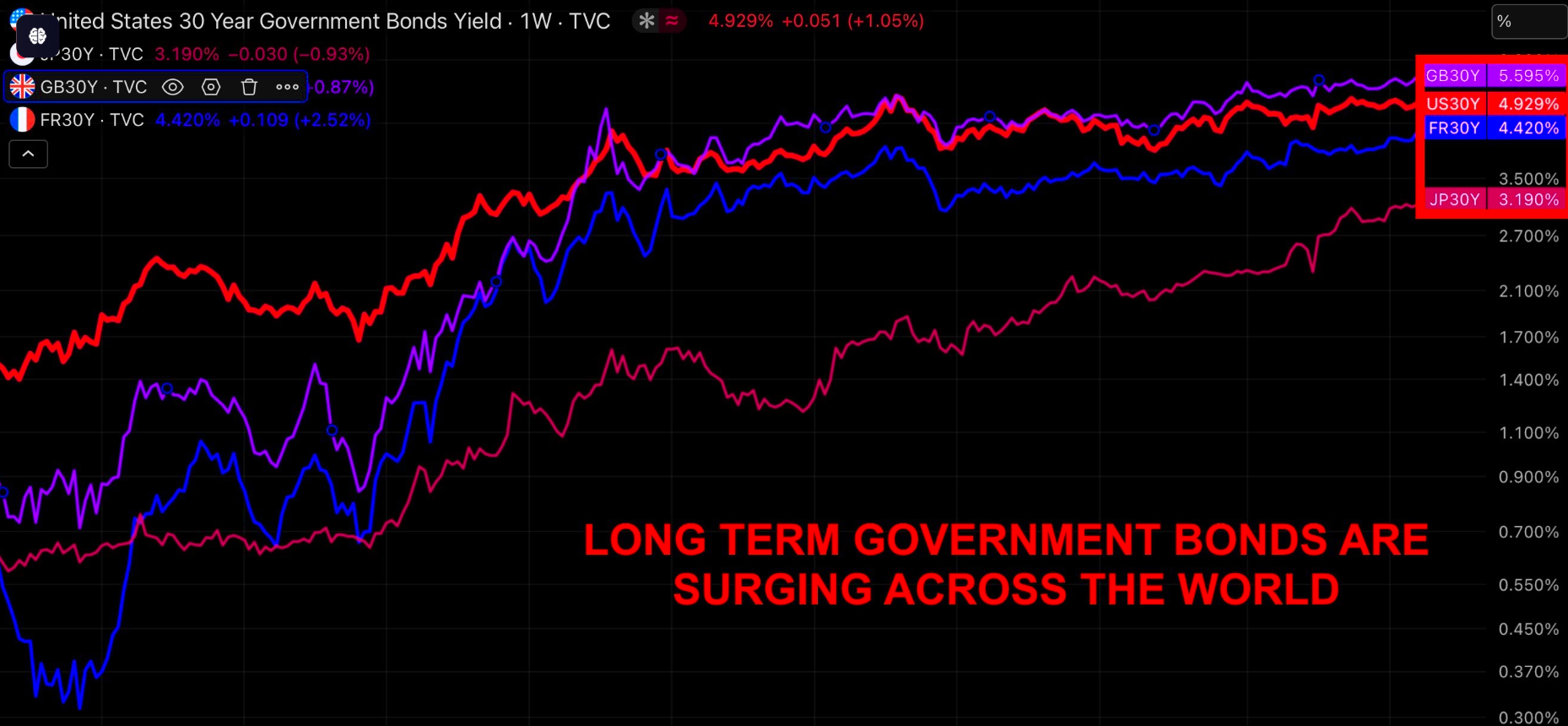
Core Insights - The global bond market is undergoing a significant adjustment driven by rising fiscal deficits, increasing public debt, persistent inflation, and a shift in investor sentiment towards higher yields [2][3][12] Group 1: Fiscal Deficits and Rising Yields - Fiscal deficits in Europe and the U.S. are expanding, with the U.S. debt-to-GDP ratio expected to rise from under 80% pre-pandemic to nearly 120% by mid-2025 [3] - The U.S. fiscal deficit is projected to remain around 6-7% of GDP even during favorable economic conditions, exerting upward pressure on U.S. Treasury yields [3] - The UK's borrowing needs are anticipated to reach historical highs by early 2025, with long-term bond yields exceeding 5.6%, the highest since 1998 [3] Group 2: Japan's Debt Burden - Japan has the heaviest debt burden, exceeding 250% of GDP, and is adjusting its yield curve control policy due to global pressures, leading to a 30-year bond yield surpassing 3% for the first time [5] Group 3: Inflation and Central Bank Credibility - Persistent inflation is a global driving factor, eroding the real value of fixed-income bonds and prompting investors to demand higher returns to protect their capital [6][7] - Central banks have paused interest rate hikes after aggressive increases in 2022-23, yet bond yields continue to rise due to quantitative tightening [8][9] Group 4: Investor Sentiment and Market Dynamics - Investor psychology has shifted from assuming low yields would persist to a more cautious stance, with "bond vigilantes" re-emerging to enforce fiscal discipline through bond sell-offs [10][11] - The demand for safe-haven bonds has diminished, with investors focusing more on inflation and debt issues rather than seeking safety during global crises [11] Group 5: Structural Reset of the Global Bond Market - The global bond market is experiencing a structural reset, with long-term yields rising across various countries, marking the end of the ultra-low interest rate era [12][13] - Credit ratings reflect disparities among countries, with the U.S. losing its AAA rating and other nations facing similar pressures, leading to increased borrowing costs and fiscal strain [12]
英国财政“黑洞”吓坏市场!30年期国债惨遭抛售 英镑创6月17日以来最大单日跌幅
智通财经网· 2025-09-02 09:21
Group 1 - The UK 30-year government bond yield has risen to its highest level since 1998, reaching 5.69%, amid growing concerns over the sustainability of public finances [1] - The British pound has depreciated over 1%, marking its largest single-day decline since June 17, with the exchange rate against the US dollar falling to 1.33 and against the euro to 86.98 pence [1] - The UK government forecasts that fiscal spending will account for 60% of GDP, up from 53% during the pandemic, while revenue is expected to slightly decrease to below 40% of GDP, leading to a projected national debt of 274% of GDP by 2073 [1] Group 2 - Analysts express that the UK's fiscal situation remains precarious, with expectations of higher risk premiums for the pound as the autumn budget approaches [2] - The UK Chancellor, Reeves, faces immense pressure to address a projected £50 billion fiscal deficit, with expectations of potential tax increases despite warnings that this could further suppress economic growth [2] - Opposition parties argue that increasing taxes would worsen the situation, advocating for spending cuts instead [2] Group 3 - Economists warn that Reeves' tax and spending policies could lead the UK towards a debt crisis similar to the 1970s, potentially necessitating assistance from the International Monetary Fund (IMF) [3] - The retail sector is also raising alarms about rising taxes and administrative burdens pushing the UK into a "stagflation" era, with food price inflation expected to remain around 5% next year [3] - The former director of the National Institute of Economic and Social Research (NIESR) indicates that the current economic conditions could lead to a collapse, drawing parallels to the 1976 IMF intervention [3] Group 4 - A former member of the Bank of England's Monetary Policy Committee highlights that the current situation resembles the 1970s, suggesting that Reeves' fiscal policies could lead to a crisis similar to the 1976 Healey crisis [4] - The increase in public spending, borrowing, and taxes is seen as a driver of both demand-pull and cost-push inflation, raising concerns about potential economic collapse if policies do not change [4]
首席点评:金银涨势持续
Shen Yin Wan Guo Qi Huo· 2025-09-02 02:29
Report Summary 1. Report Industry Investment Ratings The report does not explicitly provide industry investment ratings. 2. Core Views - **Market Overview**: The A - share market showed a strong oscillation on Monday, with the Shanghai Composite Index rising 0.46% to 3875.53 points, the Shenzhen Component Index rising 1.05%, and the ChiNext Index rising 2.29%. The trading volume in the market was 2.78 trillion yuan. The non - ferrous industry strengthened across the board, and gold stocks soared. The CPO giants led the AI hardware segment to strengthen again, while the satellite Internet concept weakened and the large - finance sector declined generally [1]. - **Key Products Analysis** - **Precious Metals**: Gold and silver showed a strong upward trend. Factors such as Trump's attempt to interfere with the Fed, the proposed inclusion of silver in the key minerals list, and the increased expectation of a September interest rate cut were positive for precious metals. However, factors like the rebound of US inflation data and the easing of geopolitical risks restricted the upward space of gold. In the long - term, the continuous increase of gold reserves by the People's Bank of China provided support for gold [2]. - **Stock Index Futures**: The stock index rose in the previous trading session, with the communication sector leading the gain and the non - bank financial sector leading the decline. The trading volume was 2.78 trillion yuan. In 2025, domestic liquidity is expected to remain loose, and more incremental policies may be introduced in the second half of the year. The probability of a Fed interest rate cut in September increases the attractiveness of RMB assets. The market is in a resonance period of "policy bottom + capital bottom + valuation bottom", but sector rotation is accelerating [3]. - **Lithium Carbonate**: The short - term trend is affected by sentiment and has high volatility. The supply is increasing, and the demand for lithium in cathode materials is also rising. The inventory situation is complex, with upstream de - stocking and downstream restocking. There is a risk of correction after the previous rapid increase, but if the inventory starts to decline, the lithium price may rise [4]. 3. Summary by Directory a. Daily Main News Concerns - **International News**: Fed理事提名人米兰很可能在9月美联储会议前就职,几位美联储主席人选也有望担任理事 [6]. - **Domestic News**: President Xi Jinping stated at the "Shanghai Cooperation Organization +" meeting that China is willing to jointly build an AI application cooperation center with all parties to share the dividends of AI development [7]. - **Industry News**: In the first half of this year, the total net profit attributable to the parent company of A - share listed companies was 2.99 trillion yuan, a year - on - year increase of 2.45%. Nearly 77% of the stocks achieved profitability, and the proportion of stocks with a year - on - year positive growth in net profit attributable to the parent company was nearly 46%. Wanchen Group had a 504 - fold increase in performance in the first half of the year [8]. b. Overseas Market Daily Returns | Variety | Unit | 8/31 | 9/1 | Change | Change Rate | | --- | --- | --- | --- | --- | --- | | FTSE China A50 Futures | Points | 14,965.58 | 14,904.15 | - 61.43 | - 0.41% | | London Gold Spot | US dollars/ounce | 3,447.57 | 3,478.96 | 31.39 | 0.91% | | London Silver | US dollars/ounce | 39.67 | 40.65 | 0.98 | 2.47% | [9] c. Morning Comments on Major Products - **Financial Products** - **Stock Index Futures**: The stock index rose in the previous trading session, with the communication sector leading the gain and the non - bank financial sector leading the decline. The trading volume was 2.78 trillion yuan. The market is in a favorable situation, but sector rotation needs attention [3][10]. - **Treasury Bonds**: Treasury bonds rose slightly, with the yield of the 10 - year active treasury bond falling to 1.77%. The central bank's open - market reverse repurchase had a net withdrawal of 1057 billion yuan. The Fed's possible interest rate cut and the domestic economic situation affect the bond market, and the stock - bond seesaw effect continues [11][12]. - **Energy and Chemical Products** - **Crude Oil**: SC crude oil rose 1.1% at night. Tensions between Russia and Ukraine affect oil exports, and OPEC and its allies will discuss production policies. The market is concerned about OPEC's production increase [13]. - **Methanol**: Methanol rose 0.68% at night. The domestic methanol plant operating rate decreased slightly, and the inventory in coastal areas increased. The short - term trend is mainly bullish [14]. - **Rubber**: Rubber had a narrow - range oscillation on Monday. The price is mainly supported by the supply side, but the demand side is weak. The short - term trend is expected to continue to correct [15]. - **Polyolefins**: Polyolefin futures rebounded after hitting the bottom. The spot market is mainly affected by supply and demand, and the inventory is slowly being digested. It remains to be seen whether the futures can drive the spot price to stop falling [16]. - **Glass and Soda Ash**: Glass futures mainly declined, and soda ash futures continued to be weak. Both are in a process of inventory digestion, and the market focuses on supply - side contraction and future consumption [17]. - **Metals** - **Precious Metals**: Gold and silver are strongly bullish. Multiple factors affect the price, and the market focuses on this week's non - farm payrolls data [2][18]. - **Copper**: The copper price rose at night. The concentrate supply is tight, and the downstream demand has both positive and negative factors. The price may fluctuate within a range [19]. - **Zinc**: The zinc price rose at night. The zinc concentrate processing fee has increased, and the supply - demand situation may turn to surplus. The price may fluctuate weakly within a range [20]. - **Lithium Carbonate**: The short - term trend is affected by sentiment. The supply is increasing, and the demand is also rising. There is a risk of correction, but if the inventory decreases, the price may rise [4][21]. - **Black Metals** - **Iron Ore**: The demand for iron ore is supported by steel mills' production. The global iron ore shipment has decreased recently, and the inventory is being depleted. The market expects an increase in shipments in the second half of the year. The price is expected to be volatile and bullish [23]. - **Steel**: The supply pressure of steel is gradually emerging, and the inventory is accumulating. The export situation is complex, and the market has a weak supply - demand balance. The short - term trend is a correction [24]. - **Coking Coal and Coke**: The prices of coking coal and coke are in a high - level oscillation. The high - level iron - water production boosts the demand, but factors such as inventory changes and price cut expectations put pressure on the prices [25]. - **Agricultural Products** - **Protein Meals**: The prices of soybean and rapeseed meals oscillated and rose at night. The US soybean production outlook is optimistic, but the decrease in planting area and strong bio - fuel demand provide support. The domestic market is expected to oscillate narrowly [26]. - **Oils and Fats**: The prices of oils and fats oscillated at night. The production of Malaysian palm oil decreased slightly in August, and the export increased. The market is expected to continue to oscillate [27]. - **Sugar**: The international sugar market is entering a stock - building stage, and the domestic market is affected by supply and demand factors. The sugar price is expected to oscillate [28]. - **Cotton**: The price of US cotton decreased. The domestic cotton supply is relatively tight, and the demand is in the off - season. The short - term trend of Zhengzhou cotton is expected to be oscillating and slightly bullish [29]. - **Shipping Index** - **Container Shipping to Europe**: The EC index rebounded, rising 1.53%. The market is mainly gambling on the off - season freight rate space. The price may be weakly volatile in September and may be supported at the end of September and early October [30].
美债不香了?澳洲第二大养老基金因通胀担忧转向英澳债券
智通财经网· 2025-09-01 23:17
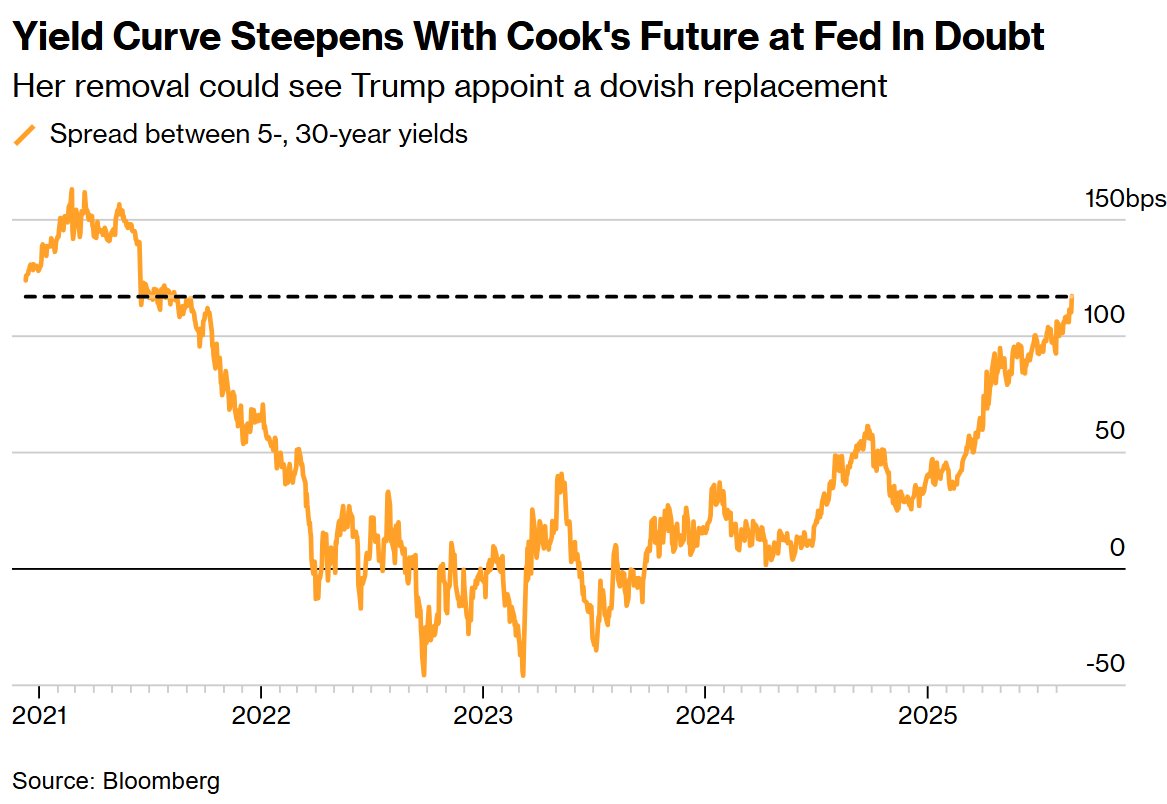
管理着 3300 亿澳元(2160 亿美元)资产的澳大利亚退休信托基金(ART)高级投资组合经理Jimmy Louca在上周接受采访时表示,该公司通过动态资产配置策略 减持了美国债券。 卢卡表示,英国和澳大利亚等其他国家的债券更有价值。他补充称,尽管美联储主席鲍威尔最近转向鸽派,但美国的财政赤字扩大和特朗普贸易战的后果可 能会加剧通胀压力。卢卡负责该基金的多资产动态资产配置部门。 智通财经APP获悉,由于担心华盛顿的政策可能引发通货膨胀,澳大利亚第二大养老基金对美国国债的看法日益悲观。 卢卡说:"从周期性来看,美联储正处于宽松周期,但由于财政方面的担忧,后端存在风险。从结构性来看,如果美国的政策组合是大力增加财政支出,再 加上美联储更愿意维持充分就业,那么这将是一种更容易推升通胀的政策组合。" 策略师西蒙•怀特表示,"美国的实际收益率看起来偏向于上升,与政府越来越多地干预货币政策时通常会出现的趋势相反。" 卢卡曾在昆士兰州财政部领导宏观经济团队。他说,ART已经从涉及两年期和10年期国债的收益率曲线变陡交易中获利了结。他现在认为英国国债和澳大利 亚政府债券更有价值。 他说:"如果你看一下澳大利亚的情况,就会发 ...
热点思考 | 财政“锦标赛”:美欧日,谁更积极?(申万宏观·赵伟团队)
赵伟宏观探索· 2025-09-01 16:05
Group 1 - The core viewpoint of the article is that after 2020, the fiscal policies of the US, Europe, and Japan have shifted towards proactive expansion, marking a new era of fiscal activism that directly influences their economic strength and stability [1][6][64] - The fiscal policies of developed economies are no longer limited to being passive stabilizers; they are now actively guiding economic development, particularly in sectors like semiconductors and defense [1][6][64] - The tolerance for high deficits is increasing among Western countries, with the US political parties showing a narrowing gap in their attitudes towards fiscal deficits, and Japan delaying its budget surplus targets [1][6][15] Group 2 - The correlation between fiscal deficit rates and GDP growth rates has been positive from 2019 to 2025, indicating that higher deficits lead to higher GDP growth, with the US benefiting the most from this trend [2][20] - The US is expected to expand its fiscal spending significantly through the "Inflation Reduction Act," which includes tax cuts and increased defense spending, potentially raising its deficit rate to around 7% [3][25][34] - Europe is also shifting towards a more expansionary fiscal stance, with Germany loosening its debt brake rules and establishing a special fund of €500 billion for direct investments and climate transition [3][34][38] Group 3 - The expected economic growth rates for 2026 are projected to be 2.0% for the US, 1.2% for the Eurozone, and 0.5% for Japan, with the US maintaining a lead in growth due to its fiscal policies [4][56] - Germany is anticipated to see a significant improvement in its GDP growth rate, potentially reaching 0.9% in 2026, driven by increased defense and infrastructure spending [4][56] - The fiscal stimulus effects are expected to be 0.6% for the US, 0.2% for the Eurozone, and only 0.1% for Japan, indicating varying levels of fiscal impact across these regions [4][52][56]


悲观论调甚嚣尘上 高收益率英债却引巨头“逆势买入”
智通财经网· 2025-08-29 12:11
Core Viewpoint - Despite a bleak fiscal outlook, UK government bonds are favored by prominent investment firms due to the resilience of the UK economy and the necessity for the central bank to maintain high interest rates to curb inflation [1][4]. Group 1: Investment Sentiment - Investment managers like David Roberts from Nedgroup Investments argue that the recent sell-off in UK government bonds has been overinterpreted, asserting that current policies are actually robust [1]. - Investors are anticipating a shift to accommodative monetary policy when high interest rates eventually suppress economic growth, potentially leading to substantial returns on current investments in UK bonds [4]. - James Novotny from Jupiter Asset Management describes investing in UK government bonds as a "painful trade," indicating a lack of clear signals for significant rate cuts from the Bank of England [5]. Group 2: Economic Indicators - The yield on 30-year UK government bonds is near its highest point since 1998, with traders adjusting their expectations for rate cuts from the Bank of England, now estimating less than a 40% chance of a 25 basis point cut this year [4]. - Daniel Loughney from Mediolanum International Funds maintains an overweight position in 10-year UK bonds, predicting that economic slowdown is only a matter of time, with potential rate cuts expected to exceed current market forecasts [8]. Group 3: Historical Context and Market Demand - Andrew Wishart from Berenberg Bank refutes comparisons between the current UK economic situation and the 1970s crisis, emphasizing that the UK is not facing a currency crisis and that the Bank of England is likely to successfully manage inflation [9]. - The demand for UK government bonds remains strong, as evidenced by the 3.33 times oversubscription of a recent 10-year bond issuance and a record £142.1 billion subscription for a similar bond earlier this year [9]. - Despite the recent weak performance of UK bonds, it is considered reasonable given the previous strong economic performance [10].
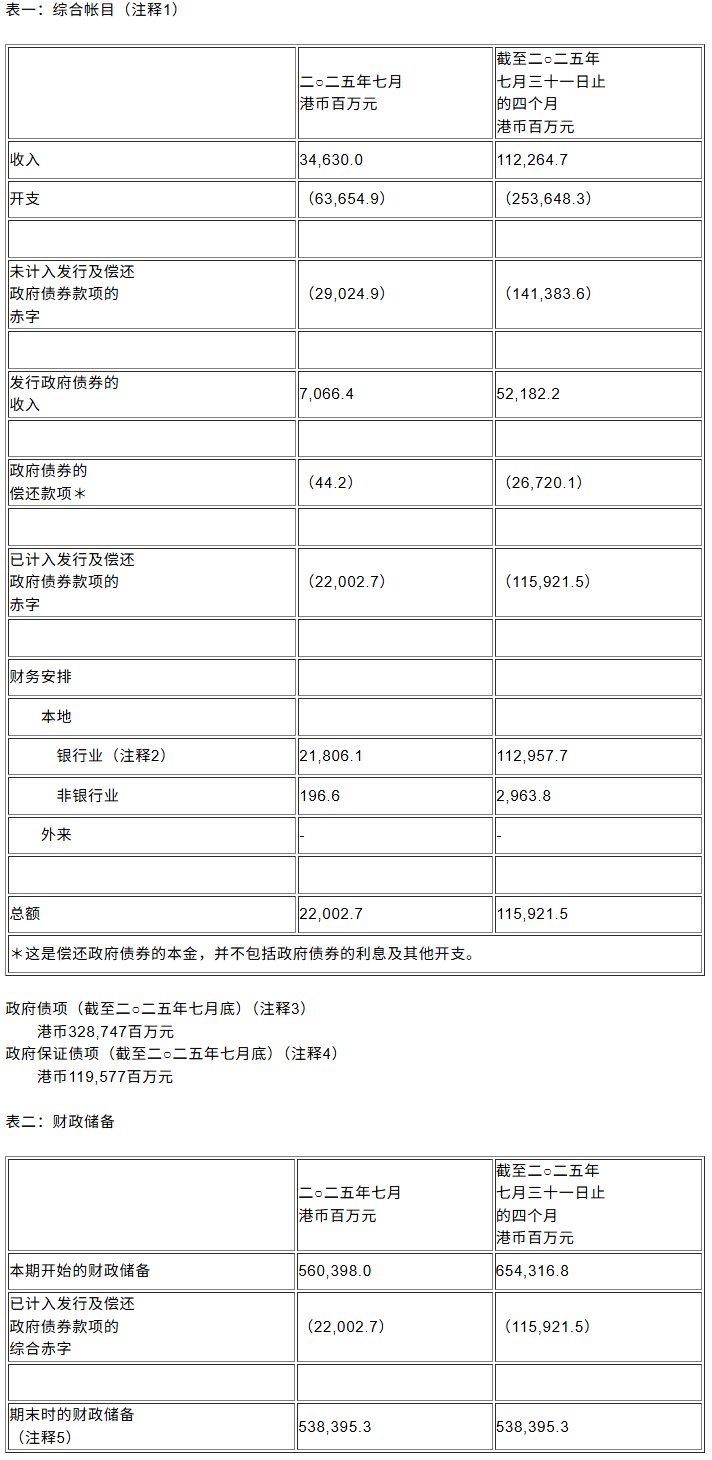
香港特区政府:本财政年度首四个月录得1159亿港元赤字
Zhi Tong Cai Jing· 2025-08-29 09:32
| | | 截至二。二五年 | | --- | --- | --- | | | 二○二五年七月 港币百万元 | 七月三十一日止 的四个月 | | | | 港币百万元 | | 收入 | 34,630.0 | 112,264.7 | | 开支 | (63,654.9) | (253,648.3) | | 未计入发行及偿还 | | | | 政府债券款项的 | (29,024.9) | (141,383.6) | | 赤字 | | | | 发行政府债券的 | | | | 收入 | 7,066.4 | 52,182.2 | | 政府债券的 | (44.2) | (26,720.1) | | 偿还款项* | | | | 已计入发行及偿还 | | | | 政府债券款项的 | (22,002.7) | (115,921.5) | | 赤字 | | | | 财务安排 | | | | 本地 | | | | 银行业(注释2) | 21,806.1 | 112,957.7 | | 非银行业 | 196.6 | 2,963.8 | | 外来 | | | | 22,002.7 总额 | 115,921.5 | | --- | --- | ...