
逆全球化

Search documents
西南期货早间评论-20251204
Xi Nan Qi Huo· 2025-12-04 01:55
Report Industry Investment Ratings No relevant content provided. Core Views of the Report - The macro - economic recovery momentum still needs to be strengthened, and it is expected that the monetary policy will remain loose. Treasury bond futures are expected to face some pressure, and a cautious attitude should be maintained [6]. - The domestic economic situation is stable, but the recovery momentum is not strong. The valuation of domestic assets is at a low level, and the Chinese economy has sufficient resilience. It is expected that the volatility center of stock index futures will gradually move up, and investors can choose the right time to go long [8]. - The global trade and financial environment is complex. The trends of "anti - globalization" and "de - dollarization" are beneficial to the allocation and hedging value of gold. The slowdown of the US labor market and the expected continuous interest rate cuts by the Fed are also beneficial to precious metals. It is expected that precious metals will continue to rise, and investors can wait and see for long - position opportunities [10]. - In the medium term, the prices of rebar and hot - rolled coils are likely to remain weak, but there may be a short - term rebound. Investors can pay attention to high - level short - position opportunities during the rebound [12]. - The supply - demand pattern of iron ore is weak, and there may be resistance to its price increase. Investors can pay attention to high - level short - position opportunities [14]. - Coke and coking coal futures may encounter resistance when rebounding. Investors can pay attention to low - level long - position opportunities [17]. - The overall oversupply pressure of ferroalloys has weakened. After a decline, investors can consider long - position opportunities at low levels when the spot loss expands [20]. - The US - Russia talks send positive signals, which is negative for crude oil prices, but OPEC+ suspending production increase in the first quarter of next year gives market confidence. The crude oil main contract should be temporarily observed [21][22]. - The deepening of the Asian fuel oil spot discount is positive for fuel oil prices, while the constructive results of the US - Russia negotiation are negative. The fuel oil main contract should be temporarily observed [25][26]. - The domestic polypropylene downstream industries are obviously differentiated. Investors can pay attention to long - position opportunities for polyolefins [28]. - The price of synthetic rubber is expected to fluctuate within a wide range with limited downward space. Investors should pay attention to the raw material market and supply changes [30]. - The natural rubber market is expected to fluctuate within a range in the short term. Investors can pay attention to long - position opportunities [32]. - The current PVC supply exceeds demand, and the price may not have much room to fall further. Investors should pay attention to supply - side changes [34]. - The price of urea is expected to decline slightly in the next period, but the downward space is limited [37]. - In the short term, PX may fluctuate and adjust. Investors should control positions, be vigilant about crude oil changes, and pay attention to macro - policy changes [39]. - In the short term, PTA may fluctuate. Investors should be cautious, control risks, and pay attention to oil price changes [40]. - In the short term, ethylene glycol may face pressure. Investors should pay attention to port inventory and supply changes [41]. - In the short term, short - fiber may fluctuate following costs. Investors should control risks and pay attention to cost changes and macro - policy adjustments [43]. - In the future, bottle - grade polyester chips are expected to fluctuate following the cost side. Investors should control risks [44]. - For lithium carbonate, investors should pay attention to the sustainability of consumption and the resumption progress of mines [45]. - Copper prices are expected to be strong, but investors should be aware of the callback risk after hitting a new high [47]. - In the short term, the price of electrolytic aluminum is in an adjustment state, while alumina prices are under pressure. Investors should pay attention to substantial production - cut trends [49]. - Zinc prices are likely to continue to fluctuate within a range [52]. - Lead prices are expected to be weak and fluctuate [54]. - Tin prices are expected to fluctuate strongly [57]. - Nickel prices are expected to fluctuate [58]. - For soybean oil and soybean meal, investors can pay attention to long - position opportunities in the low - cost support range [60]. - For palm oil, investors can consider going long on pullbacks [62]. - For rapeseed meal and rapeseed oil, investors can consider a long - biased approach [64]. - The upward space of cotton prices is expected to be limited [67]. - Sugar prices are under pressure and are expected to fluctuate [69]. - Apple prices are expected to be strong [71]. - For live pigs, after partially closing out short positions, investors can consider holding the remaining short positions [74]. - For eggs, investors should consider temporary observation [77]. - For corn and starch, it is advisable to wait and see and wait for the further release of supply pressure after transportation resumes. Corn starch may follow the corn market [80]. Summaries by Related Catalogs Treasury Bonds - On the previous trading day, most treasury bond futures closed up, with the 30 - year main contract down 0.26% at 113.610 yuan, the 10 - year main contract up 0.06% at 108.040 yuan, the 5 - year main contract up 0.07% at 105.850 yuan, and the 2 - year main contract up 0.03% at 102.420 yuan [5]. - The central bank conducted 793 billion yuan of 7 - day reverse repurchase operations on December 3rd, with an operating rate of 1.40%. There were 2133 billion yuan of reverse repurchases due on the same day, resulting in a net withdrawal of 1340 billion yuan [5]. - China's November S&P composite PMI was 51.2, and the service PMI was 52.1. The new order index continued to grow, and the new export order improved significantly [5]. Stock Index Futures - On the previous trading day, stock index futures showed mixed results. The main contract of CSI 300 index futures (IF) was down 0.30%, the main contract of SSE 50 index futures (IH) was down 0.35%, the main contract of CSI 500 index futures (IC) was down 0.41%, and the main contract of CSI 1000 index futures (IM) was down 0.58% [8]. - From January to November this year, the replacement of consumer goods with new ones drove the sales of related goods to exceed 2.5 trillion yuan, benefiting more than 360 million people [8]. Precious Metals - On the previous trading day, the closing price of the gold main contract was 956.7, with a decline of 0.18%, and the night - session closing price was 955.66; the closing price of the silver main contract was 13,582, with an increase of 1.18%, and the night - session closing price was 13608 [10]. - The US November ADP employment decreased by 32,000 people, with an expected increase of 10,000 people [10]. Rebar and Hot - Rolled Coils - On the previous trading day, rebar and hot - rolled coil futures fluctuated and consolidated. The latest price of Tangshan common carbon billet was 3000 yuan/ton, the spot price of Shanghai rebar was between 3170 - 3300 yuan/ton, and the price of Shanghai hot - rolled coils was between 3280 - 3300 yuan/ton [12]. - In the medium term, the price of finished products is dominated by industrial supply - demand logic. The demand for rebar is in a year - on - year decline, and the market will enter the off - season. The supply side still has over - capacity, and the rebar inventory is significantly higher than last year [12]. Iron Ore - On the previous trading day, iron ore futures fluctuated and consolidated. The port spot price of PB powder was 797 yuan/ton, and the spot price of Super Special powder was 685 yuan/ton [14]. - Since October, the daily output of molten iron in the country has been declining, the import volume of iron ore has increased year - on - year, and the port inventory has continued to rise [14]. Coking Coal and Coke - On the previous trading day, coking coal and coke futures encountered resistance when rebounding. The impact of safety inspections on coking coal production is weakening, and the supply is increasing. The demand from downstream coke enterprises is weakening, and the auction price of coking coal has decreased [16][17]. - After the fourth increase in the spot purchase price of coke, the profit of coking enterprises has improved, and the supply is stable. However, the demand from steel mills may weaken due to the compression of blast furnace profits [17]. Ferroalloys - On the previous trading day, the main contract of ferromanganese silicon closed down 0.03% at 5724 yuan/ton, and the main contract of ferrosilicon closed down 0.11% at 5446 yuan/ton [19]. - In the week of November 28th, the shipment volume of manganese ore from Gabon decreased to 56,900 tons, the supply of Australian ore increased since June, and the port manganese ore inventory increased slightly to 4.38 million tons [19]. - The production of ferromanganese silicon and ferrosilicon decreased by 2100 tons and 1100 tons respectively last week, and the demand for ferroalloys is weak [19]. Crude Oil - On the previous trading day, INE crude oil fluctuated downward. The US envoy's negotiation with Russia was constructive [21]. - The number of active oil and gas rigs in the US increased for the third consecutive week as of November 21st [21]. - OPEC+ may maintain the oil production level at the Sunday meeting and reach an agreement on the mechanism for evaluating member countries' maximum production capacity [21]. Fuel Oil - On the previous trading day, fuel oil hit a low and then rebounded, hitting a new low during the session. The market is concerned about the large - scale supply of high - sulfur fuel oil from the Middle East [24]. - The Singapore fuel oil inventory is at a high level, and the inflow of fuel oil from outside Asia will increase [24]. Polyolefins - On the previous trading day, the offer of the Hangzhou PP market showed some high - price loosening, and the high - price transactions were difficult to expand. The price of the Yuyao LLDPE market was adjusted by 10 - 30 yuan/ton [28]. - The average operating rate of domestic polypropylene downstream industries increased by 0.26 percentage points to 53.83%. The demand in the packaging industry decreased after the e - commerce festival, while the operating rates of the PP non - woven fabric and PP pipe industries increased [28]. Synthetic Rubber - On the previous trading day, the main contract of synthetic rubber rose 0.49%. The price in Shandong remained stable at 11,600 yuan/ton, and the basis remained stable [30]. - The short - term supply shortage pushed up the price. It is expected that the price of butadiene rubber will fluctuate widely this week, and the downward space is limited [30]. Natural Rubber - On the previous trading day, the main contract of natural rubber fell 0.65%, and the main contract of 20 - grade rubber fell 0.86%. The Shanghai spot price was adjusted down to around 14,900 yuan/ton, and the basis remained stable [32]. - It is expected that the natural rubber market will fluctuate within a range in the short term. The high price of overseas raw materials supports the rubber price, the operating rate of tire enterprises has rebounded significantly, and the inventory shows differentiation [32]. PVC - On the previous trading day, the main contract of PVC fell 0.44%, the spot price remained stable, and the basis remained stable [34]. - In November 2025, the estimated PVC output was 2.0788 million tons, a month - on - month decrease of 2.32% and a year - on - year increase of 5.60%. The demand is seasonally weakening, and the industry inventory is expected to reach 1.53 million tons [34]. Urea - On the previous trading day, the main contract of urea rose 0.59%. The price in Shandong Linyi increased by 10 yuan/ton, and the basis remained stable [37]. - The daily supply of urea is around 200,000 tons, which restricts the upward space of prices. The new round of export quotas and the concentrated procurement in the Northeast region boost the market sentiment [37]. PX - On the previous trading day, the main contract of PX fell 0.49%. The PXN spread was adjusted to 280 US dollars/ton, and the short - process profit remained stable. The PX - MX spread was 120 US dollars/ton [39]. - The PX operating rate was 88.3%, a slight month - on - month decline. Zhejiang Petrochemical has maintenance plans for CDU and reforming in January 2026, and PX production may decrease [39]. PTA - On the previous trading day, the main contract of PTA2601 fell 0.46%. The PTA operating rate was adjusted to 73.7%, a month - on - month increase of 1.6% [40]. - The polyester operating rate was 91.5%, and the long - filament operating rate increased moderately. The PTA processing fee was adjusted to around 170 yuan/ton [40]. Ethylene Glycol - On the previous trading day, the main contract of ethylene glycol fell 1.55%. The overall operating rate of ethylene glycol was 73.13%, a month - on - month increase of 2.46% [41]. - The inventory in the main ports of East China was about 753,000 tons, a month - on - month increase of 21,000 tons. The planned arrival volume at the main ports from December 1st to 7th is about 161,000 tons [41]. Short - Fiber - On the previous trading day, the main contract of short - fiber fell 0.29%. The short - fiber operating rate rose to around 97.5% [42]. - The processing fee of short - fiber was adjusted to around 1020 yuan/ton, and the demand side changed little [43]. Bottle - Grade Polyester Chips - On the previous trading day, the main contract of bottle - grade polyester chips fell 0.59%. The processing fee was adjusted to around 400 yuan/ton [44]. - The operating rate of bottle - grade polyester chip factories dropped to 72.2%. The export of bottle - grade polyester chips increased slightly, with a total export volume of 5.333 million tons from January to October, a year - on - year increase of 14% [44]. Lithium Carbonate - On the previous trading day, the main contract fell 2.82% to 93,660 yuan/ton. There was news of mine resumption this year, which alleviated the shortage expectation [45]. - The production of lithium carbonate is at a high level, and the consumption in the energy storage and power battery sectors has improved [45]. Copper - On the previous trading day, the main contract of Shanghai copper closed at 90,760 yuan/ton, an increase of 2.01% [46]. - The US November ISM manufacturing PMI was lower than expected and the previous value, and the ADP employment showed negative growth [47]. - The supply of copper ore is growing slowly, the processing fee of copper concentrate is in a deep negative range, and the demand for refined copper is affected by high prices and scrap copper substitution [47]. Aluminum - On the previous trading day, the main contract of Shanghai aluminum closed at 22,010 yuan/ton, an increase of 0.53%, and the main contract of alumina closed at 2632 yuan/ton, a decrease of 0.53% [49]. - The supply of domestic ore is tight, but the arrival of imported ore from Guinea has increased. The alumina market is in a state of oversupply, and the profit of electrolytic aluminum smelting is considerable but the production increase space is limited [49]. - The demand for aluminum has entered the traditional off - season, and the high price suppresses the downstream procurement willingness [49]. Zinc - On the previous trading day, the main contract of Shanghai zinc closed at 22,850 yuan/ton, an increase of 0.48% [52]. - The supply of zinc concentrate is tight, the processing fee is decreasing, and the demand has entered the traditional off - season, but there is still some rigid demand at the end of the year [52]. Lead - On the previous trading day, the main contract of Shanghai lead closed at 17,135 yuan/ton, a decrease of 0.29% [54]. - The supply shortage of domestic lead concentrate has been slightly alleviated, and the supply is expected to increase. The battery market is in the off - season,
要做好世界经济的供应链
董扬汽车视点· 2025-12-03 10:32
Group 1 - The article highlights a trend of de-globalization in the automotive industry, particularly among Western companies seeking to reduce reliance on Chinese supply chains, which poses a risk to global economic cooperation [1][2] - It argues that maintaining a robust global supply chain is beneficial for all countries, including China, as it has historically led to economic growth and improved living standards [2][3] - The article emphasizes that China's comprehensive supply chain advantages, including cost efficiency and innovation, should be leveraged to counteract de-globalization efforts and maintain competitiveness in the global market [3][4] Group 2 - It suggests that China should utilize its supply chain strengths strategically to negotiate better international economic and political conditions, rather than resorting to isolationist policies [4][5] - The article advises industries and companies to adapt their strategies for global supply chains by considering local economic impacts and fostering integration into local markets [5][6] - It stresses the importance of managing cultural and operational conflicts when expanding internationally, prioritizing national interests over individual corporate benefits [5][7]


西南期货早间评论-20251203
Xi Nan Qi Huo· 2025-12-03 03:31
2025 年 12 月 3 日星期三 重庆市江北区金沙门路 32 号 23 层; 023-63638617 上海市浦东新区世纪大道 210 号 10 楼 1001; 1 市场有风险 投资需谨慎 地址: 电话: | | | | 铅: | | 15 | | --- | --- | --- | | 锡: | | 15 | | 镍: | | 16 | | 豆油、豆粕: | | 16 | | 棕榈油: | | 17 | | 菜粕、菜油: | | 17 | | 棉花: | | 18 | | 白糖: | | 19 | | 苹果: | | 20 | | 生猪: | | 20 | | 鸡蛋: | | 21 | | 玉米&淀粉: | | 22 | | 免责声明 | | 23 | 国债: 上一交易日,国债期货收盘全线下跌,30 年期主力合约跌 0.51%报 113.890 元, 10 年期主力合约跌 0.07%报 107.980 元,5 年期主力合约跌 0.06%报 105.770 元,2 年 期主力合约跌 0.02%报 102.388 元。 公开市场方面,央行公告称,12 月 2 日以固定利率、数量招标方式开展了 1563 亿 ...
西南期货早间评论-20251202
Xi Nan Qi Huo· 2025-12-02 05:46
1. Report Industry Investment Ratings - Not provided in the given content 2. Core Views of the Report - **Treasury Bonds**: Expected to face some pressure, maintain a cautious stance [6][7] - **Stock Index Futures**: Expected that the volatility center will gradually move up, consider going long at an appropriate time [9][10] - **Precious Metals**: Expected to continue the upward trend, temporarily observe and wait for opportunities to go long [11][12] - **Rebar and Hot - Rolled Coils**: Rebar prices may remain weak in the medium term, and hot - rolled coils may follow a similar trend. Look for opportunities to go short at high levels during rebounds [13] - **Iron Ore**: The supply - demand pattern is weak. Look for opportunities to go short at high levels [15] - **Coking Coal and Coke**: Look for opportunities to go long at low levels [18] - **Ferroalloys**: Consider long positions at low levels after the spot loss widens [21] - **Crude Oil**: Focus on opportunities to go long [24] - **Fuel Oil**: Focus on opportunities to go long [27] - **Polyolefins**: Focus on opportunities to go long [29] - **Synthetic Rubber**: Expected to oscillate [32] - **Natural Rubber**: Consider opportunities to go long [34] - **PVC**: Focus on supply - side changes [38] - **Urea**: The downside space is limited [39] - **Para - Xylene (PX)**: May oscillate and adjust in the short term, control positions and pay attention to crude oil and macro - policy changes [40] - **PTA**: May oscillate in the short term, be cautious and pay attention to oil price changes [41] - **Ethylene Glycol**: May face pressure in the short term, pay attention to port inventory and supply changes [42] - **Short - Fiber**: May oscillate following costs in the short term, control risks and pay attention to cost and macro - policy changes [44] - **Bottle Chips**: Expected to oscillate following the cost side, control risks [45] - **Lithium Carbonate**: Pay attention to consumption sustainability and mine restart progress [46] - **Copper**: May run strongly in the short term, beware of callback risks after hitting new highs [48][49] - **Aluminum**: In a phase of adjustment in the short term, the price has resilience in the medium - long term [50][51][52] - **Zinc**: Likely to continue the range - bound oscillation pattern [53][54] - **Lead**: Likely to run weakly [55][56] - **Tin**: May oscillate strongly [58] - **Nickel**: May oscillate [59] - **Soybean Oil and Soybean Meal**: Consider long positions in the low - cost support range [61] - **Palm Oil**: Consider going long on pullbacks [63] - **Rapeseed Meal and Rapeseed Oil**: Consider a long - biased approach for rapeseed oil [66] - **Cotton**: The upside space is expected to be limited [69] - **Sugar**: May oscillate [74] - **Apples**: Expected to run strongly [75][76] - **Pigs**: Consider holding the remaining short positions temporarily [79] - **Eggs**: Consider temporary observation [81] - **Corn and Starch**: It is advisable to observe and wait for the release of supply pressure after transportation recovers. Corn starch may follow the corn market [83][84] 3. Summaries by Related Catalogs Treasury Bonds - **Market Performance**: On the previous trading day, most treasury bond futures closed higher, with the 30 - year contract down 0.08% at 114.370 yuan, and others rising [5] - **Policy and Macroeconomy**: The central bank conducted 107.6 billion yuan of 7 - day reverse repurchase operations on December 1st, with a net withdrawal of 231.1 billion yuan. The macro - economic recovery momentum needs to be strengthened, and the monetary policy is expected to remain loose [5][6] Stock Index Futures - **Market Performance**: On the previous trading day, stock index futures showed mixed results [8] - **Policy and Market**: The CSRC is promoting the pilot of commercial real - estate investment trust funds (REITs). The domestic economic recovery momentum is weak, but asset valuations are low, and market sentiment has warmed up [8][9] Precious Metals - **Market Performance**: On the previous trading day, gold and silver futures rose, with gold up 0.98% and silver up 4.33% [11] - **Market Factors**: The complex global trade and financial environment, central bank gold - buying, and the expected Fed rate cuts are favorable for precious metals [11] Rebar and Hot - Rolled Coils - **Market Performance**: On the previous trading day, rebar and hot - rolled coil futures rebounded slightly. Spot prices are at certain levels [13] - **Supply - Demand Analysis**: Rebar demand is declining year - on - year, and the market is entering the off - season. Supply capacity is in surplus, and inventory pressure is high. Hot - rolled coils have a similar situation [13] Iron Ore - **Market Performance**: On the previous trading day, iron ore futures rose slightly [15] - **Supply - Demand Analysis**: Since October, iron ore supply has increased year - on - year, and demand has declined. Port inventory has exceeded last year's level [15] Coking Coal and Coke - **Market Performance**: On the previous trading day, coking coal and coke futures rebounded significantly [17] - **Supply - Demand Analysis**: Coking coal supply is increasing, and demand is weakening. Coke supply is stable, but demand may decline due to potential steel - mill production cuts [18] Ferroalloys - **Market Performance**: On the previous trading day, manganese - silicon and silicon - iron futures rose [20] - **Supply - Demand and Cost**: Manganese ore supply has recovered, and the cost of ferroalloys is rising. Production is declining, and demand is weak, but the overall surplus is easing [20][21] Crude Oil - **Market Performance**: On the previous trading day, INE crude oil oscillated upward [22] - **Market News**: OPEC's suspension of production increase boosts market confidence. There are also news about Russia - US negotiations and the increase in US oil and gas rigs [22][23] Fuel Oil - **Market Performance**: On the previous trading day, fuel oil oscillated upward and stood above the 5 - day moving average [25] - **Market Factors**: The deepening of the Asian fuel oil spot discount and the slow progress of the US 28 - point plan are favorable for fuel oil prices [26] Polyolefins - **Market Performance**: On the previous trading day, the PP market in Hangzhou and the LLDPE market in Yuyao showed certain price movements [28] - **Market Analysis**: The average operating rate of domestic polypropylene downstream industries has increased. Different PP product industries show different trends [28] Synthetic Rubber - **Market Performance**: On the previous trading day, synthetic rubber futures fell 1.01% [30] - **Supply - Demand and Market**: Raw material prices are under pressure, supply is relatively loose, and demand from tire enterprises is weak [30][31] Natural Rubber - **Market Performance**: On the previous trading day, natural rubber futures fell [33] - **Supply - Demand and Market**: Supply is affected by weather and high overseas raw material prices. Demand is affected by enterprise maintenance, and inventory is slightly increasing [33] PVC - **Market Performance**: On the previous trading day, PVC futures rose 0.11% [35] - **Supply - Demand and Cost**: Supply is increasing, demand shows different trends in different industries, and costs are affected by raw material prices. The overall supply - demand pattern is still oversupplied [35] Urea - **Market Performance**: On the previous trading day, urea futures fell 0.18% [38] - **Supply - Demand and Cost**: Supply is increasing, demand from downstream products shows different trends, and costs and profits are affected by coal prices [38] Para - Xylene (PX) - **Market Performance**: On the previous trading day, PX futures rose 2.21% [40] - **Supply - Demand and Market**: PX supply is slightly decreasing, and the PXN spread is relatively strong. Attention should be paid to crude oil and macro - policy changes [40] PTA - **Market Performance**: On the previous trading day, PTA2601 futures rose 1.93% [41] - **Supply - Demand and Cost**: Supply is increasing, demand from polyester is relatively stable, and processing fees are declining. It may oscillate in the short term [41] Ethylene Glycol - **Market Performance**: On the previous trading day, ethylene glycol futures rose 0.28% [42] - **Supply - Demand and Market**: Supply is increasing, inventory is rising, and demand from downstream polyester is slightly decreasing [42] Short - Fiber - **Market Performance**: On the previous trading day, short - fiber futures rose 1.42% [43] - **Supply - Demand and Market**: Supply is at a relatively high level, demand changes little, and it may oscillate following costs [43][44] Bottle Chips - **Market Performance**: On the previous trading day, bottle - chip futures rose 1.23% [45] - **Supply - Demand and Market**: Supply is at a certain level, export is increasing, and it may oscillate following the cost side [45] Lithium Carbonate - **Market Performance**: On the previous trading day, lithium carbonate futures rose 0.56% [46] - **Supply - Demand and Market**: Supply is at a high level, consumption in the energy - storage and power - battery sectors is improving, and inventory is decreasing [46] Copper - **Market Performance**: On the previous trading day, Shanghai copper futures rose 0.62% [47] - **Supply - Demand and Market**: The supply of copper ore is growing slowly, and demand is affected by high prices and substitution. The price may be supported in the short term but is restricted by consumption [48] Aluminum - **Market Performance**: On the previous trading day, Shanghai aluminum and alumina futures rose [50] - **Supply - Demand and Market**: The supply of domestic bauxite is tight, but imports are increasing. Supply and demand are in a state of oversupply, and the price may adjust in the short term [50] Zinc - **Market Performance**: On the previous trading day, Shanghai zinc futures rose 0.98% [53] - **Supply - Demand and Market**: Zinc concentrate supply is tight, demand is in the off - season, and the price may oscillate in a range [53] Lead - **Market Performance**: On the previous trading day, Shanghai lead futures rose 0.64% [55] - **Supply - Demand and Market**: The supply of lead concentrate is slightly easing, demand from the battery market is weak, and the price may run weakly [55] Tin - **Market Performance**: On the previous trading day, tin futures fell 0.27% [57] - **Supply - Demand and Market**: Supply is tight, and demand shows some resilience. The price may oscillate strongly [57][58] Nickel - **Market Performance**: On the previous trading day, nickel futures rose 0.26% [59] - **Supply - Demand and Market**: Nickel ore prices are stable, demand from the stainless - steel market is weak, and the price may oscillate [59] Soybean Oil and Soybean Meal - **Market Performance**: On the previous trading day, soybean meal futures fell 0.36%, and soybean oil futures rose 0.61% [60] - **Supply - Demand and Market**: Brazilian soybean planting is slightly slower, and domestic supply is relatively loose. Demand for soybean meal is growing moderately, and demand for soybean oil is slightly improving [60][61] Palm Oil - **Market Performance**: Malaysian palm oil futures fell [62] - **Supply - Demand and Market**: Indonesian production concerns are alleviated, and exports are declining. Domestic imports are increasing, and inventory is accumulating [62] Rapeseed Meal and Rapeseed Oil - **Market Performance**: Rapeseed futures fell [64] - **Supply - Demand and Market**: Attention is focused on the Canadian crop report. Domestic imports show different trends, and inventory is in a state of destocking [64][65] Cotton - **Market Performance**: On the previous trading day, domestic cotton futures rebounded, and overseas cotton futures fell slightly [67] - **Supply - Demand and Market**: The USDA has raised the global and US cotton production and inventory forecasts. Domestic production is high, and demand is weak [67][68] Sugar - **Market Performance**: On the previous trading day, Zhengzhou sugar futures oscillated, and overseas raw - sugar futures fell 3% [70] - **Supply - Demand and Market**: Brazilian sugar production has exceeded expectations, and domestic production and imports are increasing, putting pressure on sugar prices [70][73] Apples - **Market Performance**: On the previous trading day, domestic apple futures oscillated [75] - **Supply - Demand and Market**: Inventory is decreasing, and new - season production and quality are declining, so the price is expected to be strong [75] Pigs - **Market Performance**: The national average pig price rose on the previous day [77] - **Supply - Demand and Market**: Supply is affected by enterprise sales and farmers' sentiment, and demand is affected by pickling. Attention should be paid to changes in sales and slaughter in December [77][78] Eggs - **Market Performance**: On the previous trading day, the average egg price in the main production and sales areas rose [80] - **Supply - Demand and Market**: Egg production is at a high level, and demand may increase seasonally. The price may be affected by supply and demand changes [80] Corn and Starch - **Market Performance**: On the previous trading day, corn and corn starch futures fell [82] - **Supply - Demand and Market**: North - port corn arrivals are affected by transportation, and demand shows certain trends. Corn starch supply is increasing, and inventory is at a high level [82][83]
海外央行抛售黄金?风波之下的黄金ETF配置价值再审视
Sou Hu Cai Jing· 2025-12-01 10:27
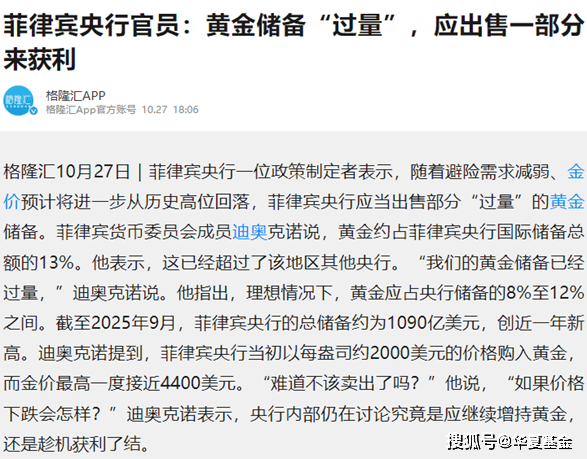
Core Viewpoint - The recent discussions around gold have intensified due to notable actions by central banks in the Philippines and Russia, leading to mixed market sentiments regarding gold's value and future prospects [2][3][19]. Group 1: Central Bank Actions - The Philippines central bank announced plans to reduce its "excess" gold reserves, aiming for gold to constitute 8%-12% of its foreign exchange reserves, which has raised concerns about gold's trustworthiness [5][7]. - Historically, the Philippines has sold gold in waves, with 30 tons sold from January to August last year, coinciding with a rise in international gold prices from $2000 to $2400 per ounce, and even surpassing $4000 this year [7][8]. - As of October, the Philippines holds approximately 4.16 million ounces of gold, with gold making up 15.4% of its total foreign exchange reserves of $109.7 billion. Even with planned reductions, the impact on global gold demand is minimal [8]. - Russia's central bank has begun selling physical gold, a significant move given its holdings of over 2300 tons, which exceeds China's reserves [9][11]. - This action is seen more as a necessity to address a growing fiscal deficit exacerbated by the Ukraine conflict and sanctions, rather than a bearish outlook on gold [14][18]. - The Russian government is using domestic transactions to sell gold, avoiding international market impacts and sanctions, while also catering to increasing domestic demand for gold [17][18]. Group 2: Gold's Value Proposition - Short-term drivers for gold prices remain linked to the Federal Reserve's interest rate policies, with expectations of continued rate cuts, which lower the holding costs for gold [20][21]. - Mid-term support for gold prices is expected from a global trend of central banks increasing their gold reserves, with 73% of surveyed central banks anticipating stable or declining dollar reserves over the next five years [22][25]. - Long-term narratives surrounding gold reflect broader geopolitical shifts and economic uncertainties, positioning gold as a measure of stability amid changing global dynamics [26][27]. Group 3: Investment Strategies - Given the recent price increases in gold, a shift from speculative trading to a more strategic asset allocation approach is recommended, with a suggested allocation of 5%-10% of total household assets in gold [29][30]. - Gold ETFs are emerging as a preferred investment vehicle for ordinary investors, offering lower costs and easier access compared to physical gold, especially after tax reforms [33][35]. - The characteristics of gold ETFs, such as low entry costs and the ability to trade like stocks, address common investment challenges faced by individuals [36][37].
第七届金麒麟煤炭行业最佳分析师第一名长江证券肖勇最新行研观点:重视白银新高的信号意义(附投资机会)
Xin Lang Zheng Quan· 2025-12-01 07:28
Core Viewpoint - The analysis highlights the positive outlook for precious metals, particularly silver and gold, driven by expectations of interest rate cuts and macroeconomic conditions, while also emphasizing the potential for industrial metals like copper and aluminum due to similar monetary policy shifts [2][3]. Precious Metals - The weakening US dollar and overall recovery in risk assets have led to a significant rise in precious metals, with silver leading the charge, breaking historical highs due to futures market dynamics [2]. - The expectation of continued economic recession in the US supports the view that interest rates will remain low, which is favorable for gold prices, with a potential breakout above previous highs anticipated [2]. - The analysis suggests a shift in stock selection strategy from current earnings to future reserves valuation for gold and silver stocks, recommending specific companies such as Zhaojin Mining and Shandong Gold [2]. Industrial Metals - Enhanced expectations for interest rate cuts have positively impacted copper and aluminum prices, with recent price increases noted (LME copper up 3.7%, aluminum up 2%) [3]. - The supply dynamics for copper and aluminum are highlighted, with copper inventories increasing while aluminum inventories are decreasing, indicating a mixed supply outlook [3]. - The analysis indicates that the copper and aluminum sectors are well-positioned for both short-term gains and long-term value appreciation, driven by macroeconomic factors and supply constraints [3]. Energy and Strategic Metals - The lithium market is expected to see a supply turning point by 2026, with increasing demand from domestic power and energy storage sectors, while supply growth is anticipated to slow down [4]. - The rare earth sector is poised for a recovery, with government policies supporting the industry and improving demand dynamics, particularly in applications like robotics [5]. - The cobalt market is projected to face shortages from 2025 to 2027, with price increases expected due to supply constraints, particularly from the Democratic Republic of Congo [5]. Summary of Recommendations - Companies to watch in the copper sector include Luoyang Molybdenum and Zijin Mining, while aluminum companies like Zhongfu Industrial and Hongqiao Group are highlighted for their growth potential [3][5]. - In the lithium space, companies such as Tianhua New Energy and Ganfeng Lithium are recommended due to their strategic positioning in the market [5].

西南期货早间评论-20251201
Xi Nan Qi Huo· 2025-12-01 05:22
1. Report Industry Investment Ratings No specific industry investment ratings are provided in the content. 2. Core Views of the Report - **Overall Market Outlook**: The current domestic economy remains stable, but the recovery momentum of the macro - economy still needs to be strengthened. The market sentiment has significantly improved, and incremental funds are continuously entering the market. Different asset classes have different trends and investment opportunities due to various factors such as supply - demand relationships, macro - policies, and international situations [6][9]. - **Asset - Specific Views**: - **Treasury Bonds**: There is still some pressure, and a cautious attitude is recommended [6][7]. - **Stock Index Futures**: The volatility center is expected to gradually move up, and investors can choose the right time to go long [9][10]. - **Precious Metals**: They are expected to continue the upward trend. Investors can wait and see for now and look for opportunities to go long [11][12]. - **Steel Products (Rebar and Hot - Rolled Coil)**: The medium - term weakness of rebar prices is difficult to change, and hot - rolled coil may follow the same trend. Investors can focus on short - selling opportunities at high levels during rebounds [13]. - **Iron Ore**: The supply - demand pattern is weak, and the futures may face resistance in rebounding. Investors can focus on short - selling opportunities at high levels [16]. - **Coking Coal and Coke**: Investors can focus on buying opportunities at low levels [18]. - **Ferroalloys**: After a decline, investors can consider long - position opportunities at low levels when the spot loss expands [21]. - **Crude Oil**: The main contract presents buying opportunities [24]. - **Fuel Oil**: The main contract presents buying opportunities [26]. - **Polyolefins**: Present buying opportunities [28]. - **Synthetic Rubber**: Expected to fluctuate [30]. - **Natural Rubber**: Investors can focus on buying opportunities [32]. - **PVC**: Pay attention to changes in the supply side [34]. - **Urea**: The downward space is limited [36]. - **PX**: May fluctuate and adjust in the short term. Control positions and be vigilant about crude oil changes [38]. - **PTA**: May fluctuate in the short term. Be cautious and pay attention to oil price changes [39]. - **Ethylene Glycol**: May be under pressure in the short term. Pay attention to port inventory and supply changes [42]. - **Short - Fiber**: May fluctuate with costs in the short term. Control risks and pay attention to cost changes and macro - policy adjustments [43]. - **Bottle Chips**: Expected to fluctuate with the cost side [44]. - **Lithium Carbonate**: Pay attention to consumption continuity and mine restart progress [46]. - **Copper**: May run strongly in the short term. Pay attention to whether it can effectively break through the oscillation range [47][48]. - **Aluminum**: In a short - term adjustment state, but has long - term resilience [50][51]. - **Zinc**: Likely to continue the range - bound pattern [52][53]. - **Lead**: May weakly fluctuate [54]. - **Tin**: May fluctuate strongly [55]. - **Nickel**: May fluctuate [56]. - **Soybean Oil and Soybean Meal**: Investors can focus on long - position opportunities in the low - cost support range [58]. - **Palm Oil**: Consider buying on pullbacks [61]. - **Rapeseed Meal and Rapeseed Oil**: A bullish approach can be considered for rapeseed oil [63]. - **Cotton**: The price is expected to be weak, and the upside space is limited [66][67]. - **Sugar**: Will fluctuate [71]. - **Apples**: Expected to run strongly [72][73]. - **Hogs**: Consider holding the remaining short positions after partial profit - taking of previous short positions [74]. - **Eggs**: Consider waiting and seeing for now [77]. - **Corn and Corn Starch**: It is advisable to wait and see and wait for the release of supply pressure after transportation recovers. Corn starch may follow the corn market [80]. 3. Summary by Related Catalogs Treasury Bonds - **Market Performance**: On the previous trading day, the closing performance of treasury bond futures was divided. The 30 - year, 10 - year, 5 - year, and 2 - year main contracts had different price changes. The central bank conducted 3013 billion yuan of 7 - day reverse repurchase operations, with a net withdrawal of 737 billion yuan on the day [5]. - **Macro - economic Situation**: In November, the manufacturing PMI increased by 0.2 percentage points, the non - manufacturing business activity index decreased by 0.6 percentage points, and the comprehensive PMI output index decreased by 0.3 percentage points. The overall economic prosperity level was stable [5]. - **Outlook**: There is still some pressure, and a cautious attitude is recommended [6][7]. Stock Index Futures - **Market Performance**: On the previous trading day, stock index futures showed mixed trends. The main contracts of different stock index futures had different price changes [8]. - **Policy News**: Many regions are researching and planning policies to support the sale of completed properties, aiming to increase the proportion of completed property sales [8]. - **Outlook**: The volatility center is expected to gradually move up, and investors can choose the right time to go long [9][10]. Precious Metals - **Market Performance**: On the previous trading day, the main contracts of gold and silver had price increases, and there were also price changes in the night session [11]. - **Supporting Factors**: The complex global trade and financial environment, the trend of "de - globalization" and "de - dollarization", central bank gold - buying behavior, and the expected continuous interest rate cuts by the Fed are all favorable for precious metals [11]. - **Outlook**: They are expected to continue the upward trend. Investors can wait and see for now and look for opportunities to go long [11][12]. Steel Products (Rebar and Hot - Rolled Coil) - **Market Performance**: On the previous trading day, rebar and hot - rolled coil futures rebounded slightly. The spot prices of different steel products are provided [13]. - **Supply - Demand Analysis**: On the demand side, the long - term downward trend of the real estate industry has not reversed, and the market will enter the off - season. On the supply side, over - capacity persists, and rebar production has decreased slightly. The inventory is higher than last year, and the inventory pressure is obvious [13]. - **Outlook**: The medium - term weakness of rebar prices is difficult to change, and hot - rolled coil may follow the same trend. Investors can focus on short - selling opportunities at high levels during rebounds [13]. Iron Ore - **Market Performance**: On the previous trading day, iron ore futures fluctuated and consolidated. The spot prices of different iron ore products are provided [15]. - **Supply - Demand Analysis**: Since October, the daily output of molten iron has declined, the import volume of iron ore has increased year - on - year, the domestic production of raw ore is lower than last year, and the port inventory has continued to rise [16]. - **Outlook**: The supply - demand pattern is weak, and the futures may face resistance in rebounding. Investors can focus on short - selling opportunities at high levels [16]. Coking Coal and Coke - **Market Performance**: On the previous trading day, coking coal and coke futures continued to decline [18]. - **Supply - Demand Analysis**: For coking coal, the impact of safety inspections on production is weakening, and supply is increasing. The downstream acceptance of high - priced goods is decreasing, and the procurement rhythm is slowing down. For coke, after the fourth price increase, the supply is stable, but the demand from steel mills may weaken due to profit compression [18]. - **Outlook**: Investors can focus on buying opportunities at low levels [18]. Ferroalloys - **Market Performance**: On the previous trading day, the main contracts of manganese - silicon and silicon - iron had different price changes. The spot prices of different ferroalloys are provided [20]. - **Supply - Demand and Cost Analysis**: The supply of manganese ore has increased, and the port inventory has decreased slightly. The cost of ferroalloys is rising. The production of rebar by sample steel mills has decreased, and the demand for ferroalloys is weak, but the overall over - supply situation is easing [20][21]. - **Outlook**: After a decline, investors can consider long - position opportunities at low levels when the spot loss expands [21]. Crude Oil - **Market Performance**: On the previous trading day, INE crude oil fluctuated upward [22]. - **News and Data**: There are news about Russia - US negotiations and the possible decision of OPEC+ to maintain oil production levels [22]. - **Outlook**: The main contract presents buying opportunities [24]. Fuel Oil - **Market Performance**: On the previous trading day, fuel oil fluctuated upward and temporarily got rid of the annual low [25]. - **Market Analysis**: The spot discount of Asian fuel oil has deepened, and the progress of the US 28 - point plan is slow, both of which are favorable for fuel oil prices [25]. - **Outlook**: The main contract presents buying opportunities [26]. Polyolefins - **Market Performance**: In the previous trading day, the PP market in Hangzhou had a slight increase in quotes, while the LLDPE price in the Yuyao market decreased in some parts [27]. - **Demand Analysis**: The average operating rate of the domestic polypropylene downstream industry has increased, but different sub - industries have different trends. The demand for some products is affected by seasons and market conditions [27]. - **Outlook**: Present buying opportunities [28]. Synthetic Rubber - **Market Performance**: On the previous trading day, the main contract of synthetic rubber rose [29]. - **Supply - Demand Analysis**: The supply of raw materials is abundant, the supply of synthetic rubber is relatively loose, and the demand from tire enterprises is weak [29]. - **Outlook**: Expected to fluctuate [30]. Natural Rubber - **Market Performance**: On the previous trading day, the main contracts of natural rubber and 20 - grade rubber rose [31]. - **Supply - Demand and Inventory Analysis**: The supply is supported by weather and high overseas raw material prices. The demand is affected by enterprise maintenance, and the inventory is slightly increasing [31]. - **Outlook**: Investors can focus on buying opportunities [32]. PVC - **Market Performance**: On the previous trading day, the main contract of PVC rose, and the spot price increased [33]. - **Supply - Demand and Cost Analysis**: The supply is increasing, the demand from different downstream industries is different, and the cost - profit situation is complex. The social inventory is increasing [33][34]. - **Outlook**: Pay attention to changes in the supply side [34]. Urea - **Market Performance**: On the previous trading day, the main contract of urea rose [35]. - **Supply - Demand and Cost Analysis**: The supply has increased, the demand from different downstream products has changed differently, and the cost and profit situation is complex. The inventory is at a certain level [35]. - **Outlook**: The downward space is limited [36]. PX - **Market Performance**: On the previous trading day, the main contract of PX rose [37]. - **Supply - Demand and Cost Analysis**: The PX load has increased, the import volume has decreased, and the cost is affected by crude oil fluctuations. The PXN spread is relatively strong, and the supply is slightly reduced [37][38]. - **Outlook**: May fluctuate and adjust in the short term. Control positions and be vigilant about crude oil changes [38]. PTA - **Market Performance**: On the previous trading day, the main contract of PTA rose [39]. - **Supply - Demand and Cost Analysis**: The supply is decreasing, the demand from the polyester industry is relatively stable, and the processing fee is declining. The cost is affected by crude oil and raw material PX prices [39]. - **Outlook**: May fluctuate in the short term. Be cautious and pay attention to oil price changes [39]. Ethylene Glycol - **Market Performance**: On the previous trading day, the main contract of ethylene glycol declined [40]. - **Supply - Demand and Inventory Analysis**: The supply is slightly decreasing, the inventory accumulation has slowed down, and the demand from the downstream polyester industry is limited [40][41]. - **Outlook**: May be under pressure in the short term. Pay attention to port inventory and supply changes [42]. Short - Fiber - **Market Performance**: On the previous trading day, the main contract of short - fiber rose [43]. - **Supply - Demand and Cost Analysis**: The supply is at a relatively high level, the demand from the downstream industry is stable, and the cost drive is increasing [43]. - **Outlook**: May fluctuate with costs in the short term. Control risks and pay attention to cost changes and macro - policy adjustments [43]. Bottle Chips - **Market Performance**: On the previous trading day, the main contract of bottle chips rose [44]. - **Supply - Demand and Cost Analysis**: The supply is at a certain level, the demand from the downstream soft - drink industry is in the off - season, and the export is increasing. The cost is affected by raw material prices [44]. - **Outlook**: Expected to fluctuate with the cost side [44]. Lithium Carbonate - **Market Performance**: On the previous trading day, the main contract of lithium carbonate declined [45]. - **Supply - Demand and Inventory Analysis**: The supply is at a high level, the demand from the energy - storage and power - battery sectors is improving, and the social inventory is decreasing [45][46]. - **Outlook**: Pay attention to consumption continuity and mine restart progress [46]. Copper - **Market Performance**: On the previous trading day, the main contract of Shanghai copper rose [47]. - **Macro - and Fundamental Analysis**: The possible early resignation of the Fed chairman increases the probability of interest rate cuts. The supply of copper ore is growing slowly, and the demand is affected by high prices and substitution effects. The social inventory has decreased [47]. - **Outlook**: May run strongly in the short term. Pay attention to whether it can effectively break through the oscillation range [47][48]. Aluminum - **Market Performance**: On the previous trading day, the main contract of Shanghai aluminum rose, and the main contract of alumina declined [49]. - **Supply - Demand and Inventory Analysis**: The supply of domestic ore is tight, but the import of ore is increasing. The supply of alumina is in surplus, and the supply of electrolytic aluminum is stable. The demand is in the off - season, and the inventory is at a low level but may increase [49][50]. - **Outlook**: In a short - term adjustment state, but has long - term resilience [50][51]. Zinc - **Market Performance**: On the previous trading day, the main contract of Shanghai zinc rose [52]. - **Supply - Demand and Inventory Analysis**: The supply of zinc concentrate is tight, the export window has opened, the demand is in the off - season but has some rigid support, and the social inventory is expected to decrease slightly [52]. - **Outlook**: Likely to continue the range - bound pattern [52][53]. Lead - **Market Performance**: On the previous trading day, the main contract of Shanghai lead rose [54]. - **Supply - Demand and Inventory Analysis**: The supply of lead concentrate is slightly easing, the demand from the battery market is in the off - season, and the social inventory may stop decreasing [54]. - **Outlook**: May weakly fluctuate [54]. Tin - **Market Performance**: On the previous trading day, the main contract of tin rose [55]. - **Supply - Demand and Inventory Analysis**: The supply of tin ore is tight, the demand has some structural support, and the refined tin inventory is decreasing [55]. - **Outlook**: May fluctuate strongly [55]. Nickel - **Market Performance**: On the previous trading day, the main contract of nickel declined [56]. - **Macro - and Fundamental Analysis**: The market's expectation of Fed interest rate cuts is increasing. The price of nickel ore is stable, the production of nickel - iron is affected, the demand from the stainless - steel industry is weak, and the inventory is at a relatively high level [56]. - **Outlook**: May fluctuate [56]. Soybean Oil and Soybean Meal - **Market Performance**: On the previous trading day, the main contracts of soybean oil and soybean meal rose. The spot prices of different products are provided [57]. - **Supply - Demand and Inventory Analysis**: The planting progress of Brazilian soybeans is slightly slower, the US soybean harvest is almost complete, the demand is expected to improve, the soybean crushing volume is high, and the inventory of soybean oil and soybean meal is increasing [57][58]. - **Outlook**: Investors can focus on long - position opportunities in the low - cost support range [58]. Palm Oil - **Market Performance**: The market has some price changes, and the export volume of Malaysia and the import volume of China are provided [59]. - **Supply - Demand and Inventory Analysis**: The export of Malaysian palm oil is decreasing, the production may decline seasonally, and the domestic inventory is at a medium level [59]. - **Outlook**: Consider buying on pullbacks [61]. Rapeseed Meal and Rapeseed Oil - **Market Performance**: The Canadian rapeseed
黄奇帆:某些国家逆全球化不会成功
Sou Hu Cai Jing· 2025-12-01 02:36
来源:金羊网 围绕"新质生产力推进共商共建共享全球合作新秩序"这一主题,黄奇帆指出,新质生产力催生产业变革,打造了全球共商的基础、共建的载体。新质生产力 的成果普惠全球,是全球实现共享的目标。 "世界的方向是减关税,所以某些国家特定的加关税、逆全球化不会成功。"黄奇帆指出,未来的发展前景,一方面是坚持真正的多边主义;另一方面,全球 各个国家要深化高水平开放,真正形成聚焦全球治理的南方格局,即发展中国家一起互利共赢的发展格局,"大国要支持发展中国家发展,在这方面,我国 提出的共商共建共享理念是这么想,也是这么做的。" 黄奇帆指出,中国坚守低关税举措,也在努力推进国家之间合作贸易零关税、零壁垒、零补贴。在全球治理中,我国最为积极地倡导共商共建共享之路。 编辑:郑健龙 羊城晚报全媒体记者柳卓楠、林清石摄影报道:11月30日,在2025年"读懂中国"国际会议专题论坛"中外企业家圆桌对话会"上,中国国家创新与发展战略研 究会学术委员会常务副主席、重庆市原市长黄奇帆发表主旨演讲。 ...

美联储降息路径及黄金行情展望
2025-11-28 01:42
Summary of Key Points from Conference Call Records Industry Overview - The records primarily discuss the **gold market** and the **monetary policy** of the **Federal Reserve** in the context of the U.S. economy and global financial conditions [1][21]. Core Insights and Arguments 1. **Federal Reserve's Interest Rate Expectations**: - The market's expectation for a rate cut by the Federal Reserve fluctuated significantly, dropping from a 100% expectation in early October to 29.6% by November 19, before rising again to 80% [5]. - There is notable internal disagreement within the Federal Reserve regarding the timing of rate cuts, with 5 out of 12 voting members supporting a pause, 4 favoring a cut, and 3 being neutral [5]. 2. **Impact of Employment Data**: - Mixed signals from U.S. employment data have created market uncertainty, with private sector data indicating deterioration and a rise in unemployment rates [6]. - The expectation for poor employment data in Q4 adds to market unpredictability [6]. 3. **Long-term Monetary Policy Outlook**: - The market anticipates that by the end of 2026, the Federal Reserve will lower interest rates to between 2.75% and 3%, indicating a sustained likelihood of loose monetary policy [8]. 4. **U.S. Fiscal Situation**: - The U.S. fiscal deficit is projected to be historically high, with expenditures exceeding revenues by 1.34 times, leading to increased pressure for rate cuts to alleviate fiscal burdens [13][14]. - The total U.S. national debt exceeds $38 trillion, constituting 125% of GDP, which raises concerns about fiscal sustainability and supports gold prices [13][14]. 5. **Global Central Bank Policies**: - Central banks worldwide are expected to maintain accommodative monetary policies to address high debt levels, which may enhance the appeal of gold as a safe-haven asset [21]. 6. **Gold Demand Dynamics**: - Gold demand remains robust, with total demand increasing by 44% year-over-year, driven primarily by investment demand from central banks and private investors [22]. - Tether, a major stablecoin issuer, has significantly increased its physical gold holdings, further supporting gold demand [24]. 7. **Geopolitical and Economic Risks**: - The potential for a U.S. government shutdown poses risks to market liquidity and could increase demand for safe-haven assets like gold [15]. - The upcoming 2026 midterm elections may influence U.S. domestic policies and external trade relations, impacting market conditions [18]. Other Important but Potentially Overlooked Content 1. **Inflation Data Uncertainty**: - The reliability of inflation data is compromised due to government shutdowns, complicating the assessment of the Federal Reserve's rate adjustment decisions [7]. 2. **Shadow Chairperson Influence**: - The concept of a "shadow chairperson" could impact market expectations and monetary policy direction, especially if the current chair's term ends before 2026 [12]. 3. **Central Bank Gold Purchases**: - Despite some countries reducing gold holdings, the overall trend among central banks remains one of increasing gold reserves, with 95% of surveyed banks indicating plans to continue purchasing gold [25][26]. 4. **China's Gold Accumulation Strategy**: - China has consistently increased its gold reserves over the past year, reflecting a strategic commitment to gold accumulation despite rising prices [27]. 5. **Silver Market Volatility**: - The silver market exhibits significant volatility, influenced by macroeconomic conditions, with historical patterns suggesting potential price adjustments following substantial increases [30]. This comprehensive summary encapsulates the key points from the conference call records, highlighting the dynamics of the gold market and the implications of U.S. monetary policy.
西南期货早间评论-20251128
Xi Nan Qi Huo· 2025-11-28 01:35
1. Report Industry Investment Ratings No relevant content provided. 2. Core Views of the Report - The macro - economic recovery momentum needs strengthening, and it is expected that the monetary policy will remain loose. Treasury bond futures are under pressure and should be treated with caution [6]. - The domestic economy is stable, but the recovery momentum is weak. However, due to low asset valuations, economic resilience, and improved market sentiment, the volatility center of stock index futures is expected to gradually rise, and investors can choose the right time to go long [9]. - Given the complex global trade and financial environment, the trend of "de - globalization" and "de - dollarization", and the slowdown of the US labor market, precious metals are favored. But considering the large recent increase, it is advisable to wait and see for long - entry opportunities [11]. - For steel products like rebar and hot - rolled coil, due to weak demand in the real estate industry and high inventory, their prices are expected to remain weak in the medium - term. Investors can focus on short - selling opportunities at high levels [13]. - The supply - demand pattern of iron ore is weak, and its futures may face resistance in rebound. Investors can look for short - selling opportunities at high levels [15]. - Coke and coking coal futures may stop falling and stabilize. Investors can pay attention to long - entry opportunities at low levels [18]. - The overall surplus pressure of ferroalloys is weakening. After a decline, investors can consider long - entry opportunities when the spot loss expands [21]. - For crude oil, although the number of rigs has increased, the increase in US crude oil production is still a long - term task. The 28 - point new plan brings new changes to the Russia - Ukraine conflict. Investors can focus on long - entry opportunities for the main contract [23]. - For fuel oil, although there are some negative factors, investors can still focus on long - entry opportunities for the main contract [27]. - For polyolefins, considering the current situation of the downstream industry, investors can focus on short - selling opportunities [29]. - Synthetic rubber is expected to fluctuate. Pay attention to the raw material market and supply changes [32]. - Natural rubber may show range - bound fluctuations in the short - term. Investors can focus on long - entry opportunities [33]. - For PVC, the oversupply situation continues, but the downward space is limited. Pay attention to the supply - side changes [35]. - Urea prices are expected to decline slightly in the next period, but the downward space is limited [38]. - PX may fluctuate and adjust in the short - term. Pay attention to controlling positions, be vigilant about crude oil changes, and follow macro - policy changes [40]. - PTA may fluctuate in the short - term. Be cautious, control risks, and pay attention to oil price changes [41]. - Ethylene glycol may be under pressure in the short - term. Focus on port inventory and supply changes [42]. - Short - fiber may fluctuate with costs in the short - term. Control risks and pay attention to cost changes and macro - policy adjustments [44]. - Bottle chips are expected to fluctuate with the cost side. Control risks [45]. - For lithium carbonate, pay attention to consumption sustainability and the resumption progress of mines [46]. - Copper prices are expected to fluctuate at high levels [48]. - Aluminum prices may experience a phased correction [50]. - Zinc prices are expected to fluctuate within a range [52]. - Lead prices may show wide - range fluctuations [54]. - Tin prices are expected to rise due to tight supply and certain demand resilience [55]. - Nickel prices may fluctuate. The cost of nickel ore has support, but the consumption is weak [56]. - For soybean oil and soybean meal, investors can focus on long - entry opportunities in the low - cost support range [58]. - Palm oil may be considered for long - entry on pullbacks [60]. - For rapeseed meal and rapeseed oil, a long - biased strategy can be considered for rapeseed oil [63]. - Cotton prices are expected to be weak [67]. - Sugar prices are under pressure and may fluctuate [71]. - Apple prices are expected to be strong [73]. - For live pigs, after partially closing out short positions, the remaining short positions can be temporarily held. Pay attention to the marginal changes in consumption caused by subsequent cooling [76]. - For eggs, it is advisable to wait and see for the time being [78]. - For corn and starch, it is advisable to wait and see. Corn starch may follow the corn market [81]. 3. Summaries by Relevant Catalogs 3.1 Treasury Bonds - On the previous trading day, most treasury bond futures closed down. The central bank conducted 3564 billion yuan of 7 - day reverse repurchase operations, with a net investment of 564 billion yuan. The profit of industrial enterprises in October decreased year - on - year, while the cumulative profit from January to October increased year - on - year [5]. - The macro - economic recovery momentum needs strengthening, and the monetary policy is expected to remain loose. Treasury bond yields are at a relatively low level, and the market risk preference has increased. Treasury bond futures are under pressure [6]. 3.2 Stock Index Futures - On the previous trading day, stock index futures showed mixed performance. The National Development and Reform Commission arranged special treasury bonds for "two - major" construction projects in the past two years [8]. - The domestic economy is stable, but the recovery momentum is weak, and corporate profit growth is low. However, domestic asset valuations are low, and the economy has resilience. The market sentiment has improved, and the volatility center of stock index futures is expected to rise [9]. 3.3 Precious Metals - On the previous trading day, gold and silver futures both rose. The eurozone's economic and service industry sentiment indexes improved in November [11]. - The complex global environment and the slowdown of the US labor market are favorable for precious metals. But due to the large recent increase, it is better to wait and see [11]. 3.4 Rebar and Hot - Rolled Coil - On the previous trading day, rebar and hot - rolled coil futures fluctuated weakly. The spot prices of related products are given. In the medium - term, the demand for rebar is weak, and the supply is high, with high inventory. The price of hot - rolled coil is expected to follow a similar trend [13]. 3.5 Iron Ore - On the previous trading day, iron ore futures fluctuated. The spot prices of different types of iron ore are provided. Since October, the daily output of hot metal has declined, the import volume has increased year - on - year, and the port inventory has risen [15]. 3.6 Coke and Coking Coal - On the previous trading day, coke and coking coal futures fluctuated. The supply of coking coal is increasing, and the demand from downstream coke enterprises is weakening. The supply of coke is stable, but the demand from steel mills may decline [18]. 3.7 Ferroalloys - On the previous trading day, manganese - silicon and silicon - iron futures both fell. The supply of manganese ore has increased, and the cost of ferroalloys is rising. The output of ferroalloys is declining, and the overall surplus is easing [20]. 3.8 Crude Oil - On the previous trading day, INE crude oil opened and closed higher. The CFTC data shows that speculators reduced their net short positions in US crude oil futures and options. The number of US oil and gas rigs has increased for three consecutive weeks. The 28 - point new plan brings new changes to the Russia - Ukraine conflict [22]. 3.9 Fuel Oil - On the previous trading day, fuel oil fluctuated upward. The delivery time of ultra - low - sulfur fuel oil in Singapore is inconsistent. The inventory in Singapore has increased in November. There are some negative factors for fuel oil prices, but investors can still focus on long - entry opportunities [25]. 3.10 Polyolefins - On the previous trading day, the offer price of PP in Hangzhou moved down, and the price of LLDPE in Yuyao partially decreased. The average operating rate of the domestic polypropylene downstream industry has increased slightly, but the order performance in some traditional fields is weak [28]. 3.11 Synthetic Rubber - On the previous trading day, synthetic rubber futures rose. The price of butadiene is under pressure, the supply is relatively loose, and the demand from tire enterprises is weak. The social inventory has increased slightly [30]. 3.12 Natural Rubber - On the previous trading day, natural rubber futures rose. The supply is affected by weather, and the demand from some enterprises is weak. The inventory has increased slightly [33]. 3.13 PVC - On the previous trading day, PVC futures rose. The supply is increasing, the demand of downstream industries varies, and the cost and profit situation is complex. The social inventory has increased [35]. 3.14 Urea - On the previous trading day, urea futures rose. The supply has increased, the demand of downstream products varies, and the industry profit has increased slightly. The inventory is lower than expected [38]. 3.15 PX - On the previous trading day, PX futures fell. The PXN spread is relatively strong, the supply is slightly reduced, and the cost is affected by crude oil. It may fluctuate and adjust in the short - term [40]. 3.16 PTA - On the previous trading day, PTA futures fell. The supply has decreased, the demand of polyester is stable, and the processing fee has declined. It may fluctuate in the short - term [41]. 3.17 Ethylene Glycol - On the previous trading day, ethylene glycol futures fell. The supply has decreased slightly, the inventory accumulation has slowed down, and the demand support is limited. It may be under pressure in the short - term [42]. 3.18 Short - Fiber - On the previous trading day, short - fiber futures fell. The supply is at a relatively high level, the demand is stable, and the processing fee is adjusted. It may fluctuate with costs in the short - term [44]. 3.19 Bottle Chips - On the previous trading day, bottle - chip futures fell. The processing fee is adjusted, the supply load has decreased, the export has increased slightly, and it may follow the cost side to fluctuate [45]. 3.20 Lithium Carbonate - On the previous trading day, lithium carbonate futures fell. The supply is at a high level, the consumption in the energy - storage and power - battery sectors has improved, and the inventory has decreased [46]. 3.21 Copper - On the previous trading day, copper futures fell slightly. The economic data strengthens the market's expectation of an interest - rate cut in December, which is beneficial to copper prices. But the supply of copper concentrate is tight, and the demand is weak [47]. 3.22 Aluminum - On the previous trading day, aluminum futures fell, while alumina futures rose. The supply of bauxite is sufficient, the supply of alumina is in surplus, and the demand for electrolytic aluminum is seasonally weak. Aluminum prices may experience a phased correction [49]. 3.23 Zinc - On the previous trading day, zinc futures rose. The processing fee of zinc concentrate has declined, the demand is weak in the off - season, and the raw - material shortage provides support for zinc prices [51]. 3.24 Lead - On the previous trading day, lead futures rose. The supply of lead concentrate is tight, the production of recycled lead is growing slowly, and the demand varies in different sectors. The inventory has increased [53]. 3.25 Tin - On the previous trading day, tin futures fell. The supply of tin ore is tight, the demand shows certain resilience, and the inventory is decreasing. Tin prices are expected to rise [55]. 3.26 Nickel - On the previous trading day, nickel futures rose. The price of nickel ore is stable, the production of downstream nickel - iron plants is affected, and the consumption of stainless steel is weak. Nickel prices may fluctuate [56]. 3.27 Soybean Oil and Soybean Meal - On the previous trading day, soybean oil and soybean meal futures rose. The planting progress of Brazilian soybeans is slightly slower, the US soybean harvest is almost completed, and the demand is expected to improve. The inventory of oil and meal is high, but the demand is growing [57]. 3.28 Palm Oil - Malaysian palm oil rose for the second consecutive day due to production concerns. The export of Indonesian palm oil decreased in September, and the export of Malaysian palm oil from November 1 - 25 decreased compared with the previous month. The domestic inventory is at a medium level [59]. 3.29 Rapeseed Meal and Rapeseed Oil - The Canadian rapeseed market was closed for Thanksgiving. The import of rapeseed oil and rapeseed meal in China in October showed different trends. The inventory of rapeseed, rapeseed meal, and rapeseed oil is at different levels [61]. 3.30 Cotton - On the previous trading day, domestic cotton futures rebounded. The USDA report increased the global and US cotton production and inventory forecasts. The domestic cotton production is high, and the demand is weak after the peak season [64]. 3.31 Sugar - On the previous trading day, sugar futures rebounded slightly. The number of sugar mills in Guangxi that have started crushing is less than last year, while the national new - sugar production has increased. The export of Brazilian sugar has increased, and the domestic import is expected to be high in the next two months [68]. 3.32 Apples - On the previous trading day, apple futures rose significantly due to favorable inventory data. The current inventory is at a low level in recent years, and the new - season apple production and quality have declined [72]. 3.33 Live Pigs - The national average price of live pigs decreased slightly. The supply pressure still exists, and the consumption change caused by subsequent cooling needs to be continuously monitored. Part of the short positions can be closed, and the remaining can be held temporarily [74]. 3.34 Eggs - On the previous trading day, the price of eggs in the main production areas rose, while that in the main sales areas remained unchanged. The egg - laying hen inventory is at a high level, and the supply has recovered. The consumption may be supported by cooling, and it is advisable to wait and see [77]. 3.35 Corn and Starch - On the previous trading day, corn futures closed flat, and corn - starch futures rose. The transportation of corn in the Northeast is affected, and the arrival volume at the northern port is low. The demand for corn is growing slightly, and corn - starch may follow the corn market [79].