
产能过剩

Search documents
巨头撤离!三菱化学宣布,全面退出焦炭及碳素业务!
Xin Lang Cai Jing· 2026-02-05 12:18
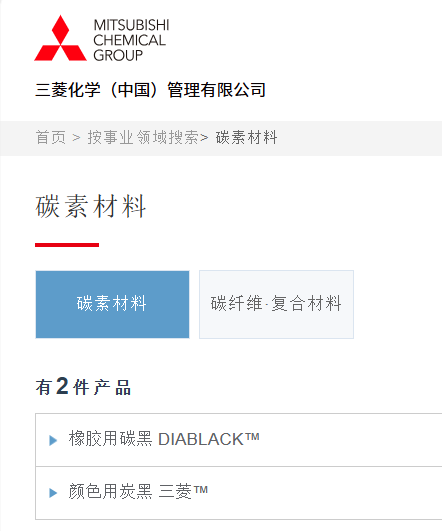
(来源:炭黑产业网) 2月2日,日本三菱化学集团(Mitsubishi Chemical Group, MCG)宣布一项重磅决定,全面退出焦炭及碳素材料(包 括针状焦、沥青焦等)业务。 伴随此次业务退出,预计将产生总计约850亿日元(约40亿元人民币)的一次性损失。 根据三菱化学中国官网介绍,其碳素材料包括橡胶炭黑DIABLACK™与色素炭黑三菱™。 (截自 三菱化学中国官网) 三菱化学表示,受中国产能过剩及印尼大型新产线投产的影响,全球供应过剩导致海外焦炭市场的低迷态势仍 在持续。尽管公司已采取多项举措改善盈利并提升焦炭品质,但目前仍看不到解决这些结构性问题的前景。 三菱化学判断,该业务的中长期增长目标将难以实现,因此决定停止焦炭生产。 供应过剩与需求疲软的局面也持续困扰着碳素材料板块。由于碳素材料的生产体系依赖焦炉的运转,停止焦炭 生产将直接影响碳素材料的成本结构。 截至 2026 年 2 月 2 日,该业务涉及员工人数约 600 人。 | Company name: | Mitsubishi Chemical Group Corporation | | --- | --- | | Representat ...

中国经济最大的风险是什么?诺贝尔经济学得主的答案,你认同吗
Sou Hu Cai Jing· 2026-02-04 13:12
也因此,我们对于经济危机的理解,常常是"以史换骨"的错位。 这话听着刺耳,但我们得承认,这是事实。 阅读须知:本文内容所有信息和数据,均为作者查阅官方信息和网络已知数据整合解析,旨 在让读者更清晰了解相应信息,如有数据错误或观点有误,请文明评论,作者积极改正! (创作不易,一篇文章需要作者查阅多方资料,整合分析、总结,望大家理解。) 说实话,当我第一次听到"中国经济最大风险,是从没经历过经济衰退萧条和危机"这句话时,我脑子里 第一反应也是:这位诺奖得主是不是太不懂中国了? 可冷静想想,经历过无数朝代更迭、文革动荡、外敌入侵、自然灾害的我们,的确从未经历过真正意义 上的西式经济危机,你没看错,这恰恰才是问题的核心。 我们有"灾荒""动乱""财政赤字",但我们从来没有经历过以市场逻辑运行中的自我崩塌:比如债务链断 裂、市场大规模抛售、产能泡沫破裂、全行业裁员等西方式标准流程。 历史周期毁的不是经济,而是政治秩序。 回望中国五千年历史,每一次改朝换代,老百姓真正的痛苦源不是"GDP下滑",而是没有饭吃。底层民 众在"生产资料"被剥夺之后流离失所,造反揭竿的导火索往往就是"活不下去了"。 归结起来,全都是那四个字:土 ...
化工行业2025年信用回顾与2026年展望
新世纪资信评估· 2026-02-03 02:35
Investment Rating - The chemical industry is rated as "Weak" and stable for 2025, with expectations of continued low economic prosperity and pressure on profitability [1]. Core Insights - The chemical industry is expected to remain in a low prosperity phase in 2025, with most raw material and product prices at historical lows. The decline in oil, coal, and gas prices has eased raw material cost pressures for chemical companies, but has weakened support for product prices [1][7]. - The overall profitability of the chemical industry is under pressure, with different segments experiencing varying levels of impact. The supply side shows a slowdown in fixed asset investment, while certain petrochemical raw materials like ethylene and propylene are expected to see significant new capacity released [1][4]. - Demand from downstream sectors is expected to remain weak, with notable differences across industries. Real estate demand continues to be sluggish, while automotive production is growing rapidly, and the demand for chemical raw materials in the new energy and new materials sectors remains high [1][27][32]. Summary by Sections Industry Overview - The chemical industry is categorized into basic chemicals and fine chemicals, with basic chemicals including acids, alkalis, and plastics, while fine chemicals encompass pesticides, fuels, and specialty chemicals [6]. Supply and Demand Dynamics - The supply of basic chemical raw materials is expected to grow moderately, while demand is anticipated to improve slightly. However, issues of overcapacity and homogenized competition are expected to persist in the short term [4][18]. - Fixed asset investment in the chemical industry has shown a general slowdown, with significant growth in the petrochemical and chemical fiber sectors, while investment in chemical raw materials and products has decreased [20][21]. Financial Performance - In the first three quarters of 2025, the overall operating income of sample companies in the chemical sector showed a slight decline, with profitability remaining at historical lows. However, cash flow from operations has improved [2][3]. - The credit quality of the chemical industry has weakened, with a concentration of credit ratings in the AAA and AA+ categories. The financing environment is stable, with a focus on leading companies [3][4]. Price Trends - The CCPI index for chemical products has shown a downward trend, with an average decline of 12.69% compared to 2023. Prices for many chemical products have reached historical lows due to weak demand and oversupply [9][17]. Sector-Specific Insights - In the agricultural chemicals sector, prices for key products like urea and glyphosate have fluctuated, influenced by global price trends and domestic demand [31]. - The new energy sector continues to drive demand for chemical raw materials, with significant growth in lithium battery production and renewable energy installations [32]. Future Outlook - The chemical industry is expected to face challenges in 2026, including continued overcapacity and competition issues. However, the fine chemicals sector is projected to develop towards high-end, green, and intelligent growth [4][5].
RU、NR、BR月报-20260130
Yin He Qi Huo· 2026-01-30 08:19
| 第一部分 | 前言概要 4 | | --- | --- | | 第二部分 | 总览与说明 5 | | 第三部分 | 宏观供应 6 | | | 一、 全球数据 6 | | ➢ | 气候 6 | | ➢ | 商品估值 11 | | 第四部分 | 微观供应 14 | | | 二、 全球数据 14 | | ➢ | 绝对价格 14 | | | 三、 海外数据 15 | | ➢ | ANRPC 胶盟天然橡胶产业 15 | | ➢ | 泰国天然橡胶产业 17 | | ➢ | 越南天然橡胶产业 27 | | | 四、 国内数据 29 | | ➢ | 中国橡胶进口及产量 29 | | ➢ | 天然橡胶的供应 34 | | ➢ | 中国橡胶表观消费量 35 | | ➢ | 国内胶水产品 36 | | ➢ | 丁二烯及顺丁橡胶的供应 38 | | ➢ | 台湾橡塑业 43 | | 第五部分 | 贸易流通 45 | | | 五、 全球数据 45 | | ➢ | 东南亚六大主产国平衡表 45 | | | 六、 海外数据 46 | | ➢ | 国际贸易 46 | | ➢ | 日本橡胶库存 47 | | ➢ | 马来西亚天然橡胶零售库 ...
信宇人:预计2025年归母净利润亏损4亿元-4.8亿元
Xin Lang Cai Jing· 2026-01-30 07:57
Core Viewpoint - The company expects a significant increase in losses for the fiscal year 2025, projecting a net profit attributable to the parent company owner between -480 million to -400 million yuan, indicating a worsening situation compared to the previous year [1] Financial Performance - The anticipated net profit excluding non-recurring gains and losses is projected to be between -490 million to -410 million yuan for 2025 [1] - The company's comprehensive gross profit and gross margin are expected to decline due to adverse market conditions [1] Market Conditions - The lithium battery industry is experiencing overcapacity, leading to intensified market competition [1] - Continuous low product prices are impacting the company's financial performance [1] Product and Customer Structure - There will be changes in the company's product and customer structure for the fiscal year 2025 [1]

鸣鸣很忙(01768):多维领先,强者恒强,两万店龙头乘势而上
CMS· 2026-01-28 08:15
证券研究报告 | 公司深度报告 2026 年 01 月 28 日 鸣鸣很忙(01768.HK) 多维领先,强者恒强,两万店龙头乘势而上 消费/商业 量贩零食渠道效率大幅领先,预计行业规模持续增长;同时公司作为行业龙头, 团队优质,供应链、仓配、拓展、品牌等多维领先,规模效应下预计强者恒强, 份额进一步提升,利润逐步释放。首次覆盖给予"强烈推荐"评级。 ❑ 风险提示:拓店速度、同店增长不及预期,行业竞争加剧,食品安全风险等。 财务数据与估值 | 会计年度 | 2023 | 2024 | 2025E | 2026E | 2027E | | --- | --- | --- | --- | --- | --- | | 主营收入(百万元) | 10295 | 39344 | 64943 | 85987 | 99689 | | 同比增长 | 140% | 282% | 65% | 32% | 16% | | 营业利润(百万元) | 329 | 1132 | 3142 | 4557 | 5782 | | 同比增长 | 229% | 244% | 178% | 45% | 27% | | 经调整净利润(百万元) | 235 ...
1个月内3家光伏企业被“追债”上亿元
Di Yi Cai Jing Zi Xun· 2026-01-27 15:57
Core Viewpoint - The photovoltaic industry is transitioning from assembly to a focus on technology, cost, and cash flow, leading to challenges in fulfilling expansion project commitments, as evidenced by recent financial disputes involving companies like *ST Muban and Yijing Photovoltaics [2][3]. Group 1: Company-Specific Issues - *ST Muban was ordered to return a total of 5.1 billion yuan in project financial subsidies and construction support funds to the Wuzhou government due to delays in project construction [2]. - Yijing Photovoltaics faced a similar situation where its project in Chuzhou was delayed, leading to a potential termination of investment agreements and a demand to return 140 million yuan [3]. - Bangjie Co. is undergoing pre-restructuring due to failure to complete a buyback agreement, resulting in a claim for 326 million yuan from a state-owned enterprise [3]. Group 2: Industry Trends - The photovoltaic industry experienced explosive growth in 2022, with total output value exceeding 1.4 trillion yuan, a year-on-year increase of over 95%, and production across various segments rising by more than 55% [3]. - Local governments have heavily supported the photovoltaic sector through financial subsidies, tax incentives, and land guarantees, which have played a crucial role in the industry's rapid scale-up [5]. - However, the rapid expansion has led to issues of overcapacity and risks associated with companies lacking relevant industry experience, as seen with *ST Muban and Bangjie Co. [6]. Group 3: Recommendations for Future Development - Experts suggest that local governments should shift from broad subsidies to innovation incentives, focusing resources on advanced technologies and mature smart manufacturing [7]. - There is a call for a transition from administrative intervention to market guidance, emphasizing the need for a fair competitive environment and the establishment of a standard system [7]. - The central government plans to address issues related to improper incentives in local investment attraction, aiming to create a unified national market and mitigate "involution" competition by clarifying regulations [7].



长江有色:高库存及交易所风控政策压制多头获利了结 27日镍价或下跌
Xin Lang Cai Jing· 2026-01-27 03:20
Core Viewpoint - The nickel market is experiencing a downturn due to profit-taking and adjustments in trading rules, with both LME and SHFE nickel prices declining amid cautious market sentiment as the Chinese New Year approaches [1][2][4]. Group 1: Market Performance - LME nickel closed at $18,590, down $120/ton or 0.64%, with a trading volume of 12,783 contracts [1]. - SHFE nickel main contract 2602 closed at 147,000 CNY/ton, down 1,890 CNY/ton or 1.27% [1]. - SHFE nickel opened lower and continued to decline, reflecting weak market sentiment and profit-taking behavior [2]. Group 2: Supply and Demand Dynamics - The long-term narrative of the nickel market has shifted from "overcapacity" to "resource constraints," with significant production quota reductions from key resource countries expected to create a notable supply gap [3]. - Current market conditions show a mismatch between long-term supply constraints and short-term demand, with stainless steel maintaining steady demand while the battery sector experiences a temporary slowdown in procurement [3]. Group 3: Future Outlook - Short-term nickel prices are expected to continue fluctuating within a range due to various macroeconomic factors and inventory changes, with market activity likely to decrease as the Chinese New Year approaches [4]. - Post-holiday, demand from downstream industries is anticipated to recover, potentially leading to a tightening supply chain and upward price movement, driven by the long-term supply gap logic [4].

华海药业:预计2025年度净利润同比降低约70%到80%
Ge Long Hui· 2026-01-26 10:02
Core Viewpoint - Huahai Pharmaceutical (600521.SH) expects a significant decline in net profit for the fiscal year 2025, projecting a range of 224 million to 335 million yuan, representing a year-on-year decrease of approximately 70% to 80% [1]. Financial Performance - The company's net profit attributable to shareholders is expected to drop sharply, with a forecasted range of 113 million to 226 million yuan for net profit excluding non-recurring gains and losses, indicating a year-on-year decline of about 80% to 90% [1]. - The report highlights a substantial decrease in both net profit and net profit excluding non-recurring gains and losses compared to the same period last year [1]. Business Challenges - Domestic formulation business is facing pressure due to the expansion and deepening of domestic centralized procurement policies, leading to continuous price pressure and intensified competition. Additionally, the sales revenue from existing products is declining, while new products are taking time to ramp up, negatively impacting profits [1]. - The raw material pharmaceutical industry is experiencing fierce competition characterized by overcapacity and price pressure. New product development is hindered by long development cycles and significant impacts from changing internal and external business environments, resulting in decreased sales revenue and profits [1]. - The company is accelerating the progress of its biopharmaceutical innovation projects, leading to a substantial year-on-year increase in R&D expenditures [1]. Non-Operating Gains - Non-operating gains have increased by approximately 100 million to 130 million yuan year-on-year, primarily due to increased fair value changes of financial assets measured at fair value and gains from the sale of certain equity interests [1].

风范股份(601700.SH):决定对岳阳晶樱进行减资
Ge Long Hui A P P· 2026-01-26 09:52
目前,岳阳晶樱注册资本人民币5000万元,其中公司实缴人民币837万元,认缴人民币4163万元。本次 减资认缴出资额4000万元后,岳阳晶樱的注册资本由5000万元减少到1000万元,其中公司实缴837万 元,认缴163万元。减资后,扬州晶樱仍持有岳阳晶樱100%股权,公司合并报表范围未发生变化。 本次对岳阳晶樱的减资,是公司综合考虑到股东回收投资本金以及实现企业高质量发展目标,提高资金 效益的工作要求而做出的决定。本次减资完成后,岳阳晶樱仍为公司的控股子公司,公司持有相关公司 的股权比例不变,不会导致公司合并报表范围发生变化,本次减资对公司的财务状况和经营成果不构成 重大影响,不会损害公司及公司全体股东特别是中小股东的利益。 格隆汇1月26日丨风范股份(601700.SH)公布,2026年1月24日,公司召开的第六届董事会第十九次会议 审议通过了《关于对控股公司减资的议案》。鉴于光伏行业目前产能过剩的现状,岳阳晶樱短期内无重 大投资计划,未来经营性资金需求降低,为盘活盈余货币资金,有效提升资金使用效率,在足额留存债 务偿付、保障公司未来运营发展所需资金的前提下,公司决定对岳阳晶樱进行减资。 ...
