
供大于求

Search documents
供大于求主导下PVC料将维持弱势
Qi Huo Ri Bao· 2025-08-25 23:36
Supply Situation - PVC production companies are currently operating at a high capacity despite being in a loss-making state, with an operating load of 77.61% as of August 22, which is an increase of 0.84 percentage points year-on-year [2] - The average loss for domestic calcium carbide method PVC is 220 yuan/ton, compared to a profit of 200 yuan/ton in the same period last year, while the ethylene method PVC has an average loss of 580 yuan/ton, up from a loss of 190 yuan/ton year-on-year [2] - The domestic PVC weekly production is around 465,000 tons, with a demand of approximately 453,000 tons, resulting in a surplus of about 12,000 tons [2] Inventory Levels - Although PVC inventory is lower than the same period last year, there has been a significant increase in social inventory since July, with a sample data of 852,700 tons, up 5.09% week-on-week and down 6.50% year-on-year [3] - The East China region has a social inventory of 784,100 tons, up 5.33% week-on-week and down 9.91% year-on-year, while South China has 68,700 tons, up 2.46% week-on-week and up 64.69% year-on-year [3] Demand Dynamics - The real estate sector, a major downstream market for PVC, is experiencing a downturn, with a 12% year-on-year decrease in cumulative real estate development investment from January to July, and a 19.4% decline in newly started construction area [4] - The operating load for PVC pipe enterprises is at 33.61% and for profile enterprises at 37.65%, indicating a lack of significant change in downstream enterprise operations [4] Export Trends - From January to July, domestic PVC exports reached 2.6595 million tons, a year-on-year increase of 53.06% [5] - India, a key export destination, has imposed anti-dumping duties on PVC imports from China, which could diminish China's price advantage and affect future export volumes [6] - The anti-dumping tax is expected to be implemented in September, leading to a potential surge in exports in August as companies rush to fulfill orders [6] Market Outlook - The overall PVC market is characterized by an oversupply situation, with the supply side remaining robust despite poor operating conditions for producers [7] - The demand from the real estate market is unlikely to show significant improvement, and the imposition of anti-dumping duties by India may further impact export dynamics [7]
商务预报:8月11日至17日猪肉零售价格小幅下降
Shang Wu Bu Wang Zhan· 2025-08-22 02:20
Group 1 - The core viewpoint of the article indicates that the overall market supply exceeds demand, leading to a decrease in pork prices across major cities in China [1] - From August 11 to 17, the average retail price of pork in 36 major cities decreased by 0.5% compared to the previous week [1] - The western region of China experienced the most significant price drops, with Guiyang, Hohhot, and Xi'an seeing declines of 3.1%, 0.9%, and 0.6% respectively [1]
中国玻璃(03300)发盈警,预期中期亏损增至不超过3.2亿元
智通财经网· 2025-08-20 14:01
Group 1 - The company expects to incur a loss of up to RMB 320 million for the six months ending June 3, 2025, compared to a net loss of approximately RMB 137 million for the six months ending June 30, 2024 [1] - The losses are primarily attributed to the prolonged downturn in the Chinese real estate sector, leading to a "supply exceeds demand" situation in the construction glass market, which keeps prices low [1] - The photovoltaic industry in China continues to experience a "supply-demand mismatch," further compressing profit margins across the entire solar power value chain [1] Group 2 - Macroeconomic uncertainties, including geopolitical instability, fluctuating international trade policies, and currency exchange rate volatility, have weakened the contribution of the company's overseas production base's strong performance to overall profitability [1]
中国玻璃发盈警,预期中期亏损增至不超过3.2亿元
Zhi Tong Cai Jing· 2025-08-20 13:59
Group 1 - The company expects a loss of up to RMB 320 million for the six months ending June 3, 2025, compared to a net loss of approximately RMB 137 million for the six months ending June 30, 2024 [1] - The losses are primarily attributed to the prolonged downturn in the Chinese real estate sector, leading to an oversupply and weak demand in the construction glass market, which keeps prices low [1] - The photovoltaic industry in China continues to experience a mismatch in supply and demand, further narrowing the profit margins across the entire photovoltaic power generation value chain [1] Group 2 - Macroeconomic uncertainties, including geopolitical tensions, fluctuating international trade policies, and currency exchange rate volatility, have weakened the contribution of the company's overseas production base's strong performance to overall profitability [1]
中国玻璃(03300.HK)盈警:预期中期亏损不超过3.2亿元
Ge Long Hui· 2025-08-20 13:53
Core Viewpoint - China Glass (03300.HK) anticipates a loss of up to RMB 320 million for the six months ending June 30, 2025, following a net loss of approximately RMB 137 million for the six months ending June 30, 2024, primarily due to ongoing challenges in the real estate and photovoltaic industries, as well as macroeconomic uncertainties [1] Industry Summary - The Chinese real estate sector continues to experience a downturn, leading to a "supply exceeds demand" situation in the construction glass market, which keeps prices at low levels [1] - The photovoltaic industry is facing a persistent "supply-demand mismatch," further compressing profit margins across the entire solar power value chain [1] - Geopolitical instability, fluctuating international trade policies, and currency exchange rate volatility are increasing macroeconomic uncertainties, which have diminished the contribution of the company's overseas production performance to overall profitability [1]
研究报告:供需关系、运输结构变化、成本上升等多因素影响货车司机收入
Zhong Guo Jing Ji Wang· 2025-08-20 03:27
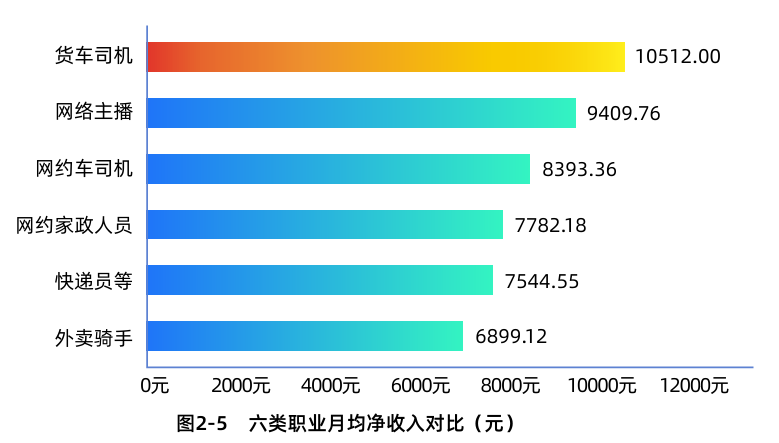
Core Insights - The report released by Renmin University of China provides a comprehensive analysis of the employment and living conditions of truck drivers in China, focusing on their demographics, income levels, consumption patterns, employment quality, social security status, and the impact of internet freight platforms and new technologies on their work and income structures [1] Group 1: Income and Employment Conditions - Truck drivers face downward pressure on income due to a persistent decline in freight rates, which is influenced by high vehicle ownership, a slowdown in transportation demand, and rising operational costs [2] - The average monthly net income of truck drivers is projected to reach 10,512 yuan by 2025, making it the highest among new employment groups, with over 90% of drivers earning between 8,001 yuan and 32,000 yuan [5] - The age distribution indicates that the majority of truck drivers are middle-aged, with those aged 30 to 49 constituting nearly 80% of the workforce [3] Group 2: Consumption Patterns - Truck drivers exhibit strong consumption capabilities, with an average monthly expenditure of 6,578 yuan, the highest among new employment groups, and significant spending on education, reflecting their commitment to family responsibilities [7] Group 3: Work Environment and Career Development - Truck drivers typically work long hours with limited rest days, averaging 3.54 days off per month, and most drive alone, indicating a high-intensity work environment [7] - The profession offers a clear career development path, with many drivers transitioning from individual transporters to roles such as fleet managers or logistics operators [9] Group 4: Digital Platform Utilization - A significant majority of truck drivers (91.82%) use digital platforms for order management, with higher platform usage correlating with increased income levels [10][14] - Drivers with strong digital skills and high platform order ratios report significantly higher average gross and net incomes, highlighting the importance of digital capabilities in the industry [14] Group 5: Organizational Participation - The report indicates that a small percentage of truck drivers are members of political organizations or labor unions, with 3.45% being Communist Party members and 8.53% having joined unions, reflecting a degree of political and organizational engagement [16]

供大于求,行情低迷
Ning Zheng Qi Huo· 2025-07-28 10:42
Report Summary 1. Industry Investment Rating - No information provided on the industry investment rating in the given content. 2. Core Viewpoint - The pig market continues to have an oversupply situation with weak demand, leading to a sluggish market. It is recommended to hold previous short positions [2][20]. 3. Summary by Directory 1. Pig Price Market Review - No specific review content provided, only a mention of a graph on pig spot and futures prices [4]. 2. Supply Situation Analysis - The supply side has a large pressure on livestock farmers to sell pigs. Large - scale enterprises have a slow selling progress and some are selling pigs with lower weights. Due to continuous high temperatures, the feed - to - meat ratio is high, increasing costs. Small - scale farmers are more willing to sell large - weight pigs, and there is an increase in African swine fever in some areas, resulting in an abundant supply [2][20]. 3. Demand Situation Analysis - The high - temperature off - season persists, with average sales of large pigs. Slaughtering enterprises are continuously making losses and are cautious in purchasing. There is less entry into the secondary fattening market, so the demand remains weak [2][20]. 4. Cost - Profit Analysis - No specific analysis content provided, only mentions of graphs on self - breeding and self - raising breeding profits and purchased piglet breeding profits [16][19]. 5. Market Outlook - The supply side remains abundant with large pressure on small - scale and large - scale enterprises to sell pigs. The demand is still weak. The oversupply situation continues, and the market is sluggish. It is recommended to hold previous short positions [2][20].
从“资产荒”角度看“内卷”的深层原因
李迅雷金融与投资· 2025-07-19 06:51
Group 1 - The article discusses the concept of "anti-involution" and its significance in the context of supply-side structural reforms, emphasizing the need to analyze the root causes of involution to effectively address it [1] - The capital market is experiencing two main trends: a decline in risk appetite and a decrease in risk-free investment returns, leading to an "asset shortage" phenomenon [1][2] - The yield on China's 10-year government bonds dropped to a record low of 1.55% in April, indicating a persistent "asset shortage" that affects both capital markets and the real economy [1] Group 2 - The profit margins of large-scale manufacturing enterprises have been declining, with profit rates falling from 5.35% in 2021 to 4.25% in the first five months of 2024 [2][5] - The revenue generated per 100 yuan of assets for large-scale manufacturing enterprises has decreased from 107 yuan in 2022 to 85.2 yuan in the first five months of 2024 [2][5] - The phenomenon of "involution" in competition is characterized by price wars among enterprises, leading to increased volume without corresponding revenue or profit growth [5] Group 3 - The export price index for China's goods has dropped by 15% from January 2023 to September 2024, indicating a significant decline compared to other emerging economies [8] - The average accounts receivable period for large-scale manufacturing enterprises has increased from 54 days in 2022 to 71.7 days in the first five months of 2024, reflecting financial pressures [11] - The capacity utilization rate for large-scale manufacturing enterprises has decreased from 75.8% in 2022 to 74.2% in the first half of 2024, highlighting the oversupply situation [12] Group 4 - The increase in manufacturing investment has outpaced overall investment growth since 2021, with manufacturing investment growth rates exceeding overall rates by 8.6 to 6 percentage points from 2021 to 2024 [15] - Local governments are incentivized to boost manufacturing investment to meet GDP targets, leading to potential overcapacity in certain sectors [21][23] - The manufacturing sector has seen significant investment in new industries, with production in solar batteries, lithium batteries, and electric vehicles exceeding global demand [26] Group 5 - Consumer spending is closely tied to income expectations, with urban non-private unit average wage growth slowing from 6.7% in 2022 to 2.8% in 2024 [29][30] - The high savings rate in China, at 42.49% in 2023, reflects a preference for low-risk assets over riskier investments, contributing to the "asset shortage" [39][40] - The income distribution disparity, where the top 20% of households account for 45.5% of disposable income, hampers overall consumption growth [35][46] Group 6 - The article draws parallels between the current "anti-involution" movement and the supply-side structural reforms of a decade ago, highlighting the need for a shift in focus from supply-side measures to stimulating consumer demand [56][62] - The current economic environment differs significantly from that of ten years ago, with reduced potential in real estate demand and a more cautious consumer sentiment [57][58] - The strategies for "anti-involution" should include reducing excess capacity, minimizing ineffective investments, and increasing household income to stimulate consumption [62]
今年荔枝跌成白菜价
投资界· 2025-07-12 07:46
Core Viewpoint - The article discusses the significant drop in lychee prices this summer, attributed to a surge in production and the simultaneous harvest of various lychee varieties, leading to a situation where some growers prefer to let their fruit rot on the trees rather than incur harvesting costs [3][13][19]. Price Trends - Lychee prices have plummeted to as low as 1.98 yuan per kilogram, with reports of prices dropping from 6 yuan to 2.98 yuan within days [5][6]. - In Guangdong, which accounts for over 50% of national lychee production, prices have seen a dramatic decrease, with some varieties like 桂味 (Guiwei) dropping from 25-26 yuan to 3-4 yuan per kilogram [14][20]. Production Factors - The national lychee production is expected to reach 3.65 million tons this year, a 111.26% increase compared to 2024, due to favorable weather conditions [13][14]. - The simultaneous ripening of lychee varieties across different regions has exacerbated the oversupply situation, leading to lower prices [13][14]. Consumer Behavior - The low prices have led to increased consumer interest and engagement, with discussions on social media about the best varieties and how to consume or store lychees [9][10]. - Consumers are exploring various culinary uses for lychees, such as in dishes like lychee ribs and lychee sweet and sour pork [10]. Industry Challenges - The lychee industry faces challenges related to logistics and preservation, as the fruit is highly perishable and requires careful handling to maintain quality [15][20]. - Growers often struggle to sell their produce at profitable prices due to limited market access and high logistics costs, which can sometimes exceed the price of the fruit itself [20][21]. Market Response - New tea beverage brands have capitalized on the low prices by launching lychee-flavored products, which have seen strong sales [11][12]. - Efforts are being made within the industry to optimize supply chains and improve the marketing of lychee products to enhance visibility and sales [21].

新能源及有色金属日报:仓单持续注销,关注新仓单注册情况-20250624
Hua Tai Qi Huo· 2025-06-24 03:48
Report Summary 1. Report Industry Investment Rating No information provided. 2. Core View of the Report The fundamentals of the lithium carbonate market are weak, with a possible decline in the consumer end and the lithium carbonate futures market. Short - term attention should be paid to the new warehouse receipt registration after the cancellation of warehouse receipts. It is recommended to sell on rallies for hedging [1][2][3]. 3. Summary According to Related Content Market Analysis - On June 23, 2025, the opening price of the lithium carbonate main contract 2509 was 58,860 yuan/ton, and the closing price was 59,120 yuan/ton, a 0.77% drop from the previous settlement price. The trading volume was 259,487 lots, and the open interest was 356,954 lots, an increase of 2,607 lots from the previous trading day. The total open interest of all contracts was 656,617 lots, an increase of 9,340 lots. The total trading volume of contracts decreased by 167,517 lots to 282,439 lots, and the overall speculation degree was 0.43. The number of lithium carbonate warehouse receipts was 26,779 lots, a decrease of 1,014 lots from the previous day. The futures were at a discount of 830 yuan/ton to the spot price of battery - grade lithium carbonate [1]. Spot Market - On June 23, 2025, the price of battery - grade lithium carbonate was 59,300 - 60,600 yuan/ton, a decrease of 4,500 yuan/ton from the previous trading day. The price of industrial - grade lithium carbonate was 57,850 - 58,850 yuan/ton, also a 4,500 - yuan/ton decrease. The market continued to have an oversupply situation. Supply was abundant, while downstream demand was weak, with only rigid demand for restocking. There was no sign of concentrated restocking. The market showed a differentiated situation: large lithium salt enterprises had relatively firm prices, while some small and medium - sized enterprises' prices were loose. The overall market trading was light [2]. Strategy - Unilateral: Sell on rallies for hedging. There is no suitable strategy for inter - period, cross - variety, spot - futures, and options trading [3][4].